In gambling and economics, there’s an observed phenomenon favorite-long shot bias.
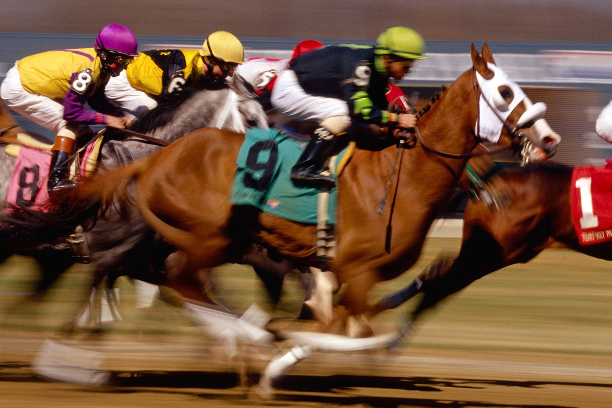
Here’s how it works …
On average, bettors tend to overvalue “long shots” and undervalue favorites.
That is, in a horse race where one horse is given odds of 2-to-1, and another 100-to-1, the true odds might for example be 1.5-to-1 and 300-to-1 respectively.
Betting on the “long shot” is therefore a much worse proposition than betting on the favorite.
Various theories exist to explain why people willingly bet on such losing propositions, such as risk-loving behavior, or simply inaccurate estimation.
 The Homa Files
June 5, 2015 at 11:13 am |
To be fair, the 300-1 bet might actually be a better bet. It depends on the expected values of the payouts, doesn’t it?