Excerpted from a Hoolihan Lokey pitch to the National Association of Corporate Directors …
First the facts …
The amount of cash on U.S. corporate balance sheets is at historical levels and continues to rise
Why?
- Cash is a risk management tool — buffering against economic & regulatory uncertainty
- Cash is a hedge against a disruption in accessing the capital markets … think 2008.
- Cash ensures that a company can maximize its ability to act on opportunistic investment opportunities
Companies have been building cash positions to record levels
* * * * *
How much?
In Q4 2011, total liquid financial assets on US non-financial balance sheets reached $2.3 trillion
Of the $2.3 trillion, it is estimated that approximately 30%, or $695 billion, is excess cash
* * * * *
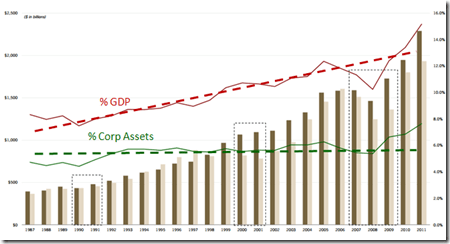
The ratio of cash to total corporate assets has increased from a relatively stable historical level of 6% to 7.6% …
The ratio of cash to GDP has been steadily rising for the past 20 years … dipped from 12.5% to about 10% from 2005 to 2009 … but, increased from 10% to over 15% from 2009 to now.
* * * * *
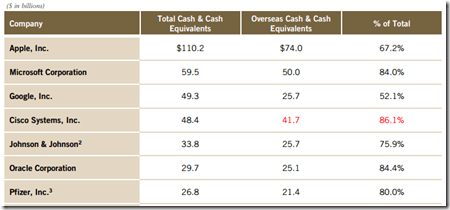
5 of the 10 companies with the highest cash balances are technology-based (Apple, Microsoft, Google, Cisco, Oracle) … 2 are car companies GM and Ford … and 2 are pharma-related (J&J and Pfizer)

* * * * *
For the biggest cash holders, most of the cash is held off-shore.
* * * * *
So what?
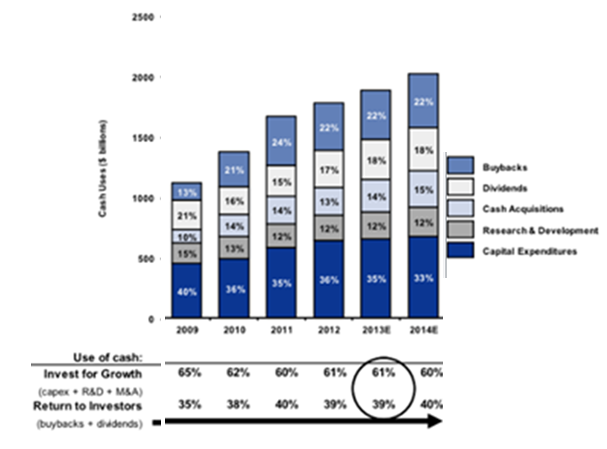
While left-leaning pundits think that the cash balances to hire more employees — a seriously flawed economic thought — historically, companies have applied available cash to:
- Pay down debt (deleverage)
- Invest in organic growth (capital expenditures)
- Make acquisitions
- Return Return capital capital to shareholders dividends or share repurchases
Note that hiring unneeded, non-economic employees isn’t on the list …
Stay tuned.
>> Latest Posts
SHARE THIS POST WITH FRIENDS & FAMILY



 The Homa Files