Archive for August 8th, 2008

Marketing – When Teens Tighten their Wallets

August 8, 2008

Excerpted from WSJ: “Retailers Catch Teenage Blues”, August 8, 2008

Teens may dread going back to school, but the retail chains catering to them eagerly await this season for a reliable boost from kids who need new clothes. In this slow economy, however, teen retailers are showing signs of stress and beginning to worry that the late-summer boom might not arrive this year.

The teen stores have long been considered recession-resistant because young customers’ spending — often linked to allowances and summer jobs — typically holds constant in a slow economy. Back-to-school purchases were viewed as a must for taste-fickle teens who often cajole their parents in August and September into giving them extra cash.

The July results show that this year’s economic slowdown is dealing wider blows. The principal culprit: energy prices, which analysts say are fast stripping teens of their ability to buy the gas they need to get to the malls where many of these stores are located.

Strong performance in junior apparel from Wal-Mart, the world’s largest retailer, suggests it might be taking sales away from teen retailers.

For many retailers, this time of year is typically the second most profitable of the year. If performance is down this fall, it could be an unpleasant preview of what is usually the chains’ most promising time of year, the holiday season.

The industry appears divided on how to respond.

Middle-end stores like Hot Topic and American Eagle already are looking to promotions in the middle of the back-to-school selling season.

But higher-end operations like Abercrombie appear to be clinging to their price points, a bet that its brand name can weather the storm and competition with department stores. Abercrombie “prides itself being an aspirational brand, and part of that is not to mark down and have sale events. They feel like that dilutes brand equity.”

Other stores are learning to sit pretty at lower price points. Teen retailer Aeropostale Inc. is running a fleet of more than 800 stores throughout the U.S. with clothing styles not too dissimilar from those found at Abercrombie — but at prices about 30% lower.

Other chains are taking a fast turn toward markdowns

It is unclear whether these moves will be enough to lure young buyers back into the mall. Megan Tysoe, a 19-year-old Georgetown University student, says she spent $300 a month on clothes last summer using paychecks from a summer job. But this year she is working an unpaid internship as a paying job couldn’t be found. And Ms. Tysoe has words that should cause worry for retailers: “Instead of buying new things, my friends trade clothes with each other.”

Full article:
http://online.wsj.com/article/SB121810860555720233.html?mod=hps_us_whats_news

* * * * *

Want more from the Homa Files?
 
Click link =>  The Homa Files Blog

* * * * *

Energy – The Case for Doing Everything

August 8, 2008

Excerpted from “It’s Simple: Drill and Conserve”, by Charles Krauthammer.  Aug. 08, 2008

Americans’ greatest concern is the economy, and their greatest economic concern is energy (by a significant margin: 37 percent to 21 percent for inflation). By an overwhelming margin of 2-1, Americans want to lift the moratorium preventing drilling on the Outer Continental Shelf, thus unlocking vast energy resources shut down for the last 27 years.

(Some) say that we cannot drill our way out of the oil crisis. Of course not. But it is equally obvious that we cannot solar or wind or biomass our way out. Does this mean that because any one measure cannot solve a problem, it needs to be rejected?

Why must there be a choice between encouraging conservation and increasing supply? The logical answer is obvious: Do both.

Do everything. Wind and solar. A tire gauge in every mailbox. Hell, a team of oxen for every family (to pull their gasoline-drained SUVs). The consensus in the country, logically unassailable and politically unbeatable, is to do everything possible to both increase supply and reduce demand, because we have a problem that’s been killing our economy and threatening our national security. And no one measure is sufficient.

The “green fuels” … are as yet uneconomical, speculative technologies, still far more expensive than extracted oil and natural gas. We could be decades away. And our economy is teetering. Why would you not drill to provide a steady supply of proven fuels for the next few decades as we make the huge technological and economic transition to renewable energy?

Fine, let’s throw a few tens of billions at such things as electric cars and renewablesis and see what sticks. But (understand that) success will not just require huge amounts of money. It will require equally huge amounts of time and luck.

On the other hand, drilling requires no government program, no newly created bureaucracy, no pie-in-the-sky technologies that no one has yet invented. It requires only one thing, only one act. Lift the moratorium. Private industry will do the rest. And far from draining the treasury, it will replenish it with direct taxes, and with the indirect taxes from the thousands of non-subsidized new jobs created.

(In the energy debate), the argument for “do everything” is not rocket science. It is common sense. 

Full commentary:
http://www.realclearpolitics.com/articles/2008/08/drill_and_conserve.html

* * * * *

Want more from the Homa Files?
 
Click link =>  The Homa Files Blog

* * * * *

Forget Buffett’s Low Tax Rate — How about those Hedge Funds?

August 8, 2008

In a prior post, I hypothesized that Warren Buffett’s guilt-ridden 17.7% effective Federal tax rate is most likely a consequence (unintended ?)  of the capital gains tax rate cut and  the functional failure of the AMT to do its job.

Another group of low capital gains tax rate benificiaries shows no Buffett-like remorse: private equity partnerships, and their close cousins, the hedge funds.

* * * * *

In brief, hedge funds are partnerships and are legally positioned to benefit from favorable capital gains tax treatment.  But, hedge funds cavalierly push the law to the limits with some contested schemes.

Specifically, hedge funds have made an art form of “carried interest” — a claim that current operating income should be classified as returns on their invested capital and then taxed at capital gains rates (which are, of course, much lower than regular income rates.

Many (most? all?) disinterested observers smell a rat — a Enron-like loophole that you can drive a truck through.

Why doesn’t the loophole get closed?  Simple politics.  Sen. Shumer (NY) keeps blocking action because he fears hedgers will head off-shore, and — some cynics reckon — stop their super-sized contributions to the Democratoric Senatorial Re-election Committee — which, coincidentally, Shumer runs.

The likely fix: raising everybody’s capital gains rates — to avoid the appearance of singling out a prized political support group. 

* * * * *

For details re: carried interest, below are summaries and links to a couple of good sources.

* * * * *

Carried Interest – The Issue

From : Senate Testimony: “The Taxation of Carried Interest”
by Peter R. Orszag, CBO Director
July 11, 2007

“A growing amount of financial intermediation is occurring through private equity and hedge funds, which are typically organized as partnerships or limited liability companies and … are growing rapidly for many reasons, including their tax advantages over traditional financial services corporations.

A general partner of a private equity or hedge fund typically receives two types of compensation: a management fee tied to some percentage of assets under management and “carried interest” tied to some percentage of the profits generated by those assets.

The management fee is taxed as ordinary income to the general partner. Taxation on the carried interest is deferred until profits are realized on the fund’s underlying assets, and any resulting profits to the general partner are taxed at the capital gains tax rate …

Most economists, however, would view at least part and perhaps all of the carried interest as performance-based compensation for management services provided by the general partner rather than a return on financial capital invested by that partner … and suggest taxing at least some component of the carried interest as ordinary income, as most other performance-based compensation is currently treated …

Much of the complexity associated with the taxation of carried interest arises because of the differential between the capital gains tax rate and the ordinary income tax rate, which creates an incentive to shift income into a form classified as capital gains. Further widening of the differential between the taxation of ordinary income and of capital gains would create even stronger incentives to shift income into the tax-preferred capital form.

Full testimony (worth reading):
http://www.cbo.gov/ftpdocs/83xx/doc8306/07-11-CarriedInterest_Testimony.pdf

* * * * *

Carried Interest – The Politics

According to Bloomberg:

Democratic Senator Charles Schumer of New York is fighting a plan to raise taxes on hedge funds and buyout firms with his own legislative poison pill …  saying that he would agree to the proposals only if taxes were also raised on oil-and-gas, venture-capital and real-estate partnerships.

Schumer may be trying to shield both his Wall Street constituents [i.e. keeping jobs in NYC] and his party’s electoral war chest … based on federal filings, contributions from employees of private-equity firms and hedge funds to the Democratic Senatorial Campaign Committee, which Schumer heads ,,, far exceed the industry’s contributions to the Republican Senate committee.

http://www.bloomberg.com/apps/news?pid=20601103&sid=a9DpYagBpVIo&refer=us

* * * * *

Want more from the Homa Files?
 
Click link =>  The Homa Files Blog

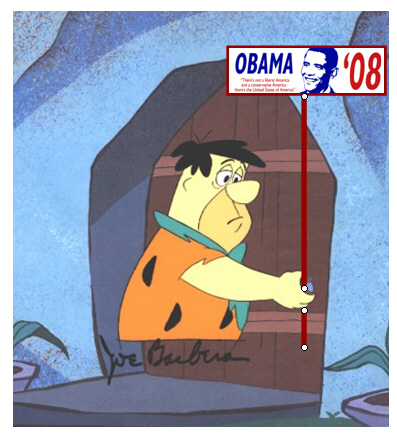
Paris be gone ! A bigger celeb walks the energy talk.

August 8, 2008

Friday cheapshot:

I usually don’t put much stock in celebrity endorsements. 

But in marketing parlance — this one, from a star who was way ahead oh his time — might have “legs” …


click picture to make it bigger

 * * * * *

Questions:

1. Wouldn’t it be faster for Fred to leave the car at home and  just walk to work ?

2. Are rock hard wheels more enegy efficient than fully inflated tires ?

* * * * *

Want more from the Homa Files?
 
Click link =>  The Homa Files Blog

* * * * *