Archive for February, 2009

Was Tuesday student government day?

February 27, 2009

Figured out what was really bothering me Tuesday night … and this time, I’m bi-partisan.

Both Obama & Jindal are smart but playing way over their experience levels.

One is the class “cool dude” who can win over the ladies and sell anything to the guys; the other is the class geek — call for homework help, but don’t elect homecoming king. 

Neither is ready to play in the bigs quite yet … especially in the most important, most challenging exec slot on earth.

Wasn’t there someone between Obama and John “Grandpa Munster” McCain  to lead us through this mess?

* * * * *

Want more from the Homa Files?
Click link =>
  The Homa Files Blog

CPGs chuck unprofitable products … huh, weren’t they already doing that?

February 27, 2009

Excerpted from The Chicago Sun-TImes, “Foodmakers cutting the fat” by Emily Fredrix, February 14, 2009

* * * * *

Food companies from Sara Lee to Heinz are trimming their offerings to focus marketing dollars on their higher-margin, best-selling brands and retain consumers, who are trading down in the recession.

Those top brands are more likely to hold their own, and getting rid of lesser-performing brands helps companies showcase top products as retailers cut inventory. Heinz aims to remove two items for each one it introduces. Sara Lee hopes to cut its offerings 8 percent this fiscal year.

It’s all shaping up to mean fewer choices for consumers.

But will they mind?

Probably not, analysts say, noting that if these products had a big following, companies would keep them around.

The nation’s grocery shelves could stand some trimming. They’re straining with about 50 percent more products than 10 years ago, including new formulas, flavors and sizes of existing lines, he said.

The trend of cutting SKUs — or stock-keeping units, the unique identity each product carries — has caught on the past three or four years. It accelerated last year as companies homed in on their most profitable brands.

Excess sizes, types and flavors of products increase the cost of everything from marketing and production to sales. And, during the recession, it’s particularly important to conserve cash. 

Most profit for many companies is concentrated in a small number of brands anyway. It’s not uncommon, he said, for 20 percent of a company’s products to account for 80 percent of its profitability.

The lines Kraft is cutting are not “major businesses,” CEO Irene Rosenfeld said recently.

Indeed, when products are removed, sales volume drops. Kraft said this month that sales unit volume fell 5.2 percent for the three months ending in December as consumers reacted to price increases and retailers cut inventory. Within that, eliminating product lines hurt volume by 1.5 percent.

Edit by NRV

Full article: http://www.suntimes.com/lifestyles/health/1431224,CST-NWS-brand15.article

* * * * *

Want more from the Homa Files?
Click link => The Homa Files Blog

Apple: Life at the top …

February 27, 2009

Excerpted from Fortune, “Five Easy Apple Charts”, by Philip Elmer-DeWitt, January 30, 2009

* * * * *

If a picture is worth a thousand words, here’s five grand worth of Apple news in charts and lists released over the past couple of days.

1. Web Brands. Apple scored No. 10 in Nielson Online’s ranking of the top Web brands based on the number of unique visitors each site drew in December 2008 — which isn’t bad considering Apple.com’s focus is so much narrower than the brands it’s up against.Nielson Web 10

2. Social Brands. The iPhone scored No. 1 — ahead even of its parent company at No. 3 — in the Vitrue 100, a new ranking launched this week by an Atlanta-based marketing company. Vitrue’s list ranks blue chip brands by how often they get mentioned in blogs, photo-sharing sites and such social media entities as Facebook, MySpace and Twitter — presumably a measure of how large these names loom in the minds of an emerging category of early adopters.

Social brands

3. Days to 1 Million. This comes from published sales data to compare the rate at which the leading smartphones achieved the market penetration milestone of 1 million units.

million-sold-graphic-footnote-storm

4. Volume vs. Revenue. This data demonstrates that what matters is not how many smartphones you sell, but how much you make on each sale (includes revenue from other sales beyond phones).

Vol. vs. Rev. (1)

Vol. vs. Rev. (2)

5. Stock Price. Finally, a glance at Apple’s share price, which having suffered a thousand cuts in the past year finally picked up a little traction in the past two weeks.

Edit by DAF

* * * * *

Full article:
http://apple20.blogs.fortune.cnn.com/2009/01/30/five-easy-apple-charts/

* * * * *

Want more from the Homa Files?
Click link => 
The Homa Files Blog

* * * * *

Foreclosures hurt all property values … NOT !

February 26, 2009

Ken’s Take: Obama keeps claiming that foreclosures have a debilitating economic impact on practically all homes prices.  That’s just not true.

First, U.S. foreclosures are concentrated in only a handful of states: AZ, CA, NV, FL, and MI … and within a handful of overbuilt, price-bubbled communities within those states.

Second, the evidence suggests that homes need to be immediately proximate to — i.e. within a couple of blocks of — a high number of foreclosures for there to be any significant impact.  In other words, foreclosures in California don’t impact home values in New York.

Third, even if homes are proximate to foreclosures, the impact on home values is minimal and short-lasting, unless there has been a significant economic causal shock in the community (e.g. an auto plant closing)

Bottom line: stopping foreclosures will only help those being foreclosed upon — most of whom deserve to be foreclosed upon.

* * * * *
Below is a summary of the article’s context.  See the source article for the analysis.

Excerpted from Weekly Standard, “Obama’s Fuzzy Housing Numbers”, Feb 24,2009

If President Obama is to sell his mortgage bailout plan to the public, an important argument will be his claim that preventing foreclosures actually helps all homeowners by preventing housing prices from dropping:

“This plan will not save every home, but it will give millions of families resigned to financial ruin a chance to rebuild,” Mr. Obama told a crowd here, in one of the communities hardest hit by the housing crisis. “It will prevent the worst consequences of this crisis from wreaking even greater havoc on the economy. And by bringing down the foreclosure rate, it will help to shore up housing prices for everyone.”

The claim that the program helps “shore up housing prices for everyone” has been frequently repeated by administration officials. Housing and Urban Development Secretary Donovan elaborated on the point:

And in all, this will help, as I said, 3 to 4 million families. But let’s be clear: This will also help millions of other families, as well. Recent research shows that neighboring homes to foreclosed homes lose as much as 9 percent of their value. So people who are not in danger of foreclosure still are suffering from nearby foreclosures. This will help those families, as well. Our estimates are that the average home — not the average home in foreclosure, but the average home across the country will gain $6,000 in value relative to had this plan not been put in place.

The president, the administration, and its advocates can promote any mortgage relief plan they choose on whatever basis they wish. But any claims that there is evidence that bailing out the mortgages of particular individuals helps all property owners is simply not supported by any real research and should be viewed with great skepticism.

Read the full analysis – with numbers and sources:
http://www.weeklystandard.com/weblogs/TWSFP/2009/02/obamas_fuzzy_housing_numbers_1.asp

* * * * *

Want more from the Homa Files?
Click link =>
  The Homa Files Blog

If you make less than $250,000 your taxes won’t go up! … yeah, right … continued

February 26, 2009

Ken’s Take: In yesterday’s post, I argued that fully taxing the top 2% wouldn’t come close to paying for Barack-O’s programs.  A day later, here’s the WSJ analysis.  Slightly different numbers, same conclusion.

* * * * *

Excerpted from WSJ, “The 2% Illusion  – Take everything they earn, and it still won’t be enough”, Feb 26 2009

President Obama has laid out the most ambitious and expensive domestic agenda since LBJ, and now all he has to do is figure out how to pay for it. On Tuesday, he left the impression that we need merely end “tax breaks for the wealthiest 2% of Americans,” and he promised that households earning less than $250,000 won’t see their taxes increased by “one single dime.”

This is going to be some trick. Even the most basic inspection of the IRS income tax statistics shows that raising taxes on the salaries, dividends and capital gains of those making more than $250,000 can’t possibly raise enough revenue to fund Mr. Obama’s new spending ambitions.

In 2006, roughly 3.8 million filers had adjusted gross incomes above $200,000 in 2006. (That’s about 7% of all returns; the data aren’t broken down at the $250,000 point.) These people paid about $522 billion in income taxes, or roughly 62% of all federal individual income receipts. The richest 1% — about 1.65 million filers making above $388,806 — paid some $408 billion, or 39.9% of all income tax revenues, while earning about 22% of all reported U.S. income.

As a thought experiment, let’s go all the way. A tax policy that confiscated 100% of the taxable income of everyone in America earning over $500,000 in 2006 would only have given Congress an extra $1.3 trillion in revenue. That’s less than half the 2006 federal budget of $2.7 trillion and looks tiny compared to the more than $4 trillion Congress will spend in fiscal 2010. Even taking every taxable “dime” of everyone earning more than $75,000 in 2006 would have barely yielded enough to cover that $4 trillion.

The bottom line is that  Obama is selling the country on a 2% illusion.  Taxes on the not-so-rich will need to rise as well.

Mr. Obama is very good at portraying his agenda as nothing more than center-left pragmatism. But pragmatists don’t ignore the data. And the reality is that the only way to pay for Mr. Obama’s ambitions is to reach ever deeper into the pockets of the American middle class.

Full article:
http://online.wsj.com/article/SB123561551065378405.html

* * * * *

Want more from the Homa Files?
Click link =>
  The Homa Files Blog

The Stimulus: Obama’s missed opportunity … to do something right (and maybe great)

February 26, 2009

Ken’s Take: Sameulson is a left-leaning economist, which should give him some broad credibility. I think his analysis is right on target.  Below are highlights.  Full article is well worth reading.

* * * * *
Excerpted from IBD, “Stimulus Needs More Power At Front End” Samuelson, February 20, 2009

Judged by his own standards, President Obama’s $787 billion economic stimulus program is deeply disappointing.

Given his dire warnings (about the economy), you’d expect the stimulus package to focus almost exclusively on reviving the economy. It doesn’t, and for that Obama bears much of the blame. His politics compromised the program’s economics. Look at the numbers.

* * * **

The Congressional Budget Office estimates that about $200 billion will be spent in 2011 or later — after it would do the most good. For starters, there’s $8 billion for high-speed rail …  the design and construction will occupy many years. It’s not a quick stimulus.

Then there’s $20.8 billion for improved health information technology — more electronic records and the like. Probably most people regard this as desirable, but here, too, changes occur slowly. The CBO expects only 3% of the money ($595 million) to be spent in fiscal 2009 and 2010.

The peak year of projected spending is 2014 at $14.2 billion.

Consider the retrofitting of federal buildings to make them more energy-efficient.  Obama says “We’re creating jobs immediately.”  Yes — but not many. The stimulus package includes $5.5 billion for overhauling federal buildings. The CBO estimates that only 23% of that would be spent in 2009 and 2010.

* * * * *

Worse, the economic impact of the stimulus is already smaller than advertised. The package includes a “patch” for the alternative minimum tax. This protects many middle-class Americans against higher taxes and, on paper, adds $85 billion of “stimulus” in 2009 and 2010.

One problem: “It’s not stimulus … Congress was going to do it anyway. They do it every year.” Strip out the AMT patch, and the stimulus drops to about $700 billion, with almost 30% spent after 2010.

The stimulus package offers only modest relief to states. Using funds from the stimulus, states might offset 40% of their looming deficits,. The effect on localities would probably be less.

The stimulus provides most funds to states through specific programs. There’s $90 billion more for Medicaid, $12 billion for special education, $2.8 billion for various policing programs. There’s a big downside: “Temporary” spending hikes for specific programs … will be harder to undo, worsening the long-term budget outlook. The major outcome:  more power centralized in Washington.

* * * * *

No one knows the economic effects of all this; estimates vary. But Obama’s political strategy stunts the impact from what it might have been.

By using the stimulus for unrelated policy goals, spending will be delayed and diluted.

Politics cannot be removed from the political process. But here, partisan politics ran roughshod over pragmatic economic policy. Even the token concessions (including the AMT provision) to some Republicans weakened the package.

Obama is gambling that his flawed stimulus will seem to work well enough that he’ll receive credit for restarting the economy — and not be blamed for engineering a colossal waste.

* * * * *
Full article:
http://www.ibdeditorials.com/IBDArticles.aspx?id=320024639130404

* * * * *

Want more from the Homa Files?
Click link =>
  The Homa Files Blog

Do as I say, not as I do … Barack "Line by Line" Obama threatens to "call out" governors & mayors if they waste money

February 26, 2009

Ken’s Take:

After signing a near trillion dollar pork-laden, spending plan, President O warms mayors and governors that American taxpayers “expect to see the money that they’ve earned — they’ve worked so hard to earn — spent in its intended purposes without waste”. 

That’s a non sequitur since most of the Obam-dictated “intended purposes” are wasteful and non-stimulative to start.

Do people really buy thiese contradictions and  mumbo jumbo?   

* * * * *

Excerpted from yahoo.com, “Obama warns mayors not to waste stimulus money”, Feb 20, 2009

President Barack Obama warned the nation’s mayors on Friday that he will “call them out” if they waste the money from his massive economic stimulus plan.

“The American people are watching,” Obama told a gathering of mayors at the White House. “They need this plan to work. They expect to see the money that they’ve earned — they’ve worked so hard to earn — spent in its intended purposes without waste, without inefficiency, without fraud.”

Using his presidential pulpit, Obama demanded accountability, from his friends in local government as well as his own agencies. He said the new legislation gives him tools to “watch the taxpayers’ money with more rigor and transparency than ever,” and that he will use them.

“If a federal agency proposes a project that will waste that money, I will not hesitate to call them out on it, and put a stop to it,” he said. “I want everyone here to be on notice that if a local government does the same, I will call them out on it, and use the full power of my office and our administration to stop it.”

The president did not specify how, exactly, he would call out one of his own agencies or a local government about wasteful projects.

http://news.yahoo.com/s/ap/20090220/ap_on_go_pr_wh/obama_mayors

* * * * *

Want more from the Homa Files?
Click link =>
  The Homa Files Blog

Batteries are the key weapon in the battle for energy independence … too bad we’re losing the weapons race.

February 26, 2009

Ken’s Take: Lithium ion batteries are the projected heart of future hybrids electric cars.  Currently, the U.S. has no significant manufacturers of even small scale lithium ion batteries, and is behind in the R&D chase to develop auto-capable sizes. And, oh yeah, lithium is mined mostly in Argentina, Boliva, & Chile … not in the U.S.  This is a big deal

* * * * * *

Excerpted from Business Week, “Electric Car Battery Wars”, Feb 12, 2009

President Barack Obama has set a target of 1 million electric cars on U.S. roads by 2012. That will require about $40 billion worth of domestically produced batteries. Most experts agree that lithium ion, which can be used to create batteries that weigh far less and store more power than those in today’s hybrids, will be the dominant technology.

The big question is whether any U.S. battery maker will be a major player by the time a mass market develops for electric cars. The field is already crowded.

Some U.S. companies claim to have prototypes that work. They include A123 Systems, a Massachusetts Institute of Technology spin-off, and Franco-American venture Johnson Controls-Saft, which has snared contracts with Ford Motor, BMW, and Mercedes-Benz (DAI). But the Americans face Asian rivals with deeper pockets and far more lithium-ion experience.

The Asians can also better afford the hundreds of millions of dollars needed to build large, state-of-the-art factories. U.S. investors are unwilling to risk such sums for startups—especially now that the recession and cheap oil have dimmed the future of hybrid cars. After surging this fall, Ener1’s stock has fallen by half since mid- December, to around 4.

Should Uncle Sam provide billions in loans and grants to a promising but unproven business? Or should the government wait for the market to sort things out before it backs a U.S. company? The risk is that by then another major industry could go the way of memory chips, digital displays, the first solar panels, and the original lithium-ion batteries used in notebook PCs and cell phones. American scientists, funded by federal dollars, were at the forefront of each of those. Yet the industries—and the high-paying manufacturing jobs that go with them—quickly ended up in Asia. U.S. labor costs and taxes drove many operations abroad, but often industries fled simply because Asian governments, banks, and companies were more willing than Americans to risk big capital investments.

Battery makers are expected to get some of the $25 billion set aside last year under Washington’s Advanced Technology Vehicle Manufacturing Program to speed the commercialization of green cars.  Under the $790 billion stimulus package under debate in Congress, U.S. lithium-ion makers also could compete for $2 billion in grants to fund research and development and manufacturing.

Lithium ion is regarded as a core enabling technology for plug-in hybrid vehicles, which, unlike most current hybrids, can be recharged with normal household current and run much longer on electricity before a gas-powered engine takes over. Lithium-ion cells can store up to three times more juice and generate twice the power of the nickel-metal hydride batteries used in today’s hybrids.

General Motors and Ford both assert that a domestic lithium-ion industry is vital if the U.S. is to be a major player in green cars. Otherwise, Detroit’s fate would be in the hands of suppliers half a world away.

China has more than 10 manufacturers—Beijing has declared lithium ion a strategic industry.

Analysts say no U.S. or Asian contender has solved all of the challenges of producing lithium-ion car batteries that are safe, reliable, and affordable: Questions linger over the battery’s ability to last long enough to satisfy car buyers, for example.

The U.S. is still in the race. The Energy Dept. has poured some $600 million into lithium-ion research.

The strongest U.S. player right now is Johnson Controls. Its French partner Saft has a cell plant, while Johnson’s big edge is its supply and design relationships with the world’s top automakers. But lithium-ion technology is vastly more complex than that of lead-acid batteries.

Skeptics counsel caution. Some doubt there will be a mass market for electric cars within a decade. When gas cost $4 a gallon last summer, consumers who shelled out the extra $3,000 for a hybrid like the Prius, with nickel-metal hydride batteries, were close to breaking even. But next-generation lithium-ion batteries will add at least $8,000 to the price of a plug-in when all the electronics are included. For drivers to save money on the Volt, Anderman calculates production will have to reach 1million cars a year, and gas will have to pass $5 a gallon.

Lithium-ion car batteries are an exciting technology. Whether they will generate an exciting U.S. industry is anyone’s guess.

* * * * *

The Players

Although a mainstream market for electric cars may be a decade or more away, governments and companies worldwide are spending massive amounts of money to gain an edge in supplying batteries for them. Here are some key players

A123 (U.S.)
This MIT spin-off has $250 million in venture capital. It supplies small quantities of batteries to Daimler, Volvo, and Chrysler and wants $1.8 billion in federal aid to build plants in the U.S.

AESC (Japan)
This joint venture between Nissan and NEC may have the deepest pockets. It plans to invest $275 million in facilities to produce lithium-ion cells for a wide range of vehicles.

BYD AUTO (China)
One of the world’s top battery makers, BYD already offers a $22,000 plug-in hybrid in China and hopes to sell cars in the U.S. soon. Warren Buffett owns 10%.

ENERDEL (U.S.)
Once part of Delphi, EnerDel has invested $200 million in an Indiana plant. Its biggest customer is struggling Norwegian hybrid carmaker Think. EnerDel wants $480 million in U.S. loans.

JOHNSON CONTROLS-SAFT (U.S.-France)
This joint venture has a factory in France and has deals with Mercedes, BMW, and Ford. Johnson Controls’ edge: It’s already a top supplier of conventional car batteries.

LG CHEM (Korea)
A leading maker of lithium-ion batteries for cell phones, LG outflanked U.S. rivals to win a deal to supply GM’s Chevy Volt plug-in. GM plans to assemble LG batteries in Michigan.

PANASONIC (Japan)
After buying Sanyo’s lithium-ion business, Panasonic may be the company to beat since it’s allied with mighty Toyota, which is planning an electric car for 2012.

* * * * *

Full article:
http://www.businessweek.com/magazine/content/09_08/b4120052113533.htm 

* * * * *

Want more from the Homa Files?
Click link =>
  The Homa Files Blog

Get those frugal consumers to buy something …

February 26, 2009

Excerpted from BusinessWeek, “How to Win Frugal Consumers and Influence Them to Buy”, by Susan Berfield, January 29, 2009

* * * * *

For a while, Paco Underhill of the consulting firm, Envirosell, has been telling merchants that there are no new customers, which is his way of saying that stores must get better at persuading existing customers to purchase more. He has also noticed that people more often make decisions about what to buy when they’re out shopping, not before. This gives stores an opportunity: If they can compellingly present information about merchandise they might exert greater influence on consumers.

* * * * *

In better times, when people selected an item from the shelf, they usually purchased it. Now the average amount of time shoppers spend in the aisles is increasing, by around 20% as they read labels more carefully. That sounds like it might be a good thing for retailers. But Underhill says people are more frequently discarding items in other parts of the store, particularly near the cash register. “They are trading out or experiencing buyer’s remorse,” he says.

Then there is the matter of choice: Underhill says some shoppers can’t deal with it, and if the item isn’t a necessity, they’ll just walk away. “Merchants have to take some control over the consumer’s eye,” he says. “Put up a sign that says ‘Our Best Seller’ or ‘Our Best Student Computer.'”

* * * * *

Underhill and I go shopping at Whole Foods, a retailer known for trying to entice shoppers with “good stories” about its products. A large sign over the red kale and rainbow chard is titled “Why Buy Organic.” The explanation is probably too long for most people to read, he says, but that’s O.K. It’s meant to make shoppers feel they’re buying something valuable, maybe doing something virtuous.

A small sign stuck into a pile of Russian Banana fingerling potatoes reads “How cute are these?” Underhill loves it. “These are more expensive than Idaho potatoes, so they’re trying to find creative ways of getting you to trade up or try something new.”

* * * * *

When Underhill talks to his clients about signs, he is concerned with what he calls the dropout rate, or the percentage of people who don’t read through an important piece of information.

Underhill’s work for a spice maker is an excellent case in point. The company had designed a pricey display for supermarkets, and the prototype categorized the bottles as spices, extracts, essences, or flavorings, and had no noticeable effect on sales. The distinctions the company was making were meaningless to shoppers. “Who cares what it is? What it does to food, how it tastes and smells, are all that counts.”

Edit by DAF

* * * * *

Full article:
http://www.businessweek.com/magazine/content/09_06/b4118045670299.htm?chan=top+news_top+news+index+-+temp_news+%2B+analysis

* * * * *

Want more from the Homa Files?
Click link => 
The Homa Files Blog

* * * * *

Why the market continues to sink …

February 25, 2009

Excerpted from IBD, “Is It Any Wonder The Market Continues To Sink?”,  February 20, 2009

* * * * *

Last Oct. 13, in trying to explain why the market had sold off 30% in six weeks, we acknowledged that the freeze-up of the financial system was a big concern. But we cited three other factors as well:

• The imminent election of “the most anti-capitalist politician ever nominated by a major party.”

• The possibility of “a filibuster-proof Congress led by politicians who are almost as liberal.”

• A “media establishment dedicated to the implementation of a liberal agenda, and the smothering of dissent wherever it arises.”

No wonder, we said then, that panic had set in.

* * * * *

Today, as the market continues to sell off , we wish we had a different explanation. But it still looks, as we said four months ago, “like the U.S., which built the mightiest, most prosperous economy the world has ever known, is about to turn its back on the free-enterprise system that made it all possible.”

How else would you explain all that’s happened in a few short weeks? How else would you expect the stock market, where millions cast daily votes and which is still the best indicator of what the future holds, to act when:

• Newsweek blares from its cover “We Are All Socialists Now

• A $700 billion bank bailout, $75 billion to refinance bad mortgages, $50 billion for the automakers, and as much as $2 trillion in loans from the Fed and the Treasury fail to build confidence in our free-enterprise system.

Talk of “nationalizing” U.S.’ troubled major banks comes not just from tarnished Democratic Sen. Chris Dodd,  from Republicans like Sen. Lindsey Graham , and former Fed chief Alan Greenspan.

• A stimulus bill laden with huge amounts of spending on pork and special interests is the best our Congress can come up with to get the economy back on track. Economists broadly agree that the legislation has little stimulative power, and in fact will be a drag on economic growth for years to come. Throwing hundreds of billions of dollars at profligate state governments and programs — such as $4.2 billion for “neighborhood stabilization activities” and $740 million to help viewers switch from analog to digital TV— has investors shaking their heads.

• A $75 billion bailout for 9 million Americans who face foreclosure, regardless of how they got into financial trouble, is the government’s answer to the housing crunch. Many Americans who have scrupulously kept up with payments are steaming at the thought of subsidizing those who’ve been profligate or irresponsible. And. recent data shows that as much as 55% of those who get foreclosure aid end up defaulting anyway

Energy solutions ranging from the expansion of offshore drilling and the development of Alaska’s bountiful arctic oil reserves to developing shale oil in America’s Big Sky country, tar-sands crude in Canada and coal that provides half the nation’s electric power, are taken off the table.

•• Trade protectionism passes as policy, even amid the administration’s lip service to free trade. Congress’ vast stimulus bill and its “Buy American” provisions limit spending to U.S.-made products and will drive up costs, limit choices and alienate key allies. Already, several European partners have begun raising barriers.

• A 1,000-plus page stimulus bill is bulled through Congress with not a single member of Congress reading it before passage.

Business leaders are demonized. Yes, there are bad eggs out there like the Madoffs and Stanfords. But most CEOs are hugely talented, driven, highly intelligent people who make our corporations the most productive in the world and add trillions of dollars of value to our economy.

• Words like “catastrophe,” “crisis” and “depression” are coming from the mouth of the newly elected president, rather than words of hope and optimism. Instead of talking up America’s capabilities and prospects, he talks them down — the exact opposite of our most successful recent president, Ronald Reagan, who came in vowing to restore that “shining city on a hill.”

* * * * *

All this in barely a month’s time. And to think that more of the same is on the way seems to be sinking in. Investors are watching closely and not caring for what they see. Sooner or later, the market will rally — but not without good reason to do so.

Full article:
http://www.ibdeditorials.com/IBDArticles.aspx?id=320027936229029

* * * * *

Want more from the Homa Files?
Click link =>
  The Homa Files Blog

If you make less than $250,000 your taxes won’t go up! … yeah, right.

February 25, 2009

The two parts of Obama’s speech that struck a chord with me were (1) he promised a cure for cancer and (2) “not a dime” of additional taxes if you make less than $250,000. 

Since most of my Homa ancestors had cancer of one mode or another, I’m all for eradicating it.  The sooner the better. I’m a bit skeptical, but what the heck.

Since I now rake in about $8.75 per hour teaching, I can slide comfortably under the “tax the rich” threshhold.  But, I’m even more skeptical of this one.

Last summer, I posted several pre-election tax analyses (mostly drawn from work at the Heritage Foundation) that drew two fundamental conclusions:

(1) The Obama tax plan would create a new voting majority in America: people who pay zero income taxes (or less) but draw mucho resources from the system. That train has left the station. The largest item in the stimulus package was the across-the-board $400 low income tax cut. 

Though it’s only about a buck a day, it’s enough to swing income tax payers from a majority to a minority.  The Congress’ nonpartisan Joint Committee on Taxation estimates that 62.4 million will have a 0% income tax rate. That’s not good. 

Now they (non-tax payers) can vote for any program — beneficial to the common good or just plain whacky — and simply order the dwindling number of tax payers to up their ante.

(2) The Obama tax plan was essentially a tax revenue breakeven — simply redistributing about $135 billion each year from the top earners to low income earners.

Here’s the rub: last night, Obama indicated that the $400 credits that were billed as “temporary stimulus” last week will become permanent — and I assume, bumped up to $500.  And, the “Bush tax cuts for the wealthy” would be allowed to expire — bumping the top marginal tax rates.

OK, but that’s essentially budget neutral, and Obama said he’d be cutting the deficit (while spending more).  Hmmm.

Answer: go get even more from the folks in the top tax bracket … the really rich.

But, the Congress’ nonpartisan Joint Committee on Taxation estimates that 1.1 million income tax filers will have $733.3 billion in income taxed at the top marginal rate of 35% rate this year. Taxed at the 35% rate, the $733 billion currently produces about $250 billion in federal revenues … leaving them with about $500 billion. 

That’s just the right amount to hit Obama’s deficit reduction target.  All it requires is a 100% marginal rate for earnings over $350,000 (where the top bracket starts).  Not likely, right?

So, how will the deficit be cut?  By “scrubbing the budget line-by-line” to eliminate wasteful spending.  A cynic might say: yeah, just like he did on the pork-laden, non-stimulative plan.  Maybe he’ll pick up some loose change there.  (In fact, maybe that’s the change he’s been talking about)

Kidding aside, the inescapable conclusion is that tax hikes will start hitting everybody who currently pays taxes.  It would be political suicide for Obama to re-institute taxes on the free-riders — that train doesn’t have a reverse gear. 

The top bracket doesn’t have enough income to fund Obama’s wish list — even at a 100% marginal rate.  So, he’ll have no choice but to pare the shopping list  or break the “not a single dime” promise.

My money’s on the latter.

* * * * *

Some facts sourced from:
http://www.ibdeditorials.com/IBDArticles.aspx?id=320369763494616

* * * * *

Want more from the Homa Files?
Click link =>
  The Homa Files Blog

Listen Up … Better Yet – Watch Those Cell Phone Bills

February 25, 2009

Excerpted from Marketing Daily, “Group Cautions on Cell Phone Contracts,” by Aaron Barr, Jan 30, 2009

* * * * *

As family budgets tighten and the recession deepens, watchdog group Consumer Action is encouraging consumers to watch out for hidden fees and penalties when it comes to cell phone contracts.

“As more and more Americans shift their phone use to cell phones, the costs and pitfalls associated with contract-based cell phones become clearer and clearer … In this new year, consumers … need to be more careful than ever about avoiding paying more than is necessary for cell phone service.”

According to the group, consumers should watch out for five issues in particular over the course of 2009. At the top of the list are early termination fees that occur when someone tries to break a pre-determined contract … 

A second issue comes from mandatory contract extensions that come when one tries to replace a lost or broken phone, which can be an increasingly significant issue as teen and tween cell phone use continues to rise. “Many consumers learn the hard way that there’s a catch when you try to replace a lost or broken cell phone–your contract may start all over again from scratch on the phone–even if you’ve been paying faithfully each month for replacement insurance” …

The group also advised consumers to watch out for overage fees when exceeding monthly limits on contracts and texting fees associated with their cell phone accounts. And the group warned immigrants to pay close attention to the rules on international calling cards. Many of the fees are not disclosed or are only disclosed in very small print on the back of the card.

“Even though limited progress has been made on some contract-based cell phone billing and disclosure issues, there are still many problems that will continue to confuse and mislead consumers in 2009 … Our goal here is to help shine a spotlight on some of the least understood problem areas” … 

Edit by SAC

* * * * *

Full Article:
http://www.mediapost.com/publications/?fa=Articles.showArticle&art_aid=99369

* * * * *

Want more from the Homa Files?
Click link =>
The Homa Files Blog

How much hope can the market withstand ? … Update

February 24, 2009

For folks who like to keep score:

The Dow closed at 8,228 on inauguration day.

The Dow closed at 7,114 yesterday (Feb. 23, 2009)

A decline of 1,114 points (13.5%) for the presidency to date.

* * * * *

The Dow dropped 382 points on the day that Geithner’s speech bombed.

The Dow dropped 298  points on the day that Obama signed the non-stimulus package (the first day that the market was open after the bill was passed).

The Dow dropped 468  points on the days after Obama announced his mortgage modification plan.

The total decline since recovery initiatives were mobilized 1,114 points

* * * * *

Fasten your seat belt for Obama’s announcement of his intention to increase in the capital gains tax rate in 2010.

Keep the change …

* * * * *

Want more from the Homa Files?
Click link =>
  The Homa Files Blog

Just me, or is the tail wagging the dog ?

February 24, 2009

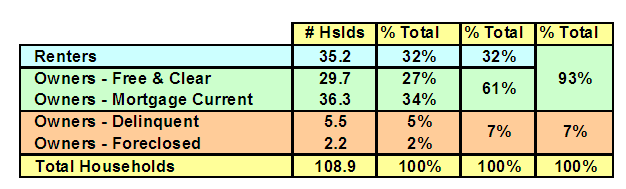
Regarding mortgage modifications, I think this chart says it all. The 93% of folks doing the right thing (and most paying taxes), get upended by the 7% who are irresponsible,

image

* * * * *

Want more from the Homa Files?
Click link =>
  The Homa Files Blog

From the Pinocchio Files … President Obama on NAFTA

February 24, 2009

Excerpted from NY Times, “Nafta Looming Over Obama’s Canada Trip”, February 19, 2009

President Obama used his visit to “underscore the importance of what is already a very robust trading relationship” and to “look for ways to grow on that as it relates to new and entrepreneurial and innovative technologies on energy and green technology.”

That is a far cry from the language of Candidate Obama. He said in a Democratic debate last year that the United States should consider leaving Nafta if the agreement could not be renegotiated.

“Ten years after Nafta passed …  I don’t think Nafta has been good for America — and I never have.”

His campaign was caught in a flap over reports that a top economic adviser to Mr. Obama, Austan Goolsbee, had tried to play down the candidate’s remarks by assuring Canadian officials that they were “more reflective of political maneuvering than policy.” The Obama campaign dismissed the reports as untrue.

* * * * *

Full article:
http://www.nytimes.com/2009/02/19/us/19trade.html?pagewanted=print

Campaign flashback: Ny Times, “Memo Gives Canada’s Account of Obama Campaign’s Meeting on Nafta”, March 4, 2008
http://www.nytimes.com/2008/03/04/us/politics/04nafta.html

* * * * *

Want more from the Homa Files?
Click link =>
  The Homa Files Blog

Retailers racing to the bottom with discount prices …

February 24, 2009

Excerpted from Reuters, “”Full price” to take on new meaning in 2009″, by Martinne Geller, January 16, 2009

* * * * *

Department stores and apparel retailers may have bid farewell to the idea of selling merchandise at full price after taking brutal markdowns during the U.S. 2008 holiday season.

In November and December, consumers were treated to unprecedented discounts on even the most prestigious brands to spur purchases in the recession.

Retail executives now fear they have trained consumers to shop only when there are discounts, prolonging the squeeze on their profit margins. With no major buying holidays between now and the back-to-school season, analysts say consumers could even put off shopping for six months or more.

* * * * *

A likely strategy is for retailers to lower initial prices to lure shoppers. That could decrease the need to later mark down unsold goods dramatically, analysts said.

Industry analysts expect clothes will come on the market in 2009 about 20 percent lower in price than they did last year, and in some cases, as much as 40 to 50 percent lower.

A smart pricing strategy is key to preserving brand cachet this year.  “I don’t think retailers can survive with a 50-percent-off sign,” he said.

* * * * *
Retailers are engaging in a “race to the bottom” in terms of pricing, and the economic downturn pits high-end store chains against a growing cadre of lower-cost rivals.  Though higher-end chain J Crew, for example, is striving to sell its clothes at full price, they are “adjusting prices right now” in certain lines, admitting that opening prices were “too high.”

Edit by DAF

* * * * *

Full Article:
http://www.guardian.co.uk/business/feedarticle/8271675

* * * * *

Want more from the Homa Files?
Click link => 
The Homa Files Blog

* * * * *

Velveeta: Kraft’s Super Bowl Hero

February 24, 2009

Excerpted from WSJ, “Velveeta Gets Ready to Party” By Julie Jargon

* * * * *

When the Super Bowls rolls around, thousands of women across the country are expected to welcome friends to their homes not just to watch the Super Bowl, but to dip into bowls of Velveeta ultimate queso dip.

For snack-food manufacturers, including Velveeta maker Kraft Foods, there’s no bigger day than the day of the big game, when Americans eat 46% more chips than on a typical Sunday …

Using its database, House Party emailed Internet-savvy women ages 25 to 50, Velveeta’s target market, offering them the chance to host a game-day party featuring Velveeta. Both House Party and Kraft also promoted the offer on their Web sites. More than 15,000 women applied, and 2,500 Velveeta lovers were chosen.

The hostesses, who won’t be paid for their services, get “party packs” containing a 32-ounce package of Velveeta, take-home plastic Velveeta storage containers for 16 guests, a recipe for chili con queso dip — along with the requisite cans of diced tomatoes and green chilies — a spinach dip recipe, a dip bowl, a couple of bags of Ritz toasted chips, snack-bag clips, Velveeta coupons, Kool-Aid and cups. House Party said it couldn’t estimate the value of the party packs.

“We don’t attend the parties; doing that would hamper the authentic nature of it … We give the hosts the materials, but very much let them create the kind of party they want to create.”

Of course, Kraft and House Party hope that the menu will showcase Velveeta, and that hosts and their guests, after sampling the product, will serve it regularly at home, as well as talk up its taste … Kraft doesn’t break out sales of Velveeta, but sales have declined in recent years in the “processed cheese loaf” category, and that Velveeta’s marketing efforts are designed to make sure “Velveeta is relevant to people today.”

After using house parties to promote its Philadelphia cream cheese and Grey Poupon mustard last year, Kraft is using the same approach for Velveeta … The Velveeta push is designed to appeal to budget-conscious consumers … “you can buy twice as much Velveeta as cheddar for the same price” … 

When House Party publicized the chance to host a Velveeta party on its Web site, Angilyn Mathews, a stay-at-home mother of five who lives in South Jordan, Utah, says she knew she had to apply … “It’s like an honor to get picked for the party … When we got the party pack with all the fun things inside, it was like Christmas.”

Edit by SAC

* * * * *

Full Article:
http://online.wsj.com/article/SB123318397635126261.html

* * * * *

Want more from the Homa Files?
Click link =>
The Homa Files Blog

The slippery slope of setting prices based on ability to pay.

February 23, 2009

Imagine walking into a car dealer, seeing a shiny new sedan on the floor, asking the salesman “what’s its price?”, and having the salesman ask you how much money you earn.  You answer $80,000 and he says “half a year’s pay — $40,000.”

As you stand pondering, you overhear the salesman talking to another customer about an identical car. That customer says he only earns $50,000 per year.  So, the salesman quotes him $25,000 — half of his annual pay.

Sound absurd ?  It should because its commercially and legally problematic  The practice is called price discrimination based on ability to pay, and any merchant who tried it would probably be stoned by the public while being hauled off to court.

This technicality didn’t faze Team Obama in the development of their mortgage foreclosure plan.  In fact, price discrimination based on ability to pay is the plan’s central operating principle.

Consider the example that Team Obama circulated on the day the President unveiled the plan.  A person (call him Able) is holding a $220,000 mortgage at 6.5% with a 30 year payback term.  Able’s principal and interest payment is about $1,370 per month, or $16,365 per year.

Team Obama’s magic ratio of payment to income is 31%, so if Able earns more than $53,000 then he doesn’t qualify for a government induced loan modification. Let’s assume Able makes just over $53,000 and doesn’t qualify.

Able’s neighbor (call him Skipper) lives in an identical home with an identical $220,000 mortgage at the same terms – 6.5% for 30 years.  But, Skipper only makes $40,000 per year and is falling behind on his payments.

Enter Team Obama’s loan modifiers.  Since Skipper only makes $40,000, Team Obama says that he should only be expected to pay $12,400 — 31% of his income — towards his mortgage.  No problem. The lender – subsidized by the dwindling number of taxpayers – just lowers Skipper’s interest rate to about 4% (3.93% to be precise) and he’s officially modified.  And, if Skipper doesn’t start skipping payments again, he gets a check for $1,000 for each of the next 5 years.  Is this a great country, or what?

Let’s look at Skipper’s loan modification another way.  Assume that the lender holds the interest rate constant at 6.5% — the same rate that Able is paying.  How can the lender get Skipper’s payment down to $12,400 ?  Simple.  Write off about $53,000 of Skipper’s principal balance — getting it down to about $167,000 – which amortized over 30 years at 6.5% crams the annual payments down to the magic 31%.

In other words, Able and Skipper bought the identical houses at the same prices.  Because Skipper didn’t earn enough to make the payments, the lender, in effect, gave him a $53,000 price rebate to make it affordable.  We taxpayers then give him an additional $5,000 rebate if he makes his reduced mortgage payments.  So, Skipper gets the house for $162,000.

Able – since he is able to pay — gets no rebate. He still owns his house at the original price — $220,000.

Whether Skipper’s mortgage is repriced by adjusting the interest rate or by reducing the outstanding principal balance, the economics are the same.  It is price discrimination based on a buyer’s ability to pay – a morally bankrupt tactic that should be illegal if it’s not.

Otherwise, why not sell cars that way?  Or for that matter, why not force all merchants to price all their goods proportionate to customers’ incomes?  Why should I have to pay the same price for a can of Coke as Warren Buffet does?  That’s not fair, is it?

* * * * *

Want more from the Homa Files?
Click link =>
  The Homa Files Blog

Foreclosures will NOT hurt your neighborhood’s property values … (unless you live in CA, FL, AZ, NV, MI)

February 23, 2009

Ken’s Take: This is a very insightful, must read analysis … one of many that Team Obama seems to have missed.

Big idea: Federal subsidies to bailout delinquent homeowners will not often involve helping “neighbors” but rather those who live thousands of miles away, mainly in just five states: California, Florida, Arizona, Nevada, and Michigan. 

In truth, Obama’s “Homeowner Affordability and Stability Plan” compels taxpayers in most states to help those in just a few.  And,there is neither evidence nor logic that suggests a drop in property values in those 5 states impact property values in the other 45 states. 

Foreclosures aren’t a national problem — they’re an isolated regional problem and, of course, a personal problem for overstretched borrowers.

* * * * *

Excerpted from NY Post, “The Foreclosure Five”, Reynolds, Feb 21, 2009

When President Obama discusses his $275 billion mortgage bailout, he talks as if it was a national problem, caused by a national decline in home prices. “We must stem the spread of foreclosures and falling home values for all Americans,” he says.

But there is no national market for homes and no national price for homes. Instead, most of the United States will pay for the folly of few.

The beneficiaries of taxpayer charity will be highly concentrated in just five states – California, Nevada, Arizona, Florida and Michigan. That is not because the subsidized homeowners are poor (Californians with $700,000 mortgages are not poor), but because they took on too much debt, often by refinancing in risky ways to “cash out” thousands more than the original loan. Nearly all subprime loans were for refinancing, not buying a home.

* * * * *

Foreclosure Rates

One out of 76 homes in Nevada went into foreclosure in January, for example, compared with one out of 173 in California, with Arizona and Florida close behind.

But,nationwide, foreclosures fell 10% in January, to one out of every 466 homes … in the 25th ranked “median” state,  only one out of 949 homes was in foreclosure – just one-tenth of 1% … in New York, by contrast, only 1 out of 2,271 homes went into foreclosure … in Vermont, foreclosures amounted to just one out of 51,906 homes

* * * * *

Home Prices

As of the third quarter of 2008,  home prices were still higher than a year before in 18 states, and down less than 2% in a dozen others. Double-digit declines in home prices were confined to just four states – surprise, every one of the Foreclosure Five except Michigan.

Even though California home prices fell 20.8% over the year ending in the fall of 2008, however, they were still 50% higher than they were just five years ago.

* * * * *

Underwater Mortgages

Obama is particularly interested in mortgages that are underwater – that is, larger than the value of the home.

But again, this varies enormously by state. The state with the tenth highest percentage of underwater mortgages, Texas, has the same 16.5% underwater as the so-called national average. The other 40 states have a below-average percentage of homes that are worth less than their mortgages, which means the mean average is not at all typical of most states.

Only 4.4% of New York mortgages are underwater, not even a tenth as many as in Nevada.

Full article:
http://www.nypost.com/seven/02212009/postopinion/opedcolumnists/the_foreclosure_five_156287.htm?&page=0 

* * * * *

Want more from the Homa Files?
Click link =>
  The Homa Files Blog

Coca-Cola: Repackaging and Repricing to Increase Value

February 23, 2009

Excerpted from Dow Jones Newswire, “Coke To Push New 99-Cent, 16-Ounce Bottle” by Anjali Cordeiro, January 21, 2009

* * * * *

Coca-Cola Co. (KO) will widen distribution of a new 16- ounce bottle priced at 99 cents in conjunction with the launch of a new marketing campaign called “Open Happiness.”

Coke executives said the new bottle size was launched about three months ago in the Southeast U.S. and is now being rolled out nationwide.

Sales of carbonated soft drinks have weakened in the U.S. as the economy has slowed, pushing beverage makers to test new package sizes and pricing.

The price of 99 cents also highlights the pressure on consumer companies to offer consumers better value for their money.

The company’s new ad campaign for its namesake brand launches this week and will have TV spots on “American Idol” and the upcoming Super Bowl. The campaign will include a focus on packaging and pricing.

Edit by DAF

* * * * *

Full article:
http://money.cnn.com/news/newsfeeds/articles/djf500/200901211404DOWJONESDJONLINE000813_FORTUNE5.htm

* * * * *

Want more from the Homa Files?
Click link => 
The Homa Files Blog

* * * * *

Angry renters say “Don’t bail out Bob …”

February 23, 2009

Excerpted from Angryrenter.com

All we hear these days is whining from reckless home borrowers and their banks.

But did you know that renters are 32 percent of American households? And that homes in foreclosure are less than 2 percent?

So why is Congress rushing to bailout high-flying borrowers and their lenders with our tax dollars?

Unfortunately, renters aren’t as good at politics as the small minority of homeowners (and their bankers) who are in trouble. We don’t have lobbyists in Washington, DC. We don’t get a tax deduction for our rent and we don’t get sweetheart government loans.

Quite simply, we are just Angry Renters. And now it is our time to be heard: no government bailouts!

To sign the Angry Renter’s petition, go to Angryrenter.com

* * * * *

Short video, worth watching:
http://www.youtube.com/watch?v=UOaDrM3rMXs 

* * * * *

Want more from the Homa Files?
Click link =>
  The Homa Files Blog

Revenue Management: Dark Skies Ahead for Airlines

February 23, 2009

Excerpted from WSJ, “After Rough Year, Airlines Bet on More Fees, Lower Fuel Costs” By Susan Carey, January 30, 2009

* * * * *

Four more U.S. airlines reported fourth-quarter losses, capping a tough year, but the industry is hoping that new fees, higher ticket prices and lower fuel bills will bring improved results in 2009.

Airlines have begun boosting revenue by raising their fees for incidental services and charging for perks that were once included in the price of a ticket … US Airways Group hopes to generate as much as $500 million of such ancillary revenue this year.

So far, the industry’s capacity reductions have enabled carriers to raise prices and report fairly healthy gains in unit revenue, or the amount taken in for each seat flown a mile.

But gyrating oil prices and the recession continue to cloud the industry’s outlook. Volatile crude prices gave airlines fits last year as oil’s descent in the second half led to losses on hedging contracts they had entered to guard against rising jet-fuel costs …


The industry faces headwinds, including the challenge of holding down unit costs as capacity is cut and previously profitable international routes turn weaker. The International Air Transport Association … said passenger demand fell 4.6% in December and international cargo traffic dropped more than 22%.  Continental said it is concerned about a deterioration in its premium international business, its business bookings and even some leisure markets.

While Continental, the fourth-largest U.S. airline by traffic, figures its annual fuel bill will drop $2 billion this year, it said it is anybody’s guess whether oil will climb to $150 a barrel or decline to $20 a barrel …

US Airways, the No. 6 U.S. carrier by traffic, reported a net loss of $541 million … with $234 million in losses reflecting adjustments to its fuel hedges. The company expects it will pay $1.7 billion less this year on fuel than in 2008. US Airways plans to reduce its mainline capacity by nearly 6% in the current quarter …

Edit by SAC

* * * * *

Full Article:
http://online.wsj.com/article/SB123315725894024393.html

* * * * *

Want more from the Homa Files?
Click link =>
The Homa Files Blog

Make 'em feel special with tiered loyalty program

February 22, 2009

Excerpted from the Journal of Consumer Research, “Feeling Superior: The Impact of Loyalty Program Structure on Consumers’ Perceptions of Status.” by Xavier Drèze and Joseph C. Nunes, April 2009.

* * * * *
How special does that gold card offered by a hotel or airline make you feel? A new study explores the connection between status and loyalty. Many businesses create loyalty programs to confer a sense of status to their customers. Examples are platinum, gold, and silver charge cards, or red and blue membership levels. The study provides insight for planning programs that enhance consumers’ perception of status.

The authors studied the limits of customer loyalty, testing how far an organization can go in adding status levels to a loyalty program before customers feel they are not so special anymore.

The authors tested a variety of options for expanding loyalty programs. They added tiers and people to customer loyalty programs in varying combinations to determine how people would feel if an organization added people to a top-tier program. They asked respondents how they felt when they added more tiers on top of them (platinum on top of gold), or added more tiers below them.

“We find that increasing the number of elites in the top tier dilutes their perception of status, but adding a subordinate elite tier enhances their perceptions of status.”

“Thus, if the firm creates a larger top tier while adding a second status tier rather than persisting with a single small top tier, it can recognize more customers without decreasing the perceptions of status among its most elite.”

In other words, being in the gold level is more special if there is a silver level below.

“A possible drawback a firm always confronts when providing preferential treatment to an elite few is whether it might disenfranchise the masses. Our study shows this concern to be unfounded. We find that given the choice between alternative firms, respondents favor companies that offer elite programs even when it is clear they would not qualify for the lowest elite tiers.”

“In other words, those at the bottom of the pyramid do not begrudge the success of those at the top.”

Edit by NRVFull article:
http://www.xdreze.org/Publications/superior.html 

* * * * *Want more from the Homa Files?
Click link => The Homa Files Blog

Make ’em feel special with tiered loyalty program

February 22, 2009

Excerpted from the Journal of Consumer Research, “Feeling Superior: The Impact of Loyalty Program Structure on Consumers’ Perceptions of Status.” by Xavier Drèze and Joseph C. Nunes, April 2009.

* * * * *
How special does that gold card offered by a hotel or airline make you feel? A new study explores the connection between status and loyalty. Many businesses create loyalty programs to confer a sense of status to their customers. Examples are platinum, gold, and silver charge cards, or red and blue membership levels. The study provides insight for planning programs that enhance consumers’ perception of status.

The authors studied the limits of customer loyalty, testing how far an organization can go in adding status levels to a loyalty program before customers feel they are not so special anymore.

The authors tested a variety of options for expanding loyalty programs. They added tiers and people to customer loyalty programs in varying combinations to determine how people would feel if an organization added people to a top-tier program. They asked respondents how they felt when they added more tiers on top of them (platinum on top of gold), or added more tiers below them.

“We find that increasing the number of elites in the top tier dilutes their perception of status, but adding a subordinate elite tier enhances their perceptions of status.”

“Thus, if the firm creates a larger top tier while adding a second status tier rather than persisting with a single small top tier, it can recognize more customers without decreasing the perceptions of status among its most elite.”

In other words, being in the gold level is more special if there is a silver level below.

“A possible drawback a firm always confronts when providing preferential treatment to an elite few is whether it might disenfranchise the masses. Our study shows this concern to be unfounded. We find that given the choice between alternative firms, respondents favor companies that offer elite programs even when it is clear they would not qualify for the lowest elite tiers.”

“In other words, those at the bottom of the pyramid do not begrudge the success of those at the top.”

Edit by NRVFull article:
http://www.xdreze.org/Publications/superior.html 

* * * * *Want more from the Homa Files?
Click link => The Homa Files Blog

The Stimulus … Line Item Detail

February 20, 2009

Below is a summary of the top spending items in Obama’s stimulus plan.

And, here’s a PDF with all of the line items:
Stimulus by Line Item High to Low -PDF

If you’d like the Excel file, email me at homak@msb.edu

image

click to enlarge

WSJ Source:
http://online.wsj.com/public/resources/documents/STIMULUS_FINAL_0217.html 

* * * * *

Want more from the Homa Files?
Click link =>
  The Homa Files Blog

CNBC’s Rick “the Plumber” Santelli asks: Raise your hand if you want to pay some deadbeat’s mortgage

February 20, 2009

On air yesterday, Rick Santelli — a CNBC reporter — lashed out at Obama’s stimulus and mortgage plans.

Live on the floor of the CBOE, Santelli asked  folks: ” How many of you people want to pay for your neighbor’s mortgage (because they) don’t pay their bills? Raise their hand. (no hands raised, lots of booing) President Obama, are you listening?”

The video was looping on cable yesterday and rcord-setting on YouTube and other video sites. Link is below if you haven’t seen it.

* * * * *

Ken’s Take:Santelli’s rant was a Joe the Plumber moment. 

Rick the Reporter captured the frustration of the more than 90% of Americans — mostly tax payers — who work hard, live within their means, pay their bills, etc. 

Even Obama admits that sub-prime mortgages are only 12% of all mortgages but more than 50% of all foreclosures.  He wants responsible folks  to kick in to provide sweet deals to irresponsible deadbeats.  

I don’t think that’s going to fly.  My hunch: Santelli has started an avalanche.

This may be Obama’s “New Coke” moment — a misread American tastes …

* * * * *

This will get you fired up (unless you’re behind on your mortgage on have your hand out).
http://www.youtube.com/watch?v=bEZB4taSEoA

* * * * *

Want more from the Homa Files?
Click link =>
  The Homa Files Blog

Using card member databases to protect consumers and boost relationship marketing

February 20, 2009

Excerpted from MSNBC.com, “Dial-a-recall? Stores use cards to warn buyers” by JoNel Aleccia, January 23, 2009

* * * * *
Jon Lowder usually disdains computer-generated telephone calls but when he got two this week from Costco, he didn’t mind.

The giant warehouse retailer was dialing Lowder to warn him that two brands of peanut butter sports bars he bought for his kids had been recalled as part of a growing salmonella food poisoning scare.

“They’d scoured their database and found any members who had purchased Clif Bars from them and then called them to let them know that they should dump those Clif Bars,” said Lowder. “Did I mention I love Costco?”

Certain shoppers are getting personalized warnings from the stores that sold them. They’re customers who hold membership cards at places such as Costco, or “loyalty cards” used to access discounts and services at some grocery stores.

About 1 million of Costco’s 54 million card-carrying members got calls about peanut butter products this week.

And in the Northeast, the Wegmans regional grocery store chain completed more than 17,000 calls about potentially tainted ice cream on Tuesday, and nearly 3,000 calls about suspect peanut butter cup candy on Thursday, all to holders of the store’s “Shoppers Club” cards who bought the affected items.

“It was really amazing that so many customers had no idea about the recall.”

The outreach is part of a small but growing trend that raises questions among consumer privacy advocates but draws praise from shoppers warned away from suspect products.

Chalk up a victory to “relationship marketing,” in which retailers try to woo consumers with personal reasons to seek their stores. In the case of food safety outreach, it’s a win all around.

But that confidence may come at a cost, noted Alessandro Acquisti, assistant professor of information technology and public policy at Carnegie Mellon University. He said he appreciates the constructive use of consumer data to warn about food poisoning, but worries about less benevolent actions.

“In this case, many consumers would be happy their information was used that way,” said Acquisti, “But they may be very unhappy if that same data is used to send them advertising they don’t want or if it is used in other ways they don’t want.”

Costco started making phone calls within the last two years, after a decade of sending letters about recalled items.

The effort isn’t comprehensive. Costco makes calls only for items identified as potentially serious or deadly Class 1 recalls by federal officials. Calls can only be made to consumers who provide accurate phone numbers and, in the case of Wegmans, only those who provide landlines.

Edit by NRV

Full article:

http://www.msnbc.msn.com/id/28802536/ 

* * * * *

Want more from the Homa Files?
Click link => The Homa Files Blog

Sharper Image Lives On … well, sort of

February 20, 2009

Excerpted from the New York Times, “Sharper Image Stores Are Dead, but the Brand Goes On”, by Eric Taub, January 18, 2009

* * * * *

The Sharper Image, which filed for bankruptcy protection last February and closed all its stores, was purchased by private investors for $49 million in May. Since then, the company has reconstituted itself (minus the stores) to become a “global lifestyle brand licensor.”

Rather than operate its own Web site, catalog and shops, the company will license products and sell them through third-party retailers. It has struck deals with HoMedics, a manufacturer of health and grooming products, luggage maker EnE and others to produce new products.

The company is also trying a new approach for these difficult times: affordability.

The problem for the original company was that its stores had plenty of lookers but, because of its high prices, not enough buyers.

“Sharper Image was an aspirational brand. While people wanted the products, not enough could afford them. Now we can be in Best Buy, Bed Bath & Beyond and midtiered department stores,” an executive noted.

The new company, which has fewer than 10 employees, kept five of its original product licensees. It currently has the Sharper Image name on 40 furniture and accessory products sold in OfficeMax stores. Its big push will come at the end of this year, when it releases “hundreds” of new, less-expensive products in partnership with 12 unnamed partners.

Edit by DAF

* * * * *

Full article:
http://www.nytimes.com/2009/01/19/technology/companies/19sharper.html?ref=technology&pagewanted=print

* * * * *

Want more from the Homa Files?
Click link => 
The Homa Files Blog

* * * * *

What about the guy that got laid off?

February 19, 2009

No surprise that I’m not a big fan of Obama’s plan to bailout the mortgage deadbeats.

For starters, consider the following (none of which I’ve heard the pundits pounce on):

First, even I am sympathetic to the working stiff who anted in a down payment and has a history of making his payments on time, but has been jolted by the economy with declining home prices and, worst of all, a lost job.  I say, cut that guy mucho slack.  I don’t mind my tax dollars helping him out.

But, Plan Obama says multiply earnings times 31% to calc mortgage payment.  The nuns taught me that anything times nothing is nothing — so this guy — the most deserving, in my opinion —  is out in the street,  That’s not fair, is it?

Second, Obama says 10 million mortgages will be impacted at a cost of $75 billion.  That’s $7,500 per loan — of which $5,000 is the sum of the annual incentives (principal reduction) if the borrower makes his payments, and at least $1,500 are processing costs to the lender.  That leaves a whopping $1,000 that goes to modify loans that average over $200,000.  Doesn’t add up to me.

Third, politically incorrect, but shouldn’t this plan be limited to social security card carrying US citizens.

Fourth, keep in mind that 1/3 of all home owners don’t have a mortgage — they own their homes free and clear of any liens or mortgages … and over 90% of all mortgage holders are making their payments — just as they always have.

* * * * *

Want more from the Homa Files?
Click link =>
  The Homa Files Blog

For the record: here’s what economists were saying pre-stimulus …

February 19, 2009

Since Team Obama has started the chatter that “saving or creating jobs” will be measured against an 11% unemployment rate, I checked to see what economists were saying right before the stimulus was passed.  Consensus was 8.8% — to me that’s the bar to apply to Obama’s program.  Let’s see what happens.

image

image

http://online.wsj.com/public/resources/documents/info-flash08.html?project=EFORECAST07

Article:
http://online.wsj.com/article/SB123445757254678091.html

* * * * *

Want more from the Homa Files?
Click link =>
  The Homa Files Blog

Detroit 3 cut number of brands … oh, no so fast

February 19, 2009

Excerpted from  brandchannel.com, “Detriot’s Big Three: Car Brands a Pile-up ” by Dale Buss, February 9, 2009

* * * * *

The Big 3 are looking to cut costs by eliminating brands, but it’s not quite that simple.  The incremental cost to maintain brands built on common manufacturing platforms may be minimal compared to the cost savings due to higher capacity utilization. Plus there are many other costs incurred by discontinuing brands.

* * * * *

Despite its looming demise, the American auto industry dismissed demands for brand reduction in December 2008. Forced by the federal government into a mea culpa that was supposed to include plans for drastic cost-cutting and other reformative measures, GM was expected to agree to eliminate a handful of its brands.

But GM went no further than admitting it should streamline Pontiac, keep Hummer for sale and maybe ditch Saab. Saturn, GM said, faced an indeterminate future—but only in terms of its ownership, not existentially.

Consider Mercury, too: Everyone has talked down Ford’s secondary brand for decades as unnecessary. But given many chances to dump Mercury, Ford has kept it around.

And as Chrysler is widely considered to be in the most danger of imminent dissolution, only two aspects of the company are given a decent chance of surviving: its minivans and its brands. If Chrysler does go out of business, Jeep and its iconic identification with SUVs probably would survive.

Even the much-damaged Chrysler brand is given some respect in discussions about what a Fiat-Chrysler combination might do with Fiat-designed or -built small cars that could be imported to the United States under their new partnership. Almost invariably, industry experts predict such vehicles would be badged “Chrysler” rather than “Fiat”—a brand that has been missing from the American market for 27 years.

Brands in the auto business are everything…and it’s a much more complex decision to either minimize or kill a brand than most people realize.”

For a variety of reasons – including historic loyalties, production strategies, internal politics and dealer investments – car brands possess a ton of inertia and are very difficult to kill even when there’s a clear business-school case to be made against them.

But profound challenges to Detroit’s automotive brands keep arising. They snuffed out Plymouth and Oldsmobile years ago. And today’s marketplace presents a strong apparent rationale for accelerated brand consolidation in the industry, including share shifts, segment disruption, the demands of developing new models more quickly and the huge costs of supporting a brand with marketing.

Add to that the extremely intensified imperative to cut costs that now is being shouldered by each of the Big Three.

“The rationale for decision-making now isn’t whether brands are strong or not—it’s that the business won’t support them,”

On the surface, it sure looks as though GM will have to say goodbye to some brands. In its business plan unveiled to Congress in December, GM said that it would slash US$ 600 million in marketing spending by 2012. It will reduce its vehicle nameplates to just 40 in 2012, down from 48 this year and 63 in 2004.

And GM told Congress that it will avidly support only half of its eight brands: Chevrolet, Cadillac, Buick and GMC. Those four account for 83 percent of GM’s US vehicle sales and much more than 83 percent of its profits.

Yet in the fine print, congressmen found that GM wasn’t actually as dedicated to brand elimination as first thought. GM CEO Rick Wagoner said that Pontiac will continue as a specialty niche brand within the Buick-GMC division—essentially, what it is now. Saab may go on the sale block along with Hummer, but since most of the brand’s vehicles are sold in Europe, GM’s evaluation of Saab is being done there.

And Saturn, GM executives told Congress, will be the subject of exploration of “alternatives” to a simple termination or sale of the brand, in large part because the company has unique franchise arrangements with Saturn dealers.

Pontiac’s manufacturing and product development already are highly integrated with those of Buick and GMC, so the marginal cost of maintaining Pontiac as a separate brand mainly lies in marketing. And the ongoing integration of Saturn’s lineup with that of Opel, the company’s leading brand in Europe, will help GM continue to build a case for preserving Saturn.

GM also is still smarting from the lessons of Oldsmobile, which it deep-sixed in 2004. First: Beware dealers. GM ended up spending an estimated US$ 2 billion in write-offs and settlements with Olds retailers.

Second, in nixing Oldsmobile, GM voluntarily sacrificed volume in the tens of thousands of units, partly in the expectation that its other brands would recover much of that. The problem was that “they gave up all that volume and it never went anywhere else inside the GM organization,”

The main reason that Mercury has survived has boiled down to the few extra points of market share that it gives Ford and how it helps the company’s overall manufacturing utilization.

At the same time, having to churn out Mercury-badged products as well as Fords “gives higher capacity utilization to Ford’s plants, maybe 95 percent with Mercury—which would be only 80 percent without it,” said David Cole, chairman of the Center for Automotive Research.

Edit by NRV

Full article: http://www.brandchannel.com/start1.asp?fa_id=463

* * * * *

Want more from the Homa Files?
Click link => The Homa Files Blog

Marion Barry agrees with Harry Reid: "Taxes are voluntary"

February 19, 2009

Last week, we posted the link to an interview in which Sen. Harry Reid said repeatedly that paying income taxes in the U.S. is strictly voluntary.  Apparently, former DC mayor Marion Barry is on the same page as Reid.

If you missed the Reid interview, here’s the link again.

http://www.youtube.com/watch?v=R7mRSI8yWwg

Trust me, this is worth watching.

* * * * *

Excerpted from AP, “Prosecutors ask judge to send Barry to jail”, Feb 10, 2009

Former Washington mayor Marion Barry was given three years of probation in 2006 after pleading guilty to misdemeanor charges for failing to file his tax returns from 1999 to 2004. As part of a plea bargain, he agreed to file future federal and local tax returns annually.

Now, prosecutors have asked a federal judge Monday to send  to jail for failing to file his tax returns for the eighth time in nine years.

If the judge decides not to send Barry to jail, prosecutors asked for a hearing so that Barry can explain his conduct and prosecutors can seek to extend his probation by two years.

* * * * *

Barry served four terms as mayor. In 1990, during his third term, he was videotaped in a hotel room smoking crack cocaine in an FBI sting. He served a six-month prison sentence and in 1994 was re-elected to the mayor’s office for another four-year term.

Full article:
http://wtop.com/?nid=596&sid=1597042 

* * * * *

Want more from the Homa Files?
Click link =>
  The Homa Files Blog

Marion Barry agrees with Harry Reid: “Taxes are voluntary”

February 19, 2009

Last week, we posted the link to an interview in which Sen. Harry Reid said repeatedly that paying income taxes in the U.S. is strictly voluntary.  Apparently, former DC mayor Marion Barry is on the same page as Reid.

If you missed the Reid interview, here’s the link again.

http://www.youtube.com/watch?v=R7mRSI8yWwg

Trust me, this is worth watching.

* * * * *

Excerpted from AP, “Prosecutors ask judge to send Barry to jail”, Feb 10, 2009

Former Washington mayor Marion Barry was given three years of probation in 2006 after pleading guilty to misdemeanor charges for failing to file his tax returns from 1999 to 2004. As part of a plea bargain, he agreed to file future federal and local tax returns annually.

Now, prosecutors have asked a federal judge Monday to send  to jail for failing to file his tax returns for the eighth time in nine years.

If the judge decides not to send Barry to jail, prosecutors asked for a hearing so that Barry can explain his conduct and prosecutors can seek to extend his probation by two years.

* * * * *

Barry served four terms as mayor. In 1990, during his third term, he was videotaped in a hotel room smoking crack cocaine in an FBI sting. He served a six-month prison sentence and in 1994 was re-elected to the mayor’s office for another four-year term.

Full article:
http://wtop.com/?nid=596&sid=1597042 

* * * * *

Want more from the Homa Files?
Click link =>
  The Homa Files Blog

Let’s eat in … what’s in the freezer?

February 19, 2009

Excerpted from WSJ, “Consumers Cut Food Spending Sharply”  By J. Lahart, T. Martin, and J. Adamy, Feb 13, 2009

* * * * *

The bad economy is hitting America right in the stomach. Consumers have cut back sharply on food spending, shunning restaurants, opting for generic products over brand names, trading in lattes for home-brewed coffee and shopping for bargains. That is hurting sales and profits at many food processors, grocery chains and restaurants.

In 2008’s fourth quarter, consumer spending on food fell at an inflation-adjusted 3.7% from the third quarter … That is the steepest decline in the 62 years the government has compiled the figure …

The big drop likely comes from two things, said Joseph Carson, an economist … First, consumers have been trading down to lower-priced items. Second, he thinks many households dug into their pantries for staples rather than going to the store, a trend that can’t continue indefinitely. “You can’t contract at this rate for long … It’s just shocking.”

Cindy Greco, a Chicago resident, said she’s shopping more at Costco and buying less expensive meat, such as chicken, shrimp and ground turkey …“I’m someone who used to never ever pay attention to the prices of groceries … But now it’s a different story.” She showed off a bottom round roast she had unearthed that was marked down to $7.21 from $18.26.

“In recent years, a lot of discretionary income has gone into buying fancier food, whether it’s Starbucks coffee or prepared dinner or restaurant meals” … Now, that trend seems to be waning.

Last week, Kraft Foods Inc. lowered its earnings forecast for the year, saying customers are cutting back purchases of snack foods and trading down to private labels. Groupe Danone SA said this week that U.S. consumers sharply trimmed their purchases of yogurt and other dairy products at the end of last year. Even makers of chocolates are worried about how well their products sold for Valentine’s Day …

Citi Investment Research warned of a “modern-day price war” based on Wal-Mart’s plan to freshen up its Great Value private-label foods and the analyst’s expectation that it will trim national-brand prices. That could force grocery stores to cut prices to compete. U.S. sales of private-label food rose 10% in 2008 from 2007, to $82.9 billion … At the same time, branded food products saw sales rise 2.8% to $416.6 billion …

When times get tough, restaurants are one of the first places where people economizeThe shift has a silver lining for some companies. While supermarkets passed along last year’s high ingredient costs to customers, McDonald’s Corp. and other fast-food chains absorbed some of the expense and kept many items priced at $1. Now, some consumers consider a fast-food meal a bargain. On Monday, McDonald’s said same-store sales rose 7.1% in January, including a 5.4% increase in the U.S.

Other consumers are opting for home cooking. In Bellevue, Neb., stock broker Kevin Vaughan and his wife cook chicken to make broth from scratch instead of buying it in cans, and use all of the resulting meat for multiple dishes … another bonus from reduced food purchases, he added: less trash to take out.

[food spending]

Edit by SAC

* * * * *

Full Article:
http://online.wsj.com/article/SB123448606475780133.html

* * * * *

Want more from the Homa Files?
Click link =>
The Homa Files Blog

Free Downloads to Save the Music Industry … say, again

February 19, 2009

Excerpted from the New York Times, “Music Industry Imitates Digital Pirates to Turn a Profit”, by Eric Pfanner, January 18, 2009

* * * * * 
After years of futile efforts to stop digital pirates from copying its music, the music business has started to copy the pirates.

Online and mobile services offering listeners unlimited “free” access to millions of songs are set to proliferate in the coming months, according to music industry executives.

Unlike illegal file-sharing services, which the music industry says are responsible for billions of dollars in lost sales, these new offerings are perfectly legal. The services are not really free, but payment is included in the cost of, say, a new cellphone or a broadband Internet access contract, so the cost to the consumer is disguised. And, unlike pirate sites, these services provide revenue to the music companies.

Perhaps the most prominent service offering unlimited downloads has been Comes With Music, which was introduced in Britain last fall by Nokia, the world’s largest maker of cellphones. It lets users download as many songs as they want, from a catalog of more than five million tracks, when they buy certain Nokia phones.

Other services offering unlimited downloads are being introduced by Internet service providers, which many people in the music industry say hold the key to curbing piracy because of their direct relationship with Web users.

“At the end of the day, we are not going to stop piracy, so let’s embrace it,” said one industry insider.

Music companies have balked at such arrangements in the past. But they are showing a newfound flexibility in licensing their material as their existence becomes increasingly threatened.

Cellphone manufacturers, meanwhile, are eager to add music services as the battle of the smartphones heats up among companies like Nokia, Apple and BlackBerry.

Edit by DAF

* * * * *

Full article:
http://www.nytimes.com/2009/01/19/business/worldbusiness/19digital.html?ref=technology&pagewanted=print

* * * * *

Want more from the Homa Files?
Click link => 
The Homa Files Blog

* * * * *

According to Time: The 25 People to Blame for the Financial Crisis

February 18, 2009

Ken’s Take: It’s tough to cram all of the culprits into one short list.  Still, how does Barney Frank miss the cut? Remember when Alan Greenspan was a near-deity?

* * * * *

Excerpted from Time, “25 People to Blame for the Financial Crisis”, Feb. 12, 2009

1. Angelo Mozilo – Co-founder and former head of Countrywide
2. Phil Gramm – Chmn- Senate Banking Committee  1995 -2000
3. Alan Greenspan – Former chairman, Federal Reserve
4. Chris Cox – Former chairman, SEC
5. American Consumers
6. Hank Paulson – Former Secretary of the Treasury
7. Joe Cassano – Founding member, AIG’s financial-products unit
8. Ian McCarthy – CEO, Beazer Homes
9. Frank Raines – Former chairman and CEO, Fannie Mae
10. Kathleen Corbet – Former CEO, Standard & Poor’s
11. Dick Fuld – Former CEO, Lehman Brothers
12. Marion and Herb Sandler – Former heads, World Savings Bank
13. Bill Clinton – Former U.S. President
14. George W. Bush – Former U.S. President
15. Stan O’Neal – Former CEO, Merrill Lynch
16. Wen Jiabao – Premier, China
17. David Lereah – Former chief economist, National Association of Realtors
18. John Devaney – Hedge fund manager
19. Bernie Madoff – Ponzi scheme orchestrator
20. Lew Ranieri – Father of mortgage-backed securities
21. Burton Jablin – Programmer at Scripps Networks, which owns HGTV
22. Fred Goodwin – Former chairman and CEO, Royal Bank of Scotland
23. Sandy Weill – Former chairman and CEO, Citigroup
24. David Oddsson – Former Prime Minister, Iceland
25. Jimmy Cayne – Former chairman and CEO, Bear Stearns

Full article:
http://www.time.com/time/specials/packages/article/0,28804,1877351_1877350,00.html

* * * * *

Want more from the Homa Files?
Click link =>
  The Homa Files Blog

If you think mortgage loan modifications are a good idea … read this

February 18, 2009

Ken’s Take: Is this a great country or what ?

* * * * *

Excerpted from WSJ, “Don’t Let Judges Tear Up Mortgage Contracts”, Feb 13, 2009

Imagine the following situation:

A few years ago a borrower took out a $300,000 loan with nothing down to buy a new house.

The house rises in value to $400,000, at which time he refinances or takes out a home-equity loan to buy a big-screen TV and expensive vacations. He still has no equity in the house.

The house subsequently falls in value to $250,000, at which point the borrower stops making payments and defaults on both the mortgage and the home equity loan.

The home equity loan gets written off and the mortgage gets modified: the principle gets written down to $250,000.

The homeowner keeps all the goodies purchased with the original  home-equity loan.

Several years from now, however, the house appreciates in value back to $300,000 or more — at which point the homeowner sells the house for a $50,000 profit.

Bottom line: By defaulting, the stiff gets $100,000 in goodies and walks away with $50,000 in cash.

Full article:
http://online.wsj.com/article/SB123449016984380499.html 

* * * * *

Want more from the Homa Files?
Click link =>
  The Homa Files Blog

Congress and The Big Three: Marriage on the Rocks?

February 18, 2009

Excerpted from Washington Post, “Congress in the Driver’s Seat”, by Kimberly Kindy and Kendra Marr, February 4, 2009

* * * * *

It is the end of an era — one in which automakers ruled Congress, easily deflected pressure to build fuel-efficient cars and packed their trademark shows with super-size SUVs perched on fake mountaintops.

There has been a gradual erosion of the auto industry’s clout in Washington and in state legislatures.

President Obama’s move last week to support strict California vehicle emission standards was another blow to the industry, already reeling from financial pressures and dismal sales.

For decades, Congressional advocates protected the industry from demands for more fuel-efficient vehicles, while sophisticated and expensive lobbying and legal strategies — some taxpayer-funded — also helped the carmakers fight off challenges.

But that kind of rock-solid support in Congress has worn away, as many members say they have been repeatedly misled by the companies’ promises of reform and complaints that new initiatives would spell financial ruin.

* * * * *

In Washington, the auto industry spent $65 million last year to lobby Congress, ranking 16th among all industries, according to the Center for Responsive Politics. Its efforts largely focused on developing a national fuel economy and emissions standard weaker than the one proposed by California.

Industry leaders continue to argue that Congress is trying to force them to build cars Americans don’t want, at least as long as gas prices remain low.

They are asking Congress to pass laws that will spur consumers to buy such vehicles. Industry leaders said drivers in Europe are willing to own smaller cars because gas costs so much more there. Without such incentives, “it puts us in the industry in the position where we are at war with the customer.”

Regardless, some trade groups acknowledge that the landscape has changed, and they are promising to work more cooperatively.

“Has the industry lost its power to say no?” asked the president of the Alliance of Automobile Manufacturers. “The industry is saying, ‘Yes, however. . . . Yes, let’s work it out.’ It’s a different starting point in the discussion. The nature of the industry has changed.”

Edit by DAF

* * * * *

Full article:
http://www.washingtonpost.com/wp-dyn/content/article/2009/02/03/AR2009020303960_pf.html

* * * * *

Want more from the Homa Files?
Click link => 
The Homa Files Blog

* * * * *

Economy does what the automakers can't … reduce number of dealers

February 18, 2009

Ken’s Take: It’s no secret that Detroit automakers have too many dealers in their distribution networks.  It’s  function of legacy overbuilding, and rigid laws (usually state) that restrict de-franchising.  Perhaps the bad economy is solving the problem for them.

* * * * *

Excerpted from Knowledge @ Emory, “Car Dealers Suffer as Sales Stall “, Feb. 12, 2009

Automobile dealers, many of which are family-owned businesses, were hammered by high energy prices and the tight credit market, and are one of the economic downturn’s latest casualties.

Based on falling sales, about 5,000 car dealers across the U.S., or nearly 25 percent of the estimated total, would have to close in 2009 to enable average sales per dealer to match 2007’s results, according to a study released in January by the accounting firm Grant Thornton LLP.

http://knowledge.emory.edu/article.cfm?articleid=1218# 

* * * * *

Want more from the Homa Files?
Click link =>
  The Homa Files Blog

Did MBAs (and their financial models) kill Wall Street?

February 18, 2009

Ken’ Take: An interesting read.

Central premise: MBAs over-engineered markets with statistical models that left no room for error (or common sense).

* * * * *
Excerpted from Bloomberg.com, “Harvard Narcissists With MBAs Killed Wall Street”, Hassett, Feb 17, 2009

For two centuries, Wall Street survived wars, depressions, bank panics and terrorist attacks. Now Wall Street as we know it is dead. Gone.

Wall Street changed radically in recent years in one notable way. Twenty or 30 years ago, it was common for the best and the brightest to be doctors or engineers. By the 2000s, they wanted to be investment bankers.

When Wall Street was run by ordinary people it was able to survive everything. After the best and brightest took over, it died the first time real-estate prices dropped 20 percent.

If you walked into any major Wall Street firm a year ago and randomly selected an employee, chances are that person would either be from an Ivy League school like Harvard University, or have an MBA, or both.

The statistics are striking. Back in the 1970s, it was typical for about 5 percent of Harvard graduates to work in the financial sector… by the 1990s, that number was 15 percent. And the proportion of those with MBAs grew as well.. A 2008 report in Fortune said that Goldman Sachs hired about 300 MBAs in 2007 and that, last year, Merrill Lynch and Citigroup were planning to hire 160 and 235 MBAs, respectively.Is it just a coincidence that so many superstar minds arrived on Wall Street just as it died? Perhaps not.

Wall Street is gone because its firms did a terrible job assessing the risks of the positions they took. The models these firms used to evaluate risks failed. But having a failed model brings a firm down only if the firm collectively buys into the model.To do that, the firm must be run by people who have a great deal of faith in their models, and a great deal of faith in themselves.

That’s where Ivy Leaguers and MBAs come in.What do you get from an MBA? One recent study found that MBAs acquire an enormous amount of self-confidence during their graduate education. They learn to believe that they are the best and the brightest.

The consequences of Wall Street’s reckless brilliance in many ways parallel modern-day engineering disasters. If you travel through Italy, you can’t help but notice the many Roman bridges that still stretch across that nation’s waterways. How is it that the Romans could build bridges that would last thousands of years, while the ones we build today collapse after a few decades?

The answer is simple. Back then, they did not have the fancy computers required to calculate exactly how strong a bridge must be. So an architect made a bridge very, very strong. Today, engineers can calculate exactly how much steel they need to incorporate into a bridge to bear the expected load. The result is, they are free to make them weaker. Another result is less wiggle room for design error. Hence, modern bridge’s predilection for collapsing.

The same is true of the financial sector. Back when Wall Street was run by individuals without fancy degrees, they had a proper skepticism toward fancy models and managed their risks with a great deal more humility and caution.

Only when failed models became canon did catastrophe strike.Wall Street didn’t die in spite of being run by our best and brightest. It died because of that fact.
* * * * * *

Full article:
http://www.bloomberg.com/apps/news?pid=20601039&refer=columnist_hassett&sid=a_ac69DqFutQ

* * * * *

Want more from the Homa Files?
Click link =>
  The Homa Files Blog

Uh-oh … is Obama’s star starting to fade ?

February 17, 2009

Ken’s Take: The press constantly points to Obama’s 60% approval rating.  That’s good, but drilling down: since inauguration day, total approval is down 5 points, strong approval is down 7 points, strong disapproval is up 10 points, and the approval index (strongly approve minus strongly disapprove) is  down to 11 from it’s high at 30.  He got a pop from the nationally televised press conference, but it faded quickly.

* * * * *

Excerpted from Rasmusssen Reports, February 14, 2009

Overall, 60% of voters say they at least somewhat approve of the President’s performance so far   … that’s down 5 points from 65% just after the inauguration.

37% strongly approve of the President’s performance so far … that’s down 7 points from 44% just after the inauguration

26% strongly disapprove of the President’s performance so far … that’s up 10 points from 16% just after the inauguration

48% of Republican voters nationwide now voice such a negative opinion, up from 29% in the first polling after inauguration day.

85% of African-American voters strongly approve of the President’s performance so far … 30% of white voters do 

66% of political liberals strongly approve of the President’s performance while 50% of conservatives Strongly Disapprove.

Obama’s Presidential Approval Index (the differ3nce between the strongly approve and strongly disapprove) is now 11, down from 28 just after the inauguration

image

* * * * *

49% of Americans trust their own judgment on economic matters more than they trust the President’s judgment … two-thirds of voters trust their own judgment more than the average member of Congress.

* * * * *

Source article:
http://www.rasmussenreports.com/public_content/politics/obama_administration/obama_approval_index_history

* * * * *

Want more from the Homa Files?
Click link =>
  The Homa Files Blog

The stimulus package broken down …

February 17, 2009

Great analysis by the Washington Post.  Good numbers and clever charting.

Too big to extract, so here’s the link.  Worth browsing.

http://media3.washingtonpost.com/wp-dyn/content/graphic/2009/02/01/GR2009020100154.gif

* * * * *

Want more from the Homa Files?
Click link =>
  The Homa Files Blog

Hey, Mr. Stimulus … What about small business?

February 17, 2009

Ken’s Take: I was surprised recently when — for a special occasion —  I attempted to make reservations at an Annapolis restaurant (Northwoods) that many locals propped as the the best in the city. It had closed after a couple of decades.  An article in the local newspaper listed it as a casualty of the economy.  Also, I got emails on the same day from a local painter — practically begging for work at any price, and from a local carpenter who was networking to land a job in web design (you read that right).  Since then, I’ve noticed the number of small businesses dying.  Bottom line: the stimulus package is giving more to ACORN than it is to small businesses in total.  That’s sad.

* * * * *

Excerpted from Knowledge@Emory, “Will the 2009 Stimulus Act Fizzle?”, February 12, 2009

Have you heard anything about what Congress is providing for small businesses in the current economic stimulus package being debated in Washington?

Small businesses in particular are concerned that the stimulus package misses the boat. Small businesses are defined as companies with fewer than 10 employees, and they account for almost 80 percent of all U.S. companies, according to the National Federation of Independent Business (NFIB) lobbying group. Small businesses are credited with generating about 70 percent of all new jobs.

“Funding, not consumer spending, is the core issue for small businesses,” he says. “Right now lenders are hesitant to extend money to commercial borrowers even when they have a good track record, and in some cases are actually calling in loans that they have already funded.”

“The freeze in funding is hurting small businesses much more than the shortfall in sales is hurting them  … Without the necessary cash to grease the gears and keep the business going, companies have had no choice but to reduce costs. And that, unfortunately, results in a cutback on capital expenditures and a need to lay off workers. So cash, in the form of loans, is the mechanism that is most important, but the stimulus bill can do little to help in that regard.”

“Typically, the propensity for risk taking goes down in a weak economy … The typical rounds of early stage financing from friends and family and angel investors depends on excess capital. Reduced wealth means that these usual sources of early venture financing are unavailable to entrepreneurs … in the current environment, many banks are not willing or able to provide loans or lines of credit, leaving very few options for entrepreneurs.”

Increased SBA funding in the stimulus package could provide some rapid assistance to small businesses

* * * * * *

Full article:
http://knowledge.emory.edu/article.cfm?articleid=1218

* * * * *

Want more from the Homa Files?
Click link =>
  The Homa Files Blog

Jefferson (Thomas of Virginia, not William of Louisiana) is rolling over in his grave …

February 17, 2009

These Jeffersonian quotes have been making the email rounds.  Even if TJ didn’t really say this stuff, it’s worth reading.

Too bad TJ wasn’t here for the stimulus debate.  Oops, I forgot.  There wasn’t time for one.

* * * * *

“I predict future happiness for Americans if they can prevent the government from wasting the labors of the people under the pretense of taking care of them.”

“To compel a man to subsidize with his taxes the propagation of ideas which he disbelieves and abhors is sinful and tyrannical.”

“The democracy will cease to exist when you take away from those who are willing to work and give to those who would not”

“It is incumbent on every generation to pay its own debts as it goes.”

“My reading of history convinces me that most bad government results from too much government.”

* * * * *

Thanks to SGC for the heads-up

* * * * *

Want more from the Homa Files?
Click link =>
  The Homa Files Blog

As economy falters, upscale wines cut prices (a little)

February 17, 2009

Excerpted from San Francisco Chronicle, “Suddenly, Those Rare Wines Aren’t So Rare”, by Jon Bonne, January 30, 2009

* * * * *

Industry experts estimate most of us are shrinking what we’ll spend on a bottle of wine by 20 to 50 percent for anything more than $10, with the occasional splurge. The thirst for $25 has dwindled to $15; $8 is the new $12.

That perilous midrange above $30 and below, say, $100? That’s where the real fear lies if you make wine.

Wine auctions struggled through the latter half of 2008, slashing their projected hammer figures, and lot prices have dropped between 10 and 30 percent since last summer, in part a correction of a runaway bull (wine) market in the past three years.

San Francisco’s Vinfolio, which specializes in locating high-end wines, has a different worry. Its average bottle price remains around $170, but with fewer sales.

In other words, it’s a buyer’s market. If you have the money, now is the best time in perhaps a decade to start a collection or taste the unattainable.

* * * * *

Wines once nowhere to be found on store shelves have for months been making quiet appearances there, often because restaurants’ allocations have been left adrift. Retailers are suddenly scoring bottles of a litany of impressive California names.

All of this should give pause to wineries still playing in that realm over $30. (Beyond $100, you’re either betting on a track record or blindly ambitious.) Brand loyalty? In a recession it has the life span of a housefly. Uniqueness sells wine, but there are oceans of not-so-unique wine around. Plus foreign currencies have weakened just enough to let us all drink astoundingly well from overseas. 

Part of survival is pricing to the market.  It’s going to get interesting when the inevitable price correction for all those overblown $50 Syrahs and $80 Cabernets bump up against California’s fixed labor and grape costs.

There is opportunity here. For a while, more California winemakers have needed to fill the gap between cheap table wines (we have plenty of those) and fancy bottles (plenty of those too) with honest under-$20 wine that looks and tastes sophisticated while speaking honestly of its origins.

Edit by DAF

* * * * *

Full article:
http://www.sfgate.com/cgi-bin/article.cgi?f=/c/a/2009/01/30/FD5L15EMGG.DTL&type=printable

* * * * *

Want more from the Homa Files?
Click link => 
The Homa Files Blog

* * * * *

Getting to $787 Billion … here are the details

February 16, 2009

The Wall Street Journal has summarized what’s in the stimulus bill.  Even their summary is too long to post, so here’s the link.

http://online.wsj.com/article/SB123458384689487271.html

Worth browsing ….

* * * * *

Want more from the Homa Files?
Click link =>
  The Homa Files Blog

Obama’s team sets the stimulus bar at limbo level …

February 16, 2009

Obama says the trillion dollar pork-laden, faux stimulative program will “save or create up to 4 million jobs”. 

Last week, I pointed out that “up to” provides mucho definitional cover by itself, but that the serious wiggle room comes from “jobs saved” — a comparison against some fabricated “what if” number.

Well, the fabricated “what if” number is already being planted:

Austan Goolsbee, one of Obama’s chief economic advisers, says  he’ll consider the effort successful if the worst scenarios don’t come to pass, “if by the end of 2009 we aren’t looking at GDP numbers that are huge negatives, if unemployment rises to the 8% range rather than the 11% that some are predicting.”

I can’t find any non-Obama paid economist saying 11%.  Most economists are saying that the unemployment rate will peak in the range of 8 to 8.5% if we do nothing.  Apparently, Team Obama is prepared to declare success (i.e. claim millions of jobs saved) is the stimulus plan does about as well as doing nothing. The jobs saved will be calculated against a disaster scenario that they’ll specify, thank you. 

In other words, a victory party is guaranteed …

* * * * *
Reference for Goolsbee quote:
http://money.cnn.com/2009/02/13/news/economy/easton_economicteam.fortune/index.htm?postversion=2009021310

* * * * *

Want more from the Homa Files?
Click link =>
  The Homa Files Blog

When the best and brightest let us down …

February 16, 2009

Excerpted from “Are Lapses Of Best And Brightest Prelude To Our Decline And Fall?”, Hansen, February 12, 2009

Certainly you’ve noticed the ads on radio now blaring out how to renegotiate our mortgages, how to avoid paying the IRS and how to walk away from freely incurred credit-card debt. We hear not to trust in mutual funds or even banks — but instead, like medieval hoarders, to revert to the age-old safety of gold.

An unraveling of the system ?

* * * * *

Most historians agree that earthquakes, droughts or barbarians did not unravel classical Athens or imperial Rome.

More likely the social contract between the elite and the more ordinary citizens finally began breaking apart — and with it the trust necessary for a society’s collective investment and the payment of taxes. Then civilization itself begins to unwind.

Today, you can take your pick: On the one side, we have free-market capitalists (think O’Neill, Raines, Fuld) who took huge amounts of money as their companies eroded the savings of tens of millions; on the other, we have supposedly egalitarian liberals who skipped paying taxes (think Rangel, Geithner, Daschle).

The result is the same. Our best-educated, wealthiest and most connected in matters of finance proved our dumbest — and our political leaders were less than ethical in meeting their moral responsibilities as citizens.

If ordinary Americans were to follow the examples of Wall Street and Washington elites, the nation would neither collect needed revenue nor invest its capital. All of that is a recipe for national decline and fall.

* * * * *

The former “masters of the universe” who ran Wall Street took enormous risks to get multimillion-dollar bonuses, even as they piled up billions in debt for their soon-to-be-bankrupt companies.

Financial wizards like Robert Rubin at Citicorp, Richard Fuld at Lehman. and Franklin Raines at Fannie Mae — all of whom made millions as they left behind imploding corporations — had degrees from America’s top universities.

They had sophisticated understanding of hedge funds, derivatives and subprime mortgages — everything, it seems, but moral responsibility for the investments of millions of their ordinary clients.

The result of such speculation by thousands of Wall Street gamblers was that millions of Americans who played by the rules, and put money each month away in their 401(k) plans and elsewhere, lost much of their retirement savings. Many likely will have to keep working well into their 60s or 70s, and delay passing on their jobs to a new generation awaiting employment.

Yet most disgraced Wall Street elites will retain their mega-bonuses and will not go to jail. Their legacy is having destroyed the financial confidence of a society that depends on putting capital safely away to be directed for investment by responsible overseers.

* * * * *

Meanwhile, we are learning that the brightest and best-educated Americans at the highest levels of government simply refuse to pay their required taxes.

And they apparently did not pay their back taxes until their Obama appointments put them in jeopardy of public disclosures.

That raises disturbing questions: Would we have known about such tax dodging had our best and brightest not wished career advancement in government? And would they have ever paid up if they had not been caught?

Take your pick: On the one side, we have free-market capitalists who took huge amounts of money as their companies eroded the savings of tens of millions; on the other, we have supposedly egalitarian liberals who skipped paying taxes.

The result is the same. Our best-educated, wealthiest and most connected in matters of finance proved our dumbest — and our political leaders were less than ethical in meeting their moral responsibilities as citizens.

* * * * *

If ordinary Americans were to follow the examples of Wall Street and Washington elites, the nation would neither collect needed revenue nor invest its capital. All of that is a recipe for national decline and fall.

Full article:
http://www.ibdeditorials.com/IBDArticles.aspx?id=319333609341307 

* * * * *

Want more from the Homa Files?
Click link =>
  The Homa Files Blog

Sprint offers unlimited calls, no contracts … for half the price

February 16, 2009

Excerpted from the Wall Street Journal, “Sprint Prepay Plan Pressures Cell Rivals”, by Roger Cheng, January 16, 2009

* * * * *

Sprint Nextel’s Boost Mobile plans to offer an unlimited nationwide calling plan for $50 a month, a bid by the youth-oriented wireless service to severely undercut rivals.

With the cheaper plan, which is half the cost of the $99 unlimited plans offered by the major carriers and $10 cheaper than similar unlimited plans offered by local competitors, Boost is hoping to go after budget-conscious consumers.  It represents an aggressive move by Sprint to attract customers even as its own core wireless service continues to lose subscribers.

In addition to unlimited calling, customers will get unlimited text messages, mobile Web surfing, and a walkie-talkie feature. Customers aren’t locked into a contract, and can leave at any time.

* * * * *

Industry watchers speculate whether the move could spark a price war in the cut-throat wireless industry.

The major carriers offer unlimited calling for $99, but those plans typically require a one or two year contract.

* * * * *

People looking to join Boost Mobile will have to switch to the Nextel network which means buying a new phone not compatible with other. Phones run between $20 and $100, and there are a limited number of choices, all from Motorola. Because there are no contracts, there are no subsidies for the handsets.

Edit by DAF

* * * * *

Note: It is not mentioned in this article, but Sprint’s Boost network is an older network, significantly slower than Sprint’s current network, and does not allow for any of the new 3G features like GPS navigation.  For a customer concerned only with making/receiving calls and even texting, though, though, this could be an interesting proposition.

* * * * *

Full article:
http://online.wsj.com/article/SB123199251112984943.html

* * * * *

Want more from the Homa Files?
Click link => 
The Homa Files Blog

* * * * *

Coffee Competition Brews as Consumers Trade Down

February 16, 2009

Excerpted from Ad Age, “Consumers Skip Starbucks for Plain Ol’ Joe” By Emily Bryson York

* * * * *

Americans appear to be cutting back on their Starbucks … survey results reveal that 60% of Americans have scaled back on fancy or expensive coffee in the past six months; 56% report cutting back just since the beginning of the year.

The culprit was overwhelmingly the economy, with 90% of survey respondents saying they are doing so to save money …

Those who have scaled back the most since the beginning of the year … are consumers 45 to 54, with fully half (50.4%) saying they have “cut back a lot” on fancy or expensive takeout coffee … As might be expected, those who had trimmed the expense the most were in the lower of the survey’s income brackets … But salary didn’t appear to be that big a factor among the 92% who said they are cutting back on back on expensive coffee to save money: The percentage was close to even across all income levels, including $75,000-plus.

And these are clearly Starbucks drinkers: Some 43% said they “buy their coffee the most” from Starbucks, followed by “other” at 20%, Dunkin’ Donuts at 19.7%, McDonald’s at 16% and Burger King at 1.3%.

The biggest shift seems to be in mind-set, as latte lovers trade down rather than out of their fancy-coffee fixes by drinking less, going to less-expensive places or brewing at home … This trading down seems to be affecting the coffee giants unevenly. While Starbucks has reported same-store sales down in the mid-single digits, Dunkin’ Donuts has opened more stores …

Harry Balzer, chief industry analyst at NPD Group, said sales of specialty coffee — lattes, cappuccinos and the like — were up 4% in 2008 but down 1% in the fourth quarter, when the economy really started to tank. That represents specialty coffee’s first quarterly decline since 2004 … In the meantime, prospects for low-rung coffee might be picking up. Sensing opportunity, Quick Chek … recently launched an outdoor and radio campaign telling consumers to “Cut spending. Keep drinking.”

While Quick Chek’s coffee sales were up in 2008 because of price increases, the chain’s sales were down by volume … the company is bracing for the arrival of a major competitor: McDonald’s, which is in the process of installing coffee bars in about 14,000 U.S. restaurants, a move virtually guaranteed to reshape the market once more. It will begin national advertising for the McCafe line early this summer.

She predicted that Dunkin,’ Starbucks and Quick Chek all will lose business when that happens. “Their price isn’t significantly lower, but they position themselves as a value offering … People, whether they’re feeling the pinch or not, are thinking differently about their money.”

Edit by SAC

* * * * *

While the actual price of a cup of Joe at Dunkin’, Starbucks or even Quick Chek may not differ significantly consumer perceptions of value do vary, which has the effect of skewing the price/quantity value equation.  So while consumers “trade down” to non-specialty brews they are in effect trading up to brands that they perceive to provide more value.

* * * * *

Full Article:
http://adage.com/article?article_id=133871

* * * * *

Want more from the Homa Files?
Click link =>
The Homa Files Blog