For Brian Darovic, filling up his car is as simple as plugging in a toaster — and almost as inexpensive.
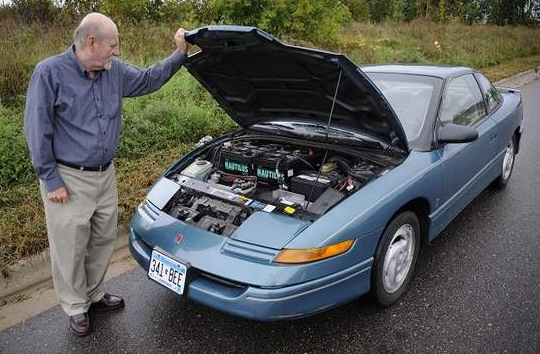
Darovic of Sartell recently converted his car from a standard, gas-powered vehicle to an electric, battery-powered vehicle.
“Sure, you could buy a GM Volt next year for $40,000,” Darovic said. “But are you going to be spending $40,000 on a car next year? I’m not.”
Though electric car conversion kits are available for between $10,000 and $15,000, Darovic was determined to build it from scratch.
He found a 1994 Saturn and spent more than a year on the project. He sketched designs and then removed the vehicle’s engine, fuel tank, exhaust system and radiator. They were replaced with an electric motor, 12 batteries and a device that controls the motor speed.
The project cost between $9,000 and $10,000, not including labor.
The car covers about 25 miles per charge with a top speed of 60 mph. But Darovic expects to reach 40 miles per charge after he finishes fine-tuning the vehicle.
Darovic estimates his Voltessa will cost about $1 per charge or a little more than 2 cents per mile.
Electric cars are also low maintenance. Tires, brakes, shock absorbers, lights, horn, radio, seats, glass and body work remain the same as those of a gasoline-fueled engine.
But there is no more need for oil changes, antifreeze, belts, exhaust systems or tune-ups. Electric motors are essentially zero maintenance and last the life of the vehicle.
While Darovic had experience working with cars, he said the conversion process is simple enough for those with less experience. “Just about anybody could do it. It’s not rocket science.”
As demand increases and costs decrease, electric cars are likely to become more affordable. For those that don’t want to wait, converting an existing vehicle to electric power offers a cost-effective solution for today.
http://www.sctimes.com/article/20090926/NEWS01/109260013&referrer=FRONTPAGECAROUSEL



 The Homa Files