Archive for May, 2010

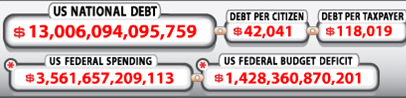
Milestone: US National Debt ticks past $13 Trillion on the debt clock …

May 28, 2010

According to the US Nation Debt Clock, a milestone was achieved this week:

The US National Debt is now officially more than $13 Trillion.

* * * * *

To put the Debt number in perspective:

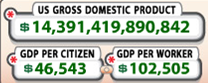
(1) It’s already equal to over 90% of annual GDP

(2) It’s heading higher by almost $1.5 Trillion annually at current tax and spending rates

(3) If you’re in the half of the population that pays income taxes, your share of the US Debt is almost $120,000

image 

image 

image

http://www.usdebtclock.org/

Hawaii Five-0 … still more to the story.

May 28, 2010

I’ve got to walk back my story that CBS was doing a great job web marketing by sending rapid-fire replies to my original 5-0 post … with promo language like “the show will rock”.

Turns out that CBS had nothing to do with the replies.

Yesterday, I received this:

Oh, my!  I have to laugh at your comment that the Hawaii Five O posts came from the CBS web marketing team. 

FYI, each of those posters is a big Alex O’Loughlin fan who simply sought to answer the questions you posed. 

We are very in tune with Alex’s career and post in many, many different sites not just yours.

As a marketing guy, I guess I automatically gave too much credit, too soon to, well, other marketing guys.

Live and learn …

Pricing Baseball Tickets Like Airline Seats .. uh-oh.

May 28, 2010

For years, I’ve agreed that sports teams were pricing themselves out-of-reach for the average family. 

“Face value” on tickets staggers me.  Dealing with scalpers males me nervous.

Now, those worlds are starting to coincide: teams getting higher prices by acting like scalpers.

Play ball.

* * * * *

Excerpted from Bloomberg Business Week:Pricing Baseball Tickets Like Airline Seats, May 20, 2010

Software helps the S.F. Giants price baseball games in much the same way airlines manage seat prices to keep planes full.

The software crunches numbers on dozens of variables (e.g. the weather, the pitchers, the teams’ records, the rivalry, day of week, time if day, StubHub market price) to determine prices that will get fans into the stands and generate the highest revenue. 

Ticket prices used to be fixed before spring training; now, they’re adjusted almost daily.

The Giants say that revenues are up 12% this season and attendance has jumped 7%, even as the league has seen a slight decline.

Expect the entire league to adopt market-based pricing … and watch it spread to other sports and entertainment. 

“There’s big money out there in lost revenue from mispricing.”

Full article:
http://www.businessweek.com/magazine/content/10_22/b4180039348750.htm

The Sestak predicament: somebody’s gotta be lying … uh-oh.

May 27, 2010

Long ago, Congressman Joe Sestak said that he was offered a high ranking position in the Obama administration if he’d step aside rather than challenging Sen. Specter in the Dem primary.

Of course, Obama folks denied the claim.

Issue would have faded … but Sestak screwed things up by staying in the race and winning.

Why is that a problem?

Well, it gives the GOP a ‘”can’t lose” issue.

I see  only 3 options:

(1) Obama folks continue playing rope-a-dope and the issue stays alive … seeming sinister and begging the question what are they hiding ?

(2) Obama folks “prove” that Sestak is fabricating the story … and, who wants to elect a Senator who gets caught lying from the get-go?

(3) Sestak names names and gives details of the offer … which causes legal problems for the administration.  Why ? It’s reported to be a Federal felony to tamper with an election – and to bribe somebody to drop out of an election is, well, tampering. 

I expect option(1) to prevail. so if the GOP wins a majority of either the Senate or Congress in Nov., expect investigative hearings on this issue to be high on the agenda. 

Hope so – they’ll be fun to watch and might keep our elected reps distracted from their spending bills.

I’ll have a burger, hold the hot dog …

May 27, 2010

Punch line: The conventional wisdom is that red meats have higher saturated fat and cholesterol levels which increase heart  attack risk. 

The good news:  a new study suggests that a juicy burger isn’t a heart-attack-on-a-plate after all.

The bad news: hot dogs, bacon and sausage are still no-no’s.

Badest of the bad: there was a TV special on the least healthy restaurant foods served in America … my favorites: a place in NJ serves deep fried hot dogs and a place in Tennessee serves deep fried burgers … both had lines running down the street ala Georgetown Cupcakes.

* * * * *

Excerpted from WSJ: A Guilt-Free Hamburger, MAY 18, 2010

A new study from Harvard suggests that the heart risk long associated with red meat comes mostly from processed varieties such as bacon, sausage, hot dogs and cold cuts — and not from steak, hamburgers and other non-processed cuts.

The finding is surprising because both types of red meat are high in saturated fat, a substance believed to be partly responsible for the increased risk of heart disease. But the new study raises the possibility that when it comes to meat, at least, the real bad actor may be salt. Processed meats generally have about four times the amount of salt as unprocessed meats.

The findings suggest that people, especially those already at risk of heart problems or with high blood pressure, should consider reducing consumption of bacon, processed ham, hot dogs and other packaged meats that have a high salt content. Salt increases blood pressure, a major risk factor for cardiovascular disease.

None of this suggests that steak is a new health food. While red meat wasn’t linked to an increased risk of heart disease in the study, it didn’t lower it either.

The American Meat Institute Foundation took issue with the findings, saying they conflict with national dietary guidelines. “The body of evidence clearly demonstrates that processed meat is a healthy part of a balanced diet.”

Full article:
http://online.wsj.com/article_email/SB10001424052748704314904575250570943835414-lMyQjAxMTAwMDEwOTExNDkyWj.html

Congress yells “fire” … then starts dousing with dollars.

May 26, 2010

Earlier this week, the President is unveiled a new line-item veto proposal to “rein in wasteful spending and hold Congress accountable.”

Concurrently Congress was putting the finishing touches on another $200 bullion faux-stimulus bill … that contains some of the hidden costs of ObamaCare and emergency relief to bond traders and racetrack operators.

This mega-spending is exempt from pay-as-you-go because it’s all emergency spending (huh?) and exempt from the line item veto since it hasn’t been enacted (and wouldn’t be applied to this junk any way).

I’m not sure if this stuff should be classified under “hope” or “change” …

* * * * *

Excerpted from WSJ: American Jobbery Act,  May 25, 2010

The House plans to vote this week on $190 billion in new spending, $134 billion of which it won’t even pretend to pay for.

  • Note: “pay as you go” doesn’t apply to anything that is considered an emergency

The biggest item is $65 billion to prevent a 21% cut in Medicare physician reimbursements … complemented with $24 billion to help states pay the exploding tab for Medicaid

  • Note: remember how ObamaCare was going to cut healthcare costs ?  Oops … just kidding.

There’s  $47 billion to extend unemployment insurance to nearly two full years.

  • Note: economic studies consistently find that extending unemployment benefits tends to, well extend unemployment.

The rest is a grab bag of political payoffs, corporate welfare and transfer payments: including subsidies for municipal bond traders, cotton farmers, yarn producers, sheep growers, Hawaiian sugar cane cooperatives, motor sports businesses, renewable energy firms, the steel lobby, and so on.

  • WSJ Note: Any industry that doesn’t get a tax credit or other handout in this bill should fire its lobbyist.

image

Of course, taxes will  increase to partially fund this new spending.

  • There’s a new 24 cent a barrel tax on oil companies because Congress says the industry’s profits are excessive.
  • U.S. multinational companies would pay a higher tax rate on their overseas income.
  • Managers of private equity and venture capital firms will see their tax rate on carried interest rise to as high as 35% from 15% today.

Full article:
http://online.wsj.com/article/SB10001424052748704113504575264532051783298.html?mod=djemEditorialPage_h

“Madam, we’ve already identified what you are, we’re just haggling over the price”

May 26, 2010

As a result of the Arizona dust-up …

Senators Kyl and McCain proposed a ‘shore up the borders’ plan that called for deploying 6,000 National Guard troops to the U.S.- Mexico border.

President Obama was reportedly non-responsive to the request during a meeting with the Senators, then immediately after the meeting, his office issued a press release saying 1,200 NG troops would be deployed to border patrol.

I know Rahm & Axelrod are brilliant politicians, but I don’t get it.

By committing any NG troops, President Obama is conceding that AZ is right and border security is an issue.

If he had deployed 6,000 troops he could have said “OK, I gave you what you wanted on border security … now let’s move on to comprehensive reform.”

Why didn’t he? 

Couldn’t be the money since spending is never an issue …

Reminds me of the old W.C. Fields joke: “Madam, we’ve already identified what you are, we’re just haggling over the price.”

Five-0 follow-up … a lesson in web marketing

May 26, 2010

In the past week, we published 2 posts that inadvertently demonstrated a point ….

One of the posts was: CBS goes retro … and I’m a happy man (for reference the original post and link are below).

Almost immediately, we got a couple of reply posts:

  • You got the first 2 right and the guy on the right is McGarrett played by Alex O’Loughlin and the girl is Kono. Yeah you heard me… CBS is reinventing…
  • The guy on the right, Alex O’Loughlin (pronounced O’Locklin) is Steve McGarrett and the character of Kono is now female and played by Grace Park – check out the new series on CBS this fall, a sure-fire hit!
  • McGarrett  is Alex O’Loughlin, the guy you thought was Kono. Kono is now the girl you see. This cast rocks! Alex is a babe and a great actor,too! He will rock as McGarrett!

Notice any similarity in the replies?

Another data point: none of the replies came from a Homa Files subscriber.

Hmmm ….

Conclusion: hats off to CBS for web marketing … they’ve got agents crawling the net for Five-0 references and posting clever replies – veiled as coming from ‘ordinary’ people — to promote the show.

Maybe CBS read our post from a few days prior that cover Search Engine Optimization – how to get your blog post noticed:

Obama, Rush, sex … what’s the connection ?
https://kenhoma.wordpress.com/2010/05/20/obama-rush-sex-whats-the-connection/

Lesson: May shock you, but some web feedback may be nothing more than company-sourced promotion … caveat reader.

Final Note: Kono – a girl ?  Is nothing sacred ?

* * * * *

Original post

CBS goes retro … and I’m a happy man.
https://kenhoma.wordpress.com/2010/05/25/cbs-goes-retro-and-im-a-happy-man/

My 3 favorite TV shows of all time are 24, Mannix, and Hawaii Five-0.

So, my pulse elevated when I read that next year’s program line-up at CBS includes  a reinvention of Hawaii Five-O,”the tropical police series that was a top-ten CBS program in the early 1970s”.”

Below is a pic of the cast.  Guy on the left must be Danny (originally played by James MacArthur), guy in the middle must be Chin-Ho Kelly (originally played by Kam Fong) and the guy on the right must be Kono (originally played by a dude named Zulu).

image
Left to right: Scott Caan, Daniel Dae Kim, Alex O’Loughlin and Grace Park in the new ‘Hawaii-Five-O’ series.

But, the cast picture begs two questions:

(1) Where’s McGarrett ?

(2) What’s with the girl ?

All I can say is “Book him, Danno !”

* * * * *
WSJ: Playing It Safe: New CBS Lineup Includes Crime Dramas, Remake, May 19, 2010 http://online.wsj.com/article/SB10001424052748704912004575252683905115498.html?mod=djemMM_t

Prying eyes: gov’t hones in on your financial transactions …

May 25, 2010

The was (and is) broadscale opposition to the Patriot Act provisions that let Feds listen in to phone chats.  But, not much whining about the Feds getting their  hands on all of our health and financial records. 

ObamaCare gives the Feds access to individual health records (though they promise they won’t do anything ontoward with them) ,,,  and the new Financial Reform ductates more detailed accounting of financial transactions.

And, oh yeah, there’ll be 15,000 more IRS agents …

* * * * *

Excerpted from cnnMoney.com: Stealth IRS changes mean millions of new tax forms, May 21, 2010

The 1099 is a catch-all series of IRS documents used to report non-wage income from a variety of sources like contract work, dividends, earned interest and pension distributions.

There’s  massive expansion of requirements for businesses to file 1099 tax forms that was hidden in the 2,409-page health reform bill, but it’s just one piece of a years-long legislative stealth campaign to create ways for the federal government to track down unreported income and close the so-called “tax gap”.

The federal government loses an estimated $300 billion each year from the “tax gap” between what individuals and businesses owe and what they actually pay.

A new 1099-K aims to shine a light on a currently hard-to-track payment stream: credit cards.

Starting in 2011, financial firms that process credit or debit card payments will be required to send their clients, and the IRS, an annual form documenting the year’s transactions. It applies to all payment processors, including Paypal, Amazon.com, and others that service very small businesses.

The 1099 changes attached to the health care reform bill massively expand the requirements for filing the “1099-Misc” form, which companies use for recording payments to freelance workers and other individual service providers.

Until now, payments to corporations have been exempt from 1099 rules, as have payments for the purchase of goods.

Starting in 2012, all business payments or purchases that exceed $600 in a calendar year will need to be accompanied by a 1099 filing.

In essence, the 1099-Misc is having its role changed from a form for tracking off-payroll employment to one that must accompany virtually any sizeable business transaction.

Full article:
http://money.cnn.com/2010/05/21/smallbusiness/1099_deluge/index.htm

Senior moments: Senators say “Let’s regulate ATMs” … now, somebody tell them what they are.

May 25, 2010

Congress seems willing to regulate a lot of stuff that they don’t understand.

Hard to imagine somebody flummoxed  (<= one of my favorite words)  by ATMs has got a grasp on Credit Default Swaps … go figure.

* * * * *

Excerpted from Washington Post: Aging Congress flummoxed by ATMs,  May 21, 2010

Sen. Tom Harkin (D-Iowa) has long pushed an amendment to limit those pesky and expensive transaction fees at automated teller machines, but his fellow senators didn’t go along with the idea this week.

One possible explanation: Quite a few of Harkin’s aging colleagues appear to have little or no contact with the decades-old technology of cash machines.

  • Sen. Ben Nelson (D), for example, told the Omaha World-Herald this week that he has never once used an ATM, relying on bank tellers instead.
  • Sen. Mike Johanns (R), has used his ATM card fewer than five times.
  • Sen. Charles E. Grassley (Iowa), the ranking Republican on the Finance Committee has a bank card but doesn’t use it for cash.

The remarks also appear to provide further evidence of cloistered politicians and a generation gap in the halls of an aging Congress.

The average age of members is among the highest of any Congress in the past century

  • The average age of senators is 63.1 years, which is three years higher than it was four years ago;
  • The average for the House was 57.2 years, which is up by two years.
  • The Senate’s longest-serving member, Robert C. Byrd (D-W.Va.), is 92.

* * * * *

Factoids

The first ATMs appeared in the United States in 1969 … there are more than 1.7 million machines worldwide.

Over 90%  percent of consumers use an ATM … about 60 percent of consumers use their bank’s ATM up to five time a month … ,12 percent use it at least 10 times a month.

Most banks barely break even on ATM fees — free customer withdrawals are typically paid for with charges to noncustomers …  but about half the ATMs in the country are operated by independent, for profit ATM operators.

Full article:
http://www.washingtonpost.com/wp-dyn/content/article/2010/05/20/AR2010052003613.html?wpisrc=nl_tech

CBS goes retro … and I’m a happy man.

May 25, 2010

My 3 favorite TV shows of all time are 24, Mannix, and Hawaii Five-0.

So, my pulse elevated when I read that next year’s program line-up at CBS includes  a reinvention of Hawaii Five-O,”the tropical police series that was a top-ten CBS program in the early 1970s”.”

Below is a pic of the cast.  Guy on the left must be Danny (originally played by James MacArthur), guy in the middle must be Chin-Ho Kelly (originally played by Kam Fong) and the guy on the right must be Kono (originally played by a dude named Zulu).

image 
Left to right: Scott Caan, Daniel Dae Kim, Alex O’Loughlin and Grace Park in the new ‘Hawaii-Five-O’ series.

But, the cast picture begs two questions:

(1) Where’s McGarrett ?

(2) What’s with the girl ?

All I can say is “Book him, Danno !”

* * * * *
WSJ: Playing It Safe: New CBS Lineup Includes Crime Dramas, Remake, May 19, 2010 http://online.wsj.com/article/SB10001424052748704912004575252683905115498.html?mod=djemMM_t

For the politics of intimidation … look for the union label.

May 24, 2010

Much has been written about the alliance between unions and gov’t.

It’s simple: gov’t adds more and more unionized gov’t jobs … most with above market pay rates, near certain lifetime employment and oversized end-of-career pensions.

In gratitude, the unions turn out the vote … and rough up opponents … apparently with de facto immunity from the press and police.

Things are getting ugly …

* * * * *

Excerpted from WSJ: Tea Parties vs. Unions in November, May 21, 2010

Elections this month have enhanced the political clout of two groups widely separated on the political spectrum.

The tea party movement stands to play an outsize role in the fall elections now that outsider Rand Paul has swept Kentucky’s GOP Senate primary.

Democrats are fearful of the Tea Party’s grass-roots enthusiasm

The rise of the tea party makes Democrats even more dependent on organized labor. Unions provided the muscle for Democrats to win a key special election in Pennsylvania for the late Jack Murtha’s seat. The AFL-CIO alone sent out 80,000 mailers on behalf of Democrat Mark Critz, along with 100,000 robocalls.

In Arkansas, unions decided to make an example of Blanche Lincoln after she opposed the “card check” bill that limits the use of secret ballots in union elections. Unions, especially the Service Employees International Union, spent more than $3 million against her.

And, some SEIU members have ratcheted up violence against political “enemies”.

Lastweek, 500 screaming, placard-waving SEIU members and allies surrounded the home of a Bank of America exec. Police refused to intervene for fear of inciting the crowd.

Watch the video and ask yourself how you’d like your house – with kids inside – surrounded by these wingnuts

image

Full article:
http://online.wsj.com/article/SB10001424052748703559004575256323526178094.html?mod=djemEditorialPage_h

Maybe Arizona should just adopt Mexico’s immigration laws …

May 24, 2010

Those who have read the Arizona law (i.e. not Holder, Napolitano, et. al.) are pointing out that:

(1) The law simply provides an enforcement mechanism for established U.S. Federal law – no new restrictions are added

(2) Racial profiling is explicitly banned in the AZ law – but not in Federal immigration laws

(3) According to Pres Calderon himself, the AZ law is way softer than Mexican immigration laws (transcript below)

So, why all the fuss ?

* * * * *

New York Post: The Mexico model, May 23, 2010

Mexican President Felipe Calderon repeatedly teed off on the new Arizona law that makes illegal immigration a state crime and requires aliens to show documentation should a cop request it. 

Calderon moaned that many immigrants “still live in the shadows, and at times, like in Arizona, face discrimination.”

He said the law “introduces a terrible idea using racial profiling as a basis for law enforcement.”

Then he went on CNN.

Asked Wolf Blitzer: “If people want to come [into Mexico] from Guatemala or Honduras or El Salvador or Nicaragua, they can just walk in?”

No,” responded Calderon. “They need to fulfill a form. They need to establish their right name. We analyze if they [don’t have] a criminal [record].”

Do Mexican police go around asking for papers of people they suspect are illegal immigrants?” asked Blitzer.

Of course,” said Calderon.

“If somebody sneaks in from Nicaragua or some other country in Central America,” continued Blitzer, “they wind up in Mexico, they can go get a job?

No, no,” Calderon replied. “If somebody [does] that without permission, we send back — we send them back.”

Full article:
http://www.nypost.com/p/news/opinion/editorials/the_mexico_model_2DyxJuFroueHqDGXMzB04K

Taster’s Choice: Nescafe whoops Starbucks’ Via …

May 24, 2010

Punch line: Starbucks decided to go downmarket with Via instant coffee and now finds itself in a street brawl with the potential to knife Starbucks premium image. 

* * * * *

Excerpted from BrandChannel: Nescafe Calls Starbucks’ Instant Coffee Bluff,  November 19, 2009

Under pressure from Dunkin’ Donuts and McDonald’s, and with its brand value in decline, Starbucks introduced Via instant coffee with an in-store taste-test promotion intended to prove that the new instant can’t be told apart from the store brew.

Starbucks competing against store brands ?

Not the usual way to maintain a brand that was built upon premium-quality coffee and the idea that Starbucks stores are America’s “third place” (after home and work).

To counter Via, Nescafé is setting up sampling stations for a taste tests of their own: Nescafe vs. Via. 

The Nescafe mantra: “A lot of hype. OR a lot of flavor.”

According to Nescafe, they’re winning convincingly.

Ouch.

Nescafé stands as a reminder and a warning: you can always take your brand down and compete on the low end.

But don’t expect your new competitors to take it lying down.

* * * * *

Full article:
http://www.brandchannel.com/home/post/Nescafe-Calls-Starbucks-Instant-Coffee-Bluff.aspx

The Sarbox burden …

May 21, 2010

Punch line: Senators  Hutchison (R., Texas) and Landrieu (D., La.) have offered an amendment to exempt companies with less than $150 million of shares held by the public from “internal-controls” audits – the most onerous of Sarbox impositions.

Ken’s Take: I was wondering when somebody would step up and highlight that Sarbox did nothing to stop or slow the 2008 financial meltdown …

* * * * *

Excerpted from WSJ: The No-Cost Stimulus, May 18, 2010

Sarbox, the Beltway’s previous attempt at financial-regulatory reform, was intended to improve the information investors receive about public companies.

The law did nothing to prevent poor disclosure at companies like Lehman Brothers but it did saddle the U.S. economy with billions in unexpected costs.

The SEC estimates that the average public company pays more than $2 million per year complying with the law’s Section 404.

The SEC admits that compliance burdens fall disproportionately on smaller companies.

These audits are piled on top of the traditional financial audit, and on top of a company’s own internal-controls review.

The result is that going public in the U.S., once the dream of entrepreneurs world-wide, has for too many company founders become something to avoid.

Full article:
http://online.wsj.com/article/SB10001424052748703315404575250693201556662.html?mod=djemEditorialPage_h

When is candy not candy ?

May 21, 2010

Punch line: States want to cut deficits by taxing candy. That’s not as easy as it sounds …

* * * * *

Excerpted from WSJ: Candy Taxes Struggle to Define Candy, May 17, 2010

Many states don’t tax food – which  considered is essential.  Taxing food might push the poor toward malnourishment or unhealthy eating.

The food exemption has traditionally extended to candy and soda.

As they struggle with budget deficits, states from New York to Washington are looking to candy and soda taxes to help bridge the gap. .

More than a dozen states have passed or proposed some sort of candy or soda tax in the 2010 legislative session, and most of them are bound to face some sort of confusion.

The hard part: defining candy.

The distinction between candy and food can be hard to pin down.

  • In Washington, a new candy tax will apply to Butterfinger candy bars, yet Kit-Kat wafers remain excise free (this because the law exempts foods with flour in them).
  • in Colorado, Kit-Kats go untaxed, but Twix bars face levies.
  • In Illinois, retailers in Chicago are unsure if Twix Bars — some of which contain flour and peanut butter — are food or candy.

Bottom line: one man’s food is another man’s candy …

Full article:
http://blogs.wsj.com/economics/2010/05/17/candy-taxes-struggle-to-define-candy/

IMF says: “US has more to do than any other country … to bring its debt back towards sustainable levels”

May 20, 2010

The UK Telegraph says: “The  US faces one of biggest budget crunches in world”

The crux of the Telegraph’s argument:

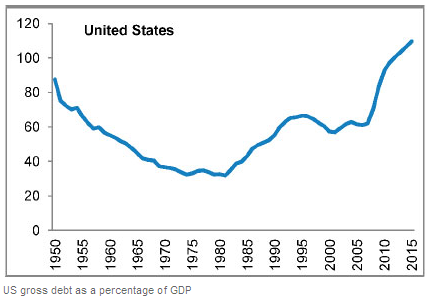
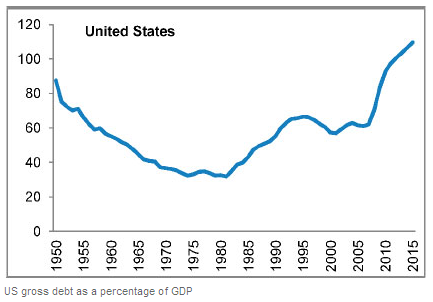
1) Under the Obama administration’s current fiscal plans, the national debt in the US will climb to above 100% of GDP by 2015 – a far steeper increase than almost any other country.

image

image


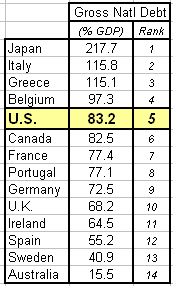
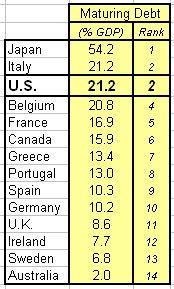
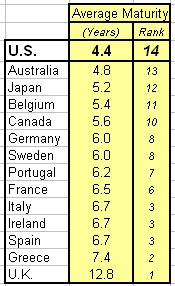
2) The US has a higher debt (relative to GDP) and a far shorter maturity of government debt than most other countries.  Said differently, the US must rollover its increasing debt more frequently – and is, therefore, vulnerable to increasing rates and variations in demand (e.g. what if China stops buying US debt ?).

image image

3) Bottom line (according to the IMF’s projections),  the US has more to do than any other country in the developed world (apart from Japan) when it comes to bringing its debt back towards sustainable levels.

* * * * *

Full article:
http://blogs.telegraph.co.uk/finance/edmundconway/100005702/us-faces-one-of-biggest-budget-crunches-in-western-world-imf/

Full IMF Report:
http://www.imf.org/external/pubs/ft/fm/2010/fm1001.pdf

image

* * * * *

Obama, Rush, sex … what’s the connection ?

May 20, 2010

Punch line: Online, article headlines have to be descriptive and direct when they show up in mobile and RSS feeds … and they have to contain key words that play to search engine algorithms.  It’s called ‘search engine optimization’.

* * * * *

Excerpted from NYT: Taylor Momsen Did Not Write This Headline,  May 16, 2010

People who worry that Web headlines dumb down public discourse are probably right.

Headlines in newspapers and magazines were once written with readers in mind, to be clever or catchy or evocative.

Now headlines are just there to get the search engines to notice. It’s called SEO — search engine optimization.

A story about whether the president would play golf with Rush Limbaugh might be headlined: “Obama Rejects Rush Limbaugh Golf Match and Says ‘He Can Play With Himself.’ ”

It would be a digital mega-hit: two highly searched proper nouns followed by a smutty entendre, a headline that both the red and the blue may be compelled to click, and the readers of the site can have a laugh while the headline delivers great visibility out on the Web.

But the need to attract attention from computer-generated algorithms sometimes makes the headlines seem like a machine thought them up as well …  it leads to a sameness that can make all the information seem as if it were generated by the same traffic-loving robot.

Full article:
http://www.nytimes.com/2010/05/17/business/media/17carr.html?ref=business

Let’s defy history and tax our way to a stable economic footing … NOT !

May 19, 2010

Punch lines:

(1) In a year or two, the US national debt will be larger than the annual output of the US economy (i.e. debt > 100% GDP) … up from 60% in the prior decade.

image

(2) Empirical evidence demonstrates that increases in marginal tax rates won’t collect ‘revenues’ more than 20% of GDP … since the dwindling number of tax payers change their behavior to minimize their tax bite.

Hauser’s Law (below) is a great piece of economic analysis …

* * * * *

Excerpted from WSJ: The Revenue Limits of Tax and Spend, May 17, 2010

Washington has adopted the Greek model of debt, dependency, devaluation and default.

Prospects for restraining runaway U.S. debt are even poorer than they appear.

Based on President Obama’s fiscal 2011 budget, the Congressional Budget Office (CBO) estimates a deficit that starts at 10.3% of GDP in 2010 … then narrows to 5.6% in 2020.

As a result the net national debt (debt held by the public) will more than double to 90% by 2020 from 40% in 2008.  

And, these debt estimates are incomplete and optimistic. They do not include deficit spending resulting from the new health-insurance legislation. And, as usual, they ignore the unfunded liabilities of social insurance programs.

The revenue numbers rely on increased tax rates beginning next year resulting from the scheduled expiration of the Bush tax cuts. The feds assume a relationship between the economy and tax revenue that is divorced from reality.

Six decades of history have established that increases in federal tax rates, particularly if targeted at the higher brackets, produce no additional revenue. For politicians this is truly an inconvenient truth: conventional methods of forecasting tax receipts from increases in future tax rates are prone to over-predict revenue.

The chart below shows how tax revenue has grown over the past eight decades along with the size of the economy.

image

Note the close proportionality between revenue and GDP since World War II, despite big changes in marginal tax rates in both directions.

Known as “Hauser’s Law”  the relationship reveals an upper limit for federal tax receipts at about 19% of GDP.

Why the limit?

The tax base … represents a living economic system that makes its own collective choices.

In a tax code of 70,000 pages there are innumerable ways for high-income earners to seek out and use ambiguities and loopholes. The more they are incentivized to make an effort to game the system, the less the federal government will get to collect.

Changes in marginal tax rates do not make a perceptible difference to the ratio of revenue to GDP.

* * * * *

Full article:
http://online.wsj.com/article/SB10001424052748704608104575217870728420184.html?mod=WSJ_hps_MIDDLEFifthNews


Is it live or is it Memorex ?

May 19, 2010

Punch line: Some dead (and nearly dead) brands — called “zombies” — still have high residual awareness that can be leveraged for relatively low cost comebacks – and extended to adjacent categories …

* * * * *
Excerpted from Business week: Imation Brings Dead Brands Back to Life, April 1, 2010

You might think a brand is dead when stores stop selling it. Imation doesn’t think so.

Imation initially made its name on floppy disks (remember them ? ) — then became the world’s largest seller of recordable compact discs.

The company knows that consumers are skipping past data-storage media like compact discs and putting their data on flash memory, where Imation is only a minor player, or on the Net.

So, Imation has spent the last couple of years acquiring so-called “zombie brands” and leveraging their built-in consumer awareness to reincarnate them.

For example, remember Memorex and TDK?  Most consumers do.

That’s why Imation is reviving them to expand into low- and high-end audio gear Imation is using Memorex and TDK to move into higher-margin products.

Memorex was a ghost of its former self when Imation bought it in 2006 for $330 million. Sales of blank audio cassettes had been declining since Sony’s CD-playing Discman came out in 1991.  Memorex dropped its signature TV ads, with their “Is it live or is it Memorex?” tagline, more than 30 years ago. And yet, research surveys showed that 95% of U.S. consumers knew the name, even among people in their 30s.

Imation came up with new product categories to refresh the Memorex brand.

Today Imation is selling Memorex-branded iPod accessories, digital photo frames, DVD players, MP3 players, karaoke machines, and TVs at retailers such as Wal-Mart Stores  and Target.

The company unveiled a new Memorex collection of Wii accessories. Imation is also bringing back another relic from the predigital age, TDK, as a high-end line of stereo gear.

The company plans to sell speakers, turntables, and other audio gear costing as much as $500 under the label TDK brand.

Imation says: “The combination of having good solid technology along with a portfolio of brands and a goal of differentiation is going to set us apart.”

Full article:
http://www.businessweek.com/magazine/content/10_15/b4173064270743.htm?chan=innovation_branding_top+stories

‘Ridiculous finger-pointing’ or ‘systemic failure’ … it’s in the eye of the beholder, I guess.

May 18, 2010

Last week, President Obama lambasted BP, TransOcean and Halliburton for “ridiculous finger-pointing” that he “didn’t appreciate”.

Ridiculous finger-pointing ? 

Hmmm.

So, the President points his finger at, well, finger-pointers.  That in itself is funny, isn’t it ?

From a guy who then went to a fundraising event where he proceeded to point his finger (again) at Pres. Bush for everything except the Bubonic Plague.

From a guy whose department heads in State, Homeland Security, NSA, CIA, FBI all pointed their fingers at the others – to duck blame for the Xmas underwear bomber.

In that case, the finger pointing was legitimized as characterizing a “systemic failure”. 

Translation: it was nobody’s responsibility – certainly not the President’s.

Why didn’t BP, TransOcean and Halliburton just claim the oil well blast & leak was simply a systemic failure ?  Then, maybe, the President wouldn’t have pointed his finger at them for finger pointing !

Subscribers tell cellphone companies: Take your 2-year contracts and shove ‘em

May 18, 2010

Bottom line: Folks aren’t giving up their cell phones in a tough economy, but they are looking harder at hidden fees and charges for unused minutes.  More are opting for “by the drink” plans – so that they only pay for what they use.

* * * * *

Excerpted from AP:  Wireless users opt for service without commitment, May 14, 2010

Together, the seven largest U.S. wireless carriers added just 230,000 contract subscribers in the first quarter. That’s negligible compared to their entire customer base of 280 million.

Prepaid service, meanwhile, attracted about 3.1 million new subscribers to the seven largest carriers in the quarter.

This marks a sharp reversal of trends. In the same quarter just two years ago, the comparable carriers added 3 million subscribers under contract, and 2.3 million to prepaid plans.

The carriers that rank third and fourth in the U.S. by subscriber numbers, Sprint Nextel and T-Mobile USA, are losing contract customers. No. 1 Verizon Wireless and No. 2 AT&T are still adding contract customers, but at the lowest numbers in more than five years.

* * * * *

Wireless subscribers have been making a big shift away from two-year contracts toward “prepaid” cell phone service, which often costs less and does not require contracts … even though contracts are needed to get popular phones such as the iPhone and the Droid.

One out of every five Americans with a cellphone had a prepaid plan at the end of 2009. In some markets, up to 30% of subscribers are on prepaid plans.

Unlike contract plans that bill subscribers each month for the services they used the previous month, prepaid services traditionally let subscribers buy minutes in advance for around 10 cents to 20 cents each. When the minutes are used up, people “refill” their accounts as needed.

For years, such plans were marketed primarily to people who did not have the credit to qualify for plans with contracts. But as the recession forced more people to cut costs, prepaid service appealed to a broader slice of the market, and prepaid services responded by offering better deals.

Now it’s possible to make unlimited calls and text messages on a prepaid plan for $45 a month – half of what it costs a customer with a contract on Verizon Wireless.

  • The prepaid market heated up in January 2009, when Sprint began offering a prepaid plan with unlimited minutes for $50 a month under its Boost Mobile brand.
  • Tracfone, a unit of Mexico’s America Movil SA, countered with Straight Talk, which provides unlimited calling for $45 per month on Verizon Wireless’ network, sold exclusively by Wal-Mart Stores Inc.
  • MetroPCS and Leap, which sells service under the Cricket brand, have responded by eliminating add-on fees for taxes and roaming, effectively cutting prices. The price war looks like it will continue.
  • Sprint and Wal-Mart Stores Inc. announced a trial of another prepaid plan: Common Cents, which is designed for people who don’t use their phones much. Calls will cost 7 cents per minute.

The popularity of text messaging is also making some people move away from contract plans that provide a big bucket of monthly minutes that may not get used.

* * * * *

Full article:
http://www.washingtonpost.com/wp-dyn/content/article/2010/05/14/AR2010051401345_pf.html

AG Holder: “It’s unconstitutional … No, I haven’t had a chance to read it”

May 17, 2010

Talk about shooting first and aiming later.

AG Eric Holder has made cameos on new shows warning that the Arizona law enforcing U.S. immigration laws could lead to racial profiling, might prompt Latinos to stop cooperating with police, and might be unconstitutional — all “on the basis of things that (he has) been able to glean by reading newspaper accounts, obviously, television”.

When asked by Rep. Poe of Texas if he had read the 10 page bill, Holder admitted “I have not had a chance to — I’ve glanced at it – I have not read it”.

Note: the entire bill is only 10 pages long.

Below is the video and a transcript.

http://www.youtube.com/watch?v=6rH1FEcbi4A

* * * * *

REP. TED POE:  So Arizona, since the federal government fails to secure the border, desperately passed laws to protect its own people. The law is supported by 70 percent of the people in Arizona, 60 percent of all Americans and 50 percent of all Hispanics, according to The Wall Street Journal/NBC poll done just this week. And I understand that you may file a lawsuit against the law. It seems to me the administration ought to be enforcing border security and immigration laws and not challenge them and that the administration is on the wrong side of the American people. Have you read the Arizona law?

ATTORNEY GENERAL ERIC HOLDER: I have not had a chance to — I’ve glanced at it. I have not read it.

POE: It’s 10 pages. It’s a lot shorter than the health care bill, which was 2,000 pages long. I’ll give you my copy of it, if you would like to — to have a copy.

Are you going to read the law?

HOLDER: I’m sure I will read the law  … I’ll spend a good evening reading that law.

POE: Well, I’ve gone through it. And it’s pretty simple. It takes the federal law and makes it — enacts it in a state statute, although makes it much more refined in that it actually says in one of the sections that no state or subdivision may consider race, color, national origin in implementing the requirements of any subsection of this law.

It seems to outlaw racial profiling in the law. I know there’s been a lot of media hype about the — the legislation.

You have some concerns about the statute. And it’s — it’s hard for me to understand how you would have concerns about something being unconstitutional if you hadn’t even read the law.

HOLDER: Well, what I’ve said is that I’ve not made up my mind. I’ve only made — made the comments that I’ve made on the basis of things that I’ve been able to glean by reading newspaper accounts, obviously, television, talking to people

* * * * *

Full transcript:
http://www.foxnews.com/politics/2010/05/14/transcript-holder-hot-seat-arizona-immigration-law/

Gatorade before, during and after … the game, that is.

May 17, 2010

TakeAway: After three years of declining sales, PepsiCo wants to regenerate the product life cycle by designing a three-step system for Gatorade consumption and targeting a niche market of elite athletes.  Particularly after a failed makeover dubbing the drink “G” last year, PepsiCo needed to find a way to regain profits for a mature product.   

*****

Excerpted from WSJ, “Gatorade: Before and After — PepsiCo’s New Ad Campaign Touts Three-Drink System for Sports Beverage” By Valerie Bauerlein, April 23, 2010

The campaign promoting the new lineup of “G Series” drinks for athletes, aims to demonstrate that Gatorade isn’t just a sports drink that replaces nutrients sweated out during the game, but a system with three steps: a carbohydrate-loaded “Prime” concentrated liquid before play; the traditional “Perform” sports drink during; and a light, protein-rich “Recover” drink after.

Gatorade’s basic “thirst quencher” message of hydration hasn’t changed much in 45 years. But PepsiCo wants the G Series to expand the Gatorade message to broader sports performance.

Teens are Gatorade’s main target.  To create the G Series line, Gatorade interviewed more than 10,000 teen athletes, parents and coaches. Many said they already ate something with carbs before a game (candy, chips), a sports drink during and something with protein afterward (sandwiches).

The three products — Prime, Perform and Recover — together will cost about $7. A 20-ounce bottle of Gatorade costs about $2.

The company also plans to reach out to adult athletes. Gatorade is launching a separate new line next month called G Series Pro, aimed at marathon runners, personal trainers and other elite athletes. The products will be sold in specialty stores such as GNC and Dick’s Sporting Goods.

Gatorade is PepsiCo’s third-biggest selling global beverage brand after Pepsi-Cola and Mountain Dew, so its 14% sales volume decline in the U.S., its biggest market, last year was a concern for executives, analysts and investors.

PepsiCo’s first-quarter earnings, released Thursday, showed that the company has yet to turbo-charge Gatorade, although sales are improving. The company posted a 26% jump in first-quarter earnings, boosted by the February acquisition of its two biggest bottlers. While quarterly revenue in the company’s Pepsi Americas Beverages business, including North America and Latin America, rose 32%, beverage volumes fell 4%.

Edit by AMW

Full article:
http://online.wsj.com/article/SB10001424052748704830404575200404277708326.html?mod=WSJ_Advertising_MIDDLETopNews

*****

Your green neighbor wants an electric car … get out your wallet!

May 14, 2010

This week I was again struck by the irony: the US Feds – who have no money and are deeply in debt — are going to borrow still more money from China to bail out the Greeks – who are deeply in debt.  That’s nuts.

And, the few remaining US taxpayers are going to asked (make that ‘told’) that they (and the Chinese lenders) subsidize their neighbors new green rides. 

And incumbents wonder why voters are dispatching them one after another …

* * * * *

Excerpted from WSJ: Welfare Wagons The new electric cars are powered by taxpayer credits, May 12, 2010

Congratulations. You’re about to buy a fancy new Nissan Leaf or Chevy Volt . . . for someone else.

The all electric  Nissan Leaf is a car for a wealthy hobbyist — good for a trip of 100 miles after which it becomes an inert lump at the end of your driveway (or behind a tow truck) for the many hours it will take to recharge. 

The Leaf will roll out in December with a surprisingly modest price of $25,280. That’s after a $7,500 federal tax credit is counted.

Buyers will also have to spring for a $2,200 charging station, but another tax credit ($1,100) cuts the cost in half.

Some states – e.g. bankrupt California, Georgia and Tennessee — will chip in additional consumer tax credits as high as $5,000.

  • Note: total tax credits = $13,600

By pricing low and going for volume, Nissan is making a calculated grab for the lion’s share of the available tax dollars — and also pressuring Washington to extend the program when the money runs out.

iPad lust applies to cars too, and early adopters can be expected to line up around the block.

But it is insane to subsidize these vehicles with taxpayer dollars.

Tax handouts for electric vehicles are emblematic of an alarmingly childish refusal to take account that the U.S. government is deeply in debt. Running up more debt to subsidize electric runabouts for suburbanites is not such a sign.

* * * * *

Even if you believe saving gasoline is a holy cause, subsidizing electric cars simply is not a substitute for politicians finding the courage to jack up gas prices.

Think about it this way:

  • You can double the fuel efficiency of any car by putting a second person in it.
  • You can increase its fuel efficiency to infinity by refraining from frivolous trips.

These are the incentives that flow from a higher gas price.

Exactly the opposite incentives flow from mandatory investment in higher-mileage vehicles. If you paid a lot for a car that costs very little to operate, why not operate it? Why bother to car pool? Why not drive across town for a jar of mayonnaise?

* * * * *

Full article:
http://online.wsj.com/article/SB10001424052748703880304575236692175987752.html?mod=djemEditorialPage_h

Mercedes, BMW … and Lincoln?

May 14, 2010

TakeAway: Just because Ford calls Lincoln its luxury brand doesn’t make it so.  Luxury is in the eye of the beholder and Ford faces the challenging task of changing customer perceptions of its stodgy, “upscale” brand.  So far, the results have been disappointing.

The less-than-luxury perception of Lincoln is not just the result of a communications gap.  Ford has been slow to update the Lincoln product line with original designs not based on middle-market Ford-branded models.

Training Lincoln dealers to offer “high-touch” service is important for the luxury segment, but shouldn’t Ford first figure out how to get customers to the dealerships?  The new models launching this summer will tell us if they got it right.

* * * * *

Excerpted from Bloomberg Businessweek, “With Lincoln, Ford Isn’t in the Lap of Luxury,” by Keith Naughton, May 6, 2010

Business is booming in Jack Kain’s Ford dealership in London, Ky. Not so much, though, at his Lincoln showroom, where new models … go begging for buyers …

Ford is on a roll, as mainstream car buyers embrace the American brand that didn’t go bankrupt. Now that CEO Alan Mulally is unloading Volvo, however, Ford’s upscale ambitions are riding on Lincoln. Sales at the unit are down 64% from its 1990 peak and buyers average an industry-high age of 62 … “To younger generations, that’s grandpa’s car,” says auto analyst Jesse Toprak … “That doesn’t help when you’re going up against Mercedes and BMW.”

Ford is trying to give Lincoln a hip implant. It’s outfitted four new models with more-dramatic design and installed high-tech features including a voice-activated phone and entertainment system …

The new look isn’t helping much. Lincoln’s U.S. market share is stuck at a paltry 0.8% this year, while the Ford nameplate grew at its fastest rate since 1977 … Lincoln is still defined by the black Town Car that has ferried generations of business travelers to the airport,

Ford long ignored Lincoln, in part because … it bought a stable of European luxury brands that seemed to hold more potential: Jaguar, Land Rover, Aston Martin, and Volvo. But … Mulally began dismantling what he called Ford’s “house of brands,” selling off the European lines at fire sale prices. The idea was to first fix its largest franchise, the middle-market Ford brand … Lincoln, whose models are based on Ford’s mechanical platforms and built in Ford plants, would be kept and fixed later.

Ford is retiring the Town Car next year and launching new models aimed at younger buyers like the MKX sport wagon this summer. It’s infusing Lincoln advertising with Gen X-friendly music from the 1980s. And Lincoln dealers are being trained to offer the high-touch service given by some European manufacturers …

The bottom line: Ford dumped its luxe brands to focus on its core vehicles. Now it’s left with aging Lincoln just as luxury demand is set to take off.

Edit by DMG

* * * * *

Full Article
http://www.businessweek.com/magazine/content/10_20/b4178023174411.htm

* * * * *

Implementation is the hard part … especially if you don’t have any experience.

May 13, 2010

Back in December, there was a report circulating that “In the Obama administration over 90 percent of the players’ prior experience was in the public sector, academia, or law practices. Virtually no business experience per se.”

obamacabinet

For details, see: Help Wanted, No Private Sector Experience Required
https://kenhoma.wordpress.com/2009/12/04/help-wanted-no-private-sector-experience-required/

At the time, liberals debunked the study as both untrue and irrelevant.

In the past week or so, I spotted 2 articles that play on the original report.

One is from the right-leaning Washington Examiner, so it’s likely to be dismissed by many folks as partisan.

As the president said about the passage of his new national health program: “We proved we’re still a people capable of doing big things.”

More accurately, it proved that Washington is still capable of saying big things. The doing part is another matter.

The RAND Corp. told us that rather than holding off premium increases, the president’s health program will drive premiums up 17 percent. The Congressional Budget Office projected that 10 million people will be booted from their employer-based policies. Medicare’s chief actuary predicted a $311 billion health spending increase on Medicare and dramatic cuts to services over the next decade.

Whether you love the idea of government-guaranteed health insurance or hate it, no sensible person expects what’s been enacted to work properly.

Excerpted from Washington Examiner: Trust gap will haunt Democrats in November, May 10, 2010
http://www.washingtonexaminer.com/politics/Trust-gap-will-haunt-Democrats-in-November-93238804.html

Another is from uber-liberal Joe Klein of Time magazine.  Not so easily dismissed.

Obama’s health care reform, and the soon-to-be-passed financial-reform bill, will create scads of new and reinforced regulatory agencies. They will have to be managed well if those new programs are to succeed — and good management is, sadly, neither a government specialty nor a priority.

Democrats tend to be more interested in legislating than in managing.

They come to office filled with irrational exuberance, pass giant fur balls of legislation — stuff that often sounds fabulous, in principle — and expect a stultified bureaucracy, bereft of the incentives and punishments of the private sector, to manage it all with the efficiency of a bounty hunter.

Traditionally, Republicans were more concerned with good management than Democrats.

But even if Republicans were intent on managing the necessary bureaucratic evils, and even if Democrats understood that making the government run brilliantly was the key to building support for their programs, there would be problems inherent in the nature of the beast.

Most bills are designed for passage, not implementation. They are stuffed with special provisions inserted by lobbyists and predatory politicians. They are empretzeled with circuitous funding mechanisms.

And then there is the nature of the bureaucracy itself.

Three types of people tend to seek government work: idealists, those looking for sinecures and those who want to build lucrative private-sector careers based on their knowledge of government regulations. All three types present problems.

There is a pretty good, but not overpowering, reason government workers are hard to fire: they need to be protected from political pressure. But that protection inevitably produces regulators who, as in a recent notorious case at the Securities and Exchange Commission, spend more time watching porn than riding herd on Wall Street.

Too many of their colleagues who are not watching porn are building expertise that will enable them to beat the regulatory system when they exit the revolving door into private finance.

Even the idealists, who are prominent in places like the Environmental Protection Agency (EPA), can cause trouble if they are naive and inflexible in their enforcement of rules and regulations.

Management 101: What the Democrats Need to Learn, by Joe Klein Thursday, May. 06, 2010
http://www.time.com/time/politics/article/0,8599,1987358,00.html

Gee.  Do you think adding a couple of experienced business managers to the team might help ?

How cool are you? …. Quick, what are the top 10 booze brands?

May 13, 2010

The World’s Most Powerful Spirits & Wine Brands, 2010
http://www.drinkspowerbrands.com/top-10.html


Smirnoff‘Smirnoff  launched a wide range of flavoured variants and a number of quality variants.

It faces fresh challenges at the top end from Absolut  and Grey Goose.

It is also being undermined from below, from the likes of Svedka – the highest new entrant in 2010 – and Eristoff. 

Johnnie WalkerJohnnie Walker has had a pretty tough year with volumes down 11%.

However, Johnnie Walker still remains the most powerful whisky brand in the world outstripping its nearest rivals by some margin – three times bigger than its nearest Scotch rival, J&B,


Bacardi

Barcardi is the rum market …

The brand leverages its relationship with music which helps drive relevance and volume in the nightclubs and bars on which it so much depends.

Martini VermouthThe sustained appeal of cocktails and Martini’s consistent association and sponsorship of glamorous events …

Positioning Martini as a versatile summer long drink and pitcher option when mixed with fruit juice will extend the brand’s relevance and opportunities for consumption.

HennessyFrench brand Hennessy is the most powerful cognac brand in the world.

The Hennessy brand remains incredibly strong and continues to be a hit with the rap community which has adopted the brand as its own. This association with some of the world’s hippest stars ensures Hennessy’s continued cultural relevance and presence among the world’s most powerful spirits brands.

Jack Daniel'sIts iconic square bottle and black and white label help differentiate Jack Daniel’s from the rest of the whiskey market.

Jack Daniel’s volumes increased slightly in one of the most difficult years for a generation, testament to the brand’s strength and loyal following.

AbsolutAbsolut has lost its status as the world’s strongest vodka brand to Smirnoff.

However, Absolut’s history of innovative marketing activities, that have given it its unique position in the market, gives the brand a solid platform from which to regain its crown.


Chivas RegalChivas Regal’s premium range of aged whisky continues to be appreciated as one of the finest in the world.

The brand’s premium status is supported with sponsorship of premium creative events such as Chivas and Cannes Film Festival.


Captain MorganCaptain Morgan reached the top 10 by entering into the spirit of social media trend, accumulating over 200,000 Facebook fans.


Ballantine'sBallentine’s  caters for different tastes, giving consumers choice without having to leave the brand.
The brand is beginning to make inroads into the lucrative cocktail market …  introducing the  brand to a new generation of loyal followers.

Source:
http://www.drinkspowerbrands.com/top-10.html

Surprise: you’re picking up the health care tab for 26 year old slackers …

May 12, 2010

Yesterday, the Feds reported that ObamaCare’s slacker insurance – calling 26 year olds “adult children” and adding them to mommy and daddy’s health insurance policy as “dependents” — wouldn’t actually be free after all.

Surprise, surprise, surprise.

The Feds estimate: cost will be about $4 billion annually – and by law, the cost must be spread across all policy holders.

Translation: you’re paying for you neighbor’s 26 year old “adult-child”.

The source article extract is below, but first, I have to boast that HomaFiles was all over this one back in March:

Slacker insurance: Extending parents coverage to 26 year olds
https://kenhoma.wordpress.com/2010/03/26/slacker-insurance-extending-parents-coverage-to-26-year-olds/ 

At the time, we said:

OK, everybody knows that under ObamaCare insurance companies will have to allow parents to cover their “adult children” until age 26:

SEC. 2714. EXTENSION OF DEPENDENT COVERAGE FOR YOUNG PEOPLE UP TO 26TH BIRTHDAY THROUGH PARENTS’ INSURANCE .
(a) In general – A group health plan and a health insurance issuer offering group or individual health insurance coverage that provides dependent coverage of children shall continue to make such coverage available for an adult child (who is not married) until the child turns 26 years of age. [Effective 6 months after enactment.]

The way the media is covering this aspect of the plan, there seems to be a presumption that this is a free-rider program — just add them to the policy and pay the same premium.

I don’t think so

Two months later, the Feds discover what we knew then:

Excerpted from AP: Adding 26-year-olds will raise premiums 1%, May 11, 2010 

According to HH&S, letting young adults stay on their parents’ health insurance until they turn 26 will nudge premiums nearly 1 percent higher for employer plans.

The new ObamaCare benefit will cost $3,380 for each dependent, raising premiums by 0.7 percent in 2011 for employer plans.

Some 1.2 million young adults are expected to sign up, more than half of whom would have been uninsured.

The regulation also specifies that young adults offered extended coverage through an employer cannot be charged more than other dependents, nor can they be offered a lesser set of benefits. Instead, the cost must be spread broadly.

Family coverage through the workplace now averages about $13,400 a year — counting both the shares paid by the employer and worker.

* * * * *

The situation is different for people buying their family coverage directly from an insurer, as many self-employed parents do. Unlike employers, insurers in the individual market do not have to spread the costs broadly. Parents would face an estimated additional premium of $2,360 in 2011.

http://www.northjersey.com/news/health/93377904_26-year-olds_will_raise_premiums_1_.html

Better health care, lower premiums, cut the deficit … yeah, right.

Cherry Coke is so yesterday … now, add a shot of whatever to your Coke

May 12, 2010

Coke is trying to boost its fountain business (in restaurants, etc.) by letting people add a shot of flavors to its drinks – kinda like Starbucks does.

Remember when Coke changed the basic formulation? Folks balked at New Coke. 

So, let’s dink with flavors some more and confuse people re: what a Coke tastes like.

Might work … but I resisted headlining this “adding fizz to the soda biz”.

The soda business is in need of some innovation.

Sales volume in the U.S. has slipped steadily for the past five years, and fell 2.1% in 2009 to 9.42 billion cases.

Fountain sales, which make up about a quarter of soft-drink volume, slipped 2.7%.

Coca-Cola hopes a new high-tech soda fountain will add some life to listless soft-drink sales by letting restaurant-goers mix up 104 different drinks, creating inventions such as Caffeine-Free Diet Raspberry Coke.

Coke is the giant of the fountain business, with 70% of the U.S. market.

A key to Coke’s strategy is to sell more sodas when people are dining out, presumably with family and friends.

The Freestyle is a wireless device, capable of beaming back information that helps Coke realize that sales of non-caffeinated drinks skyrocket after 3 p.m., or that a particular restaurant will need a concentrate shipment by the next week, based on usage patterns.

Although Coke is charging more for a Freestyle machine than for a traditional soda fountain, the company expects restaurants will ultimately raise the price of a drink by about 10 cents.

Excerpted from WSJ: Coke Goes High-Tech to Mix Its Sodas, May 10, 2010
http://online.wsj.com/article/SB10001424052748703612804575222350086054976.html?mod=djemMM_t

Why Waxman canceled the CEO hearings …

May 11, 2010

Dirty Harry would say to Waxman: “You can’t handle the truth”.

Remember when Rep. Waxman ordered a group of CEOs to testify before his subcommittee for writing down earnings to reflect one of the impacts of ObamaCare?

Then, the session was abruptly canceled.

Wonder why?

Well, according to documents obtained by Waxman  — and reported on by Fortune: “The Committee’s majority staff issued a memo stating that the write downs were “proper and in accordance with SEC rules.”  In other words, the companies were simply following the law.

And, to add fuel to the fire, the company documents indicated that the requirement to allow dependents to remain on their parents’ policies until age 26 will prove costly — very costly. Caterpillar puts the added expense — which is likely to be passed on to the employees — at $20 million a year.

Further, the documents revealed that the companies all were evaluating the possibility of dumping their health care plans, paying the employer mandate penalties, and letting the government handle their employees health care.  Why ?  To lower their costs — significantly !

For example, Caterpillar  estimated in November, when the most likely legislation would have imposed an 8% payroll tax on companies that do not provide coverage, that it could shave $25 million a year, or almost 10% from its bill. Now, because the penalty is $2,000, not 8%, it could reduce its bill by over 70%, by Fortune’s estimate.

Similarly, AT&T revealed that it spends $2.4 billion a year on coverage for its almost 300,000 active employees, a number that would fall to $600 million if AT&T stopped providing health care coverage and paid the penalty option instead.

That raise two issues. 

First, Obama says everybody can keep their health care plan if they like it.  Not if employers stop offering the programs.

Second, Fortune estimates that if 50% of people covered by company plans get dumped, ObamaCare costs will rise by $160 billion a year in 2016, over and above the ‘gold standard’ CBO projections that propelled passage of the bill.

Oops. Maybe premiums and the deficit won’t come down after all.

That would be a shocker …

Full article:
http://money.cnn.com/2010/05/05/news/companies/dropping_benefits.fortune/

Hot waitresses get bigger tips … that’s a shocker, isn’t it ?

May 11, 2010

The overall conclusion isn’t new news … but the finding the high quality service accounts for less than 2% of tips’ variance does surprise me.

And, you gotta love when an academic says “Ugly people are not a protected class”.

Excerpted from AOL News: Survey Shows Patrons Grading Waitresses on Their Curves, May 7, 2010

Restaurant patrons might be using their tips to reward cup size more than stellar service, according to a new survey that links a waitress’s gratuities to the amplitude of her breasts.

Michael Lynn, a Cornell University professor of marketing and tourism, surveyed 374 waitresses and asked them to assess their physical characteristics, including their breast size, and evaluate whether they perceived themselves as attractive.

Those with bigger breasts, slender waists and blond hair reported receiving the best tips.

High-quality service, Lynn’s analysis concluded, had less than a 2 percent effect on tip.

Lynn suggested that restaurant managers might be wise to keep his research in mind during the hiring process, because servers who make better tips are more likely to stay at a given job.

Ugly people are not a protected class, legally,” he said. “It is not in fact illegal to hire only attractive waitresses.”

This isn’t the first time Lynn has raised eyebrows with tip-related research. In fact, he’s published dozens of studies on the subject.

Full article:
http://www.aolnews.com/nation/article/survey-waitresses-with-bigger-breasts-get-better-tips/19468878

Pres. Obama says "policies are working" … as unemployment rate jumps to 9.9% … huh ?

May 10, 2010

Last Friday’s jobs report was interesting. 

Reportedly, the  economy added almost 300,000 jobs — which is certainly better than losing jobs — but not enough to to keep pace with the number of people entering (or re-entering) the labor force. 

So, the unemployment rate went from 9.7% to 9.9%, the number of unemployed people increased to 15.3 million, and the underemployment rate — which includes people whose hours have been cut as well as those working part time because they cannot find full-time jobs — rose .2 to 17.1

President Obama’s take on April’s job report: “particularly heartening … showing that the “difficult and at times unpopular steps we’ve taken over the past year are making a difference.”  
http://www.cbsnews.com/8301-503544_162-20004423-503544.html

The media’s spin is that folks who were frustrated and stopped looking for work have turned optimistic, jumped off their couches, and took to the streets to look for jobs. 

Or, it could simply be that their 99 weeks of unemployment compensation ran out and they had no choice but to start looking again.

I’m betting the latter, but we won’t be seeing much of that in the mass media … 

* * * * *

Math Note

Some of the bump in the unemployment rate was simply rounding. 

The reported rate was 9.9% — up .2 from 9.7.

Unrounded, the unemployment rate rose to 9.863% from 9.749% in March.

That calcs to ‘only’ 0.114 percentage point.

* * * * *

How to tell when a waitress (oops, I meant “server”) is working you for a tip …

May 10, 2010

Dr. Michael Lynn, Cornell School of Hotel Administration says there are 12 tactics servers often use to increase their tips.

Here they are.  Three are common sense: introducing yourself, smiling, and thanking folks. 

The others vary from cute to annoying.

Next time you’re dining out make a game of it — see how many of the antics you can spot.

  1. Introduce yourself by name.
  2. Smile a lot.
  3. Personalize your appearance — wear a funny tie, hat or flower to make you stand out.
  4. Kneel down next to tables.
  5. Recommend appetizers, wine and other extra items to increase your sales — and resulting tips.
  6. Tell a joke or play a game with customers.
  7. Touch customers.
  8. Draw a picture on the check.
  9. Use credit-card tip trays.
  10. Call customers by name.
  11. Give customers after-dinner candy.
  12. Thank customers.

Think these tactics don’t work ? 

Dr. Lynn’s studies indicate that high-quality service has less than a 2 percent effect on tips.

* * * * *

Source:
http://www.npr.org/templates/story/story.php?storyId=1329241

Decades of economic pain … until lucrative union & government pension plans go to the graveyard.

May 7, 2010

I’m a believer that commitments should be kept.  Even when they turn out to be disadvantageous.

So, I’m conflicted.

For decades, companies and governments have made major concessions to their employees — often reflected in lucrative retirement and pension plans (think UAW and Federal gov’t), regarded as too distant in the future to worry about, and inconsequential if growth rates stayed very high.

Well, now they (and we) are paying to the piper.

The pension obligations in most states and for many companies is choking the economic horse.

And, there’s no means of avoiding the burdensome costs — save for reneging on past deals made.

Since I rule out that option, I see our economy saddled by these obligations until retirees have the political courtesy to go meet their maker. 

That’ll take awhile … though the rate may accelerate under ObamaCare’s seniors’ rationing rule.  Hmmm …

* * * * *

Excerpted from WSJ: How to Tackle Government Labor Costs, April 29, 2010

State and local governments’ … pension obligations are underfunded to the tune of $1 trillion … propelled over the last decade by rising municipal employment.

The inescapable conclusion: Labor costs, which at $1.1 trillion in 2008 account for half of state and local spending, simply must come down.

Years ago, there was an informal “social contract” — public employees generally received lower wages than private-sector workers, and in return they got earlier retirement and generous pensions, allowing them to catch up.

For years, state and local government employees have received pay increases in excess of inflation, and they now have wages that are 34% higher on average than in the private sector.

Partly responsible for these trends is unionized …  pay levels higher than needed to attract qualified employees. The average quit rate among state and local employees is a third of that in the private sector.

Public employees also have a 70% advantage in benefits. Health insurance, retirement benefits, life insurance and paid sick leave are not only much more available to them, but much richer. In 2009, the costs of health insurance were 2.18 times as much for state and local employees as for private-sector workers.

Public-sector retirement costs also are high because many can retire at age 55 after 30 years of employment with pensions equal to 60% or more of final salary, which is often jacked up by lots of overtime in final working years. In some states, employees can “double dip” by retiring early and then resuming their previous jobs or taking other government positions. So they get salaries and pensions at the same time.

With slow economic growth, limited income expansion and high unemployment likely in future years, a taxpayer revolt may be brewing.

Americans still want basic municipal services like police and fire protection, good schools for their kids, clean streets and garbage collection, but at lower costs and budgets that don’t kick the deficit can down the road.

State and local government labor costs can be reduced in an orderly way.

  • Following in the footsteps of bankrupt GM, two-tier wage structures would allow existing employees to continue at current salaries, but pay new hires much lower wages that are nevertheless adequate to attract and retain qualified people.
  • And the new people can be enrolled in defined-contribution pension plans that require employee contributions instead of defined-benefit plans. Retirement ages can be increased.
  • While waiting for existing employees to retire, their pay can be frozen.
  • Pension formulas can be reformed to avoid the system being gamed by heavy overtime in final years on the job, and double-dipping can be eliminated.
  • Retirees in the public sector can be required, as they are in the private sector, to pay meaningful shares of their health-care costs.

These changes would be profound and shake up the high-paid, secure image of state and local government jobs. But essential services would still be delivered, only much more cost effectively. Push has come to shove.

Full article:
http://online.wsj.com/article/SB10001424052748704131404575117943161614762.html?mod=djemEditorialPage_h

Expiration dates are for wimps …

May 7, 2010

Takeaway: Traditionally, grocers ascribed one of two categories to their food – fresh or stale – and any inventory in the latter category was discarded.

However, some retailers have recently discovered that their customers see residual value in older food and online grocers are selling these items to consumers with a lower willingness to pay than the average shopper.

As marketers maximize profits by finding new markets for these perishables, one must wonder who’s hanging out at the far end of the demand curve.
 
* * * * *
Excerpt from FastCompany, “Questionable Trend of the Week: Expired Grocery Food Trading” by Ariel Schwartz, January 22, 2010.

Fresh groceries are just so expensive. Perhaps that’s why sites that sell out-of-date items have become so popular. One British site reported a whopping 500% increase in sales from December 2008 to the same time in 2009. Most of the goods sold on these discount sites are past their “best-before dates” but not the “use-by” dates, and have been bought at knocked-down prices from wholesalers, suppliers and supermarkets.

Once consumers get past the “ick” factor, they’ll discover that expired Hershey’s chocolate or canned tuna tastes the same as the fresh stuff. Expired food is cheap, too — some analysts estimate that customers save 75% compared to average retail prices.

So far, it seems like the trend is limited to the U.K., but the U.S. has the same problem with expired-but-good food being tossed into the trash on a daily basis. Would you turn down a slightly expired cart of groceries if it would save much-needed cash?
Edit by BHC
 
* * * * *
Full Article:
http://www.fastcompany.com/blog/ariel-schwartz/sustainability/questionable-trend-week-out-date-grocery-food-trading
* * * * *

Taking money from widows and orphans (and retirees) … I’m talking the Feds, not Goldman Sachs

May 6, 2010

Appropriately, much attention is starting to get focused on the likely TRIPLING of the marginal tax rate on dividends (see the WSJ article below). 

Right now, the top rate on ordinary dividends is 15%.  The current Senate budget resolution calls for the rate to jump on January 1 to the pre-Bush ordinary income tax rate of 39.6%.  In 2013 — when the ObamaCare tax collection mechanism gets revved up — you can add another 3.8%, pushing the high marginal rate up to a whopping 43.4%

That’s for rich folks.  But what about the widows, orphans, and retirees?

Many folks don’t realize that the current 15% dividend tax rate only applies to folks in the upper tax brackets — starting, for married folks, at $67,800.  Married folks below that threshold are in the zero, 10% or 15% marginal tax brackets — their current tax rate on ordinary dividends is ZERO !  That’s right, ZERO.

So, if their dividend tax rate for low-earners also gets upped to their ordinary income tax rates, most of them will be paying 15%.  Statistically speaking, that’s significantly different from zero.

Going after the dividend receiving fixed income retirees … hmmm… I think they call that an unintended conseuence.

* * * * *

Excerpted from WSJ: The Dividend Tax Bill Arrives, April 29, 2010

As the big tax increase day of January 1, 2011 approaches, the Democrats running Congress are beginning to lay out their priorities. Get ready for bigger rate increases than previously advertised.

Last week the Senate Budget Committee passed a fiscal 2011 budget resolution that includes an increase in the top tax rate on dividends to 39.6% from the current 15% — a 164% increase. This blows past the 20% rate that President Obama proposed in his 2011 budget and which his economic advisers promised on these pages in 2008.

(See “The Obama Tax Plan,” August 14, 2008, by Jason Furman and Austan Goolsbee: “The tax rate on dividends would also be 20% for families making more than $250,000, rather than returning to the ordinary income rate.”)

And that’s only for starters. The recent health-care bill includes a 3.8% surcharge on all investment income, including dividends, beginning in 2013. This would nearly triple the top dividend rate to 43.4% in Mr. Obama’s four years as President. We suppose the White House would call this another great victory for income equality.

* * * * *

Dividends which are payouts from business earnings are already taxed once at the corporate rate of 35%. The individual dividend tax is a second levy on that same income, and at a rate of 43.4% would take the total tax on each dollar paid in dividends to something like 60 cents.

You can expect fewer businesses either to offer or increase dividend payouts, which means less dividend revenue for the government.

The punitive tax rate on dividends combined with the deductibility of interest on borrowing also increases the tax code’s bias toward debt over equity. But aren’t we supposed to be living in a new era of healthy deleveraging?

* * * * *
Full article:
http://online.wsj.com/article/SB10001424052748703709804575202481173165478.html?mod=djemEditorialPage_h

It’s your brand that determines your advertising, not the other way around

May 6, 2010

Key Takeaway: Flashy ads. Pretty packaging. Bright colors. For those who have not taken the Homa Trilogy, this may be what comes to mind when marketing is brought up in conversation.

For the well informed marketer, however, it is crucial to understand that these tactics all need to work together in order to add value to your brand (and ultimately increase profitability).

As you think about creating your next advertisement, be sure that it allows viewers to develop (or reinforce) a single, overarching, and consistent brand identity.

* * * * *

Excerpted from Businessweek, “How to Create Better Advertising” by Steve McKee, April 16, 2010

Conventional wisdom says the secret to great advertising is developing a big idea for a campaign. In reality, the trick is developing a campaign for a big idea.

As a young company takes root and expands, it begins to establish its brand. With each passing day, the things it does enhance (or detract from) the value of that brand.

The world’s best marketers understand that as valuable as their products and services are, products and services come and go. Brands, however, live on indefinitely.

Apple’s (AAPL) animating idea is innovation. Whether it’s the design of the iPhone, the functionality of iTunes, the customer experience in the Apple Store, or the light humor of the “Mac vs. PC” ads, the company is all about providing pleasant surprises to its customers. As a result, Apple has a legion of loyal followers and is able to command premium prices for its offerings.

Foundation for Lasting Success

For Wal-Mart (WMT), the idea is savings—a concept the company has so effectively owned over the past 48 years that it became the world’s largest retailer. Occasionally it loses sight of its originating idea, but it always returns to the core.

What these and other dominant companies know is that sustainable success is built on the foundation of a singular idea, around which everything they do is oriented. Advertising is just one of those things.

It’s hard to argue with happiness. It’s hard to be against happiness. And it’s hard to find anyone who doesn’t like happiness. Coke has decided to equate its brand with happiness, and orients its product, packaging, and promotion in that direction. (Ever see a “Happiness Machine”?). In a fast-paced, pressure-filled world, anyone can take a moment to “Have a Coke and a smile.” (If that old slogan sounds familiar, it only proves the point.)

Happiness. Motivation. Innovation. Performance. Imagination. Savings. These aren’t advertising ideas; they’re business ideas that have advertising implications. If you want your advertising to be more effective, ensure that it’s rooted in the idea that animates your company. If you’re not sure what that idea is, it’s probably related to why you got into business in the first place. Rediscover your animating idea, make sure it’s still sound (see “How Solid Is Your Brand?”), and orient everything you do around it—including (but not limited to) your advertising.

Edit by JMZ

* * * * *

Full Article:
http://www.businessweek.com/smallbiz/content/apr2010/sb20100416_222501.htm?chan=innovation_branding_top+stories

A parody of parroting: "… from day one …"

May 5, 2010

Grandma Homa adage “say something often enough and people will start believing it.”

Well, President Obama has proven beyond a shadow of a doubt that American people will believe absolutely anything if it’s said often enough.  Think “not one single dime” or “on C-Span” …

For the record, I’m not on the ‘slow response’ bandwagon — I wasn’t on Bush for Katrina —  and to be consistent — I can’t jump on Obama for the oil spill.

But, I am amused by the Administration’s rapid response to re-write history. 

Even the NY Times has turned on Obama : “It took the administration more than a week to really get moving. The timetable is damning.”

The Administration’s response?  A downright laughable media blitz with the talking point mantra — “from day one” — that’s being parroted ad nauseam by administration lackies so of often that it’s becoming a parody of “on message”.

Click the pic to see it for yourself:

image

I expect “from day one” will become part everyday jargon now … and proof positive that if you say something often enough, people will believe it

Grandma Homa had it right on that one.

* * * * *

Excerpted from NY Times: Unanswered Questions on the Spill, April 30, 2010

President Obama has ordered a freeze on new offshore drilling leases as well as a “thorough review” into what is almost sure to be the worst oil spill in this country’s history — exceeding in size and environmental damage the calamitous Exxon Valdez disaster in 1989.

The company, BP, seems to have been slow to ask for help.

Yet the administration should not have waited, and should have intervened much more quickly on its own initiative.

A White House as politically attuned as this one should have been conscious of two obvious historical lessons. One was the Exxon Valdez, where a late and lame response by both industry and the federal government all but destroyed one of the country’s richest fishing grounds and ended up costing billions of dollars. The other was President George W. Bush’s hapless response to Hurricane Katrina.

Now we have another disaster in more or less the same neck of the woods, and it takes the administration more than a week to really get moving.

The timetable is damning. The blowout occurred on April 20. In short order, fire broke out on the rig, taking 11 lives, the rig collapsed and oil began leaking at a rate of 40,000 gallons a day. BP tried but failed to plug the well. Even so, BP appears to have remained confident that it could handle the situation with private resources (as did the administration) until Wednesday night, when, at a hastily called news conference, the Coast Guard quintupled its estimate of the leak to 5,000 barrels, or more than 200,000 gallons a day.

Only then did the administration move into high gear … with a series of media events designed to convey urgency — including a Rose Garden appearance by the president and dispatching of every cabinet officer with the remotest interest in the disaster to a command center in Louisiana.

We now face a huge disaster whose consequences might have been minimized with swifter action.

http://www.nytimes.com/2010/05/01/opinion/01sat1.html

BP’s brand equity … it’s leaking, too.

May 5, 2010

Some Homa family members avoided Exxon stations like the plague after the Valdez accident.  My bet: they weren’t alone.

Same fate for BP (nee British Petroleum} ?

Early data says yes — BP has gone from being No. 1 in its category in a brand-loyalty index maintained by research company Brand Keys — to dead last.

Next question for BP: how to restore its brand equity ?

Good news for BP: no signifcant retail competitors except , well, Exxon.

Excerpted from BrandChannel: BP’s Brand: Is the Damage Done?, May 3, 2010

BP’s brand equity has exploded almost as quickly as its faulty well mechanism at the bottom of the Gulf. Reportedly, BP has gone from being No. 1 in its category in the brand-loyalty index maintained by Brand Keys — to dead last.

Part of BP’s long-term problem will be that the company has gone so far out of its way over the last several years to position itself as the “green” oil company, with a sunny new logo composed of green and yellow; a new slogan, “Beyond Petroleum,” and the playing up of the BP acronym instead of its name; and its boasts about alternative-energy initiatives such as wind farms.

All of that seems laughably hollow now as BP is unmasked as – gasp! – basically an oil company — drilling the world’s deepest wells in the Gulf of Mexico, scouring for oil in the Arctic, squeezing natural gas from the rocks of Oman.

British Petroleum must fight to not join the ranks of all-time corporate villains, a list that includes fellow oil giant Exxon Mobil, which achieved infamy for Alaska’s Valdez disaster in 1989.

While BP is adamant that it will clean up this spill — the bigger challenge may very well be cleaning up and restoring the BP brand.

Full article:
http://www.brandchannel.com/home/post/2010/05/03/BP-Brand-Damage.aspx

The "spill" will be a problem for Obama … here’s why.

May 4, 2010

Lots of chatter on the right-leaning talk shows along two points:

(1) Obama was slow to respond to the crisis … no better than Bush on Katrina.

(2) There goes off-shore drilling as a source of oil for the U.S.

I can’t take the slow response criticism seriously.  I didn’t think Bush deserved it (should he have declared the LA Governor and N.O. Mayor to be grossly inept and Federalized the state ?)  … so I can’t criticize Obama on this one.

Interestingly, Obama got boxed by some bad timing.  Just a couple of weeks ago he announced expansion of off-shore drilling. While the announcement had no substance to it (actually cut back on authorized areas), it did provide some pro-drilling sound bites.  If he hadn’t said it, he would be in the catbird seat now: “See, I told you offshore drilling was bad.”  But, now he’s rhetorically in the offshore canoe.  We’ll see on that one.

My take: There will be a ‘discontinuity’ in offshore production.  This well is gone, and others will be shut or slowed by government inspections and reviews.

So what? 

I expect gas prices to be over $4 by the end of the summer … and maybe as high as $5 … due to curtailed supply and the oil companies costs of clean-up and mandatory rig upgrading.

The impact? Uh-oh for the economy. Oil is a major cost component of many products.  So, if oil prices spike, a broad range of prices to go up, demand will falter, and the expected recovery will sputter.

That means that unemployment stays high going into the November elections.

That’s a problem for the President.

The power of branding … What does "BP" stand for ?

May 4, 2010

I’ve been a bit surprised that I haven’t heard or seen a single news report of the rig blast and oil spill that has referred to BP by its former name BRITISH PETROLEUM … or have made reference to the fact that its the UK’s largest corporation.

Now, I imagine that there have been some references that I’ve missed.  The bigger points are:

(1) Why the hush-hush ? the omission strikes me as odd — certainly the reports would be different if the company were, say, formerly known as Bush Petroleum 

(2) Why haven’t we heard a peep from the British government ?maybe because they’re in an election cycle

(3) Isn’t branding a powerful tool ?imagine if the company was still called British Petroleum.

* * * * *

For the record … right from the people’s encyclopedia:

BP is the UK’s largest corporation.

BP plc (formerly The British Petroleum Company plc then BP Amoco plc) is a British global energy company that is the third largest global energy company and the 4th largest company in the world.

The company is among the largest private sector energy corporations in the world, and one of the six “supermajors” (vertically integrated private sector oil exploration, natural gas, and petroleum product marketing companies).

The company is listed on the London Stock Exchange and is a constituent of the FTSE 100 Index.

British Petroleum merged with Amoco (formerly Standard Oil of Indiana) in December 1998, becoming BPAmoco until 2000 when it was renamed BP and adopted the tagline “Beyond Petroleum,” which remains in use today.

The company states that BP was never meant to be an abbreviation of its tagline.

Source: http://en.wikipedia.org/wiki/BP

One of these things is not like the others …

May 3, 2010

Remember the Sesame Street skits where — as a kid — you had to identify that in a group consisting of an apple, an orange, a dog, and a grapefruit that the dog “wasn’t like the others” ?

* * * * *

Let’s play that game again.  Here’s the group:

(a)  “When you spread the wealth around, it’s good for everybody.”
http://www.youtube.com/watch?v=RZcEHLr4gBg

(b) “I do think at a certain point you’ve made enough money.”
http://www.realclearpolitics.com/video/2010/04/28/obama_to_wall_street_i_do_think_at_a_certain_point_youve_made_enough_money.html

(c) “There will be time for them to make profits … now is not that time.”
http://www.realclearpolitics.com/politics_nation/2009/01/obama_now_is_not_the_time_for.html

(d)  “I’m not anti-business … or anti-capitalism”
http://www.businessweek.com/magazine/content/09_32/b4142000676096.htm

* * * * *

If you were raised on Sesame Street, you probably picked (d) … correct.

* * * * *

There are a bunch of ironies:

(1) Some people seem genuinely surprised these days that Obama is trying to spread the wealth around … geez, he said he was going to do it and people voted for him and his ideas.  As the President likes to say (over & over & over): elections have consequences.

(2) Apparently $5.5 million per year is below the threshold of “you’ve made too much money” since that was what Obama raked in last year while in his $400,000 per year job as President … hmmm.  Remember in a debate John McCain answered “what’s rich?” with the answer: $5 million … double hmmm.

(3) Jobs, jobs, jobs … if the Dems have an Achilles Heel this November it’s the unemployment rate.  Other than bloating the government bureaucracies and watchdog agencies, where does the President think the jobs are going to be created?  Does he really think that he can rally American businesses by constantly vilifying them — one after another?  I guess the approach might work, but I’m taking the under bet …

It’s Powerpoint’s fault … oh, really ?

May 3, 2010

The article below has gone viral, providing ammo for folks who dislike Powerpoint presentations.

To me — an avid Powerpointer —  the argument is downright laughable.

It’s a bad idea to get somebody to organize their thoughts and present them in a logical sequence?  Better to let them ramble aimlessly and hide behind undocumented points-of-view?

If there’s not enough information for deep understanding, then demand it !  There’s plenty of space on a Powerpoint slide and in appendices.

Takes too much time to prepare?  Try writing a 5 or 10 page memo.  Knock it out in less time?  Call me skeptical.

You think Powerpoint pitches are mind-numbing?  Then what do you think about windy teleprompter speeches?

As the saying goes: slides don’t kill, people do …

* * * * *

Excerpted from NY Times: We Have Met the Enemy and He Is PowerPoint, April 26, 2010

PowerPoint has crept into the daily lives of military commanders and reached the level of near obsession.

“PowerPoint makes us stupid,” says Gen. James N. Mattis of the Marine Corps, the Joint Forces commander.

Brig. Gen. H. R. McMaster banned PowerPoint presentations … and likens PowerPoint to an internal threat.

“It’s dangerous because it can create the illusion of understanding and the illusion of control … Some problems in the world are not bullet-izable.”

In General McMaster’s view, PowerPoint’s worst offense is … rigid lists of bullet points that take no account of interconnected forces. 

Behind all the PowerPoint jokes are serious concerns that the program stifles discussion, critical thinking and thoughtful decision-making.

“Death by PowerPoint,” the phrase used to described the numbing sensation that accompanies a 30-slide briefing, seems here to stay.

Commanders say that the slides impart less information than a five-page paper can hold, and that they relieve the briefer of the need to polish writing to convey an analytic, persuasive point. Imagine lawyers presenting arguments before the Supreme Court in slides instead of legal briefs.

No one is suggesting that PowerPoint is to blame for mistakes in the current wars, but the program did become notorious during the prelude to the invasion of Iraq.

Full article:
http://www.nytimes.com/2010/04/27/world/27powerpoint.html?emc=eta1

If you’re looking for profit, don’t overlook the power of pricing

May 3, 2010

Key Takeaway: There are many ways to drive profitability for your brand. While line extensions, increased unit sales, and cost reductions may increase the ever-important bottom line, pricing strategies may be the most overlooked options.

A sound pricing strategy has the potential to improve profitability more than other tactics, as any change in price will inevitably trickle all the way down to the organization’s overall profits.

By knowing your market, establishing target prices, and giving consumers options at different price points, you will have the potential to improve profits for your existing brand or line your new business up for success.

* * * * *

Excerpted from Businessweek, “Effective Pricing Strategies to Improve Profits” by Tapan Bhatt, April 19, 2010

Current turmoil in the financial markets, highly competitive markets, and downward pressure on product prices strain the profits of companies both large and small. Now more than ever, companies must turn to the most influential, yet overlooked driver of profits: active price management.

Improve price responsiveness. To prevent margin erosion, companies should continuously fine-tune pricing across products and services so that it aligns with prevailing market conditions. Communicating prices across the network of sales reps, partners, and distributors also arms teams with the pricing data they need to compete effectively.

Address low-margin business. Companies can accurately identify low-margin business and associated root causes to make informed decisions as to whether certain deals make strategic sense despite low profitability. This way corrective action can be taken if needed.

Tighten cost-to-serve recovery. Tough economic times demand tighter cost-to-serve policies. Companies can classify customers into categories such as “strategic” and “opportunistic” to ensure appropriate cost-to-serve recovery for opportunistic customers while serving the needs of strategic customers.

Set granular pricing. Rather than using an ad hoc approach, companies should set prices and negotiation guidance according to different customer segments. Segment-specific pricing considers factors such as customer perception of product value, prevailing market conditions, and position vs. competitors.

Control “maverick” selling. The absence of guidelines on pricing negotiation, or the ability to enforce them, creates substantial variability in negotiation outcomes. Companies can increase negotiation consistency and improve margins by establishing target prices, approval levels, and floors.

Edit by JMZ

* * * * *

Full Article:
http://www.businessweek.com/smallbiz/tips/archives/2010/04/effective_prici.html