Archive for March 18th, 2011

Marketers Return to “Good Ole Days” Strategy

March 18, 2011

TakeAway: With the economy still a long way from recovering, marketers are turning to an old strategy to reconnect with consumers.

Recent ads from automobile and even bourbon companies aim to reach the average Joe via the theme of shared values 

Advertising that makes an emotional appeal to consumers is by no means a new trick to advertisers or their agency partners, but it’s easier said than done. 

One of the classic, textbook examples of marketers who excel at this is Coca-Cola, which isn’t selling bottles of Coke, per se, but “8- and 12-oz. bottles of happiness.” 

In tough times, the strategy may be even more critical as cash-strapped consumers are more likely to spend money on brands that closely align with their personal values.

* * * * *

Excerpted from WSJ, “Marketers Embrace ‘Values’ Pitch in Tough Times” By Elaine Wong, February 17, 2011

The two-minute Chrysler “Imported from Detroit” commercial is full of values-laden phrases. There are the obvious descriptors like “hard work” and “conviction” as well as adages that inspire awe and determination, such as: “It’s the hottest fires that make the hardest steel.” Or, thought-provoking questions like, “What does a town that’s been to hell and back know about the finer things in life?” All statements that are meant to encourage consumers to take a second look at Chrysler by prompting them to reconsider their values.

Another one of Detroit’s Big Three, General Motors, which also advertised in the Super Bowl, has been running a campaign for the last four months to promote its new lineup of Chevrolet vehicles, including its Volt electric and Cruze compact cars. A 60-second “anthem” or anchor television spot takes viewers through Chevrolet’s historical past, as well as a brief look into its future. “One hundred years ago, Chevrolet sprang bolt by bolt, car by car, out of the very best America had to offer: ingenuity, integrity, optimism,” the voiceover says.  There is also a subtle plug at Chevy’s “deep” history: “This isn’t just any car company. This is Chevrolet. And the strength of our nation can be found in every car and truck we make. That’s why today, tomorrow and on into a bright future, we can proudly say, ‘Chevy runs deep.’”  The strategy is a bit different from the past, when Chevrolet marketed its vehicles via a “hard sell” kind of approach–i.e., “We’re an American brand, you’re an American consumer, therefore, you should buy our products.”

The shift stemmed from this insight: “While consumers want us to succeed, they don’t want to spend their hard earned money on us just because we’re made in the U.S. and are a U.S. company.” A better approach was to focus on the emotional reasons behind why Americans buy Chevrolets.

Edit by AMW
GM Shareholders: The next bailout?

March 18, 2011

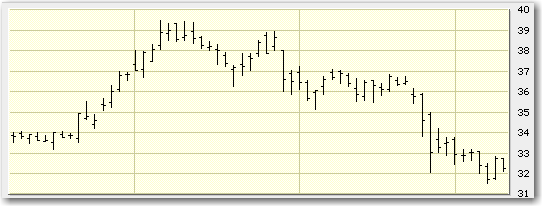
If you were one of the insiders who bought GM’s stock on the day of the IPO for $33 and change, and you’re still holding it, guess what?

You’re under water.

More realistically, if you’re one of the first day fat cats, you flipped the IPO stock … maybe for as much as $39 … you made some quick money.

But, those suckers who bought your flip?

Well, they’re way under water.

Last week, the stock was trading at its life time low … under $32. It’s still there.

Some traders are shorting the the stock, looking for a near-complete collapse.

Here’s an analysis from one of the shorts – Jonathon Hoenig of The Capitalist Pig and WSJ’s Smart Money …

GM recently announced a $4.7 billion profit , its biggest in a decade. Some 45,000 union workers will receive profit-sharing payments averaging $4,300 – a record.

And on that very same day, shares of the company slid below their IPO price of $33 for the first time, a vitally important fact overlooked by most of the enthusiastic media reports.

image

If there was ever a stock that makes people emotional , it’s General Motors. Either the company is the backbone of the American working man or the poster child for bad business practices.

That emotion, of course, is only exacerbated by the fact that GM received a $50 billion bailout from the Federal Government, an intervention that left taxpayers the largest shareholders, still owning 26.5% of an extremely weak stock. For the government to break even, shares will have to hit an estimated $53 – up 64% from current prices.

And not all of GM’s headlines have been as rosy as its recent profit announcement. The company sold just 281 Chevy Volt hybrids in February.

Despite its recent rebirth, this is a quintessential ” old soldier ” stock, heavy with the overhang of public ownership and beset with wasteful political influence .

Diet Coke smacks Pepsi …

March 18, 2011

Punch line: Coke #1, Diet Coke #2, Pepsi #3, Diet Pepsi ?

According to the WSJ …

U.S. sales of Diet Coke overtook those of Pepsi-Cola for the first time in 2010, making the diet soda the No. 2 carbonated soft drink in the country behind Coca-Cola, industry data are expected to confirm Thursday.

Occupying the top two rankings marks a historic win for Coca-Cola in its decades-old rivalry with PepsiCo, which has seen its market share slip in recent years and is trying to retool its marketing.

Pepsi-Cola commanded only a slight lead over Diet Coke in 2009, when each brand had slightly less than a 10% market share among carbonated soft drinks.

That year, regular Coke won the cola wars with a 17% market share.

But market-share data is expected to confirm Diet Coke pulled ahead in 2010.

PepsiCo made a big bet in 2010, when it didn’t market its flagship cola on the Super Bowl or in other TV spots.

Instead, it launched the Refresh Project, an online charitable-giving program that disbursed $20 million in donations “for refreshing ideas that change the world.”

Increasing the stakes, Coca-Cola and PepsiCo also spent billions of dollars last year to acquire their largest independent U.S. bottlers in a bid to bring drinks to stores more quickly.

WSJ, Diet Coke Wins Battle in Cola Wars, March 17, 2011