Archive for the ‘Mktg – Market Development’ Category

Has Starbucks cracked the code in China?

December 6, 2012

Punch line: Many Western retailers have attempted to cash in on China’s 1.3 billion consumers, with limited success.  Starbucks’s plan to localize the menu and experience might be the key to success.

* * * * *
Excerpted from brandchannel.com’s, “Starbucks Incorporates Local Tastes with China Expansion”

Western retailers have been completely bombarding China with products and sales pitches in recent years.

Having more than 1.3 billion consumers living within its borders can make a country’s citizens targets of such things.

Starbucks is about to go overdrive in its efforts to get the Chinese populace as dependent on their brand as plenty of Americans are, but the sell may not be so coffee-driven, but leverage the brand’s tea drinks and food menu.

China is still a tea-drinking nation.

So Starbucks established a research-and-development unit in the country in order to figure out what it could do to attract a larger audience than those looking for a cup of joe.

Starbucks China is serving up localized beverage and food items including a red bean frappaccino, green tea tiramisu, a Hainan chicken and rice wrap, a shredded ginger pork panini, and a Thai-style prawn wrap.

image.axd

Here are some other winners & losers in the Chinese market.
(more…)

Marketing to the rescue … how to save the USPS

September 14, 2011

Punch line: Many execs say “you can’t cost reduce yourself to success”.

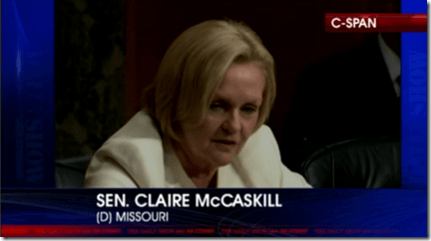
Apparently, Sen. Claire McCaskill agrees and looks to marketing to save the USPS from its financial woes.

* * * * *

U.S. Senator Claire McCaskill is a big supporter of the United States Post office.

McCaskill is against closing costly, non-essential post offices.

She thinks the USPS can market its way to success.

“I had an opportunity to go through a box of letters that my mother had from my grandmother’s house that were my letters I sent to her in college … My kids are in college now — I don’t have a box like that.”

Rather than cost-cutting, McCaskill is has suggested a marketing campaign stressing the “value of the written letter.”

Might work …

You just can’t make this stuff up.

* * * * *
Click  to see the video

image

Thanks to Tags for feeding the lead.

>> Latest Posts

How do you say “M’m, m’m, good” in Chinese?

January 26, 2011

TakeAway: Campbell Soup wants to boost its business in China via a joint venture with the conglomerate Swire Pacific Ltd. to sell soup and broths.  Swire has been the company’s distribution partner in China, but with its varied business lines (it is also the largest Coca-Cola Co. distributor in China), Campbell can now access broad distribution channels in China.

* * * * *

Excerpted from WSJ, “Campbell-Swire Venture To Market Soups In China” By Paul Ziobro, January 12, 2011

Campbell, which has slowly been building its business in the emerging markets of China and Russia, will control 60% of the joint venture, called Campbell Swire, which will launch early this year. The partnership will manufacture, distribute and market Campbell’s soups, broths and stocks in China. Profits and losses will be shared according to ownership.

Faced with slower growth in the U.S., food companies have focused on developing markets to inject growth into the business. China represents one of the biggest opportunities, with 1.3 billion consumers that have the spending power of the U.S. population, according to a recent PricewaterhouseCoopers LLP report. But challenges lurk in trying to develop enough scale to turn a profit and navigate a complex distribution network.

The arrangement has the potential of helping Campbell accelerate its growth there without having to pay most of the costs, although it is sacrificing some potential profits.

For Campbell, the prize in China is a demographic with one of the highest rates of per-capita soup consumption in the world, although most of it is homemade. Campbell says Chinese consumers have nearly 355 billion servings of soup a year.

Campbell will keep ownership of its brands and recipes, and license them to the joint venture.

Edit by AMW


Starbucks Wants “In” in India

January 21, 2011

TakeAway: Starbucks unveiled an alliance Thursday with India’s flagship conglomerate, Tata Group, a wide-ranging company that owns everything from Jaguar cars to steel mills and tea plantations.  This move is designed to pave the way for retail locations and to sell more Indian coffee world-wide.  The alliance is with India’s Tata Coffee Ltd. unit, which owns the Eight O’Clock Coffee Co. in the U.S. and is a big coffee producer in India. 

Starbucks’s success will depend on its adaptability to local tastes, but plans to stick to its strategy of being a “third place” for young Indians. 

* * * * *

Excerpted from WSJ, “Starbucks Brews Plan to Enter India” By Paul Beckett and Vibhuti Agarwal and Julie Jargon, January 14, 2011

India remains one of the big untapped markets for Starbucks.  Chairman Howard Schultz said India could one day rival China, where the company recently announced plans to more than triple the number of outlets to about 1,500 in five years.

Although known as a land of tea, India is also a major coffee exporter—the fifth-largest in the world, according to the USDA.  Indians have been flocking to coffee themselves as well. Overall domestic consumption rose to an estimated 94,400 metric tons in 2008, up almost 90% since 1998, according to Indian government figures. Much of that has been driven by quick-service, comfortable cafes that are Starbucks’s specialty.

Mr. Schultz said one of the reasons for the alliance is to raise the profile and use of Indian premium Arabica beans in Starbucks stores elsewhere. The first phase of the alliance involves sourcing and roasting beans.

The companies also are considering the opening of Starbucks outlets in Tata retail locations and hotels, Mr. Schultz said. Tata’s Taj hotels are among the most upscale in India and include the landmark Taj Mahal Palace & Tower besieged in the 2008 Mumbai terror attacks.

In recent years, many brands have been expanding as greater exposure to western culture has boosted their appeal among young people and a growing middle class. Starbucks had been looking for a partner in India since about 2007.

Some Indian consumers in New Delhi welcomed the prospect of Starbucks’s arrival, while others see it as a status symbol for the elite.

Edit by AMW

* * * * *

Full Article:
http://online.wsj.com/article/SB10001424052748703583404576079593558838756.html?mod=dist_smartbrief


* * * * *