Here’s a summary of his prescription.
Excerpted from MIT Sloan Review: Good Days for Disruptors – An Interview with Clayton Christensen Spring 2009
Every disruption has three components to it: a technological enabler, a business model innovation and a new commercial ecosystem.
In health care, the enabling technology is the ability to diagnose diseases precisely.
Now, through molecular diagnostics, enabled by our understanding of the genome, and through imaging technology that allows people to look inside the body with remarkable clarity, we are acquiring the ability to precisely diagnose more diseases by their cause, not by their symptoms.
That ability then enables us to develop rules-based treatment and a predictably effective therapy.
Our hospitals are, like mainframe computer companies, hopelessly complicated and very expensive.
To ever expect today’s hospitals to become cheap is a pipe dream.
Instead, we need to bring technology, in the form of precise diagnostics and predictably effective therapy, to outpatient clinics so you can do more and more and more of the things there that in the past required a hospital.
And then we need to bring better diagnostic technology to doctors’ offices, so you can do more and more things there that previously required a clinic.
And to nurse practitioners, so they can take on more and more of the things that in the past required a doctor.
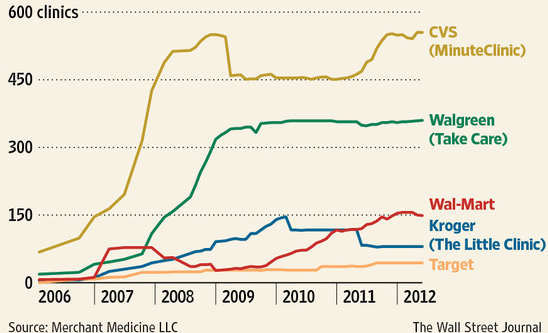
Yes, I’m a big fan of MinuteClinics — walk-in clinics that inexpensively treat common disorders such as strep throat and bladder infections.
The hospital is really not a viable business model because, in general, its costs are driven by overhead, which is driven by complexity.
In a large general hospital, much of the cost is overhead cost that’s not expended in the direct care of a patient.
While cost is driven by complexity, quality is driven by integration. It’s when we don’t integrate things correctly that problems fall through the cracks.
Specialized health care institutions, whether they are focused hospitals or focused diagnostics clinics, can integrate correctly, and because of their focus, they have much lower overhead costs.
You get better quality and lower cost.


 The Homa Files