Archive for September, 2009

In praise of health insurance companies …

September 30, 2009

WSJ: Health Co-Ops Aren’t the Answer, Sept. 28, 2009

Private health insurers perform many complex and hard-to-replicate functions.

They issue policies and accept financial risks associated with the costs of providing care.

They perform actuarial analyses to track costs and price policies.

They design different benefit structures to meet varying needs.

They select, contract with, and monitor the quality of thousands of hospitals and doctors and other professionals who provide the services covered by their policies.

They assess evidence for which technologies and treatments provide value, and provide information to assist millions of individuals and employers with a range of health-care and health coverage issues

Most plans, especially the best ones, assist with coordination of care and management of chronic conditions, and help consumers save money and time by guiding them to better health decisions.

Typically, all of this is facilitated by highly sophisticated and expensive information systems, and many trained nurses and physicians.

“It took decades and billions of investment dollars, with some of the most sophisticated business minds, to build today’s major health insurance companies”.

* * * * *

If we want greater competition for today’s health plans to drive down costs,  revise the ground rules and create a competitive landscape across the nation for existing companies.

Start by allowing health plans to compete across state lines. Because of restricted competition, in a large number of states only one or two plans dominate the market.

Reduce the number of mandated benefits states impose on plans. They drive costs 20%-30% higher than they might be.

Encourage health plans to negotiate more aggressively than they do now with hospital monopolies that exist in many local areas.

Promote benefit designs that offer more affordable coverage, such as policies with higher deductibles and health savings accounts that foster greater consumer engagement and healthy behaviors.

A “public option” by any other name—including health-care co-op—just won’t fly. The real competitive force will come from putting more dollars into individuals’ hands and fewer into insurers’ hands, and by fostering true competition among existing insurers.

* * * * *

Full article:
http://online.wsj.com/article/SB10001424052970204488304574429481529233414.html?mod=djemEditorialPage

* * * * *

Keep the change: An excise tax on ‘caloric’ soft drinks … gimme a break.

September 30, 2009

TakeAway:  The latest headache for beverage marketers – the government has decided that adding an extra tax on sweetened beverages will help Americans lose weight and, thus, reduce health care costs .  Consumer goods companies are already taking deliberate measures to increase the health profile of product offerings.  Is government intervention necessary to help consumers make good food choices? At what point is it up to consumers to make healthy food choices?

* * * * *

Excerpted from WSJ, “New Report Argues For Tax on Soft Drinks” By Betsy McKay and Valerie Bauerlein, September 16, 2009

A report published … by the New England Journal of Medicine … called for an excise tax of a penny per ounce on caloric soft drinks and other beverages that contain added sweeteners such as sucrose, high-fructose corn syrup or fruit-juice concentrates. Such a tax could reduce calorie consumption from sweetened beverages by at least 10% and generate revenue that governments could use to fund health programs, the authors said … “Escalating health-care costs, and the rising burden of diseases related to poor diet, create an urgent need for solutions, thus justifying government’s right to recoup costs.” … The latest report joins a growing drumbeat of calls for taxes on soft drinks and other sweet beverages, which some health experts compare to calls in earlier years for cigarette taxes …

Beverage-industry executives vehemently oppose the idea, which experts say would result in significant price increases … “A penny per ounce would have a seriously negative impact on the industry, as it could potentially raise prices on key packages by 40% to 50%,” said John Sicher, editor and publisher of Beverage Digest …

Currently, 33 states have sales taxes on soft drinks, but the taxes are too low to affect consumption and the revenues are not earmarked for health programs, the new report said.

Edit By TJS

* * * * *

Full Article
http://online.wsj.com/article/SB10001424052970204518504574417380680508354.html

* * * * *

Ken’s Take: How about taxing people by the pound – say, $10 per year per pound over the national height-weight guidelines?  Why just attack old people?  Let’s go after the heavies, too.

* * * * * *


Apple set to compete with Nintendo and Sony

September 30, 2009

TakeAway: MSBers: Remember back in MarkStrat when we learned that a “Direct Hit” targeting strategy was better than a “Tweener” strategy?

Apple seems to feel the same way about the iPod touch.

Kind of caught in no man’s land (not as cheap as the iPod nano, not as awe-inspiring as the iPhone), Steve Jobs and his crew have decided to position the touch against Nintendo DS and Sony PSP as a portable video game player.

Their advantage? How about competitive prices on hardware, cheaper games with a wider selection, and, oh yeah, that delicious-looking fruit with a bite taken out of it.

* * * * *

Excerpted from Forbes, “Steve Jobs Takes Aim At Competitors” By Brian Caulfield, September 9, 2009

Steve Jobs was there . A tablet computer was not.

Jobs, however, did drag out a big bag of pain for Nintendo, Sony and Cisco from wherever he has been hiding this year.

The nastiest move: tacking a video camera onto Apple’s iPod nano.

Cisco’s Flip camera, by contrast, starts at $149 for a device with half the storage and no music player. In short: “We’re going to lower the price from $149 to free,” Jobs said.

Jobs also slashed the price of the iPod touch to $199 as he unveiled a new ad that positions the tiny touch-screen tablet as a Nintendo DS killer. The new tag line for the commercial Apple will soon be using to carpet bomb the competition: “next-level fun.”

Apple was eager to make unflattering comparisons between the Sony PSP and Nintendo DS.

Apple’s  pitch: Apple’s games are cheaper; the iPhone and iPod touch’s built-in App Store makes buying games more convenient; and Apple has more of them. Apple now offers 21,178 games, compared to 3,680 available for the Nintendo DS and 607 for Sony’s PSP.

Edit by JMZ

* * * * *

Full Article
http://www.forbes.com/2009/09/09/ipod-iphone-apple-technology-enterprise-steve-jobs_print.html

* * * * *

Your choice: health reform or jail !

September 29, 2009

Ken’s Take: The IRS says it will fine or jail you for not paying Obama’s mandate levy.

So, we let thugs free because of jail overcrowding and budget constraints but incarcerate folks who refuse to buy health insurance? 

You just can’t make this stuff up …

* * * * *


WSJ:  Rhetorical Tax Evasion, Sept. 29, 2009 

The Baucus bill includes the so-called individual mandate, along with what he calls a $1,900 “excise tax” if you don’t buy health insurance.

It had been as much as $3,800 but Dems reduced the amount last week to minimize the political sticker shock.

And, lo, it turns out that if you don’t pay that tax, the IRS could punish you with a $25,000 fine or up to a year in jail, or both.

Under questioning last week, Tom Barthold, the chief of staff of the Joint Committee on Taxation, admitted that the individual mandate would become a part of the Internal Revenue Code and that failing to comply would be a “criminal” act. The willful failure to file would be a simple misdemeanor, punishable by the $25,000 fine or jail time under Section 7203 — statute covering tax evasion.

* * * * *

In the 1994 health-care debate, the CBO called the individual mandate “an unprecedented form of federal action.”

The government has never before required people to buy any good or service as a condition of lawful residence in the United States.”

* * * * *

Full article:
http://online.wsj.com/article/SB10001424052748704471504574439243760133458.html?mod=djemEditorialPage

* * * * *

Reprise: Rallying private capital to stabilize the housing market.

September 29, 2009

According to the WSJ:

While policymakers are beginning to unwind some of the other emergency programs extended to financial markets during the financial crisis, housing remains a weak spot that some view as too fragile to survive without significant government backing.

The Obama administration is close to committing as much as $35 billion to help beleaguered state and local housing agencies continue to provide mortgages to low- and moderate-income families,
http://online.wsj.com/article/SB125409967771945213.html?mod=WSJ_hps_LEFTWhatsNews

I have a better idea.  Below is a reprised post from November 2008 with my plan for handling part of the foreclosure problem and getting housing back on track. 

* * * * *

Ken’s Plan Summary: (1) eliminate ALL of the capital gains taxes on residential property that is bought from now until, say, December 31, 2010 and held for at least 18 months, (2) allow these “qualified residential properties”, if they are rented, to be depreciated for tax purposes at an aggressively accelerated rate (say, over 5 or 10 years) to generate high non-cash tax losses, and (3) allow ALL tax losses generated by these “qualified residential rental properties” to offset owners’ taxable ordinary income with no “passive loss’ limitations, thereby reducing their federal income tax liability.

The positive results are practically guaranteed.  Nonetheless, I haven’t even heard the ideas mentioned.  Guess the politically correct folks in DC don’t read the Homa Files.

* * * * *

From HomaFiles archive, “Big Idea: Rallying private capital to stabilize housing prices”, November 23, 2008.

A stark reality of the current mortgage crisis is that there have been — and will continue to be – an unprecedented and destabilizing number of foreclosures that need to be absorbed into the housing market.  Until they are, home prices will continue to slide and the crisis will persist..

To date, most of the government’s programmatic emphasis has focused on mitigating the financial pressures on lending institutions and investors who funded bad loans, by injecting supplementary capital (loans or preferred stock purchases), or by buying toxic securities..  Some political rhetoric has centered on preventing distressed citizens from “losing their homes”, but few substantive steps have been taken.  Why?

First, once a mortgage has been “securitized” – as most have been — there are contractual limitations on possible loan modifications.   In these instances, mortgage “servicers” have their hands tied.  They are only empowered to collect payments and foreclose on non-payers, with very little latitude between the extremes.

Second, there is the proverbial elephant in the middle of the room.  Many so-called home owners are – truth be told — really “occupants” not “owners”.  Some have no equity in the homes.  Some never did – even before housing prices crashed, submerging loan balances under water.   Many wouldn’t qualify today for restructured loans under the most liberal of terms – e.g. lowered interest rates, extended payment periods, reduced principle balances (to the current fair market value of the homes).  Whether the people legitimately qualified for their initial loans is irrelevant.  Whether their initial loan terms were predatory is also largely irrelevant. Objectively, the low bar is whether they can foot the bill for a restructured mortgage.  The emerging evidence seems to suggest that many – maybe most – can’t.

That leads to an inescapable conclusion: regardless of what remedial government bailouts are enacted – the housing market will continue to be flooded with foreclosures.

So, a pivotal economic policy question is how to get the foreclosed properties off the market and into the hands of private owners (i.e. not onto the government’s asset rolls), and how to keep them there until they can be remarketed at an orderly pace and higher prices.

Three straightforward changes to the income tax code – throwbacks to yesteryear — could provide the necessary financial incentives to rally private capital back into the housing market to buy, hold, and rent foreclosed homes: (1) eliminate ALL of the capital gains taxes on residential property that is bought from now until, say, December 31, 2010 and held for at least 18 months, (2) allow these “qualified residential properties”, if they are rented, to be depreciated for tax purposes at an aggressively accelerated rate (say, over 5 or 10 years) to generate high non-cash tax losses, and (3) allow ALL tax losses generated by these “qualified residential rental properties” to offset owners’ taxable ordinary income with no “passive loss’ limitations, thereby reducing their federal income tax liability.

For example, assume that an investor buys a foreclosed home for $200,000 and rents it out at a price that simply breaks even on a cash flow basis.  That is, the rental price just covers interest, taxes, insurance, maintenance, etc.  Assuming a 5-year accelerated depreciation schedule, the rental would generate an annual non-cash tax loss of $40,000 that could be used to offset the investor’s ordinary income.  If the investor were in the Obama-boosted 39.6% marginal tax bracket, that ordinary income offset could save the investor almost $16,000 in federal income taxes each year that the property is held and rented.  If the home were then resold – say, in 3 years for $250,000 –  the investor would book $170,000 in capital gains (the $50,000 home price increase, plus the $120,000 in depreciation claimed against ordinary income when the property was being rented), but the investor would owe no capital gains taxes.

Such a program potentially offers several benefits: (1) it would entice private capital to buy (and hold) foreclosures and other distressed residential property, (2) it would likely provide affordable rental housing to people (maybe the current occupants of the homes) who realistically can’t and shouldn’t shoulder the costs of home ownership , and (3) it might take some of the sting out of President-elect Obama’s proposed tax hikes.

It’s a win-win solution to part of a thorny problem.

Original post:
https://kenhoma.wordpress.com/2008/11/25/big-idea-rallying-private-capital-to-stabilize-housing-prices/
© K.E. Homa 2008

* * * * *

Want more from the Homa Files?
Click link =>
The Homa Files Blog

What’s the #1 skill that MBA recruiters are looking for ?

September 29, 2009

TakeAway:  MBA schools and students frequently forget that no matter how book smart one is, if one cannot effectively communicate that knowledge with others and drive action … that knowledge does little good. 

So, the answer: communications skills.

* * * * *

Excerpted from Insead Knowledge, “Communicating Your Way To The Top,” September 18, 2009

Good communication skills outrank other core business competencies as the number one skill for corporate recruiters looking to hire MBA graduates.

That conclusion comes not from communications specialists, but from an organization that has all the relevant data at its fingertips, The Graduate Management Admission Council (GMAC) …

This is no one-off effect. Communication skills have been consistently ranked in the top three in the last few years and this is not the first year they have been the number one requirement …

Communication is held in such high regard by recruiters … because people today expect to be communicated with on a regular basis and … communication cuts across all levels …

One of the tools of communicating is the ever-popular presentation. However, as commonplace as they may be, …  few have perfected the art of delivering a memorable and effective presentation … a few pointers to offer: first, assess the audience, preferably weeks ahead of the event. Find out who your audience is and what they will be expecting from you. Then you can fine-tune your presentation to make sure you hit the right notes …

Second, good stage presence is another clincher to an effective presentation. This encompasses knowing exactly how to command attention from the audience through body language, eye contact, and moving around the stage instead of standing behind the lectern.

Third, avoid … ‘death by PowerPoint’, basically using a standardized deck of slides, irrespective of context and audience … your story has got to come first, then you produce your slides to support your story … the slides need to be clear and concise … short and simple … visually interesting and entertaining.

Edit by TJS

* * * * *

Full Article
http://knowledge.insead.edu/contents/Communication-skills-steveknight-090918.cfm?vid=305

* * * * *

Transferring wealth from you to me … I kinda like that idea.

September 28, 2009

Ken’s Take: By the law of averages, most HomaFiles readers are younger than Homa.  So, if these guys are right, maybe the proposed health care “reforms” make sense.

* * * * *

Excerpted from WSJ: ‘Reform’ Is Income Redistribution, Sept.  27, 2009

Congress is contemplating changes … that would create a massively unfair form of income redistribution and create incentives for many not to buy health insurance at all.

Let’s start with basics: Insurance protects against the risk of something bad happening.

When your house is on fire you no longer need protection against risk. You need a fireman and cash to rebuild your home. But suppose the government requires insurers to sell you fire “insurance” while your house is on fire and says you can pay the same premium as people whose houses are not on fire. The result would be that few homeowners would buy insurance until their houses were on fire.

The same could happen under health insurance reform.

Here’s how: President Obama proposes to require insurers to sell policies to everyone no matter what their health status. By itself this requirement, called “guaranteed issue,” would just mean that insurers would charge predictably sick people the extremely high insurance premiums that reflect their future expected costs. But if Congress adds another requirement, called “community rating,” insurers’ ability to charge higher premiums for higher risks will be sharply limited.

Thus a healthy 25-year-old and a 55-year-old with cancer would pay nearly the same premium for a health policy.  But the 25-year-old … would pay significantly more than needed to cover his expected costs.

Like the homeowner who waits until his house is on fire to buy insurance, younger, poorer, healthier workers will rationally choose to avoid paying high premiums now to subsidize insurance for someone else. After all, they can always get a policy if they get sick.

* * * * *

To avoid this outcome, most congressional Democrats and some Republicans would combine guaranteed issue and community rating with the requirement that all workers buy health insurance—that is, an “individual mandate.”

But the combination of a guaranteed issue, community rating and an individual mandate means that younger, healthier, lower-income earners would be forced to subsidize older, sicker, higher-income earners.

And because these subsidies are buried within health-insurance premiums, the massive income redistribution is hidden from public view and not debated.

* * * * *

There are wiser and more equitable ways to ensure that every American has access to affordable health insurance, including high risk pools and taxpayer-funded vouchers subsidized for those who are both poor and sick.

Medicaid, charity care, and uncompensated care provided by hospitals cover some of these costs today. These solutions are imperfect, but so are the reforms being proposed in Congress.

* * * * *

Full article:
http://online.wsj.com/article/SB10001424052970204488304574434933462691154.html

* * * * *

A123’s Systems’ IPO is a big deal … here’s why.

September 28, 2009

Ken’s Take: A123’s Systems’ IPO is a big deal for 2 reasons:

(1) A successful IPO has to be a good sign for the market

(2) Virtually all batteries for hybrid and electric cars are made outside the U.S. — mostly in Japan and Korea.  So, a shift to hybrids would still make the U.S. dependent on foreign sources for the cars’ power supply.  Domestic sources of batteries is critical for energy independence.

But note: lithium — the primary component of most rechargeable batteries — is almost entirely mined outside the U.S.   For more details, see the February 26, 2009 HomaFiles post “Batteries are the key weapon in the battle for energy independence … too bad we’re losing the weapons race.” 
https://kenhoma.wordpress.com/2009/02/26/batteries-are-the-key-weapon-in-the-battle-for-energy-independence-too-bad-were-losing-the-weapons-race/

* * * * *

MarketWatch, A123 Systems jolts IPO market,  Sept. 24, 2009

Lithium ion battery maker draws strong interest

A123 Systems’ newly minted shares jumped 50% in their stock market debut as Wall Street placed its bets behind the government-subsidized maker of lithium-ion batteries for the growing electric car market. On Aug. 6, A123 won $249 million in federal stimulus funds, which the company plans to use to build factories for making batteries.

A123 drew interest from IPO investors as a way to tap into new technology. The company raised $378 million in its debut on the Nasdaq.

* * * * *

A123 Systems, an eight-year-old battery builder launched by engineers from the Massachusetts Institute of Technology, has yet to turn a profit. The company reported a loss of $40.7 million on revenue of $42.9 million in the six months ended June 30.

The company carries marquee investors in its list of principal shareholders, including General Electric , Qualcomm Inc. , Motorola Inc. and North Bridge Venture Partners.

Not only a provider for electric cars, A123 Systems develops and manufactures advanced lithium-ion batteries and battery systems for the electric grid services and consumer markets as well.

* * * * *

A123 said in its IPO filing that the number of hybrid electric, plug-in hybrid and electric cars is expected to grow from 19 models in 2009 at an annual production rate of at least 20,000 vehicles to more than 150 models in 2014 and more than 200 models in 2019.

A.T. Kearney projects the market will grow to about $21.8 billion by 2015 and $74.1 billion by 2020, stoked by governmental regulation, emerging powertrain technology and rising consumer demand.

* * * * *

Full article:
http://www.marketwatch.com/story/story/print?guid=FEC91852-2BEC-4821-A6C2-F3BD67C61B7A

* * * * *

The world is filling fast with "Fameballs"? … Wanna be one?

September 28, 2009

Ken’s Take: The use of minor or would-be celebs is a growing trend in advertising. Aspiring “fameballs” — well-known, if at all, simply for wanting to be famous — are generally poised, presentable, and vaguely familiar … and they’re cheap, as endorsers go.  And, the ‘role modeling’ seems to be pentrating pop culture.  Uh-oh.
http://www.brandchannel.com/home/post/2009/09/23/Minor-Celeb-Endorsements-Trip-Up-Sony-BMW.aspx

* * * * *

Fameball:  Minor-celebrities whose fame snowballs because journalists cover what they think other people want them to cover. In “real life”, people who crave attention and and try to create buzz about themselves.

* * * * * 

From gawker.com : So You Want to Be a Fameball?, Apr 9 2009

Fameballdom is an organic process. This guide will help your effort to become ubiquitous and despicable:

Here’s what you DO need to be a fameball:

An unquenchable desire for fame: Obviously. It is what drives all fameballs.

Shamelessness: Your desire for fame must be greater than that voice in your head screaming, “Stop; you look like an idiot.”

A lack of redeeming talents: This isn’t the Nobel Prize, okay? If you’re a shameless fame whore but you also, say, cured cancer, one could argue that your talent is being properly appreciated. This will not do.

An abundance of non-redeeming talents: These may include, but are not limited to: oversharing, self-regard, delusions of grandeur, superficial physical attractiveness, a ridiculous distinctive personal fashion trademark, the ability to talk about oneself without end, conspicuously false modesty, and sluttiness and/or man-whorishness.

Sounds easy, right? Wrong!

Any of the following things can kill a fameball trajectory fast.

Growing a conscience: It can happen to the worst of them. Instant death.

A desire for meta-fameballdom rather than actual fameballdom: This is the key mistake that people make when they beg for adoration and coverage. We’re talking to you, lady (or gent) who keeps posting pictures of yourself as the life of the hot party.

You see, while we do grow and cultivate fameballs, it’s absolutely essential that those fameballs are not seeking our approval; they must dream of stardom (even micro-stardom) in the outside world, not simply with a knowing wink from gawkers. A fameball’s famelust must be their undoing, not their doing. If you’re deserving, the world will find you

Being a one-trick pony: Lots of people do embarrassing fameball-like things from time to time. But do they have the staying power to keep plumbing ever-greater depths of self-abasement? Only the greatest do.

Full article:
http://gawker.com/5205794/so-you-want-to-be-a-fameball

* * * * *

Medicare Advantage saves money … so cut it to save money. Huh?

September 25, 2009

Ken’s Take: Apparently, when it comes to healthcare reform,  squeezing corporate profits is more important than saving money …

* * * * *

From WSJ, A preview of coming political health-care attractions, Sept 22, 2009

The Baucus Bill slashes $123 billion over the next decade from Dems-hated Medicare Advantage program – meaning that many (all?) seniors may lose this coverage.

Why do the Dems hate it?

Because profiteering insurers are “overpaid.”

Seniors like it is because private insurers focus on quality and preventive care and try to manage benefits, as opposed to simply paying bills.

In fact, one-fourth of beneficiaries have chosen it over traditional fee-for-service Medicare.

A new study finds that seniors on Advantage … spent 30% fewer days in hospitals over fee-for-service patients.

http://online.wsj.com/article/SB10001424052970204488304574427200839672342.html#mod=article-outset-box

* * * * *

If Sports Ruled the World …

September 25, 2009

Ken’s Take: Nuts.  Being a sports freak, I wish I had conjured this analogy.

In posts, I’ve mused that the willy-nilly changes in laws — and their contextual application — are injecting “political risk” into business — corporate and personal. 

Bankruptcy laws are ignored (e.g. the UAW cutting the line in front of secured creditors), contracts are ignored (e.g. exec comp pacts), tax laws are changed retroactively, closed legal cases are re-opened when political winds shift.

The question my biz friends are asking: “how can my company commit major investments — human and financial capital — if we’re not sure what the rules will be.”

That’s one of the reasons that the economic recovery will be jobless.  Adding payroll just isn’t worth the risk of game-changing shifts in the rules and their interpretation. 

* * * * *

Excerpted from WSJ, If Sports Ruled the World, Sept 17, 2009

in the primal world of sports we are all strict constructionists, even as we agree that a discreet judge would have given Serena’s foot fault a pass.

While we all know what the rules are in sports, no one knows anymore what the rules are in real life.

The Austrian novelist Peter Handke reduced the fine line separating freedom from foul to a novel’s title: “The Goalie’s Anxiety at the Penalty Kick.”

This is why we watch sports. Not just to see the thrill of victory and the agony of defeat, but because it is the one world left with clear rules abided by all.

(Some esthetes would chime in that this is why they listen to classical music where structure rules.)

Compared to sports (and classical music), real life has become constant chaos.

While we all know what the rules are in the sports, no one knows anymore what the rules are in real life.

Not in politics, law, the bureaucracies, commerce, finance or Federal Reserve policy.

Boston lawyer Harvey Silverglate argues in a forthcoming book, “Three Felonies a Day,” that federal law has become such a morass that people in business routinely violate statutes without a clue. Modern law lacks what sports provides lucidity.

The utopia most people want: a rules-based life, with wiggle room.

* * * * *

Full article:
http://online.wsj.com/article/SB10001424052970204518504574416774102132370.html?mod=djemEditorialPage

* * * * *

Let’s play 20 questions … ok, how about 5 questions?

September 24, 2009

From Hugh Hewitt of the Washington Examiner …

Here are five questions every sponsor of any version of Obamacare ought to be obliged to answer — in detail:

1. Can you specify, at least to the level of tens of millions, exactly where will the $300 billion in cuts to Medicare proposed by president come from?

2. The president and his allies agree that the cost of Medicare Advantage programs will have to increase for seniors. By how much will Medicare Advantage premiums increase?

3. The president and his allies agree that some Medicare services will have to be cut. Which Medicare services will have to be cut?

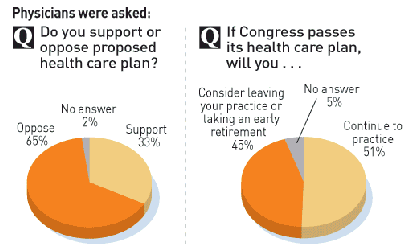
4. Forty-five percent of doctors responding to a recent Investors Business Daily/TIPP poll responded that if Obamacare passed, they would consider quitting or retiring. Even if the number of disgruntled doctors is overstated — by a factor of 2 or or 5 —  wouldn’t the number of doctors who do retire early or quit out of disgust  make the delivery of health care much more difficult than it already is?

5. If the U.S. health system is so bad, how do you explain why the five-year survival rate of women with breast cancer in the United States is higher than that of women in Great Britain and the five-year survival rate for American men with any form of cancer is much higher than the same survival rate among all European men.

Hmmm.

Washington Examiner, “Obamacare is to Medicare what ACORN is to Children’s Protective Services”, September 21, 2009
http://www.washingtonexaminer.com/opinion/columns/Obamacare-is-to-Medicare-what-ACORN-is-to-Children_s-Protective-Services-8268673-59983347.html

* * * * *

Ah-ha … How Big Bro will catch the willfully uninsureds.

September 24, 2009

Ken’s Take: I’ve been asking how the folks who choose voluntarily to self-insure and buy big screens instead of health insurance will be caught in the act.  Here’s the answer .  More “take” below”.

Heritage Foundation, The Policy Is The Problem. September 21, 2009

Individual Mandates:

Starting in 2013, almost everyone who does not have coverage would be required to purchase health insurance at a minimum level to be specified in the bill.

Any individual who fails to buy health insurance will be forced to pay a tax by the Internal Revenue Service. Depending on your income and family status the new tax would be as low as $750 per person and as high as $3,800 per family.

In order to enforce these provisions, the Baucus bill would require individuals, health insurers, employers, and government health agencies to report detailed health insurance information on all Americans to the IRS, adding significant administrative costs and reducing privacy protections.

Full article:
http://blog.heritage.org/2009/09/21/morning-bell-the-policy-is-the-problem/

* * * * *

More Ken’s Take: So, companies submit confirmations that a person (i.e. social security number) is insured.  The confirmations are matched against the IRS files (social security numbers with income) and exceptions are reported out to the health reform fine collectors who go knocking on doors to collect fines and / or repo the big screens.

Might work … yeah, right.

* * * * *

2009’s Best Global Brands

September 24, 2009

According to consultancy InterBrand …

 .  Top Ten Global Brands in 2009  . 
(and their estimated Brand Asset Value)

  1. Coca-Cola 68,734 ($m)
  2. IBM 60,211 ($m)
  3. Microsoft 56,647 ($m)
  4. GE 47,777 ($m)
  5. Nokia 34,864 ($m)
  6. McDonald’s 32,275 ($m)
  7. Google 31,980 ($m)
  8. Toyota 31,330 ($m)
  9. Intel 30,636 ($m)
  10. Disney 28,447 ($m)

For more, see …

Article:
http://www.interbrand.com/best_global_brands_intro.aspx?langid=1000

Full Report:
http://www.interbrand.com/images/studies/-1_BGB2009_Magazine_Final.pdf

Cool poster with Logos:
http://www.interbrand.com/BGB09/BGB2_POSTER_FRONT.pdf

* * * * *

What if folks who don’t have health insurance just don’t want it?

September 23, 2009

Excerpted from NY Post, ObamaCare: Losing everyone, Sept 21, 2009

The latest data from Scott Rasmussen’s poll of those who lack health insurance indicates that they’re starting to turn skeptical about the Obama plan. It’s supposed to help them, yet they back ObamaCare by only 58 percent to 35 percent — and only 30 percent support it strongly.

More to the point, only 35 percent feel it will improve the quality of their health care — and, by 41-26, they feel the cost of their care will go up, not down, under the plan.

Having the uninsured — the stated object of Obama’s compassion — turn against his reform would be the most lethal cut of all.

* * * * *

Requiring everyone to buy insurance will impose a massive tax on all who now are uninsured. The Congressional Budget Office projects that it would force the middle-income uninsured to pay on average more than 15 percent of their income.

CBO estimates that … an individual earning $32,400 a year would have to pay $4,100 in premiums before getting any subsidy.

With deductibles and co-payments, he’d have to shell out $5,600 a year, or 17.3 percent of his income.

A family of four, making $80,000 a year, would have to pay about $10,500 in premiums alone — with deductibles and co-payments, up to $15,000 or just under 20 percent of income.

And if they don’t buy insurance, they’ll face federal fines that begin to approach these same premium levels. They won’t be able to buy what they truly need — catastrophic-only coverage at a lower premium — that won’t satisfy ObamaCare’s “minimum insurance” mandate.

* * * * *

Full article:
http://www.nypost.com/p/news/opinion/opedcolumnists/obamacare_losing_everyone_GMoSJylS0ZJLsQAtWEVKyN

* * * * *

The experience gap: have any Presidential advisers run a business … or, for that matter, held a real job?

September 23, 2009

Excerpted from RCP, Saving A Million Jobs at $787,000 Per Job, September 14, 2009

The White House Council of Economic Advisers is lead by three presidential appointees. Currently, these are Christina Romer, Austan Goolsbee, and Cecilia Rouse.

According to their biographies on the Council web site, these people have never held jobs outside of academia. Their positions at Princeton, Berkeley, and the University of Chicago were protected by lifetime tenure. Unemployment, to them, is a theory that cannot become a personal reality. What in their backgrounds makes them experts on the subject of job creation?

  • They never had to meet a payroll.
  • They never had to raise money to fund their businesses from skeptical investors.
  • They never bet their life savings on their own business judgment. They never had to scramble to pay off a banker who called in a loan.
  • They never had to decide whether to take a calculated risk to expand their workforce hoping to take market share from a fierce competitor.
  • They never had to make a judgment call on whether or not to launch an unproven new product.
  • They never had to manage a reduction in force, explaining to employees that their jobs have been eliminated because the tax and regulatory burdens imposed by some new law forced them to cut costs.
  • They never lost business to a government-subsidized competitor whose cost of capital was vastly lower than theirs.
  • They never had to grease the palms of politicians offering constituent services to resolve a bureaucratic hangup caused by the labyrinthine government approvals these selfsame politicians inflict on many businesses.
  • They never had to deal with a missed sales forecast caused by an economy so roiled by capricious and uncertain fiscal policy that frightened customers were holding back orders.
  • They never had to deal with a key supplier that unexpectedly went bankrupt because their source of credit dried up as dollars got sucked out of the commercial economy into government debt.
  • They never had to negotiate with angry landlords after being forced to shut down a business destroyed by spurious mass-manufactured class action lawsuits.
  • They never had to stand up in front of disappointed investors to explain why they lost money that had been entrusted to them.
  • And you can be sure that none of them ever fell on their face and had to pick themselves up, dust themselves off, and decide whether it was worth going through all of the joys described above to take another shot at building a business from scratch.

They are prize winning experts in macroeconomics. They are ambitious, articulate, well connected, and brilliant.

But, what qualifies these people to work as high level apparatchiks of a governing class determined to manage the businesses of others?

Long after these experts return to their sinecures in academia to train another generation of economists on the wisdom of central planning and Keynesian pump priming, it’s we and our children and our grandchildren who will be paying the price.

Full article:
http://www.realclearmarkets.com/articles/2009/09/14/saving_one_million_jobs_at_787000_per_job_97404.html

* * * * *

Wanna know what cyber-folks are saying about you? Try Google Alerts.

September 23, 2009

Stumbled on an interesting web tool :

Google Alerts notifies you via email when your name shows up on the Web, and it provides links to the reference sites so you can see exactly what’s being said.

It’s a great way to stay on top of all cyberspace references to your name.

You can receive alerts in real time or in daily or weekly digests.

Register  alerts at www.google.com/alerts

To improve search accuracy,   put your name in quotes (e.g., “ken homa”) when you establish your alerts.

* * * * *

Google Alerts aren’t restricted to your name and personal info.

You can to track Web postings related to your area of expertise, (e.g. marketing strategy”), sports teams (“chicago bears”), professional contacts (“warren buffett”), etc.

* * * * *

For other Web and Tweet tracking tools:
http://www.marketingprofs.com/9/tools-tracking-measuring-evaluating-personal-brand-online-arruda.asp?adref=znnpbsc4499

* * * * *

A tax on healthy risk-takers … are they kidding?

September 22, 2009

Ken’s Take: I’ve asked before (1) How will mandate evaders get caught?  and (2) What will the Feds do if the evaders have already spent their incomes and are deep in hock? How will the fines be collected? By repo’ing uber-sized big screen TVs?

These guys ask if such mandates are even constitutional.

Talk about shoddy staff work …

* * * * *

Excerpted from WSJ: Mandatory Insurance Is Unconstitutional, Sept. 18, 2009

Under Sen. Max Baucus’s most recent plan, people who do not maintain health insurance for themselves and their families would be forced to pay an “excise tax” —roughly comparable to the cost of insurance coverage under the new plan.

Beginning in 2013, individuals would be required to have health insurance. Individuals and families who do not have insurance for more than three months in a given year would be subject to an annual excise tax of $750 and $1,500, respectively, if their income is below 300% of the federal poverty line (or $66,150 for a family of four). Tax penalties for individuals and families with incomes above that would be $950 and $3,800. The excise tax would be waived for Native Americans and individuals and families whose health-insurance costs would be more than 10% of their annual income.

The majority of those impacted are young people who forgo insurance precisely because they do not expect to need much medical care. When they do, these uninsured pay full freight, often at premium rates, thereby actually subsidizing insured Americans.

Without the mandate, the entire thrust of the new regulatory scheme—requiring insurance companies to cover pre-existing conditions and to accept standardized premiums—would produce dysfunctional consequences. It would make little sense for anyone, young or old, to buy insurance before he actually got sick.

The mandate’s real justifications are even more cynical and political. Making healthy young adults pay billions of dollars in premiums into the national health-care market is the only way to fund universal coverage without raising substantial new taxes.

In effect, this mandate would be one more giant, cross-generational subsidy—imposed on generations who are already stuck with the bill for the federal government’s prior spending sprees.

But a “tax” that falls exclusively on anyone who is uninsured is a penalty beyond Congress’s authority. If the rule were otherwise, Congress could evade all constitutional limits by “taxing” anyone who doesn’t follow an order of any kind—whether to obtain health-care insurance, or to join a health club, or exercise regularly, or even eat your vegetables.

Full article:
http://online.wsj.com/article/SB10001424052970204518504574416623109362480.html?mod=djemEditorialPage

* * * * *

If it walks like a tax, and quacks like a tax, it’s a …

September 22, 2009

Ken’s Take: I don’t have a stake in this issue, but it’s fun to watch it reveal itself.  Gotta admit that Obama-logic makes me dizzy sometimes.  Maybe he’s just way smarter than I am … oe maybe he’s just making this stuff up as he goes.

* * * * *

Excerpted from WSJ, Obama’s Nontax Tax, Sept. 21, 2009

On his round of five Sunday talk shows President Obama revealed a great deal about his philosophy of government and how he defines a tax increase.

Under Max Baucus’s Senate bill that Mr. Obama supports, everyone would be required to buy health insurance or else pay a penalty as high as $3,800 a year. George Stephanopoulos posed the obvious question about this kind of coercion when “the government is forcing people to spend money, fining you if you don’t [buy insurance]. . . . How is that not a tax?”

“Well, hold on a second, George,” Mr. Obama replied. “Here’s what’s happening. You and I are both paying $900, on average—our families—in higher premiums because of uncompensated care. Now what I’ve said is that if you can’t afford health insurance, you certainly shouldn’t be punished for that. That’s just piling on. If, on the other hand, we’re giving tax credits, we’ve set up an exchange, you are now part of a big pool, we’ve driven down the costs, we’ve done everything we can and you actually can afford health insurance, but you’ve just decided, you know what, I want to take my chances.  And then you get hit by a bus and you and I have to pay for the emergency room care, that’s . . .”

“That may be,” Mr. Stephanopoulos responded, “but it’s still a tax increase.”

Mr. Obama: “No, but—but, George, you—you can’t just make up that language and decide that that’s called a tax increase.”

“I don’t think I’m making it up,” Mr. Stephanopoulos said. He then had the temerity to challenge the Philologist in Chief, with an assist from Merriam-Webster. He cited that dictionary’s definition of “tax”—”a charge, usually of money, imposed by authority on persons or property for public purposes.”

Mr. Obama: “George, the fact that you looked up Merriam’s Dictionary, the definition of tax increase, indicates to me that you’re stretching a little bit right now.”

The CBO estimates that the Senate’s individual mandate will result in new revenues of some $20 billion over 10 years because some people will choose to opt out of ObamaCare. If that $20 billion doesn’t count as tax revenue, then what is it?

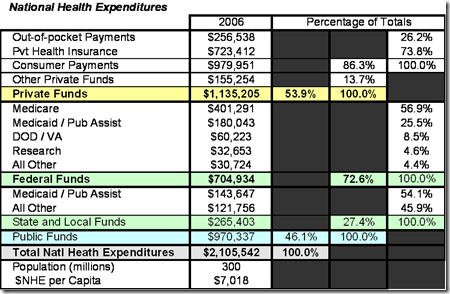
Under Mr. Obama’s definition, all taxes can be justified in the name of providing some type of service, however wasteful. It turns out the President thinks a health-care tax is not a tax if he thinks the tax is for your own good. His problem is that the individual mandate really is a tax, but the President doesn’t want voters to think of it that way, because taxes are unpopular

* * * **

[Fact: uncompensated care accounts for about only 2.2% of national health spending today.]

* * * * *

Full article:
http://online.wsj.com/article/SB10001424052970204488304574425294029138738.html?mod=djemEditorialPage

* * * * *

Great moments in marketing … an old guy pitches GM’s “bring it back” guarantee … huh?

September 22, 2009

Ken’s Take: I don’t usually take positions on ads, but I can’t resist on this one.  More “Take” below…

* * * **

BrandChannel, Should GM and Citi CEOs Take To The Airwaves?, September 17, 2009

With consumer confidence low, GM plans to reform its image and resuscitate itsbrands.

Two months after declaring bankruptcy, GM has rolled out a new ad campaign featuring government-appointed chairman Ed Whitacre.

In a 60-second spot, Whitacre declares the brand revived, and goes so far as to brag, “We win.”

The ad shows Whitacre walking through what looks to be GM research and development, shiny new cars decorating the scenery. Whitacre invites consumers to test a new GM model — though none are shown — and promises them a 60-day-money-back guarantee if not fully satisfied.

GM seems to be taking a gamble by personalizing its products with the very leaders the public holds responsible for their failure. Consumers may dismiss the ads as just more lies and empty promises. On the other hand, they may find the sight of executives stepping up to the plate a refreshing act of responsibility.

GM has made a miscalculation: Consumers are looking for action, not words.

GM should spotlight their fleet of competitive vehicles in advertisements. Instead, they’re undermining the quality of their product by placing the spotlight on their 60-day-money-back guarantee.

Full article (with a link to the commercial):
http://www.brandchannel.com/home/post/2009/09/17/GM-and-Citigroup-unveil-new-ad-campaigns-to-resuscitate-brands.aspx

* * * * *

Sidenote:

“Ad agencies can do a real disservice to clients by pitching CEO ads. It’s an easy way to land a client, because it’s very flattering to the CEO. And most CEOs have big enough egos that they cannot imagine appearing in the ads might be a bad idea. They just think the agency is brilliant for recognizing their own brilliance.”

* * * * *

Ken’s Take II: (1) My wife literally asked “who’s the old guy?  He looks almost dead.”  Perhaps Whitacre thinks he reeks credibility. I bet most folks find him more creepy than credible.  (2) Re: substance: I disagree with the article.  It’s a bold move to shift product quality risk from consumers back to the company — where it belongs  (3) Re: unintended consequences: How many folks will simply take 60 day joy rides in GM cars? Hmmm

* * * * *

Fun on the Magothy: 2nd Annual MSB-MBA-GMA Fall Outing

September 22, 2009

Here’s the link to some pics from the 2009 Fall outing.  Great weather, great food, great fun.

http://picasaweb.google.com/profkenhoma/HomaPHOTOs09092009MSBGMA2009Outing#5383966163003763698 

http://picasaweb.google.com/profkenhoma/HomaPHOTOs09092009MSBGMA2009Outing#5383966163003763698

Stuff the ballot box for Ada Polla — an MSB MBA alum.

September 21, 2009

After getting her MSB MBA in 2004, Ada Polla launched a business: Alchimie Forever skin care. 

The business has been a runaway success, and Ada  has been nominated as one of 5 finalists for “Best Emerging Entrepreneur” by Entrepreneur Magazine.

This Entrepreneur Magazine award goes to the finalist who receives the most online votes.

Ada has continued to be a strong supporter of MSB, so let’s reciprocate and give her our support.

* * * * *

It’s fast and simple.  One online vote per email address
(yes, you can technically vote more than once).

Here is the link:
www.entrepreneur.com/e2009/vote/emerging.php

Voting ends on October 12th.

As they say in Chicago: vote early, vote often, and spread the word.

* * * * *

Buffett: Rock Star of American Capitalism …

September 21, 2009

A summary of a gushing biography of the Oracle from Omaha …

Excerpted from Knowledge@Emory,  Buffett: Rock Star of American Capitalism, September 16, 2009

Warren Buffett’s rock star status is evident from the fact that each year tens of thousands of fans from all over the world travel to Omaha, Nebraska, to listen to him speak at his company Berkshire Hathaway’s shareholder meeting.

Alice Schroeder’s insightful biography titled, The Snowball: Warren Buffett and the Business of Life … seeks to explain how Buffett became one of the world’s richest men and why he is admired for his business ethics and for uniquely pledging most of his money to philanthropy.

Buffett’s annual letters to shareholders … analyze good and bad businesses, give examples of managers who treat customers and employees fairly while also making good profits, and expose accounting tricks that fool many investors. One of Buffett’s letters pointed out that rich people like him should be made to pay a higher tax rate than wage earners like his secretary.

Buffett’s most important act has been to donate much of his wealth to the Gates Foundation, to be spent over 20 years mainly on health care and education. As he states: “The idea of passing wealth from generation to generation so that hundreds of your descendants can command the resources of other people simply because they came from the right womb flies in the face of a meritocratic society.” Also, unlike most other philanthropists, Buffett has not set up a foundation nor paid for buildings at hospitals or museums to try to perpetuate his name.

Rational Money Machine

Buffett had spent $15.4 million to buy 46% of Berkshire, With Berkshire stock recently around $87,200, Buffett has grown his wealth nearly 3,000-fold in some 30 years.

This massive capital accumulation is based on an investment discipline he learned from Benjamin Graham. Buffett’s approach to investment involves using seventh grade math and common sense to analyze a company’s underlying economics; buying a business not a stock; ignoring the fluctuations of the stock market; and, most importantly, maintaining a margin of safety. Of course, the mathematical magic of compounding gains over time have also helped Berkshire Hathaway multiply its wealth.

Buffett’s three rules of portfolio management are: 1) Don’t lose money; 2) Don’t forget rule one and 3) Don’t go into debt.

He attracts talented people to work, partner and deal with him due to his honesty, fairness, letting them do their job without interference and crediting them for success.

Right Side of the Edge

Buffett criticizes the high fees charged by investment managers, especially of hedge and private equity funds. Yet, Buffett himself accumulated much of his initial capital from the fees he charged a hedge fund-type partnership, pocketing half the gains over 4%.

Some of Buffett’s investments for his partnership were also made based on the expectation that managements would buy back his stock at a higher price. In

Buffett has argued for the expensing of stock options, which many chief executives liberally give as incentives and bonuses to themselves, other managers and employees. Only in 2002, going against the views of most CEOs, Buffett found the time was right to push Coke’s board to make it the first major company to expense stock options. 

Buffett draws a token $100,000 annual salary from Berkshire and awards himself or other managers no stock options, grants or warrants.

Personal and Family Life

Buffett owns no fancy houses, cars or yachts. He wears cheap clothes, craves hamburgers, French fries and cherry Coke and appears awkward in social situations. Buffet also spends hours playing bridge online, enjoys golf, handball and table tennis and plays the ukulele. He is a showman who avoids confrontation and hides his true opinions behind coy remarks, if being blunt may hurt his business or other relationships.        

Since Buffett was consumed with his work, he had little extra time for his wife and three kids. “While he was friendly with his kids, he hadn’t really gotten to know them” while they were growing up at home in Omaha. On occasion Buffett’s secretary blocked even his family’s access to him, not on explicit but on implicit orders, a typical Buffett method of operating.

His wife wanted him to stop being consumed with making more money once he had made his initial millions. His actions that led his wife to leave their home in Omaha are the major regret of Buffett’s life: “If you get to my age in life and nobody thinks well of you, I don’t care how big your bank account is, your life is a disaster.”

Unlike most other capitalists, Buffett believes that children should not inherit money just because of the lottery of their birth. He says children should be left “enough money so that they feel they could do anything, but not so much that they could do nothing.”

Buffett’s views:  capitalists: should give their money back to society, to which he believes they owe their wealth in the first place,

“Buffett always avoided or limited his time with anyone he feared might criticize him.”

As Buffett has often noted, the American economy in the second half of the twentieth century provided the ideal environment – lots of wet snow and a long hill to roll and grow his snowball — for someone of his skills, temperament and personality to become immensely wealthy.

Full article:
http://knowledge.emory.edu/article.cfm?articleid=1267

* * * * *

Is the “Oracle of Omaha” over-rated ?

September 21, 2009

cnbc.com, The Oracle of Oma-Hype? , Sep 14, 2009

Clint Goodrich …  went from horse racing to futures trading—both occupations require focus and brutal tenacity. He  trades for some high net worth clients. His investments have averaged 22 percent gains a year over the last five years, and while he took a beating in the fourth quarter last year (who didn’t?), this year he’s up nearly 32 percent.

Goodrich thinks Buffett isn’t much of an oracle:

I think Warren Buffett is overrated. My thinking is a collective of many years of watching and listening to everyone in the media lionize this guy. As a trader and manager of money, I follow the money, literally. Clearly he’s not some stooge. He’s been successful, is shrewd and lived in the same Omaha house since 1955. However, a few simple insights into his track record leave me a little cold and not so convinced about his title “World’s Greatest Investor”.

If you bought one share in BRK.A at the “open” on Sept 10, 1999 you spent $62,500. On Sept 9, 2009 that same share was worth $97,900 on the “open”, an increase over 10 years of $35,400 (+56.64 percent appreciation), or an average simple return of +5.66 percent per year. To me, this is historically just a reasonable rate of return on a 30-year U.S. Treasury Bond, and certainly a less than spectacular rate of appreciation for someone titled “The World’s Greatest Investor”. Oh, and by the way, a 30-year U.S. Treasury is guaranteed.

Mr. Buffett is that he demonizes traders and calls derivatives “weapons of financial mass destruction”, when he himself holds some of the largest derivative positions in the world! It’s OK for him to hold derivatives but not others?

He missed the tech run, he lost billions in his US dollar position, and he apparently had no inkling of the financial crash that swept the markets in the fall of ’08 through the spring of ’09.

In general, he’s a buy and hold forever guy with a seemingly blind eye to taking profits and looking for the next opportunity. What is up with not letting go of a position, taking the profit and moving on?

Of course, the weak point in my argument would be, that so far…..he has more money than I do. But hey, that’s what makes a market!

Full post:
http://www.cnbc.com/id/32841601/site/14081545

* * * * *

Toyota powers up … more ads, more hybrids.

September 21, 2009

Reuters – CNBC.com, Toyota Plans $1 Billion Marketing, More Hybrids, 17 Sep 2009

Toyota landed three models among the top 10 sold in the recent “Cash for Clunkers” incentive program by the U.S. government.

Now, Toyota is preparing a $1 billion marketing campaign — 30 percent to 40 percent more than the company typically spends in the quarter — to boost U.S. sales in the fourth quarter, while also expanding its line of hybrid models under the Prius name.

The $1 billion will include a media campaign, as well as buyer and dealer incentives, including sweeteners for leasing.

Word of the media blitz comes less than a week after General Motors announced its own media campaign, in large part aimed at recapturing consumers who believe Toyota and other foreign automakers make better products.

Toyota executives said the company planned to sell 500,000 to 600,000 hybrid vehicles globally by the end of 2009.

Full article:
http://www.cnbc.com/id/32903880

* * * * *

Ouch: 45% Of Doctors Would Consider Quitting If Congress Passes Health Care Overhaul

September 18, 2009

Ken’s Take: If you think it’s hard to get in to see a doctor now, just wait …

* * * * *

IBD, 45% Of Doctors Would Consider Quitting If Congress Passes Health Care Overhaul, September 15, 2009

Two of every three practicing physicians oppose the medical overhaul plan under consideration in Washington, and hundreds of thousands would think about shutting down their practices or retiring early if it were adopted, a new IBD/TIPP Poll has found.

The poll contradicts the White House claims that the medical profession is behind the proposed overhaul.

* * * * *

Major findings included:

• Two-thirds, or 65%, of doctors say they oppose the proposed government expansion plan. This contradicts the administration’s claims that doctors are part of an “unprecedented coalition” supporting a medical overhaul.

• 45%, said they “would consider leaving their practice or taking an early retirement” if Congress passes the plan the Democratic majority and White House have in mind.

image

* * * **

More than 800,000 doctors were practicing in 2006, the government says. Projecting the poll’s finding onto that population, 360,000 doctors would consider quitting. The number of doctors is already lagging population growth. From 2003 to 2006, the number of active physicians in the U.S. grew by just 0.8% a year, adding a total of 25,700 doctors.

The U.S. today has just 2.4 physicians per 1,000 population — below the median of 3.1 for members of the Organization for Economic Cooperation and Development, the official club of wealthy nations.

A recent study from the Association of American Medical Colleges found steadily declining enrollment in medical schools since 1980. The study found that, just with current patient demand, the U.S. will have 159,000 fewer doctors than it needs by 2025.

Full article:
http://www.ibdeditorials.com/IBDArticles.aspx?id=337909690110379

* * * * *

Marketers' challenge: making shopping easy for cranky old folks.

September 18, 2009

Excerpted from WSJ, Seeing Store Shelves Through Senior Eyes, Sep 14, 2009

The number of adults aged 65 and older will reach 71.5 million people by 2030, twice their number in 2000 and representing nearly 20% of the total U.S. population. As baby boomers turn 65 years old beginning in 2011, they are expected to spend an additional $50 billion over the next decade on consumer products in the U.S.,

Current store layouts present challenges for elderly shoppers, experts say. Worsening eyesight makes finding items more frustrating, arthritis complicates browsing and reduced balance intensifies the strain of stooping or reaching for products.

So, some marketers are donning glasses that blur their vision, slip un-popped popcorn into their shoes, wear gloves and adjust tape that binds their thumbs to their palms …  an exercise designed to help them better understand the physical challenges facing elderly shoppers.

Some of the ways marketers are helping seniors cope:

Morgan Stanley, recommends that financial advisers ensure report colors and office lighting are friendly to elderly eyes.

Drug-store chain Rite Aid is revising its private-label goods with bigger typefaces on packaging.

Family Dollar is weighing new lighting and shelf labels.

Walgreen plans to install call buttons near heavy merchandise like bottled water and laundry detergent in some stores. It also will put magnifying glasses on store shelves.

Many retailers offer nearby parking spaces  and manageable carts.

Full article:
http://online.wsj.com/article/SB125288402995807243.html

* * * * *

Marketers’ challenge: making shopping easy for cranky old folks.

September 18, 2009

Excerpted from WSJ, Seeing Store Shelves Through Senior Eyes, Sep 14, 2009

The number of adults aged 65 and older will reach 71.5 million people by 2030, twice their number in 2000 and representing nearly 20% of the total U.S. population. As baby boomers turn 65 years old beginning in 2011, they are expected to spend an additional $50 billion over the next decade on consumer products in the U.S.,

Current store layouts present challenges for elderly shoppers, experts say. Worsening eyesight makes finding items more frustrating, arthritis complicates browsing and reduced balance intensifies the strain of stooping or reaching for products.

So, some marketers are donning glasses that blur their vision, slip un-popped popcorn into their shoes, wear gloves and adjust tape that binds their thumbs to their palms …  an exercise designed to help them better understand the physical challenges facing elderly shoppers.

Some of the ways marketers are helping seniors cope:

Morgan Stanley, recommends that financial advisers ensure report colors and office lighting are friendly to elderly eyes.

Drug-store chain Rite Aid is revising its private-label goods with bigger typefaces on packaging.

Family Dollar is weighing new lighting and shelf labels.

Walgreen plans to install call buttons near heavy merchandise like bottled water and laundry detergent in some stores. It also will put magnifying glasses on store shelves.

Many retailers offer nearby parking spaces  and manageable carts.

Full article:
http://online.wsj.com/article/SB125288402995807243.html

* * * * *

Opposition to healthcare plan reaches new high …

September 17, 2009

According to Rasmussen …

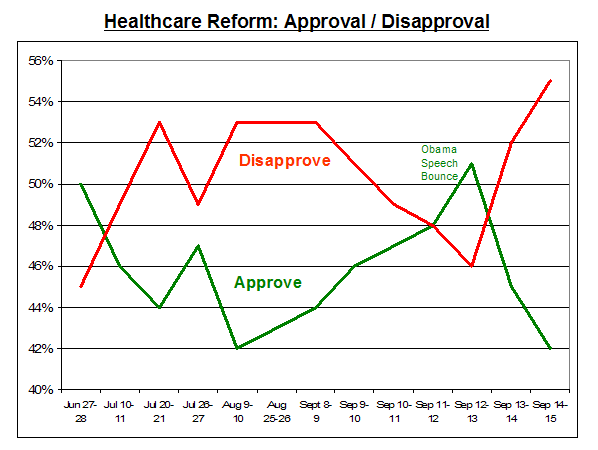
One week after President Obama’s speech to Congress, opposition to his health care reform plan has reached a new high of 55%.

The latest Rasmussen Reports daily tracking poll shows that just 42% now support the plan, matching the low first reached in August.

A week ago, 44% supported the proposal and 53% were opposed.

Following the President’s speech —  intended to relaunch the health care initiative —  support for the president’s effort bounced as high as 51% .

But the new numbers suggest that the bounce was short-lived.

image

http://www.rasmussenreports.com/public_content/politics/current_events/healthcare/september_2009/health_care_reform

What’s your core value? Take your choice: fidelity or convenience.

September 17, 2009

TakeAway: In this adaptation from his new book, Trade-Off: Why Some Things Catch On, and Others Don’t author Kevin Maney explains the tension between two key qualities — fidelity and convenience — and how a great brand fell into the trap of becoming too familiar got caught in a no-man’s-land between them.

For a brand like Starbucks, familiarity and ubiquity are deadly.

* * * * *

Fortune, How Starbucks lost its ‘fidelity’, September 16, 2009

We constantly, in our everyday lives, make trade-offs between fidelity and convenience.

Those trade-offs, and how they affect business, help explain why Starbucks  hit a wall in 2007 — and why CEO Howard Schultz is still struggling to get his company’s mojo back.

Fidelity [as in high-fidelity] is the total experience of something.

At a rock concert, for example, it’s not just the quality of the sound, which often isn’t as good as listening to a CD on a home stereo, but also everything else going on, like the crowd around you and the social cache of later telling people you saw the band live.

Convenience is how easy it is to get what you want. That includes whether it’s readily available, whether it’s easy to do or use, and how much it costs. If something is less expensive, it’s naturally more convenient because it’s easier for more people to get it.

Consumers are willing to give up convenience for great fidelity, or ditch fidelity for great convenience.

But anything that offers just so-so fidelity and so-so convenience falls into a no-man’s-land of consumer apathy that I call the fidelity belly. That’s where music CDs, newspapers, and desktop Windows-based PCs find themselves today.

* * * * *

Remarkably, the most successful products and services tend to be either high in fidelity or high in convenience — one or the other, but not both. In fact, products attempting to be both typically end up with a confused brand, like if McDonald’s tried to do gourmet meals.

This impossible place of both fidelity and convenience is something I call the fidelity mirage. And Starbucks chased it big-time.

After a decade of stupendous success, Starbucks ran into trouble in 2007.

Starbucks, during its heyday, was all about fidelity.

It was all about creating a high-fidelity experience that was greater than just the coffee … “a taste of romance” and “an oasis — a small escape during a day when so many other things are beating you down.”.

And the products Starbucks served?  Once Starbucks arrived on the scene, it suddenly seemed boring to walk into a deli or a Dunkin’ Donuts and just order coffee with cream and sugar.

Starbucks had a special aura. The green label on a cardboard cup made the coffee it held seem better. Holding that Starbucks coffee cup, being seen in a Starbucks, and being enough of a regular that you knew your favorite complex beverage combination off the top of your head conferred a bit of identity. And for all of this, Starbucks charged premium prices.

As coffee goes, there was essentially nothing convenient about Starbucks. You had to travel to a store, wait in line, and pay exorbitant prices for a product you could make at home or in the office for relatively nothing.

Then. Starbucks launched aggressive expansion plans.

If you build fidelity, the temptation is to then pursue growth. But that growth can lead to the very thing that can kill a high fidelity brand: familiarity.

“Once Starbucks became ordinary, it was committing suicide.”

Starbucks carpet-bombed the world with its franchises. In 1998, the world was populated with 1,886 Starbucks stores. Ten years later, there were 16,226.

The Starbucks brand was extended to ice cream, packaged beverages, and a record label. 

Starbucks Schultz blessed it all, convinced that Starbucks could be everywhere and still be special.

Starbucks started with high fidelity — a unique, a feel-good experience that conferred upon its customers a sense of identity.  

But the expansion plans went in the opposite direction, toward high convenience — making Starbucks  available at every moment.

Convenience acts like anti-matter to fidelity. The more convenient something becomes — the easier it is to get — the more its aura dissipates.

The more convenient something becomes, the less that item identifies its owner as someone unique and special.

For Starbucks, excessive convenience dragged down the brand and made it commonplace.

On the flip side, Starbucks could not achieve genuine convenience.  

The prices of Starbucks’ products were too high, and the lines were toolong, too slow moving. Making fancy customized drinks like frappuccinos tied up the baristas, causing back-ups. Customers realized that if they were looking for a quick, good-enough cup of coffee, it was easier to go to McDonald’s or 7-Eleven, and save a few bucks.

Starbucks’ customers reacted predictably.

Despite more Starbucks around than ever before, people started veering away. 

People looking for convenience saw less reason to pay Starbucks’ prices.

People looking for aura and identity turned back to smaller chains or independent local coffee shops.

When anything — a brand, a rock band, a style of clothing — becomes popular with a huge mass market, the cool people increasingly find it uncool, and look for something new.

In February 2007, founder Howard Schultz deplored “the watering down of the Starbucks experience” and “the commoditization of our brand.”

He immediately began reaching backward, toward Starbucks’ high-fidelity core to “go back to our roots and reaffirm our leadership position as the world’s highest-quality purveyor of specialty coffee.”

First, he shut down 7,000 Starbucks stores for three hours so 135,000 baristas could learn how to correctly make a Starbucks espresso.

Second, Schultz announced that 600 Starbucks outlets in the United States would close — the first time Starbucks backed away from its drive for convenience.

This year, Starbucks got so desperate to win back its premium position, it started opening “stealth” stores — Starbucks-owned stores minus the Starbucks name, meant to mimic small, independent, high-fidelity coffee shops.

* * * * *

For a brand like Starbucks, familiarity and ubiquity are deadly.

The aura and identity Starbucks once had is gone for most Americans.

It doesn’t mean people will stop going to Starbucks. But it does mean people will be less inclined to seek out Starbucks.

Coffee purveyors that are more convenient (like McDonald’s or 7-Eleven) or are perceived as higher fidelity (independent coffee shops or smaller chains) will have an easier time competing against Starbucks than they used to.

* * * * *

Full article:
http://money.cnn.com/2009/09/16/news/companies/kevin_maney_starbucks.fortune/index.htm?postversion=2009091612

* * * * *

"Buying insurance on your own costs 3 times as much" … no kidding?

September 16, 2009

Ken’s Take: Simple arithmetic – if you can’t lay off 2/3s of your insurance bill to an employer (or anybody else), it appears that you’re paying 3 times as much — even though the underlying cost of the insurance didn’t change. 

Are these guys grossly disingenuous or just plain dumb re: basic economics?

* * * * *

Excerpted from WSJ, Obama and the cost of individual insurance, SEPTEMBER 16, 2009

President Obama likes to take a swipe at “the marketplace” by asserting that “buying insurance on your own costs you three times as much as the coverage you get from your employer.”

This is simply false. The CBO expects premiums for employer-sponsored coverage to cost about $5,000 for singles and $13,000 for families this year on average.

According to the CBO: “Premiums for policies purchased in the individual market are much lower — about one-third lower for single coverage and half that level for family policies.”

One reason that individual policies are cheaper is that they generally require more cost-sharing by consumers.

The reason that employment-based plans seem cheaper is that on average workers only pay 17% of the premiums directly if they’re single (about $850), and 27% for family policies (about $3,500). Businesses pick up the rest by paying lower wages, thus hiding the real costs.

Meanwhile, in the individual market, consumers pay with after-tax dollars.  

This tax differential is the core of “our inefficient and inequitable system of tax-advantaged, employer-based health insurance.”

“While the federal tax code promotes overspending by making the majority unaware of the true cost of their insurance and care … the code is grossly unfair to the self-employed, small businesses, workers who stick with a bad job because they need the coverage, and workers who lose their jobs after getting sick. . . . How this developed and persisted despite its unfairness and maladaptive consequences is a powerful illustration of the law of unintended consequences and the fact that government can take six decades or more to fix its obvious mistakes.”

Full article:
http://online.wsj.com/article/SB10001424052970203917304574412813119441566.html?mod=djemEditorialPage

* * * * *

Aruba, Jamaica … coconut water refreshes a market … well, maybe.

September 16, 2009

TakeAway: Drink makers have figured out that consumers not only want the absence of “negatives” in their foods and beverages, but now also want some “positives”. 

Let’s see if coconut water turns around the bottled water biz.

* * * * *

Excerpted from WSJ, “Coconut Water Bubbles” By Suzanne Vranica, August 27, 2009

As the once-hot bottled water business loses steam, drink makers are starting to pour money into marketing campaigns for what they hope will be the next sector to come to a boil: coconut water

Coconut water is the clear liquid inside young, green coconuts and is different from coconut milk, which is pressed from the coconut meat. A popular drink in Brazil, the water is now catching on in the U.S., thanks to its healthy image and athletes and celebrities … who drink the product …

For the past 52-weeks ended July 12, sales of bottled water dropped 6% to $7.6 billion …  sales of coconut water doubled this year to roughly $20 million

 “Although it’s a very tiny part of the beverage business, it’s growing fast because it’s seen as a natural product, it’s relatively low in calories and it has a lot of potassium”

The category’s potential is now attracting the biggest players in the beverage business. Earlier this month, PepsiCo agreed to buy Brazil’s largest coconut water company, which makes coconut water brands Kero Coco and Trop Coco …

Edit by TJS

* * * * *

Full Article
http://online.wsj.com/article/SB125132416429761857.html

* * * * *

Justice prevails … B of A shareholders shielded from double-jeopardy

September 15, 2009

The HomaFiles were all over this one early (thanks to a provocative inquiry from SMH — an MSB alum).  We raised the issue way before the WSJ or anybody else. 

In an Aug. 26 post, HomaFiles asked whether it was double jeopardy for shareholders if the SEC fines a company for misleading or defrauding its shareholders.
https://kenhoma.wordpress.com/2009/08/26/an-irony-of-sec-fines-double-jeopardy-for-shareholders/

Apparently, the courts asked the same question …  and ruled accordingly.  Coincidence?

* * * * *

WSJ,  Judge Tosses Out B of A Bonus Deal, Sep 15, 2009

A federal judge threw out the Securities and Exchange Commission’s proposed settlement with Bank of America over its disclosure of controversial bonuses paid to Merrill Lynch employees, in an unusual ruling that casts doubts about how the agency handles probes of major U.S. companies.

The SEC declined to sue bank executives, saying the banks’ lawyers wrote the allegedly misleading language and it couldn’t find evidence that bank executives intended to mislead shareholders.

Instead, the SEC sued the company itself, i.e. the shareholders .

In a rare scuttling of an SEC settlement, Judge Rakoff said the $33 million fine levied on Bank of America “does not comport with the most elementary notions of justice and morality” because the company’s shareholders — the victims of the alleged misconduct — are the same people being asked to pay the fine.

The judge also had little sympathy for the SEC’s argument that it would be too difficult to pursue executives, since they had been guided by lawyers. “If that is the case, why are the penalties not then sought from the lawyers? And why, in any event, does that justify imposing penalties on the victims of the lie, shareholders?” he asked.

He also had harsh words for BofA, which has recently filed court papers claiming its proxy statement was neither false nor misleading. “If the Bank is innocent of lying to its shareholders, why is it prepared to pay $33 million of its shareholders’ money as a penalty for lying to them?”

http://online.wsj.com/article/SB10001424052970203917304574413242609077958.html?mod=djemEditorialPage

Full article:
http://online.wsj.com/article_email/SB125294493976909051-lMyQjAxMDI5NTEyNDkxNDQ0Wj.html

* * * * *

The power of infographics: The health care debate … reduced to one 8-1/2 X 11.

September 15, 2009

Excerpted from Fast Company, Infographic of the Day: Flow Chart of Obama’s Health-Care Plan, Sep 14, 2009

Charts and infographics have unequaled power to convince and explain. So why aren’t they playing a bigger role in the health-care debate?

President Obama  … uses 21st century technologies in an unprecedented ways … but he remains as musty as John Adams, in at least one respect: His insistence to use speeches alone, unaided by charts or graphs, to get his point across …  It’s not a terribly efficient way to communicate. Not, at least, compared with graphs.

There’s a business-world fetish with that one powerpoint slide that totally encapsulates a problem. Our culture is quickly growing to accept the idea of a definitive infographic, because infographics are better able to model an issue, in its sweep and complexity, than a mountain of words possibly can. No one, outside of CEO’s at investor meetings and politicians, still communicates with huge groups using speeches alone.

Why shouldn’t last week’s address to Congress have been accompanied by a couple charts? 

A summary chart (below) could have be flashed on screen endlessly afterward—more powerful than any meandering quote.

obama's health care chart

http://www.fastcompany.com/blog/cliff-kuang/design-innovation/infographic-day-flow-chart-obamas-healthcare-plan

Fumble! Bud's college "fan-cans" yanked from market as colleges protest.

September 15, 2009

TakeAway: Anheuser-Busch made a risky and costly marketing decision when it decided to launch a school-themed Bud Light campaign without the permission of the schools. 

AB wasted a valuable portion of its marketing budget since, due to school protest, it must stop production of and remove the existing inventory of many “themed” beers.

And, it hacked off several of the biggest (football power-house) universities, potentially damaging future relations. 

A little more due diligence or “priming” should have been done before launching this marketing campaign.

* * * * *

Excerpted from WSJ, “Team Colored Bud Cans Leave Colleges Flat” by John Hechinger, August 21 2009

Dozens of colleges are up in arms over a new Anheuser-Busch marketing campaign that features Bud Light beer cans emblazoned with local schools’ team colors …

As part of a broader marketing effort, the Bud Light school-colors campaign, also called “Team Pride” in the marketing materials, aims to use “color schemes to connect with fans of legal drinking age in fun ways in select markets across a variety of sports,” … the cans don’t bear any school’s name or logo…

Colleges fear that promotions near college campuses will not only contribute to underage and binge drinking but also will give the impression that the colleges are endorsing the brew …

Collegiate Licensing Co., which represents about 200 colleges, the National Collegiate Athletic Association and other school-sports organizations, complained to Anheuser-Busch about potential trademark violations after being notified about the campaign. 

At least 25 schools have formally asked Anheuser-Busch to drop the campaign near their campuses. In recent letters, the University of Michigan’s lawyers threatened legal action for alleged trademark infringement, demanding that Anheuser-Busch not sell the “maize and blue” cans in the “entire state.” …

Edit by TJS

* * * * *

Full Article:
http://online.wsj.com/article/SB125081310939148053.html

* * * * *

Ken’s Take: If the powerhouse schools had gotten a cut of the actions, I bet concerns re: underage drinking would have disappeared.  Call me cynical.

* * * * *

Fumble! Bud’s college "fan-cans" yanked from market as colleges protest.

September 15, 2009

TakeAway: Anheuser-Busch made a risky and costly marketing decision when it decided to launch a school-themed Bud Light campaign without the permission of the schools. 

AB wasted a valuable portion of its marketing budget since, due to school protest, it must stop production of and remove the existing inventory of many “themed” beers.

And, it hacked off several of the biggest (football power-house) universities, potentially damaging future relations. 

A little more due diligence or “priming” should have been done before launching this marketing campaign.

* * * * *

Excerpted from WSJ, “Team Colored Bud Cans Leave Colleges Flat” by John Hechinger, August 21 2009

Dozens of colleges are up in arms over a new Anheuser-Busch marketing campaign that features Bud Light beer cans emblazoned with local schools’ team colors …

As part of a broader marketing effort, the Bud Light school-colors campaign, also called “Team Pride” in the marketing materials, aims to use “color schemes to connect with fans of legal drinking age in fun ways in select markets across a variety of sports,” … the cans don’t bear any school’s name or logo…

Colleges fear that promotions near college campuses will not only contribute to underage and binge drinking but also will give the impression that the colleges are endorsing the brew …

Collegiate Licensing Co., which represents about 200 colleges, the National Collegiate Athletic Association and other school-sports organizations, complained to Anheuser-Busch about potential trademark violations after being notified about the campaign. 

At least 25 schools have formally asked Anheuser-Busch to drop the campaign near their campuses. In recent letters, the University of Michigan’s lawyers threatened legal action for alleged trademark infringement, demanding that Anheuser-Busch not sell the “maize and blue” cans in the “entire state.” …

Edit by TJS

* * * * *

Full Article:
http://online.wsj.com/article/SB125081310939148053.html

* * * * *

Ken’s Take: If the powerhouse schools had gotten a cut of the actions, I bet concerns re: underage drinking would have disappeared.  Call me cynical.

* * * * *

Healthcare: Pay for quality, not quantity … now, how exactly is that going to work?

September 14, 2009

One of Team Obama’s mantras is that under government-run healthcare, payments to doctors will be made based on quality (outcomes) rather than the quantity of procedures being done.

Nice philosophically, but how to make it happen ?

Couple of observations:

  • Quality over quantity should be easier in education than healthcare since students can be tested for progress.  But, virtually all merit pay programs for teachers (i.e. outcome-based) have been rejected out of hand or fail.  But, they’ll work in healthcare … hmmm.
  • A common method for controlling output quality is to control input quality.  In healthcare, that means rejecting the toughest cases and treating only the sure winners.  For example, when I first investigated corrective eye surgery, the docs rejected me.  My eyes were too bad, and they wanted to tout the percentage of patients that they got to 20/20.
  • It’s argued that a key to controlling quality is to make primary care physicians the coordinators of all medical services. That’s silly because: (1) there is a shortage of primary care docs (evidence: how quickly can you get an appointment when you’re sick? how about an appointment outside the 9 to 5 work day window?); (2) been there, tried that – in the past, most plans required that a patient see a primary care doc to get a referral to a specialist – the referral was almost always given – net impact: a step was added to the process

I guess it’s better to bum’s rush through legislation than to give it serious thought.  Disappointing.

* * * * *

What’s happening? Check out Google Domestic Trends

September 14, 2009

New to me is an interesting tool from Google.

Google Domestic Trends track Google search traffic across specific sectors of the economy. Changes in the search volume of a given sector on google.com may provide unique economic insight.
http://www.google.com/finance/domestic_trends

You can access individual trend indexes.  (Full list below)

For example, the Google Auto Buyers Index tracks queries related to “car, blue book, toyota, kelly book”.
http://www.google.com/finance?q=GOOGLEINDEX_US:AUTOBY

image

The Google Real Estate Index tracks queries related to “real estate, mortgage, rent, apartments”.
http://www.google.com/finance?q=GOOGLEINDEX_US:RLEST

image

The Google Unemployment Index tracks queries related to “unemployment, social, social security, unemployment benefits”. 
http://www.google.com/finance?q=GOOGLEINDEX_US:UNEMPL

image

* * * * *

Full list of Goggle Domestic Trends

image image

* * * * *

Ken’s Take: Google Domestic Trends is a blunt tool that will make hardcore statisticians puke.  Nonetheless, an interesting — and, I bet, directionally accurate set indicators.

* * * * *

Thanks to MSB MBA alum John Tags for the heads-up

* * * * *

About those doctors who rush to rip out the kid’s tonsils …

September 11, 2009

Pres Obama raised some eyebrows when he implied in his press conference that doctors will sometimes opt to perform surgery on patients because the reimbursements are higher.  The example was silly since surgeons – not GPs – generally rip out tonsils. 

But, there is a broader issue: how & why might a doctor perform unnecessary or marginally required procedures.

Here are a couple of interesting factoids.

Excerpted from WSJ: Obama and the Practice of Medicine, Aug 14, 2009 

Medicare data shows that for the most part, major surgeries aren’t the source of waste in health care. These kinds of procedures are typically guided by clear clinical criteria and are closely scrutinized by doctors and patients alike. Rather it is in routine procedures and treatments that economic incentives factor heavily into doctors’ decisions.

But, doctors have been accused of excessive prescription of home medical equipment and excessive utilization of radiology scans since —  In the absence of financial incentives to restrain excess use —  relatively safe diagnostic procedures can often be justified—even if their benefits are slim.

For doctors whom Medicare pays per intervention, the problem isn’t the fee-for-service model, but the way that the government program sets the fees. Medicare’s size demands that it keep payment systems simple. Thus it relies on fixed prices for checklists of services tied to discrete billing codes. These uniform payment rules reward low and high quality care the same. Fees are set according to a fixed price schedule with no tie to the physician’s quality, experience level, or the outcome of the service.A more rational system would pay doctors for entire “episodes of care,” rather than individual procedures.

* * * * *
Full article:
http://online.wsj.com/article/SB10001424052970204409904574350370729883030.html

* * * * *

Reprise: Medicare-Medicaid waste & fraud … stop yakking and fix it already.

September 10, 2009

This was originally posted July 23. 

Six weeks later, it’s still Obama’s silver bullet for covering some added healthcare costs … but nothing has been done.  If the “nut” is so juicy, go crack it already.  Comprehensive healthcare reform isn’t required to root out waste and fraud in existing programs.  We’ve wasted another $6.5 billion since my last post on the subject.  Hmmm.

* * * * *

Currently, U.S. health care expenditures are about $2,1 trillion (just over $7,000 per person).

Of that, roughly half is already government administered via Medicare and Medicaid.

Would someone please explain to me:

(!) Why Obama’s crack team doesn’t fix the problem instead of just constantly whining about it ?  My hunch: finding random instances of abuse is easy, but ferreting  out fraud en masse is hard to do – and fixing it requires a massive overhaul of systems and procedures. If more people or resources are required, spell them out and get Congress to approve them post haste.

(2) If that half of the national healthcare budget is managed so badly by the government, why should we expect that the government will do any better with the other half if they take that over?

Ken’s Take: How about the government fix Medicare-Medicaid starting today, and when success is evident, come back and pitch to take over the other half.

* * * * *

Hard Facts

image

* * * * *

How To Really Fix Our Health-Care System

September 10, 2009

Washington Post,10 Things I Hate About Health-Care Reform, September 6, 2009

As a cardiologist and the administrator of a large practice that includes general internists and specialists, I spend much of my time trying to figure out how to provide care for a growing number of uninsured or underinsured patients. I also have to battle billion-dollar private insurance companies that don’t adequately cover patients with preexisting illnesses and often deny coverage for necessary treatments.

Here are 10 major reasons why I — and doctors like me — worry that the legislation on the table will leave us worse off.

1. Private insurance companies escape real regulation.

2. We urgently need tort reform, but it’s nowhere to be seen.

Without fixing these spiraling insurance costs and the legal environment that allows large payments in unjust suits, physicians will continue to practice expensive “defensive” medicine or simply leave states that do not enact tort reform.

3. “Prevention” won’t magically make costs go down.

in general, prevention adds to costs instead of reducing them. That’s because it often means medication for hypertension and elevated cholesterol, and screening and early treatment for cancer. No amount of “prevention” will put a dent in the cost of keeping Americans healthy.

4. Reform efforts don’t address our critical shortage of health-care workers.

Many people believe that the fix for our physician deficit is simple: expand class sizes at existing medical schools and create new ones. Sorry, it’s not that easy. There is a cap on the number of federally funded training positions for newly minted M.D.s. It hasn’t changed since 1996. If the number of graduates of U.S. medical schools increases but the number of post-graduate training positions remains the same, we won’t have fixed the problem — we’ll have created a different one.

5. We need more primary-care physicians — but we also need specialists.

Everyone is worried about the dwindling ranks of primary-care physicians. But we need more specialists, too. There are impending shortages in fields such as oncology, cardiology, general surgery and gastroenterology.  Few Americans will tolerate not having access to a specialist in an emergency or having care rationed because of a limited number of skilled physicians.

6. We have to streamline drug development and shake up the Food and Drug Administration.

Creating and producing new drug therapies in the United States is a nightmare. Regulatory hurdles, disorganization and a lack of leadership at the FDA, as well as burdensome conflict-of-interest policies, have made the drug-approval process grindingly slow. At the same time, development costs are close to $1 billion per drug.

7. We can’t fund health-care reform by cutting payments to doctors.

The Centers for Medicare and Medicaid Services has proposed increasing payments to primary-care physicians by approximately 6 percent while lowering payments for many specialists, including cardiologists and oncologists, by as much as 20 to 40 percent. The American College of Cardiology estimates that 40 percent of the cardiology practices in Florida will go bankrupt.

8. We can’t forget about research.

Every modern treatment for human disease is related in some way to research at U.S. academic medical centers. However, decreased federal funding for research over the past six years has threatened to decimate a generation of young scientists and the cures they could discover.

9. Cutting reimbursements could shut some hospitals down.

It is unlikely that the homeless, the mentally ill, the substance abusers or the illegal immigrants who now receive their care in “safety net” hospitals will carry any form of health insurance.

10. We need to improve the quality of care.

The Institute of Medicine has pointed out, poor quality of care can be divided into three types: underuse of care, misuse of care and overuse of care. While eliminating misuse and overuse will decrease the cost of care, correcting problems from underuse will actually increase costs.

* * * * *

I want my patients to have insurance that will pay for their care, and I want to be able to offer new medications and the most sophisticated treatment. I want to be able to give preventive care as well as to monitor patients effectively if they develop diseases. I want to be able care for my patients in their homes, and I want to offer palliative care if it becomes necessary. I want them to be able to afford all this.

In short, I want to see major reforms in health care — I just don’t want what is on the table.

Full article:
http://www.washingtonpost.com/wp-dyn/content/article/2009/09/04/AR2009090402274.html

* * * * *

The “good enough” revolution …

September 10, 2009

Wired, The Good Enough Revolution: When Cheap and Simple Is Just Fine,  08.24.09

The central premise:

The world has sped up, become more connected and a whole lot busier.

As a result, what consumers want from the products and services they buy is fundamentally changing.

We now favor flexibility over high fidelity, convenience over features, quick and dirty over slow and polished. Having it here and now is more important than having it perfect.

These changes run so deep and wide, they’re actually altering what we mean when we describe a product as “high-quality.”

Entire markets have been transformed by products that trade power or fidelity for low price, flexibility, and convenience.

Some examples …

MP3s

The music industry initially laughed off the format, because compared with the CD it sounded terrible.

What record labels and retailers failed to recognize was that although MP3 provided relatively low audio quality, it had a number of offsetting positive qualities.

By reducing the size of audio files, MP3s allowed us to get music into our computers—and, more important, onto the Internet—at a manageable size.

This in turn let us listen to, manage, and manipulate tracks on our PCs, carry thousands of songs in our pockets, purchase songs from our living rooms, and share tracks with friends and even strangers.

And as it turned out, those benefits actually mattered a lot more to music lovers than the single measure of quality we had previously applied to recorded music—fidelity.

Netbooks

On paper, netbooks might seem like crappy toys.

They have almost no storage, processing power, or graphics capability.

What they do have, though, is accessibility: Cheap, small, and light, they let you connect to the Internet from almost anywhere.

Netbook shipments were up sevenfold in the first quarter of 2009.

Kindle

Amazon’s Kindle can’t display complex graphics, and paper still has much higher resolution.

But the device does store hundreds of titles in a slim package, ensuring that you always have access to whichever Philip K. Dick tale you’re in the mood for.

The Kindle is expected to generate $310 million in revenue by the end of 2009

Kaiser Micrclinics

Instead of building a hospital in a new area, Kaiser just leases space in a strip mall, sets up a high tech office, and hires two doctors to staff it.

They cut everything they could out of the clinics: no pharmacy, no radiology. They even cut the receptionist in favor of an ATM-like kiosk where patients can check in with their Kaiser card.

Thanks to the digitization of records, patients can go to a “microclinic” for most of their needs and seamlessly transition to a hospital farther away when necessary.

What they found is that the system performs very well. Two doctors working out of a microclinic can meet 80 percent of a typical patient’s needs.

With a hi-def video conferencing add-on, members can even link to a nearby hospital for a quick consult with a specialist.

Patients would still need to travel to a full-size facility for major trauma, surgery, or access to expensive diagnostic equipment, but those are situations that arise infrequently.

* * * * *

80 percent is a magic number — the famous Pareto principle, also known as the 80/20 rule.

And it happens to be a recurring theme in Good Enough products: 20 percent of the effort, features, or investment often delivers 80 percent of the value to consumers.

That means you can drastically simplify a product or service in order to make it more accessible and still keep 80 percent of what users want—making it Good Enough

* * * * *

Full article:
http://www.wired.com/gadgets/miscellaneous/magazine/17-09/ff_goodenough?currentPage=all

Thanks to MSB MBA alum Mike Cirrito for the lead

* * * * *

Sauce for for the goose, sauce for the gander … A Doctor's Plan for Legal Industry Reform

September 9, 2009

Ken’s Take: A very clever juxtaposition that gives the health care debate in a different perspective … 

* * * * *

WSJ, A Doctor’s Plan for Legal Industry Reform, Sept. 3, 2009

Since committees of lawyers are deciding what doctors should and should not do, perhaps physician committees can decide whether lawyers are necessary in any given situation.  Doctors sholuld take on the important duty of controlling and regulating lawyers.

Since most of what lawyers do is repetitive boilerplate or pushing paper, physicians would have no problem dictating what is appropriate for attorneys.

After all, we physicians know much more about legal practice than lawyers do about medicine.

Following are highlights of a proposed bill authorizing the dismantling of the current framework of law practice, i.e. “reforming” it:

Contingency fees will be  … eventually outlawed. This will put legal rewards back into the pockets of the deserving—the public and the aggrieved parties. Slick lawyers taking their “cut” smacks of a bookie operation. Attorneys will be permitted to keep up to 3% in contingency cases, the remainder going into a pool for poor people.

•  Each potential legal situation will be assigned a relative value, and charges limited to this amount. Program participation and acceptance of this amount is mandatory, regardless of the number of hours spent on the matter. Government schedules of flat fees for each service, analogous to medicine’s Diagnosis Related Groups (DRGs), will be issued. For example, any divorce will have a set fee of, say, $1,000, regardless of its simplicity or complexity. This will eliminate shady hourly billing. Niggling fees such as $2 per page photocopied or faxed would disappear. Who else nickels-and-dimes you while at the same time charging hundreds of dollars per hour? I’m surprised lawyers don’t tack shipping and handling onto their bills.

Legal “death panels. Over 75? You will not be entitled to legal care for any matter. Why waste money on those who are only going to die soon? We can decrease utilization, save money and unclog the courts simultaneously. Grandma, you’re on your own.

Ration legal care. One may need to wait months to consult an attorney. Despite a perceived legal need, physician review panels or government bureaucrats may deem advice unnecessary. Possibly one may not get representation before court dates or deadlines. But that’ s tough: What do you want for “free”?

Physician controlled legal review. This is potentially the most exciting reform, with doctors leading committees for determining the necessity of all legal procedures and the fairness of attorney fees. What a wonderful way for doctors to get even with the sharks attempting to eviscerate the practice of medicine.

Discourage/eliminate specialization. Legal specialists with extra training and experience charge more money, contributing to increased costs of legal care, making it unaffordable for many. This reform will guarantee a selection of mediocre, unmotivated attorneys but should help slow rising legal costs. Big shot under indictment? Too bad. Under reform you too may have to go to the government legal shop for advice.

Electronic legal records. We should enter the digital age and computerize and centralize legal records nationwide. All files must be in a standard, preferably inconvenient, format and must be available to government agencies. A single database of judgments, court records, client files, etc. will decrease legal expenses. Anyone with Internet access will be able to search the database, eliminating unjustifiable fees charged by law firms for supposedly proprietary information, while fostering transparency. It will enable consumers to dump their clunker attorneys and transfer records easily.

Ban legal advertisements. Catchy phone numbers such as 1-800-LAWYERS would be seized by the government and repurposed for reporting unscrupulous attorneys.

New government oversight. Government overhead to manage the legal system will include a cabinet secretary, commissioners, ombudsmen, auditors, assistants, czars and departments.

Collect data about the supply of and demand for attorneys.Create a commission to study the diversity and geographic distribution of attorneys, with power to stipulate and enforce corrective actions to right imbalances. The more bureaucracy the better. One can never have too many eyes watching these sleazy sneaks.

Lawyer Reduction Act. A self-explanatory bill that not only decreases the number of law students, but also arbitrarily removes 3,200 attorneys from practice each year. Textbook addition by subtraction.

Enthusiastically embracing the above legal changes can serve as a “teachable moment” and will go a long way toward giving the lawyers who run Congress a taste of their own medicine.

Full article:
http://online.wsj.com/article/SB10001424052970204731804574387021307651050.html?mod=djemEditorialPage

* * * * *

Sauce for for the goose, sauce for the gander … A Doctor’s Plan for Legal Industry Reform

September 9, 2009

Ken’s Take: A very clever juxtaposition that gives the health care debate in a different perspective … 

* * * * *

WSJ, A Doctor’s Plan for Legal Industry Reform, Sept. 3, 2009

Since committees of lawyers are deciding what doctors should and should not do, perhaps physician committees can decide whether lawyers are necessary in any given situation.  Doctors sholuld take on the important duty of controlling and regulating lawyers.

Since most of what lawyers do is repetitive boilerplate or pushing paper, physicians would have no problem dictating what is appropriate for attorneys.

After all, we physicians know much more about legal practice than lawyers do about medicine.

Following are highlights of a proposed bill authorizing the dismantling of the current framework of law practice, i.e. “reforming” it:

Contingency fees will be  … eventually outlawed. This will put legal rewards back into the pockets of the deserving—the public and the aggrieved parties. Slick lawyers taking their “cut” smacks of a bookie operation. Attorneys will be permitted to keep up to 3% in contingency cases, the remainder going into a pool for poor people.

•  Each potential legal situation will be assigned a relative value, and charges limited to this amount. Program participation and acceptance of this amount is mandatory, regardless of the number of hours spent on the matter. Government schedules of flat fees for each service, analogous to medicine’s Diagnosis Related Groups (DRGs), will be issued. For example, any divorce will have a set fee of, say, $1,000, regardless of its simplicity or complexity. This will eliminate shady hourly billing. Niggling fees such as $2 per page photocopied or faxed would disappear. Who else nickels-and-dimes you while at the same time charging hundreds of dollars per hour? I’m surprised lawyers don’t tack shipping and handling onto their bills.

Legal “death panels. Over 75? You will not be entitled to legal care for any matter. Why waste money on those who are only going to die soon? We can decrease utilization, save money and unclog the courts simultaneously. Grandma, you’re on your own.

Ration legal care. One may need to wait months to consult an attorney. Despite a perceived legal need, physician review panels or government bureaucrats may deem advice unnecessary. Possibly one may not get representation before court dates or deadlines. But that’ s tough: What do you want for “free”?

Physician controlled legal review. This is potentially the most exciting reform, with doctors leading committees for determining the necessity of all legal procedures and the fairness of attorney fees. What a wonderful way for doctors to get even with the sharks attempting to eviscerate the practice of medicine.

Discourage/eliminate specialization. Legal specialists with extra training and experience charge more money, contributing to increased costs of legal care, making it unaffordable for many. This reform will guarantee a selection of mediocre, unmotivated attorneys but should help slow rising legal costs. Big shot under indictment? Too bad. Under reform you too may have to go to the government legal shop for advice.

Electronic legal records. We should enter the digital age and computerize and centralize legal records nationwide. All files must be in a standard, preferably inconvenient, format and must be available to government agencies. A single database of judgments, court records, client files, etc. will decrease legal expenses. Anyone with Internet access will be able to search the database, eliminating unjustifiable fees charged by law firms for supposedly proprietary information, while fostering transparency. It will enable consumers to dump their clunker attorneys and transfer records easily.

Ban legal advertisements. Catchy phone numbers such as 1-800-LAWYERS would be seized by the government and repurposed for reporting unscrupulous attorneys.

New government oversight. Government overhead to manage the legal system will include a cabinet secretary, commissioners, ombudsmen, auditors, assistants, czars and departments.

Collect data about the supply of and demand for attorneys.Create a commission to study the diversity and geographic distribution of attorneys, with power to stipulate and enforce corrective actions to right imbalances. The more bureaucracy the better. One can never have too many eyes watching these sleazy sneaks.

Lawyer Reduction Act. A self-explanatory bill that not only decreases the number of law students, but also arbitrarily removes 3,200 attorneys from practice each year. Textbook addition by subtraction.

Enthusiastically embracing the above legal changes can serve as a “teachable moment” and will go a long way toward giving the lawyers who run Congress a taste of their own medicine.

Full article:
http://online.wsj.com/article/SB10001424052970204731804574387021307651050.html?mod=djemEditorialPage

* * * * *

The Power of Free (Again) … In the Air, Wi-Fi Gets a Ho-Hum Reception

September 9, 2009

Ken’s Take: A nice example of PVP concepts in action: (1) The recurring power of free – charge even a minimal amount and demand falls – a lot.  (2) Differentiated pricing – in this case, by distance.  (3) Morphing from “by the drink” to subscriptions.

* * * * *

WSJ, In the Air, Wi-Fi Gets a Ho-Hum Reception, Aug. 27, 2009

More than 500 airliners are flying around the U.S. with wireless Internet access up and running, but airlines are finding that the technology that they hope will bring new revenues may be more like in-flight meals: People gobbled up food when it was free, but they find it a lot less appetizing when they have to pay.

Airlines and in-flight Wi-Fi providers say usage has been strong and is growing as more travelers sign up for the service and find it on more flights.

But usage drops off considerably when travelers must pay for the service.

Alaska Airlines even tested charging just $1. The result: a lot fewer laptops, BlackBerrys and iPhones signed on.

Most U.S. airlines with Wi-Fi are using a service called Gogo from Aircell LLC, which built a network of cellular towers across the country.

Aircell is already testing lower prices and rolling out longer service plans. The service is priced now at $12.95 for flights longer than three hours; $9.95 for flights under three hours but more than 90 minutes, and $5.95 for flights shorter than 90 minutes.

Usage is higher on long-haul flights and has steadily increased as more travelers register for the service—making it easier to sign on during subsequent flights without entering credit-card numbers and other information.

Virgin America says about 12% to 15% of passengers across its fleet are using the service. That’s likely higher than industry averages since Virgin America has a high proportion of cross-country flights in its schedule—plus, the airline offers power ports at all seats, making it easier to use Wi-Fi.

On average, 8% to 10% of travelers need to pay for Internet access for the service providers to be profitable within five years. That may be hard to do because a large percentage of U.S. domestic flights are shorter than two hours, when travelers are least likely to pay for Web access in the air.

For many business travelers, staying online will make hours in the air more productive (and rob some road warriors of a respite from electronic leashes).

Aircell, which is adding about 100 planes a month, thinks pricing will move more toward subscriptions, with travelers buying packages of five flights or more and companies directly buying the service for their business travelers.

Full article:
http://online.wsj.com/article/SB10001424052970203706604574374571364228440.html

* * * * *

Follow-up: An irony of SEC fines … double jeopardy for shareholders ?

September 8, 2009

In an Aug. 26 post, we raised the question of whether it was double jeopardy for shareholders if the SEC to fines a company for misleading or defrauding its shareholders.
https://kenhoma.wordpress.com/2009/08/26/an-irony-of-sec-fines-double-jeopardy-for-shareholders/

Apparently, the courts are asking the same question …  coincidence?

* * * * *

WSJ, The BofA Bonus Show, Sept.4, 2009 

A judge is doing a public service by exposing what looks like a drive-by political shooting.

The SEC brought a civil lawsuit, alleging that BofA had misled investors by failing to disclose certian Merrill Lynch bonuses in the proxy documents it sent to shareholders in November, prior to the takeover vote. A beleaguered BofA in early August settled with the SEC for $33 million, neither admitting nor denying wrongdoing.

In pursuing BofA, the SEC’s broke with its policy of pursuing individuals, rather than companies, in cases of alleged fraud against investors. The SEC had adopted that policy under former SEC Chairman Christopher Cox for the sensible reason that fining a company essentially penalizes shareholders twice. “The same shareholders who were deceived in the first place” pay again out of the “corporate treasury.”  To add injury to insult, in this case the shareholders are also U.S. taxpayers, who have bailed out BofA to the tune of $45 billion.

The SEC’s defense is that it would be too difficult to go after BofA management, since individuals will claim their decisions were advised by corporate lawyers and are protected by attorney-client privilege. In other words, the SEC enforcement staff realizes it is easier to wrench a settlement out of a politically vulnerable company than it is to build a case against the responsible individuals.

The judge declared the SEC’s decision to go after BofA shareholders rather than individuals “at war with common sense” and has refused to endorse it.

How this kind of enforcement deters fraud or helps investors is a mystery.

Full article:
http://online.wsj.com/article/SB10001424052970204731804574387044194076168.html?mod=djemEditorialPage

^ ^ ^ ^ ^

Marketing focus: “What is the bigger job this brand does in a consumer’s life?”

September 8, 2009

Many big marketers are cutting back on ad spending this year … total measured ad spending for the first six months of ’09 has dropped 14.4% compared with the first six months of 2008.

But this is not how the companies that sell basic supermarket staples the American public purchases by the palletful are going about marketing in this recession.

For example, General Mills … is spending 16% more on marketing than it did in ’08. “In an environment where you have consumers going to the grocery store more often and thinking more about meals at home,we think that is a great environment for brand building, to remind consumers about our products.”

General Mills purveys homey comforts—Cheerios, Wheaties, Progresso Soup, Hamburger Helper.  It does  intensive research that aims at wreathing a kind of grandiosity of purpose around everyday products: “What is the bigger job this brand does in a consumer’s life?”  This question is threaded through an exhaustive process—including videotaped interviews with key customers — that ultimately boils the marketing message of key brands down to simple story lines. For Hamburger Helper, it’s “One Pound. One Pan. One Happy Family.”

General Mills has long built evocative stories around simple products … believing that  “marketing is a business in which the best story that’s most aggressively deployed wins”.

excerpted from Business Week, How General Mills’ Marketing Pays Off, July 16, 2009
http://www.businessweek.com/magazine/content/09_30/b4140067532922.htm

* * * * *

Shocker: Car dealers “fully price” during C4C landrush …

September 4, 2009

From the WSJ:

The federal “cash for clunkers” program pushed auto sales to their highest levels in over a year. But.analysts say the boost is likely temporary and some anticipate falloff.

Auto sales for August were between 13 and million on a  seasonally adjusted annual rate .

For comparison, auto sales regularly hit 16 million a month before the recession, they have since dipped, hitting a low in February of 9.1 million.

Even within August, the numbers point to a pullback. On a weekly basis, dealers sold cars at an annualized rate of over 19 million in the first week of the clunkers program, followed by weeks of car sales at rates of 12 million.

In the final week of August, after the program ended, sales slumped to eight million.

And, according to Edmunds.com, the clunkers program caused “unintended consequences”, including higher car prices and lower levels of supply.

Dealers raised their prices on Toyota Corollas, for example, by approximately $445 while the clunkers program was in effect. Many dealers were charging sticker prices (or more) for hybrids.

WSJ, Next for Auto Sector, Post-Clunker Hangover, Sept 1, 2009 
http://online.wsj.com/article/SB125175596718373969.html

* * * * *

TakeAway: There’s a big difference between unintentional and un-anticipatable – neither the pull-up of sales nor the jacked up prices should surprise anybody.

* * * * *

Blue Nile starts chasing women …

September 4, 2009

Ken’s Take: I watched with interest as my sons and their friends shopped for engagement rings online – all from Blue Nile.  Struck me – an old-schooler — as a risky online purchase.  But, they had great experiences – nice rocks (I think), secure delivery, and fast turnaround for resizing.  Blue Nile seemed to be gaining some traction twenty-something guys, and an acceptable brand image with the ladies.

* * * * *

WSJ, Blue Nile Gets Makeover to Please Ladies,  Sept. 2, 2009

Blue Nile – an online jeweler founded in 1999 and IPO’d in 2004 — sold $295 million in jewelry last year, in a recession ravaged jewelry industry.   While data on the diamond industry is incomplete, Blue Nile estimates  its market share is roughly 4.5% to 5.5%.  

Retooling to combat slowing grow, the company is unveiling a major overhaul of its Web site to broaden its appeal, especially to women.  The changes are intended to make the experience more akin to window shopping.

But, it faces the tricky task of trying to make improvements without losing core customers.

The vast majority of those who buy rings and necklaces from Blue Nile are men, drawn to the extra information, control and discounts — they get by shopping online instead of at a high-pressure jewelry counter.

Yet most Blue Nile purchases are given to women, whom the retailer would like to have a more premium view of its brand.

Blue Nile also rebuilt a system for shoppers to create custom engagement rings — its largest business — based on criteria they can adjust with sliding scales while watching an image of the product evolve on the screen.

Shopping is now largely contained within a single page, to cut down on the confusion and tedium of clicking back and forth.

Blue Nile says that it has taken on a redesign now because of the market’s relative weakness, which has made competitors less likely to expand.

Full article:
http://online.wsj.com/article/SB125176820957074661.html

* * * * *

About your FDIC insured bank accounts …

September 4, 2009

Another lesson that federal guarantees aren’t free:

WSJ, The Coming Deposit Insurance Bailout, Sept. 1, 2009

The Federal Deposit Insurance Corp. reported late last week that the fund that insures some $4.5 trillion in U.S. bank deposits fell to $10.4 billion at the end of June, as the list of failing banks continues to grow. The fund was $45.2 billion a year ago.

The FDIC has since had to buttress the fund with a $5.6 billion special levy on top of the regular fees that banks already pay for the federal guarantee. Everyone now assumes the FDIC will hit banks with yet another special insurance fee in anticipation of even more bank losses.

Earlier this year they quietly asked Congress to provide up to $500 billion in Treasury loans to repay depositors.

84 banks have already failed this year, and … the FDIC said it had 416 banks on its problem list at the end of June, up from 305 only three months earlier. The total assets of banks on the problem list was nearly $300 billion, and more of these assets are turning bad faster than banks can put aside reserves to account for them.

FDIC Chairman Sheila Bair continues to say that deposits will be covered up to the $250,000 per account insurance limit , and of course she’s right. But we wish she’d force Congress—and the American public—to face up to the reality of what deposit insurance costs. Amid the panic last year, Congress raised the deposit limit from $100,000 to $250,000.

The $250,000 limit was supposed to expire at the end of 2009, but in May Congress extended it through 2013, and no one who understands politics thinks it will return to $100,000. The rising bank losses mean that the FDIC’s ratio of funds to deposits is down to 0.22%, far below its obligation under the insurance statute to keep it between 1.15% and 1.50%.

Full article:
http://online.wsj.com/article/SB10001424052970204731804574385072164619640.html 

* * * * *