Archive for the ‘Memory’ Category
September 20, 2019
First, some background …
The tests I used to give to my students always included some questions that can reasonably be tagged “memorization”.
Some students were repulsed by them and oft-shoutdc the cultural refrain: “Don’t memorize anything that you can look up.”
The apparent thinking: You’ve only got a limited amount of space in your brain, so don’t clog it with an overload of information … only store the stuff you can’t look-up.
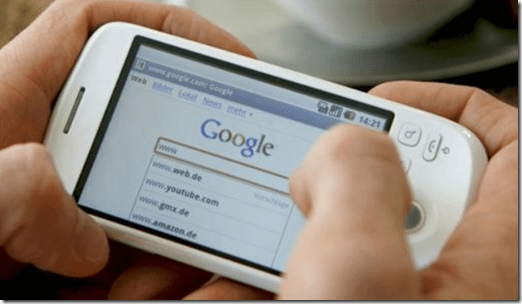
What’s wrong with that argument?
(more…)
SHARE THIS POST WITH FRIENDS & FAMILY
Posted in Brain - thinking, Cognitive functioning, Cognitive processes, Memory, Mental Health | Leave a Comment »
September 17, 2019
Continuing on the subject of mental health, I’ve oft noticed that I seem to do my best thinking when I’m asleep.
Specifically, I like to get on the computer as soon as I jump out of bed (literally) … and I often find myself doing a brain dump of thoughts that weren’t top of mind before I’d gone nite-nite.
When I mention that to folks, the revelation initially gets some chuckles … then some start nodding and chiming in with “me, too” variants on the story.
Of course, some remained unconvinced.

=======
For the skeptics, here some science …
(more…)
SHARE THIS POST WITH FRIENDS & FAMILY
Posted in Brain - thinking, Cognitive processes, Cognitive Skills, Memory, Mental Health | Leave a Comment »
October 12, 2018
Simple answer: not very … it’s subject to gaps, distortions and falsehoods.
============
The Kavanaugh-Ford imbroglio really piqued my interest in brainworks, memory and psychotherapy.
Studying up on the topics, I stumbled upon a 2013 TED Talk by Dr. Elizabeth Loftus – a research psychologist specializing in memory. Her specific areas of interest are the effects of trauma and therapeutic memory reconstruction.
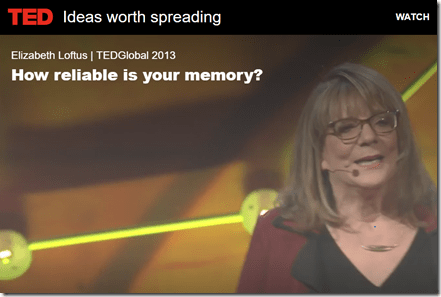
click to view
Trust me, the entire 15 minute talk which has been viewed by almost 4 million people and is loaded with evidence and examples – is engaging and educational. Well worth watching!
For now, here are some key snippets from the talk…
(more…)
SHARE THIS POST WITH FRIENDS & FAMILY
Posted in Ford, Dr. Christine, Kavanaugh, Brett, Memory, Psychotherapy | 1 Comment »
September 20, 2018
First, the disclaimers: On balance, I support Kavanaugh for the SCOTUS (though he wasn’t my first choice) … and, I’m not a psychologist.
But, over the years, I’ve done a lot of reading on how brains work … largely focused on how students students learn – cognitively and mechanically.
So, politics aside, I found the accuser’s story (as reported to the WaPo) to be curious … mostly because of the self-admitted memory gaps … e.g what year the alleged incident took place? where the incident took place? who else was present?

The cable coverage has been predictably biased on the question of how much an accuser should be able to recall … cherry-picking folks who fit their respective narratives.
CNN/MSNBC have rolled out experts arguing that memories of traumatic events are usually vague, fragmented and incomplete. Think: fog of war.
FOX has presented rape victims who claim precise recall of all sights, sounds and smells from start-to-finish. Think: mechanical evidence gathering.
Note: I do channel-switch to hear both sides. If you don’t, try it to get a more complete picture.
I wanted a more scientific treatment, so I did some digging.
Here’s what I found…
(more…)
SHARE THIS POST WITH FRIENDS & FAMILY
Posted in Kavanaugh, Brett, Memory, Psychology | 1 Comment »
September 19, 2018
According to a recent study, once a person hears that a fictional event happened, there’s a 50/50 chance that they will believe that it took place and start to embellish it with details, even if the imaginary event is of a personal nature.
For example, researchers “primed” subjects with fake (but relatively harmless) memories, such as taking a childhood hot-air balloon ride or pulling a prank on a friend.
Researchers intimated that the imaginary events were real.

And, the result …
(more…)
SHARE THIS POST WITH FRIENDS & FAMILY
Posted in Fake news, Memory, News sources, Psychological Traps | Leave a Comment »
April 24, 2018
By default, your brain “defragments” when you sleep.
=========
In a prior post, we reported some scientific evidence that most people really do think when they sleep.
For details, see: I do my best thinking when I’m sleeping … say, what?
Let’s take the science a step further…
First, an analogy…
Have you ever defragmented your computer’s hard drive?
Just in case your answer is “no” – or, you’ve never heard of defragmentation – here’s a short course:
When you save a file on your computer (think: Word, Powerpoint, Excel), the file isn’t stored in one piece.
Rather, it’s automatically broken into smaller pieces … and each piece is stashed in the first place that the computer finds an open space on the hard drive.
Since the file is stored in scattered pieces, the computer has to reassemble it when you subsequently re-open the file.
That takes time … and slows the process.
There’s a process called “defragmentation” that sorts through a computer’s hard drive, eliminates “dead links” and reassembles “live” files into contiguous pieces … making the save & open processes more efficient.
Well, it turns out that your brain comes with a process analogous to defragmentation … it’s called “synaptic pruning” … and it happens automatically when you sleep.
Here’s how it works …
(more…)
SHARE THIS POST WITH FRIENDS & FAMILY
Posted in Brain - thinking, Cognitive processes, Memory | Leave a Comment »
April 19, 2018
Study: Half of people “remember” events that never happened
=====
According to a recent study, once a person hears that a fictional event happened, there’s a 50/50 chance that they will believe that it took place and start to embellish it with details, even if the imaginary event is of a personal nature.
For example, researchers “primed” subjects with fake (but relatively harmless) memories, such as taking a childhood hot-air balloon ride or pulling a prank on a friend.
Researchers intimated that the imaginary events were real.
And, the result …
(more…)
SHARE THIS POST WITH FRIENDS & FAMILY
Posted in Fake news, Memory, News sources, Psychological Traps | Leave a Comment »
April 3, 2018
First, some background …
The tests I give my students always include some questions that can reasonably be tagged “memorization”.
Some students are repulsed by them and shout the cultural refrain: “Don’t memorize anything that you can look up.”
The apparent thinking: You’ve only got a limited amount of space in your brain, so don’t clog it with an overload of information … only store the stuff you can’t look-up.
What’s wrong with that argument?
(more…)
SHARE THIS POST WITH FRIENDS & FAMILY
Posted in Cognition, Cognitive behavior, Digital amnesia, Memory | Leave a Comment »
January 31, 2018
Study: Half of people “remember” events that never happened
=====
According to a recent study, once a person hears that a fictional event happened, there’s a 50/50 chance that they will believe that it took place and start to embellish it with details, even if the imaginary event is of a personal nature.
For example, researchers “primed” subjects with fake (but relatively harmless) memories, such as taking a childhood hot-air balloon ride or pulling a prank on a friend.
Researchers intimated that the imaginary events were real.
And, the result …
(more…)
SHARE THIS POST WITH FRIENDS & FAMILY
Posted in Fake news, Memory, News sources, Psychological Traps | Leave a Comment »
October 19, 2017
Study: Half of people “remember” events that never happened
=====
According to a recent study, once a person hears that a fictional event happened, there’s a 50/50 chance that they will believe that it took place and start to embellish it with details, even if the imaginary event is of a personal nature.
For example, researchers “primed” subjects with fake (but relatively harmless) memories, such as taking a childhood hot-air balloon ride or pulling a prank on a friend.
Researchers intimated that the imaginary events were real.
And, the result …
(more…)
SHARE THIS POST WITH FRIENDS & FAMILY
Posted in Fake news, Memory, News sources, Psychological Traps | Leave a Comment »
September 1, 2017
First, some background …
The tests I give my students always include some questions that can reasonably be tagged “memorization”.
Some students are repulsed by them and shout the cultural refrain: “Don’t memorize anything that you can look up.”
The apparent thinking: You’ve only got a limited amount of space in your brain, so don’t clog it with an overload of information … only store the stuff you can’t look-up.
What’s wrong with that argument?
(more…)
SHARE THIS POST WITH FRIENDS & FAMILY
Posted in Cognition, Cognitive behavior, Digital amnesia, Memory | Leave a Comment »
May 17, 2017
By default, your brain “defragments” when you sleep.
=========
In a prior post, we reported some scientific evidence that most people really do think when they sleep.
For details, see: I do my best thinking when I’m sleeping … say, what?
Let’s take the science a step further…
First, an analogy…
Have you ever defragmented your computer’s hard drive?
Just in case your answer is “no” – or, you’ve never heard of defragmentation – here’s a short course:
When you save a file on your computer (think: Word, Powerpoint, Excel), the file isn’t stored in one piece.
Rather, it’s automatically broken into smaller pieces … and each piece is stashed in the first place that the computer finds an open space on the hard drive.
Since the file is stored in scattered pieces, the computer has to reassemble it when you subsequently re-open the file.
That takes time … and slows the process.
There’s a process called “defragmentation” that sorts through a computer’s hard drive, eliminates “dead links” and reassembles “live” files into contiguous pieces … making the save & open processes more efficient.
Well, it turns out that your brain comes with a process analogous to defragmentation … it’s called “synaptic pruning” … and it happens automatically when you sleep.
Here’s how it works …
(more…)
SHARE THIS POST WITH FRIENDS & FAMILY
Posted in Brain - thinking, Cognitive processes, Memory | Leave a Comment »
May 5, 2017
First, some background …
The tests I give my students always include some questions that can reasonably be tagged “memorization”.
Some students are repulsed by them them and shout the cultural refrain: “Don’t memorize anything that you can look up.”
The apparent thinking: You’ve only got a limited amount of space in your brain, so don’t clog it with an overload of information … only store the stuff you can’t look-up.
What’s wrong with that argument?
(more…)
SHARE THIS POST WITH FRIENDS & FAMILY
Posted in Cognition, Cognitive behavior, Digital amnesia, Memory | Leave a Comment »
February 7, 2017
Don’t memorize anything that you can lookup (<=bad advice!)
=======
First, some background …
The tests I give my students always include some questions that can reasonably be tagged “memorization”.
Some students are repulsed by them them and shout the cultural refrain: “Don’t memorize anything that you can look up.”
The apparent thinking: You’ve only got a limited amount of space in your brain, so don’t clog it with an overload of information … only store the stuff you can’t look-up.
What’s wrong with that argument?
(more…)
SHARE THIS POST WITH FRIENDS & FAMILY
Posted in Cognition, Cognitive behavior, Digital amnesia, Memory | 1 Comment »
February 6, 2017
Study: Half of people “remember” events that never happened
=====
According to a recent study, once a person hears that a fictional event happened, there’s a 50/50 chance that they will believe that it took place and start to embellish it with details, even if the imaginary event is of a personal nature.
For example, researchers “primed” subjects with fake (but relatively harmless) memories, such as taking a childhood hot-air balloon ride or pulling a prank on a friend.
Researchers intimated that the imaginary events were real.
And, the result …
(more…)
SHARE THIS POST WITH FRIENDS & FAMILY
Posted in Fake news, Memory, News sources, Psychological Traps | Leave a Comment »
September 22, 2016
First, some background …
The tests I give my students always include some questions that can reasonably be tagged “memorization”.
Some students are repulsed by them and shout the cultural refrain: “Don’t memorize anything that you can look up.”
The apparent thinking: You’ve only got a limited amount of space in your brain, so don’t clog it with an overload of information … only store the stuff you can’t look-up.
What’s wrong with that argument?
(more…)
SHARE THIS POST WITH FRIENDS & FAMILY
Posted in Cognition, Cognitive behavior, Digital amnesia, Memory | Leave a Comment »
July 1, 2016
First, some background …
The tests I give my students always include some questions that can reasonably be tagged “memorization”.
Some students are repulsed by them them and shout the cultural refrain: “Don’t memorize anything that you can look up.”
The apparent thinking: You’ve only got a limited amount of space in your brain, so don’t clog it with an overload of information … only store the stuff you can’t look-up.
What’s wrong with that argument?
(more…)
SHARE THIS POST WITH FRIENDS & FAMILY
Posted in Cognition, Cognitive behavior, Digital amnesia, Memory | Leave a Comment »
July 7, 2015
First, some background …
The tests I give my students always include some questions that can reasonably be tagged “memorization”.
Some students are repulsed by them them and shout the cultural refrain: “Don’t memorize anything that you can look up.”
The apparent thinking: You’ve only got a limited amount of space in your brain, so don’t clog it with an overload of information … only store the stuff you can’t look-up.
What’s wrong with that argument?
(more…)
SHARE THIS POST WITH FRIENDS & FAMILY
Posted in Cognition, Cognitive behavior, Digital amnesia, Memory | Leave a Comment »




 The Homa Files