The Homa Files reached a milestone this morning
… more than 250,000 all-time views.
Thanks, loyal readers for your support … it’s what keeps me going.

P.S. Look at the recent trend … and keep visiting.
The Homa Files reached a milestone this morning
… more than 250,000 all-time views.
Thanks, loyal readers for your support … it’s what keeps me going.
P.S. Look at the recent trend … and keep visiting.
I think the unfolding political fight is Pennsylvania will certainly be interesting to watch … and, possibly will be enshrined as a strategy “teaching moment”.
First, a disclaimer … the underlying logic for this case comes from Dick Morris … he’s a hard right partisan with a grudge against the Clintons and a penchant for newsworthy predictions – many of which are airballs. So, I usually take him with a grain of salt.
That said, I think he may have something here:
Obama’s Pennsylvania Blunder
There are many reasons why Obama will lose this election — by a lot — on Tuesday.
But when the history of this contest is written, it will be especially important to probe why Obama blundered by virtually ignoring Pennsylvania.
Team Obama was so focused on the swing states that they ignored the semi-swing states which could come into play. Ohio, Florida, Colorado, North Carolina, Virginia, Iowa, New Hampshire, Iowa, and Nevada loomed so large in their calculations that they forgot about Pennsylvania, Wisconsin, Michigan, and Minnesota.
Adopting an all-or-nothing approach, Obama advertised heavily in the swing states and not at all in the semi-swing states of the Midwest.
The Detroit, Pittsburgh, Milwaukee, and Minneapolis media markets — and all the smaller cities in between got no Obama advertising.
Obama took care to irradiate the swing states with his negative attacks on Romney.
When the voters in those states saw that Mitt was not a Halloween monster but a pretty nice and reasonable guy, his negative stopped working and the states started falling to Romney.
But in Pennsylvania, Wisconsin, Minnesota, and Michigan, the negatives on Romney never ran.
The only Romney they saw in these states was the very presentable and attractive one who showed up in the debates. So there was no obstacle to hold them back from voting for Mitt.
Obama’s static dependence on the swing states to constitute a firewall backfired.
The firewall became like the French Maginot Line of 1940, easily outflanked.
When Romney began to buy ads in the semi-swing states, Obama was slow to respond.
Initially, his campaign dismissed Romney’s ads in Pennsylvania as a bluff intended to draw Obama’s resources away from Ohio.
But it was no bluff. Romney’s people realized that 20 votes in Pennsylvania were as good as 18 in Ohio.
And, in this final week, Romney’s campaign and its allied groups are spending $11 million on Pennsylvania ads as opposed to only $2 million for Obama.
Most polls show Obama leading in PA by at least a couple of points.
But, Romney’s internal campaign polls show the race well within the margin of error.
And, they’ve got a couple of strong targeted messages (coal, gun rights) … without the burden of the auto bailout debate.
That’s why Mitt is doing a closing campaign event in Philly on Sunday.
No way, Team Obama could have expected that.
Whereas Mitt has plenty of $$$ to throw at PA, Obama is more limited … each dollar that goes to PA comes out of a swing state. in the vernacular, Team O blew their wad early in the campaign … not much dry powder left.
And, add Hurricane Sandy to the mix.
Conventional wisdom is that Dems are more fair-weather voters that Republicans.
If folks in Philly’s center city don’t get to the polls, Romney’s gambit may play out.
We’ll see.
The “Establishment Survey” of employers reported that 171,000 jobs were added in October.
The “Household Survey” … the basis of the unemployment rate calculation … reported that 410,000 jobs were added in October.
That’s on top of the 873,000 jobs reportedly added in September … when the Establishment Survey reported 114,000 jobs added.
So, the Household Survey says that 1,283,000 jobs were added in September and October.
The Establishment Survey says that employers added 255,000 jobs in September and October.
The difference is roughly 1 million jobs … a big difference which, in many quarters, would be considered statistically significant.
For example, if the October Household Survey had claimed the same 171,000 as the Establishment Survey, the unemployment rate would’ve bumped to 8% … not 7.9%.
And, if the Household Survey had been in alignment with the Establishment Survey in both September and October, then the unemployment rate would be about 8.5%.
Draw you own conclusions.
In October there were 171,000 new jobs added.
Most of the job creation came in the services sector, with a gain of 150,000.
The unemployment rate moved higher to 7.9 .
Economists had been expecting the report to show a net of 125,000 new jobs and a steadying of the unemployment rate at 7.8 percent.
= = = = =
What Homa Files Predicted
Earlier this week, we posted Re: Friday’s big number … what to expect (if the BLS doesn’t hide-the-weinie).
We said …
“My bet: They’ll report on time that the unemployment rate clicked up to 7.9% … it’s the best “managed” number …. let’s Obama crow that it’s under the magic 8% … and, let’s Romney point out that it’s going in the wrong direction.”
Bingo !
No, it’s not the number of consecutive weeks that the BLS has under-reported initial unemployment claims … it’s the number of taxpayer-funded green energy companies that have failed so far … another 27 are reported to have very short financial runways..
Would you invest in this venture capitalist’s next fund?
* * * * *
Source
First, the no-no warning from the CBS affiliate in Atlanta …
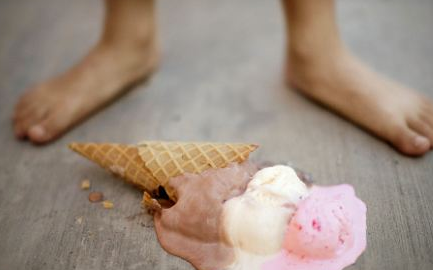
Most people are familiar with the famed “five second rule,” which states that if dropped food is picked up off the floor within five seconds of contact, it is still safe to consume.
In fact, 65 percent of parents admitted to implementing the five second rule in their homes.
Though a popular belief, a new study has found that germs often win the race.
The study, co-funded by Clorox and conducted by researchers at San Diego State University, found that germs do in fact attach themselves to edible items within that amount of time.
Baby carrots were reportedly deposited on different surfaces, including a countertop, a kitchen sink, a table, and both a carpeted and tiled floor in the interest of testing the theory.
An additional carrot was kept clean, to serve as a constant.
Researchers found that germs affixed themselves to the carrots within five seconds of contact with different surfaces.
The countertop was found to be the dirtiest surface, with the carpeted and tiled floors following closely in second and third place.
* * * * *
And, the counter story that says it’s ok for some foods …
We’ve all quoted the 3 or 5 second rule — if food falls on the floor, it’s ok if you retrieve it within 3 (some say 5) seconds!
In other words, all the yucky stuff on the floor/ground/sidewalk won’t have time to stick to our yummy stuff if we drop it.
But is it true?
Scientists investigated, and it seems for some foods, like cookies or processed ham, yes, it does work!
For other foods, like pasta, it’s a fail. The wetter the food, the bigger the risk.

* * * * *
We report, you decide.
Punch line: Weeks before what could be one of the closest presidential elections in U.S. history, Dems are claiming that fforts to mislead, intimidate or pressure voters are an increasingly prominent part of the political landscape
So are the Dems frivolous charges..
* * * * *
Excerpted from Reuters’, “As U.S. election nears, efforts intensify to misinform, pressure voters”

“We’ve seen an uptick in deceptive and intimidating tactics designed to prevent eligible Americans from voting,” said Eric Marshall of the Lawyers’ Committee for Civil Rights Under Law.
Just a few of the unscrupulous tactics include:
Edit by JDC
* * * * *
Ken’s Take:
(1) Grandma Homa always said: If you’re not doing anything wrong, you have nothing to worry about …
(2) SEIU and UAW strong-arming is apparently benign …
(3) Club-wielding members of the New Black Panther Party are ok …)
(4) They forgot about requiring IDs to vote …
(5) It’s gonna be ugly …
According to a recent Pew report
The Dem and Republican ground games are performing at rough parity with each other.
In the important battleground states, 13% have been contacted by Obama supporters
… 14% have been contacted by Romney supporters, and
…. 38% have been contacted by both.
Pew didn’t ask how many times?
If the Homa family experience is projectable, that answer is about 3 phone calls and 3 pieces of mail each day.

= = = = =
The shocker
About those robo-calls …
Pew says that roughly 2 in 3 people don’t listen to robo-calls that they get
… 81% find them annoying, and
…. the robo-calls make 1 in 5 people angry.
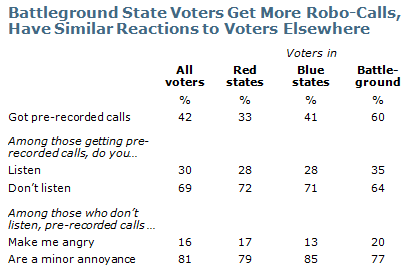
My question: why do 1 in 3 people listen to the robo-calls.
According to a just released Pew poll …
Roughly 1 in 5 have voted early.
Among early voters, Romney has the edge 50% to 45%.
Romney is outperforming McCain’s rate in 2008 by 16 percentage points.
Obama is underperforming his 2008 performance by 10 percentage points.
Hmmm.

Yeah, yeah, yeah … I’m getting as tired writing about it as you’re getting reading about it.
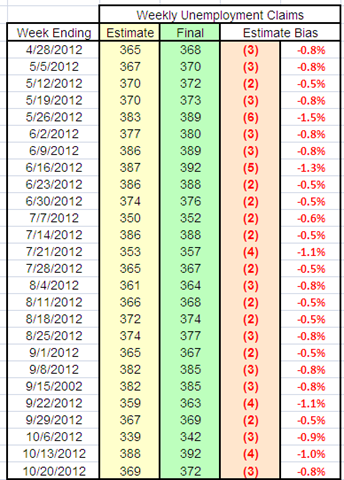
But, the BLS streak — understating initial claims – continued this week.
Now we’re up to at least 26 election season weeks in a row that the BLS’s “headline number” has under-reported the number of initial unemployment claims … and cast the jobs situation as brighter than it really is.
Based on today’s BLS report, the number for the week ending October 20 was revised upward from 369,000 to 372,000 … making this week’s headline look 3,000 better.
These guys can’t be this sloppy or this stupid … can they?
= = = = =
To put today’s number in context. let’s flashback to the chart in yesterday’s post .
The reported 4-week moving average is 374,000.
So, if the relationship of inital unemployment claims and the unemployment rate holds, tomorrow’s BLS report should be an unemployment rate of about 8.1%
That’s what all of my analyses say that the number is … but I’m still betting the under.
I think the BLS will fudge the numbers to keep the unemployment rate under 8%.
We’ll see tomorrow.

Last month, there was a “discontinuity” between jobs added as reported by the BLS’ establishment survey of employers (114k jobs added) and the household survey (873k).
The spurt in the latter drove the unemployment rate calculation (7.8%) which raised many eyebrows.
So, what to expect this Friday?
Looking back to the beginning of 2011, job growth via the employer survey has averaged 150,000 per month; the household survey has averaged 179,000.
Said differently, the employer survey has reported about 3 million jobs added; the household survey has reported about 3.6 million jobs added.
Below is a chart that indexes the two series back to January 2011.
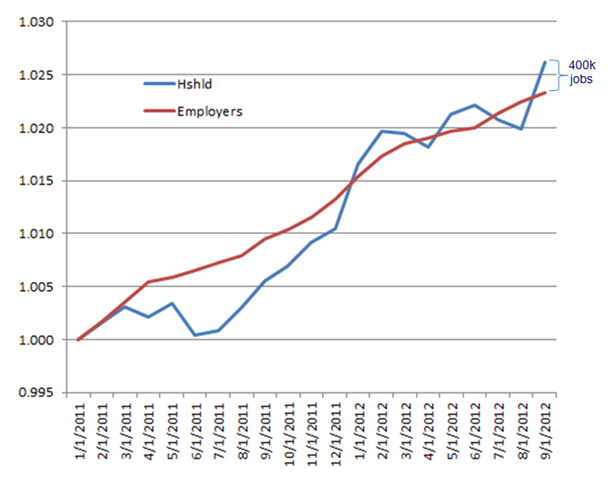
Note that for the past couple of months, the less stable household survey has bounced over and under the employer survey.
That’s what you’d expect for two comparable data series drawn from different samples.
So, statistically speaking, I’d expect one of two outcomes this Friday … either:
1) The household series “averages out” and bounces under the employer number … showing a decline of about 350k jobs and a a higher unemployment rate, or
2) The household series “serially correlates” (i.e. continues a high run) … and burps out another sizable increase in employment (say, 250k) … and another reduction in the unemployment rate.
If #1 happens, Team Obama will argue that you shouldn’t place too much weight on one monthly number … an argument that they shelved last month.
If #2 happens, Team Romney (and Jack Welch) will claim book-cooking again.
Either way, I think voters will yawn since they believe so little of what gets spewed out these days …
The election polls results are all over the place.
My take: the election is a dead heat nationally (slight Romney edge in the popular vote) and in key swing states (slight Obama lead in pivotal swing states, lead in electoral votes).
But … the fat lady hasn’t sung yet.
To get a better understanding of the dynamics in play, I dug into this week’s NPR poll.
Why NPR?
Because, if anything, it leans left, so no cookin’ the books for Mitt.
Also, it reported some interesting metrics that provide a basis for some interesting analysis.
= = = = =
Topline Results
First, NPR reports Romney leading Obama by 1 point … 48% to 47% for all respondents … dead heat.
And, 48% + 47% = 95%, so 5% are still undecided, voting for another candidate, or hopelessly confused … or all three.
So, 5 points are arguably up for grabs.
Conventional wisdom says they break mostly for the challenger … advantage Romney.

Looking deeper – into the footnotes, NPR says:
In other words, Romney’s score could be as high as 51% or as low 45%.
Obama’s score could be as high as 50% and as low as 44%.
Bottom line: Either candidate might be leading … Romney could be leading by as many as 7 points … 51% to 44%.
Or, Obama could be leading by as many as 5 points … 50% to 45%.
That doesn’t tell us much, right?
= = = = =
Independent Voters
Let’s look at the Independent voters (above chart).
Romney leads with independent voters by 12 points … 51% to 39%,
Is that lead statistically significant?
Well, NPR says:
So, Romney could be as high as 56.5% or as low as 45.5%.
Obama could be as high as 44.5% or as low as 33.5%.
Bottom line: Romney has an unequivocal, statistically significant lead among Independents.
= = = = =
Voter Intensity
Here’s where things get interesting …
NPR asked:

In marketing research, there’s a principle called the “top box effect”.
In essence, it says to focus on folks who check the highest level allowed … and pretty much ignore the rest as insignificant.
So, what do the numbers tell us?
Republican “intensity”, i.e. “extremely enthusiastic”, is 76% – 10 percentage points higher than the Dems 66% … and 22% higher than Independents 54%.
That’s a big intensity advantage for the Republicans.
How might it translate to votes?
We need another piece of data and some basic arithmetic.
= = = = =
Turnout Assumption
You’ve probably been hearing the grumbling—mostly from Republicans – that recent surveys have been skewed Democratic … that they implicitly assume that Dems will turnout more than Republicans.
The NPR “mix” is 35% Republicans, 33% Independents, and 31% Republicans.

We’ll test the sensitivity of those numbers later … for now, let’’s use NPR’s assumption.
= = = = =
”Hard Support”
OK, now let’s play with the numbers.
Here’s the summary chart … below, I’ll explain it.

What we’re trying to get to is “Hard Support” … folks who are “intense” (“extremely enthusiastic”) and favor Romney or Obama.
To get at that, we have to look at Republicans, Independents and Democrats separately.
For example, 76% of Republicans are “extremely enthusiastic” … and 96% of Republicans say they’ll vote for Romney.
Multiply those 2 numbers together, and they imply that 73% of Republicans are both “extremely enthusiastic” and inclined to vote for Romney (76% X 96% = 73%).
Since the sample “mix” is 31% Republican, Romney’s hard support from Republicans is equivalent to 22.6% of all voters (since 73% X 31% = 22.6%).
Applying the same calculations to the other classifications (Independent & Democrat) … and the data indicates that of Romney’s total of 48%, 32.9% is “hard support” and 15.2% is “soft support” that is less likely to show up at the polls.
Repeating the process for Obama, the data indicates that of Obama’s total of 47%. 29.1%% is “hard support” and 17.9% is “soft support”.
So what?
Romney has a 3.7 percentage advantage in hard support – the folks who are most likely to show up at the polls.
That’s a statistically significant number, given the polls 3 point margin of error.
Bottom line: If we factor in intensity, Romney has statistically significant advantage.
= = = = =
Another mix scenario
Let’s add one more twist.
What if the mix of Dems and Republicans is roughly equal at 33% … instead of 35% to 31%?

Big change!
Romney’s lead increases to 5.6% percentage points … Romney 50.6% to Obama 45%.
And, Romney’s hard support lead increases to 6.4 percentage points … well outside the margin of error.
= = = = =
Punch line
Yes, the headline number may signal a dead heat … within the margin of error.
But, if you factor in intensity and party mix … the numbers change pretty dramatically.
The Republican’s intensity advantage and lead among Independents seem pretty consistent across polls.
So, the key for Republicans is delivering on the intensity advantage … making sure that the “extremely enthusiastic” Republican & Independent voters turnout to vote.
For Dems, the turnout effort is even more critical since they have to close the intensity gap.
Dems claim that their turnout machine gives it substantial competitive advantage that will close the gap … or more.
I guess we’ll see next Tuesday.
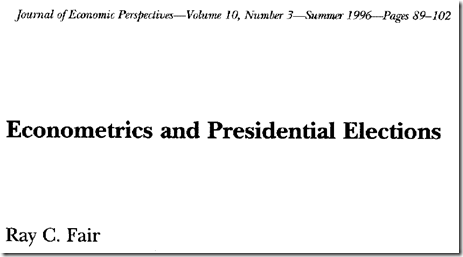
It’s called the Fair Model – not because it’s unusually unbiased (though I assume it is unbiased – but because its creator id Prof Ray Fair … currently at Yale, previously at Princeton.
We’re reporting the results for 2 reasons.
First, because I was one of Prof. Fairs research assistants at Princeton … he was the person who introduced me to econometrics … and, for that I’ll be forever grateful.
Second, because Prof. Fair’s modeling has essentially reduced presidential election outcomes down to 3 economic variables:
According to the WSJ, plug those figures into Prof. Fair’s econometric model and Romney edges Obama 51 to 49.
Said differently, “if Romney doesn’t win, it will have been despite an economy that Mr. Fair’s model suggests should have been in his favor.”
Punch line:Women are attending college at higher rates than men, graduating in greater numbers and earning higher grades. Yet one year after graduation, women were making only 82 percent of what their male colleagues were paid.
* * * * *
Excerpted from The Washington Post’s, “One year out of college, women already paid less than men, report finds”
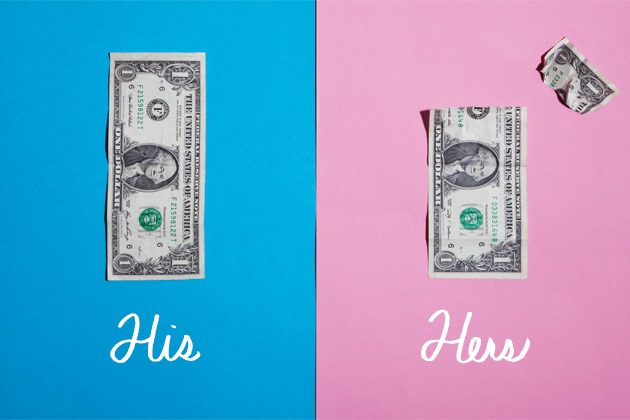
Nearly every occupation has long paid men more than women, despite laws aimed at narrowing and dissolving the differences.
Even when men and women had the same majors, there were often gaps in pay.
But much of the overall gap — the 18-percentage-point disparity — could be explained by career choices; men are more likely to enter high-paying fields such as engineering and computer science.
The researchers controlled for that, along with other variables, but an “unexplained” 6.6-percentage-point gap remained.
The researchers put forward suggestions for reducing the pay gap, including encouraging women to pursue careers in higher-paying fields and to negotiate higher pay.
“A problem as long-standing and widespread as the pay gap, however, cannot be solved by the actions of individual women alone,” the researchers wrote.
“Employers and the government have important roles to play. The pay gap has been part of the workplace so long that it has become simply normal.”
Edit by JDC


 The Homa Files