What do actor Zach Galifianakis and the cast of “Duck Dynasty” have in common?
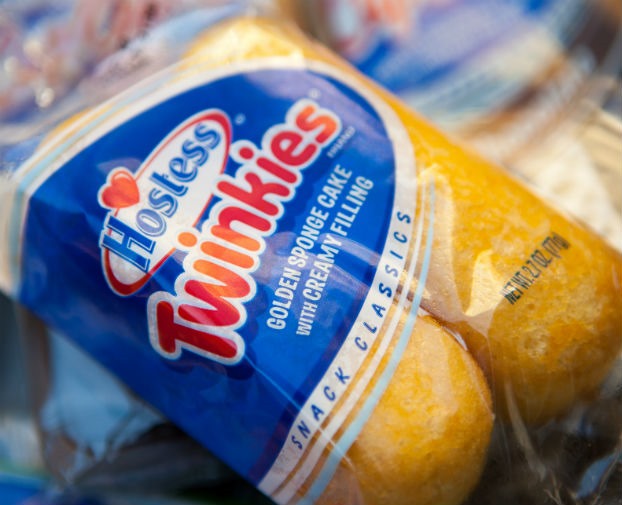
They could be the new pitchmen for Twinkies and other beloved Hostess snack brands.
And, there’s more to the marketing plan …
What do actor Zach Galifianakis and the cast of “Duck Dynasty” have in common?
They could be the new pitchmen for Twinkies and other beloved Hostess snack brands.
And, there’s more to the marketing plan …
Malcolm Gladwell gave us Tipping Point.
Now, Prof. Jonah Berger from Wharton hopes to catch a wave with a new book: Contagious: Why Things Catch On.
Berger says you need 6-elements – or STEPPS – to boost your odds of going viral:
One of the book’s examples is BlendTec – a blender company that we posted a couple weeks ago in an article worth reading (again): Marketing ROI: What you get for $300 million … and for $10.
For more, click to see a 15 minute interview with Prof. Berger.
Pretty interesting.

* * * * *
Follow on Twitter @KenHoma >> Latest Posts
Marker’s Mark Bourbon may have made the single dumbest marketing decision ever.
They decided to stretch short supplies of Maker’s Mark by diluting it … by literally adding water.
The company must have been inspired by either:
(a) millions of teenage boys who replenished their dad’s whiskey bottle by adding water after taking a swig, or
(b) Chris Rock’s hilarious minute-long bit on ‘Tussin … which is guaranteed to make you chuckle.
.
If you run out of ‘Tussin, no problem.
Just put some water in the bottle and shake it up.
Just like that … mo’ ‘Tussin … mo’ ‘Tussin
* * * * *
OK, back to the Maker’s Mark story …
By now everybody has probably heard that Maker’s Mark bourbon got themselves into a bit of a mess.
The primary cause: runaway sales.
Why’s that a problem?
Well, bourbon whiskey takes a few years to age … and a couple of years ago, Maker’s Mark management bet the under on future demand and didn’t start enough MM flowing through the distilling process.
So, Maker’s Mark can’t meet the market demand.
They can ramp up production, but the new brew won’t be ready for 6 years.
So, what did the jabrones decide to do … and why is it a problem?
According to the YouGov Brand Index annual survey, the winner is …

YouGov BrandIndex’s Buzz score asks respondents: “Have you heard anything about the brand in the last two weeks, through advertising, news or word of mouth?”
That’s a pretty wide net – can be positive or negative – but, it is certainly a measure of “buzz”.
Here are the rest of the Top 25 … many surprises …
Punch line: How do you market a pair of $300-plus sneakers? If you’re Nike, you just do it quietly. And by acting like you’re not marketing them at all.

* * * * *
Excerpted from Advertising Age, “Nike’s $300 Shoe Has the Marketing Built Right In”
Nike found itself in another controversy this week when news surfaced that it’s planning its most-expensive sneaker ever: the uber expensive LeBron X …
As the Swoosh is no stranger to controversy it is poised to combat the backlash through:
One of the strongest selling features for shoes like the LeBron X is that they’re not for everybody.
In fact, Nike will only make 25,000 to 50,000 pairs which is expected to drive up prices and demand.
Edited by JDC
According to court testimony in the Apple v. Samsung patent trial …
Apple no longer actually needs to do ANY advertising when it launches new products.
So testified marketing chief Phil Schiller
Instead, the company relies on these two strategies:
The media is so reliably disposed to favor Apple’s products that when the iPhone was launched in 2007, the company didn’t do any advertising during a brief period after the device was introduced in January 2007 and when it went on sale later in the year.
“We didn’t need to.”
The rave reviews of the iPhone and iPad did a better job than advertising to build buzz.
Apple also relies heavily on product placement: “We love to see our products used by stars in movies and television shows.
* * * * *
Memo to JCP CEO Ron Johnson: JC Penney isn’t Apple !
From the great moments in marketing file …
If you wan people to buy your product, give ‘em a free sample.

Excerpted from from the NYT …
In a special promotion, Trojan Vibrations is handing out 10,000 vibrators from two Manhattan hot dog carts identified as pleasure carts.
Along with the brand’s logo, the carts will feature sayings like “Getcha vibes here!” and “Relish the moment.”
“We thought that by giving out more vibrators, it would create some buzz, so to speak”
Trojan asserts this is the biggest handout of vibrators ever.
So new are the devices to mainstream retailers that growth in that channel has been phenomenal.
In the past year, revenue for sexual enhancement devices sold in drugstores and mass retailers grew 23.2 percent over the year before, to $16.1 million.
According to studies financed by Trojan and published in The Journal of Sexual Medicine, 52.5 percent of women and 44.8 percent of men have used vibrators.
Contrary to perceptions that they are used nearly exclusively by the unaccompanied, 40.9 percent of women and 40.5 percent of men report having used them with sexual partners.
“What we’re doing is taking something like a hot dog cart that is so everyday and so mainstream … and we’re showing people that vibrators are mainstream.”
Carol Queen, curator of the Antique Vibrator Museum and a staff sexologist for Good Vibrations, a sexual products retailer founded in 1977, credits the new Trojan ads with “pretty seamlessly integrating men into the campaign.”
Rather than seeing the growing availability of the devices at mass retailers as a threat to specialty retailers like Good Vibrations, Ms. Queen said, “what’s fabulous about the way that Trojan has entered the marketplace is that a rising tide lifts all boats.”
Some consumers who buy their first device as an impulse buy at a mass retailer are apt to eventually be drawn to boutiques … with trained people who can answer your questions and help you choose,
You just can’t make this stuff up …
Punch line: In the old days, Cadillac was the badge of excellence. Calling something the Cadillac of its category was high praise.
Well, Mickey D. wants to fill the void with the Egg McMuffin … suggesting that this breakfast sandwich is somehow synonymous with excellence.
Based on social networking indicators, the idea is getting some traction.
Gotta make you proud to be a marketer …
* * * * *
Excerpted from adweek.com, “Is This Egg McMuffin Ad the Egg McMuffin of Ads? Breakfast sandwich gets new catchphrase”
http://www.youtube.com/watch?feature=player_embedded&v=nn1IGSCp2yI#t=0s
Casting the Egg McMuffin as shorthand for excellence is about as odd as grouping it with healthy foods and casting it as a wholesome dietary choice.
But McDonald’s latest commercial for the breakfast sandwich does just that, starting with a girl telling a guy that he’s “the Egg McMuffin of boyfriends” and proceeding from there.
That phrase has caught on quickly, with the Boston Globe reporting on the adoption of the phrase in social media — used ironically or not — with something like 11,000 tweets and 1,200 Facebook mentions.
Check Twitter for various clever uses. It even made Craigslist, where a New Jersey residence was described as “the Egg McMuffin of 2 BR apts in downtown Hoboken.”
Returning to the ad, my favorite part is the Egg McMuffin of cars bit.
That’s how a friend of mine used to describe his old vehicle because it leaked oil and smelled gross.
Edit by KJM
TakeAway: Despite the craze over sites like Groupon and LivingSocial, many companies are finding it difficult to maintain sustained growth after using the site.
New research shows that the buzz these sites generate can’t make up for products that do not deliver a good value.
So perhaps the 40% of companies that wouldn’t use Groupon again should reevaluate their offerings.
* * * * *
Excerpted from Bloomberg Businessweek, “What Groupon and LivingSocial Cannot Offer,” January 25, 2011
Last month,Amazon invested $175 million in the number two online coupon site LivingSocial. True to form, Amazon is already using the platform to create enormous buzz: last week, they announced a coupon: $10 for a $20 Amazon gift certificate. Within hours, the offer generated massive interest, giving LivingSocial one of their biggest growth days and selling over $10 million in Amazon gift cards …
LivingSocial is not the first to create a compelling coupon offer. That honor goes to the market leader, Groupon. …Now, thousands of companies are jumping on the latest trend trying to generate buzz for their products.
Putting aside whether coupon sites are sustainable, all this begs the question of the value of buzz and being a first mover.
The costs are clearly high, but companies with products that tend to generate early buzz seem to do very well. At least that is the conventional wisdom. But a new study shows that no amount of buzz, excitement or first mover’s advantage will lead a product to sustained growth.
The study … tested whether early buzz could precipitate a product’s ultimate success. Using an online music test site, researchers tested whether music that was highly praised early on would be downloaded more than songs with less buzz. True to form, results from an initial study demonstrated that buzz and social influence generated early adoption and the more a song was discussed, reviewed and downloaded, the more people wanted the song. Success begets success.
But then the research team took that data and dissected it further. When they did, a surprising result emerged: while social influence can give a product an early advantage, that edge is typically not sustainable. “Social cues could convince you to take a look … but didn’t necessarily make you go in the store and buy something.” …
In business, we too often forget that what we are selling is value: we instead try to sell technology, or packaging, or just plain vaporware. To add value, your technology needs to be productized, and to do that you need to offer unique value to a customer. Without a valuable and unique product, viral marketing, social influence and buzz will help initially but will be of no lasting consequence.
No surprise, this is what many companies are finding on sites like Groupon and LivingSocial. There has been a large backlash by companies stating that these sites just don’t work: they cost a lot of money and the initial pop in sales dissipates moments later. A Rice University study found that upwards of 40% of companies who have used Groupon say they wouldn’t do so again. …
Edit by DMG
* * * * *
TakeAway: Social media has increased the speed at which customers hear from their friends about good and bad experiences with companies. In times of recession, low prices AND good customer experience are what’s needed to succeed. People-centric industries, like retail and hotel, where there is more competition tend to spend more to create a good customer experience and find success in doing so.
* * * * *
Excerpted from AdAge, “The Marketing Value of Customer Experience,” by Josh Bernoff, January 12, 2011
Customer experience is marketing. That is, in a world drenched in social word-of-mouth, the way you treat your customers — and the way they perceive you — makes all the difference in what they say to their friends.
…results from Customer Experience Index survey.
The best performers overall were Borders, Barnes & Noble, Kohl’s, Costco, Amazon, JCPenney, Walgreens, Target, BJ’s Wholesale Club, and USAA (credit cards). …a great experience by itself doesn’t make up for an industry facing digital disruption. It’s also fascinating how many low-price providers are in the top ten,… . In a recession, providing low prices and an experience that’s better than people expect is a prescription for success.
… advertising is a lot cheaper and easier than changing… to focus on customer experience. … sure, you can keep hammering the message of how great you are, even if your customers think differently. … But in the end, people will find out the truth — and with social technology, that happens more easily every day.
Or, you could put your money and effort into improving the experience. That’s an effort that will take a couple of years, but with buyers coming back and seeking value as the recession lifts, you’ll attract the leaders. They’ll talk. You could end up like Zappos, where the customer word-of-mouth is most of the marketing. Or, you could just develop a customer experience that resonates with consumers, which is a whole lot easier to advertise.
Edit by HH
Punchline: Law-enforcement officials say “alcohol, loud noise, thick crowds and the high emotions of children’s birthday parties make Chuck E. Cheese restaurants more prone to disputes than other family entertainment venues.”
* * * * *
Excerpted from BrandChannel: Someone Please Save Chuck E. Cheese’s, March 10, 2010
Generally, a strong, popular brand can weather a bad mention in the press. Even a second bit of bad press should be no big deal. However, three, four, or five are cause for alarm. And family dining and entertainment establishment Chuck E. Cheese’s should be alarmed.
The Chuck E. Cheese’s brand name has been turning up in the news with rather disturbing frequency, and each report evokes more of images “jail time” rather than “fun time.” Here is a list of some of the reports from the last few months:
“Fights among guests are an issue for all restaurants, but security experts say they pose a particular problem for Chuck E. Cheese’s… Law-enforcement officials say alcohol, loud noise, thick crowds and the high emotions of children’s birthday parties make the restaurants more prone to disputes than other family entertainment venues.”
Chuck E. seems to be dragging his feet to address the situation.
So far, the only action the brand has taken is to post “rules” in his 530-plus locations:
* * * * *
Ken’s Take: Gee, woulda thought those rules would have been enough to remedy the situation. What kind of gang member disrespects a “No” sign ?
Full article:
http://www.brandchannel.com/home/post/2010/03/10/Someone-Please-Save-Chuck-E-Cheeses.aspx
From the Rasmussen Reports, Sept. 11, 2008
* * * * *
46% of voters say they most trust information about the presidential campaign from family and friends as opposed to 32% who trust the information from news reporters more.
* * * * *
Voters are skeptical of media bias in general.
Only 21% of voters overall say reporters try to offer unbiased coverage.
86% of Republicans, 74% of independents, and 49% of Democrats think reporters try to help the candidate they want to win.
45% of Democrats say most reporters are providing unbiased coverage in the current presidential campaign, but only 20% of unaffiliateds and 9% of Republicans agree.
* * * * *
63% of likely McCain voters believe reporters would hide information harmful to the candidate they favor, 48% of potential Obama voters agree.
* * * * *
Full article:
http://web1.rasmussenreports.com/public_content/politics/election_20082/
2008_presidential_election/69_say_reporters_try_to_help_the_candidate_they_want_to_win
* * * * *
Want more from the Homa Files?
Click link => The Homa Files Blog


 The Homa Files
