Archive for February, 2011

BHO: “I’ll walk that picket line with you” … oh, just kidding.

February 28, 2011

As a stumping candidate, Obama declared: “And understand this: If American workers are being denied their right to organize and collectively bargain when I’m in the White House, I’ll put on a put on a comfortable pair of shoes myself. I’ll walk on that picket line with you as president of the United States.”

See it with your own eyes
image

http://www.youtube.com/watch?v=SA9KC8SMu3o

So, why hasn’t he kicked off his Motown Gala dancin’ shoes and slipped into some comfy walkers to join his buds in Madison, Wisc. ?

Especially after firing the early shot about “assaulting union rights”?

Well, turns out that Obama has some explaining to do.

As the WSJ reports:

President Obama, the great patron of the working man, also happens to be the great CEO of one of the least union-friendly shop floors in the nation.

Fact: President Obama is the boss of a civil work force that numbers up to two million (excluding postal workers and uniformed military).

Fact: Those federal workers cannot bargain for wages or benefits. Fact: Washington, D.C. is, in the purest sense, a “right to work zone.” Federal employees are not compelled to join a union, nor to pay union dues.

Fact: Neither Mr. Obama, nor the prior Democratic majority, ever acted to give their union chums a better federal deal.

Fact:  Democratic President Jimmy Carter, backed by a Democratic Congress, …  severely proscribed the issues over which employees could bargain, as well as prohibited compulsory union support.

Fact: Federal employee unions . Unions are limited to bargaining over personnel employment practices such as whether employees are allowed to wear beards, or whether the government must pay to clean uniforms.

Perhaps, Pres.. Obama will explain how it is that Wisconsin is wrong to ask for the same budget flexibility that he enjoys as president.

If he’s unable or unwilling) to do that, perhaps he’ll tell the thugs he dispatched to Wisconsin to back off.
In praise of global residencies …

February 28, 2011

Some timely reading for 2nd year Georgetown MBAs as they jump on planes to start their Global residencies. 

According to the dean of the Darden Graduate School of Business at the University of Virginia …

New research has revealed a sizable gap between what the business world needs and what business schools provide to their students.

The bane of most business school deans is the kind of conversation one has with a CEO who wags his finger and tells you that business schools just aren’t delivering the kind of talent business needs.

Lately, it seems that the CEOs have been telling a story like this: “A recent grad we hired got up to give a presentation to our senior management and had simply no appreciation for the challenges of globalization: no feel for the country or region; no anticipation of corruption or socialism in-country; no grasp of the supply chain difficulties; no appreciation for the differences in rule of law and property rights; and the proposed brand name translated into an unmentionable body part. The pitch was an embarrassment.”

A new report issued by the Association for the Advancement of Collegiate Schools of Business, the leading accreditor of business schools in the world reveals a sizable gap between what the world needs and what management educators do.

  • There are about 12,600 institutions in the world award undergraduate or graduate degrees of some kind in business.
  • Only about 10% of these are accredited as meeting widely accepted expectations of quality.
  • Many of the unaccredited institutions are locally focused, and concentrate in the developed economies.

There is a gap in the curricula of business schools, between the aspiration for global content and the reality.

Most schools — even leading schools — aren’t bringing globalization into the classroom in ways that do justice to the subject or the needs of businesses.

We should do better.

Fortune.  B-Schools: It’s time to globalize, February 25, 2011 

E*Trade tells baby: “Just shut-up !”

February 28, 2011

TakeAway:  E*Trade has generated a lot of awareness with its talking baby ads, but is losing ground to its competitors.

Byt, awareness doesn’t lead to customers if the message is wrong.  And, for most people money is not a joking matter..

E*Trade has caught onto this and is reworking its campaigns going forward.

* * * * *

Excerpted from Bloomberg Businessweek, “E*Trade Looks to Outgrow That Talking Baby,” by Ben Steverman, February 16, 2011

E*Trade may boast some of the most popular advertisements on TV, but the company still can’t make a profit. Hobbled by bad loans that blew up in the financial crisis, it’s stuck at fourth place in the highly competitive online brokerage industry.

E*Trade executives are thus trying a new strategy: While not entirely abandoning their talking baby campaign, they’re spending more than half of an increased ad budget on messages without the stock-trading infant. The talking baby ads, which began airing during the 2008 Super Bowl, have been a hit with TV viewers. Nielsen says that an ad featuring the E*Trade baby with a sneezing cat was the third most-liked commercial during the 2011 Super Bowl, watched by a record 111 million people. Because of the baby, “we have much higher brand recognition vs. the competition,” says E*Trade’s chief marketing officer.

Despite the attention, the New York-based company has fallen behind rivals in assets and new customer signups. Since the end of 2007, E*Trade has boosted its number of brokerage accounts by 9.4 percent, to 2.7 million. That’s solid growth, but much of the online brokerage industry has seen a heavier influx of assets. Charles Schwab has increased its active brokerage accounts by 13.5 percent since 2007 and TD Ameritrade has boosted total accounts by 24 percent in that period. …

… What’s holding back E*Trade may not be its offerings but its customer image, something the talking baby ad campaign isn’t improving… It’s an unusual strategy for a financial company. “How many people want to take advice from a baby?” …

Edit by DMG


* * * * *

Stop demonizing Wisconsin teachers !

February 25, 2011

Yesterday’s post “Maybe Wisconsin kids are better off with their teachers protesting” seems to have struck a nerve.

From a reader:

“According to your statistics, Wisconsin teachers are 4% better than the nationwide average.  Which is admittedly pretty poor, but I don’t understand why you are attempting to portray them negatively when they in fact appear to be above average.  Also, can we stop ignoring the fact that the teachers are protesting largely in response to the attempt to take away their collective bargaining rights? Education reform is a hugely complicated issue and I fail to see how demonizing a whole states-worth of individuals who spend more time with kids than many parents do is going to make the situation better.”

Here’s my open reply:

First, the Wisconsin teachers are doing a nice job demonizing themselves — by cutting classes and getting fake excuse notes from doctors.  Would that conduct be tolerated from students?  It certainly wouldn’t be tolerated by private companies – employees would be terminated in a heartbeat.  Which, I guess, is why the teachers need collective bargaining – to protect their irresponsible behavior.

Second, it makes me cringe to see anybody doing victory laps over 32% of eighth graders being proficient in reading …  I don’t think that  4% better than the national average is compelling.  Why?

The bottom line: about two out of three Wisconsin eighth graders don’t read proficiently. Ouch.

Time for teachers in Wisconsin – and every place else –  to step up and take responsibility … or at least get a fake note from a roving doctor.


Location-based Marketing hits it stride … SBUX leads the way

February 25, 2011

TakeAway: Location based marketing is exploding as restaurants and other food venues draw in  more customers.

LBM allows restaurants to reach a pool of consumers who are social media savvy and are “hyper-engaged” with the brand.

* * * * *

Excerpted from MediaPost, “Location-Based Marketing To Diners To ‘Explode’ ” by Karleen Lukovitz, February 15, 2011

Restaurants’ use of location-based marketing to… “explode” in 2011…

As consumers’ uptake of location-based services continues to mushroom, with competitors “not only becoming ubiquitous, but also more sophisticated,” …

Starbucks routinely shows the largest volumes of Foursquare check-ins with McDonald’s generally in second place and Chipotle and Burger King within the top 10, ….

… one in five (21%) consumers who consider going out to restaurants “part of their lifestyles” already uses cell phones or other portable devices to place orders, and nearly four in 10 adult consumers use social media platforms to learn about restaurants, …

…the scale of Facebook interaction …not only enables restaurant brands to imprint themselves on consumers and make relevant, well-timed offers, it is a critical means of building a pool of consumers for purposes of ramping up location-based advertising and promotions.

Starbucks has more than 1,700 Facebook friends per restaurant unit, and Facebook users are over 70% more likely than average to visit Starbucks. …Chipotle Mexican Grill has nearly 1,200 Facebook friends per unit. Engaged Facebook users are nearly 70% more likely than average to patronize this chain, and “hyper-engaged” users are more than 85% more likely.

…Twitter and its geolocation service are offering restaurants a significant opportunity to reach a younger, more urban, multicultural audience, …also proven a critical tool for attracting patrons for urban food trucks and mobile foodservice units — which are increasingly common among big brands, as well as independents.

Mobile devices are also… driving rapid restaurant adoption of in-restaurant, point-of-sale promotions and auto payment systems.

“The restaurant industry is in the midst of being shaped by the convergence of the mobile, always connected, consumer; location-based and context-aware technological innovation; and mobile payments — all of which are already demonstrating the potential to redefine how to cultivate restaurant guest loyalty, incentivize dining occasions and better tailor marketing messages,”

Edit by HH

* * * * *

Maybe Wisconsin kids are better off with their teachers off protesting …

February 24, 2011

I would have thought that Wisconsin’s protesting teachers would have anticipated that the spotlight would eventually be turned onto their performance.

Well, it has … and the picture isn’t much to crow about.

According to CNSnews.com

The National Assessment of Educational Progress rates student learning, and says that “Proficient“ represents solid academic performance.

Applying that standard, two-thirds of the eighth graders in Wisconsin public schools cannot read proficiently.

In the National Assessment of Educational Progress tests administered by the U.S. Department of Education in 2009 — the latest year available — only 32 percent of Wisconsin public-school eighth graders earned a “proficient” rating while another 2 percent earned an “advanced” rating. The other 66 percent of Wisconsin public-school eighth graders earned ratings below “proficient.”

The test also showed that the reading abilities of Wisconsin public-school eighth graders had not improved at all between 1998 and 2009 despite a significant increase in the amount of money Wisconsin public schools spent per pupil each year… from $4,956 per pupil in 1998 to 10,791 per pupil in 2008.

Nationwide, only 30 percent of public school eighth graders earned a rating of “proficient” or better in reading, and the average reading score on the NAEP test was 262 out of 500.

In other words, despite the $10,791 that taxpayers were paying to educate students in Wisconsin public schools, two-thirds of eighth graders in those schools showed at best only a “partial mastery of prerequisite knowledge and skills that are fundamental for proficient work” at that grade level.

Oops

Tell me again why they should get “free” health insurance and pensions …

Auto sales are up, so new home sales should follow … oh, really?

February 24, 2011

According to Business Week and Bank of America-Merrill Lynch…

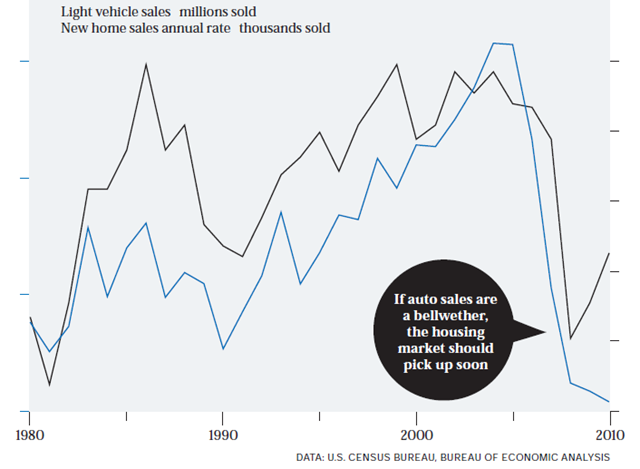
Rising demand for cars and trucks signals U.S. new-home sales may jump soon.

Why?

Data from the U.S. Census Bureau and the Bureau of Economic Analysis says that new-home sales have tracked sales of lightweight vehicles in the past 40 years — and lightweight vehicles sales are on the rise.

Hmmm. 

image

Don’t Discount the Men!

February 23, 2011

TakeAway: It seems like no matter where you turn today, there’s a fascination with the idea that women are taking over – their receding unemployment rates, increased number of college degrees, etc.

However, the true growth—even in categories that courted female shoppers for years—lies with the guys.

So, while the buying power might be moving toward women in purely fiscal terms, marketers should not lose sight of the fact that it’s increasingly men who are writing up the shopping lists, hitting the stores and doing the actual spending.

* * * * *

Excerpted from Brandweek, “Women Are Wealthy, but Guys Mean Growth” By Kathy Oneto, December 5, 2010

The “everyday Joe” has been taught that it’s OK to look good, smell nice and dress well. The motivations (while varied) for this new man’s grooming activities are less about vanity than instilling confidence and creating a feeling of success. Then there’s the growth of the full-time dad. Since 2007, 6.3 million American men have lost their jobs, which has among other things served to redefine their household roles.

What’s significant about this from a marketing perspective is that as fathers assume traditional “mom” jobs such as packing lunches and doing laundry, their interest in the brands associated with these activities—from convenience foods to fabric softener—has increased proportionally.

Some brands have been prescient enough to capitalize on this gender-role drift already. Nutrisystem, for example, has defied industry norms in the weight-loss market by directing its messaging toward men. The move not only gave the brand a new base of consumers, but it also furnished Nutrisystem with an alternative to slugging it out with competing weight-loss plans for share of the same female demo.

Similarly—and after years of soft-focus commercials full of soft-skinned women—the Dove soap brand made a play for the masculine market with a new suite of products called Dove Men + Care, which emphasizes deep-cleaning over softness and signed spokesmen like the Yankee’s Joe Girardi to make clear that Dove was no longer your wife’s beauty bar.

A broadened strategic attention is necessary for any company or any brand that hopes to stay competitive and relevant in a marketplace as lean and mutable as this one is. As one target demo (women, in this case) has moved to the economic forefront, the other (men) may have been inversely impacted. But opportunity often arises from disruption. The sooner that the marketing community catches on to men as a market for goods that previously weren’t aimed at them, the sooner they’ll reap the rewards.

Edit by AMW

* * * * *

Are you doing better now ?

February 22, 2011

Key stats from date Obama was inaugurated until today.

Yeah, I know … it’s Bush’s fault.

image

Published on DickMorris.com on February 15, 2011

Honk if you want your money going to pay for gov’t employees’ pay and benefits …

February 22, 2011

Punch line: Gov’t employee unions collect dues from members … then fund political campaigns … and sponsored officials, when elected, increase members pay & benefits … so that the union can collect  more dues, etc. 

Not exactly a virtuous cysle.

Washington Examiner, In Wisconsin, it’s the unions vs. the people, 02/18/11

Liberals and the White House try to blur the issue by lumping together government unions and labor unions in general.

Obama wrongly calls Walker’s bill “an attack on unions.” It is, at its heart, a measure changing the way the state government procures labor — Walker would end single-source contracts with a politically connected special interests.

Government unions in Wisconsin perfectly match the definition of “special interests”.

Four of the top six Wisconsin contributors to the 2010 elections were labor unions … led by the state’s teachers union and  the Wisconsin chapter of the American Federation of State, County, and Municipal Employees.

Almost all of the money went to Democrats.

Government employees, as a group, matched the union contributions with most of their money going to Democrats, too.

In the romantic liberal vision of this union uprising, determined workers are standing up to the powerful.

For much of the Left, though, this about protecting the power of labor. But there’s no fat-cat owner wanting to pocket more profits here. The unions’ target in Wisconsin is the taxpayer.

At bottom, this is the unions versus the people.

Even Franklin Roosevelt said, “The process of collective bargaining, as usually understood, cannot be transplanted into the public service.”

Campaign contributions by government-sector unions, collected through mandatory dues, help elect the public officials who are then supposed to negotiate with them. “The unions sit, in effect, on both sides of the bargaining table.”

When unions overreach in the private sector, they drive their employers out of business, and so unions only flourish under those employers — governments — that can’t go out of business.

While governments won’t go out of business, they are going broke.

So, many taxpayers see the likes of Gov. Walker as a rare grown-up under attack by opportunistic and utterly politicized unions populated by overpaid government workers.

With state budgets in crisis and the Democratic machinery already in all-out campaign mode, war has already been declared — and if the unions win, the people lose.

Checking in to “The Office?”

February 22, 2011

TakeAway: TV check ins give advertisers a new way to get to know their customers even more. Some believe it to be the next big thing in social networking.

* * * * *

Excerpted from Brandchannel, “Check-In, Tune In, Turn On” by Sheila Shayon, February 2, 2011

TV check-ins, aka social TV, is the newest form of online engagement. …it’s steadily growing and predicted to be a break-out trend of 2011.

Brands include GetGlue, Philo and Miso. So far, according to Clickz, GetGlue is the one to beat. Since launching in 2007, GetGlue has amassed 800,000 users, and 30,000 Twitter followers. …partnered with Discovery and HBO, and parlayed $12 million in financing from investors ….

GetGlue partnered with Fox and Fatburger … offering check-ins to the live premiere with printable Fatburger coupons redeemable for a free burger, …

Philo, … claims “tens of thousands” of users. …called it “Twitter + Foursquare For TV Fanatics.”

“[Social TV platforms are] yet another conduit by which brands, networks and sponsors can reach viewers in a contextually relevant time in a hyper-targeted way,” Levy told Clickz. “The context is relevant. They know what they’re watching, they know the demographic and they know each individual user because in general, they’re connecting [to Facebook and Twitter].”

Miso … has 100,000 users and a partnership with Oprah Winfrey’s new network, OWN.

…”People are already tying what they look at on this second screen with what’s happening on the television. The company does not have to create the habit, they merely have to co-opt it.”

Points and badges have proven their worth as social currency across virtually every cranny of the web, and now consumer proclivity for rewards has migrated back to the original screen – television.

… “Social Media and TV fanatics are ahead of the game right now and bending the rules to their will. …

Google’s Kraus acknowledges the imminent sprint for manifest destiny as advertisers are “very experimentally, viewing the second screen as an interesting tie-in opportunity.”

It’s only a matter of time before the click hits the TV screen big time – and the socialization of television becomes standard fare. It’s an evolutionary juggernaut that’s virtually unstoppable.

Edit by HH

Death by Powerpoint …

February 22, 2011

What not to do when you pitch …

Thanks to MM for feeding the lead.

Majority rule or mob rule … I’m confused.

February 21, 2011

I’m getting confused.

When is majority rule good and mob rule bad?

And when is mob rule good and majority rule bad?

In Egypt, mob rule was good because majority rule – in the form of free and open elections – was being suppressed. Plus, Mubarek was a thug – albeit “our” thug for 30 years. 

Pushing aside the fact that the protesters on the square (about 100,000) were an infinitesimal part of the county’s population (about 83 million), I get that one.

In Wisconsin, mob rule is good and majority rule is bad.  Huh?

The clear majority of Wisconsin voters elected a GOP governor and GOP majorities in their state’s Senate and Assembly.  They got to work and prepped legislation to make government workers pay some (versus none) of their health insurance premiums and pension benefits.

So, the Dem Senators – who knew they were going to lose the vote to the majority —  left the state to preclude a quorum for the passing of any legislation.

Democracy at work ?

And, thousands of teachers were suddenly too sick to work, and sick enough to get sight-unseen notes from cause-supportive doctors, but healthy enough  protest in Madison – where they were complemented by bus loads of union and and Dem operatives – some from Wisconsin, some not – all encouraged by no less than President Obama.

So, the multi-state mob is good, the majority of voters is bad.

I’m having trouble with that one.

Now the big question.

If we’re switching from majority rule to mob rule, how many folks have to march on Washington to get ObamaCare repealed?

I figure that since 100,000 out of 83 million was good enough in Egypt … and 50,000 out of 5 million is good enough in Wisconsin … it should take only about 500,000 congregated protesters in the U.S.

I think the Tea Party could muster that number.

Hmmm.  Let’s be consistent, right ?

Anyone care for a Buck Range Light or a Big Flats?

February 21, 2011

TakeAway: New beer brands from retail giants Supervalu and Walgreens are part of a growing effort by chain stores to make a hit of private-label beer, a category that has proved difficult for retailers.

The retailers are trying to tempt shoppers with lower-priced alternatives to domestic mass-market brews such as MillerCoors’ Keystone Light.

The effort comes amid declining sales volumes for the beer industry, which has been hurt by stubbornly high unemployment.  But store-branded beers have struggled to gain traction for years in the U.S., in part because beer is typically consumed in social settings and brand image is important.

* * * * *

Excerpted from WSJ, “Private-Label Beers Take a Shot at Earning Joe Sixpack’s Respect” By David Kesmodel, February 8, 2011

Supervalu, the third-largest U.S. grocery chain by revenue, began selling Buck Range Light, a low-priced domestic brew (12-pack of cans for as little as $5.99), in December. Drugstore chain Walgreens recently began offering Big Flats 1901 for as little as $2.99 a six pack. Costco rolled out craft beers under its Kirkland Signature brand in December 2008.

Part of the attraction for retailers is that sales of other store-branded goods—from soap to pasta—have been robust. Revenue for private-label products rose 2% last year in food, drug and mass-merchandise outlets, according to market-research firm Nielsen Co., compared with a 1% decline for branded items.

Annual sales for the U.S. beer market are about $96 billion, according to market-research firm Beverage Information Group. MillerCoors, which has a 29% share of the U.S. beer market, argues that house brands can pose downsides for the whole beer category. “Retailers should be cautious about over-proliferating their beer shelf with private label, unsupported brands that can commoditize the category”. Dave Peacock, president of Anheuser’s U.S. division, said “the industry is defined by players who invest heavily behind brands.” Anheuser-Busch controls about 48% of the U.S. beer market by volume.

Industry observers said it could be tough for Walgreens and Supervalu to build a following for their new brews. “I think it’s a hard sell, mainly because nobody has succeeded on the low-end with private-label beer,” said Harry Schuhmacher, publisher of the newsletter Beer Business Daily.

Edit by AMW

* * * * *

We’re all “special” … yeah, right.

February 18, 2011

Our parents told us we were special.

But, we all knew they were just doing their jobs.

These days, “awards proliferation” is picking up where mom and dad left off … confirming that we’re all special.

In “Everyone’s a Winner,” sociologist Joel Best concentrates primarily on America’s self- congratulatory culture.

Everywhere the author turns his gaze—from bumper stickers that boast about “my kid the honor-roll student” to boosterish “employee of the month” awards — Mr. Best sees a proliferation of prizes that seems to arise from a desperate desire to exclude fewer and fewer people from the winner’s podium.

Literary prizes are now given for every kind of category, including 12 different kinds of detective fiction recognized by the Mystery Writers of America’s Edgar awards. The nominees for the Best Picture Oscar (nominations themselves are awards) have recently doubled from five to 10, and the number of Grammy awards given out last Sunday night came to more than 100. Valedictorians were once unique; now some high schools have dozens.

The tendency to create social subsets in which we may be recognized for “excellence,” in Mr. Best’s view, is also evident in the explosion of rankings and “best of” lists in recent decades—including everything from colleges and plastic surgeons to car-repair shops and hamburgers.

Such prizes and rankings …  are often self-created and thus abundant.

One question that Mr. Best does not address is whether the many winners among us actually believe our own hype.

Martin Chuzzlewit noted long ago that many of us think we are among “the most remarkable people in America.”

WSJ, Why We’re All Above Average, Feb.16, 2011.

Wisc. gov’t unions to Dem Senators: “We own you !” … Dem Senators: “Let’s get outta here"

February 18, 2011

The rubber seems to have hit the road in Wisconsin.

Scott Walker was elected governor last November.

His platform: get the state budget under control.

So, he and GOPers in the Wisc statehouse drafted a law that would make public workers pay half the costs of their pensions and at least 12.6 percent of their health care coverage – about half of what private sector folks pay.

Currently, the Wisc gov’t workers pay ZERO towards health insurance and pensions.

So, they’re taking the proposed law pretty seriously – shutting down schools (thousands of suddenly sick teachers), marching en masse on the statehouse and the homes of the governor and legislators, carrying signs depicting the governor as Hitler and Mubarek. They’re being praised in lib media as “Midwestern Egyptians”.

In response, all of the Dem state Senators left the state for an Illinois resort — to preclude a quorum.  So, the legislature couldn’t vote the law up or down.

Police were dispatched to round up the escaped Senators, but got stalled at the Wisc state line.

President Obama piped in –- not to praise the fiscal responsibility or condemn the protesters incivility – but to assert that Wisc GOPers are simply trying to break the unions.

I guess that’s why FDR – Obama’s idol – thought that gov’t employee unions shouldn’t be allowed.

Geez.  You can’t make this stuff up.

AP, Wis. lawmakers flee state to block anti-union bill, Feb. 17, 2011

Mobile ads more effective than TV … ring, ring.

February 18, 2011

TakeAway: Data showing effectiveness of mobile advertising, specifically Apple’s iAd platform just released.

Folks seeing ads on their mobile devices via iAds are more likely to remember the brand, like the product and want to buy it more than those who see an ad on TV.

* * * * *

Excerpted from AdAge, “Apple, Campbell’s Say iAds Twice as Effective as TV” by Kunar Patel, February 3, 2011

It’s been seven months since the first iAds — …and now that those campaigns are over, we’re seeing the first effectiveness study, funded by Apple and one of iAd’s early adopters, Campbell’s.

In it, is a fairly big claim: Those exposed to one of Campbell’s iAds were more than twice as likely to recall it than those who had seen a TV ad. …the five-week study showed that iAd consumers remembered the brand “Campbell’s” five times more often than TV ad respondents and the ad messaging three times more often.

IAd respondents intended to purchase Campbell’s four times more than the TV group and that they liked the ad five times more.

… Apple is looking for data that would persuade existing marketers to renew or increase their initial investment as well as win over new advertisers standing on the sidelines. The problem Apple is facing is for their high cost of entry — a reported $1 million minimum for first-run advertisers — many other options exist for mobile advertising, including rich-media competitors like Medialets that look and feel a lot like an iAd.

… Out of 53 million impressions, 1% of users that saw the ad clicked through and spent an average of nearly one minute perusing it. …these results for iAd also beat the marketer’s benchmarks for static banner ads.

… “This does show, in really traditionally brand metric terms, that iAd really outperformed.”… The study was put in place to validate mobile, a relatively new medium for the marketer.

The brand is struggling with preconceptions of the decades-old brand and iAd was a way to frame the brand in a new light.

…the survey could also reflect overall demographic differences of each medium, or the targeting that Campbell’s used in their iAd campaign. The iAd sample was weighted to reflect the iPhone and iPod Touch universe in terms of age, gender and income, while TV survey results were weighted for a general TV audience.

Edit by HH

* * * * *

Cracking down on – you guessed it – those evil, profiteering tanning salons …

February 17, 2011

Here’s the latest from our pro-business, big picture President …

Baked into President Obama’s budget, the Internal Revenue Service will get 1,054 new auditors and staffers and new facilities at a cost to taxpayers of more than $359 million in fiscal 2012 just to watch over the initial implementation of President Obama’s healthcare reforms.

Among the new corps will be 81 workers assigned to make sure tanning salons pay a new 10 percent excise tax.

Their cost: $11.5 million.

US News, Healthcare Reform Law Requires New IRS Army,  February 15, 2011

He may take his eye off Egypt and the US Economy, but he maintains a sharp focus on the tanning salons.

Forget the jugular, just go right for the capillaries.

Thanks to SMH for feeding the lead

I took this to a drugstore and they didn’t even know what it was …

February 17, 2011

In my marketing strategy class, we were chatting about product life cycles, and I commented that being the ‘last guy standing’ in a declining market can be a profitable position since the last guy is by definition a monopolist, and momopolists are positioned to make beaucoup d’argent — that is, lots of money.

A student pointed out that might be true … until the declining market just flat out dies.

Good point …  supported by an interesting story about the end of a photography era and an iconic brand:

A sign on the wall reads: “I took this to a drugstore and they didn’t even know what it was”.

Dwayne’s Photo, a small family business has through luck and persistence become the last processor in the world of Kodachrome, the first successful color film and still the most beloved.

Kodachrome …  is noteworthy in no small part for how long it survived.

Created in 1935, Kodachrome was an instant hit as the first film to effectively render color.

Even when it stopped being the default film for chronicling everyday life — thanks in part to the move to prints from slides — it continued to be the film of choice for many hobbyists.

That celebrated 75-year run from mainstream to niche photography is scheduled to come to an end on Thursday when the last processing machine is shut down at Swayne’s —  to be sold for scrap.

Kodachrome rewarded generations of skilled users with a richness of color and a unique treatment of light that many photographers described as incomparable even as they shifted to digital cameras.

Kodak stopped producing the film last year.

At the peak, there were about 25 labs worldwide that processed Kodachrome. That number got winnowed down to one – Dwayne’s.

Last year, Kodak stopped producing the chemicals needed to develop the film.

The last frame of the last roll to be processed: a picture of all Dwayne’s employees standing in front of the store wearing shirts with the epitaph: “The best slide and movie film in history is now officially retired. Kodachrome: 1935-2010.”

NYT, For Kodachrome Fans, Road Ends at Photo Lab in Kansas, December 29, 2010

Thanks to DM for feeding the lead

If a tree falls in the woods …

February 17, 2011

I always find these numbers interesting …

From the latest ratings book:

  • O’Donnell is holding most of Olberman’s viewers
  • Piers Morgan is beating King’s numbers
  • Nobody is close to O’Reilly

Overall, MSNBC is approaching public access numbers …

image

Source: Drudge

The solution is high-speed rail … what, pray tell, is the problem?

February 16, 2011

Seriously, have you heard anybody (except Reid & Obama) say “man, what this country needs is a $53 billion  “national high-speed rail system” ?

I sure haven’t.

Except for connecting liberal bastions DC, NYC and Boston .., and Disneyland and Las Vegas … I can’t figure out where it would run … and more important, who would ride it ?

Robert Samuelson of Newsweek sees a few other holes in the program …

The rail proposal casts doubt on the administration’s commitment to reducing huge budget deficits.

High-speed rail would definitely be big.

Transportation Secretary Ray LaHood has estimated the administration’s ultimate goal – bringing high-speed rail to 80 percent of the population – could cost $500 billion over 25 years.

For this stupendous sum, there would be scant public benefits. Precisely the opposite. Rail subsidies would threaten funding for more pressing public needs: schools, police, defense.

How can we know this? History, for starters.

In 1970, Congress created Amtrak to preserve intercity passenger trains.  The idea was that the system would become profitable and self-sustaining after an initial infusion of federal money. This never happened. Amtrak has swallowed $35 billion in subsidies, and they’re increasing by more than $1 billion annually.

Despite the subsidies, Amtrak does not provide low-cost transportation. Fares on Amtrak’s high-speed Acela start at $139 one-way; A comparable roundtrip bus fare: $21.50.

Nor does Amtrak do much to relieve congestion, cut oil use, reduce pollution or eliminate greenhouse gases. Its traffic volumes are simply too small to matter.

Measured by passenger-miles traveled, Amtrak represents one-tenth of 1 percent of the national total.

The reasons passenger rail service doesn’t work in America are well-known: Interstate highways shorten many trip times; suburbanization has fragmented destination points; air travel is quicker and more flexible for long distances.

Even if ridership increased fifteenfold over Amtrak levels, the effects on congestion, national fuel consumption and emissions would still be trivial.

What’s disheartening about the Obama administration’s embrace of high-speed rail is that it ignores history, evidence and logic.

The case against it is overwhelming.  High-speed rail is not an “investment in the future”; it’s mostly a waste of money.

High Speed Rail a Fast Track to Waste, February 14, 2011

How high are your property taxes?

February 16, 2011

If you want to know how your county stacks up against others in the US, here’s a very cool interactive tool from the Tax Foundation … reports data for every county in the US

image

http://interactive.taxfoundation.org/propertytax/

Congrats on your new baby … need some Disney duds?

February 16, 2011

TakeAway: The Walt Disney Company wants to clothe newborns with its newest priority, Disney Baby.

Its distribution model starts with 580 maternity hospitals in the United States.

A representative visits a new mother and offers a free Disney Cuddly Bodysuit, a variation of the classic Onesie.

* * * * *

Excerpted from NYTimes, “Disney Looking Into Cradle for Customers ” By Brooks Barnes, February 6, 2011

In bedside demonstrations, the bilingual representatives extol the product’s bells and whistles — extra soft! durable! better sizing! — and ask mothers to sign up for e-mail alerts from DisneyBaby.com.

In this new venture, the company gains access to the maternity hospitals through a company called Our365, a business that sells bedside baby pictures.

Our365 pays hospitals for exclusive access, and companies like Disney pay Our365 to promote their own products.


More than 200,000 bodysuits will be given away by May, when Amazon.com is set to begin selling 85 styles for a starting price of $9.99 for two; Nordstrom and Target will follow with more Disney Baby items, including hats.

The endeavor dances close to a flame. Disney has suffered harsh criticism in recent years over products directed at the very young. The fiercest battle has involved Baby Einstein, the Disney-owned maker of “developmental and entertainment” videos and toys for babies and toddlers. The Campaign for a Commercial-Free Childhood, a nonprofit organization, claimed victory in 2009 when Disney, apparently acknowledging that the products did not turn babies into geniuses after all, offered some Baby Einstein refunds.

Certainly hospitals have given new mothers gift bags for decades. In recent years, however, more have banned the practice, citing criticism that free baby formula, for example, discourages breast-feeding. Privacy also is a concern.

Disney already operates a line of licensed products for infants, but results have been limited because Disney has relied almost entirely on simple licensing deals with companies like Kimberly-Clark, the maker of Huggies diapers. Grouping baby products under one brand that is controlled and heavily marketed by Disney represents a bigger opportunity.

Edit by AMW

* * * * *

Reducing the propensity to work …

February 15, 2011

Parent-to-parent chat line: “I told my son he’d better find a job so he has health insurance”

I’ve heard that refrain dozens of times from parents, so I should have picked up on this earlier …

Last week, CBO Director Elmendorf dropped a bomb at a Congressional hearing when he testified that ObamaCare would reduce the “propensity to work”.

English translation: under ObamaCare, if you don’t work, no problem.  You’ll get free health care from the government.

Well, actually, it’s not free – it’s just paid for by people who do work.  You know, tax payers.

Complement that “benefit” with a couple of years of unemployment compensation and why on earth would anybody take a relatively low paying job.

Kick back.  Relax.  And if you get sick, just send the bills to 1600 Pennsylvania Ave.

Elmendorf says the new ObamaCare entitlement will reduce employment by about 800,000 workers … as the labor force shrinks by about half a percentage point .

Mr. Elmendorf said that the law won’t eliminate jobs, it will reduce “the propensity to work.”

As with any other government subsidy, people receiving “free” health care won’t have as much incentive to search for a job or work full time.

On that score, Chris Van Hollen, the ranking Democrat on the Budget Committee, asked Mr. Elmendorf a leading question about “the freedom to choose to not get a job.”

I guess Van Hollen thinks people shouldn’t be forced to work if the don’t want to.

Hmmm.

Hey, that handbag is a fake !

February 15, 2011

TakeAway: Counterfeit products, especially low quality versions can damage a brand’s reputation.

For pharmaceutical products, counterfeits can also be very dangerous.

There are some promising new solutions to thwart counterfeiters like the one described below.

* * * * *

Excerpted from brandchannel, “New Tag Aims to Impede Chinese Counterfeiting,” by Barry Silverstein, February 2, 2011

Counterfeit branded products continue to plague legitimate marketers both on the street and online. Fueled by wary consumers seeking bargains and a global economy hampered by weak or non-existent intellectual property protection, phony goods skyrocketed last year, and this year will likely be no different.

Counterfeiting is a global problem, but it seems that China has developed a reputation as ground zero for fake brands. In China, counterfeiting is a black market industry that goes far beyond luxury brands, pervading virtually every product category.  …

Now the Leo Burnett ad agency thinks it may have the ultimate solution — the 1-TAG, a proprietary anti-counterfeiting application … which can be applied to a product during manufacturing and serve as “a signature authentication.”

With the 1-TAG, products “can be verified and authenticated at every stage of their manufacture and distribution, right through to the consumer.” The brand manufacturer can associate data to the tag code, including a product description, the manufacturing date, a product expiration date, and the product’s destination.

A salesperson or a consumer uses a standard mobile phone camera to “decode” the information via a free software application loaded on the phone. Burnett says the 1-TAG can be valuable for supply-chain inspections and to authenticate a product every step of the way. So the 1-TAG is both a behind-the-scenes product control mechanism, as well as something the consumer can use to protect herself against brand fakes.

The 1-TAG is currently in development and is likely to be tested in China soon. Burnett intends to market and sell 1-TAG beyond its own clients and potentially roll it out on a global basis. …

Edit by DMG

* * * * *

Fan of the game … and a Patriot, too !

February 14, 2011

You guessed it:  Granddaughter Anna … decked out in her Georgetown t-shirt … showing proper respect for the flag during the singing of the National Anthem … flanked by Mommie Meg and Gram Kathy … great time at the game … Hoyas won!

image

What’s your favorite: Starbucks or Dunkin’ Donuts?

February 14, 2011

A Rasmussen Reports survey finds ….

  • 62% of Adults say they drink coffee
  • 35% say they don’t touch the stuff

Of those Americans who do drink coffee …

  • 23% say they are more likely to buy it from Starbucks
  • 22% opt for  a convenience store
  • 22% opt for a local coffee shop
  • 14% get their coffee from Dunkin’ Donuts
  • 15% say they purchase it somewhere else.

Of coffee-drinking Americans …

  • 57% have at least a somewhat favorable opinion of Dunkin’ Donuts (20% Very Favorable, 22% unfavorable)
  • 49% regard Starbucks at least somewhat favorably (14% Very Favorable, 35%% unfavorable)
  • 71% of adults generally like the brew they make at home more than the kind they buy in a store or restaurant
  • 23% like the kind they buy away from home better
  • 63% think the coffee they buy in a store or restaurant is overpriced 

By the demos …

  • Adults over 40 are more likely to drink coffee
  • Adults under 30 are far more likely to buy coffee from Dunkin’ Donuts
  • Women have a higher opinion of Starbucks than men do.
  • Those who earn $60,000 or more a year like Starbucks more than those who earn less.
  • Blacks are more than twice as likely as whites to buy coffee from Dunkin’ Donuts.

Looking for whole grains? Well, follow the signs.

February 14, 2011

TakeAway: To help consumers sort through myriad of cereal options, General Mills is using social media as part of a new campaign to promote its cereals’ whole grain content.

The company expects this presence to  give consumers a shortcut or identifier to direct them to whole grain cereals.

The company will include special banners at the ends of aisles, more displays, including on pallets and in Spanish, colorful balloons and information at the checkout, as well as pointing out the check marks for whole grain content from the Whole Grains Council, an industry group that encourages eating whole grains.

* * * * *

Excerpted from NYTimes, “And Down This Aisle, Many Whole Grain Options” By Elizabeth Olson, February 2, 2011

General Mills began adding whole grains to its cereal in 2005, after federal dietary guidelines recommended daily food intake include whole grains. Its products, which include Cheerios, Cinnamon Toast Crunch, Fiber One and Total, each contain at least eight grams of whole grains per serving.

General Mills competes with Kellogg in the $6.5 billion cereal industry. It has slightly less than the one-third of Kellogg’s market share.

General Mills is moving to close the gap by spending 20 percent more on its whole grains advertising in 2011. The company spent nearly $245 million on all cereal marketing in the first nine months of last year.

The company advertises the whole grain content of its Big G cereal lineup, including Cheerios and Wheaties, separately from its advertising for individual cereal varieties.

For years, cereal makers have been battling with bread and pasta makers over which product has the higher whole grain content.

To help the baffled consumer, the General Mills campaign was reaching out to bloggers, including the MyBlogSpark network of people who review new products and other “influencers” — people who set a buying example for others. Consumers can sign up with the company’s Web site, generalmills.com, to receive and review products and host get-togethers to try new items with friends.

The whole-grains campaign is planning to give away one million servings of its whole grain cereals to needy families to spur consumption, although the company has not yet announced specifics of the giveaway. The campaign also created a series of pro-whole grain videos with a company nutritionist and Dr. Travis Stork, a host of “The Doctors” daytime talk show.

Edit by AMW

* * * * *

For Sale: one heavily used rubber stamp …

February 11, 2011

Yesterday, Sen. Jim Webb of Virginia announced that he won’t run for re-election.

Nuts.

I was relishing the chance to vote against him (again).

Webb campaigned as an independent kinda guy.

But, he seemed to toss his independence out the window during his short drive from Virginia to DC.

He dependably cast lemming-like party line votes on Obama’s Stimulus, ObamaCare, Omnibus Spending, and on and on.

He said that he “swallowed the bitter pill in the end and  voted for the final healthcare package.”

Bottom line: he voted yes, yes, yes, yes ….

One TV pundit said that Webb was calling it quits because of the enormous strains of being a Senator – what with long hours, evening and weekend votes, etc.

Gimme a break.

How much strain is there when you’re simply voting “Aye” to everything Obama-Reid-Pelosi serve up.

In fact, if Senators – from either side – are simply voting their party lines, why do they need offices, staffs, etc.

Can’t they just stay home and mail in their votes.

Would save a bunch of money …

Whatever happened to majority rule?

February 11, 2011

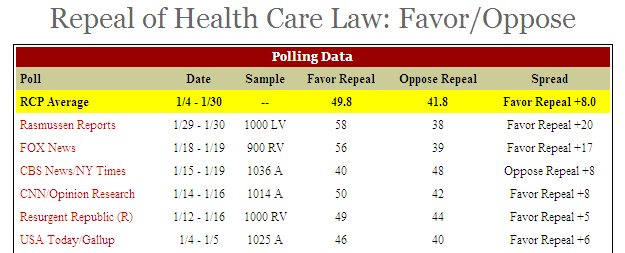
Excluding one poll from the bastions of impartiality: the NY Times and CBS – all major polls are now reporting that a plurality of Americans want ObamaCare repealed … and about 1/2 of the polls report a majority of citizens want it repealed.

Doesn’t faze our Dem senators, though, who voted as a lemming-bloc against an amendment to repeal the law.

Who cares what the majority of citizens want …

image

http://www.realclearpolitics.com/epolls/other/repeal_of_health_care_law_favoroppose-1947.html

This season’s latest trend: revamping your logo

February 11, 2011

TakeAway: Changing up your brand’s logo seems to be this seasons latest fad. 

But just because everybody’s doing it doesn’t mean you should, and especially not if you are removing the most iconic parts of your logo. 

* * * * *

Excerpted from Brandchannel, “NBCUniversal new logo might be ‘the Gap logo’ of 2011” by Abe Sauer, January 27, 2011

Look, we know the economy is bad and times are tough and the future is unknown. And we know that a brand looks at its logo …and wonders if it’s doing everything it can, if it maybe isn’t doing enough. …

But seriously, would brands all stop destroying the most recognizable elements of themselves.

…And now we come to NBC Universal. Is it a passive aggressive move … to pluck the iconic peacock from the new corporate logo?

Or is America’s biggest cable operator’s belief t that it needs to downplay the NBC part of NBCUniversal — name? It surely understands the NBC peacock is one of the most identifiable logos in America, if not the world, right?

We appreciate that it’s Comcast acquiring NBC Universal, …And it’s a new owner’s house and they can gussy up the joint as they see fit.

But Comcast — and Burke — are cable operators not known for their branding, naming (Xfinity?) or design savvy. NBCU, on the other hand, is home to some of the smartest branders on the planet, particularly on the cable networks’ side. Which would you rather do the redecorating in your house?

Also, what’s with running it all together into one word? Just try to pronounce how it looks. Do it, try. “NBCUniversal.”

This rebranding … celebrates the rich and dynamic content, a meeting of brands — so why would Comcast want new toy to be so…. blah? no vibrancy? no color? so… undistinguishable?


Edit by HH


* * * * *

Joe Wilson was right … “you lie”

February 10, 2011

On Monday, President Obama told the Chamber of Commerce that he’s pro-business and would cut both regulations and taxes.

That was Monday.

On Tuesday, the White House proposed to allow cash-strapped states to raise unemployment-insurance taxes.

Last year, Obama’s stimulus law expanded eligibility for unemployment … and the duration of its payments.

Now, the White House is moving to impose tax hikes on employers to pay for it.

Let me get this one straight.

Extend unemployment benefits … then add an employment tax that makes workers more costly … then act surprised when some of the more costly workers are canned – adding to the unemployment rolls and costs … and then raise taxes on employed workers … and so on.

Not exactly a virtuous cycle …

Every time I start thinking these guys can’t be THAT stupid … they prove me wrong.

Simple question: Why hasn’t Obama fired Ray LaHood?

February 10, 2011

Ray LaHood is Obama’s Transportation Secretary.

The guy who excorciated Toyota for making unsafe cars.

“I wouldn’t let anybody in my family drive one.  They’re not safe.”

No evidence.  Just hearsay.

No investigation.  Just anecdotes and ambulance chasers.

Toyota loses millions.  Government-owned GM surges.

Now, it’s “pedal misapplication”.  Not electronics.

Either LaHodd is totally irresponsible or frightfully conniving.

Either way, he should be fired

Let’s see if Obama has the moral clarity and ‘nads to do what’s right.

I’m taking the under on the bet …

Keep your Bud, gimme a Walgreen’s … huh?

February 10, 2011

TakeAway: Cheap beer is nothing new, but private label beer is not so common.

But now, Walgreens is introducing its line of Big Flats lager across 4,600 stores.

As if AmBev and MillerCoors didn’t have enough to worry about, there might be some more competition among those companies’ low-end offerings.

* * * * *

Excerpted from brandchannel, “Walgreens Offers Private-Label Beer,” by Jennifer Sokolowsky, January 31, 2011

Drugstores are the place to go to get your cough drops and allergy tablets, and now they are the places to pick up another kind of medicine — the self-medicating kind found in alcoholic beverages.

Duane Reade is luring Brooklyn hipsters by offering high-end bottled beer and fresh beer on tap to go in Williamsburg.

Now Walgreens is going in a completely different direction: offering its own private-label beer at the low end of the price scale.

Quietly introduced in mid-December, Walgreens now offers Big Flats 1901 lager in more than 4,600 of the chain’s 7,655 locations, according to the Chicago Tribune.

Big Flats 1901 may be labeled “premium brew,” but its price is anything but premium at about 50 cents a can, or $2.99 for a six-pack, though prices may vary by region. …

Walgreens is surely betting that those who come in looking for cheap beer will probably leave with something else as well — and that those who come in for something else just might not be able to resist leaving with some cheap beer. …

Edit by DMG


* * * * *

GM’s UAW workers get windfall bonus … and, oh yeah, Toyota’s innocent.

February 9, 2011

From the ‘makes your blood boil’ file:

Yesterday, there were 2 seemingly unrelated news stories … I say ‘seemingly’ because the mainstream media hasn’t picked up on the connection.

First, the WSJ reported that GM (aka, Government Motors)  is planning to pay its hourly workers  at least $3,000 each in profit-sharing payouts, the largest amount ever.  Why? Because the company miraculously returned to profitability in 2010. The profit-sharing checks will go to 45,000 workers as part of the auto maker’s contract with the United Auto Workers union.

Now, let’s stop and think for a moment.

How did GM return to profitability?

Through increased UAW productivity?

Nah.

First, GM wiped out shareholders and – completely ignoring contract law — moved the union pension claims ahead of its bona fide secured creditors. Get rid of your debt – and its related interest – and your economics change a bit.

Then, toss a couple of billion dollars of excess plants & equipment into a new corporate entity … just get it off your books.

Then, have one of your owners – in this case the Federal government – make some bogus claims against one of your major competitors.  Maybe have the President and Secretary of Transportation declare that the competitor’s cars are unsafe to drive.  That might dampen their sales … and increase your’s.

So what if the claims are largely unfounded.  Go for it.

Now, for the other news story.

The WSJ reported that NASA and the National Highway Traffic Safety Administration conducted a 10-month-long study on Toyota’s apparent acceleration problems.

Based on the study they absolved the electronics in Toyota’s vehicles for unintended acceleration, and said driver error was to blame for most of the incidents.

While floor mats sometimes got caught under the throttle, the  most common problem was drivers hitting the gas when they thought they were hitting the brake, which the NHTSA called “pedal misapplication.”

So tell me again why the overpaid, over-pensioned UAW workers are getting bonuses …

Kellogg’s Crunchy Nut cereal: it’s not just for breakfast any more … say, what ?

February 9, 2011

TakeAway: Adult cereal is rarely advertised primarily on the basis of taste (e.g. Special K as a dieting aid, Wheaties as “fuel” for athletic performance, etc.).  However, Kellogg’s Crunchy Nut is going “radical” and claiming great taste, on which most children’s brands do focus.   

Trivia point Kellogg’s may need to message around: its sugar content (maybe part of its “great taste”) is on par with Frosted Flakes – yikes!

* * * * *

Excerpted from WSJ, “Did We Mention That It Tastes Good?” By Andrew Adam Newman, January 26, 2011

With nearly all American households already buying cereal, there are few people to initiate, so cereal marketers often focus on increasing so called “usage occasions,” like incorporating cereal into an every-meal diet plan, as Kellogg does with Special K, or featuring non-breakfast recipes on boxes, like Kellogg’s Corn Flakes-coated chicken, Chex Mix and Rice Krispies treats.  A  Leo Burnett creative director said that the campaign aimed to reinforce that Crunchy Nut “really is a breakfast cereal,” but “baked into our tagline and concept that ‘It’s morning somewhere,’ is that we’d like to extend usage occasions.’”

A publicity stunt to encourage eating Crunchy Nut round-the-clock is being organized, fittingly, around a clock. In Los Angeles on Saturday, the brand hopes to break the Guinness world record for the largest cuckoo clock, with a timepiece that is 66 feet tall and 28 feet wide.

At the top of the hour for 24 consecutive hours, emerging from the innards of the clock will be not a mechanical bird but an actor, Brad Norman, who will perform as characters from countries where it is morning. Videos from the performances will be uploaded to the Crunchy Nut Facebook page and to YouTube.

Additionally, scanning a quick response code printed on the back of Crunchy Nut boxes with smartphones, which can recognize users’ location and local time, prompts a video of an exotic locale where it is morning.

In a survey by Mintel of American adults who eat cereal, respondents rated the importance of cereal attributes, and taste ranked highest, followed by price, wholegrain content, familiarity of flavor, fiber content and sugar content.

Edit by AMW

* * * * *

When it snows … unemployment goes down … huh?

February 8, 2011

Last Friday’s jobs report indicated that virtually no jobs were added (a paltry 36,000 to be precise), yet the unemployment rate dropped from 9.4% to 9.0%

How can that be?

Well first, January is the month when major revisions are made to the factors used to project ‘sample numbers’ to the ‘population numbers’. In other words, the metrics go from apples-to-apples to apples-to-who knows what. 

Most often, when the unemployment rate dips without a surge in jobs, it’s attributed to a LOT of unemployed folks getting discouraged and suspending their efforts to find jobs.  When they throw in the towel, they’re no longer counted as unemployed.

This January’s unemployment report had an extra twist: the snow storms that hit much of the country.

According to some analysts, a million or more people reported that they stopped looking for work in January because the weather was too bad. So, they were no longer counted as unemployed.

So, if the weather warms – or at least the snowfalls stop – these folks are likely to re-start their job searches, will be counted again as unemployeds, and the unemployment rate will go back up.

That is, unless it gets too hot to look for work.

This is a great country …

Oh, just pay whatever you feel is fair …

February 8, 2011

TakeAway: Pay-what-you-want experiments have yielded some interesting results.

When consumers pay what they feel is fair for the benefits received, there is no excess value ceded to them.

However, consumers are probably less likely to take advantage of this arrangement when the stakes are low, like in the study below.

* * * * *

Excerpted from NPR, “  Can Allowing Customers to Pay as They Wish Increase Profits?by Jess Jiang, January 19, 2011

Do you pay more when you can pay what you want? Yes, according to a recent study published in the journal Science.

… a group of researchers from the University of California wanted to test how letting people pay what they want could work for other businesses. The researchers took photos of over 100,000 people on a roller coaster ride at an amusement park. Then they split people into two groups. Group A could buy the photo for a fixed price, and Group B could pay what they wanted.

The results — people who paid what they wished bought more photos— 8 times more, and these same people also spent more money per photo.

Then, the researchers added a second-dimension, charity. Half of the participants in each group were told that some of the revenue would go to charity. Although the number of sales in both group A and B remained roughly the same, purchasers who paid as they wished spent much more money when they were told charity was involved.

As for what they want people to take away from the study, the researchers point to company ethics, “our study suggests a method in which the pursuit of social good does not undermine the pursuit of profit.”

Edit by DMG

* * * * *

Uh-oh … O’s upside down again.

February 7, 2011

President Obama’s job approval numbers are looking good … if you just look at the polls conducted by CNN, CBS, and NBC.

But, Gallup and Rasmussen are back to running counter to the mainstream media.

image

image

* * * * *

Gallup is now reporting that 45% approve and 47% disapprove … the bump from extending the Bush tax cuts seems to have faded.

image 
http://www.gallup.com/poll/113980/Gallup-Daily-Obama-Job-Approval.aspx

* * * * *

Rasmussen’s most recent Presidential Approval Index – which subtracts String Dis-approvers from Strong Approvers – is down to minus 17.

image

* * * * *

And, Gallup is reporting that President Barack Obama’s approval ratings during his second year in office were the most partisan and polarized of any president’s first two years of his presidency

Nearly a 70-percentage-point gap in how Republicans and Democrats evaluated his performance.

Obama’s approval among Republicans averaged 13 percent, while Democrats’ approval of Obama’s second year averaged 81 percent.

* * * * *

Uh-oh …

Appeasing the ‘greenwashing’ cowboys …

February 7, 2011

TakeAway: Today’s consumer speaks out against those companies they feel are falsely marketing themselves as ‘green’  … some companies have stopped trying, so that they don’t get called out.

* * * * *

Excerpted from AdAge, “Don’t let Greenwashing fears hold you back. Transparency is key as companies move towards sustainability” by Ian Yolles, January 20, 2011

Accusations of greenwashing are rampant right now, and many are well-founded. … consumers are more likely to purchase products from a brand perceived to be more “sustainable”; that is, if faced with a choice (and price being relatively equal), they would select the “greener” product. To capitalize on this trend, some companies have cobbled together feeble marketing programs that have gotten them called out for greenwashing.

Yet today’s consumer speaks out against those companies they feel are falsely marketing themselves… Social media give anyone the ability to immediately amplify and propagate their dissatisfaction, and serves as a forceful greenwashing deterrent.

On one hand, policing by industry and consumer forces is positive, weeding out those that are talking the talk but not walking the walk. …but is the fear of being labeled a greenwasher is preventing brands that are earnestly looking to do something positive from doing so for fear of a massive backlash? …hindering us from making real progress in moving toward a more sustainable future?

When it comes to the notion of a purpose-driven brand and being green, …there’s no such thing as a truly green or truly sustainable product or company. It’s about a journey, a continuum. …everyone is somewhere along the continuum of becoming more sustainable. The key is to be transparent about where you are.

… those that have green DNA intrinsically embedded in their businesses. the foundation, core of their company, service or product. Others integrating sustainability attributes into their products and brands in a way that is meaningful and makes a difference. Moving along this continuum …can be costly and time-consuming and sometimes is even fundamentally impossible. The shift often happens in small steps, especially regarding large brands, and each step needs to be taken one at a time.

So amid this climate of skepticism, how can companies move along this spectrum? Two ingredients can authentically translate corporate responsibility into a positive impact and help avoid accusations of greenwashing and a subsequent social backlash:

  1. Take action: The process of change should reflect an “inside-out process.” By that I mean start with your own house and take steps that move your business practices toward more sustainable solutions. …it gives you permission to engage in a dialogue with your consumers. …the internal transformation inspires a shift in consumer behavior, moving individuals along the green spectrum as well. It’s the “give a man a fish” strategy, and it can be accomplished through education or motivating action.
  2. Make that action measurable and trackable: If you attach goals to your efforts, both internal and external, and are able to measure and track those goals, your efforts become more credible; the impact, more tangible. …showing consumers the impact that their individual actions have in the context of the collective action of others.

To appease the greenwashing cowboys and weary consumers—and to authentically align your brand with a larger social or environmental purpose—you should focus first on measurable internal actions and use those as a basis to engage your consumer audience in a dialogue that inspires them to act in accord with your brand.

Edit by HH

* * * * *

Gimme a burger & some fries … hold the nutritional info

February 4, 2011

A new Rasmussen Reports national telephone survey finds:

  • Adults ages 30 to 39 and those who earn $60,000 to $75,000 per year are more likely to eat fast food than those in any other age and income demographic. 
  • 42% of American adults say they eat at fast food restaurants at least once a week
  • 12% eat there two or three times every week
  • 51% of Americans say eating at fast food restaurants is unhealthy, 

* * * * * *

  • Among those who eat fast food:
  • 48% say they do so because it’s convenient
  • 25% say it’s because the food is less expensive
  • 16% say they eat fast food because they like it
  • 50% consider nutritional content before ordering

* * * * *

Rasmussen Reports, Those Who Eat Fast Food, January 20, 2011

L’Oréal Wants to Give Brazil a Makeover

February 4, 2011

TakeAway: Brazilian women are among the biggest spenders on beauty products anywhere, but L’Oréal isn’t raking in reales. 

Brazilian women have traditionally bought their skin creams and mascaras from door-to-door sales representatives, not the shops where L’Oréal sells its brands. 

To compensate, L’Oréal is introducing personal beauty advisers at department stores and trying to tailor its makeup to the consumer.

For example, foundation, a strong L’Oréal category world-wide, isn’t a big seller in Brazil because women find it increases the oiliness of their skin, so the company has been charged with creating a foundation from natural ingredients.  

* * * * *

Excerpted from WSJ, “To L’Oréal, Brazil’s Women Need New Style of Shopping” , January 21, 2011

For L’Oréal, winning over Brazilian women is crucial if it is to meet its goal of adding one billion consumers—a doubling of its current clientele—over the next decade. L’Oréal currently makes about a third of its €17.5 billion ($23.36 billion) in yearly sales from emerging markets, and it wants to increase that to half by 2020.

Getting Brazilians to alter their buying habits won’t be easy. The two major players who use the door-to-door method claim roughly 50% of all color cosmetics sales and 42% of skin-care sales. Natura Cosméticos, the market leader in beauty and personal care, has one million salespeople across the country, and U.S. cosmetics company Avon has built up a larger market share in Brazil than L’Oréal thanks to its expertise in direct sales.

L’Oreal’s challenge also reflects the rising competition that global consumer-goods companies face from local rivals who understand the tastes and peculiarities of their home markets. Door-to-door vending is a longstanding custom in Brazil that has ushered millions of Brazilian women into the middle class. Some 2.5 million women, out of a total female work force of 42 million, earn a living from direct sales in Brazil.

Two years ago, L’Oréal was looking for new ways to grow as the financial crisis hit its core European and U.S. markets, and Brazil, the world’s third-largest cosmetics market after the U.S. and Japan, seemed an obvious target. While it had been in Brazil for 50 years, it had mainly focused on hair products.  Combined, makeup and skin care account for less than 15% of L’Oréal’s sales in Brazil, a paltry amount compared with the nearly 50% of sales the two categories provide the company world-wide.

For L’Oréal’s makeup offensive, it is focusing on department stores like Lojas Americanas, which is similar to Kmart in the U.S. The company is currently negotiating with the chain to expand its makeup walls country-wide. For skin care, it is targeting pharmacies and drugstores.

Edit by AMW

* * * * *


How safe are your passwords?

February 3, 2011

Interesting factoids reported in Business Week …

Punch line: Make your passwords 9 characters long with letters & numbers … and at least 1 capital letter and one special character.

* * * * *

Users who choose a common word or simple key combination for a password: 50%

Most-used passwords: 123456, password, 12345678, qwerty, abc123

* * * * *

Time it takes a hacker’s computer to randomly guess your password:

Length: 6 characters
Lowercase: 10 minutes
+ Uppercase: 10 hours
+ Nos. & Symbols: 18 days

Length: 7 characters
Lowercase: 4 hours
+ Uppercase: 23 days
+ Nos. & Symbols: 4 years

Length: 8 characters
Lowercase: 4 days
+ Uppercase: 3 years
+ Nos. & Symbols: 463 years

Length: 9 characters
Lowercase: 4 months
+ Uppercase: 178 years
+ Nos. & Symbols: 44,530 years

* * * * *

Average amount it costs a business to field a phone call requesting a password reset: $10

Proportion of help desk calls that are password-related: 30%

* * * * *

Data: Gartner, Forrester, Duo Security, Imperva, LastBit Software

BW Magazine, The Problem with Passwords, January 31, 2011

The marketing message that ALL of your customers see …

February 3, 2011

TakeAway: Packing is not just what is on the outside of your product but rather a vehicle to convey a message.  What is that message you are trying to convey and what are you trying to do with that message?  

* * * * *

Excerpted from AdAge, “What is your product saying to consumers? Rethinking the role of packaging in communications.” by James Black, January 18, 2011

Two fundamental truths about packaging are routinely overlooked by marketers. First, packaging is the only marketing vehicle that 100% of the consumers who buy your product see. Not necessarily the brand’s advertising or the exciting social media that your brand is doing. But all of the consumers who buy your brand do interact with your humble package.

… the package is really the only vehicle that you have 100% control over in-store. … and once it has a consumer’s attention, it starts conveying your message. … it is vital to get the communications right on the package. The first step is to decide what message you want packaging to convey

A package can attract new users rather than just retain current users … can also be updated to communicate a new positioning for the brand… can close a sale with the consumer in store.

Attracting new consumers vs. retaining current ones
…who the consumer is that we are trying to engage. Is it current consumers? New users? Are we trying to transition the brand from one user group to another?

…recent launch of the “U” feminine care products by Kotex … black packages (vs. pastels of other products) draw attention from shoppers at shelf… but windows on the package reveal pastel packets inside, a cue to category norms. … brand effectively communicates by being both differentiated and relevant at the same time.

In contrast, recall Tropicana redesign hastily withdrawn from market earlier last year. …so disruptive that it was not easily recognizable to current users, … the brand lost significant volume overnight. Ultimately, brands must strike a careful balance in keeping the brand recognizable to current users while also making it disruptive to new users.

Communicating a new positioning for the brand
In 2009, Bath & Body Works re-staged its core Signature Collection line. With the update, the packaging was designed to communicate that Bath & Body Works was more sophisticated, more elegant and more premium, also supported by improved product formulations. …packaging supported new and improved in-store marketing and navigation. Here, by integrating package design, product design and in-store marketing, the brand was able to holistically communicate a new positioning.

According to the company, successful test-market sales led to a nationwide rollout and the company also witnessed improved perceptions of the brand in equity measurements.

Closing the sale
In order to close a sale, it is important to understand how the consumer will respond to simple claims vs. the need for extended education at shelf.

Here, consider how the “five” subline by Haagen Daz is brought to life. … underscoring a key brand equity point around premium-ness and pure goodness by simply listing five core ingredients prominently on the front of the package: milk, cream, sugar, eggs and whatever the natural flavor is. … advances this message without disparaging the parent brand.

Is your packaging achieving the goals you have for your product? If not, it might be time to revisit what your products are communicating from store shelves.

Edit by HH


* * * * *

Home Depot Gets in Touch with its Feminine Side

February 2, 2011

TakeAway: To balance a decline in sales related to major renovations, Home Depot is pushing products related to redecorating.

Moreover, realizing that Home Depot stores can intimidate women (who just happen to be half of its customers), the chain is trying to simplify shopping through Martha Stewart Living products that carry icons to assist with coordination across categories.

* * * * *

Excerpted from NYTimes, “Revamping, Home Depot Woos Women” , January 28, 2011

Without a housing recovery to revive sales of big items or major renovation supplies, Home Depot and its competitors are promoting smaller projects this spring, during what is the major selling season for home improvement stores. And that means sprucing up departments to get female customers excited about window treatments or new colors for makeovers of existing spaces.

Lowe’s, which says it has had a female focus since its beginnings, has added a line of décor products like mood lighting and chrome toilet-paper holders to appeal to women. True Value recently opened a corporate-owned store near Chicago that had wider aisles, better lighting and clear signs, part of an effort to attract women.

Home improvement stores “have been viewed as ‘very large hardware stores’ where big, burly men go to purchase their tools and supplies.”

“These big-box stores need to appear less hardware- and more improvement-driven in the image, and reflect more women in their messages.”

This is not the first time that Home Depot has tried to figure out what women want. It has been running Do-It-Herself workshops for female customers since 2003. In the early 1990s, it opened Expo Design Centers, showrooms with fresh flowers and other feminine touches. (It closed those centers in 2009.)

The Martha Stewart products are aimed at getting women who are already visiting the stores to buy more.

They are meant to spur spending across different categories, so a woman can buy paint, rugs and countertops that coordinate, increasing how much she spends for each visit.

Edit by AMW

* * * * *


Storm call: “To continue in English, press 1 …”

February 2, 2011

Last week, a 6-hour heavy snow fall crippled the Metro DC area, causing broadscale electrical power outages.

The utility companies were immediately getting reamed on the talk shows  — though I’m not sure who was listening since the power was out – for making it hard for folks to report outages.

My thought: cut ‘em some slack, the call volume is high.

Then the lights when out at the Homa house, putting a new paint job on the mess.

The transcript:

Thank you for calling Dominion Virginia Power.

To continue in English, press 1.

(In Spanish) To continue in Spanish, press 2.

To make a payment, press 1.

To hear your account balance, press 2.

For other options, press 9.

And on and on.

It took a couple on minutes to get to the option: If your freaking power is off, press 1.

Didn’t those jabrones realize that there was an area power outage going on?

Why didn’t the transaction go like this:

Thank you for calling Dominion Virginia Power.

To report a power out, press 1.

To report a downed power line, press 2.

For any other business call back when the freakin’ snow melts.

Then the company could have simply used its caller ID system to identify the location and say “Thank you for reporting a power outage.  Now, try to stay warm”

I figure the process would have taken a max of 20 seconds.

BTW: Who calls to check their account balance in the middle of a freakin’ snow storm?

Obama’s post SOTU bounce …

February 1, 2011

Oops. 

While many polls show Obama’s approval rating going up since he extended the Bush tax cuts, according to Rasmussen, the President’s State of the Union Address pushed his approval numbers down.

Hard to believe that folks didn’t get excited over tax the oil companies, tax the rich … keep on spending on fast trains, solar panels, and whatever.

image

40% of companies who have used Groupon won't do it again …

February 1, 2011

TakeAway: Despite the craze over sites like Groupon and LivingSocial, many companies are finding it difficult to maintain sustained growth after using the site.

New research shows that the buzz these sites generate can’t make up for products that do not deliver a good value.

So perhaps the 40% of companies that wouldn’t use Groupon again should reevaluate their offerings.

* * * * *

Excerpted from Bloomberg Businessweek, “What Groupon and LivingSocial Cannot Offer,” January 25, 2011

Last month,Amazon invested $175 million in the number two online coupon site LivingSocial. True to form, Amazon is already using the platform to create enormous buzz: last week, they announced a coupon: $10 for a $20 Amazon gift certificate. Within hours, the offer generated massive interest, giving LivingSocial one of their biggest growth days and selling over $10 million in Amazon gift cards …

LivingSocial is not the first to create a compelling coupon offer. That honor goes to the market leader, Groupon. …Now, thousands of companies are jumping on the latest trend trying to generate buzz for their products.

Putting aside whether coupon sites are sustainable, all this begs the question of the value of buzz and being a first mover.

The costs are clearly high, but companies with products that tend to generate early buzz seem to do very well. At least that is the conventional wisdom. But a new study shows that no amount of buzz, excitement or first mover’s advantage will lead a product to sustained growth.

The study … tested whether early buzz could precipitate a product’s ultimate success. Using an online music test site, researchers tested whether music that was highly praised early on would be downloaded more than songs with less buzz. True to form, results from an initial study demonstrated that buzz and social influence generated early adoption and the more a song was discussed, reviewed and downloaded, the more people wanted the song. Success begets success.

But then the research team took that data and dissected it further. When they did, a surprising result emerged: while social influence can give a product an early advantage, that edge is typically not sustainable. “Social cues could convince you to take a look … but didn’t necessarily make you go in the store and buy something.” …

In business, we too often forget that what we are selling is value: we instead try to sell technology, or packaging, or just plain vaporware. To add value, your technology needs to be productized, and to do that you need to offer unique value to a customer. Without a valuable and unique product, viral marketing, social influence and buzz will help initially but will be of no lasting consequence.

No surprise, this is what many companies are finding on sites like Groupon and LivingSocial. There has been a large backlash by companies stating that these sites just don’t work: they cost a lot of money and the initial pop in sales dissipates moments later. A Rice University study found that upwards of 40% of companies who have used Groupon say they wouldn’t do so again. …

Edit by DMG


* * * * *

More proof that Sarah Palin is a mean person.

February 1, 2011

Palin got criticized last week for her reaction to President Obama’s State of the Union Address.

She simply noted that the President coined the slogan “Winning the Future” … and suggested the obvious: perhaps we should all start wearing buttons with the slogan’s initials “WTF”.

Well, liberal pundits hammered her for being crude and divisive.

Hmmm.

They didn’t squawk when Vice President Biden called ObamaCare a “BFD”.

Double standard, anybody ?