You guessed it: Granddaughter Anna … decked out in her Georgetown t-shirt … showing proper respect for the flag during the singing of the National Anthem … flanked by Mommie Meg and Gram Kathy … great time at the game … Hoyas won!

You guessed it: Granddaughter Anna … decked out in her Georgetown t-shirt … showing proper respect for the flag during the singing of the National Anthem … flanked by Mommie Meg and Gram Kathy … great time at the game … Hoyas won!
A Rasmussen Reports survey finds ….
Of those Americans who do drink coffee …
Of coffee-drinking Americans …
By the demos …
TakeAway: To help consumers sort through myriad of cereal options, General Mills is using social media as part of a new campaign to promote its cereals’ whole grain content.
The company expects this presence to give consumers a shortcut or identifier to direct them to whole grain cereals.
The company will include special banners at the ends of aisles, more displays, including on pallets and in Spanish, colorful balloons and information at the checkout, as well as pointing out the check marks for whole grain content from the Whole Grains Council, an industry group that encourages eating whole grains.
* * * * *
Excerpted from NYTimes, “And Down This Aisle, Many Whole Grain Options” By Elizabeth Olson, February 2, 2011
General Mills began adding whole grains to its cereal in 2005, after federal dietary guidelines recommended daily food intake include whole grains. Its products, which include Cheerios, Cinnamon Toast Crunch, Fiber One and Total, each contain at least eight grams of whole grains per serving.
General Mills competes with Kellogg in the $6.5 billion cereal industry. It has slightly less than the one-third of Kellogg’s market share.
General Mills is moving to close the gap by spending 20 percent more on its whole grains advertising in 2011. The company spent nearly $245 million on all cereal marketing in the first nine months of last year.
The company advertises the whole grain content of its Big G cereal lineup, including Cheerios and Wheaties, separately from its advertising for individual cereal varieties.
For years, cereal makers have been battling with bread and pasta makers over which product has the higher whole grain content.
To help the baffled consumer, the General Mills campaign was reaching out to bloggers, including the MyBlogSpark network of people who review new products and other “influencers” — people who set a buying example for others. Consumers can sign up with the company’s Web site, generalmills.com, to receive and review products and host get-togethers to try new items with friends.
The whole-grains campaign is planning to give away one million servings of its whole grain cereals to needy families to spur consumption, although the company has not yet announced specifics of the giveaway. The campaign also created a series of pro-whole grain videos with a company nutritionist and Dr. Travis Stork, a host of “The Doctors” daytime talk show.
Edit by AMW
* * * * *
Yesterday, Sen. Jim Webb of Virginia announced that he won’t run for re-election.
Nuts.
I was relishing the chance to vote against him (again).
Webb campaigned as an independent kinda guy.
But, he seemed to toss his independence out the window during his short drive from Virginia to DC.
He dependably cast lemming-like party line votes on Obama’s Stimulus, ObamaCare, Omnibus Spending, and on and on.
He said that he “swallowed the bitter pill in the end and voted for the final healthcare package.”
Bottom line: he voted yes, yes, yes, yes ….
One TV pundit said that Webb was calling it quits because of the enormous strains of being a Senator – what with long hours, evening and weekend votes, etc.
Gimme a break.
How much strain is there when you’re simply voting “Aye” to everything Obama-Reid-Pelosi serve up.
In fact, if Senators – from either side – are simply voting their party lines, why do they need offices, staffs, etc.
Can’t they just stay home and mail in their votes.
Would save a bunch of money …
Excluding one poll from the bastions of impartiality: the NY Times and CBS – all major polls are now reporting that a plurality of Americans want ObamaCare repealed … and about 1/2 of the polls report a majority of citizens want it repealed.
Doesn’t faze our Dem senators, though, who voted as a lemming-bloc against an amendment to repeal the law.
Who cares what the majority of citizens want …
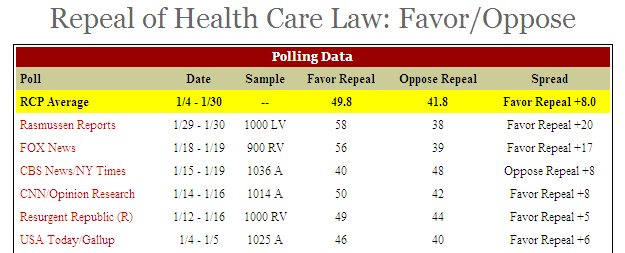
http://www.realclearpolitics.com/epolls/other/repeal_of_health_care_law_favoroppose-1947.html
TakeAway: Changing up your brand’s logo seems to be this seasons latest fad.
But just because everybody’s doing it doesn’t mean you should, and especially not if you are removing the most iconic parts of your logo.
* * * * *
Excerpted from Brandchannel, “NBCUniversal new logo might be ‘the Gap logo’ of 2011” by Abe Sauer, January 27, 2011
Look, we know the economy is bad and times are tough and the future is unknown. And we know that a brand looks at its logo …and wonders if it’s doing everything it can, if it maybe isn’t doing enough. …
But seriously, would brands all stop destroying the most recognizable elements of themselves.
…And now we come to NBC Universal. Is it a passive aggressive move … to pluck the iconic peacock from the new corporate logo?
Or is America’s biggest cable operator’s belief t that it needs to downplay the NBC part of NBCUniversal — name? It surely understands the NBC peacock is one of the most identifiable logos in America, if not the world, right?
We appreciate that it’s Comcast acquiring NBC Universal, …And it’s a new owner’s house and they can gussy up the joint as they see fit.
But Comcast — and Burke — are cable operators not known for their branding, naming (Xfinity?) or design savvy. NBCU, on the other hand, is home to some of the smartest branders on the planet, particularly on the cable networks’ side. Which would you rather do the redecorating in your house?
Also, what’s with running it all together into one word? Just try to pronounce how it looks. Do it, try. “NBCUniversal.”
This rebranding … celebrates the rich and dynamic content, a meeting of brands — so why would Comcast want new toy to be so…. blah? no vibrancy? no color? so… undistinguishable?
Edit by HH
* * * * *
On Monday, President Obama told the Chamber of Commerce that he’s pro-business and would cut both regulations and taxes.
That was Monday.
On Tuesday, the White House proposed to allow cash-strapped states to raise unemployment-insurance taxes.
Last year, Obama’s stimulus law expanded eligibility for unemployment … and the duration of its payments.
Now, the White House is moving to impose tax hikes on employers to pay for it.
Let me get this one straight.
Extend unemployment benefits … then add an employment tax that makes workers more costly … then act surprised when some of the more costly workers are canned – adding to the unemployment rolls and costs … and then raise taxes on employed workers … and so on.
Not exactly a virtuous cycle …
Every time I start thinking these guys can’t be THAT stupid … they prove me wrong.
Ray LaHood is Obama’s Transportation Secretary.
The guy who excorciated Toyota for making unsafe cars.
“I wouldn’t let anybody in my family drive one. They’re not safe.”
No evidence. Just hearsay.
No investigation. Just anecdotes and ambulance chasers.
Toyota loses millions. Government-owned GM surges.
Now, it’s “pedal misapplication”. Not electronics.
Either LaHodd is totally irresponsible or frightfully conniving.
Either way, he should be fired
Let’s see if Obama has the moral clarity and ‘nads to do what’s right.
I’m taking the under on the bet …
TakeAway: Cheap beer is nothing new, but private label beer is not so common.
But now, Walgreens is introducing its line of Big Flats lager across 4,600 stores.
As if AmBev and MillerCoors didn’t have enough to worry about, there might be some more competition among those companies’ low-end offerings.
* * * * *
Excerpted from brandchannel, “Walgreens Offers Private-Label Beer,” by Jennifer Sokolowsky, January 31, 2011
Drugstores are the place to go to get your cough drops and allergy tablets, and now they are the places to pick up another kind of medicine — the self-medicating kind found in alcoholic beverages.
Duane Reade is luring Brooklyn hipsters by offering high-end bottled beer and fresh beer on tap to go in Williamsburg.
Now Walgreens is going in a completely different direction: offering its own private-label beer at the low end of the price scale.
Quietly introduced in mid-December, Walgreens now offers Big Flats 1901 lager in more than 4,600 of the chain’s 7,655 locations, according to the Chicago Tribune. …
Big Flats 1901 may be labeled “premium brew,” but its price is anything but premium at about 50 cents a can, or $2.99 for a six-pack, though prices may vary by region. …
Walgreens is surely betting that those who come in looking for cheap beer will probably leave with something else as well — and that those who come in for something else just might not be able to resist leaving with some cheap beer. …
Edit by DMG
* * * * *
From the ‘makes your blood boil’ file:
Yesterday, there were 2 seemingly unrelated news stories … I say ‘seemingly’ because the mainstream media hasn’t picked up on the connection.
First, the WSJ reported that GM (aka, Government Motors) is planning to pay its hourly workers at least $3,000 each in profit-sharing payouts, the largest amount ever. Why? Because the company miraculously returned to profitability in 2010. The profit-sharing checks will go to 45,000 workers as part of the auto maker’s contract with the United Auto Workers union.
Now, let’s stop and think for a moment.
How did GM return to profitability?
Through increased UAW productivity?
Nah.
First, GM wiped out shareholders and – completely ignoring contract law — moved the union pension claims ahead of its bona fide secured creditors. Get rid of your debt – and its related interest – and your economics change a bit.
Then, toss a couple of billion dollars of excess plants & equipment into a new corporate entity … just get it off your books.
Then, have one of your owners – in this case the Federal government – make some bogus claims against one of your major competitors. Maybe have the President and Secretary of Transportation declare that the competitor’s cars are unsafe to drive. That might dampen their sales … and increase your’s.
So what if the claims are largely unfounded. Go for it.
Now, for the other news story.
The WSJ reported that NASA and the National Highway Traffic Safety Administration conducted a 10-month-long study on Toyota’s apparent acceleration problems.
Based on the study they absolved the electronics in Toyota’s vehicles for unintended acceleration, and said driver error was to blame for most of the incidents.
While floor mats sometimes got caught under the throttle, the most common problem was drivers hitting the gas when they thought they were hitting the brake, which the NHTSA called “pedal misapplication.”
So tell me again why the overpaid, over-pensioned UAW workers are getting bonuses …
TakeAway: Adult cereal is rarely advertised primarily on the basis of taste (e.g. Special K as a dieting aid, Wheaties as “fuel” for athletic performance, etc.). However, Kellogg’s Crunchy Nut is going “radical” and claiming great taste, on which most children’s brands do focus.
Trivia point Kellogg’s may need to message around: its sugar content (maybe part of its “great taste”) is on par with Frosted Flakes – yikes!
* * * * *
Excerpted from WSJ, “Did We Mention That It Tastes Good?” By Andrew Adam Newman, January 26, 2011
With nearly all American households already buying cereal, there are few people to initiate, so cereal marketers often focus on increasing so called “usage occasions,” like incorporating cereal into an every-meal diet plan, as Kellogg does with Special K, or featuring non-breakfast recipes on boxes, like Kellogg’s Corn Flakes-coated chicken, Chex Mix and Rice Krispies treats. A Leo Burnett creative director said that the campaign aimed to reinforce that Crunchy Nut “really is a breakfast cereal,” but “baked into our tagline and concept that ‘It’s morning somewhere,’ is that we’d like to extend usage occasions.’”
A publicity stunt to encourage eating Crunchy Nut round-the-clock is being organized, fittingly, around a clock. In Los Angeles on Saturday, the brand hopes to break the Guinness world record for the largest cuckoo clock, with a timepiece that is 66 feet tall and 28 feet wide.
At the top of the hour for 24 consecutive hours, emerging from the innards of the clock will be not a mechanical bird but an actor, Brad Norman, who will perform as characters from countries where it is morning. Videos from the performances will be uploaded to the Crunchy Nut Facebook page and to YouTube.
Additionally, scanning a quick response code printed on the back of Crunchy Nut boxes with smartphones, which can recognize users’ location and local time, prompts a video of an exotic locale where it is morning.
In a survey by Mintel of American adults who eat cereal, respondents rated the importance of cereal attributes, and taste ranked highest, followed by price, wholegrain content, familiarity of flavor, fiber content and sugar content.
Edit by AMW
* * * * *
Last Friday’s jobs report indicated that virtually no jobs were added (a paltry 36,000 to be precise), yet the unemployment rate dropped from 9.4% to 9.0%
How can that be?
Well first, January is the month when major revisions are made to the factors used to project ‘sample numbers’ to the ‘population numbers’. In other words, the metrics go from apples-to-apples to apples-to-who knows what.
Most often, when the unemployment rate dips without a surge in jobs, it’s attributed to a LOT of unemployed folks getting discouraged and suspending their efforts to find jobs. When they throw in the towel, they’re no longer counted as unemployed.
Washington Examiner: http://washingtonexaminer.com/opinion/columnists/2011/02/behind-numbers-people-leaving-workforce-means-unemployment-down#ixzz1DC3Ecb8v
This January’s unemployment report had an extra twist: the snow storms that hit much of the country.
According to some analysts, a million or more people reported that they stopped looking for work in January because the weather was too bad. So, they were no longer counted as unemployed.
So, if the weather warms – or at least the snowfalls stop – these folks are likely to re-start their job searches, will be counted again as unemployeds, and the unemployment rate will go back up.
That is, unless it gets too hot to look for work.
This is a great country …
TakeAway: Pay-what-you-want experiments have yielded some interesting results.
When consumers pay what they feel is fair for the benefits received, there is no excess value ceded to them.
However, consumers are probably less likely to take advantage of this arrangement when the stakes are low, like in the study below.
* * * * *
Excerpted from NPR, “ Can Allowing Customers to Pay as They Wish Increase Profits?” by Jess Jiang, January 19, 2011
Do you pay more when you can pay what you want? Yes, according to a recent study published in the journal Science.
… a group of researchers from the University of California wanted to test how letting people pay what they want could work for other businesses. The researchers took photos of over 100,000 people on a roller coaster ride at an amusement park. Then they split people into two groups. Group A could buy the photo for a fixed price, and Group B could pay what they wanted.
The results — people who paid what they wished bought more photos— 8 times more, and these same people also spent more money per photo.
Then, the researchers added a second-dimension, charity. Half of the participants in each group were told that some of the revenue would go to charity. Although the number of sales in both group A and B remained roughly the same, purchasers who paid as they wished spent much more money when they were told charity was involved.
As for what they want people to take away from the study, the researchers point to company ethics, “our study suggests a method in which the pursuit of social good does not undermine the pursuit of profit.”
Edit by DMG
* * * * *
President Obama’s job approval numbers are looking good … if you just look at the polls conducted by CNN, CBS, and NBC.
But, Gallup and Rasmussen are back to running counter to the mainstream media.


* * * * *
Gallup is now reporting that 45% approve and 47% disapprove … the bump from extending the Bush tax cuts seems to have faded.

http://www.gallup.com/poll/113980/Gallup-Daily-Obama-Job-Approval.aspx
* * * * *
Rasmussen’s most recent Presidential Approval Index – which subtracts String Dis-approvers from Strong Approvers – is down to minus 17.

* * * * *
And, Gallup is reporting that President Barack Obama’s approval ratings during his second year in office were the most partisan and polarized of any president’s first two years of his presidency …
Nearly a 70-percentage-point gap in how Republicans and Democrats evaluated his performance.
Obama’s approval among Republicans averaged 13 percent, while Democrats’ approval of Obama’s second year averaged 81 percent.
* * * * *
Uh-oh …
TakeAway: Today’s consumer speaks out against those companies they feel are falsely marketing themselves as ‘green’ … some companies have stopped trying, so that they don’t get called out.
* * * * *
Excerpted from AdAge, “Don’t let Greenwashing fears hold you back. Transparency is key as companies move towards sustainability” by Ian Yolles, January 20, 2011
Accusations of greenwashing are rampant right now, and many are well-founded. … consumers are more likely to purchase products from a brand perceived to be more “sustainable”; that is, if faced with a choice (and price being relatively equal), they would select the “greener” product. To capitalize on this trend, some companies have cobbled together feeble marketing programs that have gotten them called out for greenwashing.
Yet today’s consumer speaks out against those companies they feel are falsely marketing themselves… Social media give anyone the ability to immediately amplify and propagate their dissatisfaction, and serves as a forceful greenwashing deterrent.
On one hand, policing by industry and consumer forces is positive, weeding out those that are talking the talk but not walking the walk. …but is the fear of being labeled a greenwasher is preventing brands that are earnestly looking to do something positive from doing so for fear of a massive backlash? …hindering us from making real progress in moving toward a more sustainable future?
When it comes to the notion of a purpose-driven brand and being green, …there’s no such thing as a truly green or truly sustainable product or company. It’s about a journey, a continuum. …everyone is somewhere along the continuum of becoming more sustainable. The key is to be transparent about where you are.
… those that have green DNA intrinsically embedded in their businesses. the foundation, core of their company, service or product. Others integrating sustainability attributes into their products and brands in a way that is meaningful and makes a difference. Moving along this continuum …can be costly and time-consuming and sometimes is even fundamentally impossible. The shift often happens in small steps, especially regarding large brands, and each step needs to be taken one at a time.
So amid this climate of skepticism, how can companies move along this spectrum? Two ingredients can authentically translate corporate responsibility into a positive impact and help avoid accusations of greenwashing and a subsequent social backlash:
To appease the greenwashing cowboys and weary consumers—and to authentically align your brand with a larger social or environmental purpose—you should focus first on measurable internal actions and use those as a basis to engage your consumer audience in a dialogue that inspires them to act in accord with your brand.
Edit by HH
* * * * *
A new Rasmussen Reports national telephone survey finds:
* * * * * *
* * * * *
Rasmussen Reports, Those Who Eat Fast Food, January 20, 2011
TakeAway: Brazilian women are among the biggest spenders on beauty products anywhere, but L’Oréal isn’t raking in reales.
Brazilian women have traditionally bought their skin creams and mascaras from door-to-door sales representatives, not the shops where L’Oréal sells its brands.
To compensate, L’Oréal is introducing personal beauty advisers at department stores and trying to tailor its makeup to the consumer.
For example, foundation, a strong L’Oréal category world-wide, isn’t a big seller in Brazil because women find it increases the oiliness of their skin, so the company has been charged with creating a foundation from natural ingredients.
* * * * *
Excerpted from WSJ, “To L’Oréal, Brazil’s Women Need New Style of Shopping” , January 21, 2011
For L’Oréal, winning over Brazilian women is crucial if it is to meet its goal of adding one billion consumers—a doubling of its current clientele—over the next decade. L’Oréal currently makes about a third of its €17.5 billion ($23.36 billion) in yearly sales from emerging markets, and it wants to increase that to half by 2020.
Getting Brazilians to alter their buying habits won’t be easy. The two major players who use the door-to-door method claim roughly 50% of all color cosmetics sales and 42% of skin-care sales. Natura Cosméticos, the market leader in beauty and personal care, has one million salespeople across the country, and U.S. cosmetics company Avon has built up a larger market share in Brazil than L’Oréal thanks to its expertise in direct sales.
L’Oreal’s challenge also reflects the rising competition that global consumer-goods companies face from local rivals who understand the tastes and peculiarities of their home markets. Door-to-door vending is a longstanding custom in Brazil that has ushered millions of Brazilian women into the middle class. Some 2.5 million women, out of a total female work force of 42 million, earn a living from direct sales in Brazil.
Two years ago, L’Oréal was looking for new ways to grow as the financial crisis hit its core European and U.S. markets, and Brazil, the world’s third-largest cosmetics market after the U.S. and Japan, seemed an obvious target. While it had been in Brazil for 50 years, it had mainly focused on hair products. Combined, makeup and skin care account for less than 15% of L’Oréal’s sales in Brazil, a paltry amount compared with the nearly 50% of sales the two categories provide the company world-wide.
For L’Oréal’s makeup offensive, it is focusing on department stores like Lojas Americanas, which is similar to Kmart in the U.S. The company is currently negotiating with the chain to expand its makeup walls country-wide. For skin care, it is targeting pharmacies and drugstores.
Edit by AMW
* * * * *
Interesting factoids reported in Business Week …
Punch line: Make your passwords 9 characters long with letters & numbers … and at least 1 capital letter and one special character.
* * * * *
Users who choose a common word or simple key combination for a password: 50%
Most-used passwords: 123456, password, 12345678, qwerty, abc123
* * * * *
Time it takes a hacker’s computer to randomly guess your password:
Length: 6 characters
Lowercase: 10 minutes
+ Uppercase: 10 hours
+ Nos. & Symbols: 18 days
Length: 7 characters
Lowercase: 4 hours
+ Uppercase: 23 days
+ Nos. & Symbols: 4 years
Length: 8 characters
Lowercase: 4 days
+ Uppercase: 3 years
+ Nos. & Symbols: 463 years
Length: 9 characters
Lowercase: 4 months
+ Uppercase: 178 years
+ Nos. & Symbols: 44,530 years
* * * * *
Average amount it costs a business to field a phone call requesting a password reset: $10
Proportion of help desk calls that are password-related: 30%
* * * * *
Data: Gartner, Forrester, Duo Security, Imperva, LastBit Software
BW Magazine, The Problem with Passwords, January 31, 2011
TakeAway: Packing is not just what is on the outside of your product but rather a vehicle to convey a message. What is that message you are trying to convey and what are you trying to do with that message?
* * * * *
Excerpted from AdAge, “What is your product saying to consumers? Rethinking the role of packaging in communications.” by James Black, January 18, 2011
Two fundamental truths about packaging are routinely overlooked by marketers. First, packaging is the only marketing vehicle that 100% of the consumers who buy your product see. Not necessarily the brand’s advertising or the exciting social media that your brand is doing. But all of the consumers who buy your brand do interact with your humble package.
… the package is really the only vehicle that you have 100% control over in-store. … and once it has a consumer’s attention, it starts conveying your message. … it is vital to get the communications right on the package. The first step is to decide what message you want packaging to convey …
A package can attract new users rather than just retain current users … can also be updated to communicate a new positioning for the brand… can close a sale with the consumer in store.
Attracting new consumers vs. retaining current ones
…who the consumer is that we are trying to engage. Is it current consumers? New users? Are we trying to transition the brand from one user group to another?
…recent launch of the “U” feminine care products by Kotex … black packages (vs. pastels of other products) draw attention from shoppers at shelf… but windows on the package reveal pastel packets inside, a cue to category norms. … brand effectively communicates by being both differentiated and relevant at the same time.
In contrast, recall Tropicana redesign hastily withdrawn from market earlier last year. …so disruptive that it was not easily recognizable to current users, … the brand lost significant volume overnight. Ultimately, brands must strike a careful balance in keeping the brand recognizable to current users while also making it disruptive to new users.
Communicating a new positioning for the brand
In 2009, Bath & Body Works re-staged its core Signature Collection line. With the update, the packaging was designed to communicate that Bath & Body Works was more sophisticated, more elegant and more premium, also supported by improved product formulations. …packaging supported new and improved in-store marketing and navigation. Here, by integrating package design, product design and in-store marketing, the brand was able to holistically communicate a new positioning.
According to the company, successful test-market sales led to a nationwide rollout and the company also witnessed improved perceptions of the brand in equity measurements.
Closing the sale
In order to close a sale, it is important to understand how the consumer will respond to simple claims vs. the need for extended education at shelf.
Here, consider how the “five” subline by Haagen Daz is brought to life. … underscoring a key brand equity point around premium-ness and pure goodness by simply listing five core ingredients prominently on the front of the package: milk, cream, sugar, eggs and whatever the natural flavor is. … advances this message without disparaging the parent brand.
Is your packaging achieving the goals you have for your product? If not, it might be time to revisit what your products are communicating from store shelves.
Edit by HH
* * * * *
TakeAway: To balance a decline in sales related to major renovations, Home Depot is pushing products related to redecorating.
Moreover, realizing that Home Depot stores can intimidate women (who just happen to be half of its customers), the chain is trying to simplify shopping through Martha Stewart Living products that carry icons to assist with coordination across categories.
* * * * *
Excerpted from NYTimes, “Revamping, Home Depot Woos Women” , January 28, 2011
Without a housing recovery to revive sales of big items or major renovation supplies, Home Depot and its competitors are promoting smaller projects this spring, during what is the major selling season for home improvement stores. And that means sprucing up departments to get female customers excited about window treatments or new colors for makeovers of existing spaces.
Lowe’s, which says it has had a female focus since its beginnings, has added a line of décor products like mood lighting and chrome toilet-paper holders to appeal to women. True Value recently opened a corporate-owned store near Chicago that had wider aisles, better lighting and clear signs, part of an effort to attract women.
Home improvement stores “have been viewed as ‘very large hardware stores’ where big, burly men go to purchase their tools and supplies.”
“These big-box stores need to appear less hardware- and more improvement-driven in the image, and reflect more women in their messages.”
This is not the first time that Home Depot has tried to figure out what women want. It has been running Do-It-Herself workshops for female customers since 2003. In the early 1990s, it opened Expo Design Centers, showrooms with fresh flowers and other feminine touches. (It closed those centers in 2009.)
The Martha Stewart products are aimed at getting women who are already visiting the stores to buy more.
They are meant to spur spending across different categories, so a woman can buy paint, rugs and countertops that coordinate, increasing how much she spends for each visit.
Edit by AMW
* * * * *
Last week, a 6-hour heavy snow fall crippled the Metro DC area, causing broadscale electrical power outages.
The utility companies were immediately getting reamed on the talk shows — though I’m not sure who was listening since the power was out – for making it hard for folks to report outages.
My thought: cut ‘em some slack, the call volume is high.
Then the lights when out at the Homa house, putting a new paint job on the mess.
The transcript:
Thank you for calling Dominion Virginia Power.
To continue in English, press 1.
(In Spanish) To continue in Spanish, press 2.
To make a payment, press 1.
To hear your account balance, press 2.
For other options, press 9.
And on and on.
It took a couple on minutes to get to the option: If your freaking power is off, press 1.
Didn’t those jabrones realize that there was an area power outage going on?
Why didn’t the transaction go like this:
Thank you for calling Dominion Virginia Power.
To report a power out, press 1.
To report a downed power line, press 2.
For any other business call back when the freakin’ snow melts.
Then the company could have simply used its caller ID system to identify the location and say “Thank you for reporting a power outage. Now, try to stay warm”
I figure the process would have taken a max of 20 seconds.
BTW: Who calls to check their account balance in the middle of a freakin’ snow storm?
Oops.
While many polls show Obama’s approval rating going up since he extended the Bush tax cuts, according to Rasmussen, the President’s State of the Union Address pushed his approval numbers down.
Hard to believe that folks didn’t get excited over tax the oil companies, tax the rich … keep on spending on fast trains, solar panels, and whatever.

TakeAway: Despite the craze over sites like Groupon and LivingSocial, many companies are finding it difficult to maintain sustained growth after using the site.
New research shows that the buzz these sites generate can’t make up for products that do not deliver a good value.
So perhaps the 40% of companies that wouldn’t use Groupon again should reevaluate their offerings.
* * * * *
Excerpted from Bloomberg Businessweek, “What Groupon and LivingSocial Cannot Offer,” January 25, 2011
Last month,Amazon invested $175 million in the number two online coupon site LivingSocial. True to form, Amazon is already using the platform to create enormous buzz: last week, they announced a coupon: $10 for a $20 Amazon gift certificate. Within hours, the offer generated massive interest, giving LivingSocial one of their biggest growth days and selling over $10 million in Amazon gift cards …
LivingSocial is not the first to create a compelling coupon offer. That honor goes to the market leader, Groupon. …Now, thousands of companies are jumping on the latest trend trying to generate buzz for their products.
Putting aside whether coupon sites are sustainable, all this begs the question of the value of buzz and being a first mover.
The costs are clearly high, but companies with products that tend to generate early buzz seem to do very well. At least that is the conventional wisdom. But a new study shows that no amount of buzz, excitement or first mover’s advantage will lead a product to sustained growth.
The study … tested whether early buzz could precipitate a product’s ultimate success. Using an online music test site, researchers tested whether music that was highly praised early on would be downloaded more than songs with less buzz. True to form, results from an initial study demonstrated that buzz and social influence generated early adoption and the more a song was discussed, reviewed and downloaded, the more people wanted the song. Success begets success.
But then the research team took that data and dissected it further. When they did, a surprising result emerged: while social influence can give a product an early advantage, that edge is typically not sustainable. “Social cues could convince you to take a look … but didn’t necessarily make you go in the store and buy something.” …
In business, we too often forget that what we are selling is value: we instead try to sell technology, or packaging, or just plain vaporware. To add value, your technology needs to be productized, and to do that you need to offer unique value to a customer. Without a valuable and unique product, viral marketing, social influence and buzz will help initially but will be of no lasting consequence.
No surprise, this is what many companies are finding on sites like Groupon and LivingSocial. There has been a large backlash by companies stating that these sites just don’t work: they cost a lot of money and the initial pop in sales dissipates moments later. A Rice University study found that upwards of 40% of companies who have used Groupon say they wouldn’t do so again. …
Edit by DMG
* * * * *
Palin got criticized last week for her reaction to President Obama’s State of the Union Address.
She simply noted that the President coined the slogan “Winning the Future” … and suggested the obvious: perhaps we should all start wearing buttons with the slogan’s initials “WTF”.
Well, liberal pundits hammered her for being crude and divisive.
Hmmm.
They didn’t squawk when Vice President Biden called ObamaCare a “BFD”.
Double standard, anybody ?
Just kidding, of course.
Off-shore rigs are still shut-down, waiting for Cowboy Ken Salazar and Energy Secretary Steven Chu (excuse me, the Nobel Prize winning US Secretary of Energy, Steven Chu) to give them the green light to re-start.
No sites being developed in ANWR, no new off-shore rigs, existing rigs mothballed … and the Middle East in turmoil.
It’s gonna take a lot of windmills and solar shingles …
My bet: $5 gas this summer …
Just kidding, of course.
Off-shore rigs are still shut-down, waiting for Cowboy Ken Salazar and Energy Secretary Steven Chu (excuse me, the Nobel Prize winning US Secretary of Energy, Steven Chu) to give them the green light to re-start.
No sites being developed in ANWR, no new off-shore rigs, existing rigs mothballed … and the Middle East in turmoil.
It’s gonna take a lot of windmills and solar shingles …
My bet: $5 gas this summer …
Peggy Noonan was a Republican speech writer … then she jumped on the Hope & Change train … then she fell out of love with O … then the Tucson speech reignited her enthusiasm … then came the State of the Union.
Here a few of the notable quips from her WSJ op-ed …
I hate writing this. I wanted to write “A Serious Man Seizes the Center.” But President Obama was not serious and he didn’t seize the center, he went straight for the mush.
It is a strange and confounding thing about this White House that the moment you finally think they have their act together — the moment they get in the groove and start to demonstrate that they do have some understanding of our country — they take the very next opportunity to prove anew that they do not have their act together, and are not in the groove. It’s almost magical.
Rhetorically the speech lay there like a lox, as if the document itself knew it was dishonest, felt embarrassed, and wanted to curl up quietly in a corner of the podium and hide. But the president insisted on reading it.
The President continues not to comprehend America’s central anxiety about government spending: that it will crush our children, constrict the economy in which they operate, make America poorer, lower its standing in the world, and do in the American dream.
We’ll focus on “greater Internet access,” “renewable energy,” “one million electric vehicles on the road by 2015,” “wind and solar,” “information technology.” “Within 25 years, our goal is to give 80% of Americans access to high-speed rail.” The administration continues to struggle with the concept of priorities. They are like people who’d say, “Martha, the house is on fire and flames are licking down the stairs—let’s discuss what color to repaint the living room after we rebuild!” A better priority might be, “Get the kids out and call the fire department.”
The president will limit the cost of government by whipping it into shape and removing redundant agencies. Really? He hasn’t shown much interest in that before. He has shown no general ideological sympathy for the idea of shrinking and streamlining government. He’s going to rationalize government?
On education, the president announced we’re lagging behind in our public schools. Who knew? In this age of “Waiting for Superman” and “The Lottery,” every adult in America admits that union rules are the biggest impediment to progress. “Race to the Top” isn’t the answer. We all know this.
There is often about the president an air of delivering a sincere lecture in which he informs us of things that seem new to him but are old to everyone else. He has a tendency to present banalities as if they were discoveries. “American innovation” is important. As many as “a quarter of our students aren’t even finishing high school.” We’re falling behind in math and science: “Think about it.” Yes, well, all we’ve done is think about it.
When you talk this way, as if the audience is uninformed, they think you are uninformed. Leaders must know what’s in the national information bank.
He too often in making a case puts the focus on himself. George H.W. Bush, always afraid of sounding egotistical, took the I’s out of his speeches. We called his edits “I-ectomies.” Mr. Obama always seems to put the I in. He does “I implants.”
The president made a semi-humorous reference to TSA pat-downs, but his government is in charge of and insists on the invasive new procedures, to which the president has never been and will never be subjected. So it’s not funny coming from him.
WSJ, An Unserious Speech Misses the Mark, Jan. 27, 2011
TakeAway: Like many new, innovative products, there is an adoption chasm between the early adopters and the early majority.
While the new Chevy Volt has already demonstrated appeal to the early tech adopters, there are some issues that could spell trouble.
One, the short battery range doesn’t really offer a complete solution to eliminating the need for gasoline.
Two, once you have exhausted the battery, it’s just another car. Until the battery technology improves, the “killer application” seems to be lacking.
* * * * *
Excerpted from NPR, “Electric Cars Steal the Spotlight at Auto Show,” by Sonari Glinton, January 14, 2011
When the North American International Auto Show opens in Detroit on Friday, there’s going to be electricity in the air. …
… the star of the show is the Chevy Volt, the electric car with a backup gas engine. It won the top prize — the 2011 North American Car of the Year. …
GM has high hopes that the Volt will be adopted by a mainstream audience.
“Today a lot of our customers are early tech adopters — typically the first on the block to have an iPhone or an iPad,” says Tony DiSalle, the head of marketing for the Chevy Volt. He thinks those numbers will improve over time.
“The most important thing is to get consumers — mass-market consumers — to understand the benefits of the Volt,” DiSalle says.
GM expects to sell about 10,000 Volts this year. In 2012, the company will ramp up production to about 45,000 cars. But even that figure is small compared with the more than 2.2 million cars and trucks that GM’s four brands sold in 2010. …
One of the barriers to the adoption of the electric car is a phrase that keeps coming up at the auto show — range anxiety. Many of the cars on display can only travel under electric power for short ranges. Analysts say that until the big car companies can conquer consumer fears of running out of charge, electric vehicles will remain on the fringes.
“Look, the electrification of the American fleet is not going to happen overnight,” says Bob Lutz, who retired as vice chairman of GM in May.
… He says electrification will be a gradual process, predicting that it will take until 2025 for electric vehicles to account for 10 percent to 15 percent of the overall market. …
Edit by DMG
TakeAway: Like many new, innovative products, there is an adoption chasm between the early adopters and the early majority.
While the new Chevy Volt has already demonstrated appeal to the early tech adopters, there are some issues that could spell trouble.
One, the short battery range doesn’t really offer a complete solution to eliminating the need for gasoline.
Two, once you have exhausted the battery, it’s just another car. Until the battery technology improves, the “killer application” seems to be lacking.
* * * * *
Excerpted from NPR, “Electric Cars Steal the Spotlight at Auto Show,” by Sonari Glinton, January 14, 2011
When the North American International Auto Show opens in Detroit on Friday, there’s going to be electricity in the air. …
… the star of the show is the Chevy Volt, the electric car with a backup gas engine. It won the top prize — the 2011 North American Car of the Year. …
GM has high hopes that the Volt will be adopted by a mainstream audience.
“Today a lot of our customers are early tech adopters — typically the first on the block to have an iPhone or an iPad,” says Tony DiSalle, the head of marketing for the Chevy Volt. He thinks those numbers will improve over time.
“The most important thing is to get consumers — mass-market consumers — to understand the benefits of the Volt,” DiSalle says.
GM expects to sell about 10,000 Volts this year. In 2012, the company will ramp up production to about 45,000 cars. But even that figure is small compared with the more than 2.2 million cars and trucks that GM’s four brands sold in 2010. …
One of the barriers to the adoption of the electric car is a phrase that keeps coming up at the auto show — range anxiety. Many of the cars on display can only travel under electric power for short ranges. Analysts say that until the big car companies can conquer consumer fears of running out of charge, electric vehicles will remain on the fringes.
“Look, the electrification of the American fleet is not going to happen overnight,” says Bob Lutz, who retired as vice chairman of GM in May.
… He says electrification will be a gradual process, predicting that it will take until 2025 for electric vehicles to account for 10 percent to 15 percent of the overall market. …
Edit by DMG
TakeAway: Social media has increased the speed at which customers hear from their friends about good and bad experiences with companies. In times of recession, low prices AND good customer experience are what’s needed to succeed. People-centric industries, like retail and hotel, where there is more competition tend to spend more to create a good customer experience and find success in doing so.
* * * * *
Excerpted from AdAge, “The Marketing Value of Customer Experience,” by Josh Bernoff, January 12, 2011
Customer experience is marketing. That is, in a world drenched in social word-of-mouth, the way you treat your customers — and the way they perceive you — makes all the difference in what they say to their friends.
…results from Customer Experience Index survey.
The best performers overall were Borders, Barnes & Noble, Kohl’s, Costco, Amazon, JCPenney, Walgreens, Target, BJ’s Wholesale Club, and USAA (credit cards). …a great experience by itself doesn’t make up for an industry facing digital disruption. It’s also fascinating how many low-price providers are in the top ten,… . In a recession, providing low prices and an experience that’s better than people expect is a prescription for success.
… advertising is a lot cheaper and easier than changing… to focus on customer experience. … sure, you can keep hammering the message of how great you are, even if your customers think differently. … But in the end, people will find out the truth — and with social technology, that happens more easily every day.
Or, you could put your money and effort into improving the experience. That’s an effort that will take a couple of years, but with buyers coming back and seeking value as the recession lifts, you’ll attract the leaders. They’ll talk. You could end up like Zappos, where the customer word-of-mouth is most of the marketing. Or, you could just develop a customer experience that resonates with consumers, which is a whole lot easier to advertise.
Edit by HH
Bottom line: State universities and even some private colleges are culling senior faculty members to trim budgets.
That “lifetime employment” thing will get you every time …
* * * * *
BusinessWeek, States Take Aim at Tenured Professors, January 6, 2011
Hundreds of professors at public universities across the U.S. have been coaxed into retirement with offers of as much as two years’ pay.
Faced with 2012 deficits estimated at a total of $140 billion … states are looking to their university systems for savings, even if it means circumventing the once-sacrosanct tenure system.
The buyouts make business sense: Pay for tenured professors averages $117,000 a year at the top 200 U.S. public universities. Annual contracts for replacement instructors cost an average $52,500.
Texas A&M University in College Station persuaded 104 professors to retire.
Even some private colleges and universities, which have cut budgets because of falling endowment returns and rising competition for tuition dollars, are considering culling senior faculty.
At Harvard, retirement incentives were offered to 176 professors 65 or older … 46 of them, with a median age of 70, accepted.
The American Association of University Professors, warns that the departure of the most seasoned professors may prove damaging down the line.
“Experienced and active faculty members who will be leaving and replaced in the short-term are going to be followed by people who are much more transient.”
Everybody knows that Fed Dept’s have many overlapping and redundant agencies … and that inefficiency rules the day.
My POV: getting Fed spending under control can’t be done simply “at the margin” by squeezing all agencies 10% or so.
Rather, major surgery needs to be done – eliminating agencies or whole departments.
I assumed that most of the bureaucracies were set up by Dems, and was surprised to learn that out of the 15 Departments in the Executive Branch …
Republicans created these Departments;

Hmmm.
TakeAway: If what you’ve done in the past isn’t working, understanding why and communicating changes to consumers is imperative.
But if what you are offering is not what the consumers want, no amount of restaging will solve the problem.
It’s also important to understand where in the PLC your product is and what are the feasible alternatives for stretching maturity out as long as possible.
* * * * *
Excerpted from AdAge, “Pantene set to try again to reverse slide,” by Jack Neff, January 17, 2011
After a second restage in three years failed to take hold with consumers last year, the Procter & Gamble Co. brand is preparing another course correction later this month for what remains the leading brand in U.S. and global hair care.
P&G believes it’s identified and will soon fix problems with the latest restage. … problems included consumers being more loyal to discontinued products (particularly two-in-one shampoo-conditioners) than the brand, and restrictive policies at Walmart that kept the brand from communicating changes to consumers…
But some say the problem goes deeper to the basic premise behind the restage. Traditionally hair-care products touted what they do for your hair — be it volumize, smooth or add shine. Pantene took a different approach — organizing into ranges based on hair types, not solutions.
One hopeful sign is that the midcourse correction following Pantene’s last restage, which included more readable packaging and more focus on value positioning vs. salon brands, ended a similar skid.
Even so, the restages and tweaks have engendered skepticism among analysts. Pantene may be facing consequences of line extensions that aimed to blunt advances by competitors leaving Pantene with a complex product lineup and growing distance from its “healthy, beautiful hair that shines” equity.
To be sure, the U.S. hair-care business has been brutal for big players and design firms beyond P&G — though the mass business did begin growing again last year after two years of decline. Unilever last year discontinued Sunsilk in the U.S. four years after its launch and little more than two years after a 2008 Super Bowl ad for the brand created by design firm Desgrippes Gobe (now BrandImage) and positioning specialist BrandThinkTank. L’Oréal Vive, launched in the 1990s, is hanging on in drug and grocery stores, but is off shelves at Walmart and Target.
Edit by HH
Oil companies, banks, insurance companies, manufacturing companies with global footprints.
Hmmm.
Tax rates for high-earners are going up to fund “investments” in things Americans are clamoring for … like high speed rail between Disneyland and Las Vegas, and wiring up rural America (when the rest of the world is going wireless).
Corporate tax rates coming down, but corporate taxes staying the same or going up … huh?
Closing corp tax loopholes except for windmills, solar shingles, etc.
Don’t even think about touching ObamaCare … except the 1099s for small businesses.
Bottom line: I lost, you won, I don’t care, business as usual.
* * * * *
Most notable: Colleges should welcome back military recruiters and ROTC.
Silliness: “Sputnik moment”, faces in the crowd, weird stories of visits to community colleges and shingle companies.
Most surprising: Even the Dems in the crowd looked bored. My imagination, or were some doing Siduko puzzles?
So “do it” moment: overlapping functions across executive branch agencies (e.g. the salmon story) … they’re under your management Mr. President. So, fix them and stop yakking … !
Interesting point raised by new Senator Pat Toomey in the WSJ regarding the debate on raising the national debt limit:
For months, some political leaders have argued that failure to raise the debt ceiling would necessarily cause the U.S. to default on its debt.
President Obama’s Council of Economic Advisors chairman, Austan Goolsbee, recently warned, “If we get to the point where you’ve damaged the full faith and credit of the United States, that would be the first default in history caused purely by insanity. I don’t see why anybody’s talking about playing chicken with the debt ceiling.”
In fact, if Congress refuses to raise the debt ceiling, the federal government will still have far more than enough money to fully service our debt.
Next year, for instance, about 6.5% of all projected federal government expenditures will go to interest on our debt. Why would we ever default?
To make absolutely sure (we don’t), I intend to introduce legislation that would require the Treasury to make interest payments on our debt its first priority in the event that the debt ceiling is not raised.
This would not only ensure the continued confidence of investors at home and abroad, but would enable us to have an honest debate about the consequences of our eventual decision about the debt ceiling.
WSJ, How to Freeze the Debt Ceiling Without Risking Default, Jan. 19, 2011
In rough numbers, the U.S. is paying about about 1.5% in annual interest to service the $13 billion national debt … that’s about $200 billion.
Tax collections are a tad over $2 billion annually; spending is running about $3.5 billion … for an annual deficit of $1.5 billion.
In other words, $3.3 billion – almost 95% of total expenditures are for stuff other than interest on the debt.
Why not follow Toomey’s advice? Pay the interest, and shave 6% off the rest of the spending.
Makes sense to me
* * * * *
For numbers galore:
http://www.federalbudget.com/HistoricalTables.pdf
TakeAway: Campbell Soup wants to boost its business in China via a joint venture with the conglomerate Swire Pacific Ltd. to sell soup and broths. Swire has been the company’s distribution partner in China, but with its varied business lines (it is also the largest Coca-Cola Co. distributor in China), Campbell can now access broad distribution channels in China.
* * * * *
Excerpted from WSJ, “Campbell-Swire Venture To Market Soups In China” By Paul Ziobro, January 12, 2011
Campbell, which has slowly been building its business in the emerging markets of China and Russia, will control 60% of the joint venture, called Campbell Swire, which will launch early this year. The partnership will manufacture, distribute and market Campbell’s soups, broths and stocks in China. Profits and losses will be shared according to ownership.
Faced with slower growth in the U.S., food companies have focused on developing markets to inject growth into the business. China represents one of the biggest opportunities, with 1.3 billion consumers that have the spending power of the U.S. population, according to a recent PricewaterhouseCoopers LLP report. But challenges lurk in trying to develop enough scale to turn a profit and navigate a complex distribution network.
The arrangement has the potential of helping Campbell accelerate its growth there without having to pay most of the costs, although it is sacrificing some potential profits.
For Campbell, the prize in China is a demographic with one of the highest rates of per-capita soup consumption in the world, although most of it is homemade. Campbell says Chinese consumers have nearly 355 billion servings of soup a year.
Campbell will keep ownership of its brands and recipes, and license them to the joint venture.
Edit by AMW
OK, the stock got a bump on Friday thanks to a sweet earnings report … and, perhaps, thanks to Obama naming CEO Immelt to head up his recovery board of advisers.
I’m conflicted, for a couple of reasons.
First, GE stock has steadily lost value during Immelt’s tenure … which started in 2001.

Yeah, there was 9/11 and the financial crisis, but the rest of the world – measured by the S&P 500 has pretty much gotten back its losses.
GE is still down 50% from when Immelt took over.
But, it makes you wonder: why didn’t Obama pick a CEO with a record of success?
Say, like Immelt’s predecessor –- Jack Welch – who knows how to cut costs and drive innovation.
I guess Obama wanted somebody he could count on to support his healthcare and cap & trade initiatives.
FoxNews has taken to calling GE “Government Electric” because it yapped the TARP program, it takes a heavy dose of government contracts, and its media outlets (NBC and MSNBC) cheerlead for Obama..
There are a few companies on the Obama corporate A List – Democratic patrons Google and Goldman Sachs both turn up again and again at White House functions and for special recognition – but no company seems to get the VIP treatment that General Electric receives.
While most corporate leaders have taken a wait and see approach to Obama’s occasional overtures to the private sector, G.E., along with Google, Goldman and few others, have backed him to the hilt.
Whether it is pushing the president’s plan for global warming fees in order to create demand for his “Ecomagination” line of windmills, solar panels, etc., boosting the president’s national health-care law as part of an effort to sell more medical equipment, or enthusing over the Obama strategy of making loans available for industrial exporters, Immelt has been an Obama stalwart all along.
Immelt has also consistently argued to shareholders that there is big money to be made in advancing the Democratic agenda, in huge government contracts, subsidies and incentives.
FoxNews.com, Obama Teams Up With GE, January 21, 2011
That raises some major angst for me – my political philosophy is on one side, and my wallet is on the other.
Oh my.
Fitness guru Jack LaLanne passed away on Sunday … at the ripe old age of 96.
Nice article in the Wash Post touting the man …
Jack LaLanne was … a fitness pioneer!
He inspired us to get off the couch and do jumping jacks.
He once swam the length of the Golden Gate Bridge while toting 140 pounds of equipment!
And, on television, he encouraged us to engage in manageable fitness — or at least to buy a juicer!
Jack LaLanne was a hero for people like me.
The world these days is more polarized than ever. The Fit People meet up once a year, slather their bodies in oil, and march around in swimsuits lifting refrigerators with their teeth. They jog distances traditionally associated with announcing that the Greeks are victorious and then dying on the spot.
The Fat People meet up every day at Chili’s and order platters of things slathered in other things that you wouldn’t think were a good combination unless your goal was to singlehandedly consume more calories than the entire population of a smaller first-world country like Liechtenstein.
There are the rest of us. We just sort of muddle along. Every year we resolve to go to the gym and lift things and jog on the machines and maybe use those giant inflatable balls for whatever it is they’re supposed to be used for.
Jack LaLanne wasn’t about just the fit people — or just about the Fat People.
During his years on television, he encouraged everyone to work out, not just the people with buns of steel or buns of cinnamon.
I’ll miss Jack LaLanne.
Washington Post, This is why we’re fat: Missing Jack LaLanne, January 24, 2011
TakeAway: With the proliferation of DVRs such as TiVo, building awareness for products and services through TV commercials is more challenging than it used to be.
To get viewers to stop skipping through the commercials, advertisers are starting to make commercials look like the shows they interrupt.
It’s tricky but effective.
* * * * *
Excerpted from NPR, “‘Podbuster’ Ads, Calculated To Make You Hit Pause,” by Neda Ulabe, January 12, 2011
Call it smart advertising — or bad boundaries. You may have noticed a spike in the number of TV commercials designed to look and feel like whatever show you’re watching. They’re called podbusters, DVR busters or interstitial ads, and they’re designed to remove viewers’ fingers from the fast-forward button during blocks — or “pods” — of ads.
The advent of TiVo and similar devices can be thanked for the rise of the podbusters. About 40 percent of households have DVRs — meaning 40 percent of households can easily zip past commercials. Think of podbusters as speed bumps for ads.
Media consultant Dan Portnoy got caught while watching … the AMC drama Mad Men. That evening, he was speeding through the commercials as usual when he saw guys in ’60s fashions in a familiar-looking office, and he thought the program had started again. So he stopped fast-forwarding. What he saw looked like Mad Men. It sounded like Mad Men. But it was an ad for shampoo. …
He’d been caught by one kind of podbuster: a commercial that looks like the show. Bravo’s Top Chef employs a different variety: brief, vacuous outtakes from the real show, slotted in between commercials to make you think the program has started up again. …
There are other kinds of podbusters, too. Both Glee and 30 Rock are punctuated by commercials featuring actors from the shows. When you see Tina Fey in an American Express ad as it whizzes by on fast-forward, it’s easy to mistake it for 30 Rock — and so you stop to watch. …
Edit by DMG
What can I say? Granddaughter Anna wins by a landslide …

Thanks to Meg (a.k.a. “Mommie”) for candid capturing this teaching moment.
First, the disclaimer: I own a statistically significant amount of GE stock – leftover from my years working with the company. So, I’m as biased as biased can be. I’d like the stock price to go up — a lot.
* * * * *
I was bummed a week ago when the crack Sanford C. Bernstein analysts downgraded General Electric stock from an “outperform” rating to a “market perform” rating. As near as I can tell, in analyst-speak, that means “sell”.
I assumed that those dudes were plugged in and were foreshadowing a bad earnings report.
Then, the headlines started rolling in: G.E. Profit Rises 51%, Topping Forecasts … and the stock bumped more than 5% in a day.

Remind me not to listen to Sanford C. Bernstein analysts … boy, they must feel dumb … but, I bet they’ll still get fat bonuses.
* * * *
Tomorrow: Obama appoints Immelt to his recovery board …
TakeAway: While some consumers balk at logo changes for aesthetic reasons, others react due to an emotional connection companies wanted to create in the first place. Companies involve consumers in what used to be regarded as internal corporate operations. Sometimes, you get what you ask for.
* * * * *
Starbucks wants to join the small club of companies that are so recognizable they can rely on nothing but a symbol: Nike and its swoosh; McDonald’s and its golden arches; Playboy and its bunny; Apple and its apple.
The danger is that it will join the much larger class of companies that have tried to change their logos only to be forced to backtrack by an electronic lynch mob.
The people who spend their lives creating new logos and brand names have a peculiar weakness for management drivel. Marka Hansen, Gap’s president for North America, defended the firm’s new logo (three letters and a little blue square) with a lot of guff about “our journey to make Gap more relevant to our customers”. The Arnell Group explained its $1m redesign of Pepsi’s logo with references to the “golden ratio” and “gravitational pull”, arguing that “going back-to-the-roots moves the brand forward as it changes the trajectory of the future”.
People have a passionate attachment to some brands. They do not merely buy clothes at Gap or coffee at Starbucks, but consider themselves to belong to “communities” defined by what they consume. A second reason is that the more choices people have, the more they seem to value the familiar.
The debate about logos reveals something interesting about power as well as passion. Much of the rage in the blogosphere is driven by a sense that “they” (the corporate stiffs) have changed something without consulting “us” (the people who really matter). This partly reflects a hunch that consumers have more power in an increasingly crowded market for goods. But it also reflects the sense that brands belong to everyone, not just to the corporations that nominally control them.
Edit by AMW
* * * * *
* * * * *
Keith Olbermann and MSNBC abruptly parted ways on Friday night, as the network announced it had agreed to end his contract and the last installment of his show would air that evening.
Olbermann made his debut on “Countdown” in 2003 and quickly became the face of MSNBC’s more liberal tilt in its evening hours. Along with fellow host Rachel Maddow, he helped catapult MSNBC ahead of Time Warner’s CNN in the size of its primetime audience.
Olbermann averaged 1 million viewers in 2010 in the 8 p.m. hour, according to MSNBC, a distant second to Fox News’s Bill O’Reilly, but nearly double what CNN averaged against him in the hour.
WSJ, MSNBC, Olbermann Call It Quits, Cancel Show, Jan. 22, 2011
* * * * *
Note: It’s a heavy round up to get Olberman’s audience to 1 million … typically, it ran around 750,000. O’Reilly is usually pegged at 2.5 to 3.0 million. CNN at about 500,000 to 750,000.
Most interesting: About 300 million folks don’t watch any of them in prime time … and, I think WWE beats them all when RAW and Smackdown are on.
* * * * *

Source: Drudge Reports
Previously, we posted that a 26-state majority was suing over the constitutionality of ObamaCare mandates.
Make that 27 …
Governor Mary Fallin announced last night that Oklahoma will file a lawsuit against the new healthcare law.
Instead of joining the 25 states in the Florida suit or Virginia in its free-standing lawsuit, Oklahoma will sue on the grounds that the federal healthcare law violates the new constitutional amendment just approved by Oklahoma voters.
Oklahoma State Question 756 changed Oklahoma’s constitution to say Oklahomans can’t be required to participate in any healthcare system – be it Federal or State dictated.
For those keeping score …
But, Reid says “no up or down vote” and Obama says “veto”.
So much for “government by the people, for the people” …
There’s still a lot of chatter about how evil health insurance companies are causing health care costs to continue to soar. The implication is that the increases are largely attributable to their expanding profit margins and astronomical exec bonuses.
Then, a WSJ op-ed got me thinking.
The punch line: Blue Shield of California announced that it was upping premiums by as much as 39% to cover increases in the underlying cost of health care and the added costs of ObamaCare – e.g. coverage for adult children and pre-existing conditions.
Here’s the rub: Blue Shield of CA is a not-for-profit insurer. All they do is collect premiums and pay health providers – and try to breakeven at the end of the year. So, their premium increases can’t be demonized as profiteering. If they have to pay more out, they simply adjust premiums to cover the difference.
Got me wondering: how much of the health insurance business is handled by not-for-profits?
About 275 million Americans have health insurance … roughly 1/3 of them are covered by Medicare or Medicaid.
Since the gov’t doesn’t engage in profiteering, we can dismiss 1/3 of insureds and half of health care expenditures as irrelevant to the profiteering argument.
OK, we’re down to 200 million insureds.
There are plenty of NFP insurance companies, but the biggie is Blue Cross / Blue Shield.
From their web site: Health plan providers affiliated with the Blue Cross and Blue Shield Association (BCBSA) — known as “the Blues” — serve more than 100 million members nationwide.
So, at most, for profit health insurance companies cover about 1/3 of all insureds – and handle less than 1/4 of all health care expenditures.
Looks to me, like premiums are going up because healthcare costs are going up … not because of profiteering.
Maybe I’m missing something …
TakeAway: Starbucks unveiled an alliance Thursday with India’s flagship conglomerate, Tata Group, a wide-ranging company that owns everything from Jaguar cars to steel mills and tea plantations. This move is designed to pave the way for retail locations and to sell more Indian coffee world-wide. The alliance is with India’s Tata Coffee Ltd. unit, which owns the Eight O’Clock Coffee Co. in the U.S. and is a big coffee producer in India.
Starbucks’s success will depend on its adaptability to local tastes, but plans to stick to its strategy of being a “third place” for young Indians.
* * * * *
Excerpted from WSJ, “Starbucks Brews Plan to Enter India” By Paul Beckett and Vibhuti Agarwal and Julie Jargon, January 14, 2011
India remains one of the big untapped markets for Starbucks. Chairman Howard Schultz said India could one day rival China, where the company recently announced plans to more than triple the number of outlets to about 1,500 in five years.
Although known as a land of tea, India is also a major coffee exporter—the fifth-largest in the world, according to the USDA. Indians have been flocking to coffee themselves as well. Overall domestic consumption rose to an estimated 94,400 metric tons in 2008, up almost 90% since 1998, according to Indian government figures. Much of that has been driven by quick-service, comfortable cafes that are Starbucks’s specialty.
Mr. Schultz said one of the reasons for the alliance is to raise the profile and use of Indian premium Arabica beans in Starbucks stores elsewhere. The first phase of the alliance involves sourcing and roasting beans.
The companies also are considering the opening of Starbucks outlets in Tata retail locations and hotels, Mr. Schultz said. Tata’s Taj hotels are among the most upscale in India and include the landmark Taj Mahal Palace & Tower besieged in the 2008 Mumbai terror attacks.
In recent years, many brands have been expanding as greater exposure to western culture has boosted their appeal among young people and a growing middle class. Starbucks had been looking for a partner in India since about 2007.
Some Indian consumers in New Delhi welcomed the prospect of Starbucks’s arrival, while others see it as a status symbol for the elite.
Edit by AMW
* * * * *
Full Article:
http://online.wsj.com/article/SB10001424052748703583404576079593558838756.html?mod=dist_smartbrief
* * * * *
Remember when Obama’s crack Secretary of the Interior — Cowboy Ken Salazar – said he was putting his boot on BP’s throat and keeping it there “until” they paid up? Then, he and Obama demanded that BP set up a $20 billion account to fund recovery efforts.
Well, I guess the boot can be lifted from BP’s throat now … thanks to the Russians.
The NY Times reports:
Russian companies are talking to BP about buying billions of dollars in oil fields and other assets to help it pay its gulf cleanup and compensation costs.
Along with a partner, BP is planning to explore the rich oil fields in Russia’s Arctic waters, a region that is off limits in the United States and Canada.
And BP’s chief executive, Tony Hayward, who is turning over the reins this Friday to Robert Dudley, is being welcomed onto the board of TNK-BP, the company’s 50-50 joint venture in Russia.
NY Times, In Russia, BP Sees a Second Act, September 29, 2010
Though BP seems doomed to years of hostile regulation and lawsuits in the United States, in Russia, the second-most important country for the company’s operations, BP’s fortunes are brighter than ever.
Guess we showed them.
According to conservative economist Thomas Sowell is short-term thinking that ignores second-order consequences:
* * * * *
Source: Chapter 1, Applied Economics, Thomas Sowell, Basic Books, 2010
TakeAway: As times change, more and more men are self-identifying themselves as the primary decision makers for the household and they don’t feel companies are doing a good job of targeting them?
Know your audience and what is important and communicate that message in channels they will see. (NFL games perhaps?)
* * * * *
Excerpted from AdAge, “Time to Rethink Your Message: Now the Cart Belongs to Daddy,” by Jack Neff, January 17, 2011
Mom is losing ground to Dad in the grocery aisle, with more than half of men now supposedly believing they control the shopping cart. The implications for many marketers may be as disruptive as many of the changes they’re facing in media.
… marketers of packaged goods … take solace in one thing — at least they could count on their core consumers being moms and reach them through often narrowly targeted cable TV, print and digital media.
But a study last year of 2,400 U.S. men ages 18 to 64 finds more than half identify themselves as the primary grocery shoppers in their households. …about six in 10 identifying themselves as their household’s decision maker on packaged goods, health, pet and clothing purchases. …only 22% to 24% of men felt advertising … speaks to them…
Recession has forced millions of men in construction, manufacturing… out of work and … into more domestic duties. At the same time, Gen X and millennial men in particular more likely to take an active role in parenting and household duties.
…any stigma once attached to men as shoppers is fading fast.
Behavioral research of shoppers shows a number more like 35% of grocery and mass-merchandise shoppers are now men…. That number has been growing thanks to the economy and changing gender roles, she said.
… the fact that a third of a brand’s shoppers are male is an awful lot to ignore. As a result, shopper-marketing efforts are increasingly gender-neutral rather than targeted for female shoppers,
Last year’s tear-jerking “Behind Every Olympic Athlete is an Olympic Mom” Winter Olympics ads for P&G created some resentment from dads, who still make up the vast majority of volunteer coaches for youth sports.
Perhaps favorably for marketers… men are more brand-loyal and less focused on promotions than women shoppers, Ms. Weinberg said. In advertising, they do more product research …because they’re often newer to the categories, prefer ads with more information.
There are more ads that speak to men,… But many …still portray [men] as hapless domestically, which doesn’t help marketers. “Men,” he said, “need to be something other than invisible or buffoons in advertising.”
Edit by HH
* * * * *
Full Article
http://adage.com/article?article_id=148252
* * * * *


 The Homa Files