Archive for January, 2010

Lessons from Toyota’s quality snafu

January 29, 2010

Ken’s Take:

(1) Kudos to Toyota for stepping up with a J&J Tylenol-like response in the market … especially since the analogous Audi problem turned out to be bogus.  It’ll hurt Toyota  in the short-run, but pay dividends in the long-run

(2) Press reports have a tinge of “good for them, good for US” … seem to overlook that most of the vehicles are made in the U.S.  Hmmm

(3) GM will regret its direct attack during during Toyota’s sales cessation period.  I’m as competitive as the next guy (ok, more competitive), but what goes around comes around … Just watch and remember.

* * * * *

Consumer Reports, the bible of the car-buying public, now rates Ford’s quality higher than Toyota’s.

Excerpted from WSJ:Toyota: Too Big, Too Fast, Jan. 28, 2010

Three or four years ago senior Honda executives demanded to know from their underlings how arch-rival Toyota could expand its production and sales so quickly and still keep its quality intact.

Now they’re getting the answer: Toyota’s once-vaunted quality actually was eroding.

In fact, Consumer Reports, the bible of the car-buying public, now rates Ford’s quality higher than Toyota’s.

General Motors held the title of “world’s largest car company” for decades before things began to go wrong there. Toyota grabbed the top spot last year, and things started going awry in just a matter of months.

This week the company suspended the sale of eight different models, including the popular Corolla, Camry and Avalon, for potential safety problems. Next week Toyota will halt production at the five North American factories that make those vehicles.

The company also expanded a recall that already was the largest in automotive history. Some 4.8 million Toyota cars and trucks might suffer from sticking accelerator pedals or faulty floor mats that seem to grab the accelerator and can cause the car to accelerate out of control. Several deaths have been attributed to the problem.

How could this possibly happen to the car company that was the undisputed leader in quality, the company that all the others from Germany and America and even Japan wanted to emulate? The answer is almost too simple.

Toyota is suffering from trying to get too big, too fast. It went on a headlong expansion spree around the world.

In doing this Toyota abandoned one of the pillars of its conservative culture: never building a new product in a new factory with a new workforce.

Any new Toyota factory, anywhere in the world, would first build a vehicle that Toyota was making at one of its existing plants. That approach minimized quality-control variables.

But in 2006 Toyota started building its first full-size pickup truck at a new factory with a new workforce in San Antonio, Texas. That truck, the Tundra, was recalled both for the gas-pedal issue and for another problem, potential corrosion of the vehicle’s frame.

In 2005 Toyota recalled 2.38 million vehicles in the U.S., which was slightly more than the number of cars and trucks the company sold in America that year. 

* * * * *

Another question is how quickly Toyota can resolve the unintended acceleration issue. It’s a problem with a curious history.

In the mid-1980s Audi was accused of having a similar problem, and its U.S. sales almost evaporated. But the issue, fed by media hysteria, turned out to be bogus.

Toyota’s acceleration problem appears to be the real thing. The company has pinpointed specific likely causes—linkages in the gas-pedal mechanism and the size of the floor mats.

In an era when cars have more microchips than many desktop computers, these things are amazingly low tech.

Reports yesterday said Toyota was zeroing in on a repair: inserting a “spacer” in the pedal mechanism that would increase the tension in a spring and help prevent sticking.

* * * * *

The company remains the leader in gas-electric hybrid technology. Toyota is reversing its overexpansion and reducing excess capacity by closing a plant in California, and postponing plans to build another plant in Tupelo, Miss.

Because it is Japan’s biggest auto maker by far, Toyota tends to be insular. One pressing need is for Toyota to develop a new generation of talented and trusted local leadership in the many countries where it operates. It’s impossible for a small inner circle in Japan to run a global company effectively in the long run. 

* * * * *

The immediate question is what Toyota’s dramatic moves will do to its reputation.

Consumers might (and should) give the company credit for taking unprecedented and costly action in the interest of protecting their safety. But many Toyota owners are worried, and brand-loyalty ratings have begun to drop.

In last year’s J.D. Power Customer Retention Survey, Toyota lost the top spot to Honda for the first time since the poll began six years ago. Toyota and Lexus still hold the second and third positions in the survey, but the trend has to be discomfiting.

General Motors, meanwhile, has begun offering special discounts to Toyota owners who trade in their cars, a marketing move that might backfire the next time GM has a big recall.
http://online.wsj.com/article/SB10001424052748704878904575031082583154198.html?mod=WSJ_newsreel_opinion

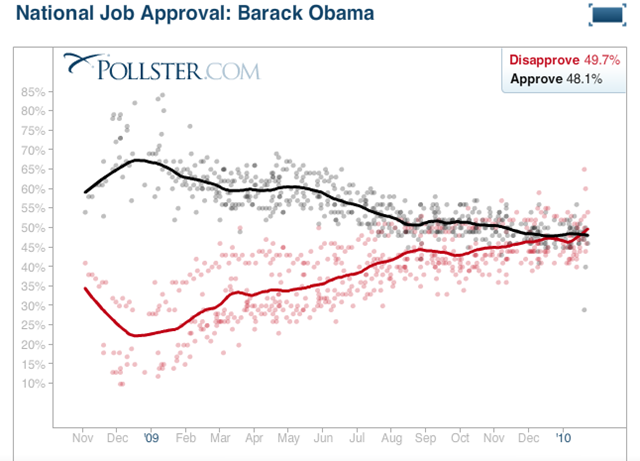
Uh-oh … the President’s lines have crossed.

January 29, 2010

For the first time, Pollster.com’s poll-of-polls has more folks disapproving of President Obama’s job performance than approving.

These numbers are post-Massachusetts, but pre-State of the Union address.

image
http://www.pollster.com/polls/us/jobapproval-obama.php?xml=http://www.pollster.com/flashcharts/content/xml/Obama44JobApproval.xml&choices=Disapprove,Approve&phone=&ivr=&internet=&mail=&smoothing=&from_date=&to_date=&min_pct=&max_pct=&grid=&points=1&lines=1&colors=Disapprove-BF0014,Approve-000000,Undecided-68228B

While Pepsi pushes health, Wall Street is still on a sugar high

January 29, 2010

Key Takeaway: PepsiCo, a company whose only ties to health come through the athletes in its advertisements, is trying to make a push for a more balanced portfolio.

Throughout this period, the company has seen a sharp decline in sales for many of its hero brands. PepsiCo is still staying true to its healthy vision, as the R&D budget has increased by nearly 40% over a three year period.

As delicious as Pepsi Apple Slices may sound to some, Wall Street does not seem to be as favorable to the strategy as it holds PepsiCo’s stock price well below the soft drink giant, Coca-Cola 

* * * * *
Excerpted from BusinessWeek, “Pepsi Brings In the Health Police” by Nanette Byrnes, January 14, 2010

Over the past two years, Pepsi has hired a dozen physicians and PhDs, many of whom built their reputations at the Mayo Clinic, WHO, and like-minded institutions. Some researched diabetes and heart disease, the sort of ailments that can result in part from eating too much of what Pepsi sells.

Last year, technological improvements to an all-natural zero-calorie sweetener derived from a plant called stevia allowed Pepsi to devise several fast-growing brands, including Trop50, a variation on its Tropicana orange juice that has half the calories of the breakfast standby. Introduced in March, Trop50 has become a $100 million brand.

Chief Executive Nooyi says she has no choice but to move in healthier directions. For more than 15 years, consumers have gradually defected from the carbonated soft drinks that once comprised 90% of Pepsi’s beverage business. Many switched to bottled water. Meanwhile, the cloud of criticism shadowing Pepsi’s largest business, oil- and salt-laden Frito Lay snacks, grew steadily.

Coming off a tough 2009, during which once high-flying brands such as Gatorade slipped, Pepsi hasn’t convinced Wall Street that Nooyi’s plans will pay off. The company trades at a significant discount to its rival, Coca-Cola . While securities analysts say that healthier foods look like a good long-term market, for now, the slowdown in the company’s far larger traditional snack-and-soda portfolio cannot be ignored. “The consumer can move to baked chips, or pretzels, or Sun Chips, but they’re not yet giving up their chips for an apple or carrot stick,” says Bill Pecoriello, CEO of Consumer Edge Research, an independent stock-research firm in Stamford, Conn.

Pepsi built its empire on the manufacture and distribution of instantly recognizable products. It could get a bag of Lay’s or a can of Mountain Dew to customers practically anywhere in the world. So far, healthier options have produced only modest hits, including TrueNorth nut snacks and SoBe Lifewater.

Edit by JMZ


* * * * *

Full Article:
http://www.businessweek.com/magazine/content/10_04/b4164050511214.htm?chan=innovation_branding_top+stories

Trust me: Fox is the most trusted name in news … here’s the data

January 28, 2010

Punch line: A poll finds that 49 percent of Americans trust Fox News, 10 percentage points more than any other network.

Note: the polling organization PPP is the one that hit Scott Brown’s election margin on the button.

* * * * *

From Politico: Poll says Fox most trusted name in news, 1/27/10

Fox is the most trusted television news network in the country, according to a new poll out Tuesday.

A Public Policy Polling nationwide survey of 1,151 registered voters found that 49 percent of Americans trusted Fox News, 10 percentage points more than any other network.

Thirty-seven percent said they didn’t trust Fox, also the lowest level of distrust that any of the networks recorded.

CNN was the second-most-trusted network, getting the trust of 39 percent of those polled. Forty-one percent said they didn’t trust CNN.

Each of the three major networks was trusted by 35 percent or less of those surveyed, with NBC ranking highest at 35 percent. Forty-four percent said they did not trust NBC, which was combined with its sister cable station MSNBC.

Thirty-two percent of respondents said they trusted CBS, while 31 percent trusted ABC. Both CBS and ABC were not trusted by 46 percent of those polled.

Full article:
http://www.politico.com/news/stories/0110/32039.html

* * * * *

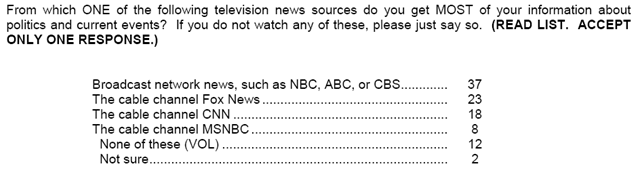
In a separate WSJ/NBC survey, almost 1 in 4 of all registered voters get most of their political information from Fox

That compares to 37% for the big 3 networks combined, and 18% for CNN.  Only 8% rely on MSNBC (whew !)

I guess the 12% “none of these” track to Jon Stewart & Steven Colbert.  (Yipes.)

image

http://msnbcmedia.msn.com/i/MSNBC/Sections/NEWS/A_Politics/___Politics_Today_Stories_Teases/10049NBCWSJ.pdf

Apple’s tablet to be the savior for lagging industries

January 28, 2010

Key Takeaway: Apple is back to its incredibly innovative ways as it prepares for the launch of the iPad in 2010.

This device will allow consumers to have a more interactive experience with print media, give people the ability to host two-way video discussions anywhere and anytime, and may finally jumpstart telecommuting.

Talk about benefit-overload; this product’s unique attributes show that there are ways to revive and improve stagnant, or even declining, categories.

* * * * *

Excerpted from BusinessWeek, “Five Ways Apple’s Tablet May Change the World” by Ben Kunz, December 30, 2009

Speculation about Apple’s one-device-to-rule-them-all iPad reached fever pitch this month when Yair Reiner, an analyst at Oppenheimer (OPY), dug through Steve Jobs’ production pipeline and found evidence that the tablet was being readied for an April 2010 launch.

…the iPad will change the world in at least five ways.

• Magazine and newspaper publishing will bounce back as consumers rediscover paid subscriptions…Expect to see publishers launch visually stunning versions of their magazines with swooping typography, video insets, CNN iReporter-style news uploads, social media overlays—whatever it takes to make you think you’re seeing a magazine or newspaper like never before, so much so you’ll even want to pay for it.

• Television and radio ratings will continue to fall. Unlike print, TV and radio won’t fit easily into the Apple tablet’s format. Sure, U.S. consumers still watch 5 hours and 9 minutes of live television a day, but the problem is ratings don’t hold when commercials actually air…Rather than being a device to watch television, the Apple tablet is more likely to be an interactive distraction when real TV ads come on your basement set.

• Augmented-reality views of the world will increase. If you missed this trend, it’s simple: Augmented reality puts computer graphics on top of live video feeds, similar to the yellow line you see on the field in NFL games.

• Two-way video on tablets will push communication costs even lower…Add a tablet with built-in Webcam, and suddenly video calls are as easy as holding up a mirror.

• Telecommuting may finally take off…when Apple tablets make portable video truly accessible, plane ticets and poor coffee in cars may become things of the past.

Edit by JMZ

* * * * *

Full Article:
http://www.businessweek.com/technology/content/dec2009/tc20091229_795528.htm

Remember the $787 billion Stimulus … oops, make that $862 billion.

January 27, 2010

Yesterday the CBO released a new budget outlook for 2010 and beyond.  The highlights (or,  lowlights):

  • ” … if current laws and policies remained unchanged, the federal budget would show a deficit of about $1.3 trillion for fiscal year 2010.”
  • The unemployment rate is projected to fall to 9.5% by 2011, 8% by 2012 and about 6% by election day 2012 (hmmm)

    image


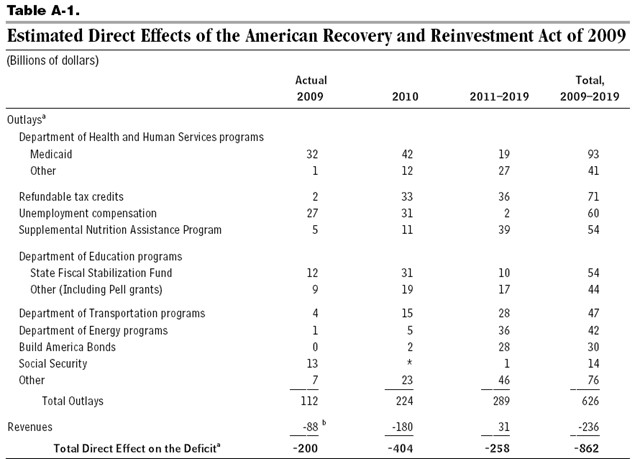
  • Somewhat buried in the details is a re-estimation of the cost of the 2009 stimulus bill (officially known as ARRA – American Recovery and Reinvestment Act).

    CBO originally estimated that ARRA would cost $787 billion from 2009 through 2019. Its new estimate is $862 billion, about $75 billion (9.5%) higher than previously forecast.

    Roughly 75% of the overage is attributable to “safety net” programs — food stamps and unemployment benefits.  Logical since the Stimulus program was going to be the silver bullet that kept unemployment below 8%.  Oops.Below is a chart summarizing all of the costs.

    Note that $258 billion hasn’t been spent yet (bank it ?) and that, so far,  a whopping 3% of the budget ($28 billion) has been spent to rebuild our roads and bridges.  Wasn’t that supposed to be the main event?

    Side note: if CBO estimate is off by 10%  in the current year of a budgeted program, how much confidence should we have in a trillion dollar healthcare estimate ?  Yipes.

    Click the chart to enlarge it

image
See Appendix A of the CBO Report:
http://www.cbo.gov/ftpdocs/108xx/doc10871/01-26-Outlook.pdf

Clinically speaking, is Pres. Obama a narcissist ?

January 27, 2010

Anti-Obamanites often characterize the President as a narcissist.  Is he?

Below is one clinician’s criteria for slotting somebody as a narcissist.  All are narcissistic tendencies.

A score of 10 out of 13 slots somebody as an “overt maladaptive narcissist”.  That sounds pretty bad.

If the State of the Union gets boring tonight, pull out the list and score the President along these criteria.
 

image

Source: Disarming the Narcissist: Surviving & Thriving With the Self-Absorbed by Wendy T. Behary

Haitian crisis highlights need to find new ways of gathering data … social networking to the rescue

January 27, 2010

Takeaway: The crisis in Haiti proves that necessity is the mother of innovation as volunteers turn to new platforms to aggregate data from cell phones and social networks in order to decide where to focus their efforts.

As the dust from this tragedy settles, will these new methods for composing tweets into tunes find other applications?

* * * * *

Excerpt from Washington Post, “Crisis mapping brings online tool to Haitian disaster relief effort” by Monica Hesse, January 16, 2010.

The site Ushahidi.com allows users to submit eyewitness accounts or other relevant information for disaster zones via e-mail, text or Twitter — and then visualize the frequency of these events on a map. By Friday, Ushahidi, which means “testimony” in Swahili, had received nearly 33,000 unique visitors, and several hundred personal reports in Haiti that mainstream news organizations might not hear about.

Taken individually, these bits of data might not be terribly useful. The goal is that by aggregating the incidents in a visual format, people and organizations using the site will be able to see patterns of destruction, to determine where services should be concentrated. A red dot on the map, for example, signifies that looting is happening near a town called Pétionville; another shows that Hotel Villa Creole has become a site of medical triage.

The practice is known as crisis mapping, a newer field of disaster analysis using geography-based data sets, employed by organizations like Ushahidi and Arlington-based GeoCommons. Although individuals have used Twitter and Facebook to share anecdotes for a few years — notably, during 2009’s contested Iranian elections — crisis mapping brings many data points together, making meaning out of randomness and spreading information about areas lacking well-developed records. “We’re providing a repository for all kinds of organizations,” says Ushahidi’s director of strategic operations and founded the International Network of Crisis Mappers.

Ushahidi was originally founded in 2008 to map reports of violence in post-election Kenya. A Kenyan blogger had been trying to keep track of these incidents, “but got swamped by how much information was coming in and wanted to have a larger context of what was happening.” She appealed to the blogosphere for help, and soon had a site that allowed the entire Kenyan population to catalogue the injustices and atrocities they were witnessing — a real-time encyclopedia of unrest. Since then, the Ushahidi platform has been employed in many smaller projects, from monitoring elections in India to tracking medicine in various African countries.

In Haiti, it’s too early to tell what impact Ushahidi might have on relief efforts.

Some of the rescue workers for whom Ushahidi was intended are currently too besieged by the chaos of the situation to attempt incorporating it into their work: “Our colleagues are not feeding information into crowd-sourcing platforms for now,” writes one crisis responder. “I don’t think they have the time.”

Crisis mappers hope that their analytics will gain greater use in coming days, as rescue workers attempt to navigate the changed landscape.

“Being one of the poorest countries in the Western Hemisphere, Haiti doesn’t have the infrastructure that a more developed country would have,” such as extensive Global Positioning System equipment that would aid in mapping the terrain, says chief technology officer of GeoCommons, which has also been producing Haiti-related maps. “Now you have all of these people needing to know how to get from here to there. You need to know where the triage centers are, and the food and water. An old map would be irrelevant with road closings.”

The crowd-sourcing represents the future of crisis response. “We’re going to need to collaborate, we’re going to need to share data,” a Ushahidi contributor said. “The best way to provide humanitarian response is to be able to provide platforms and tools that allow people to share on-the-ground information quickly.”

Edit by BHC

* * * * *

Full Article:

http://www.washingtonpost.com/wp-dyn/content/article/2010/01/15/AR2010011502650.html?hpid=topnews

* * * * *

The "Supreme" effect of Brown’s win …

January 26, 2010

Pundits have been so riveted on the impact Scott Brown’s election is having on ObamaCare that they are overlooking a bigger deal: Supreme Court appointments … likely to be a relatively frequent happening since the average age of Supreme Court justices is about 90 years old.

Pre-Brown, Pres Obama could name practically any wingnut he wanted when a Supreme Court vacancy occurred … tilting the Court further left. 

Now, #41 can join his GOP colleagues to block anybody designee who leans too far out of the mainstream.

This could come back to haunt Pres Obama since he voted against Alito, saying that he was “qualified but too conservative”. 

Those words will come back to haunt the President.   

A picture is worth a thousand words on the teleprompter…

January 26, 2010

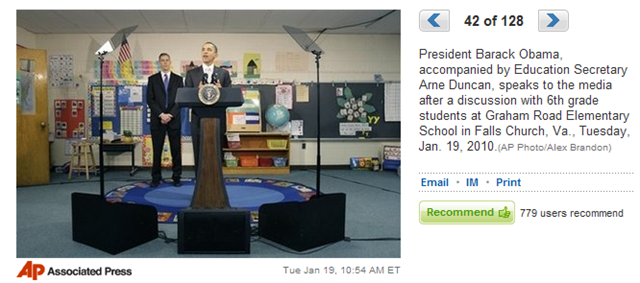
While speaking to a crowd (?) of 6th graders … cue the teleprompter.

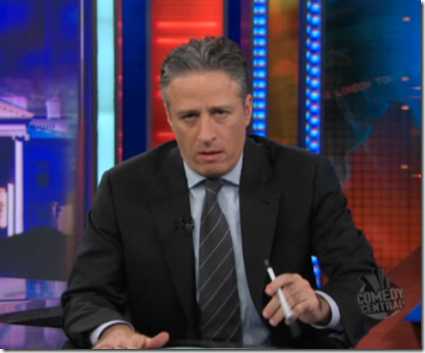
 Here’s Jon Stweart’s take
http://www.realclearpolitics.com/video/2010/01/26/jon_stewart_mocks_obama_for_teleprompter_in_classroom.html

image

http://news.yahoo.com/nphotos/Obama-Cabinet-Picks-Education-Secretary-Arne-Duncan/ss/events/pl/110508obamacabinet/im:/100119/480/9131bc77c7534185bdbf267bb4ab8497/

Slow and steady wins the pricing game

January 26, 2010

Key Takeaway: We all know that a pricing increase, when performed properly, has the potential to exponentially increase profits.

As the economy begins to pick up, it will be important for companies to extract greater value out of their current portfolio, which may be heavily discounted.

The most effective price-increasing strategy may be “Steadily Decreasing Discounting” (SDD), which was found to increase both sales and profitability for the companies using this method. Unlike typical strategies, SDD involves slowly raising prices from the sale price back to the initial level rather than all at once.

This will continually create incentive for a consumer to purchase the product right now, and won’t leave the consumer with a sense of regret if she missed the lowest price.

* * * * *

Excerpted from NACS Online, “Study: Retailers Can Increase Profits by Changing Pricing Strategy” by The University of Miami School of Business Administration, January 7, 2010

The University of Miami School of Business Administration released results of a study this week that shows retailers can substantially increase sales and profits if they increase the price of a sale item to its original cost in gradual steps rather than in one swift move.

Over a 30-week field study, the school reported a 200 percent increase in sales and a 55 percent increase in profits by using this strategy, which it calls “Steadily Decreasing Discounting” or “SDD.”

“SDD starts like Hi-Lo pricing in that you have a big sale, but the main difference comes after the initial sale when you progressively increase the price back to its regular level versus in one shot,” explained Michael Tsiros, an associate professor and chair of the Marketing Department at the University of Miami School of Business and the study’s lead author. “By doing so, SDD avoids a key problem of the Hi-Lo strategy – the big dive in sales at the end of the promotion that results from people stocking up on the item during the promotion or because they perceive the price to be too high because it was recently much lower.”

“SDD could be particularly effective in the current economic downturn,” Tsiros said. “Many retailers have been offering discounts of 60 percent or even 80 percent, and stores can’t offer those prices forever. But if they bring prices back up in increments, consumers will have time to adjust.”


Edit by JMZ

* * * * *

Full Article:
http://www.nacsonline.com/NACS/News/Daily/Pages/ND0107107.aspx

Of course he’s anti-business … so say 77% of investors

January 25, 2010

Ken’s Take: Let’s see, unemployment is over 10% and businesses provide jobs … so, go to war with banks and business.  Hmmm.  Might work.

Bernanke gets the highest approval ratings — by far — so don’t reappoint him.  Hmmm again.

* * * * *

Excerpted from Bloomberg: Obama Seen as Anti-Business by 77% , Jan 21,2010

U.S. investors overwhelmingly see President Barack Obama as anti-business and question his ability to manage a financial crisis, according to a Bloomberg survey.

  • 77 percent of U.S. respondents believe Obama is too anti-business.
  • Four-out-of-five are only somewhat confident or not confident of his ability to handle a financial emergency.
  • Only 27 percent of U.S. investors view the President favorably.

“Investors no longer feel they can take risks,” citing Obama’s efforts to trim bonuses and earnings, make health care his top priority over jobs and plans to tax “the rich or advantaged.”

Investors say Obama has been in a “constant war” with the banking system, using “fat-cat bankers and other misnomers to describe a business model which supports a large portion of America.”

The U.S. investors’ perceptions of Obama stand in contrast to those of their European counterparts, most of whom say the president strikes the right balance when it comes to managing business interests. Europeans, however, are more confident in Obama’s leadership on financial matters than Asians.

U.S. respondents give Geithner a 63 percent unfavorable rating and Summers 67 percent. One financial figure to find favor among U.S. respondents is Federal Reserve Board Chairman Ben S. Bernanke, who garners a 68 percent approval rating.

Unlike other recent presidents, Obama hasn’t selected a leading business executive for his cabinet or a top advisory role.

http://news.yahoo.com/s/bloomberg/20100121/pl_bloomberg/a8uii1bcrdmy

The UAW … California style.

January 25, 2010

Punch line: The pension liability created by lucrative union contracts was no problem … until folks started to retire … and live a lot longer than expected.

* * * * *

Excerpted from WSJ: Public Employee Unions Are Sinking California,  Jan,22, 2010

Months after closing its last budget gap, the Golden State’s $83 billion budget is $20 billion in the red.

“This year alone, $3 billion was diverted to union pension costs from other programs.”

To balance the budget, California needs to take on its public employee unions.

Approximately 85% of the state’s 235,000 employees (not including higher education employees) are unionized.

Over the past decade pension costs for public employees increased 2,000%. State revenues increased only 24% over the same period.

There are now more than 15,000 government retirees statewide who receive pensions that exceed $100,000 a year.

Many of these retirees get a pension that equals 90% of their final year’s pay. The pensions for these (and all other retirees) increase each year with inflation and are guaranteed by taxpayers forever—regardless of what happens in the economy or whether the state’s pensions funds have been fully funded (which they haven’t been).

Note: Many of the retirees are former police officers, firefighters, and prison guards who can retire at age 50 with full benefits.

Full article:
http://online.wsj.com/article/SB10001424052748703699204575017182296077118.html?mod=djemEditorialPage

Loss leader pricing – why do it?

January 25, 2010

TakeAway:  Though it’s facing a lot of resistance from its franchisees, Burger is mandating a profit killing price for the double cheeseburger. 

Why in the world would a global franchisor want to force it’s franchisees to lose money.  The answer is, of course the franchisor doesn’t want the franchisee to lose money.  The franchisor wants to use the item as bait to bring in customers and increase the sales of other, and most likely, higher margin products. 

If Burger King franchisees do not get this logic or have proof that this logic is false, then Burger King may have bigger problems to worry about.

* * * * *

Excerpted from WSJ, “Burger King Franchisees Can’t Have It Their Way,” By Richard Gibson, January 21, 2010

The price of a double cheeseburger is generating a lot of heat among Burger King franchisees.

In an ongoing dispute that could affect how the nation’s hundreds of franchise organizations set prices, the burger chain is insisting that its two beef-patty sandwich be sold for no more than $1—in line with other items on its “Value Menu.”

But the company’s franchisees claim that at that price, they lose money.

Although the loss on each sandwich may only be a few cents, a typical restaurant might sell several hundred of the burgers each week.

Most franchisees are following orders for now, but the National Franchisee Association for Burger King, which represents restaurant operators across the U.S., filed a lawsuit last fall in U.S. District Court in Florida, asserting that the company’s franchise agreements don’t allow it to dictate prices.

Burger King … says it sees the value promotion as key to competing effectively in the current consumer environment …

A court ruling that’s favorable to Burger King could embolden other franchisers to mandate prices. Many franchisees have long regarded their power to set prices as testament to their independence.

Burger King’s arch rival, McDonald’s, faced a similar issue, when its franchisees rebelled against a $1 double cheeseburger. The matter was defused when the fast-food giant removed one of the sandwich’s two slices of cheese and renamed it the McDouble, cutting the cost of ingredients …

Burger King’s franchisees say they usually get the chance to sign off on price changes, and that they’ve twice rejected a $1 double cheeseburger. Burger King confirms that it previously didn’t dictate prices on individual items, though it did require a $1 maximum price on Value Menu items.

The company won a separate case in 2008 requiring franchisees to offer the Value Menu, which is core to its efforts to attract price-conscious consumers.

A company might choose to set prices if it thinks the stores are charging so much that its royalties—and its reputation—are being diminished. But most companies don’t like to rile their franchisees …

Some franchises … say they recommend prices, especially in connection with national marketing campaigns.  For example, Papa John’s is offering a special Super Bowl pizza for $11.99, though it notes in advertisements that the price is valid only at “participating” restaurants.

“Most franchisees follow our recommended national offers,” says Burger King’s SVP … since customers might argue with the store’s workers if they’re charged more.”

Edit by TJS

* * * * *

Full Article
http://online.wsj.com/article/SB20001424052748704320104575014941842011972.html#mod=todays_us_section_b

* * * * *

Conan gets $32 million … where’s the outrage? or the pay czar?

January 22, 2010

Punch line: Conan fails at 11:30 and gets $32 million to go away.  Where’s the pay czar when you need him ? 

* * * * *

FBN: Conan, $40 Million & The TARP Takers by Brian Sullivan, January 19, 2010

Where’s the outrage?

Polls show the public is furious over the expected record bonuses being paid to wall streeters this year.   

Meantime, another large-font headline these days is the very public battle between Jay Leno, Conan O’Brien and NBC.   After trading public barbs (advantage: Conan) for a few weeks, that fight appears over.   Leno gets his show back and Mr. O’Brien reportedly gets $40 million to walk away.

Good for him.   But where’s the bonus bruhaha?

NBC is owned (until the Comcast deal closes) by General Electric.  Like many big banks, GE benefited from taxpayer handouts through backstops of debt for its GE Capital divison.   Not once, but a couple of times.  Imagine the headlines if a stock trader at a TARP-taking bank was paid anywhere close to that to walk away.   The AFL-CIO would issue a press release, Congress would hold another hearing and many TV news types would trip over themselves to out-populist each other.

If we’re going to browbeat the traders for getting their contractually-mandated percentage of business (which is what most of the bonuses are), then we must also be fair and hand out the same criticism for other TARP-takers with large payouts, regardless of the business they’re in.    We don’t have to like the bonuses.   We don’t have to like the banks or the bailouts.   We shouldn’t.   But we should at least follow the money.

Full article:
http://briansullivan.blogs.foxbusiness.com/2010/01/19/conan-40-million-the-tarp-takers/

Nuts and Creeps … both endangered species

January 22, 2010

Punch line: tax payers are no longer going to tolerate lying, cheating, secret-dealing, ineffective government operatives.

Nelson’s Cornhusker Kickback was a defining moment — even the people of Nebraska — the beneficiaries of the special deal — rejected it as just plain wrong.

Imagine … a constituency that can’t be bought off.

* * * * *

WSJ: The New Political Rumbling Massachusetts may signal an end to old ways of fighting , Peggy Noonan, Jan. 21, 2010

In the 2006 and 2008 elections, and at some point during the past decade, the ancestral war between Democrats and the Republicans began to take on a new look.

If you were a normal human sitting at home … chances are pretty good you came to see the two major parties not as the Dems versus the Reps, or the blue versus the bed, but as the Nuts versus the Creeps.

The Nuts were for high spending and taxing and the expansion of government no matter what. The Creeps were hypocrites who talked one thing and did another, who went along on the spending spree while lecturing on fiscal solvency.

In 2008, the voters went for Mr. Obama thinking he was not a Nut but a cool and sober moderate of the center-left sort.

In 2009 and 2010, they looked at Obama’s general governing attitudes as reflected in his preoccupations — health care, cap and trade — and their hidden, potential and obvious costs, and thought, “Uh-oh, he’s a Nut!”

Which meant they were left with the Creeps.

The contest between the Nuts and the Creeps may be ending.

The Nuts just got handed three big losses, and will have to have a meeting in Washington to discuss whether they’ve gotten too nutty.

But the Creeps have kind of had their meetings — in Virginia, New Jersey and Massachusetts. And what seems to be emerging from that is a new and nonsnarling Republicanism.

We’ll see …

Full article:
http://online.wsj.com/article/SB10001424052748703699204575017503811443526.html?mod=djemEditorialPage

FOX soars … Air America crashes.

January 22, 2010

Punch line: Everything has been coming up roses for Fox since the White House declared war on the network last year.

* * * * *
RCP: Media Wars: FNC Keeps Rising, Air America Crashes, January 21, 2010

On Tuesday, liberal Air America radio declared bankruptcy and will cease live broadcasts immediately.

On the same day Neilsen reported competition-dwarfing numbers for Fox News’s coverage of the special election in Massachusetts on Tuesday night. 

According to Neilsen, Fox News drew an 6.2 million total viewers during primetime Tuesday night, compared to only 1.5 million for CNN and 1.1 million for MSNBC.

Clearly, those numbers are driven in part by the fact that Fox’s right-leaning audience was intensely interested in the outcome of this race. But it also had to do with the fact that Fox simply provided more, and better, coverage of the event. Fox was the only network to cover Coakley and Brown’s speeches in their entirety.

And as  Miami Herald TV critic Glenn Garvin noted “MSNBC’s Keith Olbermann and Rachel Maddow, positively enraged that Massachusetts dared to elect a Republican, delivered two hours of nonstop bilious rage toward the state’s voters, calling them “irrational” and “teabaggers,” engaged in “a total divorce from reality, and hinting that they’re vicious racists to boot.”  Good thing nobody was listening.

Full article:
http://realclearpolitics.blogs.time.com/2010/01/21/media-wars-fnc-keeps-rising-air-america-crashes/

Tanning salons sigh relief as bullseye shifts to big banks

January 21, 2010

Big winner from Mass results are tanning salons since taxing them was going to fund part of ObamaCare.  Maybe, just maybe, they dodged a bullet.

Now, the administration is picking on somebody its own size — the Wall street banks.

Since the announced “fee” on big banks got some populace traction, why not put on a full court press?

* * * * *

WSJ: Proposal Set to Curb Bank Giants, Jan. 21, 2010
 
President Barack Obama is expected to propose new limits on the size and risk taken by the country’s biggest banks, marking the administration’s latest assault on Wall Street in what could mark a return, at least in spirit, to some of the curbs on finance put in place during the Great Depression.

The past decade saw widespread consolidation among large financial institutions to create huge banking titans. If Congress approves the proposal, the White House plan could permanently impose government constraints on the size and nature of banking.

The goal would be to deter banks from becoming so large they put the broader economy at risk and to also prevent banks from becoming so large they distort normal competitive forces.

Mr. Obama is also expected to endorse measures which would place restrictions on the proprietary trading done by commercial banks, essentially limiting the way banks bet with their own capital.

The proposal could have the biggest effect on Bank of America Corp., Wells Fargo & Co., and J.P. Morgan Chase & Co., which control a large amount of U.S. deposits, as well as Goldman Sachs, Morgan Stanley and Citigroup Inc., which have a large presence on Wall Street.

The rules could also keep banks out of the business of running hedge funds, investing in real estate or private equity, all businesses that have become important, profitable parts of these banks.

If investors believe the new rules could take effect, they could sell off the shares of most of the big financial stocks in the belief these companies would be facing years of turmoil and potentially lower profits.

The White House proposal would seek to return the “spirit of Glass Steagall,” meant to limit large banks from becoming too big and complex that create enormous risk.

Full article:
http://online.wsj.com/article/SB10001424052748704320104575015910344117800.html?mod=WSJ_hps_LEFTWhatsNews

Did SNL & the Daily Show start the ball rolling?

January 21, 2010

No pundits are saying it, but I think that video loop of candidate Obama promising to “put the negotiations on C-Span” caused the recent tipping point in voter angst.

And, it’s no secret that many folks get most of their news from the Daily Show and other comedy venues.  So, when they turned their guns on the President, you had to know that trouble was brewing.

Here are the two prime culprits: SNL’s “Jack & Squat” skit … and John Stewart on “Jobs Created or Saved”

* * * * *

Video: SNL goofs on Obama for accomplishing nothing — except jack & squat
http://hotair.com/archives/2009/10/04/video-snl-goofs-on-obama-for-accomplishing-nothing/

* * * * *

Video: Jon Stewart spoofs jobs saved or created.
http://vodpod.com/watch/2655813-the-daily-show-with-jon-stewartamerican-idle?pod=

WARNING: for mature audiences.

click picture or link to view

image

http://vodpod.com/watch/2655813-the-daily-show-with-jon-stewartamerican-idle?pod=

Holding on for dear life, Nokia attempts to re-enter the handset market

January 21, 2010

TakeAway: Like 66% of companies out there, Nokia suffered from the first mover disadvantage.  Then throw some complacency on top of that and you will have the current day Nokia – losing market share by the minute and watching its stock price tumble. 

Now Nokia it is trying to crawl back.  Blaming customer focus, carrier demands, etc. for its dwindling success, Nokia is hoping that a suite of killer apps and new distribution channels will renew its position as a credible competitor in the handset market.

* * * * *

Excerpted from NYTimes, “Can Nokia Recapture Its Glory Days?” By Nelson D. Schwartz, December 13, 2009

If there’s anywhere left in the world where it’s still impolite to flash a BlackBerry or an iPhone, it’s Nokia’s annual analyst meeting.

But earlier this month, as executives talked up the company’s plans for 2010, the optimistic message from the stage was belied by the behavior of the audience. In the back of the room, one money manager after another distractedly toyed with a competing device … one analyst announced to the room, “I don’t think anyone in this room is expecting an improvement in earnings next year” …

Although Nokia still commands 37% of the world’s handset market, it’s facing bruising competition in the lucrative high end of the industry, where the iPhone and BlackBerry have grabbed the cool factor in smartphones that can surf the Web and handle e-mail …

Nokia’s problems are especially acute in North America, where its hold on smartphones equals 3.9%, compared with 51% for Blackberry and 29.5% for iPhone … 

“We made wrong decisions in the American market,” says Nokia’s EVP for devices. For example, Nokia was slow to make the change to so-called clamshell phones, sticking with “monoblock” models even as consumers abandoned them.

And while Nokia first offered touch-screen technology in 2004 — three years before the debut of the iPhone — Apple’s models quickly made Nokia’s competing products look stodgy. Most of Nokia’s touch-screen phones can’t quickly transform their screen with the jab of a finger, which is among the factors that make the iPhone seem so much more slick.

Until recently … the company didn’t want to produce phones specifically tailored for American consumer tastes, and it resisted demands from the major carriers to come up with phones based around their brands and individual specifications …

Nokia has also been hobbled by its traditional weakness in phones employing C.D.M.A., the wireless technology offered by Sprint and Verizon Wireless that’s used by about 50% of American consumers … Nokia focuses instead on G.S.M. phones for AT&T and T-Mobile. However, AT&T’s exclusive deal with Apple has hurt Nokia in the high-end smartphone market …

Nokia is finally responding — its lithe, BlackBerry-like E72 appeared in the United States on Tuesday — but it is facing looming threats in other segments.

Google is offering Android, a rival to Nokia’s own operating system, which has been picked up by competitors like HTC, Motorola and Dell, while Asian manufacturers are turning up the heat with low-priced handsets in emerging economies where Nokia has long enjoyed outsize market share … 

“The market believes this is a management team that can’t and won’t execute,” …

Despite the pessimism outside, Mr. Kallasvuo insists spirits are still high inside the company …

Indeed, for all the new competition in smartphones, Nokia remains the dominant player in conventional handsets, selling roughly 15 phones a second worldwide …

And while market share might be minuscule in North America, the company commands a whopping 62.3% of the market in the Middle East and Africa, as well as 48.5% in Eastern Europe and 41.8% in Asia …

What’s more, Nokia has been written off before.  Citing past crises in 1998 (the advent of smaller phones), 2001 (the bursting of the tech bubble) and 2004 (the sudden popularity of flip phones) … “we’ve always had points where technology hit a plateau and had to be reconfigured.”

So why didn’t Nokia move more quickly to counter Apple and Research in Motion in smartphones? “We didn’t execute; we were aiming at too geeky a community,” he says. “Apple is made for the common man. It’s more for Joe Six-Pack than techno-geeks. But we understand Joe Six-Pack too” …

Nokia executives say new offerings like the N900, which is as much a mobile computer as it is a phone, or the N97 Mini, which combines touch-screen technology with a qwerty keyboard, will win back buzz from Apple and BlackBerry while appealing to the company’s 1.1 billion customers …

Another crucial development in 2010 will be a bigger push for North American market share, as Nokia works more closely with carriers and brings out more smartphones … Nokia executives are promising a smartphone for next year that will update the company’s aging Symbian operating system, combining the touch-screen coolness of the iPhone with a BlackBerry-like e-mail solution …

And though Nokia’s flagship outlets in the United States may be folding, the Finnish giant is still trying to compete directly with Apple online, opening Ovi in May to compete with Apple’s hugely successful Apps Store …

Edit by TJS

* * * * *

Full Article
http://www.nytimes.com/2009/12/13/business/13nokia.html?_r=1&scp=2&sq=nokia&st=cse

* * * * *

Day-after-pills: Dow 11,000 … rats jumping … Hillary smiling

January 20, 2010

OK, couple of morning after the election thoughts …

Dow Soars

I’m on record with friends and on the blog that the Dow would head to 7,500 if ObamaCare passed … and I expected that it would.

Now that the odds have shifted — at least temporarily — the market should get a huge boost.

I’m not a big Jim Cramer fan, but I agree with him on this one:

Former Barack Obama supporter Jim Cramer on Friday said the stock market would have a huge rally if Scott Brown defeats Martha Coakley in Tuesday’s special senatorial election in Massachusetts.
 http://newsbusters.org/blogs/noel-sheppard/2010/01/17/jim-cramer-brown-win-causes-huge-stock-rally-investors-nervous-about-#ixzz0d9GKbCfp

* * * * *

Rats Jumping Ship

Last week I opined that some Dems might be secretly wishing for a Brown victory since it would take them off the hook re: ObamaCare.  They could let it die without casting a no vote.

Well, Democratic Senator Jim Webb of VA stepped up last night, pointing out the obvious:

In many ways the campaign in Massachusetts became a referendum not only on health care reform but also on the openness and integrity of our government process. It is vital that we restore the respect of the American people in our system of government and in our leaders. To that end, I believe it would only be fair and prudent that we suspend further votes on health care legislation until Senator-elect Brown is seated.
http://tpmdc.talkingpointsmemo.com/2010/01/health-care-comes-to-screeching-halt-sen-webb-no-hcr-votes-until-brown-seated.php

If Webb doesn’t get squashed by Reid and the White House today, watch for a flurry of “save my own hide” defections. 

* * * * *

Hillary Smiles

Soon after Obama’s inauguration, a plugged-in politico friend of mine told me that Hillary expected the Obama presidency to implode and was informally keeping part of her organization in place to be prepared to challenge Obama in 2012.  At the time. I dismissed the possibility as wishful thinking.

Well, now an implosion doesn’t appear to be such a wild possibility.

And, no less the the National Enquirer says:

A furious Michelle Obama has declared war on Oprah Winfrey – saying she has proof the talk-show titan is plotting with Hillary Clinton to take the White House from her husband.
http://www.nationalenquirer.com/michelle_obama_war_with_oprah_hillary_clinton/celebrity/67983

Remember, the Enquirer was right on Tiger and John Edwards. 

Hard to bet against them.

Brownisms … that weren’t on CNN or MSNBC

January 20, 2010

I was flipping channels last night to see what the different networks were saying and showing.

Olberman and the MSNBC team were deriding Brown and Mass voters for being stupid, and advocating full steam ahead on ObamaCare 

Blitzer and the CNN team was just sad about the turn of events, and suggesting scaling back ObamaCare.

Both MSNBC and CNN stopped showing Brown’s victory speech when he got into the meat of his campaign points.  Really.

So, if your were watching those networks, you missed his classic line that “It’s not Ted Kennedy’s seat, it’s not the Democrats seat, it’s the people’s seat.”

On ObamaCare: “It will raise taxes, it will hurt Medicare, it will destroy jobs and run our nation deeper into debt.” 

On terrorist rights: “Our tax dollars should go towards weapons that destroy terrorists, not lawyers to defend them.”

For a stupid guy, he seem to make a lot of sense.

* * * * *

P.S. Oh yeah, Hannity and the Fox team were gloating …

From ‘coffee’ to ‘ignoranus’ … some uncommon definitions.

January 20, 2010

The Washington Post has published the winning submissions to its yearly neologism contest, in which readers are asked to supply alternative meanings for common words … and common definitions to not so common words:

The winners are:

1. Coffee (n.), the person upon whom one coughs.

2. Flabbergasted (adj.), appalled over how much weight you have gained.

3. Abdicate (v.), to give up all hope of ever having a flat stomach.

4. Negligent (adj.), describes a condition in which you absentmindedly answer the door in your nightgown.

5. Flatulence (n.) emergency vehicle that picks you up after you are run over by a steamroller.

6. Balderdash (n.), a rapidly receding hairline.

7. Testicle (n.), a humorous question on an exam.

8. Frisbeetarianism (n.), the belief that, when you die, your soul flies up onto the roof and gets stuck there.

9. Bozone (n.): The substance surrounding stupid people that stops bright ideas from penetrating. The bozone layer, unfortunately, shows little sign of breaking down in the near future.

10. Cashtration (n.): The act of buying a house, which renders the subject financially impotent for an indefinite period.

11. Sarchasm (n): The gulf between the author of sarcastic wit and the person who doesn’t get it.

12. Inoculatte (v): To take coffee intravenously when you are running late.

13. Decafalon (n.): The grueling event of getting through the day consuming only things that are good for you.

12. Glibido (v): All talk and no action.

13. Dopeler effect (n): The tendency of stupid ideas to seem smarter when they come at you rapidly.

14. Ignoranus (n): A person who’s both stupid and an #@$!**#@.

PLC regeneration – board games are back and better than before

January 20, 2010

TakeAway:  Board game manufacturers are taking advantage of technology to not only breathe new life into the board game market, but also to enjoy enormous price increases.

* * * * *

Excerpted from WSJ, “New Twists to the Games People Play,” By Ann Zimmerman and Joseph Pereira, December 9, 2009

Mattel and other makers of traditional games these days are increasingly turning to technology to attract a new generation of players. Hasbro has updated the classic Clue with a Secrets and Spies edition … Monopoly became the No. 1 paid application in the iPhone app store … One of the hottest games this holiday season owes its life to medical science.  Part high-tech Ouija board, part Mousetrap, Mattel’s Mindflex purports to allow you to move objects with your mind through the technology in an EEG … 

Toys “R” Us, which chose the Mindflex as a hot Christmas toy, is also selling a similar product, Star Wars The Force Trainer, by toy maker Uncle Milton Industries , which claims that players can levitate a ball inside a clear plastic 10-inch tower with their minds. It sells for $100.

“It is the first time you actually can use the force,” says VP merchandising at Toys “R” Us, adding that the toy is selling well despite its steep price tag.

With titles like these, toy manufacturers are experiencing something of a game renaissance. While sales of toys in the first nine months of the year were down 2%, board-games sales rose 8%, ahead of almost every category …

It’s unclear if high-tech board games will have staying power, but they’ve definitely created a certain buzz. Despite its $80 price tag, Mindflex is almost sold out. Panicked parents have been writing pleading messages on Twitter and other social-media sites, followed by triumphant posts when they secure a game … The mother of a 9-year-old girl says she didn’t mind paying $110, or a 38% premium, for the game online …

The recession has given a big boost to board games in general—even low-tech ones—as families forgo vacations and costly outings in favor of spending more time at home. Hasbro, the largest board-game seller with 53% share of the market, has capitalized on the hunkering-down effect, partnering with food companies and retailers in 120 countries to sell products as part of a “Family Game Night” promotion in the past year.

To entice new sales of traditional games, Hasbro has tried to spice them up with modern features …

The board-game business is also getting a boost from some parents who resent the growing popularity of electronic games …

At $10 to $35 a pop for most traditional games, board games are cheaper alternatives to vacations, ski-trips or even visits to the movies …

“To tell you the truth,” says Mrs. Murphy, a real estate agent, “we had forgotten how much fun games like Clue and Scrabble and Uno can be—not to mention how much money we saved.”

Edit by TJS

* * * * *

Full Article
http://online.wsj.com/article/SB20001424052748703558004574583922534512310.html#mod=todays_us_personal_journal

* * * * *


Obama: "Cambridge Police behave stupidly, again"

January 19, 2010

Well, the President didn’t really say that, but he must be thinking it.

Remember when Obama started a bruhaha over the the arrest of his buddy Harvard Prof. Louis Gates Jr. ? 

Obama said he ‘didn’t know all the facts’  of the case and then declared that the Cambridge police had acted ‘stupidly.’

Well, what goes around comes around, I guess.

At the time, a few Cambridge officers said they would never vote for Obama again.  Who cares, right?

Well, it’s payback time.

The Cambridge Police Patrol Officers union endorsed Republican Scott Brown in the Mass Senate race.

To add salt to the wound, Martha Coakley’s husband is a retired Cambridge cop, and a member of the union.

http://www.wickedlocal.com/cambridge/news/x1409379713/In-dig-at-Coakley-Cambridge-Police-Patrol-Officers-union-endorses-Republican-Brown-in-Senate-race

Adidas plans to extend its product line from the ground up

January 19, 2010

Takeaway: Adidas, a company well-known for shoe production, is going to enter Europe’s growing outdoor apparel market.

Market attractiveness certainly exists in this category, as outdoor gear has been outperforming other sporting goods categories.

The bigger question, however, relates to Adidas’ competitiveness in this market.

With a huge player in North Face and niche competitors, such as Patagonia, does Adidas stand a chance?

Most likely this will come down to Adidas’ brand equity in the eye of the consumer. Does Adidas stand for all outdoor activity? Or is it stuck, like a double-knotted tie, to the shoe industry?

* * * * *

Excerpted from BusinessWeek, “Adidas Leaps from Hot Sneakers to Warm Jackets” by Holger Elfes, December 9, 2009

Adidas has long been one of the world’s premier brands in fashion sport shoes. Now the German sporting-goods company plans to begin selling high-end mountaineering jackets next year, muscling in on North Face’s turf as outdoor gear grows faster than traditional sporting goods.

Sales of outdoor gear will rise about 0.7% in Europe this year, outperforming the declining sporting-goods market, according to industry body European Outdoor Group.

In Europe, Adidas increased its spending on marketing this year by running TV commercials with Alexander and Thomas Huber, brothers who are known for extreme Alpine climbing. The sporting-goods maker also started sponsoring Reinhold Messner, who made the first solo ascent of Mount Everest without bottled oxygen.

Adidas Chief Executive Herbert Hainer has said his company would build its outdoor-sports division using its own brand name and without resorting to acquisitions.

“Adidas is doing a seriously good job as the company tries to take advantage of the increasing interest for outdoor gear,” says Mark Held, secretary general of European Outdoor Group. He expects the industry’s growth to continue into next year. “Even in hard times, people continue buying outdoor gear to escape for a while from the seriousness of life.”

Edit by JMZ

* * * * *

Full Article:
http://www.businessweek.com/innovate/content/dec2009/id2009129_588770.htm?campaign_id=innovation_related

Bumper sticker says it all …

January 18, 2010

image

Viral marketing at a whole new level

January 18, 2010

TakeAway:  The beauty of online ads is that companies can let consumers do most of the work. 

Once a consumer finds an interesting ad, he or she will do the company’s dirty work of spreading that puppy around to hundreds to thousands of their friends. 

Now, companies are upping the game by offering videos. This could be the best viral marketing has ever seen.

* * * * *

Excerpted from NYTimes, “Online Ads Are Booming, if They’re Attached to a Video,” By Brian Stelter, November 11, 2009

News Web sites are starting to look a lot less like newspapers and a lot more like television.  CNN.com and ESPN.com are featuring video much more prominently on their home pages, often prompting visitors to press play before they begin to read … news Web sites are not the only Web sites jumping on this trend …

A major reason is commercial. At a time when other categories of advertising dollars are shrinking, video ads are booming. News sites are adding more video inventory to keep pace with the demands of advertisers, and benefiting from the higher cost-per-thousands, or C.P.M.’s, that ads on those videos command …

Video is now the fastest-growing segment of the Internet advertising market … and video ads will be the “main channel” for major advertisers seeking to increase their online spending in the next 5 years …

Some companies think of online video as an extension of TV, and others think of it as an enhancement — one that allows for interactive messages and instant feedback from viewers.

Companies acknowledge that the medium is still in many ways immature. Sites continue to disagree about the legitimacy of “autoplay,” a setting that starts videos automatically when a Web page loads, increasing the number of streams without necessarily knowing that the Web user is watching.  And, ads next to “serious” news dispatches normally cannot draw the same C.P.M.’s as lighter fare …

“The Web is fulfilling this promise of being a medium where you can enjoy video as much as you can see it on TV,” … “The difference online is, if you want to do something with it — share it, stick it on a blog, post it on a Facebook page, or mark it and save it — you can do all that. And that was never possible before.”

Edit by TJS

* * * * *

Full Article
http://www.nytimes.com/2009/11/11/business/media/11adco.html?_r=1&ref=media

* * * * *

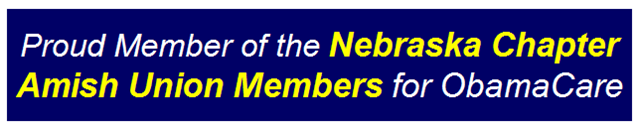
If you're an Amish union member living in Nebraska (with elderly parents living in Florida) … this plan's for you.

January 15, 2010

If you’re keeping track of the special ObamaCare deals:

States have to pay for extended Medicaid — except Nebraska. 

Seniors lose Medicare Advantage — except in Florida. 

Everybody must buy healthcare insurance — unless they’re Amish — since the Amish have a religious objection to insurance.

And, in the latest backroom deal, Cadillac health insurance plans face a 40% excise tax — unless the insured is in a union … at least until 2018.

I figure that by the time all of the special deals are cut and  this junk law is passed,  Lloyd Blankfein (CEO of Goldman Sachs) and Jamie Dimon (CEO of JP Morgan) will only two people in America without a special deal —  and will be paying  for the entirety of the ObamaCare program.

Maybe that’s a good thing.

Here are details …

Source: NY Post: Another Rank Deal, January 15, 2010

What happens when the irresistible force of the Democratic urge to tax runs up against the immovable object of Democratic loyalty to the labor unions?

Another ugly deal in a health-care bill that already was a grotesquerie of pay offs to favored politicians and interests. The levy in question is a 40 percent excise tax on high-end employer-provided insurance plans that – typically – has been sold as a tax on “the rich.” It’s called the “Cadillac tax,” a name redolent of corporate executives cackling in their Escalades over their cushy benefits.

The unions, which make it a point to negotiate generous insurance plans with their employers (to the point of bankrupting them), were chagrined to learn that for purposes of this tax, they’re among the rich. They howled in terms that could have been drawn from Henry Hazlitt’s free-market classic, Economics in One Lesson: The Shortest and Surest Way to Understand Basic Economics.

The excise tax is supposed to be paid by evil insurers and employers. Except in this one case affecting their self-interest directly, the unions see through the fiction and understand that the tax will trickle down onto them. How disorienting to hear unions implicitly recognize that corporations ultimately don’t pay taxes, their customers and employees do.

“While the excise tax is slated to be imposed on the insurers on so-called high cost plans, the tax will be passed on to enrollees in the form of higher premiums, co-pays or reduced benefits,” a coalition of public-employee unions wrote congressional leaders. “Characterizing this tax proposal as a ‘Cadillac tax’ is a misnomer. It hits the average blue collar and white collar employee.”

The unions also bristled at a fairly typical trick of liberal taxation – bracket creep. The Cadillac tax affects few people when it begins in 2013. Since it’s not indexed to account for the ever-rising expense of health care, though, it will catch more and more people over time.

This is why New York Times columnist Bob Herbert called it “a middle-class tax time bomb,” and Nancy Pelosi made an oblique reference to Pres. Barack Obama breaking his promise not to increase taxes for anyone making less than $250,000 a year. Obama’s support for the Cadillac tax not only violates that forlorn pledge, but directly contradicts one of his chief lines of attack against John McCain in the 2008 campaign.

McCain wanted to end the tax exemption for employer-provided insurance coverage and compensate people with a tax credit to buy their own plans, a systematic approach to controlling costs and increasing choice. Obama’s plan will increase costs and reduce choice, but he needs $150 billion in revenue over ten years to try to make it look deficit-neutral, so he’s – as he put it in his unrelenting anti-McCain ads – “taxing health benefits for the first time in history.”

But pressure from the unions has now forced the White House to agree to raise the $23,000-per-household threshold of the tax slightly and – more importantly – exempt insurance plans that are the product of collective-bargaining agreements until 2018. This Labor Loophole stands in the finest tradition of the Louisiana Purchase and the Cornhusker Kickback. With no possible public-policy justification, it puts the awesome power to tax and spend at the service of nakedly political ends.

Oliver Wendell Holmes famously said that taxes are the price of civilization. In this case, taxes are the price of not belonging to a group that pours countless millions of dollars into the Democratic coffers. Under the Cadillac tax, there’s one set of rules for the Service Employees International Union and another for everyone else.

Obama is currently haranguing the banks so he doesn’t get pegged as a “Wall Street Liberal.” The more dangerous rubric for him is a “Washington Liberal,” a politician knee-deep in the special-interest politics of the Beltway as he pushes an unpopular agenda of rapid government expansion. Obama’s style of politics has gone from inspiring to revolting in the space of a year.

http://www.realclearpolitics.com/articles/2010/01/15/another_rank_deal_99912.html

Patois and attitude ? Nope, give us wisdom and competence.

January 15, 2010

Ken’s Note: “Patois” — a great word — is any nonstandard language that draws class distinctions between those who speak it and those who speak the common or dominant language or dialect.  “Patois” could become this year’s “gravitas”.

* * * * * 

The public has turned decisively against the “educated classes”, many of their works, and many of their ideas.

Perhaps, our “educated class” is educated beyond its intelligence, and mistakes mastery of its patois and attitude for wisdom and competence.

It is full of itself, and values too highly its skill sets, which are entertaining, but not on the optimum level of consequence.

On this optimum level are resolution, moral clarity, and an ability to understand and connect with a great many people, things for which the educated class is not known.

This class fooled itself, and much of the country, for which the country will not soon forgive it.

Excerpted from Washington Examiner: Obama’s education of little use to his presidency, January 13, 2010
http://www.washingtonexaminer.com/opinion/columns/Obama_s-education-of-little-use-to-his-presidency-8756295-81272472.html

Mass Senate Race: Will the winner be the winner or the loser ?

January 15, 2010

I’m really intrigued by the Senate race is Mass.

Though I haven’t heard any pundits say it, I’m betting that some current Democratic Senators are silently hoping that Coakley (the Dem) loses.  Think Bayh, Webb, Lincoln, Landrieu. 

Why?

Now, these folks have to vote in lockstep on the bill or get pulverized by the Reid-Pelosi-Obama machine.  If Brown gets elected to break the super-majority, all the pressure is off the lemmings.  They won’t be blamed if the bill flames out.

On the other hand, GOPers are probably better off if Brown loses.  If he wins and ObamaCare goes away, the Repubs lose their major 2010 talking point and get accused of being obstructionists.

Perhaps, the best case for the Republicans would be a Brown victory but a slimey delay to keep him from being sworn in until after ObamaCare passes.  Then the GOP breaks the super-majority and still has the healthcare talking point for the elections.

The only loser in that case: well, all of us.

This is better than the last week of the NFL when play-off spots are still up for grabs.

Companies turn to product-specific soap operas to engage consumers

January 15, 2010

TakeAway:  I’m not sure if product-specific soap operas or webisodes are aimed at providing work for struggling actors and actresses, creating another way for studios to get advertising revenue, or engaging consumers. 

While I do think there is some benefit offering enhanced versions of commercials online so that consumers that want more info can get it, I think it is farfetched to say that products require actors in order for consumers to engage with the brand. 

And, if that is the case, maybe the brand may need more than a webisode to solve the problem.

* * * * *

Excerpted from NYTimes, “Shows Online, Brought to You by …,” By Stuart Elliott, November 24, 2009

… Actors are finding new ways to stay in the public eye in the form of Web series, also known as webisodes. Almost all such Web series are being created specifically for advertisers, borrowing a strategy from the early days of radio and television when shows like “The Kraft Music Hall,” “The Bell Telephone Hour” … that entertained Americans while selling cheese, phone service …

Webisodes — part of a trend called branded entertainment — are growing because marketers feel compelled to find new methods to reach consumers in an era when the traditional media are losing eyeballs, ears, hearts, minds and perhaps other body parts to the Internet …

Among the major brands proclaiming “brought to you by … ” online are Maybelline cosmetics, which is sponsoring Ms. Bushnell’s Web series, “The Broadroom,” available at maybelline.com/thebroadroom, and ConAgra Foods, which is sponsoring a daily show, “What’s So Funny?,” on yahoo.com, peddling products like Healthy Choice and Marie Callender’s!

The goal is to “extend our reach,” said media director at Clorox, and attain “a higher level of engagement” than is possible through tactics like running 30-second commercials that interrupt episodes of conventional TV series …

When developing branded entertainment, “the entertainment part has to come first” … otherwise consumers will dismiss it as “pushing a product” …

Shows should have an episodic, TV feel but be digestible, in portions sized appropriately for online viewing — typically three to seven minutes each …

Some consider webisodes “the flavor du jour” … but sponsors are signed “before we shoot a frame” of a Web series …

Edit by TJS

* * * * *

Full Article
http://www.nytimes.com/2009/11/24/business/media/24adcol.html?_r=1&ref=media

* * * * *

The perils of ‘free’ …

January 14, 2010

Punch line: Economists have shown that if a good’s price is zero or decreasing, then the demand for this good will likely increase. And, that applies to healthcare.

* * * * *

Excerpted from American.com: The High Cost of No Price, January 12, 2010

A simple chart shows why healthcare spending has gone out of control. The graph shows out-of-pocket payments by consumers and spending by Medicaid, Medicare, and private insurers on healthcare from 1965 to 2008.

image 

In 2008, consumers were only directly responsible for 11.9 percent of total national healthcare expenditures, down from 43 percent in 1965.   This means that someone other than consumers pays roughly 88 percent of all healthcare costs, giving consumers little incentive to mind costs and much incentive to over-consume.

Since the passage of Medicare in 1965, consumers’ out-of pocket spending on healthcare has decreased steadily as a percentage of overall U.S. healthcare spending. While real and nominal out-of-pocket healthcare payments increased over the period, growth in these costs was dwarfed by a much more rapid growth in overall spending. On average, consumers’ out-of pocket healthcare costs increased 6.7 percent each year, while national healthcare expenditures increased by an average 9.8 percent each year.

By contrast, increases in expenditures by private insurers, Medicaid, and Medicare accounted for the majority of this excess cost growth — since 1965, private insurers’ spending has increased by an average 10.8 percent annually, Medicaid spending has increased by an average 15.4 percent, and Medicare spending has increased by an average of 15.6 percent each year. The rate of growth in both Medicare and Medicaid spending far outpaces the rate of growth in out-of-pocket and private insurance costs.

When people aren’t exposed to the true cost of their care — even if they pay for it in foregone wages and higher taxes — they consume more.

It’s that simple.

Full article:
http://www.american.com/archive/2010/january/the-high-cost-of-no-price

Mass Senate Race: the real Kennedy factor

January 14, 2010

Scott Brown scored when proclaimed “It’s not teddy Kennedy’s seat, it’s not the Democrats seat, it’s the people’s seat” — nice rhetorical play, for sure.

* * * **

Pundits say that the 3rd party candidate — who happens to be named Kennedy — will sap votes from Brown since their ideology is similar and Kennedy “shows” better than Brown

Pundits are wrong.

Friends know that I often half-joke that I’m not a big fan one man, one vote.  I argue that many voters are completely uninformed on the candidates and issues, so they vote based on precinct boss guidance, candidates’ gender and looks, or name recognition.

My bet: many left leaning Mass voters will pull the voting lever for Kennedy — thinking that they’re voting for a member of the famos clan.  These folks, if they had a clue, would vote for Coakley.

Bottom line: Kennedy factor will help Brown.

Haven’t heard that on TV, have you?

Uh-oh. New Dem idea: Extending the Medicare tax to interest, dividends, and cap gains.

January 14, 2010

I don’t know how I missed this one. 

In the secret WH talks re: reconciling the House and senate bills, another taxing idea slipped out:

Boosting the Medicare payroll tax – either by increasing the rate or extending it to unearned income – is still a live option, according to sources familiar with the talks. 
http://www.politico.com/news/stories/0110/31480.html#ixzz0caQSCeWR

“They” like to call it unearned income.  We  income taxpayers (i.e. the minority) like to call it interest, dividends and capital gains — earnings previously sheltered from FICA and Medicare.

Now, this is getting personal.

Who’s to blame for the lack of integrated marketing mixes these days?

January 14, 2010

TakeAway:  It’s unclear whether CPG manufacturers should blame themselves or the retailers, but the CPGs better blame something for their lack of adhering to a key marketing success pillar – integrate your marketing mix.

* * * * *

Excerpted from Marketing Daily, “GMA Study: Shopper Marketing Still Siloed,” By Karlene Lukovitz, November 3, 2009

Shopper marketing continues to grow in importance for CPGs and retailers, but its effectiveness is being limited by insufficient integration with out-of-store marketing and media channels …

Overall investment in shopper marketing ( … in-store advertising, promotion and design initiatives intended to extend brand equity and provide the retailer with differentiation) is estimated to be growing at 21% annually …

Study concludes that CPG manufacturers have yet to align shopper marketing initiatives with the advertising and promotions that reach consumers at home and on the go. That results in disconnected marketing messages, wasted spending and missed opportunities to drive purchases …

Integrating and quantifying results from shopper marketing is becoming even more critical. Retailers increasingly seek to tap into CPGs’ budgets beyond trade promotions, pushing manufacturers to shift spending into ads on retailer Web sites and in-store video networks, as well as participate in retailer database marketing programs …

Study found brand preference to be the most important out-of-store factor influencing which products go on a shopping list …

The study also found that nearly half of food and beverage shoppers and nearly 60% of health/beauty and household goods shoppers purchase their preferred brands even when a less expensive alternative is available. And, 48% of food and beverage shoppers, 58% of household product shoppers and 59% of health and beauty shoppers — use coupons or price promotions to “justify buying the brands they want” rather than as the key factor driving their decision making …

Shoppers choose 59% of the brands they buy in the store, and 41% before they enter the store. This points to opportunities, even in the current down economy, to influence their brand choices before they go shopping.

For the 59% of items for which brands are selected in-store, 85% of shoppers perceive in-store factors as more influential than out-of-store marketing. After price, communicating benefits on packaging is most influential, whether for reinforcing existing brand preferences, driving competitive switching, capturing purchase when there is no strong brand preference, or creating impulse sales.

While confirming that most shoppers (81%) do research before shopping … 77% of shoppers do not take detailed shopping lists into the store. Instead, most shoppers have “mental lists” that include “brand consideration sets,” but evolve as they are exposed to more marketing at home, in transit and in the store.

Edit by TJS

* * * * *

Full Article
http://www.mediapost.com/publications/?fa=Articles.showArticle&art_aid=116719

* * * * *

Want to opt out of ObamaCare? … Declare yourself Amish.

January 13, 2010

This is getting nuttier by the day. 

States have to pay for extended Medicaid — except Nebraska. 

Seniors lose Medicare Advantage — except in Florida. 

Cadillac health insurance plans face a 40% excise tax — unless the insured is in a union. 

And now, everybody must buy healthcare insurance — unless they’re Amish — since the Amish have a religious objection to insurance. 

Anybody know how to become Amish?

Hmmm.  What if you’re just allergic to insurance?

* * * * *
Sourced from Watertown Daily Times: Amish families exempt from insurance mandate, Jan. 9, 2010

Federal health care reform will require most Americans — but not all — to carry health insurance or risk a fine. People with religious objections can opt out

For example, Amish families  are free from that requirement.

They, as well as some other religious sects, are covered by a “religious conscience” exemption, which allows people with religious objections to insurance to opt out of the mandate.  The provision is in both the House and Senate versions of the bill, making its appearance in the final version routine unless there are last-minute objections.

Amish people generally rely upon a community ethic that disdains government assistance. Families rely upon one another, and communities pitch in to help neighbors pay health care expenses.

Lawmakers reportedly included the provision at the urging of Amish constituents, although the legislation does not specify that community and the provision could apply to other groups as well, including Old Order Mennonites and perhaps Christian Scientists.

Congressional aides said the exemption is based on a carve-out the Amish have had from Social Security and Medicare taxes since the 1960s. Whether Amish businesses, however, would fall under the bill’s mandates is still an open question.

Sen. Charles E. Schumer, D-N.Y., who was a key negotiator on the Senate bill, supports the religious exemption, and called the provision a “no brainer.”

Note: the Amish do buy vehicle insurance. 

Hmmm.  Must be for buggies since they don’t drive cars.

Source article:
http://www.watertowndailytimes.com/article/20100109/NEWS02/301099964

The new GM figures out that trucks are profitable and green cars aren’t … no kidding.

January 13, 2010

Excerpted from WSJ: Back to the Future: GM Bets on Trucks, Jan. 13, 2010

GM now is trying to boost revenue and return to profitability in a bid to repay the $6.7 billion in cash it owes the U.S. government. The Treasury Department also invested roughly $50 billion more in GM that was converted into a 60% stake in the auto maker.

The government has pushed GM, Chrysler — which also restructured in a federally financed bankruptcy — and other auto makers to produce smaller, more fuel-efficient vehicles, including battery-powered cars.

But, GM announced that it is using freed up cash to fund a major update of its full-size pickups, a bet that consumers and businesses will resume buying trucks after a long lull in sales.

GM, which had relied on full-size pickups such as the Chevrolet Silverado for a major portion of its U.S. revenue and operating profit, had put off redesigning the trucks as its finances collapsed and it underwent a government-backed bankruptcy reorganization last year.

Trucks sales sagged in the past two years after gasoline spiked to $4 a gallon in 2008 and home sales — a big driver of truck purchases by contractors and builders — collapsed amid the recession.

Until the past few years, full-size pickups had been a big business for Detroit car companies. They often sell for $30,000 and more and generate thousands of dollars in operating profit each.

“When the housing industry starts to pick up, you will see truck sales increase immediately and companies will need to have fresh products out there,”

Full article:
http://online.wsj.com/article/SB126334663717427135.html?mod=WSJ_hps_LEFTWhatsNews

Looking for a low-cost marketing research tool? Twitter may be your answer.

January 13, 2010

TakeAway:  In need of real-time consumer feedback?  Well, look no further.  Twitter evolved its search capabilities to allow “searchers” to not only track the volume of tweets, but also to assign a sentiment to those tweets.

* * * * *

Excerpted from, WSJ, “Follow the Tweets,” By Huaxia Rui, Andrew Whinston, and Elizabeth Winkler, November 30, 2009

There’s a new tool that can help companies predict sales for the coming weeks, or decide whether to increase inventories or put items on sale in certain stores. It’s Twitter.

Social-media sites such as Twitter have made it increasingly easy to find out what consumers think and want without the limitations and bias associated with older market-research tools … With Twitter, users broadcast what they are doing or thinking via “tweets” … People can “tweet” about anything at any time … which allows for word-of-mouth to spread at astonishing speed. Anyone can follow a user’s messages, and tweets are easily searchable using keywords …

Executives can make accurate predictions about sales trends by analyzing tweets that mention their products or services … essentially companies can monitor their “buzz” …

Imagine a company is releasing a new product into the marketplace and has spent a lot of money on advertising to create “buzz” … the company can track the buzz, determine whether the overall opinion is positive or negative and focus on specific areas of the country. The company could track the progression of tweets during and after the product’s launch to determine whether there are shifts in opinion, giving the company a chance to react quickly if there is a problem …

If executives notice a sudden surge of tweets in New York City, signaling that people will go out and buy their product over the weekend, they may want to make sure stores in the area have enough stock. Inversely, if they notice that the buzz about the product is dying out, they may decide to put the product on sale, eliminate inventory and come up with something new.

There are some challenges inherent in collecting and sorting tweets in “real time,” or as they are being sent. Twitter returns only the most recent 1,500 tweets for each keyword-search query, so if there is a sudden surge of tweets containing your keywords, you could miss some messages …

Twitter’s advanced-search feature is capable of identifying tweets as either positive or negative … Twitter determines whether a tweet has a positive or negative attitude based on “emoticons” …

Here are a few ways companies are successfully using Twitter:  1) Take note of complaints that may help improve the next generation of products and offer customer service. Listen to what Twitter users are saying about the competition and the industry in general … 2) Identify influencers … Reaching out to these Twitterers can be a key strategy for companies when launching a new product, building a new campaign or just collecting opinions … 3) Pay attention to shifts in opinion … or emoticons … 4) Follow trending topics. Twitter has recently added a trending topics section to its home page, showing the 10 most discussed topics at the moment …

Edit by TJS

* * * * *

Full Article
http://online.wsj.com/article/SB10001424052970204731804574391102221959582.html

* * * * *

Fighting off colds, flu … cancer and aging … a miracle drug ? (Nope)

January 12, 2010

Punch line: Medical experts are offering an additional reason to exercise: Regular workouts may help fight off colds and flu, reduce the risk of certain cancers and chronic diseases and slow the process of aging.

* * * * *
Excerpted from WSJ: The Hidden Benefits of Exercise, Jan. 5, 2010

image

Physical activity has long been known to bestow such benefits as helping to maintain a healthy weight and reduce stress, not to mention tightening those abs. Now, a growing body of research is showing that regular exercise—as simple as a brisk 30- to 45-minute walk five times a week—can boost the body’s immune system, increasing the circulation of natural killer cells that fight off viruses and bacteria. And exercise has been shown to improve the body’s response to the influenza vaccine, making it more effective at keeping the virus at bay.

“No pill or nutritional supplement has the power of near-daily moderate activity in lowering the number of sick days people take.”

The Centers for Disease Control and Prevention says 36% of U.S. adults didn’t engage in any leisure-time physical activity in 2008.

“We need to refocus the national message on physical activity, which can have a bigger impact on health than losing weight.”

Regular exercise has been shown to combat the ongoing damage done to cells, tissues and organs that underlies many chronic conditions. Indeed, studies have found that exercise can lower blood pressure, reduce bad cholesterol, and cut the incidence of Type 2 diabetes.

Scientific studies are now suggesting that exercise-induced changes in the body’s immune system may protect against some forms of cancer.

Studies suggest that women who exercise regularly can expect a 20% to 30% reduction in the chance of getting breast cancer compared with women who didn’t exercise. Walking the equivalent of three to five hours per week at an average pace reduced the risk of dying from the disease by 50% compared with more sedentary women.

Researchers are also investigating whether exercise can influence aging in the body. In particular, they are looking at whether exercise lengthens telomeres, the strands of DNA at the tips of chromosomes. When telomeres get too short, cells no longer can divide and they become inactive, a process associated with aging, cancer and a higher risk of death.

Studies have concluded that physical activity has an anti-aging effect at the cellular level, suggesting exercise could prevent aging of the cardiovascular system.

“Exercise can be used like a vaccine to prevent disease and a medication to treat disease … If there were a drug with the same benefits as exercise, it would instantly be the standard of care.”

Starting an exercise program can have benefits at any age, but is particularly important for those over 40, when physical strength, endurance, flexibility and balance begin to decline.

During exercise, two types of immune cells circulate more freely in the blood, neutralizing pathogens. Although the immune system returns to normal within three hours, the effect of the exercise is cumulative, adding up over time to reduce illness rates.

But,  high-intensity exercise over long periods, like running a marathon, can “take a good thing too far.”  Such exertion can induce the release of stress hormones in the body that damp some functions of the immune system temporarily, increasing susceptibility to infection for short periods. In one five-year study,  one out of four ultra-marathoners reported sickness in the two weeks following their races.

Full article (worth reading):
http://online.wsj.com/article/SB10001424052748704350304574638331243027174.html?mod=WSJ_hps_MIDDLEThirdNews

High paying finance jobs getting harder to find …

January 12, 2010


Even when the U.S. labor market finally starts adding more workers than it loses, many of the unemployed will find that the types of jobs they once had simply don’t exist anymore.

The downturn that started in December 2007 delivered a body blow to U.S. workers. In two years, the economy shed 7.2 million jobs, pushing the jobless rate from 5% to 10%, according to the Labor Department. The severity of the recession is reshaping the labor market. Some lost jobs will come back. But some are gone forever, going the way of typewriter repairmen and streetcar operators.

Many of the jobs created by the booms in the housing and credit markets, for example, have likely been permanently erased by the subsequent bust.

For more highly educated workers, finance may no longer offer as many high-paying jobs as it has in the past. Since the start of the recession, the financial sector has lost 548,000 jobs, or 6.6% of its work force. Experts predict that there will be further pressure on financial jobs.

Excerpted from WSJ: Even in a Recovery, Some Jobs Won’t Return, Jan. 12, 2010 
http://online.wsj.com/article/SB126325594634725459.html?mod=WSJ_hps_MIDDLEThirdNews

Why high unemployment is sticky this time …

January 12, 2010

Excerpted from CNBC: How government is routing the recovery, January 11, 2010

Despite all the money spent on stimulus, the economy continues to lose jobs and unemployment remains at a staggering 10 percent.

The number-crunchers have been celebrating what appears to be the end of the Great Recession as told through rising GDP, higher business profits and a buoyant stock market.

But owners of small businesses — the usual engines of economic growth — are still refusing to hire back workers as they normally do when the economy turns up from a sharp decline.

How are companies surviving the recession?

By cutting costs and hoarding cash, not expanding their business and hiring more people, even as the economy now is starting to recover.

During other recoveries, firms would be hiring workers in droves as demand picks up for goods and services. This time around, they’re not — because “they don’t know what their costs are going to be.” And those costs are, of course, higher taxes.<p>

Talk to them, and they’ll gladly tell you why: Having weathered the recession, they now fear the administration will choke off the nascent recovery and increase their costs through higher taxes to pay for the myriad of programs , including the hyperexpensive health-care overhaul.

JP Morgan CEO Jamie Dimon explains that many businesses simply don’t want to borrow to expand their operations and hire more workers. The demand for loans is way down because businesses, particularly those that are making money and can qualify for loans, simply don’t want to borrow … because they don’t know just how high their tax bills will be.”

“Why logically would any businessman use this money to expand if he doesn’t know what all his costs will be because of the expansion of these government programs?”

Why risk expanding operations and hiring workers amid a wild boom in government that will lead to massive tax hikes when you can make money simply by doing nothing or laying people off?        

All of which translates into a jobless recovery — the economy appearing to grow while unemployment remains unnaturally high — unless of course, you work in government

http://www.nypost.com/p/news/opinion/opedcolumnists/how_obama_routing_the_recovery_zneMnksB1VnHzSS7QmuhnL

Arm & Hammer vows to make child-raising a little less stinky

January 12, 2010

Key Takeaway: In what now almost seems routine, Arm & Hammer has once again laughed in the face of the product life cycle.

The company known for continually finding new ways to market its core product of baking soda has found yet another use: odor-eliminating diaper pails. Arm & Hammer has successfully brought the efficacy of baking soda into several new categories, ranging from refrigerator deodorizers to laundry detergent.

Just goes to show that if you continue to search for new consumer insights and find innovative uses for your product, you too may come up smelling like roses (or baking soda).

* * * * *

Excerpted from Brandweek, “Arm & Hammer Diaper Pail Finds Fresh Use for Baking Soda” by Elaine Wong, November 16, 2009

Church & Dwight has found new usage for baking soda: A vented diaper disposal system. The brand tapped baby care maker Munchkin to launch Arm & Hammer Diaper Pail, which hits stores this week.

In launching the Arm & Hammer Diaper Pail, Church & Dwight is hoping to “address the unmet needs of…[more than] four million new moms every year,” said the company’s licensing director, Tammy Talerico. (Munchkin developed the product under a licensing agreement with the packaged goods maker.) The move is Church & Dwight’s first significant foray into the baby products category, but the company sees it more as a way to extend the multiple uses of its baking soda product, Talerico added.

Print ads will also appear in January parenting magazines; online ads are running on mommy sites like Parents.com, Coolmompicks.com and Babyzone.com. “This ties in nicely with our Diaper Pail, which is designed around one of mom’s most tried-and-true nursery solutions—using the natural power of baking soda to eliminate odors,” Ardell added.

Munchkin has also enlisted the help of mommy bloggers—including Lisa Sugar (Lil’ Sugar) and Michelle W. (Mama Plays Mozart)—to share parenting tips with consumers.

Edit by JMZ

* * * * *

Full Article:
http://www.brandweek.com/bw/content_display/news-and-features/packaged-goods/e3i8ccf864b12d44b626fdc10a8c8c7edbd

What bad economy? DelMonte doing peachy …

January 12, 2010

Key Takeaway: Although the marketing department may continue to be the first to get hit with budget cuts during troubling economic times, Del Monte is showing this may not be the right strategy during a recession.

Through increased advertising, a strong focus on an innovative product pipeline, and leveraging the synergies between consumer and trade promotions, Del Monte has been able to build share and profitability in several markets.

Just goes to show that during times where all of your competition begins to cut marketing programs, ample opportunity is left behind for those who continue to maintain a connection with both consumers and distributors. Who needs a finance department anyway?

* * * * *

Excerpted from Brandweek, “Marketing Helps Del Monte Thrive During the Recession” by Elaine Wong, November 14, 2009

When Del Monte Foods appointed Bill Pearce as its first CMO in May 2008, the goal was to deliver category-changing marketing that would drive the organization forward, the company said at the time. Going by top-line results, you could argue that he delivered. The company reported a first-quarter profit of $58.6 million, versus a year-ago loss of $10.1 million. On Pearce’s watch, the company has rolled forth eye-catching campaigns, such as the “nude fruit”-themed “Fruit Undressed” ads—via lead consumer goods agency, Smith Brothers Agency, Pittsburgh. The advertising is part of Pearce’s strategy to reinvigorate Del Monte by more “consumer-centric marketing,” the former Taco Bell marketing chief said. Pearce, a veteran of the Campbell Soup Co. and Procter & Gamble, spoke with Brandweek about Del Monte’s new marketing focus.

BW: Earlier this month, Del Monte Foods consolidated consumer promotions and shopper marketing duties for its consumer goods and pets business under two different agencies—Catapult Action-Biased Marketing and Draftfcb, Chicago, respectively. What brought about this decision?
BP:
It goes to what we’re trying to do. I talked about top-tier growth and top-tier share, [and this is part of our effort to achieve that]. It’s not just what you do on TV, but how you surround the consumer on the integrated marketing [front]. We wanted to [increase] our ability to communicate with the shopper in-store, and that really requires ramping up our shopper marketing capabilities. And frankly, the consumer trend—how people shop—has changed over the last couple of years. So it’s really also about making sure we have shopper/consumer promotion capabilities in line with the [current] shopper marketing [trends].

BW: Del Monte Foods dialed up ad spending by 11 percent in its latest quarter. Which brands are you focused on marketing in a recession?
BP:
On the consumer side, you’ve seen our Del Monte ads [for our canned fruits and vegetables business] on TV for the first time in 10 years, and we will continue to support [that campaign]. We believe that the brand is extremely relevant, and we’ve got a very creative way to reframe it in consumers’ minds. [Spots, also via Smith Brothers, show the value and nutrition of buying Del Monte’s canned foods over fresh or frozen brands.] On the pets side, we see continued upside in the pet snacks business, and we recently launched a new campaign for Milk-Bone [“It’s good to give,” via Draftfcb in Irvine, Calif.]. We will continue to support that as well as our work on Pup-Peroni [ads show dogs communicating with their owners with the help of signs], which has been on air [since January].

BW: Marketers have cut back on new product pipelines in a recession. Do you see much of Del Monte’s innovations coming from line extensions or category-changing new products? Do you have an example of this?
BP:
Fruit Chillers [Freeze & Eat Tubes is a good example]. You can think of them as line extensions, as we do have the Fruit Chillers [fruit cup snacks] product. But it was a totally reworked proposition with an entirely new target audience. So, a focus on kids, a new product form, a handheld, versus a cup, like one you’d eat sorbet or ice cream out of with a spoon. And we view that as more than a line extension. It’s been well received. It opened our brand to a whole new user base and to new occasions that fit in with today’s lifestyles and [busy] moms’ needs.

Edit by JMZ

* * * * *

Full Article:
http://www.brandweek.com/bw/content_display/news-and-features/direct/e3i8f2c0287dc37ec6b833274de1d3ffa85

Did you know …

January 11, 2010

From the Statistical Abstract of the United States:

  • In 2007, the average American spent 1,613 hours watching TV, the equivalent of 67 days.
  • About three-quarters of Americans (76.1 percent in 2007, to be exact) get to work by driving alone. Only 10.4 percent carpool, while 4.9 percent use public transportation and 2.8 percent walk.
  • On average, Americans spend 25.3 minutes commuting each way. The state with the longest average commuting time is New York, at 31.5 minutes.
  • In 2006, about 34 percent of U.S. adults were judged obese, triple France’s rate (10.5 percent) and four times Switzerland’s (7.7 percent).
  • From 1993 to 2007, murders dropped from 25,000 to 17,000 and robberies from 660,000 to 445,000.
  • In 2007, 18 percent of high school students reported carrying a weapon sometime in the previous year.
  • Smoking continues to decline, from 25.3 percent of adults in 1990 to 19.7 percent in 2007.
  • Garbage per person has stabilized; it was 4.5 pounds per day in 1990 and 4.6 pounds in 2007.
  • In 2007, nearly two-fifths of all U.S. births were to unmarried women, double the share in 1980.
  • The share of children under the federal poverty line in 2007 (17.6 percent) was virtually the same as in 1980 (17.9 percent).
  • Since 1970, the student-teacher ratio in schools has declined dramatically, from 22-1 to 15-1 in 2007 … with little effect on test results.
  • Almost one-quarter of elementary and high school students are immigrants or have immigrant parents.

Excerpted from RCP: American Life by the Numbers, January 11, 2010
http://www.realclearpolitics.com/articles/2010/01/11/suicide_sex_and_suvs_99842.html

Don’t interview for jobs on rainy days !

January 11, 2010

Dr. Don Redelmeier examined University of Toronto medical school admission interview reports from 2004-2009.

After correlating the interview scores with each day’s weather archives, he determined that candidates who interviewed on rainy or snowy days received interviewer ratings that were significantly lower than those of candidates who were lucky enough to visit on a sunny day, a difference that could not be explained by demographic factors or by grades and test scores.

In fact, the impact of the bad weather on applicants was the equivalent of a 10% lower score on the MCAT, easily enough to influence acceptance and rejection in many cases.

Some other Redelmeier findings …

* * * * *

The belief that arthritis pain is related to the weather is just another example of perception trumping reality.

After following 18 arthritis patients for a year, Dr. Don found no relationship between weather and pain.

It’s just that people tend to notice the weather more when their joints are aching, and that humans like to find patterns and explanations (particularly for unpleasant phenomena), even when none exist.

* * * * *

Mortality among patients admitted to hospitals on weekends is higher than weekdays.

Dr. Redelmeier found that seriously ill patients admitted to hospitals on weekends were significantly more likely to die.

This study catalyzed important discussions about weekend staffing patterns in hospitals around the world.

* * * * *

Academy award winners live longer than runner-ups.

Dr. Redelmeier, noting that most research examining the correlation between social status and health focused on society’s lower rungs, decided to use the Academy Awards to examine the relationship among the glitterati.

This study found that Academy Award winners live an average of 4 years longer than runner-ups, an astounding survival advantage.

The full mechanism of the apparent survival benefit among successful actors and actresses is not known. Untangling the explanations is complicated because some stars also engage in superstitious and deleterious behaviors.

* * * * *

Medical school class presidents die early

Comparing medical school class presidents to a control group comprised of those who appeared alphabetically before or after the president in the medical school class photo , the class presidents died about 2.5 years earlier.

“The type of medical professional who sacrifices themselves for this type of professional prestige may also be the type who fails to look after their health or is otherwise prone to early mortality.”

* * * * *

Full article:
http://community.the-hospitalist.org/blogs/wachters_world/archive/2009/12/21/rainy-day-interviews-oscar-winners-mortality-and-a-randomized-trial-of-niceness-in-the-er-the-extraordinary-mind-of-don-redelmeier.aspx

Attack ads – companies’ ads talk the talk, and competitors demand proof that the products walk the walk

January 11, 2010

TakeAway:  Due to the increasing competition for consumers’ dollars, negative advertising is at an all time high. 

Companies are responding to this wave of aggressive advertising by demanding that competitors cough up the proof behind their claims. 

But, do attack ads actually work? 

In at least some cases, the answer is no: attack ads may lead consumers to abandon not only a competitor’s product, but also the entire product category. 

Has this new focus on negative advertising caused companies to lose their perspective on the consumer market?

* * * * *

Excerpted from NYTimes, “Best Soup Ever? Suits Over Ads Demand Proof,” By Stephanie Clifford, November 22, 2009

… Companies that were once content to fight in grocery-store aisles and on television commercials are now choosing a different route — filing lawsuits and other formal grievances challenging their competitors’ claims. Longtime foes like Pantene and Dove, Science Diet and Iams, AT&T and Verizon, and Campbell Soup and Progresso have all wrestled over ads recently.

The goal is usually not money but market share. Companies file complaints to get competitors’ ads withdrawn or amended.

The cases themselves might seem a little absurd — an argument over hyped-up advertising copy that not many consumers take at face value. Pantene has attacked Dove’s claim that its conditioner “repairs” hair better, and Iams has been challenged on one of its lines, “No other dog food stacks up like Iams.”

Dueling advertisers, however, argue that these claims can mislead consumers and cause a pronounced drop in sales. Since advertisers are required by law to have a reasonable factual basis for their commercials, their competitors are essentially demanding that they show their hand.

The increase in these actions may be a reflection of the dismal economy: in recessions, when overall spending lags, advertisers must fight harder for customers …

The number of complaints over ads from competitors … is on track to set a record this year … 

Defending claims made in ads sometimes requires delving into minutiae. The Pantene-Dove case centered on whether Dove Therapy repaired hair better than a Pantene conditioner. To defend its conditioner ad, Dove supplied a study measuring the combing force required by treated hair, a study on breakage in a 200-strokes-per-tresses test, and had an expert defend its decision to use the “wet combing” method rather than “dry combing” …

How brands will deal with their competitors’ advertisements is an increasingly important component of the overall marketing strategy … must explore lots of permutations, whether it’s offensively or defensively … But, as with all attacks on competitors, these disputes run the risk of persuading consumers to avoid not just a rival’s product, but the product altogether.

Last fall, Campbell Soup started an ad campaign that said its Select Harvest soups were “Made with TLC” while labeling Progresso soups, from its rival General Mills, “Made with MSG.” Progresso responded with its own campaign, and then both companies complained to the advertising review division, which recommended withdrawal of some ads from both sides … The damage was already done …since then, unit sales of wet soups at both companies have declined every quarter. A UBS analyst attributed the drop largely to the advertising battle …

“They’re navel-gazing and they’re not thinking about what consumers want to hear — they’re just talking at conference tables about how to strike back or how their integrity has been affected” …

Edit by TJS

* * * * *

Full Article

http://www.nytimes.com/2009/11/22/business/media/22lawsuits.html

* * * * *

Press zero if to want to talk to a customer service rep … yeah, right.

January 8, 2010

Excerpted from: WHAT AMERICANS REALLY WANT by Dr. Frank I. Luntz

* * * * *

According to Dr. Luntz’s surveys, 1/3 of Americans say that customer service is worse at major companies than it was five years ago … and people prefer taking out the trash to phoning a customer service call center.

There are two aspects of service that drive consumers crazy:

  • First, getting a live voice on the phone.
  • Second, actually getting help from that person

Telephone automated answering systems were created to organize and streamline consumer interactions, as well as to replace expensive personnel with cheap software and technology. But the cost in consumer irritation is often more than the savings.

It’s no wonder that road rage has given way to phone rage as the number one time-consuming annoyance.

* * * * *

Companies that insist on automated phone systems to answer customer questions and complaints need to follow three procedures if they want to maintain customer credibility.

1. Three rings, max.

People expect the phone to be picked up just after the third ring. That’s the standard set by home answering machines and cell phone voice mail, so people are conditioned to it. Anything longer triggers an immediate negative emotional response and is almost guaranteed to make the call more unpleasant than it otherwise would have been.

2. Two people, max.

Even more irritating than waiting for the initial telephone pickup is being passed from one representative to another.

A company is allowed one transfer. If a generalist transfers you to a specialist, you’ll accept that to get the expert advice implied by the word “specialist.”  But if you’re transferred more than once, people lose confidence in the company and its ability to figure out what’s wrong and fix it.

3. Americans, please.

People are immediately suspicious when they hear a foreign accent. To them, it’s a sign that the help desk has been outsourced, and it immediately destroys customers’ confidence that the problem will be addressed and resolved.

* * * * *

From: WHAT AMERICANS REALLY WANT. . . REALLY – The Truth About Our Hopes, Dreams, and Fears
by Dr. Frank I. Luntz

Memo to C-Span: “Take a hike. I was just kidding” (update)

January 8, 2010

OK, whether you’re for ObamaCare or against it, you gotta feel a bit squimish that the bill is being crafted in secret — literally behind locked doors — with rushed votes that preclude reps from reading it.

Now, President Obama is “hands on” in the process — with some of the meetings taking place at the White House — in secret, of course.

C-Span has offered to televise all of the negotiations.  A logical offer since candidate Obama pledged to hold all of the negotiations in public and ,explicitly promised — on several occasions — to televise them on C-Span

Here are 2 clips  that are worth watching …

Candidate Obama mash-up of the repeated, explicit promise to televise the negotiations:
http://www.breitbart.tv/the-c-span-lie-did-obama-really-promise-televised-healthcare-negotiations/

Commentary by left-leaning Jack Cafferty of CNN:
http://www.realclearpolitics.com/video/2010/01/07/cnns_cafferty_rips_obama_openness_pledge_as_a_lie.html

Gallup: Obama Begins 2nd Year w/Highest Disapproval Rating in Modern Era

January 8, 2010

According to Gallup’s first full data set for 2010, Barack Obama starts his second year in office with the highest disapproval rating of any President since Eisenhower.

Obama begins 2010 with 44% of the public disapproving of the job he’s doing as president. That’s four points higher than the next closest president (Reagan), six points worse than Bill Clinton, and 17 points worse than Jimmy Carter.

Obama also begins his second year in office with the second worst job approval rating of any president in the last 56 years:

image

http://realclearpolitics.blogs.time.com/2010/01/06/gallup-obama-begins-2nd-year-whighest-disapproval-rating-in-modern-era/

* * * * *