OK, cheap shot.
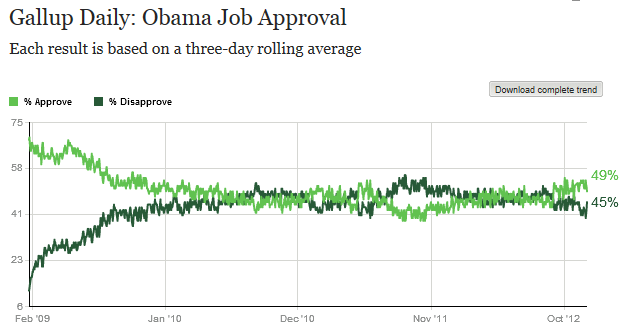
According to Gallup, Obama now has a 49% approval rating … down a couple of points from his election draw.
* * * * *
What about Twinkie’s approval rating?
(more…)
Interesting analysis by the CBO …
Punch line: When you delate the numbers, i.e. take out inflation effects – household net worth is roughly 5 times disposable income … that’s down from the dot-com and housing booms & busts, but roughly at historical levels.
In other words, the market bubbles were more like sugar-rush outliers … than “new normals”.

* * * * *
Follow on Twitter @KenHoma
Punch line: A record number of shoppers spent Black Friday weekend shopping for deals, revealing new consumer trends present this holiday shopping season.
* * * * *
Excerpted from Adage.com’s, “Four Things Holiday-Shopping Kickoff Tell Us About the Economy, Consumer Habits”

A record 247 million shoppers visited stores and websites over Black Friday weekend, up from 226 million last year. The average shopper spent $423 this weekend, up from $398 last year, helping total spending reach an estimated $59.1 billion.
Here arefour things we’ve learned from the holiday-shopping kickoff:
(more…)
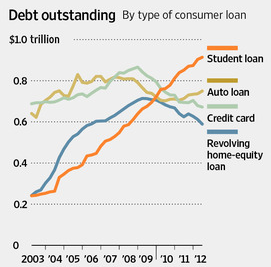
There’s an increasing amount of chatter re: student loan debt being the next financial bubble to burst.
In fact, according to the WSJ, student loan balances are approaching $1 trillion and have blown by auto loans and credit card balances.
= = = = =
How do student loans rack up relative to home mortgages?
(more…)
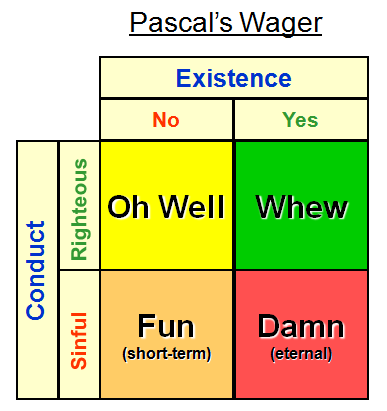
One of the few things I remember from Philosophy 101 is Pascal’s Wager.
In a nutshell, it says that God may or may not exist … and we all have the choice to live righteously or sinfully.
Naturally, that creates a 2 X 2 matrix …
If you choose to live on the wild side and God exists … uh oh.
If you choose to live a clean life, you score big if God exists … and don’t have much downside if she doesn’t.
I often find Pascal’s Wager to be a practical decision-making prop.
Follow on Twitter @KenHoma >> Latest Posts
Wrong !
Cyber Monday sales nearly doubled from last year, with mobile shopping playing a large role in those numbers.
Despite high mobile numbers, social media drove very few sales during Cyber Monday.
* * * * *
Excerpted from Adage.com’s, “Cyber Monday Mobile Purchases Nearly Double From 2011”
Cyber Monday was the biggest online shopping day ever and mobile shopping played a significant role in its growth.
Spending increased 30.3% from the previous year, with mobile devices accounting for accounted for 12.9% of all sales. That’s a 96% increase from 2011.
Mobile sales were lower on Cyber Monday than on Black Friday, however, a change that IBM attributes to more customers returning to work and shopping from their PCs.
Both mobile traffic and mobile sales fell by 20% from Black Friday to Cyber Monday.
Despite the overall spending increases, the average order size dipped 6.6% to $185.12, the report said.
Social sales also decreased, as Facebook, Twitter, LinkedIn and YouTube generated just 0.41% of all online sales, a 26% drop from 2011.
Below is a neat summary infographic
(more…)
Answer: According to the CBO, about 14% … down about 1 pp from the recession high water mark … but about 3 pp higher than the historical average
The CBO says that even in normal times, the number of vacant housing units is substantial, reflecting:
Further, the CBO says: “excess vacant units account for about 2/3s of the slower pace of growth of residential during the current recovery relative to prior recoveries.”

* * * * *
Follow on Twitter @KenHoma
First, what’s the biggest tax loophole?
Answer: The non-taxable payments that companies make towards employees health insurance premiums.
These days, the policy to cover a husband, wife and a couple of kids is about $15,000.
Employers typically pick up about 2/3s of the bill … call it $10,000.
The $10,000 is tax deductible for the company, and isn’t taxed as employee compensation – even though it’s clearly part of an employee’s compensation package.
In total, the health insurance loophole amounts to over $170 billion annually … about twice the mortgage interest deduction … and about twice the “Bush tax cuts for the wealthy”.

Source: Credit Suisse, Neal Soss
= = = = =
So, how might ObamaCare close this loophole?
(more…)
Found this browsing through some old files.
My students know that I think conceptual frameworks are important.
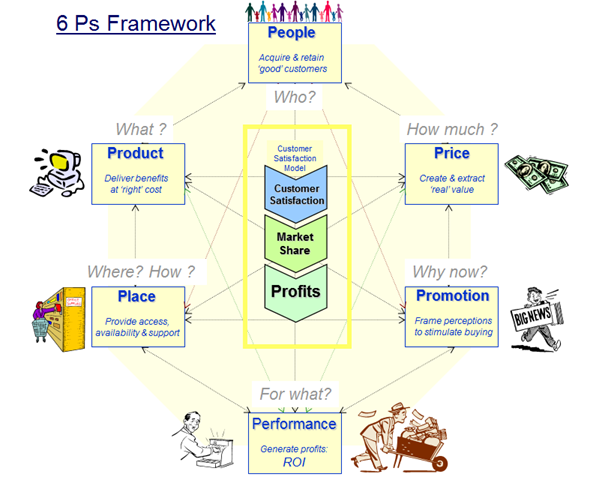
This article might have been my inspiration …
(more…)
Warren Buffet was back at it yesterday, venting his conscience by repping in an NYT op-ed for higher taxes on wealthy folks.
As part of his treatise, he argues that investors aren’t swayed by after-tax returns … pre-tax is what moves them.
Say, what?
Keep reading for his other thoughts and Ken’s proposed Buffett Rule …
(more…)
HITS: HomaFiles’s Ideas To Share
For decades cognitive psychologists has characterized folks as being either left brain dominant – logical – or right brain dominant – creative.
Browse the lists below and pick your dominant brain side – left or right.

= = = = =
So what? What to do?
= = = = =
Answer: Because they can …

= = = = =
Excerpted from Business Week
Think about it: You can get free Wi-Fi at a McDonald’s or at a city park, but check into some 4 & 5 star hotels and they’ll charge you as much as $15 peer day to check your email or update Twitter.
Q: Why isn’t Wi-Fi free at fancier places? Aren’t you supposed to get better service for paying more?
Answer: According to a study done by Cisco … 60%.
That’s why companies like Accenture are going to “hoteling”, why more hotels are putting in business suites, and why Starbucks is adding conference rooms in some locations.

= = = = =
What are the bigger implications?
= = = = =
HITS: HomaFiles Ideas To Share
Punch line: Relatively small increases in price can generate large increases in profitability … that’s called price-profit leverage. And, relatively small increases in prices are low hanging fruit for practically all products and companies since consumers have “zones of price indifference” or, in other words, a “latitude of price acceptance”.
* * * * *
Price-profit Leverage
According to McKinsey Increases in price typically have 2 to 4 times the effect on profitability as proportionate increases in volume.
More specifically, given the cost structure typical of large corporations, a 1% boost in price realization yields a 5% to 15% net income gain.

* * * * *
Latitude of Price Acceptance
Customers have a latitude of price acceptance — a range of possible prices within which price changes have little or no impact on their purchase decisions.
Customers frame their LPAs from the price range that they observe, say, in-store vs. online, or regular vs. sale prices.
LPAs vary for different categories of products that customers buy.
A McKinsey & Co. study shows that LPAs can range widely: from 17% for branded consumer health and beauty products to 10% for engineered industrial components and apparel to only 2% for some financial products.
The 2% for financial products may seem paltry, but the McKinsey study indicates that a financial services company moving from the middle to the top of a 2% LPA band for personal loan products would generate an 11% increase in operating profits for those products.
* * * * *
Buyer behavior & LPAs
Scanner panel data analyses for sweetened and unsweetened drink categories support the presence of a region of price insensitivity around a reference price.
* * * * *
Takeaway: Know the LPA … then go for it … don’t leave easy $$$ on the table.
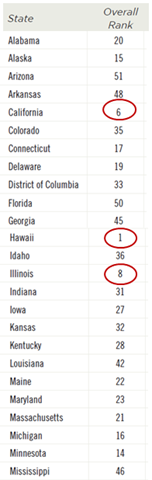
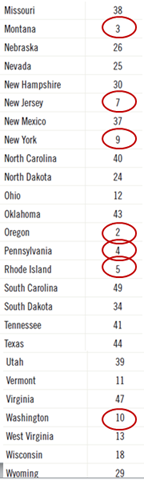
The Fordham Institute evaluated the power of state teacher unions along thirty-seven different variables grouped into five broad areas:
Area 1: Resources and Membership
Internal union resources (members and revenue), plus K–12 education spending in the state, including the portion of such spending devoted to teacher salaries and benefits.
Area 2: Involvement in Politics
Teacher unions’ share of financial contributions to state candidates and political parties, and their representation at the Republican and Democratic national conventions.
Area 3: Scope of Bargaining
Bargaining status (mandatory, permitted, or prohibited), scope of bargaining, right of unions to deduct agency fees from non-members, and legality of teacher strikes.
Area 4: State Policies
Degree of alignment between teacher employment rules and charter school policies with traditional union interests.
Area 5: Perceived Influence
Results of an original survey of key stakeholders within each state, including how influential the unions are in comparison to other entities in the state, whether the positions of policymakers are aligned with those of teacher unions, and how effective the unions have been in stopping policies with which they disagree.
= = = = =
Answer: Hawaii and Oregon have the strongest teacher unions … Florida has the weakest.
See the report for details by state.
Can’t be sure, but here’s a contender.
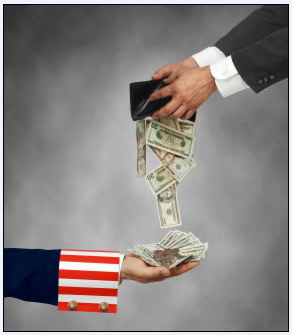
The NY Times reports:
Congressional negotiators, trying to avert a fiscal crisis and raise “revenue” from the wealthy.
One idea is to tax the entire salary earned by those making more than a certain level — $400,000 or so — at the top rate of 35 percent rather than allowing them to pay lower rates before they reach the target, as is the standard formula.
Under the existing tax code:
- The first $17,400 of adjusted gross income for a couple filing jointly is taxed at 10 percent.
- Above $17,400, up to $70,700, income is taxed at 15 percent.
- Income between $70,701 and $142,700 is taxed at 25 percent.
- Gross incomes up to $217,450 are taxed at 28 percent. The next bracket, 33 percent, ends at $388,350 for couples.
- The top bracket hits adjusted gross incomes only above $388,350.
Currently, all taxpayers get the advantage of the lower tax rates below the top threshold, whether they earn $40,000 or $40 million.
Let’s think about this bonehead scheme for a moment.
Say a couple that files jointly earns $399,999.
Their income tax liability would calculated:
Grand total $116,050 … for an effective tax rate of 29%.
But, under the rumored scheme, this couple would have an easier tax calculation … their tax liability would be 35% tomes $400,000 … for a grand total of $140,000
Again, think about it ….
By earning $1 more – going from $399,999 to $400,000 – the couple would have their tax liability increase by by 21% …$23,950.
Now, that’s some marginal tax rate.
Am I missing something?
* * * * *
Follow on Twitter @KenHoma
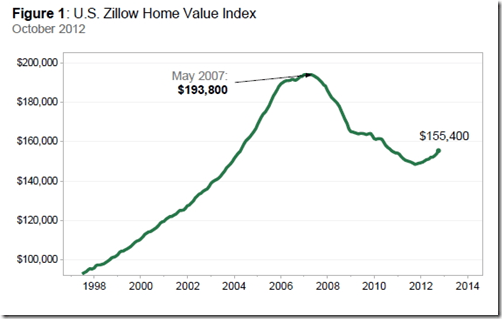
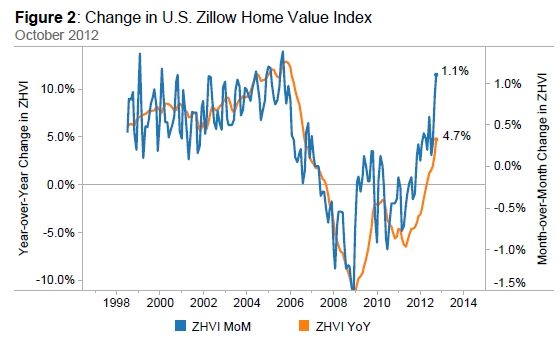
According to Zillow … yes!
Zillow says: Most markets have already hit a bottom and 40 out of the 256 markets covered are forecasted to experience home value appreciation of 3% or higher.

* * * * *
Follow on Twitter @KenHoma
Gerald Hall, the director of a youth baseball program in Washington, says:
“Baseball is a game taught by fathers, while basketball and football are more often taught by peers in pickup games.
If you did a survey, I believe you’d find that the one thing average and above-average baseball players have in common is a father.
Baseball is, at heart, a father-and-son sport.
And if you’re a kid that has nobody to throw to, nobody to talk to, nobody to discipline you in the way that baseball demands, you’re not likely to play the game.” Source
Play ball!
* * * * *
Follow on Twitter @KenHoma
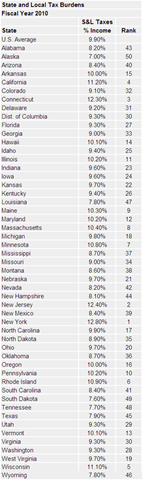
Last week we posted Which states have the lowest (and highest) incomes taxes?
A couple of readers asked “Yeah, but what about when you consider sales taxes and property taxes?”
Good question.
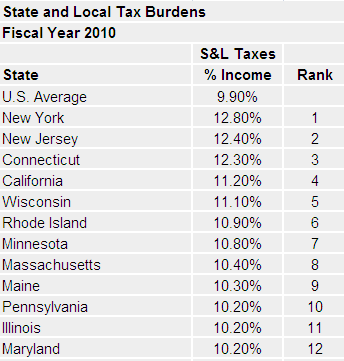
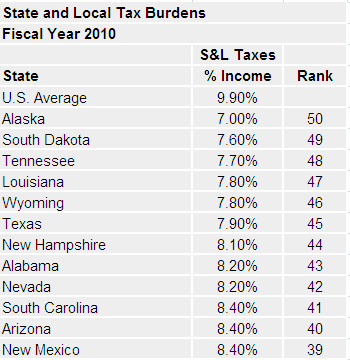
Here’s a recap for 2010 – latest analysis I could find.
= = = = =
Dirty Dozen – Highest Combined State & Local Tax Rates
= = = = =
12 Lowest Combined State & Local Tax Rates
= = = = =
All States – Alphabetical
= = = = =
Data Sources & Recaps
Best data source I found for state-by-state tax rates – income, sales, property, estate – is at BankRate.com
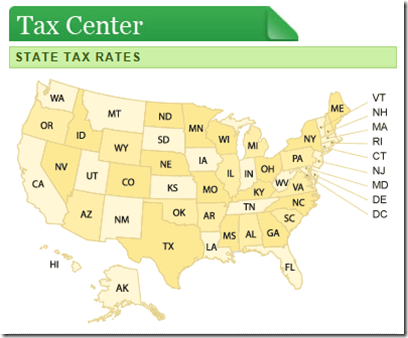
Some other useful links:
Bloomberg recap of all S&L taxes by state
USA Today recap of S&L taxes by state
Tax Fed sales tax rates by state & locality
* * * * *
Follow on Twitter @KenHoma
Answer: 3 more than there used to be.
Punch line: Red Bull is riding the stratos wave, launching 3 new flavors for Red Bull fans. 7-Eleven will carry the new items exclusively until they are released more broadly later this year.
* * * * *
Excerpted from branchannel’s, “Trio of New Red Bull Flavors Launching Exclusively at 7-Eleven”
More than 8 million YouTube viewers watched daredevil Felix Baumgartner plummet at the speed of sound from 24 miles above Earth to a lonely spot in New Mexico. And you can bet that every one of them noticed the Red Bull logo plastered on his spacesuit thanks to the company’s major financial investment in making the space drop occur.
It was a giant step for sports sponsorships, one that likely inspired more than a few of those watching at home to sample the brand. Now Red Bull is offering up a few more flavors to help folks feel a rush of their own. However, if consumers want to have a taste of the new flavor and can’t wait till next spring when they are released on a wider scale, they’ll have to go to a 7-Eleven. The convenience store chain has signed a deal to become the sole distributor of Red Bull’s first three flavor extensions, through the end of the year.

Energy drinks were a $9 billion business in the U.S. last year, in no small part due to the partnership between Red Bull and 7-Eleven. Said a 7-Eleven rep, “As our guests look to refresh and re-fuel morning, noon and night, enthusiastic Red Bull fans can get their first taste of these new flavors only at our stores. The Editions from Red Bull will launch nationally in March, so we know Red Bull lovers will be eager to get their hands on them early.”
Edit by BJP

* * * * *
Follow on Twitter @KenHoma
Punch line: Between 2008 and 2010, companies with more diverse top teams were also top financial performers. That’s probably no coincidence.
* * * * *
Excerpted from the McKinsey Quarterly Article’s, “Is there a payoff from top-team diversity?”

There are many reasons companies with more diverse executive teams should outperform their peers: fielding a team of top executives with varied cultural backgrounds and life experiences can broaden a company’s strategic perspective, for example.
To understand whether reality is consistent with theory, McKinsey looked at the executive board composition … [and] the findings were startlingly consistent: for companies ranking in the top quartile of executive-board diversity, ROEs were 53 percent higher, on average, than they were for those in the bottom quartile.
While it could not quantify the exact relationship between diversity and performance in such cases, McKinsey did offer them as part of a growing body of best practices.
These successful companies are simultaneously pursuing top-team diversity, ambitious global strategies, and strong financial performance.
Edit by JDC
Last year, I was interviewed by the Wash Post re: retailers moving to Thanksgiving evening openings in advance of Black Friday.
I served up some ivory tower stuff about budget effects, shopping days’ effects, etc.
Here are my full talking points and what made the cut …

Black Friday 2011: Holiday shoppers hit stores, with a Thanksgiving head start
Last year, Toys R Us became one of the first big-box chains to launch its Black Friday specials at 10 p.m. Thursday. This year, Wal-Mart matched the move.
So Toys R Us opened its doors even earlier, at 9 p.m.
“This is just the beginning,” said Ken Homa, professor of marketing at Georgetown University’s McDonough School of Business. “Next year, we’re likely to see everybody doing this. . . . The guys with the first opportunity to get to somebody’s pocketbook are likely to take share away from their competitors.”
Accurately quoted and, if I must say so myself, captures the essence of my message … and my style.
Probably a bit nostalgic for my former students …
* * * * *
Follow on Twitter @KenHoma
I’m hearing increasing chatter about relocations to low tax tax states to offset the burst of Fed tax increases.
So, I checked out current state income tax rates.
Best data source I found for state-by-state tax rates – income, sales, property, estate – is at BankRate.com
Full list of state income tax rates is below …
= = = = =
Zero income tax in 6 states
Alaska benefits from their oil industry; Florida & Nevada rake in sales taxes from tourists.
= = = = =
2 states tax interest & dividends, but not wages
Say, what ?
= = = = =
10 highest state tax rates
All are blue states. Coincidence?
= = = = =
Here’s the full list, showing the highest income tax rate in each state
… and the income level that puts a taxpayer in the top bracket.
•Alabama: 5% on income over $3,000
•Alaska: No income tax
•Arizona: 4.54% on income over $150,000
•Arkansas: 7% on income over $32,600
•California:10.55% on income over $1 million
•Colorado: flat 4.63% of federal taxable income
•Connecticut: 6.5% on income over $500,000
•District of Columbia: 8.5% on income over $40,000
•Delaware: 6.95% on income over $60,000
•Florida: No income tax
•Georgia: 6% on income over $7,000
•Hawaii: 11% on income over $200,000
•Idaho: 7.8% on income over $26,418
•Illinois: flat 3% of federal AGI with modifications
•Indiana: flat 3.4% of federal AGI with modifications
•Iowa: 8.98% on income over $63,315
•Kansas: 6.45% on income over $30,000
•Kentucky: 6% on income over $75,000
•Louisiana: 6% on income over $50,000
•Maine: 8.5% on income over $20,150
•Maryland: 6.25% on income over $1 millio
•Massachusetts: flat 5.3% on all income
•Michigan: flat 4.35% of federal AGI with modifications
•Minnesota: 7.85% on income over $74,780
•Mississippi: 5% on income over $10,000
•Missouri: 6% on income over $9,000
•Montana: 6.9% on income over $15,400
•Nebraska: 6.84% on income over $27,000
•Nevada: no income tax
•New Hampshire: 5% on interest and dividend income. Wages are not taxed.
•New Jersey: 8.97% on income over $500,000
•New Mexico: 4.9% on income over $16,000
•New York: 8.97% on income over $500,000
•North Carolina: 7.75% on income over $60,000
•North Dakota: 4.86% on income over $373,650
•Ohio: 5.925% on income over $200,000
•Oklahoma: 5.5% on income over $8,700
•Oregon: 11% on income over $250,000
•Pennsylvania: flat 3.07% on all income
•Rhode Island: 9.9% on income over $373,650
•South Carolina: 7% on income over $13,700
•South Dakota: no income tax
•Tennessee: 6% on interest and dividend income. Wages are not taxed.
•Texas: no income tax
•Utah: flat 5% on all income
•Vermont: 8.95% on income over $373,650
•Virginia: 5.75% on income over $17,000
•Washington: no income tax
•West Virginia: 6.5% on income over $60,000
•Wisconsin: 7.75% on income over $225,000
* * * * *
* * * * *
Follow on Twitter @KenHoma
Punch line: In an effort to further connect digital with brick and mortar, Amazon is installing lockers in a number of retailers including Staples and Rite-Aid.
* * * * *
Excerpted from brandchannel’s, “Amazon Puts the Hurt (Locker) on Competition”

Heading into last year’s year-end holiday selling season, Amazon … felt some backlash when it provided an app that allowed consumers to find lower prices on any products they found at competing brick-and-mortar retailers.
This year, Amazon is finding plenty of new ways to corral consumers as the holiday seasons looms ever closer.
Staples, the largest U.S. office supply retailer, is planning to install Amazon-branded lockers in its stores that would allow consumers to have Amazon packages shipped to their stores for pick-up.
Amazon already has similar deals with a few grocery, convenience, and drug stores, including at select D’Agostino, Gristede and Rite-Aid stores in New York.
Edit by JDC
* * * * *
Follow on Twitter @KenHoma
DealFlicks.com offers movie goers lower prices for to fill seats that would otherwise go unused.

Similar to the old Priceline hotel model, users select their neighborhood, movie and showing time, and once they’ve paid, the location of the theater is revealed.
Discounts range between an average of 40 and 60 percent off typical ticket prices.
Users can also take advantage of Super Deals – offering the greatest discounts – when they enter two possible screening times and allow DealFlicks to choose which one they see.
Fexible consumers benefit with large discounts.
Theaters benefit by selling more seats (and popcorn).
Thanks to MC for feed the lead.
* * * * *
Follow on Twitter @KenHoma
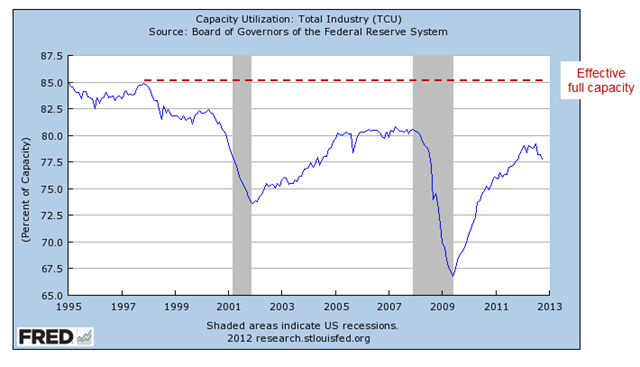
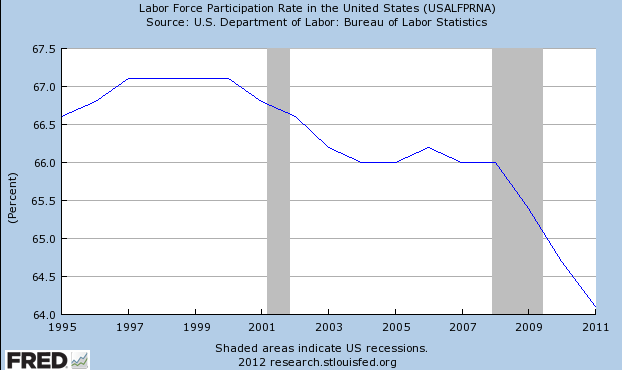
Punch line: The employment market is likely to stay in the doldrums … employers – still operating below effective full capacity – are leveraging the productive full-time employees they retained during the recession, shifting some of them to part-time status … and supplementing them with temporary workers and new part-timers. And, the labor force participation rate is dropping as workers become demotivated and disincentivized.
= = = = =
The Demand Side
Full time work is about to get scarcer.

By hiring part-time workers who put in less than 30 hours per week, employers can avoid a mandate dictated by the new health reform law: either provide expensive health insurance or pay a fine equal to $2,000 per worker.
In a July survey, 32% of retail and hospitality company respondents told [Mercer] that they were likely to reduce the number of employees working 30 hours a week or more.
Already, some companies are putting plans into action.
Source: Forbes
= = = = =
The Supply Side
A new book by University of Chicago economist Casey Mulligan explains that through a major expansion of the welfare state we are paying people not to work:
He says that public policies enacted during the Obama administration’s first four years have been affecting the supply side of the market as reflected in the labor force participation rate.
 .
.
In the matter of a few quarters of 2008 and 2009, new federal and state laws greatly enhanced the help given to the poor and unemployed — from expansion of food-stamp eligibility to enlargement of food-stamp benefits to payment of unemployment bonuses — sharply eroding (and, in some cases, fully eliminating) the incentives for workers to seek and retain jobs, and for employers to create jobs or avoid layoffs.
If a person gets laid off and is offered a new job paying $500 a week …. his take home pay would be about $250 after deducting taxes and work related expenses.
Since untaxed unemployment benefits total $289, clearly he is better off not working … [at least for 99 weeks].
All in all, Mulligan estimates that about half the precipitous 2007-2011 decline in the labor-force-participation rate and in hours worked can be blamed on easier eligibility rules for disability benefits, unemployment insurance, food stamps and housing aid.
Source: Forbes
* * * * *
Except for eccentric billionaires, I haven’t heard about people renouncing their US citizenship and relocating to foreign tax havens.
But, in the past week, I’ve heard 4 stories of sober-minded friends starting to implement plans to move to states with no or low income taxes and no estate taxes.
That’s not a new thing, but the breadth of interest and urgency is something I haven’t seen before.
Some is induced by aging … 3 of the 4 are nearing retirement age.
The flashpoint, though, is ignited by Obama’s re-election and his rants and threats to jack up taxes.
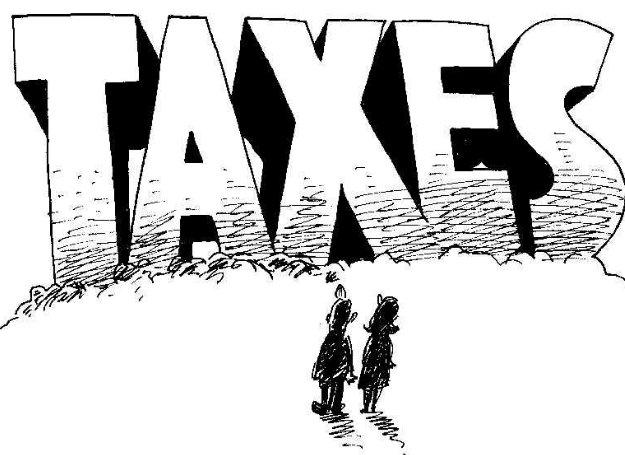
Savvy folks understand that (a) more than folks making $250K will be impacted, and (b) many of the tax increases are already baked in courtesy of ObamaCare.
So, the thinking goes: “I can’t control the Fed taxes I pay but I can control the local taxes I pay … so, I’m moving to a low tax locale to offset the hit Obama’s putting on me.”
The interesting irony: the destination states are red ones … or purple ones (think Florida).
The bulk of the migration will be wealthier folks bolting from high tax & spend blue states (think CA, MD, NY, NJ) … giving the blue states a declining tax base and forcing them to jack up state taxes on everybody else to feed their tax and spend monsters.
An unintended consequence of the caviler Fed tax policy Obama is pushing … watch it develop.
* * * * *
Follow on Twitter @KenHoma
Punch line: Since splitting earlier this year, Kraft Foods and Mondelez are both pursuing similar growth strategies: trimming slower, smaller brands and focusing efforts on powerhouse brands to drive economies of scale.
* * * * *
Excerpted from brandchannel’s, “The Kraft/Mondelez Dilemma: Which Brands to Trim, Which Brands to Boost?”

One of the main reasons for Kraft to split into its new Kraft Foods and Mondelez International units was to free the latter to pursue the beckoning opportunities in the global snacking business without being tied down to the slower-growth, mature North American groceries business.
Both newly independent entities are pursuing something of the same strategy to tap into their separate growth opportunities: paring back non-performing, small brands, and applying innovation resources and expansion ambitions to big brands
Mondelez has said that it may divest some products as it seeks to streamline its range. The company will pursue a “simplification agenda,” Tom Cofer, head of Europe, confirmed to Bloomberg.
Not to be outdone, Kraft Foods also is planning “product pruning.” Kraft hasn’t indicated what products and brands it will trim, but analysts have speculated that Oscar Mayer, Gevalia coffee, Jell-O and Planters comprise a list of “power” and “jewel” brands safe from disposition. On the other hand, Breakstone sour cream, Grey Poupon mustards and A-1 steak sauces could be targets for divestiture.
Kraft Foods’ board of directors, meanwhile, just approved a $650 million “restructuring, related implementation and spinoff transition program,” the company reported in an SEC filing, which includes severance, asset disposal and professional service fees.
Mondelez has indicated that it will be creating new synergies among the many powerhouse brands in its stable … to supercharge growth especially in emerging markets including the Middle East, even as it trims in more mature markets, such as Canada.
So, for instance, Mondelez is leveraging a “nervous” Cadbury’s long presence in India to help growth of its Oreo brand, in part by packaging Oreos in that market in Cadbury’s signature purple packaging rather than the red and white of Oreo’s Nabisco brand.
Mondelez also is trying to goose growth with marketing innovations such as its use of a new digital-advertising diagnostics tool and by its plans to crowdsource some marketing tactics in Europe.
Significant growth is what Mondelez, and Kraft Foods, need — otherwise, what was the split for?
Edit by BJP
* * * * *
Follow on Twitter @KenHoma
Punch line: Cable pricing strategies appear to be a mystery to most, but Comcast confirms the company, does in fact, have a strategy for those wacky prices.
* * * * *
Excerpted from WSJ’s, “Cord-Cutting: Cable’s Offer You Can’t Refuse”

When Georgia-based medical student Cathy Vu called Comcast last month to cancel her TV service and keep just Internet, she got a shock.
Taking the Internet alone would cost her more, not less, a month.
Cable providers are making their Internet-only plans less attractive than their cable and Internet packages.
Unbundling often doesn’t pay*
People are pretty much forced into buying both services. Comcast confirms the pricing strategy, saying it is more valuable for the cable operator to pursue customers who will take multiple services than “single play” customers.
Several pay-TV executives say that cord-cutting is still a small trend that has largely stemmed from weak economic conditions.
But one little-discussed factor is cable operators’ pricing policies, which can prompt people to keep TV even if they don’t particularly want it.
In addition, Comcast, Time Warner Cable and Verizon said that a customer who takes multiple services is more likely to stick with the cable company and add more products later on.
“The deeper the discount, the higher the churn” at the end of the promotional period, one cable executive said.
Edit by BJP
* * * * *
Follow on Twitter @KenHoma
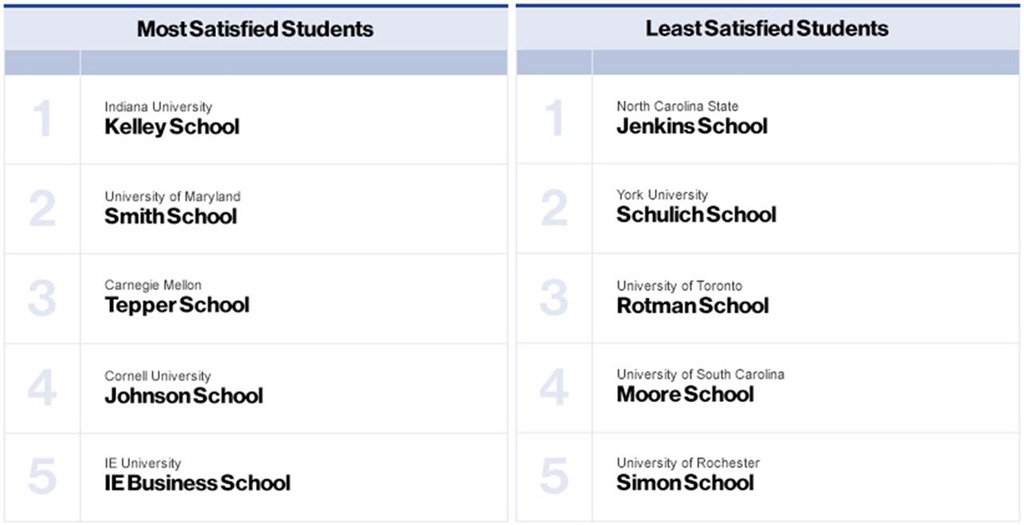
Punch line: Business week releases results on which B-Schools have the most and least satisfied students.
* * * * *
Excerpted from businessweek’s, “Can’t Get No Satisfaction: The B-School Happiness Index”
Which business schools have the most satisfied students?
That question will in large part determine which schools make it to the top of the list and which are consigned to rankings oblivion.
Student satisfaction counts for 45 percent of the final ranking, while recruiter surveys contribute an additional 45 percent and a review of faculty research adds the final 10 percent.
It’s worth noting how closely student satisfaction tracked with teaching quality and career services this year.
Four of the five schools with the most satisfied students were on our lists of schools with the most highly-rated teachers and career services.
Three of the five programs with the least-satisfied students were on our list of schools with the most poorly rated career services.
Don’t look for the highly ranked MBA programs at Harvard, Wharton, and Stanford to top the list of schools with the most satisfied students.
As a rule, students come to such programs with super-high expectations and, in our surveys, are generally reluctant to give them the highest marks.
But the elite programs get their revenge in other ways: Recruiters love them.
Edit by BJP
* * * * *
Follow on Twitter @KenHoma
The stock market usually does well in December: gaining ground in 75% of Decembers since 1928 while earning a 1.5% average monthly return … second best of the 12 months .
But , as we’ve harped before …
Capital gains taxes are scheduled to rise at the start of 2013 from a 15% rate to 23.8% (20% plus a 3.8% tax associated with ObamaCare.
According to Goldman Sachs:
The nearly 9 pp hike in capital gains taxes is similar in magnitude to the 9 pp rise in 1970 and the 8 pp rise in 1987.
In both prior cases S&P 500 posted negative returns in December as investors locked-in the lower tax rate.
The S&P 500 fell by 1.9% in December 1969 and 2.8% in December 1986.
Merry Christmas!
* * * * *
Couple of interesting charts from Prof. Mark Perry …
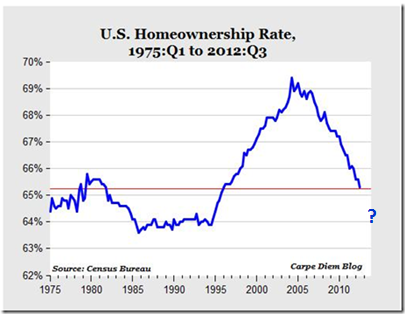
The home ownership rate in the US has fallen to about 65% … down from a peak over 69% during the housing boom & bubble.
Couple of observations:
= = = = =
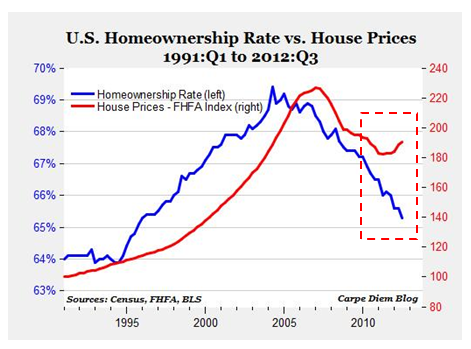
Note surprisingly, home prices map closely with the homeownership rate … except for the past couple of periods – with house prices trending up and homeownership still trending down.
Raises questions:
* * * * *
For the first time in awhile, McDonald’s reported a drop in same store sales … and fired the U.S. President.
Now, industry mavens are proffering advice for turning things around …

Reported in USA Today, here are some of the ideas:
= = = = =
Ken’s Take:
1) Geez, don’t panic guys … there is a tough economy out there
2) Stay true to your core … remember when Taco Bell tried to go upscale and started to lose its base – young males looking for cheap food.
3) It’s all about the dollar menu – the McDouble for $1 is a powerful magnet !
* * * * *
Punch line: With its “Follow Me and I’ll Follow You” campaign, pizza chain Mellow Mushroom turns the popular online phrase “following” into a real-life brand action.
* * * * *
Excerpted from Ad Age’s, “Follow Pizza Chain Mellow Mushroom On Twitter, And It’ll Follow You Back — In Real Life”

When you follow brands on Twitter, at best you get a smattering of decent jokes littered across your Tweetdeck timeline, and at worst, you’re bombarded with promotional tweets that practically beg you to unfollow them.
Pizza place Mellow Mushroom does neither. Fitzgerald + Co offers you a little stalker with your Twitter follow with “Follow Me and I’ll Follow You,” a campaign that told people that in return for following the company on Twitter, it would follow you.
The catch? They’d follow you in real life, dressed as Mellow’s stoned-looking mushroom mascot.
The brand stalked 20 Mellow Mushroom followers in a week (with help from the followers’ friends and family), and recorded the whole thing using hidden cameras.
Want to see the result? Watch @acuemma get followed by clicking here.
Edit by JDC
Everybody knows that Warren Buffett feels awful because his marginal tax rate is less than his secretary’s …. and so, he wants fellow millionaires & billionaires (i.e. those folks making more than $250,000) to throw more money into the Federal coffers.
Well, the current fiscal cliff mess has rekindled my thinking re: tax changes required to advance Buffett’s obsession with his “paying his fair share”.
Glad to report that I got it !
A tax change that will totally free Warren of guilt.
Simply stated:
Ken’s “Buffet Rule”
For purposes of estate taxation, estates shall be limited to a maximum deduction of $1 million for charitable donations.
Now that Buffett has leveraged the tax laws to amass his $62 billion fortune, he advocates higher taxes for high-earners.
He’s suddenly amped about everybody paying their fair share.
Give me a break.
Let’s walk through Saint Warren’s personal “fair share” plan.
First, to the extent that any of Buffett’s wealth is in stocks with “unrealized capital gains” … the the dough gets bequeathed at a “stepped-up basis”.
English translation: no capital gains get paid on his “unrealized gains” … ever !
Nice dodge, right?
Ken’s Buffett Rule doesn’t fix that.
But, the big daddy tax dodge is that Buffett is bequeathing his estate to his buddy Bill Gates’ tax exempt foundation … part, I guess, to “give back to society” … but in large part to dodge estate taxes.
If his buddy Barack gets his way, estates will be taxed a minimum of 45%.
That means that Buffett dodges over $25 Billion in Federal estate taxes by channeling the estate to his buddy Gates.
Note: According to the Wash Post, Obama’s Buffett Rule is only projected (by Obama) to raise $46 billion over 10 years … $4.6 billion annually … and most analysts think that number is a pipe dream.
So, Ken’s Buffett Rule would cop over half of Obama’s 10 year Buffet Rule tax haul, while isolating the tax to the man who won’t shut up about wanting pay his fair share … put YOUR money where your mouth is Warren.
Great idea, right?
P.S. For folks who worry about the collateral damage done to charities, the deduction limit can be raised to $1 billion per estate …. that would exclude practically every estate … except Buffett’s.
This year’s BusinessWeek MBA rankings are out.
Here are the punch lines …
= = = = =
Usual suspects in the top 10

= = = = =
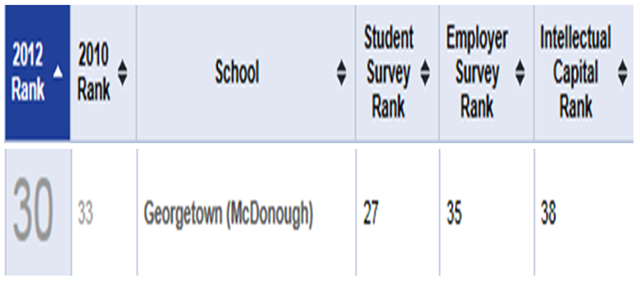
Good news: MSB bounced back into the top 30
… moved from #33 in 2010 to #30 in 2012
Big improvement in student survey scores …
Big deal since below 30 often slotted “all other”
= = = = =
Offset: Regional competitor Maryland bounced from #42 to #24

* * * * *
Before the reveal, a question …
Hostess was brought down by bakers in the the Bakery, Confectionery, Tobacco Workers and Grain Millers Union.
Where will Twinkie bakers find work when hostess closes?
Will restaurants rush to pick-up Twinkie bakers as as pastry chefs?
I’ll take the under on that bet.
= = = = =
Bake ’em at home
When Hostess Brands announced that it was shutting down, loyalists lamented the loss of their beloved Twinkies.
Not to worry.
Below is a recipe for homemade Twinkies … the cake and the filling.
The secret sauce?
Crisco … lots of Crisco.
Bon Appetit!

Golden “Twinkie” Cake:
2 cup all-purpose flour
3 tsp. baking powder
¼ tsp. salt
½ cup unsalted butter, softened
1 cup sugar
2 large eggs
1 tsp. vanilla extract
1 cup whole milk
Preheat your oven to 350 degrees F. Spray molds/pan with non-stick spray.
Sift together flour, baking powder and salt into a bowl and set aside.
In a large bowl, beat together butter and sugar at medium-high speed until pale and fluffy. Next, beat in the eggs one at a time, beating for 1 minute in between each addition. Reduce the mixer speed and add flour mixture alternating with the milk, beginning and ending with the flour mixture. Add the vanilla and mix until the batter just comes together. Over mixing with make your cake chewy. Makes 12 cakes.
Spray your Twinkie canoes and bake at 350 for 15 minutes, or until the cakes are just a light golden color and a tester inserted in the center of the cakes comes out clean. Remove from the oven and let cool.
= = = = =
Cream Filling
¼ cup shortening (Crisco brand)
¼ cup margarine
1 cup sifted powdered or 10x sugar
2 tsp. vanilla
Beat together the shortening and margarine until light and fluffy. Add the powdered sugar in a little at a time and beat on high until peaks form. Add vanilla and beat for one minute. Place in prepared icing tubes for piping into cakes.
To fill the cakes, insert the icing tip – preferably a large star tip – into three points along the flat-side of the cake, about 1/8 of an inch deep. Squeeze lightly until you see the filling begin to ooze out.
* * * * *
Punch line: They’re everywhere on election day: “I Voted” stickers.
If almost everybody’s got one, it feels pointless to put one on your own sleeve.
But actually, the fact that everybody’s got one is the point.
* * * * *
Excerpted from The Atlantic’s, “Why the ‘I Voted’ Sticker Matters”
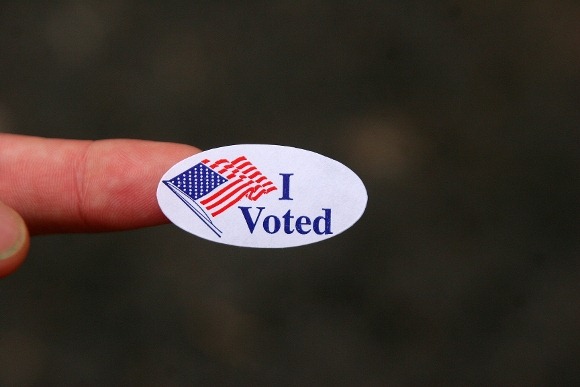
At a pure cost-benefit level, it’s hard to justify taking hours out of your day to cast a single vote.
And yet, we vote. We vote because we think it’s important.
We vote because we care about our country and our rights. We vote because it makes us feel good.
People like being seen having voted.
And that’s where the “I Voted” sticker comes in.
The “I Voted” sticker is a signal and an advertisement.
It binds people together … and reminds others to join the group.
Tens of millions of people will vote in every presidential election whether there are free stickers or free cookies.
But beyond these intrinsically interested voters are countless more citizens who need motivation to show up at the ballot box.
The “I Voted” sticker’s value — and its motivation — is purely social.
And to the extent that it might actually get some marginal Americans to the polls, it’s also priceless.
Edit by JDC
click to follow @KenHoma

Hot off the WSJ wires …
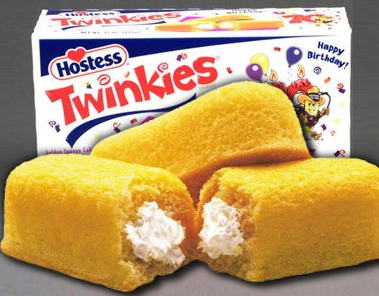
Hostess Brands, the maker of iconic treats such as Twinkies and traditional pantry staple Wonder Bread, is shuttering its plants and liquidating its 82-year-old business.
A victim of changing consumer tastes, high commodity costs and, most importantly, strained labor relations, Hostess ultimately was brought to its knees by a national strike orchestrated by its second-largest union … the Bakery, Confectionery, Tobacco Workers and Grain Millers Union.
The company will “promptly” lay off most of its 18,500 employees and focus on “selling its assets to the highest bidders.”
Hostess’s remaining inventory — loaves of bread and plastic packages of cream-filled desserts — probably will be sold in bulk to a discounter or big-box store.
The company will attempt to sell its plants and its brands – think Twinkies, Ding-Dongs.
The names have decades of “deliciously retro” brand equity, and there is “pretty significant demand” for the products.
A fresh owner of the intellectual property, which includes everything from names to recipes to graphics, could revitalize the Hostess brands with new flavors, limited-edition Twinkies, co-branded products, and international reach.
* * * * *
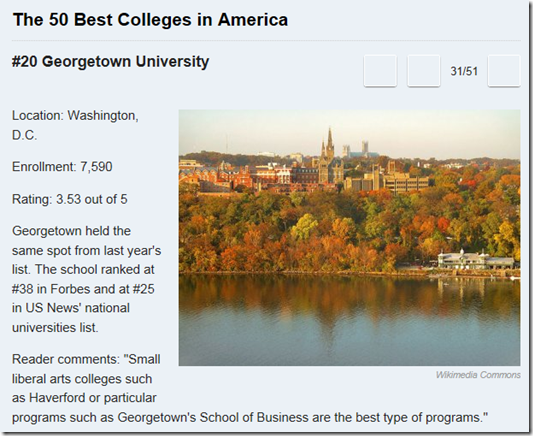
MSB gets a well deserved shout out from Business Insider …
Punch line:
” … programs such as Georgetown’s School of Business are the best type of programs.”
* * * * *
Since I think Simpson-Bowles will be the template for the fiscal cliff resolution, I’ve been thinking about its provisions … starting with taxes (of course).

= = = = =
Mortgage Interest Deduction
Currently, income tax payers who itemize are allowed to deduct mortgage interest subject to some liberal restrictions:
Simpson-Bowles proposed that:
Let’s do an example.
Say somebody is holding $1 million in mortgages carrying a 5% interest rate … annual interest paid = $50,000.
On balance, I side with with Simpson-Bowles on this one.
In fact, I’d probably be even more aggressive and phase the mortgage interest tax advantage out entirely over, say, 10 years.
My basic logic: Why should home owners get a tax break that’s not available to the 35% of people who rent the place where they live?
Said differently, why should renters who pay income taxes subsidize my mortgage?
And, it’s hard to say, with a straight face, that vacation homes deserve a tax break.
So, I say: start the process of eliminating the mortgage interest deduction.
What do you say?
* * * * *
One key problem solving skill is identifying core issues quickly.
In a prior post, we explored why “Managers faced with a complex problem typically end up solving the wrong problem” …. and suggested some remedies.
Continuing that discussion …
Recognize that the number of core business problems is not infinite … though variants abound.
More specifically, in my opinion, the defining conceptual structure of most business problems is the same … and is captured in the PAR Framework.
PAR stands for Potential – Action – Results … companies take action against identified market potential to secure results … which, in most cases, are measured as profits.

A business problem – or case interview question — usually centers on one of the PAR components … with the other 2 providing a basis for resolution.
For example, if profits (the “R”) are down, the question is whether it’s due to market conditions (the “P”) or the company’s actions (the (“A”).
Or, the question may be how to respond (the “A”) to a change in market or competitive conditions (the “P”) … and what results to expect for alternative responses.
Or, the question may be what markets to enter (the “P”) in what way (the “A”) … to achieve what results.
The takeaway point: the PAR Framework provides a ready structure for getting your arms around common business problems.
Punch line: With internet piracy and digital song-sharing sites like Spotify, selling records is increasingly difficult.
Taylor Swift uses retail partners, traditional media and broad audience targeting to top the charts once again.
* * * * *
Excerpted from WSJ’s, “Taylor Swift Album Fast Out Of Gate”
Taylor Swift’s “Red,” is on track to sell more than one million copies in its first week in U.S. stores.
The album is expected to set new one-week sales records on Apple’s iTunes Store.
Target — one of Ms. Swift’s corporate sponsors—sold more than 400,000 copies, also a one-week record for the chain.
Breaking the one-million-unit mark today takes more ingenuity than it did in 2000, the year the CD-sales boom peaked.
The pace of million-sellers has slackened along with broader music sales, which have fallen by nearly 42% in the past 12 years.
Sales have been hurt by Internet piracy and a variety of other factors.
As online access replaces ownership, million-selling debuts could become a thing of the past.
Ms. Swift’s latest ascent into the stratosphere has been aided by several corporate partners, including Papa John’s Pizza which has been delivering to customers Ms. Swift’s “Red” CD along with a single-topping large pizza for a total of $22.
Her photo also appears on Papa John’s pizza boxes.
Many of Walgreen’s 8,000 locations have displayed the disc prominently, along with free-standing, life-size cardboard images of the 22-year-old pop star that fans have used for photo opportunities.
Wal-Mart offers a limited edition Red ‘Zine Pack.

The album has also been powered largely by more traditional means.
Since announcing the album in August, Big Machine has released four singles and played 30-second previews of each song the day before the singles went on sale on iTunes.
Potentially boosting Ms. Swift’s sales, Big Machine isn’t making her album available through online streaming services such as Spotify for at least several months.
Many artists and labels have complained that they make little from such services, which let users listen to unlimited amounts of music for a flat monthly price, or even free.
Though Ms. Swift is nominally a country artist, her music has taken on an increasingly pop sound, a key to attracting more buyers.
You don’t get a number like she did without attracting a number of tribes.
It’s the niche-ing of America.
Edit by BJP
Since I think Simpson-Bowles will be the template for the fiscal cliff resolution, I’ve been thinking about its provisions … starting with taxes (of course).
= = = = =
State & Local Taxes
Currently, income tax payers who itemize are allowed to deduct state & local taxes.
Primarily, that includes state & local income taxes and local real estate taxes.
I benefit from both.
Still, I side with with Simpson-Bowles on this one.
My basic logic: Why should Federal income tax payers is relatively low tax & spend states (think FL, TX) be forced to subsidize folks in high tax & spend states (think CA, NY, NJ, MD, DC).
If a goal of tax reform is fairness … that’s not fair!
So, I say: eliminate the deduction for state & local taxes.
What do you say?
* * * * *
Unbelievable !
Now that the election is done, the BLS has “caught up” on initial jobless claims reporting … their words, not mine.
Here’s a shocker …
They’ve figured out that unemployment is more of a problem than they’ve been reporting.
In the week ending November 10, the advance figure for seasonally adjusted initial claims was 439,000, an increase of 78,000 from the previous week’s revised figure of 361,000.
The 4-week moving average was 383,750, an increase of 11,750 from the previous week’s revised average of 372,000.
The consensus forecast for this week –- based on prior weeks’ reporting – was 375,000 … 64K lower than the BLS’ surprise number.
I say: Let’s raise taxes and get this economy moving again …
= = = = =
Technical note: While blame will be laid on Hurricane Sandy, keep in mind that (1) hurricanes temporarily boost employment of construction & trades workers, and (2) the affected areas were without electricty and many government offices (e.g. FEMA outposts) were closed … so, these initial unemployment claims are probably under-reported (as usual) … the fuller impact of the hurricane will show up in the next couple of weeks.
= = = = =
Ohio & PA
The highest numbers of new filings came from Pennsylvania and Ohio, where there were thousands of layoffs in the construction, manufacturing, and automobile industries. During his campaign, President Obama highlighted his record of job creation in those states — Ohio in particular. Source
Oops.
* * * * *
We’ve been on this theme for awhile … now the WSJ is reporting: Tax threat Prompts Selloff
Investors Dumping Winning Stocks Due to Expected Jump in Capital-Gains Rate
The prospect of higher taxes on capital gains is prompting many to unload some of their winning stocks.
Tax-induced selling is one factor some market watchers attribute to the recent declines.
“Tax rates are going up, and if you don’t plan to hold these stocks for a long time, now is the time to take advantage of the lower tax rates”

What we’ve said that the WSJ doesn’t say:
Punch line: YSL’s classic logo may soon be extinct, and customers are snapping it up while they can.
Industry experts speculate that this move will actually increase the value of the classic logo and create a vintage label for the brand.
* * * * *
Excerpted from Business Week’s, “What Is The Deal With Yves Saint Laurent’s Logo?”
This week, thousands of shoppers braved rain and crowds for the annual Yves Saint Laurent sample sale.
Unlike in years past, this crowd was extra-jittery.
Since new creative director Hedi Slimane relabeled the brand “Saint Laurent Paris,” many of the fashion faithful have been worried that the company’s classic “YSL” logo will be replaced.
So shoppers are racing to snatch it up while they can.

If the old logo is indeed an endangered species, does this mean that items bearing it will go up in value?
According to the Luxury Institute, the answer is affirmative.
“YSL is making the change in a surgical way,”. They will reinterpret the classics. So yes, the classics will sell for more with a certain group of people.”
The brand’s renewal, announced this summer to some disappointment among consumers, has been hard to pinpoint:
The company told reporters that the fashion house is called “Yves Saint Laurent,” the ready-to-wear collection “Saint Laurent,” and the logo “Saint Laurent Paris.”
PPR Luxury Group (which owns the brand) is very customer-centric and is working to modernize the YSL brand and improve the in-store experience.
Still, “If you run away from your classic product or reinterpret your classics … too far away from the DNA of the brand, you will fail. Period.”
While luxury brands might try to appeal to younger consumers, “even younger consumers mature into wanting the classics of that luxury brand.”
Perhaps this is why Yves Saint Laurent hasn’t completely abandoned its old signature.
“The YSL logo, created by Cassandre in 1961, will remain intact,” though it has not yet been determined how it will be used in the future.
Edit by BJP


 The Homa Files