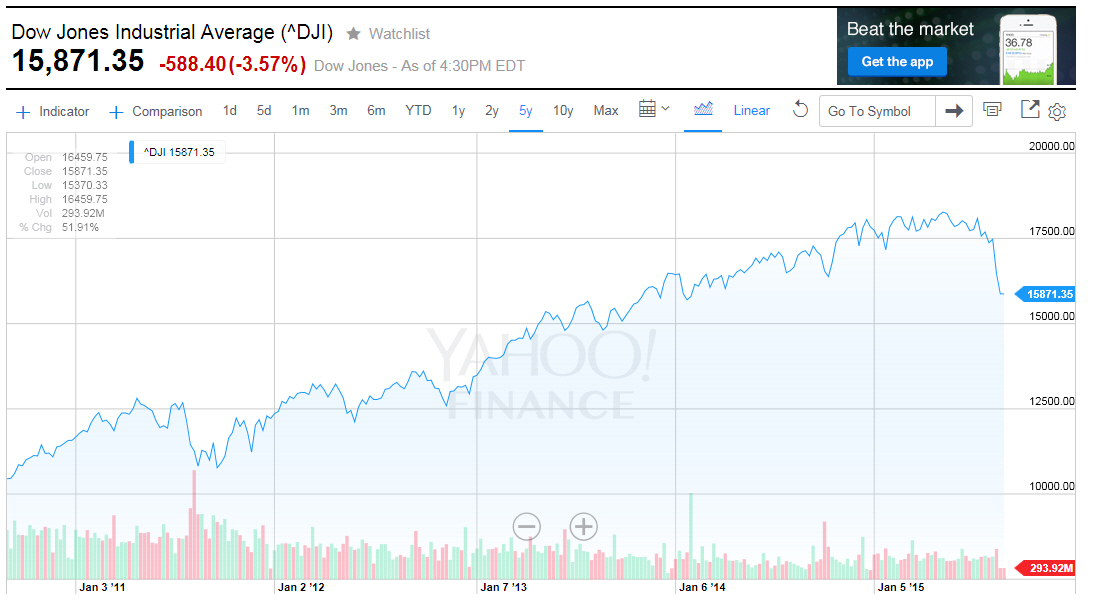
It was an interesting week on Wall Street … a huge drop on Monday … followed by 3 days of high intra-day volatility … and ending right about where things started.
Whew.
So, what happened?

For what it’s worth, here’s my take …
It was an interesting week on Wall Street … a huge drop on Monday … followed by 3 days of high intra-day volatility … and ending right about where things started.
Whew.
So, what happened?
For what it’s worth, here’s my take …
This was a week that market analysts retroactively tag “a long anticipated correction”.
Yeah, right. That’s what you guys have been saying.
====
This week’s market dynamics beg a bigger question:
Why, given a sluggish economy and DC disarray, did the stock market keep marching forward to record highs … that met their come-uppance this week?
Easy.
Let’s start by taking a stroll down memory lane ….
The extreme market volatility this week, at least partially fueled by the algorithm-based high frequency traders, reminded me to reprise a very cool 15 minute TED Talk that is stashed in the HomaFiles archives.
Tech entrepreneur Kevin Slavin tells how algorithms have reached across industries and into every day life.
A couple of lines caught my attention:
Obviously, Slavin comes down on the side of the quants.
Worth listening to this pitch … a very engaging geek who may be onto something big.
* * * * *
Follow on Twitter @KenHoma >> Latest Posts
I don’t give investment advice. Period.
That said, there are the 2 technical charts that I have on my radar.
The first is a simple “channeled” trend view of the S&P 500

The takeaway:
For the past 3-1/2 years, the S&P has been trending upward (no news there) … within a fairly constant band delimited by the highs and lows.
Besides being a psychological trigger, the 2000 level appears to have been a significant technical breakpoint.
Hindsight is 20/20 … I should have bailed on my S&P Index holdings when the 200 level was broken.
But, of course, I didn’t.
Ouch.
The 2nd chart zooms in on the last 5 days of trading.
Yesterday, we posted about high frequency traders crowing about their high profits from Monday’s unprecedented stock market volatility.
Arguably, their methodology — hinging on fast data and low transactions’ costs — fanned the volatility flames.
I was surprised that Bernie Sanders didn’t seize the moment to say “I told you so” … and to pitch his Financial Transactions Tax.
Given the stock market bounces this week, I though it would be timely to reprise a post from a couple of weeks ago which has heightened relevance and timeliness …
=====
Shocker: I agree with Bernie Sanders’ Financial Transactions Tax … err. make that “half-agree”
Dem-Socialist candidate Bernie Sanders doesn’t serve up much that I agree with … but, there is one reheated idea that I half-support.
Sanders proposes that financial transactions be taxed … roughly 1/2% for most trades … slightly lower for for some categories of investments … say, Municipal Bonds.
Sanders would use the new tax proceeds to fund public college for low-income students.

=====
Let’s dissect the proposal … then, for what it’s worth, I’ll tell you where I agree and where I disagree …
Yesterday was a historically spectacular day on Wall Street … DJIA down 1,000 on the open, rebound by about 750 points, back down by 750.
Unprecedented volatility.

Geez, was the world’s economic structure changing that much hour-to-hour?
Was new economic information flowing in at warp speed?
Nope.
Sure, there was a deepening understanding that the market is over-valued and that China’s economy is in trouble.
That explains a big correction, but what about the hour to hour volatility?
From the you can’t make this stuff up file …
A recent HUD IG report identified “families earning more than the maximum income for government-subsidized housing as an egregious abuse of the system. “
Some examples in the Washington Post:
These are extreme cases, but they’re not alone: about 2.5% of the 1.1 million families in the country who live in public housing have incomes over the HUD maximums.

So, why is this happening and what is HUD doing about it?
WARNING: Disturbing Content
We’re temporarily suspending the HomaFiles usually high editorial standards … this is a story that must be told.
=====
Earlier this week, the UK’s Daily Mail led it’s coverage with the following story:

======
The article has so many angles that it’s a ‘must view to believe ” …
I hate to help the Dems, but I can tell them how to win when Hillary finishes her implosion.
Cutting to the chase, it’s by running Biden for President with Obama for VP.

Before you dismiss the idea out-of-hand, let me explain …
Say, what?
Many of you may be too young to have witnessed and remember, but…
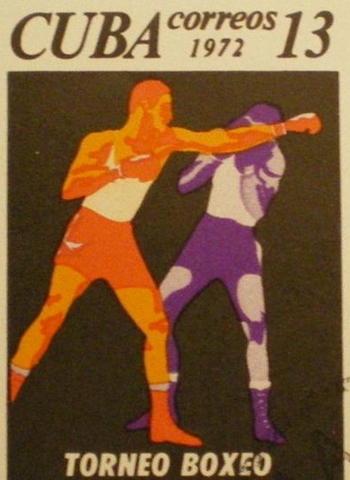
In the 1972 Olympics, the polished U.S. boxing team was predicted to sweep the competition.
But, something happened on the way to the medals’ platform that shocked the sporting world.
======
Here’s the story and why Trump jogged my memory of the 1972 Olympics …
Recently, a friend casually mentioned to me that his family finances were being strained by healthcare costs.
Why?
His family’s annual deductible had gone up from $2,500 to $12,500.
What?
Think about that for a moment … a 10-grand bump in out-of-pocket healthcare costs before the insurance even kicked in (with co-pays, of course).

======
The discussion piqued my curiosity, and I did some digging to put my friend’s predicament in perspective … what I found was surprising (and certainly under-reported in the main stream media)
You read that right …
Uzbekistan Airways is going to start weighing passengers before flight

======
Here’s what’s going on …
The most recent Census Bureau data … sorts households by income quintile … the highest quintile are “rich” households and the lowest quintile are “poor” households.
A fundamental conclusion drawn from the data: if you want to be rich, it helps to have a job and be married to someone who has one, too.
 .
.
Let’s dive into some of the details …
Steve Siebold, author of “How Rich People Think,” spent nearly three decades interviewing millionaires around the world to find out what separates them from everyone else.
“It had little to do with money itself, he told Business Insider. It was about their mentality.”

Here are my favorites from his 21 Ways that Rich People Think Differently:
3. Average people have a lottery mentality. Rich people have an action mentality.
“While the masses are waiting to pick the right numbers and praying for prosperity, the great ones are solving problems”
4. Average people think the road to riches is paved with formal education. Rich people believe in acquiring specific knowledge.
“Many world-class performers have little formal education, and have amassed their wealth through the acquisition and subsequent sale of specific knowledge.”
5. Average people long for the good old days. Rich people dream of the future.
“People who believe their best days are behind them rarely get rich, and often struggle with unhappiness and depression.”
7. Average people earn money doing things they don’t love. Rich people follow their passion.
“To the average person, it looks like the rich are working all the time … But one of the smartest strategies of the world class is doing what you love and finding a way to get paid for it.”
8. Average people set low expectations so they’re never disappointed. Rich people are up for the challenge.
“No one would ever strike it rich and live their dreams without huge expectations.”
12. Average people live beyond their means. Rich people live below theirs.
“The rich live below their means, not because they’re so savvy” … but because they can … and they do!
15. Average people would rather be entertained than educated. Rich people would rather be educated than entertained.
“The rich appreciate the power of learning long after college is over … Walk into a wealthy person’s home and one of the first things you’ll see is an extensive library of books they’ve used to educate themselves on how to become more successful … The middle class reads novels, tabloids and entertainment magazines.”
Thanks to CH for feeding the lead
According to a CNBC summary of a study published in the Journal Psychological Science …
The richer you are, the more likely you are to think that others are wealthy, too.

According to the study’s authors, the reason for the misconception is simple …
When questioned in the debate re: his support for Common Core, Jeb Bush gave a mushy (and self-contradictory) answer .
When he was done, I wasn’t sure if he was for it or against it.
For his punch line, he reverted to the universal “we need to set higher standards” argument.
A couple of other candidates jumped in to praise higher standards.
Sounds like motherhood, right?

======
I’m not so sure ….
This is from the HomaFiles archives – one of my favs.
The original article was inspired by Clinton’s win over elder Bush (the Perot factor), younger Bush’s win over Gore (the Nader factor), and Jesse Ventura’s gov win in Minnesota.
The analysis has relevancy these days, given the way that the not-Trump vote is being carved thin among many GOP presidential contenders.
* * * * *
Excerpted from WSJ: How Beef-Hungry Voters Can Get Tofu for President, March 14, 2003
Those odd ducks who scrutinize returns, calculate how each additional candidate affects the others’ chances and analyze strategic voting are hard at work. I refer, of course, to mathematicians.
Yes, there is a mathematics of elections.
Research has identified various voting systems world-wide in which, paradoxically, becoming more popular can make a candidate lose, abstaining gives your preferred candidate a better chance, and picking a winner means accepting someone a majority of voters don’t want.
This last paradox characterizes the U.S. system of plurality voting (vote for one; the top vote-getter wins). It works fine when there are two candidates, but with three or more, plurality voting can come up short.
For a democracy, the mathematicians’ most robust result is chilling. “It’s surprisingly difficult to identify a voting system that accurately captures the will of the people”.
* * * * *
The Election
So as not to inflame passions with current political examples I’ll illustrate his point with food.
You and two colleagues are planning an office party, and the caterer offers chicken, steak or tofu. You poll 17 invitees:
5 people prefer chicken to steak to tofu.
2 people prefer chicken to tofu to steak.
4 people prefer steak to tofu to chicken.
4 people prefer tofu to steak to chicken.
2 people prefer tofu to chicken to steak.
One organizer tallies the ballots by the plurality method, counting only first-place votes. Chicken wins (7 votes), while steak is last (4 votes).
A second organizer uses “approval voting,” in which voters mark all acceptable choices (everyone’s top two choices are acceptable). Now steak wins with 13, tofu gets 12 and chicken is last with 9.
The third organizer uses a point system that gives their first choices 2 points, second choices 1 and last picks 0. Now tofu wins with 18, steak gets 17, chicken 16.
The ‘winner’ changes with the choice of election procedure … An ‘election winner’ could reflect the choice of an election procedure” rather than the will of the people.
* * * * *
It gets better. Thanks to a mathematical property called non-monotonicity, in some voting systems, ranking a choice higher can defeat it.
In a plurality-with-runoff system, the two candidates with the most first-place votes face one another in round two.
This time, we invite other departments to our office party, and get this first-round result:
27 prefer chicken to steak to tofu.
42 prefer tofu to chicken to steak.
24 prefer steak to tofu to chicken.
Chicken (27 votes) and tofu (42) reach the runoff. Assuming steak fans maintain their preference and give their second-round votes to tofu, tofu wins the runoff.
That seems fair.
But what if four people in the group of 27 chicken lovers are last-minute converts to vegetarianism and, in round one, prefer tofu to chicken to steak, like the group of 42?
Now steak (24 first-place votes) and tofu (46) make the runoff, in which steak beats tofu 47 to 46. Tofu’s late surge turned its win into a loss.
* * * * *
Such paradoxes tend to occur under specific but far from unusual circumstances.
With plurality voting, the most common is when two centrists face an extremist. The majority splits its vote between the centrists, allowing the fringe candidate to squeak in. In Minnesota’s 1998 governor’s race, Hubert Humphrey got 28% of the vote, Norm Coleman 34% and Jesse Ventura won with 37%, even though most voters ranked him last.
* * * * *
Thanks to such outcomes, scientists say what’s most needed is “a way for voters to register their second and third choices … especially in primaries, where there tends to be a large field.” Both a ranking system (give candidates 4, 3, 2 or 1 point) and approval voting accomplish that.
The U.N. chooses a secretary-general by approval voting. “It is particularly appealing in elections with many candidates … If your favorite candidate is a long shot, you can vote for both him and a candidate with a better chance without wasting your vote on the long shot. Approval voting would do a lot to address the problem of presidential-primary victors not being the choice of most voters.” Approval voting could well make more people (especially supporters of long shots) feel their ballot matters.
Still, no system is perfect. As Nobel-winning economist Kenneth Arrow proved mathematically in 1951, no voting system is guaranteed to be free of paradoxes in a race with three or more candidates, except one — a dictatorship.
First, a couple of disclaimers:
This is neither my prediction of what’s to come, nor my preference..
It’s just an oddball scenario that could conceivably happen.

Bottom line:
All the pundits say that if Trump runs as a 3rd party candidate, then the GOP is toast..
I say: Not so fast …
Let’s put another puzzle piece in place re: a wild scenario of how the GOP could prevail even if Trump runs as a 3rd party candidate …

=====
What happens if no presidential candidate gets 270 electoral votes?
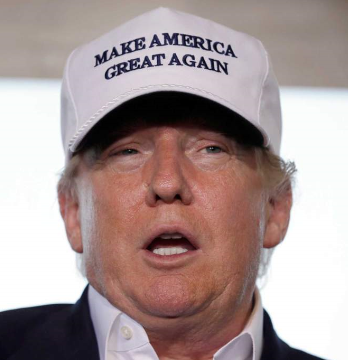
Lots of chatter around whether Trump (or Sanders) will run as 3rd party candidates.
Pundits are unanimous that a Trump 3rd party run would doom the GOP and hand the election to Hillary (presuming that she’s not in jail).
I’m not so sure.
In the next couple of posts, I’ll build to a scenario that has Trump running as a 3rd party candidate, but the GOP nominee getting the keys to the White House (<= note how I strained to avoid using the word “winning”).
======
Let’s put the first puzzle piece in place and answer the question:
Has any 3rd party presidential candidate ever won any electoral votes?
Since LifeLock is in the news again, I thought I should reprise the HomaFiles all-time most viewed post …
=====
Here’s one from the “you can’t make this stuff” file.
LifeLock is one of the companies that monitors the credit applications and credit worthiness inquires.
Todd Davis became LifeLock’s CEO when the company’s founder was ousted for making repeated misleading statements about his shady past and the company’s origins.
For a couple of years, Mr. Davis was prominent in LifeLock’s ads … revealing his social security number and daring identity thieves to crack his code.
Bad idea.

Reportedly, Mr. Davis has had his identity stolen at least 13 times since his taunt-the-thieves commercials.
Loyal readers know that I’m attentive to identity theft issues ever since I got nailed.
I tend to be a proponent of the identity theft services.
I buy mine through Costco (good place to save a few pennies, right?) … in part, because I’ve been suspicious of all the advertising done by industry leader LifeLock.

Turns out that the FTC was – and continues to be suspicious of LifeLock and its hyped up claims …


 The Homa Files