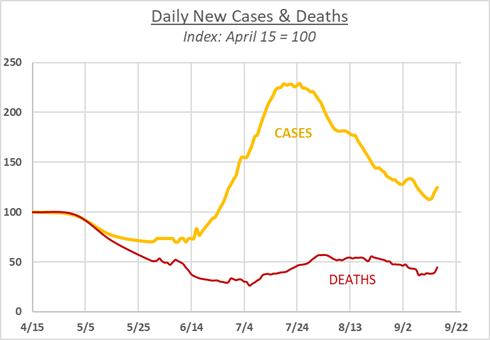
One answer to why there wasn’t a commensurate high spike in deaths.
=============
COVID tests yielding “false positive” results have been hitting the news again.
A couple of weeks ago, Ohio governor Mike DeWine tested positive, missed an event with President Trump and was subsequently re-tested (twice) and found to be negative.
See Ohio Gov. DeWine tests negative … after testing positive.
This week, it was reported that several nursing homes have experienced numerous cases of false positives.
False-positive test results are a particularly significant risk in nursing homes, because a resident wrongly believed to have Covid-19 could be placed in an area dedicated to infected patients, potentially exposing an uninfected person to the coronavirus.
And, there is a growing number of reports that re-opened schools are being shut-down when a single student or faculty member tested positive. Locally, I know of 3 such instances.
Bottom line: false positives are very likely and have significant consequences to patients and institutions.
The IHME estimates that less than 1% of Americans are currently infected.
Given the low prevalence of COVID (i.e. percentage currently infected) … and low but statistically significant testing errors … the likelihood of false positives is very high!
Here’s my logic…
In my strategic business analytics course, I used to teach something called Bayesian Inference … a way to calculate probabilities by combining contextual information (called “base rates” or “priors”) with case-specific observations (think: testing or witnessing).
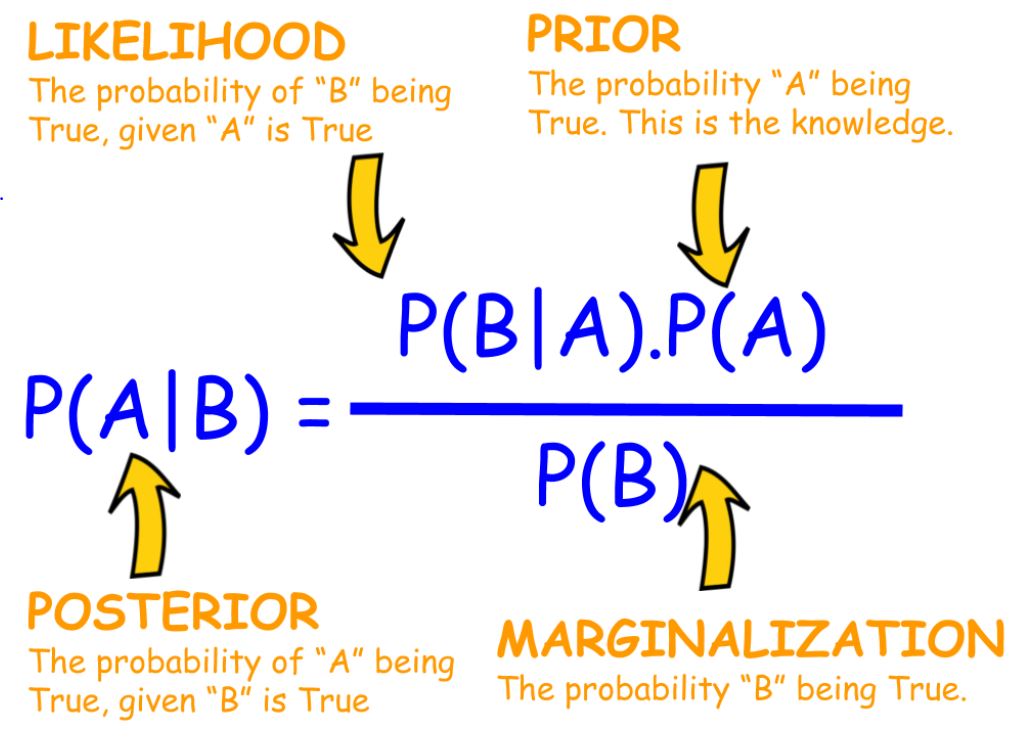
Today, we’ll apply Bayesian Inference to the COVID testing situation…


 The Homa Files