December 18, 2012
In a prior post Effective problem-solving … the five key skills, we isolated 5 key problem solving skills.

Let’s drill down on #1 …
* * * * * *
(1) Identify core issues quickly
One of my observations was drawn for the Center for Creative Leadership which has found that : “Managers faced with a complex problem typically end up solving the wrong problem.”
How can that be? What explains the misses?
Based on my experiences, there are 4 at least 4 frequently encountered stumbling blocks that managers often encounter.
- Wandering in a foreign land: Often, managers just don’t have the perspective – drawn from experience or education or whatever – to fully understand the nuances of a problem or recognize the tell-tale patterns.
- Trees obscure the forest: The initial observation related to complex problems, which – by definition — come laden with extraneous or equivocal information that sometimes clouds the picture and causes cognitive solution.
- Unconscious biases take over: For example. how about cutting the Federal deficit? If you present the problem to a fiscal conservative, they’ll immediately start probing for spending cuts. If you ask a liberal, they’ll start figuring how to raise taxes. Same problem. Different perspectives drive by in-going biases.
- (Preference for simpler problems: In his book “Thinking Fast, Thinking Slow”, Adam Tversky argues that most mortals – when confronted by a hard, complicated problem exhibit a burning urge to to solve a simpler problem … one they’ve seen before, or one that seems simpler and more solvable.
* * * * *
So, how to jump over these stumbling blocks?
Here are some suggestions …
- Start generic, then get specific: If you’re unfamiliar with a particular industry or situation, take it up a level of abstraction. That is, conceptualize it with relevant elements that are more familiar. Then, adjust to the specifics of the situation.
- Clear clutter, structure problem: Get down to the absolute essentials. Purge the problem of the distracters that aren’t germane or the factors that aren’t likely to influence the answer. Don’t be lured to information that may be interesting but not determining. Once the canvas is cleaner, patterns should be easier to discern.
- Stay focused and be objective: This hard because many biases are sub-conscious. Ask yourself if a person with a different slant would come to the same conclusion.
- Refrain: “What’s the question?” … Keep pushing yourself to test “is this the central problem … or, just a symptom?”
* * * * *
Follow on Twitter @KenHoma >> Latest Posts
SHARE THIS POST WITH FRIENDS & FAMILY
Posted in Decision-making, HITS, Problem solving | Leave a Comment »
December 17, 2012
Since taxes will be a big topic this, thought we’d put things in perspective.
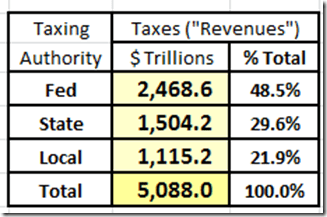
Americans pay a tad over $5 trillion in taxes to the Feds, States and Local Governments.
Technical note: In government parlance, the taxes are called “revenue”.
By taxing authority
Drilling down, the $5 trillion is split roughly 50%-30%-20% to the Feds, States and Locals, respectively
* * * * *
How do the totals breakdown by type of tax?
Read the rest of this entry »
SHARE THIS POST WITH FRIENDS & FAMILY
Posted in Taxes | Leave a Comment »
December 17, 2012
HITS: HomaFiles’ Ideas To Share
Earlier this year, I had the opportunity to kick-off the MSB Consulting Club’s pioneering extracurricular series on problem-solving.
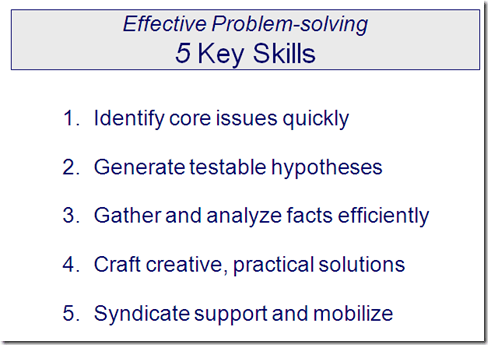
My overall message was that there are 5 key problem-solving skills that consulting firms are looking for …
* * * * *
Here are some of the Homa-isms that framed each of the skills Read the rest of this entry »
SHARE THIS POST WITH FRIENDS & FAMILY
Posted in Problem solving | Leave a Comment »
December 14, 2012
OK, he really didn’t say the last part.
According to CNBC, Warren Buffett is one of several dozen wealthy people who have signed a statement calling for a “strong tax on large estates.”
Buffett & friends say:
- “Dynastic wealth, the enemy of a meritocracy, is on the rise. Equality of opportunity has been on the decline. A progressive and meaningful estate tax is needed to curb the movement of a democracy toward a plutocracy.”
- We (the wealthy) have “benefited significantly” by government investments in schools, infrastructure. and public safety, among other things, so it is “right morally and economically” to have a “significant” tax on large estates because it “promotes democracy by slowing the concentration of wealth and power.”
- “It is right to have a significant tax on large estates when they are passed on to the next generation … it is right morally and economically, since an estate tax promotes democracy by slowing the concentration of wealth and power.”
OK, so what constitutes a sizable estate and how much of it should the government take?
Read the rest of this entry »
SHARE THIS POST WITH FRIENDS & FAMILY
Posted in Buffett Rule, Buffett, Warren, Estate Taxes, Taxes | Leave a Comment »
December 13, 2012
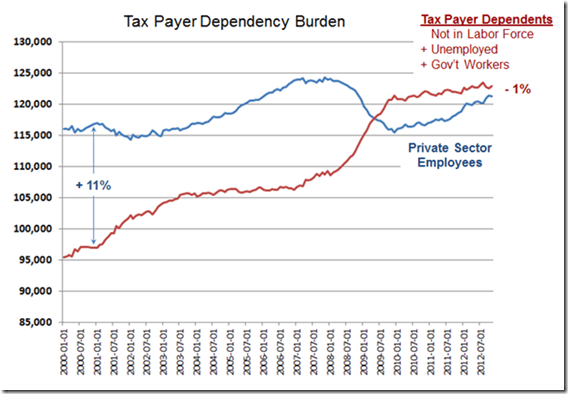
In prior posts this week, we noted that – on a macro basis — there are 122 million adults in the US who are dependent on 121 million tax payers who work in private sector.
* * * * *
A microcosm of the US picture is the city of Detroit
You know, Detroit as in ”about to file for bankruptcy”
Detroit as in “we voted you in, now bail us out”.
Detroit as in “unions are the way to middle class success”.
Consistent with the emerging national picture, it turns out that the 257,576 people in Detroit who do not have a job and are not looking for one outnumber the 224,846 residents who do have jobs.
Here are some other factoids courtesy of CNS …
Read the rest of this entry »
SHARE THIS POST WITH FRIENDS & FAMILY
Posted in Employment - Jobs, Government Employees, Taxes, Unemployment, Unions - UAW | Leave a Comment »
December 12, 2012
Economist Robert Samuelson paints a pretty bleak picture in an op-ed Is the economy creating a lost generation?

The essence of his opinion piece:
Read the rest of this entry »
SHARE THIS POST WITH FRIENDS & FAMILY
Tags: Lost generation
Posted in Economy, Millennials | Leave a Comment »
December 12, 2012
In a prior post — Work harder: “Tax payer dependents” are counting on you. — we worked the nums to show that there are more tax payer dependent adults than there are private sector workers.
Specifically, there are about 121 million private sector works and about 122 million tax payer dependent adults — 89 million working age adults who aren’t looking for work, the 12 million unemployeds, and the 22 million government employees (yes, our tax dollars pay their wages, benefits, and over-stuffed pensions)
That’s a total of 122 million adults who are dependent on 121 million private sector workers.
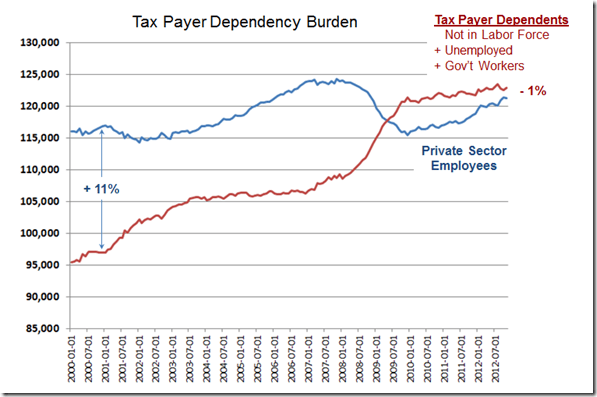
Below are the totals over time.
Back in 2000, there were about 11% more private sector workers than tax payer dependent adults.
The lines crossed in mid-2009 … and now, there are about 1% more tax payer dependent adults than there are private sector workers.
So, we’ve got to raise taxes on the workers to support those who are dependent on them.
Ponder that when your alarm goes off tomorrow.
* * * * *
Follow on Twitter @KenHoma >> Latest Posts
SHARE THIS POST WITH FRIENDS & FAMILY
Posted in Employment - Jobs, Government Employees, Taxes, Unemployment | 6 Comments »
December 12, 2012
According to the most recent NFIB Survey of Small Businesses, the small business owners’ optimism index dropped 5.6 points to 87.5.
The NFIB says “apparently something happened in November to lessen optimism”.
Wild guess: they’re taking Obama’s obsession with jacking up their taxes personally …


* * * * *
Follow on Twitter @KenHoma >> Latest Posts
SHARE THIS POST WITH FRIENDS & FAMILY
Tags: Optimism Index
Posted in Economy, Small Business | Leave a Comment »
December 11, 2012
Conventional wisdom: increasing proportion of old folks will be a drag on the consumer economy.
People in their 50s spend more than younger – or older folks … by a lot.
The economic implications are monumental.

Here’s the logic from Bill Gross at PIMCO:
Read the rest of this entry »
SHARE THIS POST WITH FRIENDS & FAMILY
Posted in Consumption, Economy, Mktg - Consumer Behavior | Leave a Comment »
December 11, 2012
Here are some nums that should give you pause.
There are about 315 million people living legally in the US.
244 million — 77.5% of the 315 million – are working age … the rest are kids
155 million of the 244 million are officially counted “in the labor force” … that’s 63.8% – the labor force participation rate.
Of the 155 million, 143 million are employed; 12 million are unemployed … that’s 7.7% of the 155 million in the labor force
Of the 143 million who are employed, 22 million (15%) work for Fed, state and local government … 121 million work in the private sector
The 121 million private sector employees pay the taxes that support
- 89 million working age adults who aren’t looking for work
- 12 million unemployeds
- 22 million government employees (remember, our tax dollars pay their wages, benefits, and over-stuffed pensions)
That’s a total of 122 million adults who are dependent on the taxes paid by 121 million private sector workers.
Got that?
There are more tax payer dependent adults than there are private sector workers.
Think about it …

Coming: How the ratio of tax payer dependent adults to private sector workers has changed over time.
Stay tuned ….
* * * * *
Follow on Twitter @KenHoma >> Latest Posts
SHARE THIS POST WITH FRIENDS & FAMILY
Posted in Employment - Jobs, Government Employees, Labor Force, Unemployment | 4 Comments »
December 11, 2012
In October, McDonald’s posted its first monthly drop in nine years.
The company immediately replaced the president of its U.S. business.
The new president “ramped up McDonald’s value messaging, focusing heavily on the Dollar Menu to help drive traffic”.
The company again renewed emphasis on low-priced menu options, such as $1 Sausage McMuffins and coffee.

The result?
McDonald’s sales sales bounced back in November.
Surprise, surprise, surprise…
Source
* * * * *
Follow on Twitter @KenHoma >> Latest Posts
SHARE THIS POST WITH FRIENDS & FAMILY
Posted in Mktg - Pricing, Price points, Restaurants | Leave a Comment »
December 11, 2012
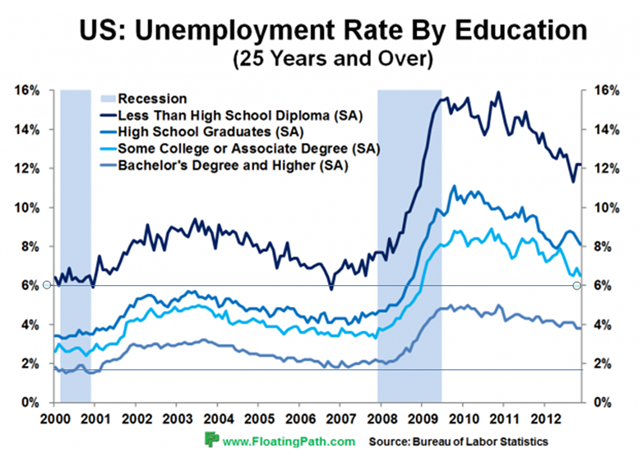
It isn’t exactly new news that more education makes you more employable.
For folks without a HS diploma:
- The current unemployment rate is 12%
- That’s down 4 percentage points from the 16% recession peak.
- But, it’s still 6 percentage points higher than the 6% low point back to 2000.
- And, 6% isn’t very low.
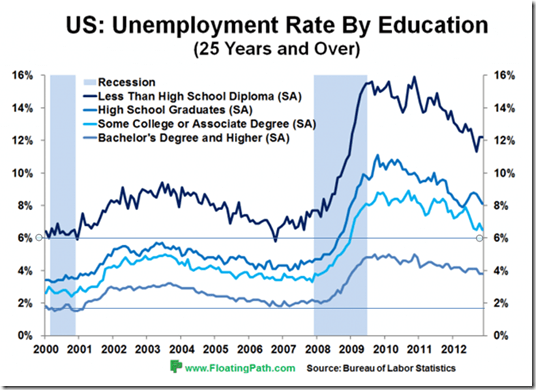
For folks with a college degree or higher:
- The current unemployment rate is 4%
- That’s down 1 percentage points from the 5% recession peak.
- But, it’s still 2 percentage points higher than the 2% low point back to 2000.
Hard to argue against the importance of education.
* * * * *
Follow on Twitter @KenHoma >> Latest Posts
SHARE THIS POST WITH FRIENDS & FAMILY
Posted in Education - Academics, Employment - Jobs, Unemployment | 1 Comment »
December 10, 2012
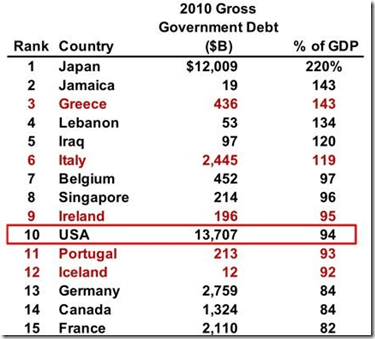
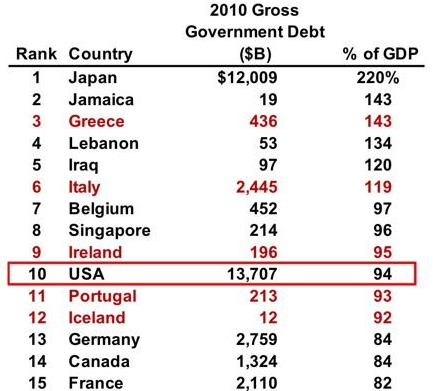
Even in 2010, when the national debt was “only” $13.7 billion
… the U.S. was the world’s #1 debtor in the sheer amount of debt
… and was approaching the top 10 as a % of GDP.
Source
* * * * *
The debt continues to grow in $$$ and as a percent of GDP
Here are the nums:
Read the rest of this entry »
SHARE THIS POST WITH FRIENDS & FAMILY
Posted in Debt - Deficit | Leave a Comment »
December 10, 2012
Several companies have announced that they’ll pay special dividends this year while investors are still be taxed “only” 15% on them.
My favorite had been Costco since co-founder and former CEO Jim Sinegal lambasted the rich at the Democratic National Convention, saying that they aren’t paying their fair share!
Shortly after, Costco then rushed to save its investors some taxes by announcing a special dividend to be paid before year end.
Glance at Yahoo Finance’s list of beneficiaries:
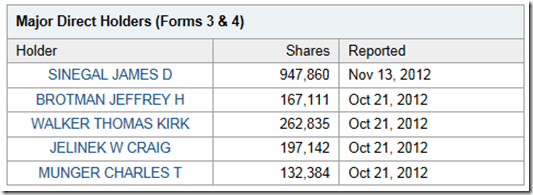
Yep, there’s the holier-than-thou Mr. Sinegal atop the leader board.
I guess he means other rich people should pay more.
Recognize the name coming in 5th at Costco?
Charles Munger is Warren Buffett’s sidekick.
Which provides a nice transition.

Following Costco’s lead, the Washington Post will pay its 2013 dividends before the end of this year to try to spare investors from anticipated tax increases.
Guess who’ll benefit from that tax avoidance move …
Yep, no other than Warren “You Should Pay More Taxes” Buffett.
You see, Buffett’s firm Berkshire Hathaway is reported to be the WaPo’s largest shareholder with an estimated 1.7 million shares … and will get a dividend payment of roughly $17 million .
C’mon man, walk the talk … or shut-up !
* * * * *
Follow on Twitter @KenHoma >> Latest Posts
SHARE THIS POST WITH FRIENDS & FAMILY
Posted in Buffett, Warren, Tax Loopholes, Taxes | 1 Comment »
December 9, 2012
Why the DC gridlock re: taxes & spending?
First, while Obama won a relatively slim majority of the countrywide macro vote … the GOP won a majority of the district-by-district micro vote.
In other words, the whole doesn’t equal the sum of the parts.
Further, as argued by Jay Cost in an Insightful Weekly Standard piece, people don’t really grasp the perilous financial situation the US is in … in part, because past economic growth rates have insulated folks from the hard choice of higher taxes or lower spending.
They’ve been able to have their cake … and eat it, too.

Here’s the essence of Cost’s argument:
Read the rest of this entry »
SHARE THIS POST WITH FRIENDS & FAMILY
Posted in Gov't Waste & Inefficiency, Gov't Spending, Tax burden, Taxes | Leave a Comment »
December 9, 2012
ExtremeTech.com says that “traditional” hybrids are dying.

Here’s Extreme Tech’s logic …
Read the rest of this entry »
SHARE THIS POST WITH FRIENDS & FAMILY
Posted in Autos - Travel, Hybrid vehicles | Leave a Comment »
December 8, 2012
As loyal readers know, I’ve been trying to get my arms around this question.
In a prior post, we drilled down on taxes … or, as my Dem friends would say government “revenues”.
We posted that in 2012 Americans will pay a tad over $5 trillion in taxes to the Feds, States and Local Governments.
Drilling down, the $5 trillion is split roughly 50%-30%-20% to the Feds, States and Locals, respectively. Note that the Federal portion is just under $2.5 trillion.

* * * * *
If these are “revenues” there must be matching services provided, right?
I found a study by the non-partisan Tax Foundation that analyzes taxes paid and benefits received.
The study is old – using 2004 data – but, in my opinion is a good starting point to calibrate the answer.
Read the rest of this entry »
SHARE THIS POST WITH FRIENDS & FAMILY
Posted in Tax burden, Taxes, Welfare | Leave a Comment »
December 7, 2012
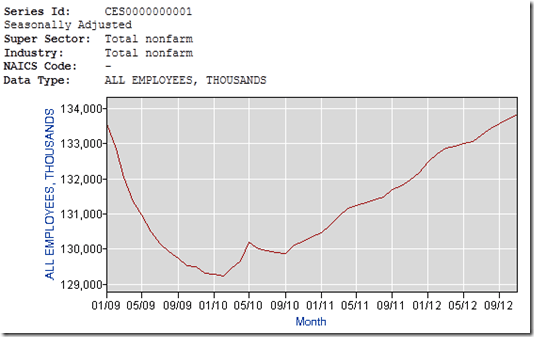
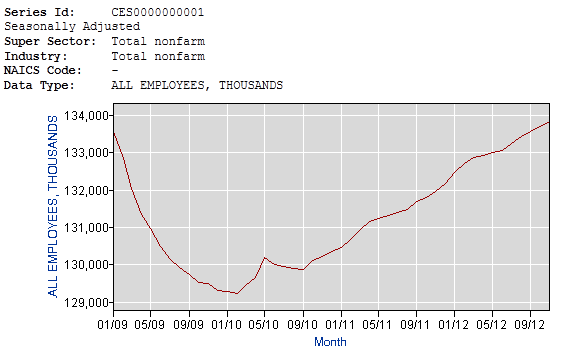
The “Establishment Survey” provided the “headline number” that 146,000 jobs were added … from 133,706,000 employed in Oct. to 133,852,000 Nov.
* * * * *
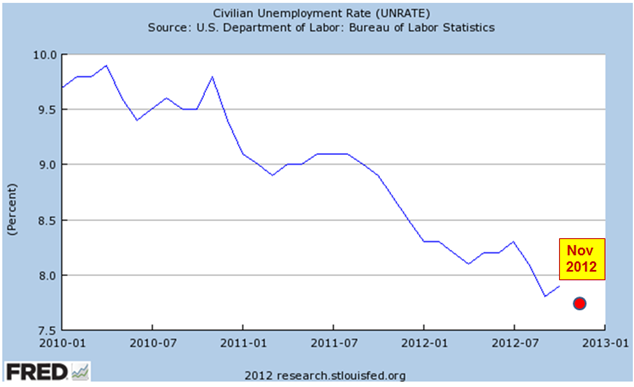
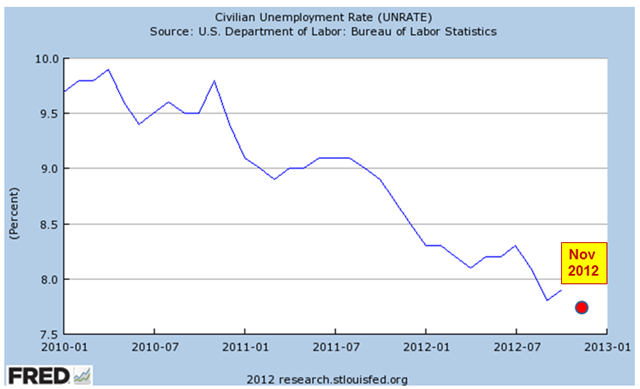
And, the unemployment rate dropped from 7.9% to 7.7%.
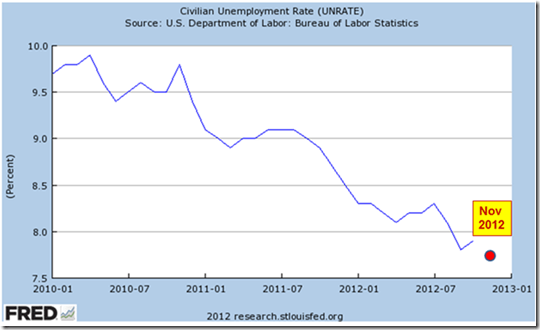
* * * * *
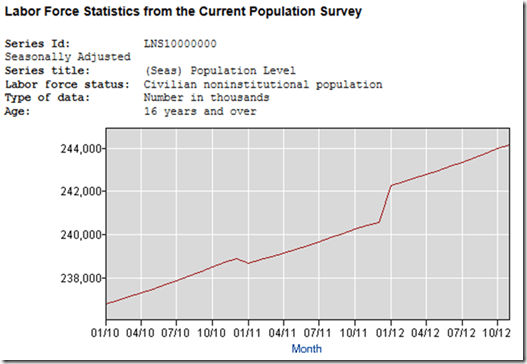
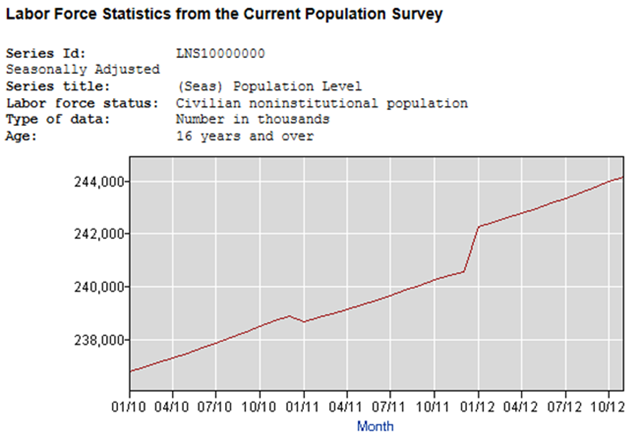
But, the population of working age adults increased by 191,000 – more than the number of added jobs … from 243,983,000 in Oct. to 244,174,000 in Nov.
That should increase the unemployment rate, right?
* * * * *
More important, the “Household Survey” – the basis of the unemployment rate calculation — reported that 122,000 jobs were LOST… from 143,384,000 employed in Oct. to 143,262,000 Nov.
For sure, that should increase the unemployment rate, right?

* * * * *
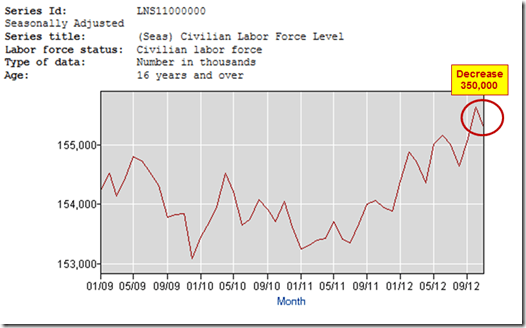
But the unemployment rate didn’t go up, it went down … because the civilian labor force CONTRACTED by 350,000 … from 155,641,000 in Oct. to 155,291,000 Nov.
That is, 350,000 people stopped looking for work and were no longer counted as unemployed..
* * * * *
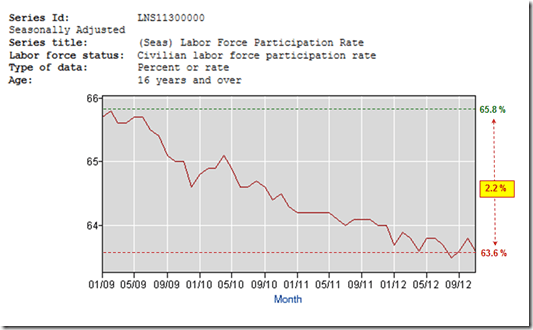
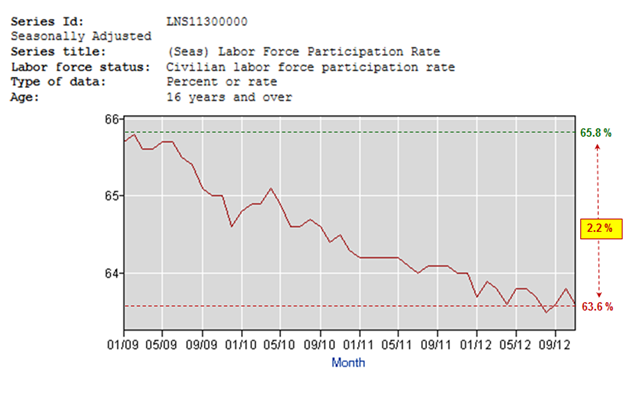
Said differently, the labor force participation rate dropped … and is now about 2.2 percentage points lower than it was when Obama took office
* * * * *
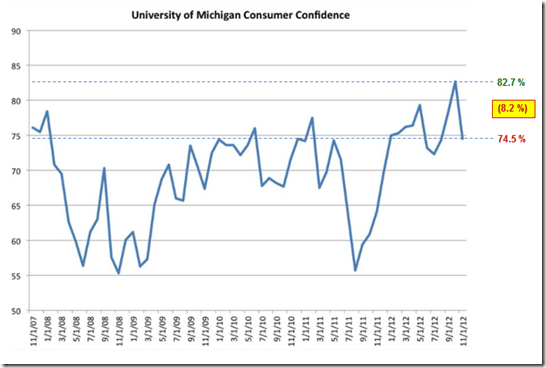
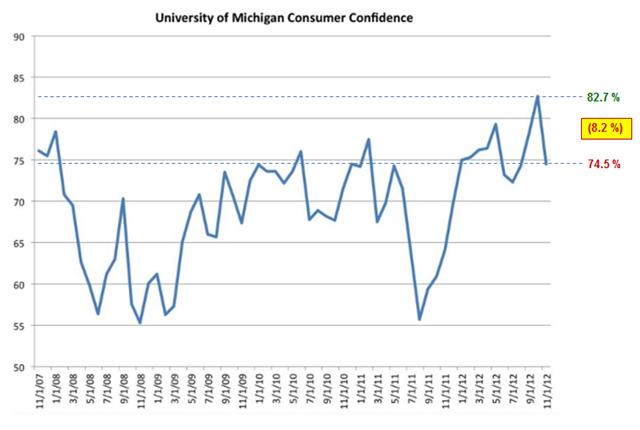
And, consumer confidence dipped, so don’t be surprised if even more people stop looking for jobs.
* * * * *
Bottom line: Not your classic turnaround … but if enough people stop looking for jobs, we’ll have this unemployment mess fixed in no time.
Ouch !
* * * * *
Follow on Twitter @KenHoma >> Latest Posts
SHARE THIS POST WITH FRIENDS & FAMILY
Posted in BLS, Economy, Employment - Jobs, Unemployment | Leave a Comment »
December 7, 2012
Hot off the presses …
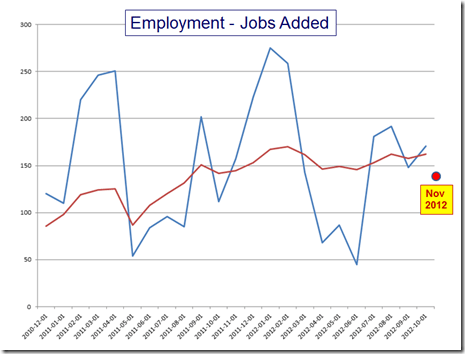
The BLS reported that 146,000 jobs were added in November … below October … below the 12 month rolling average … and below the 200k that most economists say is what’s required to dent the unemployment rate …
* * * * *
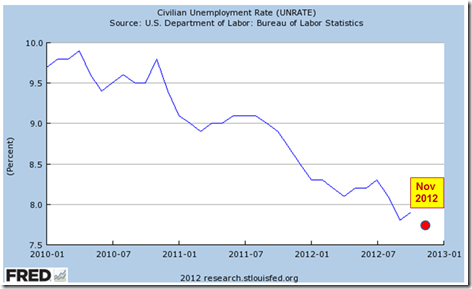
… But, magically, the unemployment rate dropped by 2-tenths of a percent to 7.7% … hmmm.
* * * * *
Most interesting number: October’s government employment number was revised down by about 50,000
Hmmm.
Yesterday in our post Gotcha: About those rosy unemployment stats … we showed how the bump in government employment accounted for most of the decline in the unemployment rate running up to the election.
Seems that that number was a tad inflated.
Surprise, surprise, surprise.
Wouldn’t you think the government would know how many employees are on the payroll?
* * * * *
Follow on Twitter @KenHoma >> Latest Posts
SHARE THIS POST WITH FRIENDS & FAMILY
Posted in BLS, Employment - Jobs, Unemployment | Leave a Comment »
December 7, 2012
Uh oh. There’s a new world emerging …
Captured poignantly in a pitch by Mary Meeker of KPCP

Source
* * * * *
Follow on Twitter @KenHoma >> Latest Posts
SHARE THIS POST WITH FRIENDS & FAMILY
Posted in Academics - Research, Education - Academics | Leave a Comment »
December 7, 2012
Just a friendly reminder that the tax man cometh the when the ball drops on Times Square.
There are 2 big ones: elimination of the 2% payroll tax “holiday” … and the ObamaCare tax on “unearned income”

= = = = =
Payroll Tax
For the past 2 years, payroll taxes – you know, the automatic deductions for Social Security and Medicare – were reduced by 2% to stimulate the economy.
The so-called “2% tax holiday” ends on December 31 and there are no apparent moves to renew it.
According to USA Today:
A temporary reduction in Social Security payroll taxes expires at the end of the year and hardly anyone in Washington is pushing to extend it. Obama hasn’t proposed an extension, and it probably wouldn’t get through Congress anyway, with lawmakers in both parties down on the idea.
Even Republicans who have sworn off tax increases have little appetite to prevent this one .
Bottom line: The expiration will cost a typical worker about $1,000 a year, and two-earner family with six-figure incomes as much as $4,500.
= = = = =
ObamaCare Tax …
Read the rest of this entry »
SHARE THIS POST WITH FRIENDS & FAMILY
Posted in Taxes | Leave a Comment »
December 7, 2012
Punch line: In milliseconds, advertisements are being served based on your browsing habits.
Behind the every one of these ad placement opportunities is a sophisticated tracking system that allows access to the highest bidder.
* * * * *
Excerpted from New York Times’ “Your Online Attention, Bought in an Instant”

The odds are that access to you — or at least the online you — is being bought and sold in less than the blink of an eye.
How it works …
Read the rest of this entry »
SHARE THIS POST WITH FRIENDS & FAMILY
Posted in Internet - Soc Networking, Internet Marketing - eCommerce -, Mktg - Advertising, Mktg - Promotion | Leave a Comment »
December 6, 2012
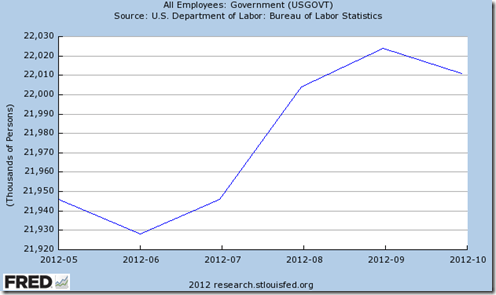
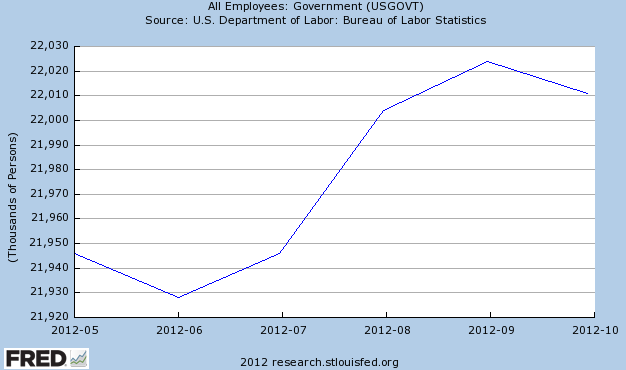
First, glance at what’s been going on with government employment the past couple of months
… about 1 million employees were added to government payrolls from June 2012 until election day.
Hmmm.
* * * * *
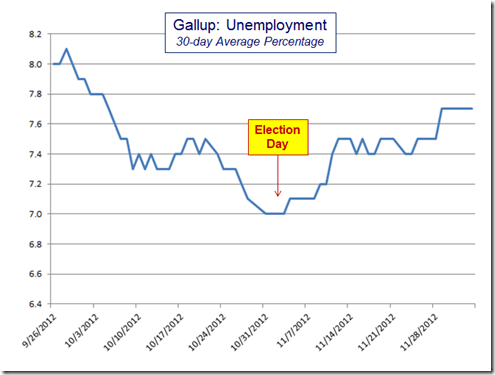
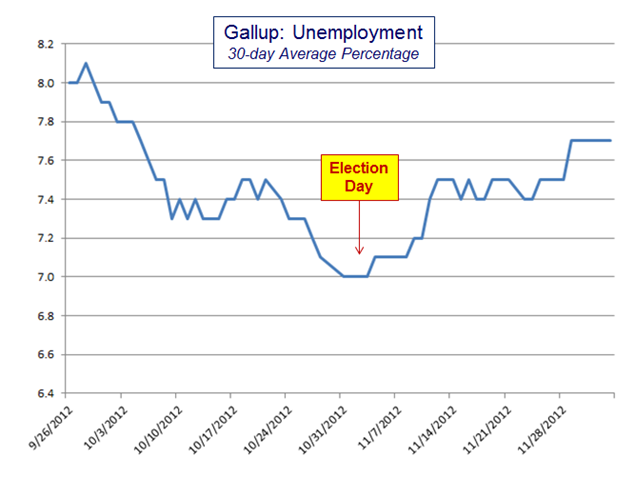
Now, take a gander at Gallup’s daily tracking of unemployment.
Note that Gallup’s unemployment rate dropped by about a point in the run-up to the election.
Virtually all of that drop is attributable to the bump in government employees.
Double hmmm.
And, Gallup’s unemployment rate is up about 3/4’s of a percentage point since the election.
Triple hmmm.
I thought that Team Obama had this economy turned around …
Oops.
* * * * *
Question: Tell me again how higher tax rates will help a faltering economy?
Unless the BLS fudges the number tomorrow, the GOP may finally have an arrow in their fiscal cliff quiver.
* * * * *
Follow on Twitter @KenHoma >> Latest Posts
SHARE THIS POST WITH FRIENDS & FAMILY
Posted in BLS, Economy, Employment - Jobs, Unemployment | 1 Comment »
December 6, 2012
No secret that spending is out of control … exceeding tax revenues by 10 percentage points of GDP
Dems are saying “don’t touch Social Security, Medicare or any other entitlements”
Some folks are saying “Keep borrowing, rates are low”.
Here’s the predictable outcome … no budget left for ANYTHING except entitlements and interest on the debt … and, it can’t be solved by simply taxing the millionaires and billionaires who make more than $250,000..

Source: Mary Meeker KCPB
* * * * *
Follow on Twitter @KenHoma >> Latest Posts
SHARE THIS POST WITH FRIENDS & FAMILY
Posted in Entitlements, Fiscal cliff, Taxes | 2 Comments »
December 6, 2012
Punch line: Many Western retailers have attempted to cash in on China’s 1.3 billion consumers, with limited success. Starbucks’s plan to localize the menu and experience might be the key to success.
* * * * *
Excerpted from brandchannel.com’s, “Starbucks Incorporates Local Tastes with China Expansion”
Western retailers have been completely bombarding China with products and sales pitches in recent years.
Having more than 1.3 billion consumers living within its borders can make a country’s citizens targets of such things.
Starbucks is about to go overdrive in its efforts to get the Chinese populace as dependent on their brand as plenty of Americans are, but the sell may not be so coffee-driven, but leverage the brand’s tea drinks and food menu.
China is still a tea-drinking nation.
So Starbucks established a research-and-development unit in the country in order to figure out what it could do to attract a larger audience than those looking for a cup of joe.
Starbucks China is serving up localized beverage and food items including a red bean frappaccino, green tea tiramisu, a Hainan chicken and rice wrap, a shredded ginger pork panini, and a Thai-style prawn wrap.

Here are some other winners & losers in the Chinese market.
Read the rest of this entry »
SHARE THIS POST WITH FRIENDS & FAMILY
Posted in China, Mktg - Global - BoP, Mktg - Market Development | Leave a Comment »
December 5, 2012
Punch line: If public-sector employees just worked as many hours as their private counterparts, governments at all levels could save more than $100 billion in annual labor costs.
* * * * *
According to a report in the WSJ …
New evidence from a comprehensive and objective data set confirms that the “underworked” government employee is more than a stereotype.

Based on the American Time Use Survey, which the Bureau of Labor Statistics administers to a large and representative sample of American households each year:
- During a typical workweek, private-sector employees work about 41.4 hours.
- Federal workers, by contrast, put in 38.7 hours
- State and local government employees work 38.1 hours.
In a calendar year, private-sector employees work the equivalent of 3.8 more 40-hour workweeks than federal employees and 4.7 more weeks than state and local government workers.
Put another way, private employees spend around an extra month working each year compared with public employees.
If the public sector worked that additional month, governments could theoretically save around $130 billion in annual labor costs without reducing services.
* * * * *
Another reason that I hate to pay taxes …
* * * * *
Follow on Twitter @KenHoma >> Latest Posts
SHARE THIS POST WITH FRIENDS & FAMILY
Posted in Government Employees, Taxes | 2 Comments »
December 5, 2012
One of the provisions of the Bush tax plan was to eliminate the so-called marriage penalty … the tax rules and rates that had a husband & wife pay more income taxes if they were married than if they stayed single.
I’ve been bemused that in all of the chatter about Obama’s obsession with jacking rates, I haven’t heard anything about the resurrection of the marriage penalty … at least for evil rich millionaire & billionaires who make more than $250,000..

Here’s the rub: Obama’s tax hikes apply to individuals earning more than $200,000 and families earning more than $250,000.
Let’s do a simple example:
Read the rest of this entry »
SHARE THIS POST WITH FRIENDS & FAMILY
Posted in Fiscal cliff, Obama, Tax reform, Taxes | 1 Comment »
December 5, 2012
Answer: Nobody yet, but some Macy’s customers think that it would be a good idea
Facing a petition from consumers to ‘dump’ Donald Trump as a spokesperson, Macy’s claims that marketing and politics have nothing to do with each other, despite using some of Trump’s famous political comments as inspiration in the company’s new campaign.

* * * * *
Excerpted from Adage’s, ‘”Macy’s Unmoved by Dump Trump Petition”
As a petition encouraging Macy’s to “Dump Donald Trump” continues to gain steam, with nearly 558,000 signatures, the retailer shows no sign of dropping the outspoken tycoon.
Here’s Macy’s thinking:
Read the rest of this entry »
SHARE THIS POST WITH FRIENDS & FAMILY
Posted in Mktg - Promotion, Retailing | Leave a Comment »
December 4, 2012
Answer: Not very good.
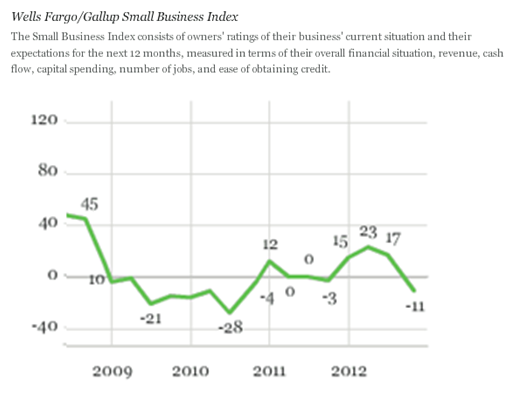
Gallup’s Small Business Index has fallen 28 points since the votes were counted … and is now back in negative territory.
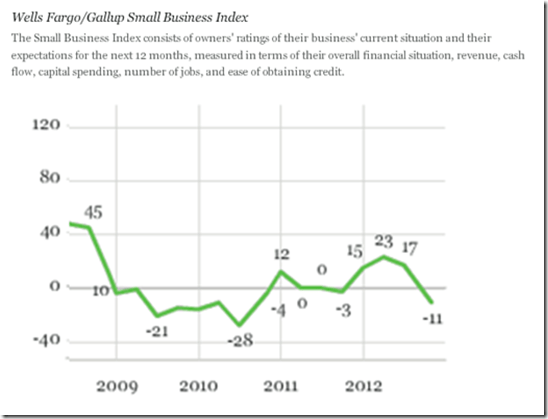
And, the headline number only tells part of the story:
Read the rest of this entry »
SHARE THIS POST WITH FRIENDS & FAMILY
Posted in Economic Recovery, Polls & Surveys, Small Business | Leave a Comment »
December 4, 2012

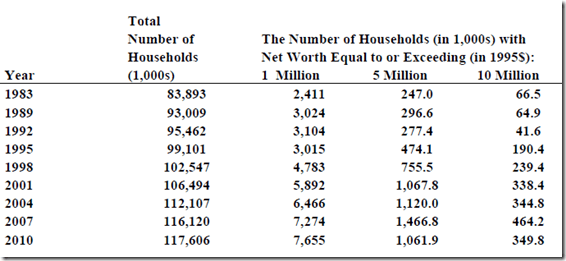
Based on a very rigorous analysis by Robert Wolff of NYU …
Scored in constant 1995 dollars – i.e. eliminating the effects of inflation …
- Roughly 6.5% of US households – about 7.5 million — have a net worth greater than $1 million.
- That’s up 5.25% since 2007 … an increase from 6.3% of households
- But, the number of households with net worth greater than $5 million declined by 27.5% from 2007
- And, the number of households with net worth greater than $10 million declined by 25% from 2007
Bottom line: More millionaires … but they have fewer millions.
Source: Wolff, NYU, Asset Price Meltdown and Wealth of the Middle Class
* * * * *
Follow on Twitter @KenHoma >> Latest Posts
SHARE THIS POST WITH FRIENDS & FAMILY
Posted in Income & Wealth, Income - Earnings, Net Worth, U.S. - Income & Wealth, Wealth - Distribution | 1 Comment »
December 4, 2012
Punch line: What goes into determining pay? Here are 8 tips to discover the salary you deserve.
* * * * *
Excerpted from Forbes, “How To Figure Out What You Really Should Be Paid”
Not sure if your salary is commensurate with your skills and accomplishments?
Curious how your pay measures up to others’ in your field? Want to know what you’re really worth?

Here’s how to determine your value in the labor market:
Read the rest of this entry »
SHARE THIS POST WITH FRIENDS & FAMILY
Posted in Careers & Interviewing, Compensation - Executive Pay, Salary & Compensation | Leave a Comment »
December 3, 2012
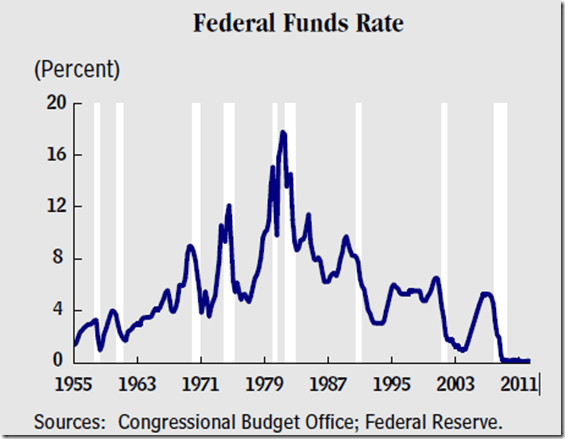
Here’s a chart to calibrate your perspective …
The Fed Funds Rate currently running at about zero … that compares to a historical average of about 8% … and a peak of about 18% in the Carter years.
There’s only one way to go – up.
Imagine the fiscal crisis if if the interest rate on the $16 Trillion debt slides back up to the 8% historical average … or, gawd forbid, to the Carter-level rates.
Now, that would be a fiscal cliff !
Source
* * * * *
Follow on Twitter @KenHoma
SHARE THIS POST WITH FRIENDS & FAMILY
Posted in Economy, Fiscal cliff, Interest rates | Leave a Comment »
December 3, 2012
Given Obama’s obsession with increasing tax rates on the “millionaires & billionaires” making more that $250,000 … and, given the GOP’s rhetoric that they want to protect small businesses … I can’t figure out why they don’t just treat business income reported on 1040s differently than ordinary income.

Specifically, in a prior post we said:
- Separate business income reported on 1040s from all other income … then cap the business income portion at 25% … allow losses to offset ordinary income.
- Then, since Obama is obsessed with raising rates on “millionaires & billionaires” who make more than $250k, I add some brackets with high rates for folks making more than $500,00, #1 million, etc
= = = = =
A loyal Homa Files reader – who is a part-owner of a relatively small business — that will have his company hammered by Obama’s proposed tax rate change.
Here’s a paraphrase of his real life perspective:
“Personal income” should be just that, the take-home pay and revenue received by the individual worker and should exclude income listed on the K-1 in the personal tax return.
- Note: Income from S-Corps, LPs, etc., is conveyed via K-1s. The “corporate income tax” is, in effect, paid by the equity-holders and partners as personal income.
Example: Say an individual “earns” $250,000 and owns 5% of an S-Corp that earns $5MM
The individual gets allocated $250,000 (5% times $5 million) of the S-Corp’s earnings via a K-! … that $250,000 is rolled into the individual’s 1040 return.
- Important: the individual didn’t get any cash from the S-Corp, just an allocation of earnings.
Having broken the magical $250,000 threshold, Obama’s tax scheme would certify the individual as a “millionaire or billionaire” and jack up his tax rates to 39.6% … plus 3.8% in ObamaCare taxes since the income is “unearned”.
Think about that.
The highest corporate tax rate is 35% … the average corporate tax rate is much lower. Think, GE’s zero-percent rate.
But, under Obama’s plan this small business owner gets slapped with a tax rate of over 44%.
Does that sound right to you?
To make matters worse, the individual didn’t get any cash … just an allocation of earnings.
To pay the tax bill, he has to reach into personal funds … which are probably limited since he’s thrown his dough into the company … or, the S-Corp will have to distribute dividends to partially cover the individual’s tax liability.
If the S-Corp pays out dividends to partially fund the owners’ tax liability, the company has less money to invest in the business.
Does that make any sense?
Thanks to ST for feeding the lead
* * * * *
Follow on Twitter @KenHoma >> Latest Posts
SHARE THIS POST WITH FRIENDS & FAMILY
Posted in Tax burden, Tax deductions, Tax Loopholes, Tax reform, Taxes | 1 Comment »
December 3, 2012
They focus on customer value.
McKinsey says that leading companies combine insights about customers, competitors, and costs to develop more innovative and cost-effective products.
* * * * *
Excerpted from McKinsey Quarterly’s, “Designing products for value”

A rising tide of prosperity in developing economies is reshaping the nature of competition. Recognizing the challenges of the new environment, a few product makers … are taking a different approach.
Here are some examples:
Read the rest of this entry »
SHARE THIS POST WITH FRIENDS & FAMILY
Posted in Customer Satisfaction - Loyalty, Customer-Valued Marketing TM, Customer-Valued TM, McKinsey, Strategy | Leave a Comment »
December 2, 2012
Most press reports have said the Black Friday was boomville.
Really?
Not according to Gallup which reported that “self-reported spending” during the Black Friday weekend was down almost 20% from last year … from $103 to $84.
Hmmm.

* * * * *
Follow on Twitter @KenHoma >> Latest Posts
SHARE THIS POST WITH FRIENDS & FAMILY
Posted in Economy, Retailing | Leave a Comment »
December 2, 2012
Not necessarily.
Let’s walk through the logic.
= = = = =
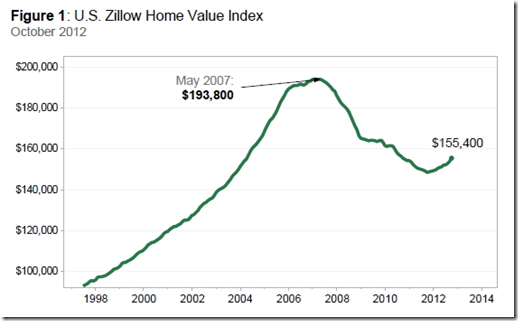
First, home price indices show that home prices have stopped falling … and arguably are increasing.
= = = = =
And, relating home prices to equivalent property rental rates suggests that the bubble in home prices has been fully deflated and home prices should, at a minimum, creep upward.

= = = = =
But, a CNBC analysis offers a sobering offset.
Read the rest of this entry »
SHARE THIS POST WITH FRIENDS & FAMILY
Posted in Housing - Mortgages | Leave a Comment »
December 1, 2012
The NY Times ran an article titled “Complaints Aside, Most Face Lower Tax Burden Than in 1980”
The thesis of the article was predictable NYT: If you’re working, cough up more dough to the Feds and stop complaining … tax rates were higher in 1980.
Personally, I find that argument to be unmoving. I prefer to compare to 1860 when there was no Federal income tax.
- Factoid: In 1862, in order to support the Civil War effort, Congress enacted the nation’s first income tax law.
The article also lobs the obligatory “57% think taxes should be raise on the rich”, i.e. anybody making a tad more than I am.
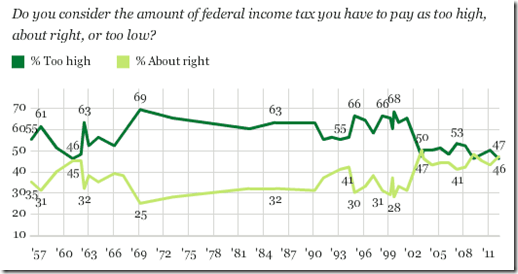
And the article references a Gallup survey that guarantees a chuckle: the nation is evenly divided between those who think their taxes are too high and those who think that their taxes are just about right.
Translation: Folks paying little or no Fed income tax think taxes are about right. Note: There’s that pesky 47% number again.
C’mon NYT, you can do better than this.
= = = = =
On the plus side …
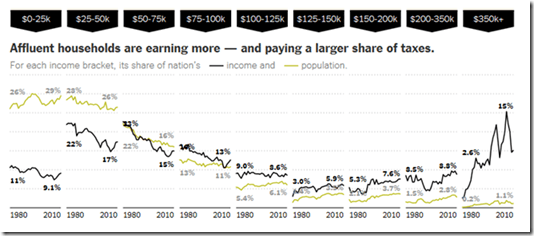
… the article links to a great interactive infographic that slices tax data since 1980 along key measures.
It’s worth playing around with … both for the info and because it’s a cool analytical tool.
click for Infographic
* * * * *
Follow on Twitter @KenHoma >> Latest Posts
SHARE THIS POST WITH FRIENDS & FAMILY
Posted in Taxes | Leave a Comment »
November 30, 2012
OK, cheap shot.
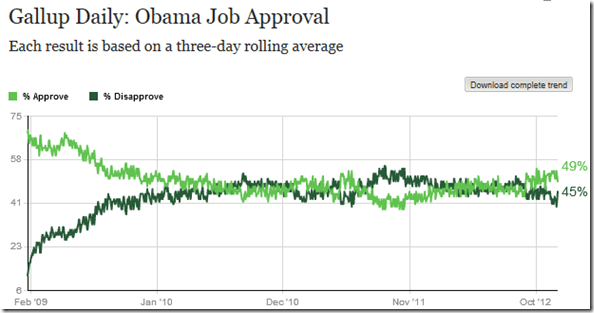
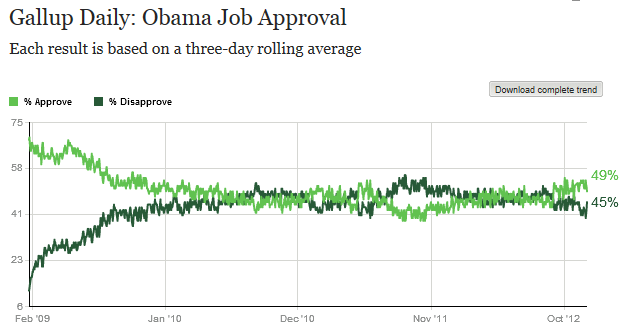
According to Gallup, Obama now has a 49% approval rating … down a couple of points from his election draw.
* * * * *
What about Twinkie’s approval rating?
Read the rest of this entry »
SHARE THIS POST WITH FRIENDS & FAMILY
Tags: Hostess, Twinkies
Posted in Obama, Polls & Surveys | Leave a Comment »
November 30, 2012
Interesting analysis by the CBO …
Punch line: When you delate the numbers, i.e. take out inflation effects – household net worth is roughly 5 times disposable income … that’s down from the dot-com and housing booms & busts, but roughly at historical levels.
In other words, the market bubbles were more like sugar-rush outliers … than “new normals”.

* * * * *
Follow on Twitter @KenHoma
SHARE THIS POST WITH FRIENDS & FAMILY
Posted in Economy, Housing - Mortgages, Net Worth, Stock Market | Leave a Comment »
November 30, 2012
Punch line: A record number of shoppers spent Black Friday weekend shopping for deals, revealing new consumer trends present this holiday shopping season.
* * * * *
Excerpted from Adage.com’s, “Four Things Holiday-Shopping Kickoff Tell Us About the Economy, Consumer Habits”

A record 247 million shoppers visited stores and websites over Black Friday weekend, up from 226 million last year. The average shopper spent $423 this weekend, up from $398 last year, helping total spending reach an estimated $59.1 billion.
Here arefour things we’ve learned from the holiday-shopping kickoff:
Read the rest of this entry »
SHARE THIS POST WITH FRIENDS & FAMILY
Tags: Black Friday
Posted in Mktg - Promotion, Retailing | Leave a Comment »
November 30, 2012
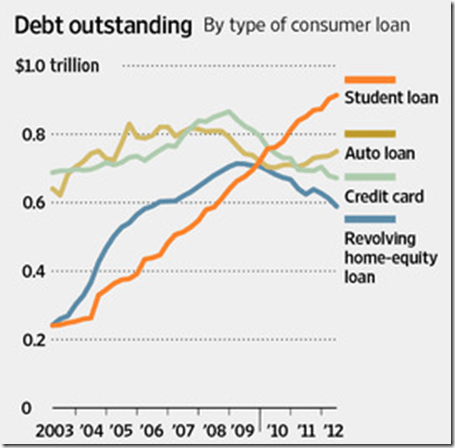
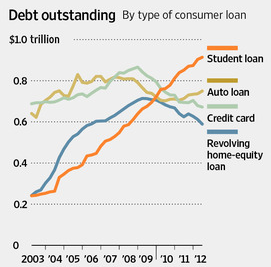
There’s an increasing amount of chatter re: student loan debt being the next financial bubble to burst.
In fact, according to the WSJ, student loan balances are approaching $1 trillion and have blown by auto loans and credit card balances.
= = = = =
How do student loans rack up relative to home mortgages?
Read the rest of this entry »
SHARE THIS POST WITH FRIENDS & FAMILY
Posted in Debt - Deficit | 1 Comment »
November 29, 2012
Warren B. was waxing on NPR about investments and the economy.

I listened to the podcast, expecting to scream when he started whining about his taxes being too low.
He didn’t, so I didn’t.
Below are some punch lines and a link to the audio of the interview.
Read the rest of this entry »
SHARE THIS POST WITH FRIENDS & FAMILY
Posted in Buffett, Warren, Investing, Investments, Management - General | 2 Comments »
November 29, 2012
HITS: HomaFile’s Idea To Share
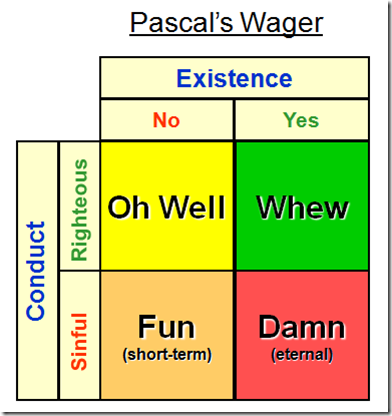
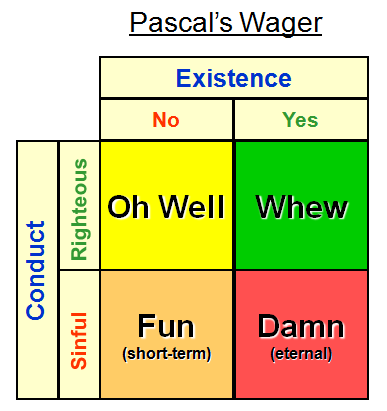
One of the few things I remember from Philosophy 101 is Pascal’s Wager.
In a nutshell, it says that God may or may not exist … and we all have the choice to live righteously or sinfully.
Naturally, that creates a 2 X 2 matrix …
If you choose to live on the wild side and God exists … uh oh.
If you choose to live a clean life, you score big if God exists … and don’t have much downside if she doesn’t.
I often find Pascal’s Wager to be a practical decision-making prop.
Follow on Twitter @KenHoma >> Latest Posts
SHARE THIS POST WITH FRIENDS & FAMILY
Posted in Decision-making, HITS, Problem solving | 4 Comments »
November 29, 2012
Wrong !
Cyber Monday sales nearly doubled from last year, with mobile shopping playing a large role in those numbers.
Despite high mobile numbers, social media drove very few sales during Cyber Monday.
* * * * *
Excerpted from Adage.com’s, “Cyber Monday Mobile Purchases Nearly Double From 2011”
Cyber Monday was the biggest online shopping day ever and mobile shopping played a significant role in its growth.
Spending increased 30.3% from the previous year, with mobile devices accounting for accounted for 12.9% of all sales. That’s a 96% increase from 2011.
Mobile sales were lower on Cyber Monday than on Black Friday, however, a change that IBM attributes to more customers returning to work and shopping from their PCs.
Both mobile traffic and mobile sales fell by 20% from Black Friday to Cyber Monday.
Despite the overall spending increases, the average order size dipped 6.6% to $185.12, the report said.
Social sales also decreased, as Facebook, Twitter, LinkedIn and YouTube generated just 0.41% of all online sales, a 26% drop from 2011.
Below is a neat summary infographic
Read the rest of this entry »
SHARE THIS POST WITH FRIENDS & FAMILY
Tags: Black Friday, Cyber Monday
Posted in Internet - Soc Networking, Internet Marketing - eCommerce -, M-Commerce | Leave a Comment »
November 28, 2012
Answer: According to the CBO, about 14% … down about 1 pp from the recession high water mark … but about 3 pp higher than the historical average
The CBO says that even in normal times, the number of vacant housing units is substantial, reflecting:
- the lengthy process of selling home
- the number of second homes and “seasonal units”
Further, the CBO says: “excess vacant units account for about 2/3s of the slower pace of growth of residential during the current recovery relative to prior recoveries.”

* * * * *
Follow on Twitter @KenHoma
SHARE THIS POST WITH FRIENDS & FAMILY
Posted in Housing - Mortgages | Leave a Comment »
November 28, 2012
First, what’s the biggest tax loophole?
Answer: The non-taxable payments that companies make towards employees health insurance premiums.
These days, the policy to cover a husband, wife and a couple of kids is about $15,000.
Employers typically pick up about 2/3s of the bill … call it $10,000.
The $10,000 is tax deductible for the company, and isn’t taxed as employee compensation – even though it’s clearly part of an employee’s compensation package.
In total, the health insurance loophole amounts to over $170 billion annually … about twice the mortgage interest deduction … and about twice the “Bush tax cuts for the wealthy”.

Source: Credit Suisse, Neal Soss
= = = = =
So, how might ObamaCare close this loophole?
Read the rest of this entry »
SHARE THIS POST WITH FRIENDS & FAMILY
Posted in Health Care / Medical Insurance, ObamaCare, Tax Loopholes, Taxes | Leave a Comment »
November 28, 2012
Found this browsing through some old files.
My students know that I think conceptual frameworks are important.

This article might have been my inspiration …
Read the rest of this entry »
SHARE THIS POST WITH FRIENDS & FAMILY
Tags: frameworks, models problem-solving
Posted in frameworks, Problem solving | Leave a Comment »
November 27, 2012
Warren Buffet was back at it yesterday, venting his conscience by repping in an NYT op-ed for higher taxes on wealthy folks.
As part of his treatise, he argues that investors aren’t swayed by after-tax returns … pre-tax is what moves them.
Say, what?
Keep reading for his other thoughts and Ken’s proposed Buffett Rule …
Read the rest of this entry »
SHARE THIS POST WITH FRIENDS & FAMILY
Posted in Buffett Rule, Buffett, Warren, Tax deductions, Tax Loopholes, Taxes | 2 Comments »
November 27, 2012
HITS: HomaFiles’s Ideas To Share
For decades cognitive psychologists has characterized folks as being either left brain dominant – logical – or right brain dominant – creative.
Browse the lists below and pick your dominant brain side – left or right.

= = = = =
So what? What to do?
= = = = =
Read the rest of this entry »
SHARE THIS POST WITH FRIENDS & FAMILY
Posted in Brain - thinking, Decision-making, Problem solving | 1 Comment »
November 27, 2012
Answer: Because they can …

= = = = =
Excerpted from Business Week
Think about it: You can get free Wi-Fi at a McDonald’s or at a city park, but check into some 4 & 5 star hotels and they’ll charge you as much as $15 peer day to check your email or update Twitter.
Q: Why isn’t Wi-Fi free at fancier places? Aren’t you supposed to get better service for paying more?
Read the rest of this entry »
SHARE THIS POST WITH FRIENDS & FAMILY
Posted in Hospitality, Mktg - Pricing | Leave a Comment »

































 The Homa Files