Pew just published an interesting study on birth rates and family size.
Here’s one of Pew’s spotlight charts.
The data seems to support the headline …

=====
But, there’s a more compelling takeaway …
Pew just published an interesting study on birth rates and family size.
Here’s one of Pew’s spotlight charts.
The data seems to support the headline …
=====
But, there’s a more compelling takeaway …
I’ve long opined that disadvantaged kids from tough homes and neighborhoods would benefit from boarding schools that dislocate them from their challenging environments and provide them with a constructive, comprehensive learning and social experience.
What I didn’t know was that this education model is already in place in a few locales and is slowly being spread to others.
Click to view photo essay

One of the pioneering public boarding schools is DC’s SEED Foundation Charter School …
Yesterday, we looked at the numbers re: Baltimore City school’s spending …
Summary: Over $16,000 per student … top 4 (or higher, depending on the study) in the country … with a student to teacher ratio of about 15 to 1 … and a student to “adult” ratio of about 8 to 1.
Not bad.
While researching the post, I stumbled on an article in Business Insider:
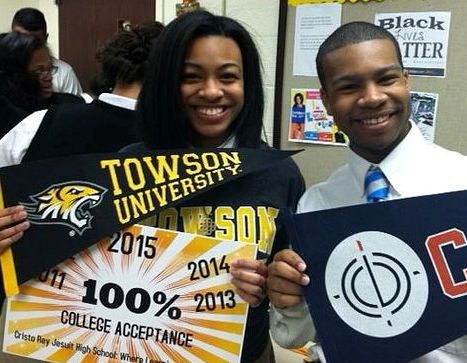
How a Baltimore school that only accepts poor students has a 100% college acceptance rate.
The article profiles Baltimore’s Cristo Rey High School which has achieved a 100% college acceptance rate among graduates despite taking only students from disadvantaged neighborhoods
=====
How does Cristo Rey do it?
A largely unchallenged claim in the past week is that the way to fix many of Baltimore’s inner city problems is to spend more on education.
Makes sense until you look at the numbers.
Based on 2010 Census numbers, Baltimore City spent almost $16, 000 per student … more recent analyses peg the number even higher.
That spending level ranks Baltimore City 4th among school districts with at least 40,000 students … more recent data reflecting an infusion of additional Fed funds pushes the ranking up to #2, trailing only NYC.

Let’s put those numbers into context …
All the hoopla surrounding the Apple Watch launch reminded me of an ad campaign run by a company called Blendtec.
According to George Parker of AdScam ….
At a conference a couple of years ago. GE and their agency, BBDO, made a presentation of their new “Imagination” campaign.
After showing some nice TV spots and explaining that they’d spent $300 million on media over the last year, they proudly declared that brand awareness had increased substantially.
This generated polite applause.

Next up was the Marketing Director of blender manufacturer Blendtec who proceeded to blend:
He then put up a single slide showing that every time they posted a self-produced, ten dollar video on YouTube in their long-running “Will It Blend” campaign (which to-date has had more than 220 million views,) sales went up by an accurately measurable percentage.
Understandably, the crowd went nuts.
The point being, GE spent hundreds of millions and couldn’t quantify with any certainty what they had achieved for all that money.
Blendtec spent pennies and achieved consistently significant and measurable results.
Below is the links to the Blendtec iPhone videos… worth watching.
A couple of year’s ago, I wrote a post that probably stunned loyal readers.
The post praised Obama — Michelle that is.
She gave the kick ass speech that I was hoping the Obamas would deliver everywhere, all the time.
Ironically, the speech was given at Bowie State University … a few miles from Baltimore.
Unfortunately, Mrs. O decided a war on Twinlies was more important than cultural leadership.
Still the speech is worth a listen.
Here’s a flashback…
=====
I haven’t been a big Michelle Obama fan.
Never recovered from her “first time I’m proud to be an American” snit … and totally turned off by her hypocritical lifestyle of the rich & famous routine.
Biggest deal: I’ve oft said that she and her husband have squandered an opportunity to talk frankly to black kids in a way that only they can.
They’ve got the cred to push family values, individual responsibility and the importance of education.
Except for a few lines in a few speeches, they’ve come up prtetty empty.
That is, until last week when the First Lady gave a great commencement address at Bowie State University.

She encouraged the graduates to promote the importance of education in the black community.
According to the Washington Post, she layered a tough-love cultural commentary with statistics … one in three African American students drop out of high school … only one in five African Americans between the ages of 25 and 29 have a college degree.
Here are a couple of the high impact sound bites from her speech:
According to the latest research, IQ accounts for what portion of career success?
a. 50 to 60 percent
b. 35 to 45 percent
c. 23 to 29 percent
d. 15 to 20 percent

The answer …
According to Business Week, top school MBAs haul in an average of about $1,750 per week for their summer internships.
At HBS, the median is $7,000 per month … that’s about $1,650 per week … which annualizes to about $90k.
Of course, there’s wide variation based on the school and the industry.
Note that Kellogg –- a general management and marketing school – tops the list

* * * * *
Follow on Twitter @KenHoma >> Latest Posts
In my Strategic Business Analytics course, we were covering decision rules .. specifically, the current day importance of decision-making algorithms.
Reminded me to flashback a cool 15 minute TED Talk.
Tech entrepreneur Kevin Slavin tells how algorithms have reached across industries and into every day life.
A couple of lines caught my attention:
Obviously, Slavin comes down on the side of the quants.
Worth listening to this pitch … a very engaging geek who may be onto something big.
* * * * *
Follow on Twitter @KenHoma >> Latest Posts
Interesting article on Quartz.com tracking how “the internet’s power to unbundle content sparked a rapid transformation of the music industry’ and arguing that”and it’s doing the same thing to higher education today.
Let’s start with the recorded music industry.
It’s no surprise that
The unbundling of albums in favor of individual songs was one of the biggest causes of the music industry’s decline.
It cannibalized the revenue of record labels as 99-cent songs gained popularity over $20 albums.
What did surprise me us that recording industry revenues have dropped by half from the $14 billion in 2000.

The eroding revenues and and internet dynamics have “changed the way music labels had to operate in order to maintain profitability.
The traditional services of labels: identifying artists; investing in them; recording, publishing, and distributing their work; and marketing them—are now increasingly offered a la carte.”
And, talk about the top 1% and distribution of riches …
Being a recording artist these days is a hard gig …
Pressure from labels then had downstream effects on content creators, specifically artists.
The top one 1% of artists now take home 77% of revenue, and the rest is spread across an increasing number of artists.
The pain of the record labels is forced on artists through smaller royalty payments.
Ouch.
Now, what’s the parallel to higher education?
NPR says …
“Getting the results of a genetic test can be a bit like opening Pandora’s box … you might learn that you’re likely to develop an incurable disease later on in life.”
There’s a federal law that’s supposed to protect people from having their own genes used against them, the Genetic Information Nondiscrimination Act, or GINA.
Under GINA, it’s illegal for health insurers to raise rates or to deny coverage because of someone’s genetic code.

But the law has a loophole: It only applies to health insurance.
Some insurance can be denied or priced high because of a person’s DNA.
Here’s an example … and a prediction.
You bet they do …

======
Prof Robert Kaplan of San Diego State University conducted an experiment:
Faculty subjects were asked to grade an essay written by a student.
A photograph of the student was attached to the essay.
The grade given for the essay correlated strongly with a subjective attractiveness scale evaluated by other judges.
What is interesting is that all the subjects received the exact same essay, and the photograph attached to it was randomly assigned.
Bottom line: physical attractiveness causes graders to give essay writers better scores on their essays.
Here’s what’s going on …
According to an Urban Institute study, more than 35 percent of Americans have debts and unpaid bills that have been handed over to collection agencies.
The unpaid bills include credit cards, hospital bills, mortgages, auto loans, student loans, gym membership fees or cellphone contracts.

Here are some interesting factoids …
Dan Lovallo, a professor and decision-making researcher says, “Confirmation bias is probably the single biggest problem in business, because even the most sophisticated people get it wrong. People go out and they’re collecting the data, and they don’t realize they’re cooking the books.”
What’s this “confirmation bias” that Lovello is talking about?
No surprise, people tend to seek out information that supports their existing beliefs.
You know, liberals watch MSNBC, read the NY Times listen to BBC podcasts; conservatives watch FOX, read the WSJ and listen to Rush.
Behavioral psychologists call the he dynamic “confirmation bias”.

=====
In socio-politics, the confirmation bias tends to harden polarized positions. People just gather debate fodder rather than probing both sides of issues.
In the realm of decision making, confirmation bias has a dysfunctional effect: it leads to bad decisions.
I’ve been reading a book called How Not to Be Wrong: The Power of Mathematical Thinking by Jordan Ellenberg
The author recounts a classic stock advisor scam that goes like this …

======
One day, you receive an unsolicited newsletter from an investment advisor, containing a tip that a certain stock is due for a big rise.
A week passes, and just as the Investment advisor predicted, the stock goes up.
The next week, you get a new edition of the newsletter, and this time, the tip is about a stock whose price the adviser thinks is going to fall.
And indeed, the stock craters.
That’s good, but it gets even better …
Cool TED pitch by a dude named David Pogue … demonstrating 10 handy tech tips.
For example, how to skip by cell phone voicemail greetings (Hi. This Ken. I’m not able … blah, blah) and get straight to leaving a message.
For Verizon, just press the star sign (*) … for AT&T, press the # sign.

=====
What to do when a web page’s text is too small to read?
According to WashPost …
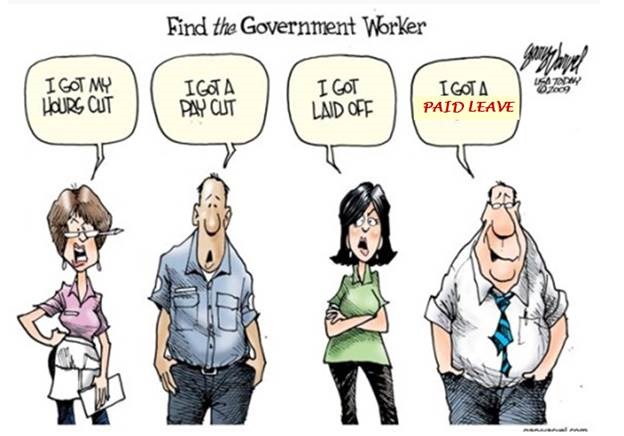
Government records show that tens of thousands of federal workers are being kept on paid leave for at least a month — and often for longer stretches that can reach a year or more — while they wait to be punished for (or cleared of ) misbehavior or are disputing a demotion.
While disputing a demotion?
=====
Here are some details that’ll make you cringe …
Since it’s tax day, I thought I’d flashback to a drill down I did on the tax system — who pays in, where does it go and who benefits …
In a prior post, we drilled down on taxes … or, as my Dem friends would say government “revenues”.
We posted that in 2012 Americans paid a tad over $5 trillion in taxes to the Feds, States and Local Governments.
Drilling down, the $5 trillion is split roughly 50%-30%-20% to the Feds, States and Locals, respectively. Note that the Federal portion is just under $2.5 trillion.

* * * * *
If these are “revenues” there must be matching services provided, right?
I found a study by the non-partisan Tax Foundation that analyzes taxes paid and benefits received.
The study is old – using 2004 data – but, in my opinion is a good starting point to calibrate the answer.
Thanks to social media, today’s teens are the first to have a complete record of their whole lives — their thoughts, their actions, and their friends.
Eric Schmidt — Google chairman and ex-CEO — worries, however, that they’ll be the first who’ll never be allowed to forget their mistakes.
Schmidt says: “People are now sharing too much.”
More specifically, privacy pundits say that it just takes your name, zip code and birth date to ID you and start linking your online and offline personal data … forever.
Now, Pew has published a research study re: teen’s online habits .

Here are the Pew results …
We’ve covering the Halo Effect in class this week, so it’s time to dust off one of my favorite posts …
======
I’ll explain the picture later, but first, the back story.
A couple of interesting dots got connected last week.

First, I started watching The Voice.
I liked the talent and the bantering among the coaches, but wondered why they used the turning chairs gimmick. You know, judges can’t see the the performers, they can just hear them.
Became apparent when Usher turned his chair and was surprised to see that the high-pitched soul singer was a big white guy.
Hmmm.
=====
Second, for the course I’m currently teaching, I’ve been reading a book called The Art of Thinking Clearly — a series of short essays on cognitive biases – those sneaky psychological effects that impair our decision-making.
This was a big week: Easter, NCAA Finals, and baseball’s opening day ….
Let’s play off those events and flashback for some yucks.
First, W and O throwing out opening day pitches.
One of them throws a strike, one of them doesn’t.
Guess …
OK, I know what you’re thinking: “He’s just picking on Obama. Everybody knows that hoops is his game”.
Hmmm.
Remember the Easter eggs festivities at the Whitehouse in 2013?
Just finished this year’s taxes.

One interesting twist ….
In 2012, like a lot of folks, I sold a bunch of stocks to beat Obama’s hike in the capital gains tax … from 15% to 23.8% (including the 3.8% ObamaCare surcharge)
As a result, my state tax bill paid in 2013 was higher than usual … Virginia’s share of the capital gains.
At first I was delighted this year.
Why?
Because, on my Federal return, I could deduct the higher-than-normal taxes that I paid to Virginia.
Unfortunately, the thrill was short-lived.
I’d forgotten about the AMT … you know, the Alternative Minimum Tax.
I’d forgotten, but TurboTax hadn’t.
Bottom line: My VA tax deduction got wiped away by the AMT calculation.
Like many folks, I had internalized that state income taxes are annoying, but no big deal since they get written off at the Federal level.
Not so if you’re among the millions of Americans who get snared in the AMT trap.
Oh, well.
At least there is one small delight I get from the AMT …
It’s not new news that the Labor Force Participation Rate has been falling .
What struck me in March’s employment stats was that the LFPR is still dropping

Many economists say it’s simply demographics — it’s old folks retiring.
Partially true, but certainly not the whole story.
Last Friday, the President was spinning the 126,000 jobs gain as a continuation of the longest consecutive period of (meager) monthly jobs gains.
OK, I added the meager part …
And, he touted how he’d added 12 million jobs to the economy since he took office.
Not to nit-pick, but it’s 10 million since he took office … 12 million since the slide bottomed out.
.
OK, so 2 million more people are working since the worst recession since the depression.
That’s pretty good, right?
Last Friday, the BLS reported that the U.S. economy added 126,000 jobs.
That’s about half of the consensus forecast (which was about the prior 12 months average).
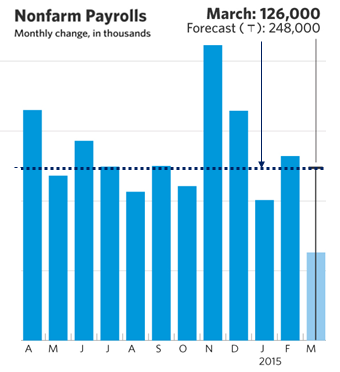
Look at the chart and tell me if your see a pattern …
I once worked for a CEO who wouldn’t stand for lemon in his water or red ink.
That is, both the red ink on a financial statement and red ink on a document.
Apparently, he was onto something with the latter.
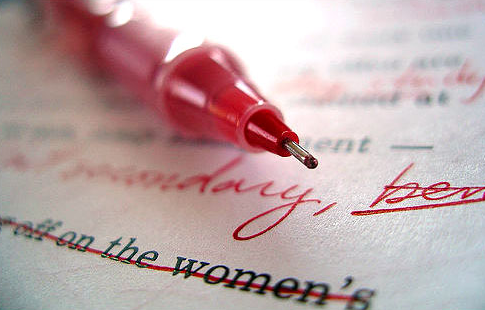
In the UK, hundreds of schools have banned their teachers from marking in red ink.
Here’s why …
Since, I started preparing my taxes this weekend, I got curious …
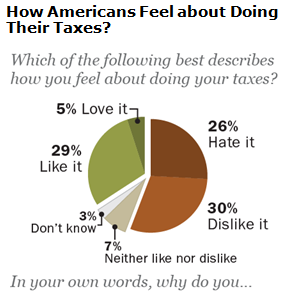
Pew Research says that overall, 33% of Americans say they do their own taxes while 56% say someone else prepares their taxes.
A majority of Americans (56%) have a negative reaction to doing their income taxes 1 in 4 say they hate doing them.
Among those who dislike or hate doing their taxes, most cite the hassles of the process or the amount of time it takes:
About a third (34%) say they either like (29%) or love (5%) doing their taxes.
Here are some details re: the “likers” and lovers …
A couple of years ago I jumped on the bandwagon and e-filed my first ever tax return.

A couple of weeks later I was an identity theft victim.
Coincidence?
I can’t prove the connection … I also can’t shake the suspicion.
Now, crooks have a new online hack: filing online returns that claim other folks refunds.
I good friend just got burned on this specific new tax hack.
Here’s what’s going on …
No, it’s not Hillary Clinton.
Fortune just released it’s list of the World’s Greatest Leaders.
The highest ranked woman snagged the #6 spot on the list …
Of course not … that’s silly.
OK let’s try a variant of the question: Does education make you smarter?

=====
I bet a lot of you would bet the over on that one.
Here’s what the researchers say …
If you do any banking online, you’ve probably gotten that message at one time or another.
Maybe it was when you got a new computer … or, when you used a friend’s computer to pay a bill.
You probably didn’t think much of it.
You just answered the security questions and paid your bill.
Bet you didn’t stop to wonder: How did Bank of Boise know that this wasn’t my usual computer?
Better yet, ask: How does the bank know when I am on my regular computer?
Well, now that I’ve aroused you curiosity, the answer is ….
Your computer has its own distinctive “device fingerprints” that make it identifiable on the Net as your computer.

I worry about stuff like this. So, I’d thought about this one.
And, my thinking was wrong.
Here’s what’s going on …
Driving into school yesterday, I was listening to a sportstalk show that was chatting about the tough times these days in college basketball.
Have to admit, that I hadn’t noticed.

But, apparently there is a lot of trash-talk going on.
According to RealClear Sports:
“The doomsayers cite a plodding pace, lower scoring (67.1 points per team per game this season, compared with 77.7 in 1972), and seven consecutive years of decreased Division I attendance.”
Here are the fixes that the pundits propose … and my ideas.
A couple of weeks ago, there was a local bruhaha.
One lady sent a snitty email late at night to a club mailing list.
One of the recipients – who had been sipping wine all night – took offense, and shot back a nuclear-rated reply… to the whole list, of course.
A major cat-fight broke out … wasn’t pretty.
.Got me thinking more generally about about late night emails …

And, by coincidence, the Harvard Business Review just published an article on the topic.
Watching March Madness games this weekend, an old quote scrolled across the screen and caught my eye.
It was attributed to legendary – albeit controversial old-school basketball coach Bobby Knight …
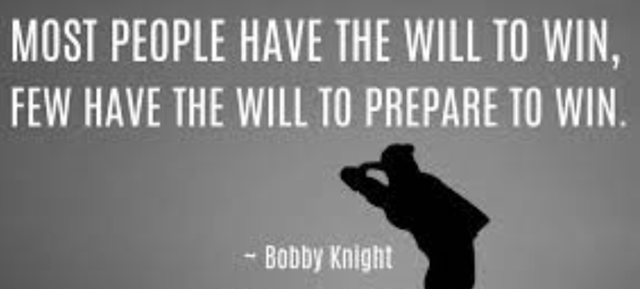
Kinda sums things up pretty well these days, doesn’t it?
=====
#HomaFiles
Follow on Twitter @KenHoma >> Latest Posts
Recently, a poll finally asked a question that really cuts to the chase:
Which better describes how you feel about the way things are going in the world these days?

Started me wondering:
What’s up with a goofy idiom like “going to hell in a handbasket”?
You probably heard that Kraft is recalling it’s Mac & Cheese.
When I heard the headline, I assumed that it was because somebody finally figured out what the orange stuff was.
Not so, apparently some metal shavings got mixed with the goop … not exactly the way to add iron to the foodstuff.
The recall gave me a flashback to a post from last year … very much on topic … so I dug it up for a replay.
At the time, consumer groups were a bit concerned about the Mac & Cheese ingredients.
Uh-oh: Consumer mavens dissing Kraft’s dayglow mac & cheese …
Talk about a timely news item.
In class Tuesday, we were talking about food taste & quality.
My teaching point: when the food buyer isn’t the food eater, the buyer may be less sensitive to taste & quality.
My example: millions of mothers serve their little kiddies mac & cheese that glows in the dark.
A veiled reference to Kraft’s legendary mac & cheese … and, that odd color of orange that happens when those mysterious dry ingredients are stirred into the pasta.
Well, apparently the neon dish also caught the eye of a couple food crusaders who have embarked on a campaign against two of the dyes that Kraft uses to create its trademark color.
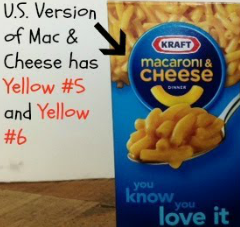
Here’s their rip and Kraft’s response …
In these days of Moneyball and Team Obama’s campaign technology apparatus that could pin down the ice cream flavor that somebody eats, this shouldn’t happen.
But, it does.
The GAO just issued a report saying that the Feds made an estimated $125 billion (that’s billion with a “b”) in so-called “improper payments” in 2014

Here are some of the ugly details …
OK, here’s a test for you …

Rank the the following by the odds that somebody who is in the group or who is exposed to the risk is likely to die.
Make #1 the highest risk of dying in the next year; make #7 the lowest risk circumstance
And the answer is …
Not so fast.
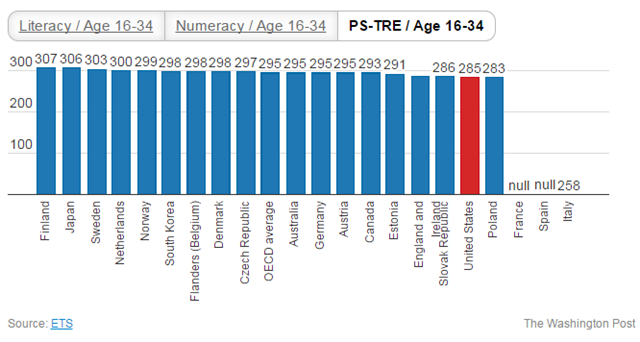
According to the Washington Post, ETS (the College Board folks) analyzed the results of a test given by the Organization for Economic Co-operation and Development (OECD).
The test was meant to assess adult skill levels in 3 areas: problem-solving, literacy and “numeracy”..
ETS broke out the numbers for U.S. millennials, defined as people 16 to 34 years old..
The vast majority of American test-takers lacked a high school degree
The bottom line: in problem solving, U.S. millennials second from the bottom … edging out Poland,
* * * * * *
Of course, problem solving is a blend of quant skills (numeracy) and language skills (literacy).
How did our millennials stack up as poets and quants?
The shooting of 2 cops in Ferguson Wednesday night prompts the question again.
Below is a post from last December when the 2 NYC cops were shot dead.
At the time, some dismissed the assassinations as just the random act of a “crazy guy.”
Is this another “crazy guy” to be shrugged off?
Looks to me like the Ferguson cops were shot because somebody hated them
Why hasn’t Holder airlifted the FBI to hunt down the perps?
Here’s the original post …
======
Today, we’ll be serious, not sarcastic.
As everybody should know by now …
“Without provocation, an attacker ambushed and killed officers Wenjian Liu and Rafael Ramos while they sat in their marked patrol car in the Bedford-Stuyvesant Area of Brooklyn … ‘They were quite simply assassinated, targeted for their uniform,’ Police Commissioner William Bratton said at a news conference.”

Earlier in the day, the killer posted a photo of a silver handgun and a message on Instagram in which he talked about killing police officers “in retaliation for the deaths of Garner and Brown.”
Let’s think about that for a moment …
I’ve always wondered that … especially since NJ is the only place on Planet Earth that won’t let you self-pump your own gas.
Nope.
Gotta wait for the attendant to notice you’re there and do it for you.

Of course, the attendants don’t look like the guy in the picture.
Nope.
They all look like folks who should be reported to Homeland Security.
My point: having attendants should push gas prices up, right?
A common hypothesis is that there are a lot of gas storage facilities along I-95.
Cheaper supply?
That doesn’t square since there isn’t much gas drilled in the local area.
OK, so what is it?
I may have stumbled on the answer …
Before you answer, let me feed you a couple of hints.
According to a government report:
In September 2013, a New York resident, believed to be the world’s oldest living man, died at age 112.
According to the Gerontology Research Group, as of October 2013, only 35 known living individuals worldwide had reached age 112.

You’re thinking a pretty low number, right?
Well, let me rephrase the question: How many Americans does the Social Security Administration think are over 112?
The answer may surprise you …
OK, time to weigh in on Hillary going off the grid while Secretary of State …

Interesting article in the DailySignal – a right-leaning organization …
Basic conclusion: Hillary’s not alone …lots of government employees use personal email accounts to transact government business.
To be more precise – the survey says – about 1/3 of government employees conduct some or all of their government business.
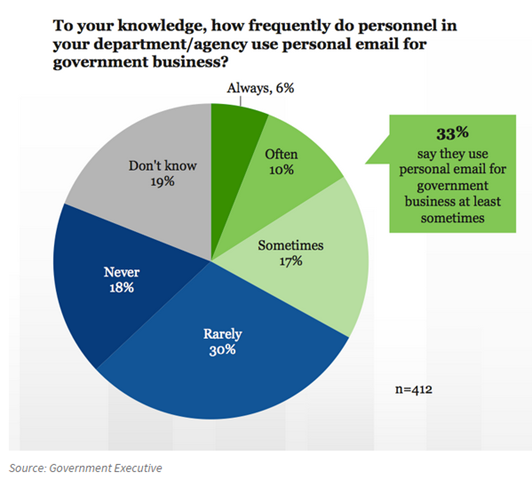
So, why is it a problem Hillary did it, too? Shouldn’t she get a pass since so many other government employees do the same?
Here’s why not …
It has been 10 days since I placed a “free shipping” order with Amazon.
Why is that important”
There are a lot of indicators bandied about to ‘prove’ how well or poorly the economy is doing.
There’s GDP, unemployment, CPI, and many, many other metrics.
Sometimes they provide a consistent view of the economy … sometimes they contradict.

Well, I’ve stumbled on the Ultimate Economic Indicator. An indisputable measure of economic activity …
A couple of weeks ago, the Administration and its friends were touting that unemployment claims had dropped to historically low levels … proof positive that the pork-laden, 2009 Stimulus Spending Program worked … albeit 4 or 5 years after the program ended.

There has been a lot less chest-pounding the past couple of weeks. Wonder why?
Yesterday, the Supreme Court heard oral arguments in the latest — and perhaps, the most significant challenge to ObamaCare.

In a nutshell, the essence of the case is whether the ObamaCare law provides for insurance subsidies to folks buying health insurance through the Federal Insurance Exchange.
The argument centers on very specific – and very literal wording in the law.
To “motivate” individual states to set up their own insurance exchanges, the law law says that subsidies would only be provided to people who buy their health insurance thru state exchanges. No provision was made for subsidies thru the Federal exchange.
ObamaCare supporters are arguing that the wording was a “drafting error” and that the legislative intent was to provide subsidies regardless of whether the insurance was bought thru a state or Federal exchange. That’s somewhere between revisionist history and boldface lie.
Failing that argument, the fallback line of reasoning is that bad things will happen ObamaCare if it’s implemented the way it’s written.
That may be true, but this is a legal issue not a social issue.
Conservatives argue that the intent was clear (to bully states into creating exchanges) and that the law needs to be interpreted as written, not based on what might have been intended.
Of course, Chief Justice Roberts violated the latter point when he let the law fly when the individual mandate was challenged — coining the penalty to be a tax.
I expect the Justices to find for the plaintiffs and against ObamaCare.
Here’s where the irony creeps in …
This is getting very weird …
Last week, I posted the story of a woman who was about to be executed in Georgia for successfully plotting with her boyfriend to off her husband.
At the last minute, her execution was postponed because of bad weather … though, it wasn’t obvious (to me) what weather has to do with a lethal injection being done indoors.
The execution was rescheduled for this Monday.

Once again, things didn’t go as planned …
Since it’s tax time, I thought you might like to see a recap of how much dough (some) Americans fork over to the government …

Americans pay a tad over $5 trillion in taxes to the Feds, States and Local Governments.
Technical note: In government parlance, the taxes are called “revenue”.
By taxing authority
Drilling down, the $5 trillion is split roughly 50%-30%-20% to the Feds, States and Locals, respectively
Here’s more detail …
Since, I started preparing my taxes this weekend, I got curious …
Pew Research says that overall, 33% of Americans say they do their own taxes while 56% say someone else prepares their taxes.
A majority of Americans (56%) have a negative reaction to doing their income taxes 1 in 4 say they hate doing them.
Among those who dislike or hate doing their taxes, most cite the hassles of the process or the amount of time it takes:
About a third (34%) say they either like (29%) or love (5%) doing their taxes.
Here are some details re: the “likers” and lovers …
I thought about this one last nite watching the Hoyas give Kansas a run for their money.
I often say that electricity, the EZ pass, and the 3-point line make my list as the top 3 inventions ever …
You know all about the first two.

Here’s the story behind the third: basketball’s 3-pointer …


 The Homa Files