Getting America moving again … the view from the UPS truck.

March 9, 2012

In a recent HBS blog post, the CEO of UPS opined how to get the economy “Moving at the Speed of Business”.

The essence of his pitch:

The recovery’s been slower than expected. Why? The  I talk to lack the confidence to increase investments and expand hiring. They’re concerned with growing budget deficits, uncertain tax policy, rising energy costs, and crumbling infrastructure.

Four key changes could reassure business leaders — and ignite private-sector growth.

  1. Develop a strategy for energy security
  2. Fix the transportation infrastructure
  3. Simplify the tax code and lower business taxes
  4. Focus on trade policy

Well stated, UPS-skewed (that’s ok), but fairly common stuff.

What caught my attention were a couple of “throw in” points.

First, regarding natural gas as an energy source:

Natural gas is plentiful in the United States, and it works well for short-haul trucking (compressed natural gas) and long haul trucking (liquid natural gas).

Heavy tractor trailers consume about three quarters of the diesel fuel used by all commercial trucks.

Imagine the amount of imported oil we’d save — along with improving the air quality — by converting our nation’s long haul fleet of heavy tractors from diesel to natural gas.

Second, regarding road congestion:

Today, we address critical transportation needs in isolation. We go from one appropriation to the next, often with politics guiding priorities.

As a result, our investments are not targeted at alleviating bottlenecks in our road, rail, maritime, and air networks.

The cost of congestion in the United States in 2010 was about $101 billion — up from $79 billion in 2000.

Across our UPS network, a five-minute delay each day for each of our vehicles costs us $100 million per year.

Extrapolate that across the whole economy, and you get a sense of the huge economic burden of congestion.

Interesting points …

Thanks to Justin Bates for feeding the lead.

>> Latest Posts

How many people watch online video content each day?

March 9, 2012

Answer: Over 100 million !

So, the online industry is following in TVs footprint by organizing a two week long event to woo advertisers with the ultimate goal of pulling spending away from TV and towards online.

* * * * *
Excerpt from WSJ: “TV’s Big Ad-Sales Bazaar Inspires an Online Copycat”

This April the biggest online media outlets are planning a two-week event in New York. Each company will take a different day to woo advertisers by presenting different marketing opportunities.

Coming as more companies are creating more original online video programming, the event signals an intensifying effort by the online video world to challenge television.

TV drew $60.7 billion in advertising versus online video totaled only $2.02 billion. More than 100 million Americans watched online video content on an average day, a 43% increase from the year prior.

“There is a big gap between the time consumers are spending on digital platforms and the amount of ad spend”.

Edited by ARK

>> Latest Posts

Unemployment: The final nums before tomorrow’s final nums …

March 8, 2012

Tomorrow’s BLS report will be very interesting.

On the plus side: ADP, released their proprietary private payrolls jobs report earlier this week. Its usually – but not always – a good leading indicator of the the BLS nums.

Form February, ADP reported a gain of 216,000 private sector jobs.

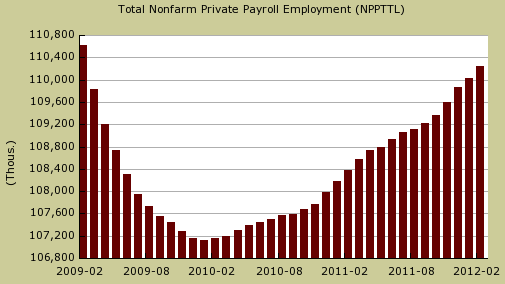
Last month (January) 2012 ADP’s final num was 173,000 jobs. In contrast, the BLS reported 257,000 seasonally adjusted private sector jobs for January.

image

On the minus side:

Today, the BLS reported that the number of U.S. workers filing new applications for unemployment benefits rose for the third consecutive week

Initial jobless claims jumped 8,000 to a seasonally adjusted 362,000 in the week ending March 3.

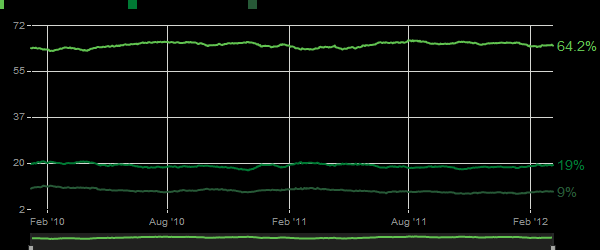
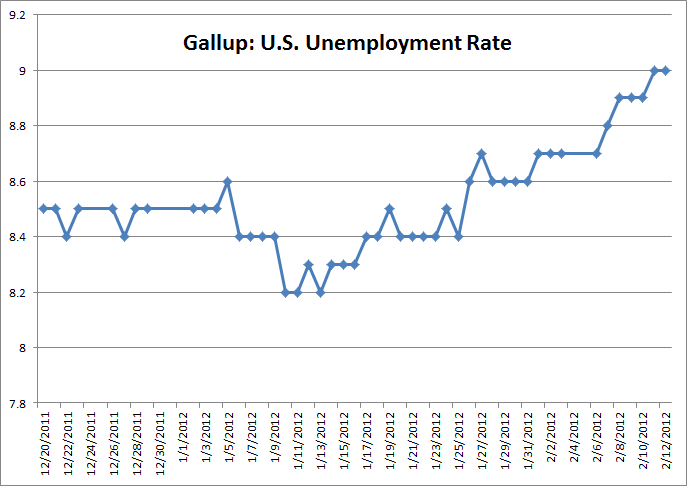
Most important, Gallup – which nailed the drop to 8.3% last month —  has been consistently reporting an unemployment rate of 9% throughout February.

image

The consensus of economists is that about 200,000 jobs will be reported and that the unemployment rate will hold at  8.3%.

Ken says: seasonally unadjusted jobs will decline, seasonally adjusted jobs will increase less than 200,000 … and the unemployment rate will bump back up to 8.5%

>> Latest Posts

Buffett: Giving to the Gates Foundation because it’s run more efficiently than the gov’t … no (bleep), Warren.

March 8, 2012

Interesting interview with Warren Buffett on CNBC last week.

The dialogue that caught my attention had to do, of course, with Buffett’s whining that his taxes are too low … paired with the hypocrisy that he’s sheltering his estate from taxes by dishing his end-of-life dough to the Gates Foundation.

CNBC’s Joe Kiernan observed to Buffett:

I’ve gotten you to admit in the past that one of the reasons you think the Gates Foundation will do a lot better with your 50 or 60 billion is because charities have a better — a much better reputation for watching how money is spend and for doing more good.

Buffetts retort:

Anytime an organization is as big as the US government or any other government, they are not going to be as efficient, obviously, as smaller organizations.

Kiernan followed up:

So with all that in mind, can you at least see how someone might, on an intellectual basis, be opposed to just giving a blank check to such a profligate entity?

Buffett’s answer:

On the other hand, we have successfully defended the country, we’ve built the greatest industrial machine the world’s ever seen, we’ve built the richest population the world’s ever seen.

The truth is, we can have a country that works wonderfully with 19 percent or so of revenues going to Washington and spending 21 percent.

Say, what?

Kiernan politely went in for the kill:

If the government was a business and Berkshire was looking at it, there’s no way Berkshire would even take a 1 percent stake in the government with their track record of investments. Right?

All Buffett could do was stammer …

Full transcript

>> Latest Posts

Another tipping point: married folks a dwindling majority …

March 8, 2012

Excerpted from the Wash Post:

The proportion of adults who are married has plunged to record lows as more people decide to live together now and wed later, reflecting decades of evolving attitudes about the role of marriage in society.

Just 51 percent of all adults who are 18 and older are married, placing them on the brink of becoming a minority, according to a Pew Research Center analysis.

That represents a steep drop from 57 percent who were married in 2000.

The marriage patterns are a striking departure from the middle of the 20th century, when the percentage of adults who never wed was in the low single digits.

In 1960, for example, when most baby boomers were children, 72 percent of all adults were married.

>> Latest Posts

What’s the best indicator of how much you’ll earn ?

March 7, 2012

Answer :  How much your parents earned.

There’s about a .5 “intergenerational earnings correlation” in the U.S.

That means, look at how much your folks earned and you have a good idea re: how much you’ll be earning.

Causation, or just correlation ?

Well, there’s a causal variable in there.

Children of high earning parents tend to get better educations … much better educations.

image 
Reported by the New America Foundation

>> Latest Posts

Overheard in the faculty lounge … re: the Target flap.

March 6, 2012

By now, everybody has heard how Target mines data on shoppers to ID when they’re approaching life events — e.g. having a baby — that make them “vulnerable to marketing initiatives.”

The reaction of many marketers seems to be: “why aren’t we doing that?”

The reaction of shoppers is predictably negative: “Invasion of privacy”, “manipulative”, “creepy”.

The reaction in the faculty lounge is interesting.

Background: a branch of marketing studies consumer behavior … how and why consumers think and act … why they pick one brand over another, etc.

There seems to be concern among some academic CB researchers that their findings are  being hijacked by evil profiteers, to the disadvantage of the masses:

Consumer behavior research clearly helps the stores in the “attack” on the consumer. Does CB help in the development of the “defense” of the consumer?

One colleague sought to allay any pangs of guilt:

The “consumerism” defense is that the findings can be used to benefit both producers and consumers.

Any way, as [a famous consumer researcher] used to argue “the effects we study are so small in the real setting that any harm done is minimal.”

Now, that’s a rallying cry for you …

>> Latest Posts

Flashback: Thinking about $4 per gallon gas …

March 6, 2012

Since gas prices are on many people’s minds these days, I pulled the following post out of the archives.  Originally posted August 22, 2008, it’s strikingly current today.

* * * * *.

Most folks wonder why the pump price of gas is surging this year.

I ask a different question: why didn’t the oil companies — branded by most folks as evil profit grubbers — push the price up into the $4 /gallon range a year or two ago?

In my pricing course, I harp on a basic point: marketers should be respectful of costs (i.e. never sell stuff below “fully-loaded cost” plus an acceptable profit), but they MUST price to the market. That is, they should determine the price that the market will bear, and then adjust accordingly to maximize profits — taking into account downward sloping demand curves and volume-related cost functions.

It’s starting to look like $4 per gallon gasoline is about what the market will bear. That’s the price point where folks started to cutback in gas consumption the past couple of months.

* * * * *

Question: Why did the oil companies wait for the cost of crude to push up gas prices? To me, it seems that the oil companies have actually showed restraint over the past couple of years.

* * * * *

Here’s a crude analysis (pun intended):

Simply divide the price of a barrel of crude over the past couple of years by 42 (since the are 42 gallons per barrel), and compare the result to the retail price of gasoline (which is usually expressed per gallon).

The difference — gasoline’s “back of the envelope” mark-up over crude prices — is plotted below.

Note that for the past 9 months, or so, the crude mark-up been about $1 per gallon — at the low end of the historical range.

image

* * * * *

Since the cost of a barrel of crude has skyrocketed over the past couple of years, the percentage mark-up has trended down. Hmmm.

image

* * * * *
Bottom Line:

It certainly looks like the oil companies price gasoline using some sort of “cost plus” formula.

I think the oil companies left a lot of profits on the table during the past couple of years — the retail gas market would probably have borne higher prices.

Now, I’m betting that retail gases will be “sticky” — there will be a “ratchet effect” and gas prices will come down proportionately slower than crude oil prices.

And, I predict that if the oil companies get hit with a windfall profits tax, they’ll just pass the tax along into retail gas prices. Just watch.

* * * * *

Analytical note:

The “real” calculations re: the economics of converting crude oil into gasoline are way more complicated than the above simple analysis (e.g. only about 1/2 of a barrel of crude is made into gasoline, there are refining and distribution costs, the 1/2 barrel that doesn’t go into gas earns other profits).

My bet: the conclusions drawn from a more precise analysis would be directionally the same, and probably pretty close to the $1 per gallon — which has a certain memorable ring to it.

>> Latest Posts

Sara Lee splits company … incorporates part in the Netherlands.

March 6, 2012

I bet you missed this one.

It announced on a Friday afternoon, so most folks missed it.  And, it sounds innocuous enough …

According to the WSJ:

Sara Lee Corp. said Friday it will seek a listing for its coffee and tea business on the Amsterdam stock exchange, as part of its plan to split the company in two.

Sara Lee said the business will be incorporated in the Netherlands, where its Douwe Egberts coffee brand is already based.

The new company, which also makes Pickwick Teas, will be headquartered in Amsterdam.

Maybe the move is simply to get company execs closer to the relevant markets.

Call me cynical, but I think we’re going to see quite a few of these offshore splits by U.S. companies.

Why?

Simple.  If Team O continues to push for taxation without repatriation of non-U.S. earnings, you can bet that more American companies will split and plant major parts of their companies in non-U.S. locations.

The economics are compelling …

>> Latest Posts

Your Diet Coke bottle is … well, quite chic!

March 6, 2012

TakeAway: Diet Coke partners with Diane von Fürstenberg to design new packaging for its Diet Coke bottle. Proceeds from the sales will go towards the Foundation for the National Institutes of Health. Diet Coke + Fashion + Health? Hmm…

* * * * *
Excerpted from psfk.com “Diane von Fürstenberg Redesigns Diet Coke

image_thumb1

Proceeds from the sales of Diane von Fürstenberg’s Diet Coke collection will go towards the Foundation for the National Institutes of Health.

Although there’s nothing new about celebrity bottles these days, we think the fashion designer has a fresh approach on an aging marketing gimmick – plus the charity angle is interesting (if a little ironic considering the discussion about the healthiness of diet soda).

Edit by KJM

>> Latest Posts

Big Apple, not Big Brother is following you and your iPhone …

March 5, 2012

And the irony is that, in this case, Big Brother is Apple … not the Orwellian-feared government.

How so?

Some Apple apps can jack your address book, photos, and location coordinates.

In other words, all your private stuff.

More specifically, according to the NY Times

The private information and photos on your phone may not be as private as you think.

There are reports that some apps are taking people’s address book information without their knowledge.

As it turns out, address books are not the only things up for grabs.

Photos are also vulnerable.

After a user allows an application on an iPhone, iPad or iPod Touch to have access to location information, the app can copy the user’s entire photo library, without any further notification or warning, according to app developers.

When the devices save photo and video files, they typically include the coordinates of places where they were taken — creating another potential risk.

Conceivably, an app with access to location data could put together a history of where the user has been based on photo location.”

“It’s very strange, because Apple is asking for location permission, but really what it is doing is accessing your entire photo library.”

I guess Apple was right … 1984 is here.

Thanks to MET for feeding the lead.

>> Latest Posts

How long does an average unemployed person stay unemployed?

March 5, 2012

Answer : In the old days, it used to be 10 weeks …  then a steady creep up to 20 weeks … then an explosion over the past couple of years to 44 weeks.

But, according to Team Obama, the long duration has nothing to do with the extension of unemployment benefits to 99 weeks.

Yeah, right.

image

>> Latest Posts

McBaguette, s’il vous plait …

March 5, 2012

Punch line: Is Mickey D. is going haute cuisine? No, not really.  The Mickster is just sticking a burger on baguette and charging the French a premium price.  Mon dieu.

* * * * *
Excerpted from the WSJ “To Tailor Burgers for France, McDonald’s Enlists Baguett”

In France the fast-food giant is gearing up to offer a burger served on baguette, part of a wider effort to add more locally inspired fare to its menu and attract more upscale diners.

McDonald’s restaurants across France will test the McBaguette — a burger topped with French-made Emmental cheese and mustard.

The promotion is in line with the  company’s successful global strategy of updating its restaurants to appeal to a broader clientele, while offering a more varied menu, up and down the price scale.

In France that involves tapping into a national obsession: bread.

  • 98% of French people eat bread every day.
  • The French each consume about 55 kilograms (a21 pounds)of bread a year.
  • 65% of the two billion sandwiches sold each year in France are baguette-based.

The McBaguette will be sold for €4.50, more than a euro above the average price of a sandwich in France.

* * * * *
Ken’s Take: “Obsession with bread”?  I thought the French were obsessed with something else.  Live and learn …

Thanks to AGC

>> Latest Posts

How does GM’s tax rate compare to Buffett’s secretary’s?

March 2, 2012

Interesting editorial in the WSJ re: the GM bailout.

Everybody knows the GM’s stock holders were wiped out, that secured debt holders were subordinated to the unsecured UAW claims and  haircut to about 50 cents on the dollar, and that “New GM” stock is trading about 25% below its IPO price — leaving taxpayers with a $15 billion book loss on Treasury holdings.

What most folks don’t know is that GM got a special deal that rolls old GM’s $45 billion in accumulated tax losses into new GM.  That’s usually not allowed when restructuring companies — as a means of stopping companies from just acquiring losses from other companies as a tax dodge.

Bottom line:

In a 2011 working paper, J. Mark Ramseyer of Harvard and Eric Rasmusen of Indiana University argue that by manipulating corporate tax rules by fiat, “Treasury gave the firm (and its owners, including the UAW) $18 billion more in assets.”

The WSJ observed:

Mr. Obama crowed yesterday about GM’s “highest profits in its 100-year history.”

We’d be interested to hear how its effective tax rate compares with Warren Buffett’s secretary’s.

Hmmm ….

>> Latest Posts

Forget price, what’s a company’s stance on, well, whatever?

March 2, 2012

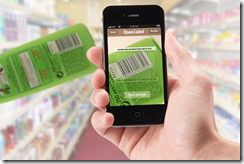
TakeAway: The OpenLabel app allows consumers to make socially responsible shopping decisions real-time by simply scanning a barcode to read and contribute crowdsourced information.

* * * * *
Excerpted from psfk.com “Add Crowdsourced Reviews To Scannable Barcodes

OpenLabel is inviting consumers to add reviews and information to everyday product barcodes to make socially responsible shopping much easier.

The app can scan barcodes and bring up crowdsourced information such as the company’s stance on workers’ rights, social justice, environment, health, and other corporate social responsibility aspects.

image_thumb

Peter Kirwan, an investor of OpenLabel, explains that the app is “everything but price, we’re about actual information.” Although the app does allow consumers to submit pricing details, it hopes to deliver more in-depth information to help consumers decide if they should buy or avoid the product.

Edit by KJM

Oops … BLS unemployment report not being released until next Friday.

March 1, 2012

OK, I got a bit a head of myself this week …

The December unemployment report was released on January 6 — the first Friday in January,

The January unemployment report was released on February 3 —  the first Friday in February,

image

So, I assumed that the February unemployment report would be released tomorrow March 2 — the first Friday in March,

Wrong.

The BLS says that The Employment Situation for February will be released next Friday, March 9, 2012, at 8:30 a.m. (EST).

My analysis and predictions still hold … a bump up in the rate.

>> Latest Posts

What to look for in next week’s jobs report …

March 1, 2012

Next week’s unemployment report will be quite interesting.

As we’ve posted before, Gallup’s daily tracking report indicated that the unemployment rate was about 9% in mid-February … and has risen to 9.2%. 

Gallup’s mid-month number is usually a good predictor of the BLS’s end-of-month number. 

A good test of whether the books are being cooked is to look at the seasonal adjustment factor being applied to total employment.

In January, the BLS increased its seasonal adjustment factor … so, total employment went from a seasonally unadjusted loss of jobs to a seasonally adjusted gain in the number of jobs … and the unemployment rate dropped sharply to 8.3%.

Below is the historical data for the past couple of years re: how much the BLS jacks up February’s total employment numbers via seasonal adjustment.

Takeaway: if the seasonally adjusted total employment is more than about 1.18% higher than the non-seasonally adjusted number, you can suspect some book-cooking.

Let’s see what happens …

image

>> Latest Posts

Shopping in Singapore is off the wall … literally!

March 1, 2012

Punch line: PayPal seeks to capture the attention of daily subway commuters in Singapore with ‘mobile shopping walls.’

* * * * *
Excerpted from psfk.com “Shop Right Off The Subway Wall With PayPal”

image_thumb1

Online payment service company PayPal is trialing a new mobile shopping initiative that allows customers to point and purchase using QR codes. PayPal has created catalog ‘mobile shopping walls’ in 15 metro stations in Singapore.  QR is short for Quick Response. They can be read quickly by a cell phone.

They are used to take a piece of information from a transitory media and put it in to your cell phone.

You may soon see QR Codes in a magazine advert, on a billboard, a web page or even on someone’s t-shirt.

Once it is in your cell phone, it may give you details about that business (allowing users to search for nearby locations), or details about the person wearing the t-shirt, show you a URL which you can click to see a trailer for a movie, or it may give you a coupon which you can use in a local outlet.

The reason why QR codes are more useful than a standard barcode is that they can store (and digitally present) much more data, including url links, geo coordinates, and text.

The other key feature of QR Codes is that instead of requiring a chunky hand-held scanner to scan them, many modern cell phones can scan them.

The large display features Valentine’s Day offers from eight participating retailers. The user will need to first download the PayPal QR code reader app, which scans the barcodes and allow the user to log into PayPal to purchase the items.

QR codes are quickly on the rise with an incredible increase of over 4500% of QR code scans between 2010 and 2011.

These square barcodes have been particularly popular in Singapore due to the rapid growth of smartphone ownership and free accessible Wi-Fi across the city.

Edit by KJM

>> Latest Posts

The labor force participation rate … so what?

February 29, 2012

When the Feds release this week’s unemployment data, expect more chatter about the falling labor participation rate … which reflects the increasing number of discouraged people who have stopped looking for work and don’t get counted in the unemployment numbers.

For the 4 years prior to Obama’s inauguration, the labor force participation rate hung pretty steady … at around 66%.

Since Obama took office, that rate has plummeted to 63.7%.

image
image

Let’s try some math skills …

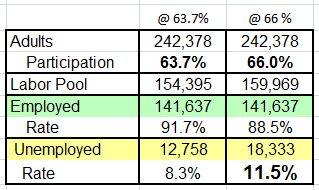
If unemployment is 8.3% with a 63.7% labor force participation rate, what would the unemployment rate be if the participation rate were at the pre-Obama 66%?

Answer: about 11.5%

image

Obama’s economic hope continues to be that more and more people get discouraged — or, just stay on unemployment for the full 99 weeks.

Bingo, down goes the unemployment rate.

>> Latest Posts

There will only be one Lady Gaga … on Facebook, that is.

February 29, 2012

Punch line: Tighter controls. More credibility? Facebook will now verify celebrity stage or pen names to create accounts for the likes of Lady Gaga.

* * * * *
Excerpted from CNET.com “Facebook to launch verified accounts with pseudonyms

… In an effort to root out impostors, Facebook will reportedly soon allow celebrities and other public figures to verify their accounts in much the same way that Twitter does.

The social network will begin notifying public figures with many subscribers tomorrow that they can verify their accounts by submitting an image of a government-issued ID, allowing them to display a preferred pseudonym instead of their birth name, according to a TechCrunch report. Facebook will then manually approve the “alternative names” to confirm they are the real stage names or pen names.

Facebook users must be chosen to participate in the program; there is no way to volunteer for verification. However, unlike Twitter, verified accounts will not receive a special badge indicating verified status.

Verification will allow celebrities such as Stefani Germanotta to be more readily accessible to fans when her name is officially listed as Lady Gaga instead of what’s on a birth certificate.

image_thumb1

However, as on Twitter, the influx of impostors has become an inconvenience for both Facebook and fans alike.

Edit by KJM

>> Latest Posts

What’s $65 among friends?

February 28, 2012

There was a piece recently in  the NY Times — titled How the U.S. Lost Out on iPhone Work.

The article stirred up some flak against Apple for producing the iPhone in China instead of the U.S.

The author argues that lower Chinese wages are, at best, only a partial explanation:

It is hard to estimate how much more it would cost to build iPhones in the United States.

However, various academics and manufacturing analysts estimate that paying American wages would add up to $65 to each iPhone’s expense.

The article concludes: “However, labor is such a small part of technology manufacturing …and since Apple’s profits are often hundreds of dollars per phone, building domestically … would still give the company a healthy reward.”

What???

Apple sells about 100 million iPhones annual … times $65 is $6.5 billion.

So, the answer is for Apple to suck it up, lower its profits, and dish the dough to high cost American workers.

Or, maybe Apple could just jack up the price of each iPhone by $65.

Certainly folks would be willing to pay that much of a premium to get an American made phone that works almost as well as the Chinese made one, right?

I’ll take the under on that bet.

>> Latest Posts

Why aren’t there Minute Clinics next to every ER?

February 28, 2012

That’s a question I often ask.

Everybody knows that some people use ERs in place of a primary care physician or an urgent care clinic.

That’s costly to the healthcare system since an average ER bill is around $1,000 while an average bill at a Minute Clinic or one of Walmart’s ProCare clinics is about around $50.

Currently, Federal law requires ER physicians to look at everyone who comes to the ER and treat those who have life-threatening illnesses or injuries.

So, the “system” has pay a $950 premium and seriously hurt or ill patients get to wait in long queues to get treated.

Bad deal all around..

A hospital in Odessa Texas is trying to attack the problem buy requiring patients to post a $250 deposit if they want to be treated in the ER minor ailments

According to OAOA.com

When someone comes into the Medical Center Hospital ER, they’re assessed to determine the severity of their ailments.

Based on the examination a doctor decides whether or not the person’s injury or illness requires a stay in the ER.

If the injury or illness is determined to be minor, they’ll be directed to a local clinic rather than be treated in the ER.

People with chest pains, abdominal pains or high risk conditions like tuberculosis are the types of patients who would not be redirected to a clinic.

In addition, children younger than 10 years-old and adults older than 65 years old will not be redirected either.

But if that person chooses to remain in the ER and have their minor ailment treated there, they will have to pay a $250 deposit,

The new measure is part of an effort to redirect those without serious issues to more appropriate places for treatment and streamline the ER.

Sounds like a step in the right direction, but I still gotta ask: Why aren’t there Minute Clinics next to every ER?

Have a stern triage nurse out front directing folks to turn right into the ER or turn left into the clinic.

Everybody gets appropriate treatment and we actually save some healthcare costs … rather than just shuffling around who pays for what.

>> Latest Posts

In advance of this week’s unemployment report … Gallup up to 9.2%

February 27, 2012

In case you missed it this weekend, Gallup’s daily tracking report put unemployment at 9.2%up from 8.3% in mid-January.

image

The BLS report this Friday will be vey interesting.  Even with more book-cooking via changed methodologies, sample changes, and seasonal adjustments — it’ll be hard to put lipstick on this pig

My prediction: the BLS rate will go from 8.3% to 8.5% …. with a lot smoke re: seasonal adjustments … but  nothing would surprise me now that the bean counters have been politicized.

>> Latest Posts

Target the targeter becomes the target … very predictable.

February 27, 2012

This is going to be hard for Target to shake.

The NYT revelations that Target has been mining its data bases to early-identify pregnant women and “change their buying behaviors when they’re vulnerable to marketing initiatives” has gone viral.

Now, Target has become a target …

Here’s a funny piece from the Colbert Report:

click to view
image

Thanks to RG for feeding the lead

>> Latest Posts

Tipping point ?

February 24, 2012

As far back as July, 2008 we warned that under Obama: “Tax Payers Will Become a  Dwindling Majority”

To be fair, as the original post outlines, much of the credit (blame?) goes to Bush and the unintended consequences of his tax cuts.   They started the momentum.  Obama just pushed down on the accelerator.

Well, as predicted, we’re approaching the tipping point.

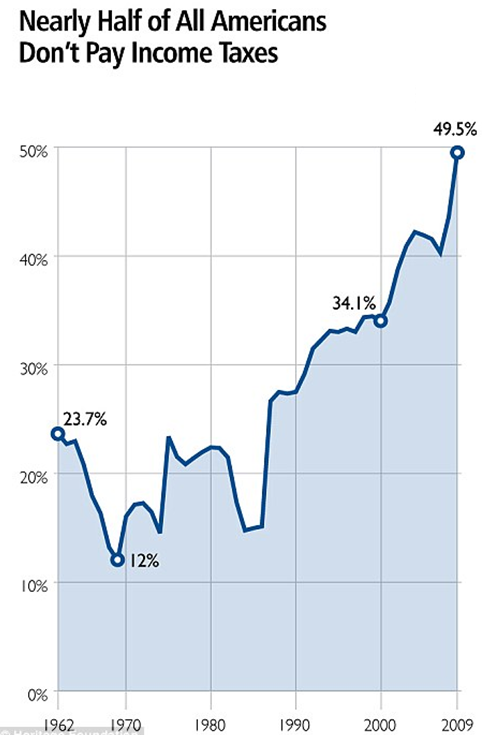
According to the Heritage Foundation, only half of U.S. citizens pay federal income tax, according to the latest available figures.

In 2009, just 50.5 per cent of Americans paid any income tax to the federal government – the lowest proportion in at least half a century

We warned you …

image

>> Latest Posts

Remember when a Blackberry was cool?

February 24, 2012

Punch line: Remember when you’d secretly watching out-of-the-corner of your eye for that blinking red light? Yep, we all did it – and it even fed our egos of feeling somewhat important when we knew we had a message pending… Well, RIM,  the makers of the “crackberry,” first dominated the marketplace but seem to have lost sight of its strengths, and customer needs. Now, it struggles for survival in the marketplace …

* * * * *

Excerpted from mashable.com “7 Marketing Lessons From RIM’s Failures

image_thumb1

Long before the iPhone the took the world by storm, and before Google even dreamed about getting into the phone business, Research in Motion was on top of the consumer electronics mountain.

Today, sadly, it is buried under it, and industry insiders everywhere wonder whether RIM will survive …

Here are seven marketing lessons from RIM’s dark and difficult journey.

1. Make Great Products

Consumer electronics success begins with excellent products. The BlackBerry was once perceived as the very best smartphone — or, at least, “emailing phone” — available. It was exciting, emotional and it made people feel good. RIM sold BlackBerries on the strength of word-of-mouth recommendations. BlackBerries were aspirational, and people wanted to own one because friends and colleagues were so passionate about them.

Now, fast-forward to today.

Consider the excitement and energy around the iPhone and all those Android handsets. RIM enjoys none of that today. Not one percent of it. In part, it’s because it stopped making good smartphones in favor of a poorly received tablet called the PlayBook.

Successful marketing begins with having a tremendous product or service to market. Nothing happens without this.

2. Build on Strengths Instead of Improving on Weaknesses

For RIM, the BlackBerry was a great strength, and they all but abandoned its development and marketing for a year or longer to create the tablet. RIM did this to try to prevent the world from passing it by in the tablet space — which it did anyway. Tragically, as a result of diverting talent, attention, resources, investment and innovation from the BlackBerry to the Playbook, the consumer smartphone world has also passed RIM by.

If you focus on developing weaknesses, your strengths will atrophy due to neglect.

3. Gravity Pushes Backwards

If you’ve attained a measure of success, you must continue innovating your products, services and your marketing just to maintain your position. Because you can bet the competition is innovating aggressively, and they’ll pass you by in three seconds if you stop doing the things that brought you success. RIM not only stopped releasing new BlackBerries while focusing on its PlayBook, it basically stopped talking to its customers about them for an extended period.

Gravity pushes backwards in business. Consistent and aggressive innovation is required not only to attain success, but to maintain it.

4. Know Precisely Who Your Customer Is

RIM’s management famously disagreed on who their customer was. Then co-CEO Mike Lazaridis felt the customer was the corporation. Others, probably including his counterpart Jim Balsillie, wanted to aim BlackBerry products at consumers. If you don’t know exactly who your customer is, it is impossible to market. Language, messaging, platforms, branding and public relations change completely depending on the customers you target.

So identify your customers as precisely as possible, and aim all of your marketing efforts at them.

5. Executives Set the Marketing Tone

Consider the most successful companies in consumer electronics (and two of the most successful companies in all of business): Apple and Amazon. Their chief executives set their marketing tone, and everyone follows. If you haven’t seen it yet, watch this YouTube video of Steve Jobs introducing the iPad, and listen to how everybody who followed him on stage used exactly the same words.

This is no accident. The next day, thousands of articles used the same words to describe the amazing, remarkable and awesome iPad. Amazon’s Bezos is the same way. The best marketers have high-level executives setting the tone. They not only teach the rest of the company how to talk about their products and services, but the customers, the media, and the market itself. Obviously, RIM’s co-CEOs did not set this tone. They couldn’t even agree on who the customer was.

6. Avoid Unforced Errors

Most marketing problems are self-made and entirely avoidable. Consider the major developments from RIM’s recent past:

  • It voluntarily stopped focusing on the BlackBerry to make a product it had no experience with.
  • It could not identify its customer.
  • It stopped marketing to consumers, allowing competition to roar past.

7. Keep Talking to Your Customers

If RIM had talked to its customers like this, it would have quickly learned that they probably weren’t particularly interested in a BlackBerry tablet without built-in email, messaging or contacts!

If you’re not talking to your customers, you’re just guessing from a conference room.

Edit by KJM

>> Latest Posts

The problem is that the market for unskilled labor is too efficient … say, what?

February 23, 2012

Punch line: Fmr. Labor Secretary Robert Reich says that the problem isn’t that there are too few manufacturing jobs in the U.S., it’s that unions don’t have the sway they used to have.

Excerpted from Salon; “The factory jobs aren’t coming back”

The U.S. has 5.5 million fewer factory jobs today than in July 2000 – and 12 million fewer than in 1990.

Blame that on lower-wage workers overseas … and  numerically-controlled machine tools and robotics. 

Not to worry, though, because bringing back American manufacturing isn’t the real challenge, anyway.

The real challenge is creating good jobs for the majority of Americans who lack four-year college degrees.

Manufacturing used to supply lots of these kind of jobs, but that was only because factory workers were represented by unions powerful enough to get high wages.

That’s no longer the case.

In the 1950s, more than a third of American workers were represented by a union.

Now, fewer than 7 percent of private-sector workers have a union behind them.

If there’s a single reason why the median wage has dropped dramatically for non-college workers over the past three and a half decades, it’s the decline of unions.

Let me make sure that I understand.

Folks who don’t finish college can’t compete with equally skilled (or unskilled) foreign workers who charge a lot less for their services.

And, they can’t compete with high tech machines that crank out consistent quality at low cost.

So, the answer is to introduce a market inefficiency — a labor cartel – that forces U.S. companies to pay unskilled laborers more than their true economic value.

And then, when the companies pass along the added costs to consumers …  we’re all some how better off.

Do I have it right?

Wouldn’t it make more sense for unskilled laborers to get paid their true economic value … and enhance their educational and skills’ bases if they want to be paid more?

>> Latest Posts

Forget Membership Points…..Your Reward is a Surprise!!

February 23, 2012

Punch line: Best Buy is differentiating its membership rewards with a “surprise and delight” approach.

Sure beats cold cash discounts, right?

* * * * *
Excerpted form AdAge: “Surprise! Here’s a Ticket to a Movie Premiere, on Best Buy”

Best Buy invited a handful of top shoppers and their family members to an exclusive preview of “Twilight Eclipse.”

The reward, which went to select members of Best Buy’s Reward Zone loyalty program, was part of a “surprise and delight” approach that’s becoming a mainstay in loyalty strategies.

“Surprise and delight” plays off the principle that a dollar bill is always worth more when you find it crinkled up in an old pair of pants.

At Best Buy, surprises have taken the form of movie premieres and exclusive shopping invites on Black Friday.

Edited by ARK

Target bellies up to moms-to-be … by mining their shopping patterns.

February 22, 2012

In a previous post, we excepted from a NY Times article How Companies Learn Your Secrets that

  1. Much of what people do is based on habits, not conscious reasoning.
  2. Consumers’ shopping habits and brand loyalties are often more habitual than thoughtful.
  3. But, there are certain “events” — e.g. new baby, new home, recent divorce — that seem to make consumers more open to switching stores and brands.
  4. Savvy marketers are learning to identify these critical events — before they happen — and try to get consumers to switch  their behavior.

Target is one of the retailers identifying customers who are “vulnerable to intervention by marketers” … and pouncing on them.

Who?  Moms-to-be.

How?

According to the NY Times article, Target identified about 25 products that, when analyzed together, allowed them to assign each shopper a “pregnancy prediction” score.

For example, sometime in the first 20 weeks, pregnant women tend to load up on body lotions and supplements like calcium, magnesium and zinc.

With that information in their computer systems, Target can identify likely pregnant women and, more important,  estimate their due dates, so that  Target can send coupons timed to very specific stages of her pregnancy.

It’s a bit unbelievable … and a lot creepy.

And, oh yeah, it works.

But, gotta wonder why Target let this cat out of the bag …  if this story goes viral,  the privacy concerns are likely to offset the added sales to moms-to-be.

>> Latest Posts

Move over MJ … Nike’s ready with some Lin-kicks.

February 22, 2012

Punch line: Nike has jumped on the Lin band wagon and plans to release the Hyperfuse 2011 Linsanity PE.

Pretty catchy name, right?. 

* * * * *

Excerpted from brandchannel.com, “With Jeremy Lin Shoe, Nike Seeks Linsane Asylum

image

In case you hadn’t noticed, the world has gone nuts for New York Knicks point guard Jeremy Lin …

Now Nike is planning to give the people what they want: to be #Linning too.

According to ESPN Radio’s blog, the shoe manufacturer is “set to release the Nike Hyperfuse 2011 Linsanity PE,” a shoe that features New York Knick’s iconic orange and blue with ‘Lin’ written in script, “sweeping across the side of the heel” …

Lin’s new shoe isn’t likely to supplant the Air Jordan in Nike history, of course, but it’s hard to imagine what will happen if Lin keeps leading the Knicks to consecutive victories — and after the inevitable end to the hot streak …

Meanwhile, Lin’s brand keeps getting larger, and not just in the U.S.

Lin — who is the first American-born player in the NBA of Chinese or Taiwanese descent — now has more than 350,000 Twitter followers and, on the Chinese version, 750,000, according to the New Yorker. The publication notes that “last week, Lin rocketed to the number-one most searched item on Baidu, the Chinese search engine.”

Edit by KJM

Re: the unemployment rate … Gallup still hanging at 9% — up from 8.3%.

February 21, 2012

You may remember that the BLS reported a dramatic drop in the unemployment rate for January — down from 8.5% to 8.3%.

image

At the time, we (and many other folks) pointed out that the apparent improvement was largely drive by people leaving the work force, by seasonal adjustments (which were more liberal than prior years), and by a revision in the way that the BLS compiles the numbers.

In other words, smelled like some book-cooking going on.

At the time, we encouraged loyal readers to start watching the Gallup daily tracking of the unemployment rate.  Historically, it has been a pretty good canary in the unemployment coal mine.

Typically, Gallup’s mid-month number is a good predictor of the BLS’s end-of-month number.

Well, the Gallup number has increased dramatically from mid-January to mid-February … from 8.3% (same as the BLS end of January number) … up to 9%, where it has bee hanging.

The number reported by the BLS for February will be very, very interesting …

Based on Gallup, the unemployment rate should surge back up.

Unless, of course, somebody cooks the books …

image

>> Latest Posts

Hitting consumers when they’re “vulnerable to intervention by marketers”…

February 21, 2012

Punch line: Many of consumers’  buying behaviors are habitual — deeply ingrained and difficult of to change.  Marketers have to identify times when consumers are open to change and get them. to break  their habits. 

The good news: the are times when consumers are, in fact, ripe for change …

In the 1980s, a team of researchers led by a U.C.L.A. professor named Alan Andreasen (now at MSB) undertook a study of peoples’ most mundane purchases, like soap, toothpaste, trash bags and toilet paper.

They learned that most shoppers paid almost no attention to how they bought these products, that the purchases occurred habitually, without any complex decision-making.

Which meant it was hard for marketers, despite their displays and coupons and product promotions, to persuade shoppers to change.

But when some customers were going through a major life event, like graduating from college or getting a new job or moving to a new town, their shopping habits became flexible in ways that were both predictable and potential gold mines for retailers.

The study found that:

  • When someone marries, he or she is more likely to start buying a new type of coffee.
  • When a couple move into a new house, they’re more apt to purchase a different kind of cereal.
  • When they divorce, there’s an increased chance they’ll start buying different brands of beer.

At those unique moments, Andreasen wrote, customers are “vulnerable to intervention by marketers.”

In other words, a precisely timed advertisement, sent to a recent divorcee or new homebuyer, can change someone’s shopping patterns for years.

Excerpted from NY Times, How Companies Learn Your Secrets, by Charles Duhigg

Note that Prof. Andreasen didn’t just pick off the obvious stuff — e.g. new parents buying baby stuff,  new home owners furnishing their new digs, or divorcees buying new duds.

No, the life-changers seem willing to change many of their buying patterns and brand loyalties.

Next: How Target identifies customers who are “vulnerable to intervention by marketers”  … and pounces on them.

>> Latest Posts

Hit the trademark button: Linsanity™

February 21, 2012

NY Knicks sensation Jeremy Lin is going on offense to protect “Linsanity”.

Last week, he applied for trademark rights to Linsanity.

One of Lin’s attorneys confirmed: “We’re prepared to protect his intellectual property rights,” said Pam Deese at the Washington, D.C., law firm of Arent Fox. She declined to comment further

Lin paid a filing fee of $1,625 to cover use of the trademarked term on all manner of apparel, including underwear.

Here’s the rub: One of Lin’s high school basketball coaches reportedly bought the domain name Linsanity.com in 2010 and has been selling Lin branded merchandise including T-shirts that have similar blue and orange coloring like that of the Knicks’ uniforms..

According to the Huffington Post:

“The NBA is pursuing enforcement — in the US, China and other countries — to address the sale of counterfeit ‘Lin’ jerseys and other unauthorized merchandise using NBA intellectual property. We also are coordinating with Jeremy Lin’s representatives regarding their efforts to enforce against the unauthorized use of his name and image.”

>> Latest Posts

Some highlights (and many lowlights) from last Friday’s trip to Capitol Hill …

February 20, 2012

On Friday, we took an out-of-town friend to see the Capitol complex.

Let me be more specific, last Friday around noon, we took an out-of-town friend to the Capitol Visitors’ Center.

Know where I’m going with this?

According to the Washington Post:

Federal authorities on Friday arrested a 29-year-old Moroccan man in an alleged plot to carry out a suicide bombing at the U.S. Capitol,.

When arrested a few blocks from the Capitol around lunchtime on Friday, he was carrying what he believed to be a loaded automatic weapon and a suicide vest ready for detonation.

Suffice it to say, our group would have been very disappointed if we had gotten our butts blown off by the wingnut.

Since we didn’t, we’ll call that a highlight.

We got gallery passes to watch both the Senate and the Congress … hoping to catch a break and see them — with our very own eyes — increase the deficit by $180 billion and edge Social Security closer to insolvency.

First stop: House of Representatives.

When we walked in there was a “Member” speaking — no idea who the dude was.

Who was he speaking to, you ask?

Answer: NOBODY !

There was not a single other Member present to listen to to the guy — just a the House clerk, a couple of pages and a couple of court recorders — you know, the jobs that became obsolete about 30 years ago.

When the first guy was done talking, the was replaced at the podium by a “gentleman from Maryland” who must have been at least 120 years old.

He was mumbling so badly that we walked out … heading for the Senate.

When we walked into the Senate, Mike Lee– one of my favorites — was talking.

He was giving a spirited stop-the-spending speech to … NOBODY!

Again, not a single other Senator was hanging around to hear his pitch.

When he finished, Orin Hatch — another of my favorites — strolled in.

He gave a passionate defense of religious rights to … NOBODY.

When he finished, Harry Reed marched in.  We’re still not sure what he was blabbing about … our guest thought it had something to do with stalled appointments.

The best part of the day came when votes were held … with Harry Reed being the only Senator in the room.

First, there were a couple of things passed “without objection”.

Translation: the parliamentarian polled the room “Are there any objections?”

Of course not, you jackass, Harry Reed is the only one in the room…

“Passed without objection.”

The sublime became ridiculous when an actual vote was taken.

Again, Reed’s the only Senator present.

The parliamentarian commanded: “All those agreeing say ‘aye’.”

Reed chirps “aye”.

“All opposed say ‘nay’”

Still nobody else present, you jackass.

“The ayes have it, motion is accepted.”

I thought I was in the Twilight Zone.

I was still hoping that the other 99 Senators would storm in to vote on the payroll tax budget buster.

But, the parliamentarian just shouted: “Adjourned until next Tuesday at noon.”

Bummer.

I’d like to say I feel better about the process having watched it first hand.

I’d like to say that , but I can’t.

What a joke.

>> Latest Posts

Here’s what your food will look like … want it?

February 20, 2012

Takeaway: Some of my family members predictably respond to pictures on menus.

Heaven may have arrived on earth for them.

A London restaurant uses technology to give diners a virtual peek at how their food will look.  If  they like what they see, they can use the touchpad to enter their order.

* * * * *
Excerpted from psfk.com “Giving Your Restaurant Order With The Click Of A Table

image_thumb1

In the Future of Retail report there is a fascinating example of an electronic mirror found at the Inamo St. James restaurant on London’s Regent Street.

On our recent trip to the UK we visited the restaurant to try out the interactive tables that all diners use there.

When diners sit, a screen is projected on the table and through the use of a touchpad they can order drinks, food, games and even a taxi.

A fun aspect of the interaction is that a diner can see how the dishes will look once served — an image gets projected on a plate on the table before they order.

With a mouse click, each dish can be added to a list — and then when the diner is happy with their selection that list of orders is electronically sent to the kitchen.

And if the diner is wondering what is happening while they wait they have a range of options.

For a start, they can open a video window on the table with a live feed from the kitchen or they can entertain themselves by changing the projected table-cloth, choosing from various photographs and patterns …

Edit by KJM

>> Latest Posts

“Nobody knew the economy was in such bad shape” … oh, yeah?

February 17, 2012

Soon after taking office, President Barack Obama crowed that  he’d cut the deficit in half by the end of his first term.

He made the pledge not as a candidate but as president.

It came in the East Room of the White House at the opening of his Fiscal Responsibility Summit on Feb. 23, 2009.

I want to be very clear: We cannot, and will not, sustain deficits like these without end.

Contrary to the prevailing wisdom in Washington these past few years, we cannot simply spend as we please and defer the consequences to the next budget, the next administration, or the next generation.

We are paying the price for these deficits right now.

In 2008 alone, we paid $250 billion in interest on our debt — one in every 10 taxpayer dollars. That is more than three times what we spent on education that year; more than seven times what we spent on VA health care.

So if we confront this crisis without also confronting the deficits that helped cause it, we risk sinking into another crisis down the road as our interest payments rise, our obligations come due, confidence in our economy erodes, and our children and our grandchildren are unable to pursue their dreams because they’re saddled with our debts.

And that’s why today I’m pledging to cut the deficit we inherited in half by the end of my first term in office.

Now, the President and his shills are hitting the talk shows asking for a pass on the pledge, saying that “nobody knew how deep the economic crisis was”.

Say, what?

Well, except for the Federal Reserve Board … as reported in their annual report … before Obama made the pledge.

click to see the whole report
image

Here’s the essence of the report:

The unemployment rate has risen to its highest level since the early 1990s, and other measures of labor market conditions—for example, the number of persons working part-time because full-time jobs are not available—have worsened noticeably.

The deteriorating job market, along with the sizable losses of equity and housing wealth and the tightening of credit conditions, has depressed consumer sentiment and spending; these factors have also contributed to the continued steep decline in housing activity.

In addition, businesses have instituted widespread cutbacks in capital spending in response to the weakening outlook for sales and production as well as the difficult credit environment.

In all, real gross domestic product (GDP) in the United States dropped at an annual rate of 3-3⁄4 percent in the fourth quarter; real GDP seems headed for another considerable decrease  2009.

Hmmm.  Sounds like the Fed knew.

If you don’t like the Fed, see the Kiplinger Report “They Called It Right (Predictions for 2009)”

Here’s a sampling:

ROBERT SHILLER, professor at Yale University: ” The present situation has many similarities to the Great Depression.”

PETER SCHIFF, president of Euro Pacific Capital: “”We’re going to be in a depressionary environment. Our economy will be a mess for years and years to come. ”

NOURIEL ROUBINI, chairman of RGE Monitor and professor at New York University: ” I expect that the recession will be very severe and that it won’t be over before the end of 2009.”

BOB RODRIGUEZ & TOM ATTEBERRY, chief executive officer and partner, respectively, First Pacific Advisors: “Projections of economic growth have been far too optimistic. This is a multiple-year problem.”

DAVID TICE, chief equity strategist for , Federated Investors: “This will be a longer-term decline — you’ll see fits and starts …   it’s likely going to take four to five to ten years (to recover). 

Maybe Obama’s crack economic team didn’t know, but it looks like way more than “nobody”  knew.

>> Latest Posts

Move over Angry Birds … I need my iPad to edit a Powerpoint pitch.

February 17, 2012

I got an iPad last summer, but have been having trouble finding really useful things to do on it.  Even emails seem to have major limitations.

Hall talk with colleagues indicated that they were running into the same situation: great for playing games and watching Netflix, but limited re: practical apps.

That may be ending.

More start-ups are writing productivity apps for the iPad … including Quickoffice — which has a cheap app for viewing and editing Word, Powerpoint and Excel.

Anybody out here try Quickoffice yet?

Excerpted from Business Week: Microsoft Office-like apps are a big hit on Apple’s tablet

Quickoffice, an iPad app for viewing and editing Microsoft Office documents was regularly among the top-three highest-grossing apps throughout 2011.

The app can open and edit documents from Microsoft’s most popular productivity software programs: Word, Excel, and PowerPoint. It also ties into cloud-based storage providers such as Dropbox and Box.net and social networks such as Facebook, so users can easily store and share those documents.

The app’s $20 price tag is high relative to the app store’s typical $0.99 offerings, but Quickoffice’s CEO says he’s not worried about appealing to everyone.

“I don’t care about units, I care about money.”

Quickoffice’s sales topped $30 million in 2011 and are expected to grow more than 50 percent in 2012.

>> Latest Posts

How about a referendum on the 10 Commandments ?

February 16, 2012

OK, the Catholic bishops are still pushing back on the ObamaCare mandate that church-affiliated organizations must “violate their consciences” and ante up for contraceptives.

Many pundits are counter-punching the bishops … arguing that they are woefully out-of-touch … that an overwhelming majority of Catholics support contraception.  So, the bishops should get off their soap boxes and ditch the rule.

Interesting angle: subject religious doctrine re: right and wrong  to a popular vote.  If it doesn’t get a majority, chuck it.

Hmmm.

I think the idea has merit.

In fact, I say: why not hold a referendum on the 10 commandments?

Maybe #10 and #7 would fail to get enough votes and it would become legit for me to jack my neighbors big screen TV.

The idea has potential, right?

Think about it.

Which of the 10 would you like to see voted out?

            10 Commandments

  1. You shall not have other gods.
  2. You shall not take the name of the Lord God in vain
  3. Remember to keep holy the Lord’s Day
  4. Honor your father and your mother
  5. You shall not kill
  6. You shall not commit adultery
  7. You shall not steal
  8. You shall not bear false witness
  9. You shall not covet your neighbor’s wife
  10. You shall not covet your neighbor’s goods

>> Latest Posts

Walmart marks healthy options with its own “Great for you” icon

February 16, 2012

Punchline: Walmart moms want to buy healthier foods for their families, but are over-whelmed by nutrition labels and options. To simplify the buying process and promote healthier eating, Walmart has made a “Great for you” icon for its healthy products.

* * * * *
Excerpted from brandchannel.com, “Walmart’s “Great for You” Icon Promotes Healthier Food Choices

image_thumb

A year after pledging to develop a front-of-pack label that would give its customers an easier way to identify healthier food, and a month after a public commitment with First Lady Michelle Obama to putting nutrition front and center in its stores, Walmart, the nation’s largest food retailer this week unveiled a “Great For You” icon to create a visual system to educate customers ..

Walmart says it will adapt to whatever the FDA’s regulations are whenever that list actually is produced, but will for now add the icon to products with lower levels of fat, sugar, and artificial additives. Plus, the seal will appear on signage in the fruits and vegetable section of its grocery area.

“It helps customers see very, very quickly what healthier choices are for them,” stated Andrea Thomas, SVP of sustainability for Wal-Mart Stores …

“Walmart moms are telling us they want to make healthier choices for their families, but need help deciphering all the claims and information already displayed on products,” said Andrea Thomas, senior vice president of sustainability at Walmart. “Our ‘Great For You’ icon provides customers with an easy way to quickly identify healthier food choices. As they continue to balance busy schedules and tight budgets, this simple tool encourages families to have a healthier diet” …

Edit by KJM.

>> Latest Posts

MoFoFree: Cell phones update …

February 15, 2012

Punch line: Wireless operators like Sprint Nextel are building a big business providing free cellular service to the poor. Taxpayers pick up the tab.

Ouch

* * * * *

Last year, we blogged about the Feds free cellphone service to low income folks.

You see, chatting and texting is an entitlement that tax payers are morally required to subsidize.

Say, what?

The program started with good intentions: to provide every low income household with a landline for emergency use.  No long distance.  No special service.  Just local calls and 911.

No problem.

Well, then landlines became “so yesterday” and the program morphed to cell phones

And, guess what?

Demand is exploding.

According to Business Week:

Companies like Sprint Nextel aren’t driven by altruism.

Serving cash-pinched customers  can pay off due to federal government subsidies.

And finding new customers isn’t hard.

Now the poor or unemployed form a large pool of would-be customers.

With unemployment at 9.4 percent and one in six Americans living in poverty, Sprint and  TracFone have seen an explosion in sign-ups for the government-subsidized free wireless services. 

Applicants have to be eligible for Medicaid or several other low-income assistance programs, have a family income significantly below the local poverty level (poverty guidelines vary by state), or receive food stamps.

In October, 43.2 million received such food assistance, up 14.7 percent from a year earlier.

Despite the rules, it’s reported to be  pretty easy to get one of these phones – or to get several of them.  Think “no doc” mortgages with fewer controls.

One reported scam is for qualified people to sign up, sell their phones on eBay, and then go back to the government  trough for another phone.

But, not to worry.

Also according to Business Week: “A staffer at the Federal Communications Commission, which oversees carriers, says the agency may consider tightening oversight and cost management of the fast-growing program.”

That’s a relief, for sure.

And, oh yeah … under consideration is extending the program to broadband service.

Gimme a break already.

>> Latest Posts

Thanks for the good customer service … and, oh yeah, good-bye.

February 15, 2012

Ken’s Take: There’s a marketing classic titled “Why Satisfied Customers Defect”.  The authors say it’s because of something called the “top box effect”.  Keeping a customer merely “satisfied” isn’t enough.  To secure their loyalty, companies have to make them “completely satisfied” — which is often the top possible choice on a market survey.

* * * * *
Excerpt from AdAge:
“Why Brand Love, Satisfaction Aren’t Keeping Shoppers Faithful”

Accenture found that even though consumers are more satisfied with customer service than ever before, they are switching brands at a high rate.

Consumer satisfaction had increases ranging from 5% to 7% in one year, depending on the category.

Consumers are happier, for instance, with shorter wait times; the ability to solve issues without having to speak to someone; and the ability to resolve an issue by speaking to just one person.

About 44% of consumers said they expect more, or much more, than they did last year from the brands with which they do business.

Today’s savvy digital customers expect polite and knowledgeable employees or convenient customer-service hours.

And while they appreciate and are satisfied with those things, it’s not going to stop them from taking their business elsewhere.

Edited by ARK

>> Latest Posts

According to Gallup, U.S. unemployment rate is back to up 9% … oops.

February 14, 2012

A couple of weeks ago – when Team Obama was victory lapping over the unemployment rate dropping to 8.3% – we told readers to watch the Gallup daily unemployment surveys as a harbinger of things to come.

Gallup has been saying that the employment numbers in the end of January seemed to be weakening.

Guess what?

After reaching a low of 8.2% in mid-January – consistent with gov’t reporting —  the rate has crept back up to 9%.

Hmmm.

A reverse victory lap in the offering?


image

Source: Gallup

>> Latest Posts

What does your bus stop smell like?

February 14, 2012

TakeAway: Promoting a new product, UK’s McCain Foods is pumping the smell of baked potatoes into local bus stops. That would drive Occupiers crazy in the U.S. … or, maybe, make them smell better.

Hmmm. Worth a try.

* * * * *
Excerpt from AdAge: “Smell-Vertising Hits U.K. With Potato-Scented Bus Shelters”

McCain Foods is tempting UK consumers with the wafting smell of “3-D baked potatoes” as they wait at city bus shelters.

When people press a button on a poster, a hidden heating element warms the fiberglass 3-D potato and releases the aroma of oven-baked jacket potato throughout the bus shelter.

The shelters will also dispense a discount for the product: baked potatoes that are ready to eat from frozen in five minutes.

Edited by ARK

>> Latest Posts

Obama’s favorite book … guaranteed.

February 13, 2012

Gotta admit, I like the tussle between Team O and the Catholic Church.  It’s like watching a Wrestlemania main event.

But, theological and and health issues aside, I’m shocked by Administration’s naiveté re: business and economics.

And, I think I broke the code. 

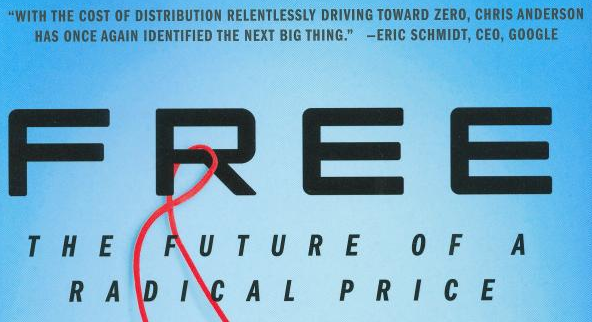
I’m betting that the only business book Obama and his advisers carry around is Chris Anderson’s 2009 best-seller: Free – The Future of a Radical Price.

Note that I said “carry around” … not “read” … because the book does a nice job of explaining the uses and mis-uses of “free”,

Why do I think so?

Easy, because the cover blurb was written by Google’s Eric Schmidt — the recently canned Google CEO and close buddy of Obama’s … and because of Obama’s penchant for declaring stuff to be “free” whether it is or isn’t.

image

Obviously, Team O doesn’t really get the concept.

Let’s start with the basics: nothing is free

When something (like pills) is produced, delivered and consumed, there are associated  costs.

Yes, pills may be given to the consumer without charge, but somebody has to pick-up the tab.

Since the government has no money of its own, if it nobly declares that it’ll pay for it, it’s really saying that all taxpayers will pay for it — whether they want to or not.

Note that, for obvious reasons,  I said taxpayer, and not citizens. 

Let’s take another variation: consumers don’t have to pay for pills — their insurance companies will be mandated to give them away for free.

Oh really.

One member of the administration said that the money will come straight from the insurance companies reserves — the money set aside to pay claims.

Well, then either other types of claims become unfunded (i.e. can’t be paid), or the insurance  company just rolls over and sacrifices some profits, or premiums go up.

There aren’t any other options, and I’m betting on the last one — raising premiums.

That’s ok — in the mind of the Feds — because employers, not employees have to eat the premium increase.

Well, economists would say that the higher premiums come indirectly out of employees pockets since they will just constrain other parts of workers’ compensation packages.

You can buy into that argument or not … your choice.

Let’s pretend that the insurance company just has to eat the added costs.

Oops.

Team O walked into a logic trap.

Many large organizations self-insure.  That means that insurance companies are just processing agents — the companies pay claims out of their own coffers. 

It was like that at GE and Black & Decker.

And guess what, many large Catholic organizations are self-insured.

So, saying that the Catholic organizations won’t have to pay for pills, etc., — that their insurance companies will have to pay — is complete nonsense.

You see, self-insured organizations are their own insurance companies.

That’s what self-insured means!

So, even the Catholic bishops figured out that Team O’s grand accommodation is not really an accommodation at all.

It’s either the reflection of business ignorance or an intentional ruse.

Hmmm.  Hard to pick.

>> Latest Posts

Chickens and taxpayers … hmmm.

February 13, 2012

Gone viral … at least among taxpayers.

image

Thanks to JWC for feeding the lead

>> Latest Posts

Hit the “Good Gym” … then jog over to Granny’s place and make her eat an apple.

February 13, 2012

Punch line: Want to do more than simply getting in shape? How about literally running an errand for someone else – maybe picking up their groceries?

The Good Gym connects interested people who seek more “meaningful ways to exercise”?

* * * * *
Excerpted from psfk.com, “Gym Concept Connects Jogging To Social Good

The Good Gym pairs runners with the elderly and less-mobile people in the neighborhood and have joggers run to their house to deliver something nice, such as a magazine or a piece of fruit.

Editorial note: Be sure to make it a large print mag or soft fruit.  Otherwise, Granny may swat you with a stick.

The runner is also encouraged to have a small casual chat with the immobile person before heading home.

The Good Gym project is currently looking for interested people who wish to establish a branch in their community.

This creative idea is just one of the many projects being looked into on Social Lab, an online lab for people to collaboratively investigate, experiment and play with new ideas

Edit by KJM

Where the stimulus money went … and why it didn’t “drop kick” the economic recovery.

February 13, 2012

Nice, balanced retrospective in the NY Post re: Team O’s stimulus and why it didn’t — in Joe Biden’s words — “drop kick” the economic recovery.

First, where did the money go?

Biggest chunk to tax cuts that were so diffused — averaging $10 per paycheck —  that they were either overlooked by folks or not enough to neutralize the impact of crushing debt loads or employment uncertainty.

Next biggest chunk to bail out states’ entitlement programs — mostly Medicaid and unemployment benefits.  Just kept things even, no economic boost.

Thirdly, to teacher retention.  Forestalled layoffs, but only temporarily since cash-strapped localities eventually had cut-back when the Fed funds stopped coming and locals couldn’t afford.

Lastly, to the so-called shovel ready infrastructure projects.  Many of those that could of mattered either weren’t really shovel ready or got caught up in government red tape — i.e. the approval & permitting process.  So, spending went to silly or half-baked initiatives — e.g. turtle crossings and bullet trains.

>> Latest Posts

Pro-life, pro choice … the nums explain the politics.

February 10, 2012

Since the “A”  issue has been front and center the past couple of days – given the flaps between Komen and Planned Parenthood, and Team O and the Catholic Church – I got curious about the numbers.

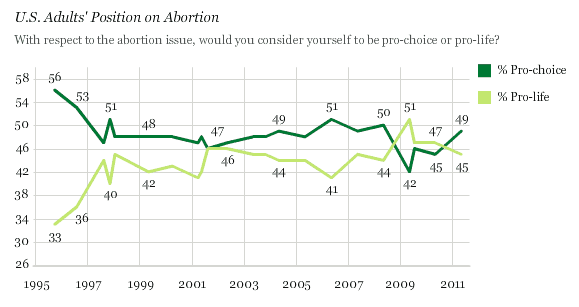
Results of the  the most recent Gallup survey …

  • 2011 results: 49% pro-choice, 45% pro-life
  • Prior year was reversed: 47% pro-life, 45% pro-choice
  • Call it a “push”, but recent trend favoring pro-choice

Last point probably explains why Team O dropped the gloves for a fight with the Catholic bishops …

image

>> Latest Posts

But, when do they ask you if you want the insurance and other price uppers?

February 10, 2012

TakeAway: Convenience is key – especially for busy consumers. Now, French consumers can rent or share a car by simply sending a text message.

* * * * *
Excerpted from psfk.com, “Rent Or Share A Car Just By Texting

image_thumb

Leading mobile commerce company Netsize has launched a peer-to-peer car sharing social network in France that allows users to rent a car simply by sending a text message.

CityzenCar is the SMS-based service that simplifies the car rental process for consumers and enables 12,000 members in 2,000 French cities to conveniently book a vehicle with their handset.

Car owners receive rental notifications via SMS and if they approve it, the driver will receive a text message back with information on the car and location. The car owner can choose to deliver the keys to the driver in person, or authorize a CityzenCar personnel to unlock the doors.

The CEO of CityzenCar explains that, “We wanted to make it as easy as possible for our customers to interact with each other and make the best use of our service. Netsize’s flexible and highly dependable SMS solution is crucial to ensure the quality of our service”.

Edit by KJM

Cookin’ the books? … About those pesky seasonal adjustments to the Fed’s employment numbers …

February 9, 2012

Earlier this week, we blogged about the “interesting” difference between Team O’s job gain claim:

The Labor Department reported that the economy gained 243,000 jobs.

But, the BLS  also reported that the economy lost 2,689,000 jobs in the month

The difference in the two numbers is in seasonal adjustment.

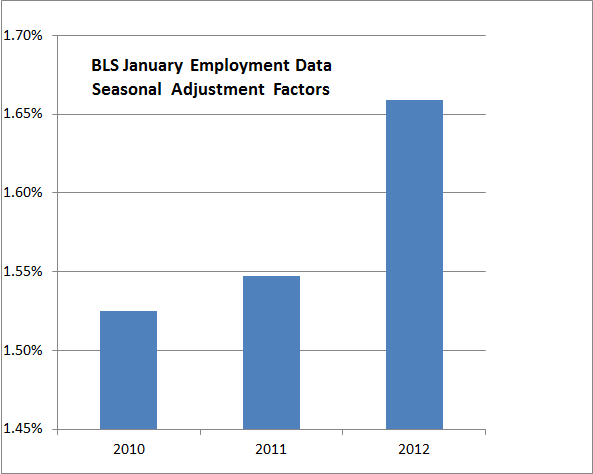
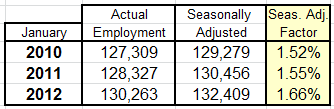
Here’s an interesting tidbit that I haven’t seen reported: the January seasonal adjustment factor mysteriously crept up from the factor that was used in January 2011 … with the effect of increasing the number of seasonally adjusted jobs reported.

As Gomer Pyle would say: Surprise, surprise, surprise …


image


image

Source: BLS

>> Latest Posts