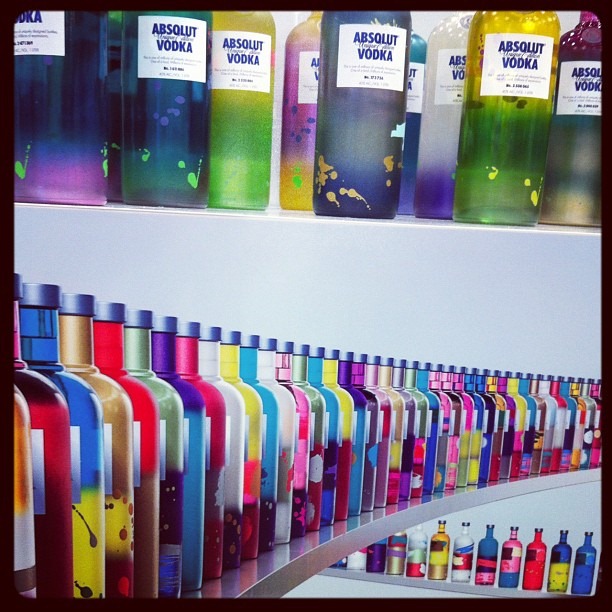
Punch line: Absolut Vodka recently re-engineered a production plant in order to produce 4 million bottles – all of which are completely unique with no two bottles having the same design.
In a world where consumers are demanding more and more customization, where should companies draw the line?
Absolut Vodka recently launched ‘Absolut Unique,’ a project in which the vodka makers will release 4 million limited-edition, unique bottles.
The project required a company’s production plant to be completely re-engineered; the ‘carefully orchestrated randomness’ to the bottle design involves using complex pattern programming alongside splash guns and color-generating machines to ensure that no two bottles come out the same.
The vodka bottles will be individually numbered and will be distributed globally in 80 markets.
“Absolut Unique feels a bit mad scientist, a bit street art. When the bottles first appeared on the conveyer belt, we cheered. By that point the production line looked more like an artist’s studio than a bottle factory.”
Take a look at this video for a behind-the-scenes look at the process.
Tony Vernon, the CEO of Kraft Foods’ new standalone North American grocery business set lofty goals for the company, pledging to pour more advertising behind top “power” brands while slashing overhead to create a more nimble corporate culture.
Vernon said his goals are “nothing short of creating a renaissance in North American food and beverage.” He added:
“We will create a new Kraft, one with the spirit of a startup and the soul of a powerhouse.”
Mr. Vernon gave the most detailed look yet at his strategy for the $19 billion company.
In a plan put in place last year, these grocery brands are being split from Kraft’s global snacking and candy products such as Trident and Oreo, which will become part of a company called Mondelez International.
Kraft is betting that the split will bring more focus to brands while creating two distinct investment choices for Wall Street.
Mondelez is positioned as a high-growth company with penetration in developing markets, such as Brazil and India, while Kraft Foods Group is full of category-dominant meat and cheese brands, which act as cash cows that will generate consistent dividends for investors.
The trick for Kraft Foods Group will be to differentiate its grocery brands in categories that risk becoming commoditized.
Vernon suggested that Kraft would spend more with marketing to catch up to peers.
Kraft Foods Group brand spent 2.9% of its net revenue on advertising in the latest fiscal year, compared to the 4.5% average spent by competitors, including 8.6% by Kellogg Co., 6.4% by Campbell Soup. Co. and 5.5% by General Mills.
As it puts more money in marketing, Kraft Foods Group will continue the strategy already underway in which top power brands, will get the lion’s share.
Those brands include Lunchables, Planters, Velveeta Shells & Cheese, Capri Sun, Jell-O, Philadelphia, Kraft Macaroni & Cheese, Kool-Aid, Miracle Whip, MiO and Gevalia.
Key non-power brands, such as A1, Athenos and Cool Whip, will be supported with more “entrepreneurial” methods,
Mr. Vernon said, including with digital advertising such as YouTube videos. Among the ads Mr. Vernon showed off to analysts is this YouTube spot for Cool Whip, featuring characters from TV show “Family Guy.”
Earlier this week, we posted the HBR article claiming that “Marketing is Dead”.
Fact is, many folks think that marketing is nothing more than a bunch of b.s. being dished by shysters.
And, some folks (think finance majors) regard marketing as unchallenging & touchy-feely … a discipline for folks who can’t cut it in finance.
Au contraire, mes amies.
This week at the annual Marketing 101 session for 1st year MBAs, I tried to convey that marketing plays a central role in most companies, is highly analytical, and – done right – is harder than it looks.
From the HomaFiles archives, here’s the HOT (Homa Online Tutorial) that pitches the case.
Addressing a crowd of more than 550 entrepreneurs and business owners at the Growco conference, … the company’s co-founder, Neil Blumenthal, offered a bit of insight into how and why the company has grown so rapidly …
Cut out the middle men: By working with a manufacturer in China, and designing the glasses themselves, Warby cut out the middle men and make the glasses far more affordable.
Don’t overspend on unnecessary marketing: Instead of a five or six figure launch spend … Warby launched with two well-placed editorials in Vogue and GQ. The tactic was so effective that … within two weeks, they had sold out … and had a waitlist of 20,000 customers.
It all comes down to company mission: When the company moved into its new offices a couple of months ago, it decided to knock down the walls of the office … “to institute mechanisms for people to learn on a regular basis.”
Traditional marketing — including advertising, public relations, branding and corporate communications — is dead.
Many people in traditional marketing roles and organizations may not realize they’re operating within a dead paradigm.
But they are.
The evidence is clear.
Here’s the “evidence”:
Several studies have confirmed that in the “buyer’s decision journey,” traditional marketing communications just aren’t relevant. Buyers are checking out product and service information on the Internet, and often from … word-of-mouth or customer reviews.
CEOs have lost all patience with CMOs who lack business credibility, the ability to generate sufficient business growth, and evidence that … brand equity can be linked to actual firm equity or any other recognized financial metric.
Third, in today’s increasingly social media-infused environment, traditional marketing and sales doesn’t work so well …and doesn’t make sense. When you try to extend traditional marketing logic into the world of social media, it simply doesn’t work.
The prescription: build communities, leverage “influencers”, be “authentic”,build social equity, etc.
Blah, blah blah.
Ken’s Take: As I often remind my students, marketing is more than sales and advertising !
Marketing is also about:
Identifying high potential (i.e. profitable) target markets
Designing products that meet real customer needs
Pricing products to deliver value to buyers and profits to shareholders.
Distributing through efficient, hassle-free channels
Communicating products’ benefits and value-to-customers
Measuring performance to efficiently allocate assets and spending.
Reports of marketing’s death are premature … unless you mistakenly think that marketing and advertising are synonymous.
The Washington Times did an analysis of Dem and GOP TV ad placements to reverse engineer their respective targets and strategies.
Here are some of the findings:
Republicans are at an extreme disadvantage when it comes to television advertising because Democrats watch more TV.
Every single genre of TV programming has a Democratic-leaning audience, with sports coming the closest to a partisan balance.
Sports and documentaries, have audiences that are far more inclined to vote.
“Shark Tank,” a reality program about entrepreneurship, has only 18 percent Democratic ads, and the law-and-order favorite “Cops” is heavily Republican.
Venerable game shows, while barely registering as blips in modern pop culture, remain among the top destinations for political ads because of their largely older base of viewers who are likely to go to the polls.
“The Price Is Right” is second among all TV shows for Romney ads and third for spots for Obama.
Democrats are advertising during daytime shows watched by high numbers of unemployed people, including those who rely on welfare and other social services.
More generally, the unemployed watch whatever’s on at 3 a.m., or Jerry Springer’ or Maury Povich.
All “Jerry Springer” ads have been for Democrats. PAC Priorities USA has made 10 separate buys on Springer.
Nearly every political ad during the adult cartoon series “Family Guy” is for a Democrat.
More than 80 percent of political spots during “The Young and the Restless,” the long-running soap opera, tout liberal candidates and causes.
Relatively inexpensive ads during daytime soap operas watched by stay-at-home moms are abundant, and are used primarily by Democrats.
Reality-dating programs have a skewed Democratic audience that’s below average in likelihood to vote.
Obama has advertised heavily on courtroom reality shows such as “Judge Judy” whose viewers include large numbers of black voters.
The implicit Democratic strategy according to the Washington Times:
The more lowbrow the show, the better.
“People who are low in political information can be more persuadable,”
“If you get someone that’s watching ‘[Keeping Up With] the Kardashians,’ and they’re a swing voter, and see one or two ads,” that could make the difference because that ad may be the only political information they digest.
Sometimes I wonder if “1-man, 1-vote” is overrated …
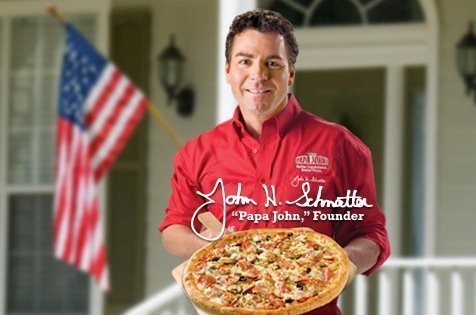
Punch line: Papa Johns CEO has taken a stand against Obamacare, and announced that the popular pizza delivery chain will pass the increased cost of doing business on to its customers, in order to protect its shareholders.
Get ready to pay more for your Papa John’s pizza if “Obamacare” goes into full effect … 15 to 20 cents more.
John Schnatter, chief executive of the pizza chain, is bashing President Obama’s healthcare reform law as a policy that will force the company to choose between its customers and its investors. And if the Patient Protection and Affordable Care Act rolls out as planned in 2014, Schnatter’s strategy is “of course … to pass that cost on the consumer in order to protect our shareholders’ best interest,” he said in a recent conference call.
Schnatter estimates that the legislation will cost Papa John’s about 11 cents to 14 cents per pizza, which equates to 15 cents to 20 cents per order.
“We’re not supportive of Obamacare like most businesses in our industry but our business model and unit economics are about as ideal as you can get for a food company to absorb Obamacare,” Schnatter said. “Ergo, we have a high ticket average with extremely high frequency of order counts, millions of pizzas per year.”
On Twitter, reactions were mostly negative. “*switches to Pizza Hut*,” wrote one user. “*calls Dominoes*,” wrote another. “I really wish businesses would stay out of politics,” tweeted user mikedavis824.
The National Restaurant Assn. has criticized the healthcare legislation for having a chilling effect on expansion and hiring in the industry, which tends to be labor-intensive and burdened with thin margins. Chains such as White Castle and Burger King have predicted surging costs due to the new regulations, which require businesses with 50 or more full-time employees to offer healthcare to such workers and their dependents.
Unsurprisingly, Papa John’s chief is a big fan of Mitt Romney. Schnatter recently even hosted a private fundraiser for the Republican presidential candidate at his mansion in Anchorage, Ky. Romney was dazzled by the grounds, declaring to guests: “Who would’ve imagined pizza could build this. This is really something. Don’t you love this country? What a home this is, what grounds these are, the pool, the golf course…. This is a real tribute to America, to entrepreneurship.”
Punch line: How do you market a pair of $300-plus sneakers? If you’re Nike, you just do it quietly. And by acting like you’re not marketing them at all.
Nike found itself in another controversy this week when news surfaced that it’s planning its most-expensive sneaker ever: the uber expensive LeBron X …
As the Swoosh is no stranger to controversy it is poised to combat the backlash through:
Counterattack: The athletic giant hasn’t said what the final price will be for the shoe but it ripped the $315 price tag quoted by the WSJ as “inaccurate.”
Word of mouth: Instead of expensive ads, Nike’s relying on word-of-mouth to build anticipation. The result: the buzz from athletes and sneaker blogs has helped score stories in every major media outlet.
Product placement: Nike had the placement of all placements when millions of NBC TV viewers watched LeBron wear the shoes while leading the U.S. men’s basketball team to the gold medal in London.
One of the strongest selling features for shoes like the LeBron X is that they’re not for everybody.
In fact, Nike will only make 25,000 to 50,000 pairs which is expected to drive up prices and demand.
Abercrombie & Fitch’s skin-filled ads and nightclub vibe once delighted American teenagers and infuriated parents.
Today, many aren’t even paying attention.
The once-edgy retailer has lost a third of its market value in the past year as it grapples with falling sales in Europe and the U.S.
While Abercrombie blames the economy for its woes, brand consultants say it also has failed to change with the times.
Today’s teens are underwhelmed by the half-naked models and blaring, dimly lit stores.
They’re also less inclined to wear Abercrombie’s longtime uniform of pricey denim and graphic T-shirts.
Sales at non-U.S. stores open at least a year plunged 26 percent in the second quarter.
Abercrombie shuttered 71 U.S. stores in its most recent fiscal year, and in February said it will close another 180 through 2015.
Today’s teens are “radically different” from other generations … and have a bevy of options thanks to the boom in fast fashion from Forever 21 and H&M.
Abercrombie is “positioned well to take advantage of this group’s desire to be rebellious and indie and different, because that’s what the brand is about … but right now the product mix doesn’t communicate that or facilitate it.”
So are there ways for large, established companies to innovate?
Yes and here are some unconventional guidelines to follow.
1. Hire people who annoy you:
A lot of research shows that diverse teams tend to come up with a wider variety of answers, and, thus, are more likely to find the surprising winning idea.
This suggests a hiring strategy–hire people who annoy you.
As long as you’re ensuring they are smart, the people who annoy you represent the diversity you and your company require.
2. Don’t copy, remake:
There is an entire cottage industry devoted to teaching you how to be innovative.
Most answers are glib because they point to some surface feature of a behavior.
3. Don’t create, listen:
The purpose of innovation is not simply to build something new, but to win new customers, new markets, or new products …
If you want to find out what customers want, nix the focus groups and instead watch their behavior.
Punch line: Corporate giants spent millions during the Olympic games with the expectation of a return on that investment. What sales levels can Adidas, P&G, and McDonald’s expect to see after Olympics advertising?
The Olympics has highlighted the boost that companies can get from sports sponsorship in the short term but experts say that the real benefit is brand awareness over the long term, which isn’t so easy to quantify.
Over the past few weeks several companies have trumpeted how sports sponsorship has paid off in terms of sales, with Adidas reporting an 18% jump in second-quarter profit tied to sponsorships.
Procter & Gamble expected its sponsorship of the London Olympics to bring in $500 million in incremental sales, with the hope that a bevy of commercials around the events would propel consumers to pick up more Bounty paper towels and Gillette razors.
And U.S. fast food giant McDonald’s Corp. will receive a boost to sales with the exclusive right to sell fries at four sites around the Olympic stadiums.
“There are not that many opportunities for brands to get the massive audiences that sporting events such as the Olympics, soccer World Cup and Euro 2012 attract,” said Graham Hales of Interbrand. “The value of being associated with, say, the Olympics, definitely makes for a stronger brand but working out the financial benefit is a trickier call.”
Adidas, as the sole sportswear partner of the Olympics and with individual deals with athletes including sprinters Tyson Gay and Yohan Blake, sped away from rivals Nike and Puma to post an 18% second-quarter jump in profits thanks to its strong sponsorship deals. The German company invested $157.1 million in this summer’s Olympics which it has already made back in the past 12 to 18 months in license product sales alone, which have more than tripled since the 2008 games in Beijing.
Procter & Gamble were similarly vague about returns on sponsorship investment. CFO Jon Moeller didn’t disclose how much the world’s largest consumer-products company spent but said that a $600 million figure floating around some circles “is not the number we are spending,” and that the company is pleased with its expected return on this year’s games.
Paying for sponsorship must be weighed up in the context of a company’s overall marketing budget. Each sponsor pays only to be allowed to be associated with the Olympics—you don’t get much more than that for your money particularly because there is no sponsorship allowed inside Olympic stadiums. A company must judge whether a $300 million marketing bill with no direct Olympic association is better or worse than paying $100 million for sponsorship and then $200 million to activate it.
The exercise is complicated by “ambush marketing” strategies which enable companies to associate themselves strongly with a sporting event even though they aren’t official sponsors. Nike, for example, which isn’t an official sponsor of the International Olympic Committee or the London 2012 Olympics, but does sponsor the U.S. team, launched a global TV campaign featuring everyday athletes competing in places around the world named London timed to coincide with the Olympics 2012 opening ceremony.
Awareness is not an issue for these large companies and the short-term boost to sales is not significant in their world-wide sell, but being a sponsor is definitely a benefit and justifies the cost of the sponsorship.
Think of the bargain entertainment center you can buy at IKEA for $299.
The purchase price is a steal compared to the fully assembled entertainment center at a furniture store.
But, it takes you two days to assemble it.
At, say $20 per hour, the implicit economic cost of your time is over $200.
Suddenly, it’s no bargain at all.
If you value your time higher than $20 per hour then then economics get even worse.
The principle: “price” is more than the money expended to acquire a product … it also includes the economic cost or searching, acquiring and putting a product into use … and any on-going costs to keep the product maintained and operating.
What does that have to do with preventive medicine?
Simple connection.
According to an article last week in the WSJ: “To meet the promise of free preventive care nationwide, every family doctor in America would have to work full-time delivering it”.
In other words, demand is twice the capacity to supply.
“When demand exceeds supply in a normal market, the price rises until it reaches a market-clearing level.”
That’s Econ 101.
When a price is fixed below the natural “clearing price” then either the product has to be rationed or other economic costs kick in … like the implicit cost of of the time required to acquire the service.
Think about the time involved to get to see a doctor.
First is the scheduling call.
Ever been put on hold or forced to call back?
I have.
Ever been disappointed when told that the first available appointment slot is weeks off?
I have.
Note: For patients in need of services covered by Medicare, the typical wait to see a doctor was two or three weeks
Ever waited for an hour or two or more waiting to see the doctor?
I have.
Note: Studies report that 20% of the patients who come to an emergency room leave without ever seeing a doctor, because they get tired of waiting.
When demand exceeds supply, doctors have a great deal of flexibility about who they see and when they see them.
In marketing economics, it’s called “demand management”.
Demand management has a couple of underlying principles.
One is “Whenever demand exceeds supply take care of loyal customers first, then take care of the other customers willing to pay the most”.
So, if you’re a doctor facing demand that far exceeds your capacity, what do you do?
First, take care of longstanding patients … then service the patients that pay the most – those who pay out-of-pocket or have private insurance.
Who’s last on the list? Government insured patients: MediCare and Medicaid.
How can they possibly do that?
Simple. They can simply act like airlines, restaurants, credit card companies and banks.
For example, once a Medicaid patient’s phone number is in the system, their phone calls can be queued behind any calls from higher paying patients.
Financial service companies have been doing that for years. Whales’ calls get priority routing and faster answers.
Similarly, appointment slots can be capacity constrained by payment type … with relatively few slots per day allocated to low price patients.
Airlines have capacity controlled low priced “leisure” seats for decades.
Once at the office, doctors can keep advancing high pay patients in the waiting queue.
What’s the worse that can happen? A patient that you’re going to lose money serving ups and leaves. Oh well.
The bottom line: free isn’t really free … when you factor in your time … and the possibility of not being served at all.
First: Consumers don’t know what the heck anything should cost, so we rely on parts of our brains that aren’t strictly quantitative.
Second: Although humans spend in numbered dollars, we make decisions based on clues and half-thinking that amount to innumeracy.
More specifically, here are some more ways consumers end up paying too much …
Anchoring Effect: People are heavily influenced by the first price we see … it’s called “anchoring” … that’s why the appliance salesman shows you the most-featured, highest-priced appliance first … it makes every other appliance seem like deal.
Aversion to Extremes: People are terrified of extremes … they don’t like buying the cheapest item … or the most costly … they shy away from prices that appear too high or too low.For example, in one famous study, people were offered 2 kinds of beer: premium beer for $2.50 and bargain beer for $1.80.
Around 80% chose the more expensive beer.
When a third beer was introduced, a super bargain beer for $1.60, 80% bought the $1.80 beer and the rest $2.50 beer. Nobody bought the cheapest option.
Then researchers removed the $1.60 beer and replaced with a super premium $3.40 beer.
Most people chose the $2.50 beer, a small number $1.80 beer and around 10% opted for the most expensive $3.40 beer.
Shining Light Effect: Savvy restaurants, for example, design their menus to draw our eyes to the most profitable items by things as simple as pictures and boxes.Good rule of thumb: If you see a course on the menu that’s highlighted, boxed, illustrated, or paired with a really expensive item, it’s probably a high-margin product that the restaurant hopes you’ll see and consider.
Dulled senses: Alcohol narrows the range of complicating factors people can hold in their heads at once. People are easily made dumber by alcohol, time, decisions.When we’re drunk, stressed, tired, and otherwise inattentive, we’re more likely to ask and answer simple questions about buying things.
Cheap candy bars and gum are situated near the check-out at grocery stores because that’s where exhausted shoppers are most likely to indulge cravings without paying attention to price.
Concealed habits: To save some $$$, cancel recurring payments like gym memberships and subscriptions to papers and services you don’t use.Cancelling is a hassle, right?
So what?
Cancel that subscription.
Peace of mind… allows some companies to make more money on extended warranties and service contracts than they do on their productsExcept for PCs (high prices, risk of crashes), extended warranties don’t pay-off … otherwise, why would retailers push them so aggressively?
According to court testimony in the Apple v. Samsung patent trial …
Apple no longer actually needs to do ANY advertising when it launches new products.
So testified marketing chief Phil Schiller
Instead, the company relies on these two strategies:
Positive media buzz, e.g. glowing product reviews.
Product placement in TV shows and movies.
The media is so reliably disposed to favor Apple’s products that when the iPhone was launched in 2007, the company didn’t do any advertising during a brief period after the device was introduced in January 2007 and when it went on sale later in the year.
“We didn’t need to.”
The rave reviews of the iPhone and iPad did a better job than advertising to build buzz.
Apple also relies heavily on product placement: “We love to see our products used by stars in movies and television shows.
* * * * * Memo to JCP CEO Ron Johnson: JC Penney isn’t Apple !
In a special promotion, Trojan Vibrations is handing out 10,000 vibrators from two Manhattan hot dog carts identified as pleasure carts.
Along with the brand’s logo, the carts will feature sayings like “Getcha vibes here!” and “Relish the moment.”
“We thought that by giving out more vibrators, it would create some buzz, so to speak”
Trojan asserts this is the biggest handout of vibrators ever.
So new are the devices to mainstream retailers that growth in that channel has been phenomenal.
In the past year, revenue for sexual enhancement devices sold in drugstores and mass retailers grew 23.2 percent over the year before, to $16.1 million.
According to studies financed by Trojan and published in The Journal of Sexual Medicine, 52.5 percent of women and 44.8 percent of men have used vibrators.
Contrary to perceptions that they are used nearly exclusively by the unaccompanied, 40.9 percent of women and 40.5 percent of men report having used them with sexual partners.
“What we’re doing is taking something like a hot dog cart that is so everyday and so mainstream … and we’re showing people that vibrators are mainstream.”
Carol Queen, curator of the Antique Vibrator Museum and a staff sexologist for Good Vibrations, a sexual products retailer founded in 1977, credits the new Trojan ads with “pretty seamlessly integrating men into the campaign.”
Rather than seeing the growing availability of the devices at mass retailers as a threat to specialty retailers like Good Vibrations, Ms. Queen said, “what’s fabulous about the way that Trojan has entered the marketplace is that a rising tide lifts all boats.”
Some consumers who buy their first device as an impulse buy at a mass retailer are apt to eventually be drawn to boutiques … with trained people who can answer your questions and help you choose,
The Obama campaign has elevated poll-testing and focus-grouping to near-clinical heights.
The results from his vaunted focus groups drive the president’s every action: his policies, his campaign venues, his targeted demographics, his messaging.
More specifically, spotted an interesting analysis in The Hill:
Recent campaign spending records of the Obama campaign, disclosed that they’ve spent $15 million on polling since the first of the year.
Based on typical polling rate card, $15 million for polls translate to about 6 million minutes of polling time.
Assuming interview lengths of 10 minutes, that’s like 600,000 interviews.
Of course, “polling” doesn’t necessarily mean one-on-one interviewing.
Perhaps as much as a third of the $15 million may have been spent on focus groups and ad testing with dials.
Again, using normal rate cards, upwards of 4,000 Americans may have been asked to participate in these test sessions.
Yep, from the pollsters lips to the teleprompter’s ears … to the candidate’s lips … to the voters ears.
So, what’s my beef?
First, lack of “authenticity” … a willingness to say anything to anybody if it polls well … even if it’s not true (e.g. the multiple Pinocchios that the Wash Post gave to the Bain outsourcing riff and the incredible “I spend less than any President since Harry Truman)
Second, a willingness to “tailor” the message to different groups or individuals … i.e. to pander shamelessly.
And, the larger point: losing the forest in the trees … whipsawing based on minutiae and missing the big picture,
A couple of weeks ago we posted that Team Obama had a novel idea:
For weddings, you shouldn’t give a bride & groom a toaster or impersonal cash … rather, you should make a donation – in their names – to O’s re-election campaign.
So far, “the Event Registry” has been all but ignored on social-media sites — even though Facebook, Twitter and other networks have been a strong suit for the Obama campaign.
“The number of links and stories about the announcement is very low” said a spokeswoman for the social-media tracking firm Topsy.
Wedding industry pros called the ploy tasteless and divisive.
Brides-to-be commenting on her site’s message board called the initiative “gross!” and “tacky”
“We found that nearly everyone found this to be a bad idea.”
A couple of years ago, behavioral economists Xavier Gabaix and David Laibson wrote a seminal paper on the concept of “price shrouding,” and “information suppression”.
The principle is simple, and shows why cheating is rampant in our markets and why honesty is rarely the best policy.
First, a definition of shrouding:
In days gone by, price tags were simple.
An apple cost 10 cents. A cup of coffee cost $1.
But today, the consumer marketplace is far more complicated, giving sellers the opportunity to create confusion.
Many items have follow-up costs that make the original price tag meaningless.
Computer printers are the classic example.
You might get a great deal on a printer, but if the ink is expensive, you lose in the end.
In fact, Gabaix argues that it’s impossible for consumers to intelligently shop for printers.
No consumer knows how much ink costs — the cartridges don’t come in standard sizes, the amount of ink used to print varies and ink costs are unpredictable.
That makes the true price “shrouded” — not quite hidden, but not quite clear, either.
So, it’s easy for printer companies to lowball printer price tags and overcharge for ink, enabling them to print money.
Shrouded price tags are everywhere.
The hotel website might say “$99 a night” but you know the bill will be more like $120 or $130.
Pay TV companies promise $30-a-month service, which ends up costing more like $50.
At its best, the maddening mixture of coupons, rebates, sales and fine print fees can feel like a game.
At worst, it’s being cheated.
You’d think shoppers would love a chance to buy from a store that doesn’t play these games, the way car buyers (allegedly) like shopping at no-haggle auto dealerships.
They don’t.
Shoppers hunt for the tricks that let them save money.
Stores hide booby traps that let them take money.
If a firm tries to educate consumers on tricks and traps, and tries to offer an honest product, a funny thing happens: Consumers say, “Thank you for the tips,” and go back to the tricky companies, where they exploit the new knowledge to get cheaper prices, leaving the “honest” firm in the dust.
“Once you educate consumers on the right way to shop, they will seek out the lowest cost store, and that will be the one with the shrouded prices.”
“Shrouding is the more profitable strategy.”
Like it or not, hidden fees – and secret discounts – are here to stay.
I was interviewed by a reporter from the Economist a couple of week’s ago.
Though I served up some prime material (and some red meat), my quotes didn’t make the cut
Dear Ken:
Unfortunately I was not able to use the information you provided, as what we needed was specific confirmation of actual examples of dynamic/custom pricing. Thank you once again for your willingness to share your expertise
According to a study at the University of Minnesota’s Carlson School of Management, report inThe Economist …
When offered two deals on loose coffee beans: 33% extra free or 33% off the price, most shoppers considered them equivalentthoughhe discount is by far the better proposition … it would take a 50% increase in quantity to be equivalent.
More generally, the researchers found, that shoppers prefer getting something extra for free to getting something cheaper.
For example, the researchers sold 73% more hand lotion when it was offered in a bonus pack than when it carried an equivalent discount (even after all other effects, such as a desire to stockpile, were controlled for).
The main reason is “consumer innumeracy” … e.g. people can’t do fractions or simple math in their head.
* * * * *
How can retailers compensate for (or exploit) consumers’ math blind spots?
One way is to befuddle them with double discounting.
People are more likely to think that a product that has been reduced by 20%, and then by an additional 25%, is a better deal than one which has been subject to an equivalent, one-off, 40% reduction.
Similarly, when evaluating a car’s fuel efficiency, consumers understand the number of extra miles per gallon it gets, more so than the equivalent percentage fall in fuel consumption.
We’re not talking calculus, we’re talking fractions … ouch.
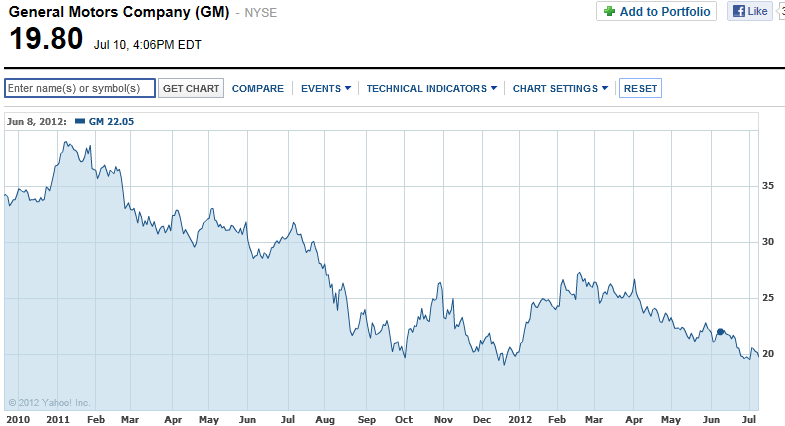
Losing ground to Toyota and needing to clear out end-of-model-year vehicles, GM will offer no-haggle pricing on 2012 Chevrolet cars and trucks plus a money-back guarantee on all new Chevys .
The new promotions, which GM calls its Chevy Confidence program, address two things car shoppers dread: haggling and commitment.
“Americans aren’t great at haggling and we are expected to do so on the two biggest purchases we face: real estate and autos.”
“This Chevrolet Confidence program alleviates the issue of haggling and eliminates ‘buyer’s remorse.’”
The no-haggle program pledges to offer 2012 vehicles at the “best possible prices” in addition to current incentives.
The no-haggle sales price, called Total Confidence Pricing … harkens back to previous sales programs offered by GM.
The company’s Saturn included no-haggle buying before the brand ended as part of GM’s bankruptcy reorganization in 2009.
Such programs are “marginally effective,” according to Dennis Virag, president of Automotive Consulting Group. “There will be some buyers, but I don’t think it’s going to attract a large number of new customers for Chevy.”
* * * * * GM is trying to boost Chevy as the brand faces greater pressure from Toyota.
U.S. sales of Chevrolet, GM’s largest brand, rose 6.3 percent to 961,662 cars and light trucks in the first half, a slower pace than the industrywide increase of 15 percent; Toyota’s namesake brand gained 29 percent to 937,964.
Ken’s Note: Toyota faced what President Obama would call “headwinds” the past couple of years with a tsunami knocking out production for a few months, and Obama’s Secretary of Transportation calling Toyotas unsafe to drive … a hysterical charge that was never proven.
GM CEO Dan Akerson is pushing the company to boost operating margins and strengthen Cadillac and Chevrolet as global brands.
Punch line: adidas is under fire after debuting an athletic shoe that contains rubber ankle shackles. adidas calls the shoe quirky and lighthearted, but consumers liken the shoe to slavery shackles. Despite initially defending the shoe, adidas has pulled the shoe from the Fall/Winter 2012 line, bowing to the power of consumers.
adidas is under fire after posting a picture of its upcoming JS Roundhouse Mids on the adidas Originals Facebook page, designed by Jeremy Scott.
It’s not the colors or name that’s offending, but the rubber shackles attached to them that remind some observers (such as the Rev. Jesse Jackson) of the ankle chains that imprisoned African American slaves. That the “adidas” name is also part of the “shackles” is raising hackles (and heckles).
Even so, the brand defended the design and the designer. “Jeremy Scott is renowned as a designer whose style is quirky and lighthearted … Any suggestion that this is linked to slavery is untruthful.”
Nevertheless, despite initially defending the designer, adidas is pulling the shoe, stating: “We apologize if people are offended by the design and we are withdrawing our plans to make them available in the marketplace.”
Punch Line: Start-ups are pitching software to retailers that, with the use of in-store Wi-fi, will be able to track shoppers’ path and movements through the store. Retailers would also get information about which websites consumers are visiting while at different places in store – which would help explain which products consumers may be testing in-store, but buying online. Manufacturers will also be interested for the ability to directly target consumers with digital coupons or ads as they walk through the store. Shopper privacy is the one area that hasn’t been “thought through” yet.
Companies that develop Wi-Fi networks have a new pitch for retailers and marketers: Use the technology to keep tabs on customers, just as Amazon.com Inc. tracks online shoppers … Venues like stores, malls and airports are installing Wi-Fi networks to please smartphone-toting shoppers, who use them to get faster Internet access and avoid cellular-data charges. Wi-Fi lets the network operator keep tabs on what users are doing—from where they’re standing to what websites they’re viewing. That lets retailers learn in what aisle shoppers are most likely to point their iPhone’s Web browser to Amazon.com. Mall owners have a new way to judge which storefronts attract the most foot traffic. And owners of Wi-Fi networks can turn their antennas into virtual billboards, charging a premium for ads sent to users’ phones in prime locations.
Other companies are developing technology known as “heat mapping,” which allows organizations with big Wi-Fi networks to identify customer locations and traffic patterns. It works by triangulating phone signals received by different Wi-Fi bases.
A start-up … goes even further. It offers software that will let retailers track which websites a shopper visits when using a store’s Wi-Fi network and then overlay that information with data showing where the shopper is in the store. The resulting “heat maps” could show which products are most vulnerable to being tried out in the store but ultimately bought for less online.
Retailers that find shoppers are navigating to a particular e-commerce website could buy additional advertising on that website. Meanwhile, a department store that learns many of its customers log on to Amazon.com while in the electronics department could move an additional store employee to that area. “We’re trying to understand not only physically where they’re going within the store but also where they’re going virtually within that shopping experience.”
Punch line: Dollar Shave Club is to shaving what Netflix is to renting movies. A disruptive business model and innovative launch in the digital space have made Dollar Shave Club a threat to the big wig razor brands who are still calling an additional blade innovation (see the Flashback link below for a view on blades’ innovation)
… Dollar Shave Club, a disruptive idea … turns the expensive and drab process of buying men’s razors into a Netflix’s-like business model. For a set low-price per month, DSC sends members new high quality razors.
What makes Dollar Shave Club so unique is how it was launched. In March, DSC posted a video written by and starring company founder Mike Dublin. In going after personal hygiene giants like Gillette and Schick, Dublin had to get people’s attention out of the gate. His opening line – and every line thereafter – captured attention and have racked up 5 million views.
After the video went viral, Dublin was featured in scores of mainstream news and business reports. So great was demand that DSC had to delay adding new members for weeks while it increased support capacity … This a great example of excellent marketing that came at a low cost and high returns.
Solution providers often see marketing as an expensive proposition only big vendors can afford. Even when they do engage in marketing, the products are rather stiff and unimaginative, which leads to unfulfilled expectations.
Other examples of companies who have taken advantage of viral marketing: Microsoft’s “Smoked by Window’s Phone” and CalNet’s Wally Cleaver videos. So before you dismiss the notion of marketing – viral, video or otherwise – think about what Dollar Shave Club, Microsoft and CalNet did. A little creativity can go a long way.
Michael Francis helped make Target a roaring success. So, JC Penney CEO Ron Johnson offered him a $12 million signing bonus to jump ships. Francis took the bait.
Bad decision …except for the $12 million … which Francis gets before the tax rates jump on Jan. 1.
Now, Francis taking the fall for Johnson’s “no sales” strategy’s failure to ignite consumer interest.
Johnson’s still claiming that his idea is fine but it wasn’t marketed right. That there was a failure to communicate.
After all, a sleek logo and aggressive “retail list price maintenance” worked at Apple … so why shouldn’t it work at a commodity rag place like JCP?
J. C. Penney ousted its JC Penney brand president, Michael Francis.
Francis was hired last October “at great expense” — a whopping $12 million signing bonus — from Target.
He is seen as taking the fall for his boss, company CEO Ron Johnson, the former Apple top retailer who oversaw JCP’s new brand strategy in January.
Johnson who championed the idea of killing coupons and sales in favor of “fair and square pricing” (a reference to its logo), so-called “month long value” and “everyday low” pricing.
JCP recently scrapped that strategy and is re-embracing the dreaded s-word — “sale.”
CEO Johnson “will assume direct responsibility and oversight of the company’s marketing and merchandising functions.”
Ken’s Take: If I were JCP, I would have fired the Apple guy and kept the target guy … eventually, they’ll fire the CEO, too … and probably promote their VP Finance to interim CEO … as soon as it becomes evident that the critical Christmas season is a bust
* * * * *
In case you missed it, I was on NPR a couple of weeks ago commenting on the JCP strategy.
Punch line: Democrats and Republicans have wildly different taste when it comes to certain brands. Politicians are starting to see the value in understanding these differences, and the link to voters’ decision making process.
America is settling in for a long summer of campaigning between the Democratic candidate President Obama and the Grand Old Party’s Mitt Romney.
News of minor flubs by candidates and those who work for them will come up at bars, barbecues, and ice-cream joints across the land (or be completely avoided, for everyone’s safety).
… Members of the two political parties don’t just disagree on their candidates. They also mostly disagree on the brands they love, though there are three that help bring them together. Next time a president wants to have a bipartisan summit of some sort, he or she might want to involve Coke, Apple, and Visa.
Both candidates and brands have never fought harder for our affection and our votes, … It’s never been more important to understand why people make the choices that they do. Brands can learn a lot by having a deeper understanding of the deep-seated connections that drive our decision-making.
Well, according to the AP …Taco Bell, is going upscale.
The chain plans to rollout “gourmet Mexican” menu additions created by celebrity chef Lorena Garcia … venturing onto the turf of Chipotle and Qdoba which are known for higher-quality ingredients.
It’s a departure from such standards as tacos, burritos and chalupas that Taco Bell’s core young-adult customers crave.
But, the Cantina Bell line could find a niche between Taco Bell’s less-expensive core items and the more-expensive fare at Mexican restaurants such as Chipotle and Qdoba.
The menu additions are bigger than the chain’s regular burritos … and will take a bigger bite out of the wallet: The Cantina Burrito Bowl and Cantina Burrito, offered with chicken or steak, will sell for nearly $5 apiece.
Taco Bell executives acknowledged that the push for quality will draw some skepticism. … especially following a yearlong sales slump stemming from a lawsuit that raised questions about its meat filling.
According to Brand Z, IBM continues its rise up the brand-valuation hierarchy, leapfrogging Google and rising to No. 2 behind Apple, its value up 15% to nearly $116 billion last year.
Omnicom’s Interbrand also had IBM No. 2 in its brand-valuation ranking released last October, up 8%, but valued Big Blue at just under $70 billion, only about 60 cents on Brand Z’s dollar.
But, the CoreBrand Brand Power ranking released about three weeks earlier, said the value of IBM’s brand plummeted last year as it fell 18 places to No. 66 on that firm’s list.
Hmmm.
Ad Age says it’s illustrative of a bigger problem:
The IBM case is but an extreme among many disparities the Marketing Accountability Standards Board has found in publicly available valuations of brands.
The MASB has been trying to develop a common way of measuring what brands are worth and how those values change.
“Many of the valuators treat them as black boxes, so you don’t even know what’s in it.”
Skechers advertised its Shape-ups as a fitness tool designed to promote weight loss and tone muscles with the shoe’s curved “rocker” or rolling bottom — saying it provides natural instability and causes the consumer to “use more energy with every step.”
But, the Feds want you to know that simply sporting a pair of Skechers’ fitness shoes is not going to get you sexy curves or a toned tush.
For millions of consumers,”the only thing that got a workout was their wallet.”
Skechers will pay $40 million to settle charges by the Federal Trade Commission that the footwear company made unfounded claims that its Shape-ups shoes would help people lose weight and strengthen their butt, leg and stomach muscles.
Consumers who bought the shoes will be eligible for refunds, though it’s not clear how much money people will get.
“The FTC’s message, for Skechers and other national advertisers, is to shape up your substantiation or tone down your claims.”
Skechers says it disputes the charges and is pursuing additional studies.
A South Korean Dunkin’ Donuts campaign is reinventing the traditional radio advertisement using unique technology and the smell of coffee.
The campaign, named, Flavor Radio releases coffee aroma via sound recognition technology.
Each time the Dunkin’ Donuts radio ad was played a light coffee aroma was released using atomizers installed on commuter buses in Seoul.
The aroma has reinforced the sensory connection and experience of the Dunkin’ Donuts brand, and has boosted in-store traffic in South Korea.
In fact, over than 350,000 people experienced the ad during the campaign, leading to number of visitors to the Dunkin’ Donuts stores increasing by 16 percent and sales going up 29 percent.
In-store sensory experience is nothing new to retailers, but now this experience has been taken out of the store and into the streets.
Punch line: Less scale, extend reach, and more collaboration. IDEO representative explains how companies and individuals can increase their own innovation leverage.
… Recently, psfk.com interviewed Ryan Jacoby – who helps clients incubate new businesses, design new offerings, and craft innovation strategies at IDEO.. We asked him to explain how a company or an individual can increase their ‘innovation leverage:’
Instead of ‘scaling innovation,’ focus on increasing your innovation leverage.
Scaling innovation often means enabling hundreds or even thousands of individuals within an organization to become more productive participants in the innovation process. While a lofty goal, most organizations aren’t going to transform an organization without years of work and significant investment.
There are thriving communities and partners out there actively innovating right now. The trick is to tap into that activity. Rather than focusing efforts exclusively on scaling innovation, for some companies I recommend organizations find quick and concrete ways to increase their Innovation Leverage.
Broadly speaking, you can increase your organization’s Innovation Leverage in two ways:
Extending your organization’s innovation reach: Opening up to a variety of collaborators—internal groups, customers, suppliers, stakeholders, and partners—extending your ecosystem in the process.
Leveraging your reach and newly formed relationships: Smartly utilizing that extended ecosystem, contributing to platforms, inviting collaboration, and doing more in the process with limited investment.
As the tools and networks evolve, it should get easier and easier to increase innovation leverage. The trick, as always is the case, is for innovators to get their organizations comfortable with the act of opening up and getting feedback on less-than-perfect ideas. The organizations that do will find a wealth of options for them to innovate more, with less.
Carly who has starred in T-Mobile’s ads since 2010 and been dubbed by some a DVR-proof pitch personality, is trading her usual frocks for biker leather as the T-Mobile looks to halt mass subscriber defections.
“The pending AT&T deal negatively impacted customer satisfaction and brand perception in 2011, which is why we believe it is time to reinvigorate the challenger strategy and to relaunch the brand,”
Despite its smaller budget, T-Mobile ads have seemed to cut through the clutter, thanks largely to Carly, the only current spokescharacter for a mobile carrier who’s easily recognizable.
Ads featuring biker Carly are intended to equate the brand with speed which is the single-biggest thing consumers are looking for in their next smartphone.
Dr. John Kellogg — founder of the world’s largest cereal company had a simple credo: “Eat what the monkey eats … simple food and not too much of it.”
Do monkeys eat Pringles?
Hope so because Kellogg is buying Pringles from Procter & Gamble in a $2.7 billion deal expected to close this summer.
Why?
For openers, Kellogg’s legacy brands (Corn Flakes and Rice Krispies) are under pressure from private labels and other breakfast convenience foods.
Note: Kellogg cranks out about 200 million pounds of private-label cereal a year.
The real growth for Kellogg, as well as for packaged-food rivals like PepsiCo and its Frito-Lay division, is foreign markets and snacks. That’s where Pringles comes in.
Kellogg’s CEO says that selling cereal and selling snacks are two entirely different skills.
What the company is buying with Pringles is not just a line of products that is already huge internationally, but a group of Procter & Gamble merchandisers with “the snack mind-set.”
“When you’re talking about snacks … it’s about someone who came into the store to buy something else and hit a display and thinks, ‘Hey, I’d love to have a can of Pringles.’
With snacks, it’s much more intercepting the consumer in-store as opposed to getting on their shopping list.
It’s in-store merchandising.
It’s retail entertainment.
Whereas cereal is much more about the 30-second feel-good ad.”
* * * * * Nutrition note: According to Robert H. Lustig, a professor of clinical pediatrics at the University of California, San Francisco:
”People who consume sugar are more likely to overeat because “there are signals to the brain that tell you when you’ve had enough; sugar blocks them.
Eating calories from sugar will therefore lead you to consume more calories.”
Advertisers are generally charged when a beacon is fired as an ad begins playing. But Hulu is moving that notification to the end, meaning that and ad that isn’t completed won’t count.
“If you pay for a full impression, you will get an impression, full stop.”
The company said its completion rate for ads is 96% — extraordinarily high for online video, where the average completion rate is closer to 88% for long-form content and 54% for short clips.
“Vendors with greater video completion rates [see] greater brand lift and greater message recall.”
Though the move will cost Hulu some volume, the company’s idea is that it will be made up in higher rates resulting from competition for fewer available spots.
It also means advertisers get some partial impressions free, as a number of viewers will be exposed to a portion of the ad before they click away.
Dollar Shave Club, the e-commerce start-up, already developed a following for its quirky approach to hawking razors and blades for a $3 to $9 monthly fee.
It began with a YouTube video, in which founder rides on a forklift, plays tennis, and dances with a fuzzy bear. It’s already received some four million views.
The shaving industry market leaders have huge marketing budgets, deep consumer research and relationships with retailers that leave little room for newcomers.
What the start-ups have in their favor is technology. Companies with no marketing budget can command attention with free video and quickly build a following on services like Facebook and Twitter. Netflix have conditioned consumers to getting regular deliveries of the things they use by mail.
It is unclear whether those prices will prove low enough to lure users. By comparison, 15 Gillette Mach3 cartridges can be purchased for as low as $2.06 each on Amazon.com.
In one of my classes we study how books are priced.
Last fall, a team suggested that page count was a relevant criteria … that books with more pages should be priced higher than shorter books.
I summarily rejected the idea and joked at the team’s expense.
Well, the page has turned.
The team just returned from China and sent me me this picture.
Lo and behold, in China, they encountered book stores that sold books based on their weight.
A counterfeit version of the Steve Jobs biography (above) weighed in at 360 grams, and was priced by weight at 18 RMB ($2.85). Roughly 50 RMB ($8) per kilo.
The team tells me that all paperback books in that particular shop (located on Nanjing road, main street Shanghai) are sold at this rate; hardcovers are also priced by the kilo but at a higher rate.
OK guys, you get the last laugh.
Thanks to Ash Kaluarachchi & Greg Berguig for feeding the lead
Punch line: Billboards are no longer larger than life. Legoland goes against the grain and advertises its ‘Minibreaks’ using the nation’s smallest billboards – incorporating the iconic Lego blocks in its designs.
Advertising agency DLKW Lowe created this great poster campaign for Legoland Windsor, installing tiny Lego billboards around London and inviting passers-by to tweet #legolandminibreaks with a photo if they spotted one of them.
The agency shared a Google Map of their locations to help people find the miniature advertisements.
The nation’s smallest ever billboards promote different aspects of Legoland Minibreaks, including its resort packages, its new hotel, and the fact that kids go free.
Campbell Soup Co. — which has put soup in see-through tubs and sipping cups — is now shoving it in a pouch as the marketer embraces innovations and new packaging in search of a turnaround.
The new microwavable pouches will be sold under the name, Campbell’s Go! Soup, and will launch in up to six flavors ranging from Coconut Curry with Chicken and Shitake Mushrooms to Moroccan Style Chicken with Chickpeas. The flavors, which are a mouthful even to say, are aimed at younger consumers.
… Campbell reported domestic soup sales down 2% last quarter. The new strategy,first announced in July, seeks toreverse Campbell’s overemphasis on sodium reduction and its failure to reach out to young shoppers, who increasingly skip the soup aisle for other simple meals, such as frozen foods.
… CEO Denise Morrison framed the new approach as one that “requires moving from a high dependence on line extensions to more disruptive innovation, new and differentiated products, packaging and category segments that create new pathways for growth.” At the same time, Campbell is sticking by its plan to pour an additional $100 million this year into brand-building, research and development, and product launches.
Pouches and boxes aside, the can will remain at the company’s core. “When we talk about our U.S. soup strategy, we talk about first celebrate the can, then expand soup beyond the can, and then expand them to the greater simple-meals arena,” Ms. Morrison said.
Punch line: AOL has hired Evercore Partners to help it shop around its patent portfolio in hopes of offsetting lost dial-up business and “accelerating shareholder value creation.”
Meanwhile, Facebook has acquired around 750 patents from IBM in order to “bolster the social network’s defenses against litigious rivals”.
Citing three people with knowledge of the hire, Bloomberg says AOL tapped Evercore to find a buyer for more than 800 patents and to “explore other strategic options” — code for a possible sale or private buyout of the entire company.
Last December, AOL announced plans to reorganize the company, combining its declining dial-up Internet service business and its Web services arm, the latter of which was recently scaled back with layoffs in the Instant Messenger group.
AOL has previously said it’s looking for ways to raise cash from its patent portfolio and is making efforts to “accelerate shareholder value creation.”
AOL’s move follows Facebook’s acquisition of some 750 patents from IBM, a deal made to bolster the social network’s defenses against litigious rivals. Facebook has been targeted by Yahoo for allegedly infringing on a number of its patents that cover customization and advertising.
Easy to pile on AOL for its strategic mis-steps over the years (e.g. hanging with the “walled garden” too long, failing to find a way to migrate to high-speed internet service), but gotta give the company credit for its role in the Internet explosion.
And, in a timely fashion, the original owners dumped the bag on Time-Warner … walking away with a fortune …
As much as a third of the traffic in some areas has been attributed to drivers circling as they hunt for spaces … causing lost time, polluted air and illegal parking.
In his 2005 book, “The High Cost of Free Parking”, Donald Shoup, a professor of urban planning at UCLA advocated dynamic pricing of metered parking spots — finding the lowest price a city can charge and still have one or two vacant spaces available on every block.
San Francisco is putting the theory to test.
San Fran is using new technology and the law of supply and demand, raising the price of parking on the city’s most crowded blocks and lowering it on its emptiest blocks.
San Francisco installed high tech parking sensors and new meters at roughly a quarter of its 26,800 metered spots to track when and where cars are parked.
And beginning last summer, the city began tweaking its prices up and down and shortening (or lengthening) time limits — trying to to leave each block with at least one available spot all the time.
Eventually, the metes may charge different prices at different times of the day.
“We only need a few people to see there is a price difference and choose to park in a different location to open up just a few spaces here and there.”
But raising prices is rarely popular … and the program was “complicated on the social equity level” since high parking prices can shut out poorer parkers.
TakeAway: Diet Coke partners with Diane von Fürstenberg to design new packaging for its Diet Coke bottle. Proceeds from the sales will go towards the Foundation for the National Institutes of Health. Diet Coke + Fashion + Health? Hmm…
Proceeds from the sales of Diane von Fürstenberg’s Diet Coke collection will go towards the Foundation for the National Institutes of Health.
Although there’s nothing new about celebrity bottles these days, we think the fashion designer has a fresh approach on an aging marketing gimmick – plus the charity angle is interesting (if a little ironic considering the discussion about the healthiness of diet soda).
Punch line: Is Mickey D. is going haute cuisine? No, not really. The Mickster is just sticking a burger on baguette and charging the French a premium price. Mon dieu.
In France the fast-food giant is gearing up to offer a burger served on baguette, part of a wider effort to add more locally inspired fare to its menu and attract more upscale diners.
McDonald’s restaurants across France will test the McBaguette — a burger topped with French-made Emmental cheese and mustard.
The promotion is in line with the company’s successful global strategy of updating its restaurants to appeal to a broader clientele, while offering a more varied menu, up and down the price scale.
In France that involves tapping into a national obsession: bread.
98% of French people eat bread every day.
The French each consume about 55 kilograms (a21 pounds)of bread a year.
65% of the two billion sandwiches sold each year in France are baguette-based.
The McBaguette will be sold for €4.50, more than a euro above the average price of a sandwich in France.
* * * * * Ken’s Take: “Obsession with bread”? I thought the French were obsessed with something else. Live and learn …
The NYT revelations that Target has been mining its data bases to early-identify pregnant women and “change their buying behaviors when they’re vulnerable to marketing initiatives” has gone viral.
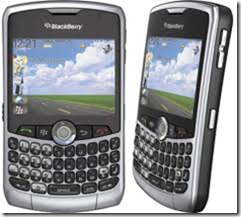
Punch line: Remember when you’d secretly watching out-of-the-corner of your eye for that blinking red light? Yep, we all did it – and it even fed our egos of feeling somewhat important when we knew we had a message pending… Well, RIM, the makers of the “crackberry,” first dominated the marketplace but seem to have lost sight of its strengths, and customer needs. Now, it struggles for survival in the marketplace …
Long before the iPhone the took the world by storm, and before Google even dreamed about getting into the phone business, Research in Motion was on top of the consumer electronics mountain.
Today, sadly, it is buried under it, and industry insiders everywhere wonder whether RIM will survive …
Here are seven marketing lessons from RIM’s dark and difficult journey.
1. Make Great Products
Consumer electronics success begins with excellent products. The BlackBerry was once perceived as the very best smartphone — or, at least, “emailing phone” — available. It was exciting, emotional and it made people feel good. RIM sold BlackBerries on the strength of word-of-mouth recommendations. BlackBerries were aspirational, and people wanted to own one because friends and colleagues were so passionate about them.
Now, fast-forward to today.
Consider the excitement and energy around the iPhone and all those Android handsets. RIM enjoys none of that today. Not one percent of it. In part, it’s because it stopped making good smartphones in favor of a poorly received tablet called the PlayBook.
Successful marketing begins with having a tremendous product or service to market. Nothing happens without this.
2. Build on Strengths Instead of Improving on Weaknesses
For RIM, the BlackBerry was a great strength, and they all but abandoned its development and marketing for a year or longer to create the tablet. RIM did this to try to prevent the world from passing it by in the tablet space — which it did anyway. Tragically, as a result of diverting talent, attention, resources, investment and innovation from the BlackBerry to the Playbook, the consumer smartphone world has also passed RIM by.
If you focus on developing weaknesses, your strengths will atrophy due to neglect.
3. Gravity Pushes Backwards
If you’ve attained a measure of success, you mustcontinue innovating your products, services and your marketing just to maintain your position. Because you can bet the competition is innovating aggressively, and they’ll pass you by in three seconds if you stop doing the things that brought you success. RIM not only stopped releasing new BlackBerries while focusing on its PlayBook, it basically stopped talking to its customers about them for an extended period.
Gravity pushes backwards in business. Consistent and aggressive innovation is required not only to attain success, but to maintain it.
4. Know Precisely Who Your Customer Is
RIM’s management famously disagreed on who their customer was. Then co-CEO Mike Lazaridis felt the customer was the corporation. Others, probably including his counterpart Jim Balsillie, wanted to aim BlackBerry products at consumers. If you don’t know exactly who your customer is, it is impossible to market. Language, messaging, platforms, branding and public relations change completely depending on the customers you target.
So identify your customers as precisely as possible, and aim all of your marketing efforts at them.
5. Executives Set the Marketing Tone
Consider the most successful companies in consumer electronics (and two of the most successful companies in all of business): Apple and Amazon. Their chief executives set their marketing tone, and everyone follows. If you haven’t seen it yet, watch this YouTube video of Steve Jobs introducing the iPad, and listen to how everybody who followed him on stage used exactly the same words.
This is no accident. The next day, thousands of articles used the same words to describe the amazing, remarkable and awesome iPad. Amazon’s Bezos is the same way. The best marketers have high-level executives setting the tone. They not only teach the rest of the company how to talk about their products and services, but the customers, the media, and the market itself. Obviously, RIM’s co-CEOs did not set this tone. They couldn’t even agree on who the customer was.
6. Avoid Unforced Errors
Most marketing problems are self-made and entirely avoidable. Consider the major developments from RIM’s recent past:
It voluntarily stopped focusing on the BlackBerry to make a product it had no experience with.
It could not identify its customer.
It stopped marketing to consumers, allowing competition to roar past.
7. Keep Talking to Your Customers
If RIM had talked to its customers like this, it would have quickly learned that they probably weren’t particularly interested in a BlackBerry tablet without built-in email, messaging or contacts!
If you’re not talking to your customers, you’re just guessing from a conference room.
Best Buy invited a handful of top shoppers and their family members to an exclusive preview of “Twilight Eclipse.”
The reward, which went to select members of Best Buy’s Reward Zone loyalty program, was part of a “surprise and delight” approach that’s becoming a mainstay in loyalty strategies.
“Surprise and delight” plays off the principle that a dollar bill is always worth more when you find it crinkled up in an old pair of pants.
At Best Buy, surprises have taken the form of movie premieres and exclusive shopping invites on Black Friday.
Much of what people do is based on habits, not conscious reasoning.
Consumers’ shopping habits and brand loyalties are often more habitual than thoughtful.
But, there are certain “events” — e.g. new baby, new home, recent divorce — that seem to make consumers more open to switching stores and brands.
Savvy marketers are learning to identify these critical events — before they happen — and try to get consumers to switch their behavior.
Target is one of the retailers identifying customers who are “vulnerable to intervention by marketers” … and pouncing on them.
Who? Moms-to-be.
How?
According to the NY Times article, Target identified about 25 products that, when analyzed together, allowed them to assign each shopper a “pregnancy prediction” score.
For example, sometime in the first 20 weeks, pregnant women tend to load up on body lotions and supplements like calcium, magnesium and zinc.
With that information in their computer systems, Target can identify likely pregnant women and, more important, estimate their due dates, so that Target can send coupons timed to very specific stages of her pregnancy.
It’s a bit unbelievable … and a lot creepy.
And, oh yeah, it works.
But, gotta wonder why Target let this cat out of the bag … if this story goes viral, the privacy concerns are likely to offset the added sales to moms-to-be.
In case you hadn’t noticed, the world has gone nuts for New York Knicks point guard Jeremy Lin …
Now Nike is planning to give the people what they want: to be #Linning too.
According to ESPN Radio’s blog, the shoe manufacturer is “set to release the Nike Hyperfuse 2011 Linsanity PE,” a shoe that features New York Knick’s iconic orange and blue with ‘Lin’ written in script, “sweeping across the side of the heel” …
Lin’s new shoe isn’t likely to supplant the Air Jordan in Nike history, of course, but it’s hard to imagine what will happen if Lin keeps leading the Knicks to consecutive victories — and after the inevitable end to the hot streak …
Meanwhile, Lin’s brand keeps getting larger, and not just in the U.S.
Lin — who is the first American-born player in the NBA of Chinese or Taiwanese descent — now has more than 350,000 Twitter followers and, on the Chinese version, 750,000, according to the New Yorker. The publication notes that “last week, Lin rocketed to the number-one most searched item on Baidu, the Chinese search engine.”…














 The Homa Files