May 17, 2012
Unless you were on Mars last week, you know that President Obama – inadvertently coaxed by bumbling Joe Biden – announced his support for gay marriage.
Not much surprise there, but the revelation sparked some interesting politics.
Quick out of the chutes, Newsweek – the reliably liberal news mag – hit the stands with a very controversial cover announcing Obama as the first gay president … apparently a play off of Bill Clinton’s old claims that he was the first black president.
My bet: it’ll be the highest selling issue of Newsweek ever … with most of its distribution in early November … used by both the far left left and the far right to rally their bases.

* * * * *
Interesting Twist
On the heels of the Newsweek feature article, a New York Times survey reported that 2 of 3 people saw through Obama’s “evolution” as being more politically expedient than morally driven.

* * * * *
The political motives
Consistent with the NY Times survey, the Newsweek article outlined the political rationale:
There was, of course, cold politics behind it.
One in six of Obama’s fundraising bundlers is gay, and he needs gay’s money.
When Obama announced recently that he would not issue an executive order barring antigay discrimination for federal contractors, the gay donors all but threatened to leave him high and dry.
If money was one factor making the move necessary, the youth vote — essential to his demographic coalition and overwhelmingly pro–marriage equality — clinched the logic of it. The under-30s were looking worryingly apathetic, especially compared with 2008. This would fire them back up.
The latest Gallup poll, moreover, offered another incentive.
Marriage equality is now supported by half of Americans in polls.
Independents favor gay marriage by 57 percent.
So it’s been confirmed: gay rights is indeed a wedge issue.
* * * * * *
Another plot twist
Newsweek’s political logic makes sense, except…
The New York Times/CBS News poll indicates that most respondents said that the president’s position (on gay marriage) will not impact how they vote.
But among those who say it will influence their choice, 26 percent said they are less likely to vote for Obama as a result, while 16 percent say they are more likely to.
Hmmm.
Doing the arithmetic, that means a net loss of 5% (25% minus 16% = 10% times 50% = 5%) voting for Obama in what’s generally considered a 50/50 race.
* * * * *
Dissing the media
To close the loop, Obama campaign deputy manager Stephanie Cutter went on MSNBC to dismiss the CBS/New York Times poll as “flawed”.
Note that we cited Newsweek, the NY Times, CBS and MSNBC … not FoxNews or the WSJ … wow.
Stay tuned, this political saga isn’t over.
>> Latest Posts
SHARE THIS POST WITH FRIENDS & FAMILY
Tags: "first gay president", CBS, gay marriage, MSNBC, NY Times, Obama
Posted in Campaign 2012, Obama | Leave a Comment »
May 16, 2012

According to the WSJ … GM is going to stop advertising on Facebook
General Motors plans to stop advertising on Facebook after the company’s marketing executives determined their paid ads had little impact on consumers’ car purchases.
GM will continue to expand its use of marketing through Facebook’s pages, in which marketers can display content at no cost
The news comes at a bad time for Facebook which is expected to hold a historic initial public offering on Friday. Facebook executives have spent the last two weeks trying to convince investors that its advertising business makes it worthy of a $105 billion valuation.
GM, started to re-evaluate its Facebook strategy earlier this year after its marketing team began to question the effectiveness of the ads.
GM marketing executives met with Facebook managers to address concerns about the site’s effectiveness and left unconvinced advertising on the website made sense,.
GM spends about $40 million on its Facebook presence. About $10 million of that is paid to Facebook for advertising, the rest covers content created for the site,
“Companies in industries from consumer electronics to financial services tell us they’re no longer sure Facebook is the best place to dedicate their social marketing budget — a shocking fact given the site’s dominance among users.”
Although GM’s $10 million worth of ad spend on Facebook won’t impact its $3.7 billion in revenue, the move is a disappointing development for the social network and could hurt if more big advertisers choose to follow suit.
“Disappointing and could hurt” … you think ?
>> Latest Posts
SHARE THIS POST WITH FRIENDS & FAMILY
Tags: Facebook, GM, social networking
Posted in Internet - Soc Networking | Leave a Comment »
May 16, 2012
Monday was a great day in the rough & tumble day in the world of presidential politics and candidates’ hypocrisy.
* * * * *
Monday morning
President Obama’s campaign launches an ad, “Steel,” attacking Mitt Romney’s record on job creation.
The two-minute ad focuses on GS Technologies, a steel mill in Kansas City that was bought by Romney’s private equity firm Bain Capital and went bankrupt soon after.
According to the Washington Post, the ad paints Romney as out of touch with the needs of the local workers and concerned only with Bain’s own profits.
“We view Mitt Romney as a job destroyer … a vampire. They came in and sucked the life out of us.”
click to view

* * * * *
Monday afternoon
In rapid response mode, the Romney campaign also released its own web ad, “American Dream,” focused on a successful steel company invested in by Bain:
click to view

* * * * *
Monday evening
According to the Weekly Standard, President Obama attended a fundraiser Monday evening in New York City hosted by Hamilton E. James, the chief operating officer and president of Blackstone — “one of the world’s largest private equity fund businesses”
This fundraiser-of-the day had a particular irony to it since earlier in the day Obama criticized private equity investors as vampires.
* * * * *
You just can’t make this stuff up …
>> Latest Posts
SHARE THIS POST WITH FRIENDS & FAMILY
Tags: Bain, Obama, Romney, vampires, venture capitalists
Posted in Campaign 2012, Obama | 1 Comment »
May 15, 2012
Punch line: Liberals do an excellent job painting conservatives as heartless, greedy villains. Frank Luntz — right leaning pollster — fights back with some survey results that debunk some myths about conservatives
* * * * *
Excerpted from the Washington Post: Five myths about conservative voters
Myth #1. Conservatives care most about the size of government.
conservatives don’t want a reduced government so much as one that works better and wastes less.
In a poll we completed among self-identified conservatives just before the 2010 elections,“efficient” and “effective” government clearly beat “less” and “smaller” government.
For conservatives, this debate is less about size than about results, along with a demand that elected officials demonstrate accountability and respect for the taxpayer, regardless of whether they’re spending $1 million or $1 trillion.
Myth #2. Conservatives want to deport all illegal immigrants.
Yes, conservatives want effective border control right away. And more than 80 percent are dissatisfied with America’s immigration system. Conservatives don’t want to round up all the illegal immigrants and deport them.
But, conservatives embrace legal immigration. A solid majority believe that there should be an eventual path to earned legal status.
According to our polling in November, seven in 10 conservatives agree with the following statement: “America’s immigration policy should consist of tall fences and wide gates. We need to aggressively prevent illegal immigration, but let those stay that have worked hard and demonstrated a real, measurable commitment to this country through military or public service.”
Myth #3. They worship Wall Street.
Conservatives are highly critical of Wall Street and wholeheartedly celebrate Main Street.
The business leaders that conservatives respect most are entrepreneurs, not chief executives; conservatives value small-business owners above big bankers.
In a poll conducted early this year, I asked conservatives whom they most trusted to get our country on the right economic track. By nearly two to one, they chose small-business owners over corporate America (only “political leaders” did worse).
Most agree with moderates and liberals that things on Wall Street have gotten out of hand. They believe that those who abuse the system should be held accountable and that those who work hard and play by the rules should be free to advance.
Myth #4. Conservatives want to slash Social Security and Medicare.
Conservatives want the programs strengthened, not dismantled. They know Social Security & Medicare need reform, but they want changes to be effective and reasonable.
Conservatives believe in such simple principles as personal choice and greater competition, and they are more confident than liberals in people’s ability to make the right decisions.
For example, 78 percent agree with the statement: “Increasing patient choice in Medicare will help save Medicare from bankruptcy. When patients can shop for better care . . . it will force insurance companies to compete against each other, which lowers costs and increases care.”
Myth #5. Conservatives don’t care about inequality.
Fully 66 percent of conservatives consider the growing gap between the rich and the poor a “problem,” while 21 percent call it a “crisis.”
The big difference between left and right is the difference between opportunity and outcome.
Conservatives want to increase opportunity, giving everyone the freedom and tools to prosper, so that the poor may someday become rich.
Liberals want to redistribute income, making the rich — quite simply — less rich.
* * * * *
Bonus Myth. Conservatives don’t want regulations enforced.
Conservatives also believe that we need better enforcement of the regulations we already have, not more rules.
Like all Americans, they are outraged that there hasn’t been a single prosecution by the Obama administration for the corporate abuses that led to the economic meltdown.
As a focus group participant once asked: “If Martha Stewart was convicted, why no one from Goldman Sachs?”
>> Latest Posts
SHARE THIS POST WITH FRIENDS & FAMILY
Tags: big governemt, consertatives, immigration, income inequality, Medicare, myths, Wall Street
Posted in Conservatives, Politics - General | Leave a Comment »
May 15, 2012
TakeAway: A new start up is taking “like” to the next level by letting consumers buy company shares via Facebook.
* * * * *
Excerpt from AdAge: “’Like’ the Brand? Loyal3 Wants You to Own the Company”
The idea behind startup Loyal3 is to provide a technology platform for brands to sell their own shares (actually $10 fractions of shares) to consumers on Facebook — a concept CEO Barry Schneider calls “the ultimate ‘like’ button.”
Loyal3 is slated to launch in May with a number of brands hoping to give their fans a chance to own the company.
Edited by ARK
SHARE THIS POST WITH FRIENDS & FAMILY
Tags: IPO shares, Loyal3
Posted in Internet - Soc Networking | Leave a Comment »
May 14, 2012
Last week, we were fast out of the blocks posting about the drop in the labor force participation rate: How to make 11% unemployment look like 8.1%
The essential points raised:
- Since President Obama was inaugurated, the U.S. working age population has increased by roughly 8 million people.
- During that same period the U.S. labor force – folks either holding or looking for jobs – stayed roughly constant at about 154 million.
- So, it arithmetically follows that the labor force participation rate declined … from about 66% to 63.5%
Here’s the money chart from last week’s post:

* * * * *
The long view
Some analysts have seized on the fact that 324,000 Women Dropped Out of Labor Force in Last Two Months.
Are women really leaving the labor force in droves? ?
Let’s start with the long view:
Back in 1960, women’s labor force participation rate was below 40%.
Over the next 40 years, it bumped up about a point a year, hitting 60% in 2000.
The demographics are well known. More women chose to pursue careers and some families needed 2-wage earners in the family in order to make financial ends meet.

* * * * *
The Shorter View
But, the long view masks what’s been happening the past couple of years.
Let’s shorten the time frame back to only 1990, and increase the granularity of the charting scale.
During the Clinton Era, women’s labor force participation rates continued to climb at the historical rate and reached a historical peak a bit above 60%
The participation rate fell back slightly during the eight Bush years … from 60% to about 59.5%
During the 3+ years since Obama’s inauguration, the women’s labor force participation rate dropped 2 points from 59.5 to 57.5%
Hmmm.

* * * * *
So, what’s going on?
Pundits are serving up a few explanations:
1. The labor market has absorbed the historically pent up supply of women wanting to work and able to find jobs.
2. Some women have discovered what many me have know for centuries – work often isn’t as fulfilling and rewarding as it’s made out to be.
3. Some women have done the math and figured out that compensation levels are sometimes inadequate to fully cover the costs of work clothes, commuting, child care, etc.
4. As government benefits have increased, some women at the lower rungs of the economic ladder have concluded that they’re better off not employed than to take a low paying job.
Regarding the last pint, according to the WSJ, in some high-benefit states women need to earn $30,000 or more to compensate for the benefits they lose if they get a job.
Considering that a full-time minimum wage job only pays about $20,000 [ 2,000 hours times $10} … at least part of the explanation for declining labor force participation rates may be purely rational economics …
>> Latest Posts
SHARE THIS POST WITH FRIENDS & FAMILY
Tags: Bush, Clinton, employment, Jobs, labor force participation rate, Obama, unemployment
Posted in Employment - Jobs, Unemployment | Leave a Comment »
May 11, 2012
A couple of weeks ago – during the clash between Team Obama and the Catholic bishops – some pundits thought that the Catholic Church should change its doctrine re: contraception because its position lacked popular support.
Hopping on that idea, HomaFiles asked: How about a referendum on the 10 Commandments ?
OK, the Catholic bishops are still pushing back on the ObamaCare mandate that church-affiliated organizations must “violate their consciences” and ante up for contraceptives.
Many pundits are counter-punching the bishops … arguing that they are woefully out-of-touch … that an overwhelming majority of Catholics support contraception. So, the bishops should get off their soap boxes and ditch the rule.
Interesting angle: subject religious doctrine re: right and wrong to a popular vote. If it doesn’t get a majority, chuck it.
Hmmm.
I think the idea has merit.
In fact, I say: why not hold a referendum on the 10 commandments?
Maybe #10 and #7 would fail to get enough votes and it would become legit for me to jack my neighbors big screen TV.
The idea has potential, right?
Think about it.
Which of the 10 would you like to see voted out?
* * * * *
Well, seems a judge in Roanoke thinks we were onto something
Could the Ten Commandments be reduced to six, a federal judge asked Monday.
That unorthodox suggestion was made by Judge Michael Urbanski during oral arguments over whether the display amounts to a governmental endorsement of religion, as alleged in a lawsuit filed by a student at Narrows High School.
After raising many pointed questions about whether the commandments pass legal muster, the judge referred the case to mediation – with a suggestion:
Remove the first four commandments, which are clearly religious in nature, and leave the remaining six, which make more secular commands, such as do not kill or steal.
What remains unclear is whether the county would be willing to make such a move – likely to produce more political turmoil – during future discussions to come from mediation.
Source
Looks like we started something … though, those are the 4 commandments we would chuck.
>> Latest Posts
SHARE THIS POST WITH FRIENDS & FAMILY
Tags: 10 commandments, 6 Commandments
Posted in Law & Lawyers, Laws - Very Strange | 1 Comment »
May 11, 2012
TakeAway: A disruptive innovator in the French Telecom industry is growing market share and inadvertently challenging Apple’s IPhone business model.
* * * * *
Excerpt from Forbes: “Apple’s Business Model Vulnerability, Exposed by a French Upstart”
Free Mobile is up-ending Apple’s prospects in France. Analysts are blaming the firm for driving down iPhone sales by 10% in the past quarter alone.
Free is offering unlimited domestic calls and texts, free calls to many international countries, 3 GB of data, and no contract commitment — all for $25 a month. In exchange, subscribers give up benefits associated with traditional mobile carriers. Free barely advertises, does not invest in proprietary applications; and doesn’t subsidize handsets at all.

Free has won nearly 3 million subscribers in its first three months, and the incumbents are facing intense price pressure.
This is a major problem for Apple. People who have to pay the full price for a handset flock to the less expensive, and technically quite solid, Android and Windows offerings.
The iPhone has always been expensive, reliant upon big subsidies from carriers trying to stand out from their competitors.
Edited by ARK
>> Latest Posts
SHARE THIS POST WITH FRIENDS & FAMILY
Tags: Apple, Disruptive Innovation
Posted in Disruptive Innovation | Leave a Comment »
May 10, 2012
Takeaway: Dunkin Donuts launches out-of-store sensory experience linking radio ads with a light coffee aroma spray inside commuter busses.
* * * * *
Excerpted from PSFK.com “Dunkin’ Donuts Interactive Bus Ad Sprays The Aroma Of Coffee”

A South Korean Dunkin’ Donuts campaign is reinventing the traditional radio advertisement using unique technology and the smell of coffee.
The campaign, named, Flavor Radio releases coffee aroma via sound recognition technology.
Each time the Dunkin’ Donuts radio ad was played a light coffee aroma was released using atomizers installed on commuter buses in Seoul.
The aroma has reinforced the sensory connection and experience of the Dunkin’ Donuts brand, and has boosted in-store traffic in South Korea.
In fact, over than 350,000 people experienced the ad during the campaign, leading to number of visitors to the Dunkin’ Donuts stores increasing by 16 percent and sales going up 29 percent.
In-store sensory experience is nothing new to retailers, but now this experience has been taken out of the store and into the streets.
Edit by KJM
>> Latest Posts
SHARE THIS POST WITH FRIENDS & FAMILY
Tags: aromatic advertising, coffee, Dunkin' Donuts, sensory advertising
Posted in Mktg - Advertising, Mktg - Promotion | Leave a Comment »
May 10, 2012
The NY Times reported on President Obama’s campaign rallies over the weekend:
The atmosphere at both college rallies was buoyant and the crowds were sizable, though in Columbus the turnout did not fill the Ohio State University’s 18,300 seat arena.
At times, the rallies had the feeling of a concert by an aging rock star.
A few supporters were wearing faded “Hope” and Obama 2008 T-shirts, and cheers went up when the president told people to tell their friends that his campaign was “still about hope” and “still about change.”

OMG.
And, that’s from the NY Times …
>> Latest Posts
SHARE THIS POST WITH FRIENDS & FAMILY
Tags: aging rock star, campaign, NY Times, Obama
Posted in Election - 2012, Obama | 1 Comment »
May 9, 2012
Mainstream media missed it, but last week Health and Human Services Secretary Kathleen Sebelius testified before a Congressional committee to rehash her directive that Catholic organization pony up for contraceptives.
Representative Trey Gowdy (R–SC) asked Sebelius to explain the legal basis for what the secretary called an “appropriate balance between respecting religious freedom and increasing access to important preventive services.”
In her responses to subsequent questions, the secretary admitted she was unaware of Supreme Court cases stretching back several decades, in which religious believers’ rights against government intrusion were upheld by the court.
So, Rep. Gowdy schooled her.
It’s worth watching the video of the trainwreck … portions of the transcript are below.
click to view

Excerpted for the Catholic News Agency
“So, before this rule was promulgated,” Gowdy continued, referring to the federal contraception mandate, “did you read any of the Supreme Court cases on religious liberty?”
“I did not,” Sebelius responded.
The representative proceeded to ask the Health and Human Services secretary whether she was familiar with the outcomes of several cases pitting state interests against religious believers’ claims under the First Amendment.
Sebelius agreed with Gowdy that the state had a “compelling interest in having an educated citizenry.”
“So when a state said, ‘You have to send your children to school until a certain age,’ and a religious group objected because they did not want to send their children to school until that certain age, do you know who won?” he asked. “It went to the Supreme Court.”
The 1970s case, Wisconsin v. Yoder, is considered a landmark in U.S. jurisprudence. Sebelius said she did not know its outcome. “The religious group won,” Gowdy informed her.
“I think the state has a compelling interest in banning animal sacrifice,” he continued. “When a state banned the practice of animal sacrifice and a religious group objected, it went to the Supreme Court. Do you know who won that?”
“I do not, sir,” Sebelius responded. She was again informed that the religious group prevailed, in the 1993 case of Church of Lukumi Babalu Aye v. Hialeah.
“When a religious group objected to having a certain license tag on their cars, it went to the Supreme Court,” Gowdy said, in an apparent reference to the 1976 case of Wooley v. Maynard. “Do you know who won?”
Sebelius said she was unaware of this outcome as well. “The religious group won,” Gowdy told her.
The congressman also noted the Equal Employment Opportunity Commission’s recent 9-0 loss in the Supreme Court. The commission accused a Lutheran church and school of retaliatory firing, but lost the case when all nine justices upheld the school’s right to choose employees on religious grounds.
“So when you say you ‘balanced’ things,” Gowdy said, “can you see why I might be seeking a constitutional balancing, instead of any other kind?”
Ouch …
SHARE THIS POST WITH FRIENDS & FAMILY
Tags: Constitution, HHS, Kathleen Sebelius, religious liberty
Posted in Law & Lawyers, ObamaCare | Leave a Comment »
May 8, 2012
In AMS, we’ve being reading about Clayton Christensen’s theories on disruptive innovation.
For background, see last weeks post disruptive innovation.
This week, Business Week has a feature article on Christensen — focusing on his life values — but also summarizing his research work, including some criticism.
* * * * *
Criticism of Disruptive Innovation
If there has been one knock against Christensen’s theories, it’s that they are better as analysis than as a course of action.
It’s something Christensen and an impressive network of co-authors and collaborators have worked hard to dispel.
“The theory is more descriptive than prescriptive,” says Larry Keeley, the co-founder of Doblin, a strategic consulting firm in Chicago, who considers Christensen a peer and a friend.
“There are very few robust intellectuals working on innovation, and I don’t mean to take anything away from Clay’s accomplishment when I say this, but …
[the disruption theory] strikes me as an incomplete idea.”
* * * * *
Christensen on life values:
“To understand a company’s strategy, look at what they actually do rather than what they say they do”
The same logic applies to one’s life. For example, ambitious people will reliably tell you that family, or being a mother or father, is the most important thing in their lives.
Yet when pressed to choose between racing home to deal with a chaotic pre-bedtime scene and staying another hour at the office to solve a problem, they will usually keep working.
It’s these small, everyday decisions that reveal if you’re following a path to being the best possible spouse and parent.
“If your family matters most to you, when you think about all the choices you’ve made with your time in a week, does your family come out on top?”
Full article
>> Latest Posts
SHARE THIS POST WITH FRIENDS & FAMILY
Tags: Christensen, Disruptive Innovation, life values, Strategy
Posted in AMS Concepts-Frameworks-Examples, Lifestyle | Leave a Comment »
May 8, 2012
There was a report released last week by the House Ways and Means Committee.
It didn’t get much mass media coverage, perhaps, because of its title: “Why ObamaCare Will Force Americans to Lose the Health Care Coverage They Have and Like”
The essence of the report: many Fortune 100 companies expected to drop their health insurance plans and, instead, pay the $2,000 per employee ObamaCare “penalty”.
First, the facts:
The House Ways and Means Committee asked for and received, on a confidential basis, information on the cost and coverage of the health insurance plans for the Fortune 100 companies.
In total, the Committee received information from 71 Fortune 100 companies.
In total, the 71 Fortune 100 companies that responded to this inquiry could save an estimated $28.6 billion in 2014 alone by eliminating health insurance coverage for their more than 5.9 million U.S. employees (impacting more than 10.2 million employees and dependents covered by those plans) and instead paying the $2,000 per full-time employee fine created in the Democrats’ health care law.
From 2014 through 2023, these employers could save an astounding $422.4 billion if they took this action.

Most (all ?) of the cable and radio pundits were calling big company plans to be an unintended consequence of ObamaCare.
I beg to differ. I think it’s completely intended.
Thank about it: Team Obama often said that they wanted a “single payer system”.
English translation: everybody gets covered by government administered health insurance. Everybody.
So, they put a lowball number on the penalty.
Companies usually pay more than $5,000 per employee … often more … sometimes way more.
It’s a no-brainer for companies to ditch their plans, pay the penalty, and force their employees onto the government program.
But, that’ll make ObamaCare more costly.
How will it get paid for?
Easy, just jack up the ‘per employee’ penalties.
The penalties are already programmed to go to $10,000 in 2024.
What’s to keep them from going even higher?
Answer; nothing.
Now ponder that for a moment
Many (most?) companies will be paying an escalating “headcount tax”.
The more employees they hire, the higher the tax bill.
How do you think that’ll impact the sluggish job growth?
I’m betting it won’t help …
>> Latest Posts
SHARE THIS POST WITH FRIENDS & FAMILY
Tags: employer penalty, Fortune 100, House Ways & Means, ObamaCare
Posted in ObamaCare | Leave a Comment »
May 7, 2012
President Obama says “The unemployment rate clicked down again in April”.
Proof positive that his economic plan is working.
Not so fast.
Indeed the unemployment rate dropped to 8.1% despite relatively low job growth.
How can that be?
Easy.
The unemployment rate is a fraction: the numerator is the number of unemployed people who are actively looking for work … the denominator is the number of people employed plus the number of people actively looking for work.
Most people implicitly assume that the denominator is staying relatively constant … maybe edging up a bit.
So, they conclude that a drop in the unemployment rate is driven by unemployed people finding jobs.
Not in the Obama recovery.
These days, the unemployment rate is driven more by what’s called the labor force participation rate … the percentage of able bodied people in the population who are either employed or actively looking for work.
The labor force participation rate has tumbled in the past couple of years.
More specifically …
* * * * *
Labor Force
Since January 2009, the U.S. working age population has grown about 8 million, but the labor force has stayed pretty much flat.

* * * * *
Labor Force Participation
While some of the 8 million increase in the working age population since January 2009 may have replaced folks who dropped out of the labor force, the net effect is that the 8 million increase in the working age population didn’t boost the size of the labor force.
Said differently, the labor force participation rate dropped precipitously … from about 66% to 63.5%.
While the labor force participation rate dropped a bit during the Bush years, the decline is – buy and large – a reflection of the “Obama Recovery”.
* * * * *
Impact on Unemployment Rate
Let’s put that drop in context:
In January 2009, the labor force participation rate was 65.71%
Since January 2009, the working age population grew by just over 8 million … from 234,738,000 to 242,784,000
If the labor force participation rate had stayed constant from January 2009 until now, there would be 159,522.672 folks in the labor force … not the currently reported 154,365,000
The BLS reported 12.5 million unemployed in April (<= note the “roundness” of the number)
The BLS reported the unemployment rate at 3.1% … 12.5 million divided by 154.4 million.
If the labor force participation rate was still at the January 2009 level, then the current unemployment rate would be a whopping 11%.
Calculation:
159,522.672 minus 154,365,000 equals 5.2 million dropouts from the labor force
12.5 million unemployed plus 5.2 million dropouts = 17.7 million
17.7 million divided by 159,522.672 equals 11%
Those are the top line numbers … in subsequent posts I’ll dive deeper into the numbers and provide some “what’s going on” context
>> Latest Posts
SHARE THIS POST WITH FRIENDS & FAMILY
Tags: Obamanomics, unemployment labor force particiapation rate
Posted in Employment - Jobs, Unemployment | 1 Comment »
May 4, 2012
In every market, there are two trajectories—the pace at which products and services improve and the pace at which customers can utilize the improvements.
Customers’ needs tend to be relatively stable over time, while the offerings improve at a much faster rate.
Therefore, over time, products and services that once were not good enough for the typical customer ultimately pack in more features and functions than the customer can use. These are sustaining innovations. Whether they are simple or breakthrough improvements, they help industry leaders make better products that they can sell for higher profits to their best customers.
Industry leaders—or incumbents—almost always win battles of sustaining innovations, regardless of how technologically challenging they are.
Industry leaders stumble, however, when they face disruptive innovations.
A disruptive product or service is not a breakthrough improvement — in fact, it’s actually not as good as the item the industry leaders are selling. Because of this, existing customers won’t use it, and the leaders ignore it.
But these disruptive innovations are more threatening than industry leaders realize.
They transform complicated and expensive products into simpler and more affordable ones, so they appeal to consumers who previously lacked the money and skill to own and use the leaders’ products.
And little by little, the disruption predictably improves, until the disruptive products serve a much wider audience better and more affordably.
As a result, everyone is better off—except for the disrupted companies. Consumers abandon more expensive and less accessible old-line products, and the incumbent companies that produced these go out of business.
The dynamics of disruption play out in virtually every industry, from electronics to transportation. The personal computer disrupted mainframes and minicomputers. Southwest disrupted the major airlines. Toyota disrupted the Detroit car companies.
Excerpted from BizEd, “On Innovation”, Clayton Christensen, May / June 2008
>> Latest Posts
SHARE THIS POST WITH FRIENDS & FAMILY
Posted in Uncategorized | 3 Comments »
May 4, 2012
Last week in a major policy address on foreign policy, VP Biden cited a reason to elect President Obama: because he has “a big stick”.
Say what?
Maybe “Cool with a Big Stick” will catch on as a replacement for Hope & Change …
click to view

This jabrone a gift that keeps on giving.
* * * * *
Biden Berates Donors
According to pool press reports:
Vice President Joe Biden berated campaign donors at a fundraiser in Washington D.C.
“I guess what I’m trying to say without boring you too long at breakfast – and you all look dull as hell.
I might add. The dullest audience I have ever spoken to.
Just sitting there, staring at me. Pretend you like me!”
* * * * *
Dumbest Poll Question
While we’re on the topic …
Also last week, the FoxNews poll asked one of the dumbest questions ever:
“Do you approve or disapprove of the job Joe Biden is doing as Vice President?”
The results: a toss-up

My take:
1) Do people have any idea what the “job as Vice President” is? Not sure that I do …
2) Hard for me to believe that 84% of the people even know who Joe Biden is.
3) Even if they did know what a VP does, and have an opinion re” how well Biden is doing the job … who cares?
SHARE THIS POST WITH FRIENDS & FAMILY
Tags: approval ratings, Biden, Biden gaffes, Big Stick
Posted in Laughs, Polls & Surveys | Leave a Comment »
May 3, 2012
A couple of data points …
The BLS weekly new unemployment claims averaged 363,000 in March … they’ve been just short of 390,000 the past couple of weeks.
* * * * *
Challenger reported an increase in job cuts — vs. last month and vs. same month last year.
U.S.-based employers announced planned job cuts totaling 40,559 during the month of April.
That is a 7.1 percent increase from job cuts announced in March.
April job cuts were up 11.2 percent from the same month a year ago.
So far this year, employers have announced 183,653 job cuts, 9.8 percent more than the job cuts by this point in 2011.
* * * * *
Gallup’s daily tracking of unemployment has been running between 8.3% and 8.4% for the past week or so.
* * * * *
Yesterday, ADP reported that the private sector added just 119,000 jobs in April
Private-sector employment increased by just 119,000 in April, according a report from ADP that puts a dent into the notion that the jobs market is on the path to a solid recovery.
The report was well below forecasts of 170,000 and comes after a string of stronger numbers.
ADP said service-sector jobs rose by 123,000, but construction fell by 5,000
* * * * *
Let’s see: unemployment claims are up, Gallup says 8.4%, ADP reports a slowing of job growth (below what’s need to keep pace with typical labor market growth).
So, what’ll be the BLS unemployment number?
My bet: the mysterious seasonal adjustments coupled with more discouraged workers no longer looking for work will keep the unemployment rate at 8.2%
We’ll see.
>> Latest Posts
SHARE THIS POST WITH FRIENDS & FAMILY
Tags: BLS, cooking the books, emplyment, Jobs, Obama, unemployment
Posted in Employment - Jobs, Unemployment | Leave a Comment »
May 3, 2012
Excerpt from AdAge: “Global Study: 75% of People Think They’re Not Living Up to Creative Potential”

More than 75% of people feel that their countries are not living up to their collective potential to be creative.
In the U.S., 52% of respondents described themselves as creative, the highest of all the regions. It was 36% in France and 19% in Japan.
Japan rose to the top as the most creative country, but Japanese respondents themselves didn’t view Japan as the most creative.
Six in 10 people felt that being creative is valuable to their country’s economy, while in the U.S. it was 7 in 10. France was the country with the lowest number of people prizing creativity — 13%.
Indeed, increasing pressure to be productive rather than creative at work in the U.S. and U.K. was 80%, while 85% in France.
Edited by ARK
>> Latest Posts
SHARE THIS POST WITH FRIENDS & FAMILY
Tags: creativity
Posted in Creativity | Leave a Comment »
May 2, 2012
Team Obama is touting the rousing success of GM.
You know, Bin Laden is dead; the UAW is alive.
Oops, Imeant GM is alive.
Hmmm. Let’s see …
The original GM stockholders — you know, your grandma and the pension funds — got completely wiped out.
The secured creditors got about 65% of their principal wiped out.
And privileged folks got the opportunity to buy stock in the new GM.
Those share have declined by 30% from the $33 IPO price ,,, a 50 point spread vs, the S&P 500 which increased 20% over the same period.
That’s a loss of about $16 Billion in market cap in about 18 months.
Now, that’s what I call a roaring success … many more successes and we really will be bankrupt.

>> Latest Posts
SHARE THIS POST WITH FRIENDS & FAMILY
Tags: Bailouts, GM, GM is alive, market capitalization
Posted in Autos - Travel, Bailouts | 1 Comment »
May 2, 2012
Punch line: Less scale, extend reach, and more collaboration. IDEO representative explains how companies and individuals can increase their own innovation leverage.
* * * * *
Excerpted from psfk.com, “How Can Companies Be More Innovative?”

… Recently, psfk.com interviewed Ryan Jacoby – who helps clients incubate new businesses, design new offerings, and craft innovation strategies at IDEO.. We asked him to explain how a company or an individual can increase their ‘innovation leverage:’
Instead of ‘scaling innovation,’ focus on increasing your innovation leverage.
Scaling innovation often means enabling hundreds or even thousands of individuals within an organization to become more productive participants in the innovation process. While a lofty goal, most organizations aren’t going to transform an organization without years of work and significant investment.
There are thriving communities and partners out there actively innovating right now. The trick is to tap into that activity. Rather than focusing efforts exclusively on scaling innovation, for some companies I recommend organizations find quick and concrete ways to increase their Innovation Leverage.
Broadly speaking, you can increase your organization’s Innovation Leverage in two ways:
- Extending your organization’s innovation reach: Opening up to a variety of collaborators—internal groups, customers, suppliers, stakeholders, and partners—extending your ecosystem in the process.
- Leveraging your reach and newly formed relationships: Smartly utilizing that extended ecosystem, contributing to platforms, inviting collaboration, and doing more in the process with limited investment.
As the tools and networks evolve, it should get easier and easier to increase innovation leverage. The trick, as always is the case, is for innovators to get their organizations comfortable with the act of opening up and getting feedback on less-than-perfect ideas. The organizations that do will find a wealth of options for them to innovate more, with less.
Edit by KJM
>> Latest Posts
SHARE THIS POST WITH FRIENDS & FAMILY
Tags: IDEO, Innovation
Posted in Mktg - Product & Innovation | Leave a Comment »
May 1, 2012
TakeAway: In such a fast paced life, Danish filmmaker captures his children’s growth through weekly filmings. This video provides a new spin on the phrase, “kids grow up so fast.”
* * * * *
Excerpted from psfk.com, “Filmmaker Creates Time-Lapse Videos Of His Kids Growing Up”
Danish filmmaker, Frans Hofmeester, has a two-minute video that shows his son growing up from birth to nine years old.
He also has a similar video of his daughter where the clip starts off with her as a baby and ends with her at 12 years old.
The two time-lapse videos show the remarkable changes as the children transform from crying babies, to kids with expressive characteristics.
Hofmeester commented that he filmed his children every week. He began with his daughter when he“felt the need to document the way she looked to keep my memories intact.”
His two videos were uploaded last week and have gone viral with more than 4.3 million views combined.
Watch the video below to see Hofmeester’s daughter Lotte grow up from birth to 12 years old in under three minutes.
click to view

Edit by KJM
>> Latest Posts
SHARE THIS POST WITH FRIENDS & FAMILY
Tags: babies, memories, time lapse videos
Posted in Innovation - Creativity | Leave a Comment »
May 1, 2012
Last week, I had an interesting coincidence of events.
First …
I was chatting with an MSB alum who is very active in political circles about the marketing of candidates …. specifically, the impact of advertising.
To paraphrase, he said that relatively few political commercials really break through the clutter and move the needle.
He cited two as commonly regarded success models: Hillary’s “3 a.m. phone call” and McCain’s “Celebrity”.
click to view “3 a.m.”

click to view “Celebrity”

* * * * *
Then …
President Obama slow jammed on the Jimmy Fallon Show.
Next day, American Crossroads (a GOP Super PAC) ran a “Celebrity” ad knock-off called “Too Cool”
click to view “Too Cool”

* * * * *
Raises an interesting question:
1) Cool move by the President to engage young folks who vote based on “cool”,?
2) Or, did Team Obama hand Team Romney a gift.
Hmmm.
>> Latest Posts
SHARE THIS POST WITH FRIENDS & FAMILY
Tags: Fallon, Hillary 3 a.m., McCain Celebrity, political ads, slow jam, Too Cool
Posted in Mktg - Advertising, Political ads | Leave a Comment »
April 30, 2012
I wonder if the Secret Service agents caught playing in Colombia have considered using the “George Costanza Defense”?
In a classic Seinfeld episode, George was messing around with the office’s cleaning lady and she ratted him out to the boss.
The boss called George in for a “conversation”:
click picture to view … transcript below
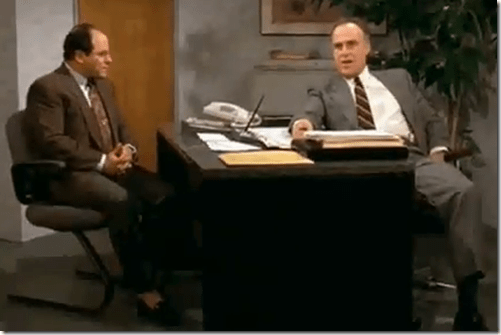
Mr. Lippman: It’s come to my attention that you and the cleaning woman have engaged in sexual intercourse on the desk in your office. Is that correct?
George Costanza: Who said that?
Mr. Lippman: She did.
George Costanza: Was that wrong?
Should I not have done that?
I tell you, I gotta plead ignorance on this thing, because if anyone had said anything to me at all when I first started here that that sort of thing is frowned upon…
You know, ‘cause I’ve worked in a lot of offices, and I tell you, people do that all the time.
Wonder if the Secret Service agents have tried George’s Costanza defense?
Might not work, but would at least generate some yuks.
>> Latest Posts
SHARE THIS POST WITH FRIENDS & FAMILY
Tags: Colombia, George Costanza, Secret Service
Posted in Laughs | Leave a Comment »
April 30, 2012
Punch line: TED-Ed YouTube channel aims to woo teachers with its subject-specific short-video content and customizable tools.
* * * * *
Excerpted from brandchannel.com “TED-Ed Aims to be a Teacher’s Pet”
The TED-Ed YouTube channel’s short videos have garnered over 2.5 million views since it was launched in March.
Now, a newly-launched TED-ED website is TED’s latest delivery on its brand promise of “Ideas Worth Spreading;” a dynamic site with customizable tools for educators.
click for a video overview of TED-Ed

Each short video (three to eight minutes) includes multiple choice quizzes, open-ended questions and a ‘Dig Deeper’ section. When a student answers incorrectly, a ‘Video Hint’ directs them to the point in the video with the correct answer. Teachers can browse content by subject with videos mapped via tagging to curricula taught in schools and access correlative materials that augment with the learning level.
“The new website is all about what teachers and students can do with those videos,” said TED-Ed’s Logan Smalley. “The goal of TED-Ed is for each great lesson to reach and motivate as many learners as possible. By putting this new technology to use, we hope to maximize time in class and give teachers an exciting tool for customizing – and encouraging – learning.”
“But the most innovative feature of the site is that educators can customize these elements using a new functionality called “flipping,”” notes the official press release. “When a video is flipped, the supplementary materials can be edited and the resulting lesson is rendered on a new and private web page. The creator of the lesson can then distribute it and track an individual student’s progress as they complete the assignment.”
Custom lesson plans receive a unique URL where teachers can track student’s viewing and responses and their plans can draw from any video on YouTube.
“Educators who have tested the site applaud it for its ease and intuitiveness, which, they say, will be especially useful for technology-shy teachers. “Some teachers are kind of afraid of videos,” says Jonathan Bergmann, a K-8 technology facilitator outside of Chicago. “They feel like technology is such a huge hurdle. I think this website will make it easier.” Bergmann, who is a pioneer of the flipped class movement, sees the TED-Ed site becoming an essential tool for outside-the-classroom learning.”
… “Our goal here is to offer teachers free tools in a way they will find empowering,” said TED Curator Chris Anderson of the TEDucation push. “Great teaching skills are never displaced by technology. On the contrary, they’re amplified by it.” …
Edit by KJM
>> Latest Posts
SHARE THIS POST WITH FRIENDS & FAMILY
Tags: online education, TED
Posted in Education - Academics, Online Education | Leave a Comment »
April 27, 2012
According to IBIS World …
The 10 fastest growing industries in the U.S. are:

… and the 10 fastest dying industries are:

Thanks to Tags for feeding the lead
>> Latest Posts
SHARE THIS POST WITH FRIENDS & FAMILY
Tags: Fastest dying industries, Fastest growing industries
Posted in Economics | Leave a Comment »
April 27, 2012
TakeAway: SyFy is expecting to provide brands additional awareness by way of integrating a new online video game and TV show.
* * * * *
Excerpt from AdAge: “Syfy Already Pitching ‘Defiance,’ Coordinated TV Series and Video Game”
Syfy is pitching advertisers on integrations into “Defiance,” the coordinated TV series and multiplayer online game.

“Defiance” centers on aliens and humans living together on Earth 30 years from now. The two species struggle to build a society amid devastation after an epic war.
The show and the game will influence each other and evolve together. If, for example, the game warns of an invasion, “then the show will reference that battle in the following episode.”
Starcom MediaVest Group says ” ‘Defiance’ is a groundbreaking paradigm that links both media [types] and allows brands to be more immersive than they could be as part of TV or a video game alone.”
Edited by ARK
>> Latest Posts
SHARE THIS POST WITH FRIENDS & FAMILY
Tags: Defiance, SyFy, TV, video games
Posted in Media, Video Games | Leave a Comment »
April 27, 2012
According to Business Week:
- One in three people who call the IRS don’t get their calls answered
- 10% of all mail sent to the IRS sits for at least 2 months before processing starts
- Less than half of all people who write to the IRS get replies in less than 6 weeks
- 10% of all mail sent by the IRS never reaches the intended recipient.
Yipes !
>> Latest Posts
SHARE THIS POST WITH FRIENDS & FAMILY
Tags: customer service, IRS
Posted in Gov't Waste & Inefficiency, IRS | Leave a Comment »
April 26, 2012
This is getting downright silly …
The first line of this morning’s BLS report on weekly jobless claims says:
In the week ending April 21, the advance figure for seasonally adjusted initial claims was 388,000, a decrease of 1,000 from the previous week’s revised figure of 389,000.
Note the last couple of words: “ … from the previous week’s revised figure”.
Hmmm.
Here’s the way CNBC decoded the report:
Initial claims for state unemployment benefits dropped by 1,000 to a seasonally adjusted 388,000, the Labor Department said on Thursday.
The prior week’s figure was revised up to 389,000 from the previously reported 386,000.
The four-week moving average for new claims, a closely followed measure of labor market trends, rose 6,250 to 381,750, its highest since the week that ended January 7.
Get it?
Last week, when claims were reported to have gone up, they were understated by 3,000.
Hmm.
Now, last month gets revised upward … and guess what?
This month is lower than last month.
So, Team O has a talking point: jobless claims are down.
They do think we’re stupid …
>> Latest Posts
SHARE THIS POST WITH FRIENDS & FAMILY
Tags: BLS, cooking the books, unemployment
Posted in Employment - Jobs, Unemployment | Leave a Comment »
April 26, 2012
TakeAway: Recent study shows hybrid vehicles lack repeat purchasers.
* * * * *
Excerpt from AdAge: “Usually No Encore for Hybrid Buyers”
Only about one out of three hybrid vehicle owners chooses to buy another hybrid, according to a study by research firm Polk.
The good news for automakers is that a high percentage of the return buyers remain loyal to the brand, even if they don’t buy another hybrid.
In the case of hybrids, rising fuel prices, to more than $4 a gallon in some places, has so far had “little impact” on hybrid buying decisions, the report said.
“The lineup of alternate-drive vehicles aren’t appealing enough to consumers to give the segment the momentum it once anticipated.”
Edited by ARK
>> Latest Posts
SHARE THIS POST WITH FRIENDS & FAMILY
Tags: Hybrid autos, repurchase rates
Posted in Autos - Travel, Energy | 1 Comment »
April 26, 2012
Did you know that there’s a field of study devoted to the subject of how individuals make choices about paying taxes; it’s called “tax morale.”
According to BusinessWeek, the IRS studied the factors motivating taxpayers to comply with tax laws and concluded that the” fear of getting caught plays a much smaller role in keeping taxpayers honest than is commonly assumed.” They’re less inclined to dodge when they believe that their cheating creates national problems.
On the flip-side, when taxpayers learn that many people evade taxes, they are more likely to evade them, too.
And, the IRS hired social anthropologists to look more closely at the behavior of tax dodgers.
They divided evaders into eight categories of noncompliance.
- Procedural noncompliants don’t pay taxes because IRS procedures are too complicated.
- Asocial and habitual noncompliant taxpayers get a rush out of cheating.
- Symbolic noncompliant taxpayers game the system out of principle.
- Brokered noncompliants use accountants and lawyers to cheat
- Some who don’t comply simply can’t afford their tax burden, or are too lazy to file.
- Generational noncompliers think it’s normal not to pay taxes because people in their families didn’t pay.
The sociologists also found that there are towns in the U.S. inhabited by super-taxpayers who have high compliance rates in numbers and percentage of taxes due that are paid.
Now, the IRS is trying to identify the super-tax-paying communities’ demographics to pinpoint what makes their residents so honest.
Among the hypotheses: an inspiring pastor, an immigrant community with values from the home country, or really good public schools.
Maybe they should test the locales’ water supply …
>> Latest Posts
SHARE THIS POST WITH FRIENDS & FAMILY
Tags: anthropology, compliance, IRS, Sociology, tax morale, Taxes
Posted in IRS, Taxes | Leave a Comment »
April 25, 2012
Former SNL comedian John Lovitz voted for Obama in 2008.
Now, he’s expressing his disappointment in a very “colorful” way.
The essence of his rant goes to the core of what bothers many besieged taxpayers.
“I voted for the guy and I’m a Democrat.
First they say … ‘You can do anything you want. Go for it.’
So then you go for it, and then you make it, and everyone’s like, ‘F— you’ … give me half … no, that’s not enough, give me more than half.
This whole thing with Obama saying the rich don’t pay their taxes is f—ing bulls—.”
Worth listening to the whole thing … if you don’t mind a few bad words … and want a few yuks

>> Latest Posts
SHARE THIS POST WITH FRIENDS & FAMILY
Tags: Goes viral, Lovitz rant, Obama, Taxes
Posted in Laughs, Obama, Taxes | Leave a Comment »
April 25, 2012
TakeAway: T-Mobile reboots the its brand with an alter-ego of its well-known spokeswoman in the hopes of increasing trial.
* * * * *
Excerpt from AdAge: “T-Mobile Talks Tough for Its Comeback, Vowing ‘No More Mr. Nice Girl’”
Carly who has starred in T-Mobile’s ads since 2010 and been dubbed by some a DVR-proof pitch personality, is trading her usual frocks for biker leather as the T-Mobile looks to halt mass subscriber defections.

“The pending AT&T deal negatively impacted customer satisfaction and brand perception in 2011, which is why we believe it is time to reinvigorate the challenger strategy and to relaunch the brand,”
Despite its smaller budget, T-Mobile ads have seemed to cut through the clutter, thanks largely to Carly, the only current spokescharacter for a mobile carrier who’s easily recognizable.
Ads featuring biker Carly are intended to equate the brand with speed which is the single-biggest thing consumers are looking for in their next smartphone.
Speed? Yeah, right/
Edited by ARK
>> Latest Posts
SHARE THIS POST WITH FRIENDS & FAMILY
Tags: brand positioning, Carly Foulkes, T-Mobile
Posted in Mktg - Advertising, Mktg - Brands, Mktg - Promotion, Telecom | Leave a Comment »
April 25, 2012
Way back in November 2008 — in a post titled: “Big Idea: Rallying private capital to stabilize housing prices.” — I proposed a plan to resuscitate the residential housing market.
The essence of the plan (in 2008) was to:
- Eliminate ALL of the capital gains taxes on residential property that is bought from now until, say, December 31, 2010 and held for at least 18 months,
- Allow these “qualified residential properties”, if they are rented, to be depreciated for tax purposes at an aggressively accelerated rate (say, over 5 or 10 years) to generate high non-cash tax losses, and
- Allow ALL tax losses generated by these “qualified residential rental properties” to offset owners’ taxable ordinary income with no “passive loss’ limitations, thereby reducing their federal income tax liability.
At the time, I said “the positive results are practically guaranteed”.
Well, almost 4 years later, look what’s happening — even without the bold strokes that I suggested.
The NY Times reports that “Investors Are Looking to Buy Homes by the Thousands”.
Some deep-pocketed investors are betting that the residential real estate market is poised to explode.
With home prices down more than a third from their peak and the market swamped with foreclosures, large investors are salivating at the opportunity to buy perhaps thousands of homes at deep discounts and fill them with tenants.
There are close to 650,000 foreclosed properties sitting on the books of lenders.
An additional 710,000 are in the foreclosure process, and about 3.25 million borrowers are delinquent on their loans and in danger of losing their homes.
With so many families displaced from their homes by foreclosure, rental demand is rising. Others who might previously have bought are now unable to qualify for loans.
Investors believe the rental income can deliver returns well above those offered by Treasury securities or stock dividends.
At the same time, economists say, they could help areas hardest hit by the housing crash reach a bottom of the market.
Imagine if the movement had started 4 years ago.
And, imagine if the movement was boosted with the tax incentives,
It’s late, but not too late.
As I said before; “the positive results are practically guaranteed”.
>> Latest Posts
SHARE THIS POST WITH FRIENDS & FAMILY
Tags: housing crisis, investors, Real Estate, residential real estate
Posted in Financial Crisis, Housing - Mortgages | Leave a Comment »
April 24, 2012
Excerpted from the NY Times When a Sugar High Isn’t Enough
Dr. John Kellogg — founder of the world’s largest cereal company had a simple credo: “Eat what the monkey eats … simple food and not too much of it.”
Do monkeys eat Pringles?
Hope so because Kellogg is buying Pringles from Procter & Gamble in a $2.7 billion deal expected to close this summer.
Why?
For openers, Kellogg’s legacy brands (Corn Flakes and Rice Krispies) are under pressure from private labels and other breakfast convenience foods.
Note: Kellogg cranks out about 200 million pounds of private-label cereal a year.
The real growth for Kellogg, as well as for packaged-food rivals like PepsiCo and its Frito-Lay division, is foreign markets and snacks. That’s where Pringles comes in.
Kellogg’s CEO says that selling cereal and selling snacks are two entirely different skills.
What the company is buying with Pringles is not just a line of products that is already huge internationally, but a group of Procter & Gamble merchandisers with “the snack mind-set.”
“When you’re talking about snacks … it’s about someone who came into the store to buy something else and hit a display and thinks, ‘Hey, I’d love to have a can of Pringles.’
With snacks, it’s much more intercepting the consumer in-store as opposed to getting on their shopping list.
It’s in-store merchandising.
It’s retail entertainment.
Whereas cereal is much more about the 30-second feel-good ad.”
* * * * *
Nutrition note: According to Robert H. Lustig, a professor of clinical pediatrics at the University of California, San Francisco:
”People who consume sugar are more likely to overeat because “there are signals to the brain that tell you when you’ve had enough; sugar blocks them.
Eating calories from sugar will therefore lead you to consume more calories.”
Thanks to DM for feeding the lead
>> Latest Posts
SHARE THIS POST WITH FRIENDS & FAMILY
Tags: in-store merchandising, Kellogg, Pringles, snack foods
Posted in Food & Drink, Health & Nutrition, Mktg - Merchandising In-store, Mktg - Sales Force | Leave a Comment »
April 24, 2012
Punch line: Many scientists work has been undermined by the contamination and misidentification of cancer cell lines used in research labs around the world.
* * * * *
Excerpted from the WSJ
Cancer experts seeking to solve the problem have found that a fifth to a third or more of cancer cell lines tested were mistakenly identified —with researchers unwittingly studying the wrong cancers, slowing progress toward new treatments and wasting precious time and money.
In hundreds of documented cases that undermine a broad swath of research, cancer samples that were supposed to be one type of tumor have turned out to be another, through either careless laboratory handling, mislabeling or other mistakes.
These mix-ups are maddeningly difficult to pinpoint: an improperly sterilized pipette, a lab worker momentarily distracted, a misread label or a typo on a record sheet.
When seeking cancer treatment for a specific tumor, he said, such mistakes “are an utter waste of public money, charity money and time.”
“It may be causing drugs to be used which are inappropriate for that particular type of cancer.”
The problem is particularly damaging for research into such rare cancers as adenoid cystic carcinoma, which strikes 1,200 people in the U.S. each year. The lack of a good cell line slows research and few in the field have the time or resources to create new lines.
Seeking to solve the problem, a committee led by ATCC, a nonprofit group based in Manassas, Va., released guidelines this year to establish standards to authenticate cancer cell lines.
ATCC is working with the National Center for Biotechnology Information, a branch of the National Institutes of Health, to establish a central repository and database of cell lines that have undergone genetic testing and whose origins can be verified.
>> Latest Posts
SHARE THIS POST WITH FRIENDS & FAMILY
Tags: cancer, clinical research, DNA strains
Posted in Health & Nutrition | Leave a Comment »
April 23, 2012
Mort Zuckerman — head of U.S. News, not the Mark Zuckerberg, the guy at Facebook — was an Obama supporter in 2008.
Suffice it to say that he’s disappointed with the President’s accomplishments re: the economy.
His article President Obama’s Economic Programs Have Failed is worth reading in its entirety.
Here are a couple of data points from it …
- The pool of unemployed Americans is 15 million — that’s roughly equal to the entire population of the states of Connecticut, Delaware, Arkansas, Iowa, and Oklahoma.
- 25% of households include someone who is unemployed and looking for work.
- Among the jobless, a staggering 42% of the unemployed are long-term unemployed, without jobs for six months or longer.
- Since 2008, some 3 million people have dropped out of the job market. If they hadn’t, the unemployment rate would be about 10.8%.
- So-called structural unemployment has risen from 5 percent before the crisis to close to 7% today …. if so, many lost jobs that cannot be restored by boosting demand.
- Hiring today is at about 70% of the 2006 level … so, job seekers are only about one third as likely to find work as in 2006.
- Layoff announcements have risen 18% from a year ago, and hiring plans have dropped 82%.
- The U.S has lost 6 million blue-collar manufacturing jobs.
- 70% of job openings have been in mostly low-wage sectors, including healthcare, leisure, hospitality, and retail.
- Some 7.7 million workers are stuck in part-time jobs, with pay inadequate for entry into the middle class.
- 67% of the meager employment growth rate has been in the 55 and older age cohort.
- The jobless rate for workers ages 20 to 24 is over 13%; teenagers, 25%; Hispanic teenagers, 30.5%; and black teenagers, 37.9%.
- People with a college education face unemployment rates of about 4.2; those with a certificate from a community college or at least some college coursework have a jobless rate of 7.5%.
- People who did not finish high school have it worst at almost 13%.
- Two thirds of our employment is concentrated in 6 million small and medium-size businesses.
- The U.S. needs 1 million new businesses every year to keep us on the right track. Instead we have only about 400,000 firms starting up.
- Real per capita disposable income — adjusted for inflation — is down to $32,600 now versus $34,641 back in 2006.
- The ratio of total household debt to after-tax earnings is 117% — down from last year’s peak peak of 131%, but is still above the pre-bubble rate of 70%.
Zuckerman concludes: We are still in an era of deleveraging, rising savings rates, home price deflation, and squeezed real income, all of which will continue to affect consumer spending.”
Have a nice day …
>> Latest Posts
SHARE THIS POST WITH FRIENDS & FAMILY
Tags: Economy, Obama, Zuckerman
Posted in Economy, Obama | Leave a Comment »
April 23, 2012
TakeAway: Hulu is challenging online advertising pricing by only charging for fully viewed ads.
* * * **
Excerpt from AdAge: “Hulu’s New Guarantee: Someone Watched Your (Whole) Ad”
Advertisers are generally charged when a beacon is fired as an ad begins playing. But Hulu is moving that notification to the end, meaning that and ad that isn’t completed won’t count.
“If you pay for a full impression, you will get an impression, full stop.”
The company said its completion rate for ads is 96% — extraordinarily high for online video, where the average completion rate is closer to 88% for long-form content and 54% for short clips.
“Vendors with greater video completion rates [see] greater brand lift and greater message recall.”
Though the move will cost Hulu some volume, the company’s idea is that it will be made up in higher rates resulting from competition for fewer available spots.
It also means advertisers get some partial impressions free, as a number of viewers will be exposed to a portion of the ad before they click away.
Edited by ARK
SHARE THIS POST WITH FRIENDS & FAMILY
Tags: Hulu, online ads, pay for performance
Posted in Internet - General, Internet - Soc Networking, Internet Marketing - eCommerce -, Mktg - Advertising | 1 Comment »
April 20, 2012
According to Forbes …
Doctors, no fans of health insurance, are openly rooting that Obamacare will be struck down by SCOTUS, as appears to be the direction of things after last month’s oral arguments.
A recent poll by sermo.com, a physican’s website, revealed that 75 percent of doctors are against the health care law.
A survey by Deloitte, a major health consulting firm, found that 69 percent of physicians are “pessimistic about the future of medicine” because of the law.
My, oh my, how times have changed.
>> Latest Posts
SHARE THIS POST WITH FRIENDS & FAMILY
Tags: doctors, ObamaCare, SCOTUS
Posted in ObamaCare | 1 Comment »
April 20, 2012
TakeAway: A new start-up is using disruptive innovation to cut its way into the multi-billion dollar shaving industry.
* * * * *
Excerpt from WSJ: “A David and Gillette Story”
Dollar Shave Club, the e-commerce start-up, already developed a following for its quirky approach to hawking razors and blades for a $3 to $9 monthly fee.
It began with a YouTube video, in which founder rides on a forklift, plays tennis, and dances with a fuzzy bear. It’s already received some four million views.
The shaving industry market leaders have huge marketing budgets, deep consumer research and relationships with retailers that leave little room for newcomers.
What the start-ups have in their favor is technology. Companies with no marketing budget can command attention with free video and quickly build a following on services like Facebook and Twitter. Netflix have conditioned consumers to getting regular deliveries of the things they use by mail.
It is unclear whether those prices will prove low enough to lure users. By comparison, 15 Gillette Mach3 cartridges can be purchased for as low as $2.06 each on Amazon.com.
Edited by ARK
>> Latest Posts
SHARE THIS POST WITH FRIENDS & FAMILY
Tags: Dollar Shave Club, razor blades
Posted in Mktg - Promotion | Leave a Comment »
April 19, 2012
In an earlier post “Government Gone Wild?”, I said:
If the President takes day trips on Air Force One to campaign, why shouldn’t GSA folks take day trips to Hawaii for ribbon cuttings?
A loyal, left-leaning reader (maybe now a former left-leaning reader) challenged the Homa Files fact-checkers as “just plain wrong” since:
The campaign reimburses the federal gov’t for the usage of Air Force One and costs associated with protection of the POTUS directly related to campaigning.
My immediate reply:
There is partial reimbursement …. the campaign pays for “incremental costs not related to official business” …. it’s not prorated …. when he gives a 30 minute Buffett Rule speech and does 3 hour long fund-raisers, the campaign doesn’t pay for 75% (or 85%) of the cost of the trip.
Just to sure, we doubled back on the facts.
Landed on a point-on article by ever right-wing ABC: Presidential Piggybacking: Obama Trips Combine Official, Political Business
The act of presidential piggybacking — coupling official duties, in this case a speech on the economy, with political fundraising — was not pioneered by Obama but is prominently on display this year.
The president’s jet-setting has raised the curiosity and questions from taxpayers about who bears the sky-high costs.
Official presidential travel has traditionally been paid for by taxpayers as part of executive branch operations, while political trips and events are to be covered by a candidate’s campaign committee.
On the occasions that they mix, the costs are to be split.
“Most presidents have doubled up on trips and said they followed the law, which is a complex formula no one really understands. At the end of the day the Federal Election Commission has not been abundantly clear about how the costs of mixed purpose travel should be paid for”
As a rule of thumb, an incumbent president’s campaign is expected to reimburse the government the cost of a first class commercial airline ticket for each person riding Air Force One to or from a political event.
But the amount doesn’t come close to covering the proportional operating cost of Air Force One, or the army of Secret Service agents, White House advance teams, the fleet of Air Force cargo planes transporting the presidential motorcade or the helicopters that often ferry the president from an airport to a remote site.
Air Force One alone cost $179,750 per flight hour in fiscal year 2012.
That figure includes fuel, flight consumables, depot level repairs, aircraft overhaul and engine overhaul. Pilot and airmen salaries are not included because they are paid regardless of the plane’s use.
On a recent three-day, three-state swing that included two official events and eight fundraisers, netting more than $8 million, incurred flight costs alone of $2.1 million, based on the Air Force figure and flight times gathered from press pool reports.
The Obama campaign has reimbursed more than $1.5 million for travel so far this election cycle, according to FEC records.
Read that last paragraph carefully.
80% of the “stops” of the cited trip were campaign-related.
And, just the cost of AF One were over $2 million.
So, you’d expect that the Obama Campaign would have picked up at least $1.6 million of the costs — just for AF one, just on this one trip.
But, according to ABC, the Campaign has only picked up $1.5 million in total, for the entire campaign cycle so far.
C’mon man.
I say to the GSA guys: Go cut some ribbons” … Why not?.
>> Latest Posts
SHARE THIS POST WITH FRIENDS & FAMILY
Tags: Air Force One, Obama, Presidential piggybacking
Posted in Gov't Waste & Inefficiency, Gov't Spending, Obama | Leave a Comment »
April 19, 2012
TakeAway: Ford’s Mustang brand is being refreshed to target Gen-Y consumers who have to taste the the freedom of driving.
* * * * *
Excerpt from WSJ: “Old Mustang Is Put Out to Pasture”
The Mustang today strongly hews to the look of the 1964 original. But Ford is working on radical makeover of its signature youth-market car, people familiar with Ford’s plans said.
The next generation would retain the shark-nosed grille and round headlights, but would look more like the new Ford Fusion.
The change is part of a bid to make the Mustang appeal to Generation Y, the roughly 80 million people who were born between 1980 and 1999. This demographic group is entering its peak car-buying years.
For Ford, Gen Y may prove a difficult target.
For many in this group, cars and driving just aren’t that cool in an era of iPads and Facebook.
A 2011 study by the University of Michigan found that just two-thirds of all 18-year-olds had driver’s licenses in 2008, down from 80% in 1983.
Edited by ARK
>> Latest Posts
SHARE THIS POST WITH FRIENDS & FAMILY
Tags: Autos, cars, Mustang
Posted in Autos - Travel | Leave a Comment »
April 18, 2012
Two events this week got me thinking.
First, the Senate held the campaign-ploy vote on Obama’s Buffett Rule — intended to double capital gains tax rates on millionaires & billionaires”.
Then last nite, Buffett disclosed that he has been diagnosed with prostate cancer. Consistent with the experience of several of my friends, Buffett says it’s not life-threatening, given the early detection and high success rate of treatments. I wish him well … in our family, we take cancer very seriously.
That said, the events rekindled my thinking re: tax changes required to advance Buffett’s mission to “pay his fair share”.
I got it !
Simply stated:
Ken’s “Buffet Rule”
For purposes of estate taxation, estates shall be limited to a maximum deduction of $1 million for charitable donations.
Now that Buffett has leveraged the tax laws to amass his $62 billion fortune, he advocates higher taxes for high-earners.
He’s suddenly amped about everybody paying their fair share.
Give me a break.
Let’s walk through Saint Warren’s personal “fair share” plan.
First, to the extent that any of Buffett’s wealth is in stocks with “unrealized capital gains” … the the dough gets bequeathed at a “stepped-up basis”.
English translation: no capital gains get paid on his “unrealized gains” … ever !
Nice dodge, right?
Ken’s Buffett Rule doesn’t fix that.
But, the big daddy tax dodge is that Buffett is bequeathing his estate to his buddy Bill Gates’ tax exempt foundation … part, I guess, to “give back to society” … but in large part to dodge estate taxes.
If his buddy Barack gets his way, estates will be taxed a minimum of 45%.
That means that Buffett dodges over $25 Billion in Federal estate taxes by channeling the estate to his buddy Gates.
Note: According to the Wash Post, Obama’s Buffett Rule is only projected (by Obama) to raise $46 billion over 10 years … $4.6 billion annually … and most analysts think that number is a pipe dream.
So, Ken’s Buffett Rule would cop over half of Obama’s 10 year Buffet Rule tax haul, while isolating the tax to the man who won’t shut up about wanting pay his fair share … put YOUR money where your mouth is Warren.
Great idea, right?
P.S. For folks who worry about the collateral damage done to charities, the deduction limit can be raised to $1 billion per estate …. that would exclude practically every estate … except Buffett’s.
>> Latest Posts
SHARE THIS POST WITH FRIENDS & FAMILY
Tags: Buffett Rule, estate taxes, tax dodges
Posted in Buffett, Warren, Taxes | Leave a Comment »
April 18, 2012
Punch line: Never carry cash or a checkbook? Apple now makes paying back your friend even easier, with the application Bump Pay. Simply enter an amount and ‘bump’ iPhones.
Excerpted from psfk.com “Pay Your Friends Back By Bumping iPhones”
* * * * *


The popular content-transfer app Bump, has now released a new iOS app called Bump Pay.
The app allows users to exchange money by simply by entering the amount they wish to transfer and then just tapping their phones together.
Both users need to link the app to their existing PayPal accounts in order for the transaction to work.
“Bump Pay is interesting because of its novelty, which may spur trial, but being within arm’s reach of the person you’re paying back is not always convenient and will limit its usefulness.”
Bump Pay will initially be available on the iPhone only.
Edit by KJM
>> Latest Posts
SHARE THIS POST WITH FRIENDS & FAMILY
Tags: Bump Pay, cellphones, iPhone
Posted in Payment methods & systems | Leave a Comment »
April 17, 2012
Apple’s stock has lost about 9% of its value since hitting its most recent all-time high of $644, and is on a week-long skid.
Even if you don’t own any AAPL sahres outright, if you’re holding any mutual funds or ETFs, you probably own a boatload.
For example, if you’re holding the PowerShares QQQ (QQQ), you’re holding a big slice of Apple … 17.5% is in AAPL/

What’s the top holding in the SPDR S&P 500 (SPY)?
You guessed it, APPL …4.37% of the SPY

Ditto for many of the most popular mutual funds.
For example, APPL is almost 10% of Fidelity’s Contrafund.

A couple of other biggies:
- Fidelity Magellan (FMAGX) … top stock … 6.24%%
- American Funds Growth Fund of Amer A (AGTHX) … top stock … 4.85%
You get the picture, right?
Two major takeaways:
First, If you’re holding any popular ETfs or mutual funds — individually or in, say, 401-Ks — then you probably own a bunch od Apple.
Even more important, so many big dogs — ETFs and mutual funds — are so heavily invested in Apple that, as Apple goes, so will the market.
I’m surprised that more hasn’t be written about about Apple’s influence on the total stock market.
You might want to start worrying …
>> Latest Posts
SHARE THIS POST WITH FRIENDS & FAMILY
Tags: APPl, Apple, ETF, mutual funds
Posted in Finance & investing, Investments | Leave a Comment »
April 17, 2012
Finished up my taxes this weekend …. OUCH.
Along with more than 30 million other taxpayers, I got caught by the Alternative Minimum Tax (AMT).
There are about 130 million Fed tax filings each year … about half of them pay no Fed income taxes (or get a refundable credit) … that means that about half of all tax payers get hit with the AMT. it only takes about $75,000 in income to make somebody a candidate for the AMT.
This year — in part because of the hoopla re: the Buffett Rule — I dug dig into the AMT calculations rather than just take Turbo Tax’s answer and run.
The bottom line — based on my dissection — is that the AMT requires that high earners pay about 28% on their ordinary taxable income — wages, interest, pensions, etc.
So, on ordinary taxable income the Obama-Buffett Rule (OBR) boosts the rate from 28% to 30%.
Big deal, right?
The real impact is what happens to capital gains and “qualified” dividends — which are currently capped at a 15% rate — even under the AMT.
Under the Obama-Buffett Rule, capital gains and qualified dividends would be taxed at 30% — a doubling of the current AMT rate.
Now, that is a big deal.
When you cut to to the chase, the Obama-Buffett Rule is simply a doubling of the capital gains tax rate — selectively applied to those people who earn most of the capital gains.
The OBR simply takes capital out of play from the private sector and transfers it to the government sector.
If you think that the government does a better job allocating capital than the free market, then you gotta love the Obama-Buffett Rule.
If you think the government uses capital less efficiently than the private sector, you gotta hate it.
Put me in the latter camp …
>> Latest Posts
SHARE THIS POST WITH FRIENDS & FAMILY
Tags: Buffett Rule, capital gains, Taxes
Posted in Buffett, Warren, Obama, Taxes | Leave a Comment »
April 16, 2012
The past week has been like a bad reality show: “Government gone wild“.
We’ve had — in chronological order — the GSA scandal mocking government controls on spending, Demster Hilary Rosen whacking away at Ann Romney, and the Secret Service “incident”.
Though I’m a b-school prof and I worked in the real world for a couple of decades, I don’t claim particular expertise in management leadership or ororganizational behavior.
That’s ok, because this one is so obvious …
Organizations observe their leaders – what they do, not what they say – and act accordingly. Consider …
- If the President wastes billions on shovel ready projects (“ha ha”), why should the GSA squeeze every dime?
- If the President shovels billions to his bundlers (think Solyndra), why shouldn’t the GSA buy a couple of iPads for each other?
- If the President takes day trips on Air Force One to campaign, why shouldn’t GSA folks take day trips to Hawaii for ribbon cuttings?
- If the first lady parties with the girls inVegas,why shouldn’t the GSA party in Vegas?
- If the President mocks folks for their “guns and bibles”, why shouldn’t Hilary Rosen mock Ann Romney for “never working a day in her life”?
- If the President has a constant stream of rock stars to the White House for private parties, why shouldn’t his Secret Service entourage have some party girls over every now and then?
- If the President openly disrespects our higher institutions (think Supreme Court), why shouldn’t the Secret Service disrespect our higher institutions (think, the Presidency)?
Obama should take the last point most seriously. He’s the role model and sets the tone for government employees.
Maybe, his “people” are just acting the way he’s acting
>> Latest Posts
SHARE THIS POST WITH FRIENDS & FAMILY
Tags: GSA, Leadership, OB, Obama, Secret Service Scandal
Posted in Leadership, Management, Obama | Leave a Comment »
April 16, 2012
A month ago — in a post titled Head-scratching polling results — we pointed out:
… right-leaning FOX News has Obama +2 in approval, Rasmussen and Bloomberg — also usually a bit to the right — have him +1.
But, left-leaning Gallup has Obama down 7 points.
Far left-leaning CBS/NYT and ABC/Wash Post have him down 6 points and 4 points, respectively.
I thought those results were quite curious.
Well, I’m happy to report that the planets are back in alignment.
According to RCP, right-leaning Fox has Obama 6 points under water.
Left-leaning CNN, ABC, and Washington Post have him 5 to 6 points above water.
We’re back to the old normal … whew.

>> Latest Posts
SHARE THIS POST WITH FRIENDS & FAMILY
Tags: Obama, polls, presidential approval, surveys
Posted in Obama, Polls & Surveys | Leave a Comment »
April 13, 2012
Everyone knows that Barack Obama’s campaign slogan was “Hope & Change” in 2008.
But, according to left-leaning Politico:
No one seems to know what it will be for 2012.
The White House has been cycling through catchphrases since announcing his reelection bid a year ago:
- Winning the Future
- We Can’t Wait
- An America Built to Last
- An Economy Built to Last
- A Fair Shot.
And, my favorite:

>> Latest Posts
SHARE THIS POST WITH FRIENDS & FAMILY
Tags: 2012 election, brand, Obama, slogan
Posted in Obama | 1 Comment »
April 13, 2012
In case you were off the planet yesterday, Hillary Rosen — reportedly a DNC adviser — dissed Ann Romney (and millions of stay-at-home moms) that Mrs. Romney — a mother of 5 and cancer survivor — has no cred re: economic issues because she “hasn’t worked a day in her life”.
Oops … stepped in it.
According to the Washington Post, Team Romney quickly seized the opening:
The Romney campaign’s quick reaction to Rosen’s comments — Ann Romney Twitter feed, Fox News hit, conference call — speak to an operation that is ready for the minute-by-minute battle that is modern presidential campaigning.
Romney’s operation won a measure of respect for their handling of the slipup by Rosen.
Already there’s a Romney bumper sticker available for sale.

>> Latest Posts
SHARE THIS POST WITH FRIENDS & FAMILY
Tags: bumper sticker, Mom's Drive the Economy, Romney
Posted in Presidential election, Romney, Mitt | Leave a Comment »
April 13, 2012
Punch line: Google encourages consumers to go hands free with a beta version of augmented reality glasses. With these wrap around, Star Trek-esc glasses, you can check the weather, look at maps, and take pictures.
* * * * *
Excerpted from “Google Launches Augmented Reality Glasses In Beta”

Google has began rolling out prototypes of their augmented reality glasses to employees through a somewhat secret initiative called Project Glass. The prototype, pictured above, is the company’s first venture into wearable computing. The wrap-around glasses feature a see-through lens that can stream everything from the weather to maps to text messages, in real-time. The glasses can record video, take pictures and the device sends and receives messages through voice commands …
The prototype model has debunked early rumors that the glasses would resemble a pair of Oakley Thumps, but this is just one of the many variations of the glasses in the works. There has also been speculation that the glasses would interfere with people’s daily life too much but according to the New York Times writer, Nick Bilton:
One person who had used the glasses said: ‘They let technology get out of your way. If I want to take a picture I don’t have to reach into my pocket and take out my phone; I just press a button at the top of the glasses and that’s it.
Edit by KJM
>> Latest Posts
SHARE THIS POST WITH FRIENDS & FAMILY
Tags: Google, Oakley, sunglasses, wearable computing
Posted in Google | Leave a Comment »




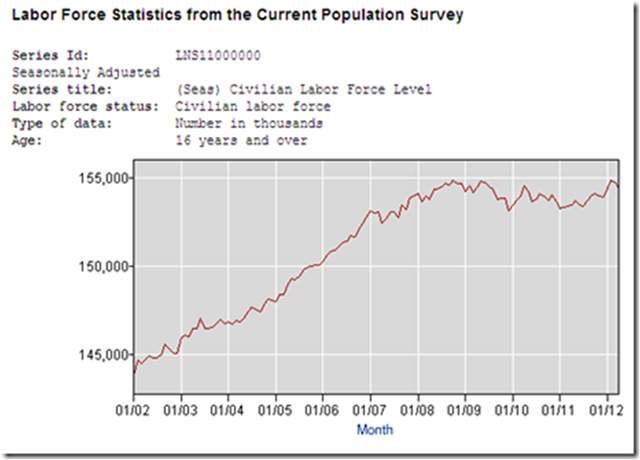



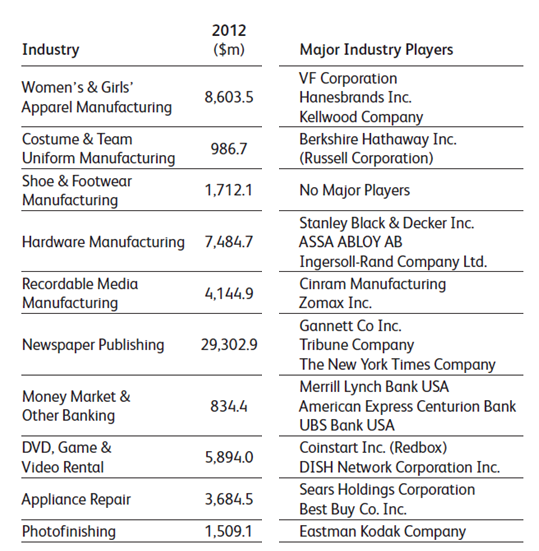











 The Homa Files