Punch line: Many of consumers’ buying behaviors are habitual — deeply ingrained and difficult of to change. Marketers have to identify times when consumers are open to change and get them. to break their habits.
The good news: the are times when consumers are, in fact, ripe for change …
In the 1980s, a team of researchers led by a U.C.L.A. professor named Alan Andreasen (now at MSB) undertook a study of peoples’ most mundane purchases, like soap, toothpaste, trash bags and toilet paper.
They learned that most shoppers paid almost no attention to how they bought these products, that the purchases occurred habitually, without any complex decision-making.
Which meant it was hard for marketers, despite their displays and coupons and product promotions, to persuade shoppers to change.
But when some customers were going through a major life event, like graduating from college or getting a new job or moving to a new town, their shopping habits became flexible in ways that were both predictable and potential gold mines for retailers.
The study found that:
When someone marries, he or she is more likely to start buying a new type of coffee.
When a couple move into a new house, they’re more apt to purchase a different kind of cereal.
When they divorce, there’s an increased chance they’ll start buying different brands of beer.
At those unique moments, Andreasen wrote, customers are “vulnerable to intervention by marketers.”
In other words, a precisely timed advertisement, sent to a recent divorcee or new homebuyer, can change someone’s shopping patterns for years.
Note that Prof. Andreasen didn’t just pick off the obvious stuff — e.g. new parents buying baby stuff, new home owners furnishing their new digs, or divorcees buying new duds.
No, the life-changers seem willing to change many of their buying patterns and brand loyalties.
Next: How Target identifies customers who are “vulnerable to intervention by marketers” … and pounces on them.
NY Knicks sensation Jeremy Lin is going on offense to protect “Linsanity”.
Last week, he applied for trademark rights to Linsanity.
One of Lin’s attorneys confirmed: “We’re prepared to protect his intellectual property rights,” said Pam Deese at the Washington, D.C., law firm of Arent Fox. She declined to comment further
Lin paid a filing fee of $1,625 to cover use of the trademarked term on all manner of apparel, including underwear.
Here’s the rub: One of Lin’s high school basketball coaches reportedly bought the domain name Linsanity.com in 2010 and has been selling Lin branded merchandise including T-shirts that have similar blue and orange coloring like that of the Knicks’ uniforms..
“The NBA is pursuing enforcement — in the US, China and other countries — to address the sale of counterfeit ‘Lin’ jerseys and other unauthorized merchandise using NBA intellectual property. We also are coordinating with Jeremy Lin’s representatives regarding their efforts to enforce against the unauthorized use of his name and image.”
Punchline: Walmart moms want to buy healthier foods for their families, but are over-whelmed by nutrition labels and options. To simplify the buying process and promote healthier eating, Walmart has made a “Great for you” icon for its healthy products.
A year after pledging to develop a front-of-pack label that would give its customers an easier way to identify healthier food, and a month after a public commitment with First Lady Michelle Obama to putting nutrition front and center in its stores, Walmart, the nation’s largest food retailer this week unveiled a “Great For You” icon to create a visual system to educate customers ..
Walmart says it will adapt to whatever the FDA’s regulations are whenever that list actually is produced, but will for now add the icon to products with lower levels of fat, sugar, and artificial additives. Plus, the seal will appear on signage in the fruits and vegetable section of its grocery area.
“It helps customers see very, very quickly what healthier choices are for them,” stated Andrea Thomas, SVP of sustainability for Wal-Mart Stores …
“Walmart moms are telling us they want to make healthier choices for their families, but need help deciphering all the claims and information already displayed on products,” said Andrea Thomas, senior vice president of sustainability at Walmart. “Our ‘Great For You’ icon provides customers with an easy way to quickly identify healthier food choices. As they continue to balance busy schedules and tight budgets, this simple tool encourages families to have a healthier diet” …
TakeAway: Promoting a new product, UK’s McCain Foods is pumping the smell of baked potatoes into local bus stops. That would drive Occupiers crazy in the U.S. … or, maybe, make them smell better.
McCain Foods is tempting UK consumers with the wafting smell of “3-D baked potatoes” as they wait at city bus shelters.
When people press a button on a poster, a hidden heating element warms the fiberglass 3-D potato and releases the aroma of oven-baked jacket potato throughout the bus shelter.
The shelters will also dispense a discount for the product: baked potatoes that are ready to eat from frozen in five minutes.
Gotta admit, I like the tussle between Team O and the Catholic Church. It’s like watching a Wrestlemania main event.
But, theological and and health issues aside, I’m shocked by Administration’s naiveté re: business and economics.
And, I think I broke the code.
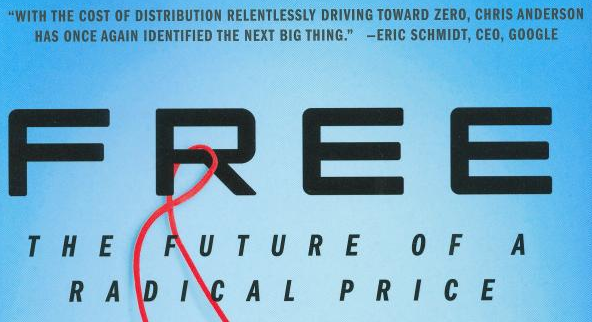
I’m betting that the only business book Obama and his advisers carry around is Chris Anderson’s 2009 best-seller: Free – The Future of a Radical Price.
Note that I said “carry around” … not “read” … because the book does a nice job of explaining the uses and mis-uses of “free”,
Why do I think so?
Easy, because the cover blurb was written by Google’s Eric Schmidt — the recently canned Google CEO and close buddy of Obama’s … and because of Obama’s penchant for declaring stuff to be “free” whether it is or isn’t.
Obviously, Team O doesn’t really get the concept.
Let’s start with the basics: nothing is free.
When something (like pills) is produced, delivered and consumed, there are associated costs.
Yes, pills may be given to the consumer without charge, but somebody has to pick-up the tab.
Since the government has no money of its own, if it nobly declares that it’ll pay for it, it’s really saying that all taxpayers will pay for it — whether they want to or not.
Note that, for obvious reasons, I said taxpayer, and not citizens.
Let’s take another variation: consumers don’t have to pay for pills — their insurance companies will be mandated to give them away for free.
Oh really.
One member of the administration said that the money will come straight from the insurance companies reserves — the money set aside to pay claims.
Well, then either other types of claims become unfunded (i.e. can’t be paid), or the insurance company just rolls over and sacrifices some profits, or premiums go up.
There aren’t any other options, and I’m betting on the last one — raising premiums.
That’s ok — in the mind of the Feds — because employers, not employees have to eat the premium increase.
Well, economists would say that the higher premiums come indirectly out of employees pockets since they will just constrain other parts of workers’ compensation packages.
You can buy into that argument or not … your choice.
Let’s pretend that the insurance company just has to eat the added costs.
Oops.
Team O walked into a logic trap.
Many large organizations self-insure. That means that insurance companies are just processing agents — the companies pay claims out of their own coffers.
It was like that at GE and Black & Decker.
And guess what, many large Catholic organizations are self-insured.
So, saying that the Catholic organizations won’t have to pay for pills, etc., — that their insurance companies will have to pay — is complete nonsense.
You see, self-insured organizations are their own insurance companies.
That’s what self-insured means!
So, even the Catholic bishops figured out that Team O’s grand accommodation is not really an accommodation at all.
It’s either the reflection of business ignorance or an intentional ruse.
Thirty-some advertisers will spend upwards of $230 million just for the airtime to fight for attention in the Feb. 5 game.
At stake: the eyeballs of more than 100 million Super Bowl viewers. And the urgent need to drive all of them online to find out more, socialize and tweet with friends and ultimately buy that beer, smartphone or luxury car.
Sexy ads are slinking back to the Super Bowl.
No company has used sexual imagery more shamelessly on the Super Bowl than GoDaddy.
“We set the standard of indecency,” jokes CEO Parsons, who takes special pride in being widely accused of single-handedly bringing down the tone of Super Bowl advertising.
Truth be told, the action in each GoDaddy ad is just a big tease to get folks to go online and find out more about the company that people use to register domain names and host websites.
The ploy, which GoDaddy has used for eight consecutive Super Bowls, works ridiculously well.
But. some researchers have found that spots with sexual imagery take a 10% hit in “likability” vs. ads without racy images.
They conclude that most viewers actually prefer to see ads with kids or animals.
Toyota and Honda … have been gearing up new products they’re hoping will begin attracting Americans back to their brands this year …
Toyota showed off its new Prius c — the “c” in the name is for city — a small entry in its growing “family” of Prius hybrids, and bowed its NS4 concept plug-in hybrid that should see the market around 2015.
… Toyota is reaffirming its commitment to the long-term future of a type of propulsion that it pioneered with the Prius hybrid.
Toyota also plans to introduce a “plug-in” Prius, a la the Chevrolet Volt, sometime this year, as well as a Scion iQ EV and a second generation of its Toyota RAV4 EV, an SUV, in small volumes.
“Young buyers on a budget have seen hybrids as out of reach… The next three years … will be a critical period for gauging consumer interest in other advanced technologies.
Cost and convenience will remain the key challenges during this period. [Also], refueling infrastructure remains a distinct challenge” …
Takeaway: Forget the old adage, “An Apple a Day,” Dole wants you to make it a banana a day. As part of its “Go Bananas” campaign, Dole aims to drive more usage occasions with Americans, while making us all a bit healthier…
… Although nearly 90 percent of U.S. households already buy bananas on a regular basis, Dole wants all Americans to make bananas part of their daily routine in 2012. The year-long initiative aligns with Dole’s long-time goal of bettering the public’s nutritional health through greater consumption of fresh fruits and vegetables.
As the world’s largest provider of fresh produce and the top banana brand in North America, Dole is building upon the success of its “Go Bananas” campaigns in 2009 and 2010 to take America’s love for bananas to the next level. The “Go Bananas Every Day” initiative from Dole Fresh Fruit offers recipes, promotions and partnerships with 366 ways (2012 is a leap year, after all) to enjoy the ubiquitous fruit this year …
Among the ways consumers can show their banana love throughout 2012:
Day 78 (Mar 18): Treat your post – St. Patrick’s Day hangover with a banana, nature’s Vitamin B6-rich hangover cure.
Day 238 (Aug. 25): Observe National Banana Split Day. The famous dessert celebrates its 108th birthday in 2012.
Day 285 (Oct. 11): Trade in the nicotine gum or patch for a banana to help stop smoking …
The initiative will be supported by a 12-month-long multimedia marketing effort encompassing a campaign-specific microsite, traditional and digital advertising, a sticker program, public relations, social media, a blogger and other third-party partnerships. Dole will visit select cities throughout the year to meet with food bloggers, registered dietitians, retailers, the media and other influencers to discuss the health, versatility, affordability and convenience benefits of bananas …
Casting the Egg McMuffin as shorthand for excellence is about as odd as grouping it with healthy foods and casting it as a wholesome dietary choice.
But McDonald’s latest commercial for the breakfast sandwich does just that, starting with a girl telling a guy that he’s “the Egg McMuffin of boyfriends” and proceeding from there.
That phrase has caught on quickly, with the Boston Globe reporting on the adoption of the phrase in social media — used ironically or not — with something like 11,000 tweets and 1,200 Facebook mentions.
Check Twitter for various clever uses. It even made Craigslist, where a New Jersey residence was described as “the Egg McMuffin of 2 BR apts in downtown Hoboken.”
Returning to the ad, my favorite part is the Egg McMuffin of cars bit.
That’s how a friend of mine used to describe his old vehicle because it leaked oil and smelled gross.
American consumers remain decidedly lukewarm to hybrid vehicles.
Buick is hoping to get around this obstacle by positioning its latest hybrid, a version of the LaCrosse sedan, as a non-hybrid. Instead, GM is touting the “light electrification” system it uses for the car and has come up with a unique brand name for it: “eAssist.”
“When you say ‘hybrid,’ many times that comes with baggage.”
“So for us, the focus was to put an emphasis on the car itself and what this car delivers and how technology enhances the ownership experience.
We’re selling a LaCrosse that happens to have this great [eAssist] technology.”
For example, Buick and its dealers are emphasizing: the quiet ride… and the car’s “start-stop” capability which halts operation of the engine at stoplights, saving fuel, and then starts it up again when the driver punches the accelerator.
The LaCrosse with eAssist retains a feature that has proven popular with most hybrid purchasers: a screen on the instrument panel that helps them track … fuel economy.”
The eAssist gauge “is a way for people to show they’ve got something unique, and they can show their friends and families.”
TakeAway: Sorry coupon printers, people are going mobile with their couponing… Juniper research report reveals global mobile coupon redemption is growing an average 8% yearly … overtaking the best paper coupon campaigns.
The global redemption rate of mobile couponing is growing over 8 percent annually, according to Juniper Research.
According to the “Mobile Coupons Whitepaper,” by 2016 there will be over 600 million regular mobile coupon users worldwide.
The report found that mobile coupons have compelling advantages over their paper … as mobile coupons:
Bridge the divide between online and physical retailing
Can be individually targeted to drive traffic to stores
For the next few years users will be signing up to multiple coupon schemes and deciding on the ones they like best – so now is a crucial time for mobile marketing agencies to get it right on behalf of their clients and establish a loyal customer base. ”
Other findings from the report include:
The integration of mobile coupons and mobile payment data is rare and an untapped opportunity.
Redemption values will exceed $43bn globally by 2016, driven by better targeting and mobile apps.
When diagnosing a current marketing strategy or developing a new one, most marketers jump right in to thinking about market segments, products, or ads.
Wrong.
I encourage my students to always, always, always start with an analytical understanding of the business economics: how companies make money in the business.
It’s “Ken’s Rule #1” of strategy …
Historical note: During Nixon’s Watergate scandal, a source to Washington Post’s Woodward and Bernstein – nicknamed “Deepthroat” – kept telling the investigative journalists to “follow the money”. That advice coined the now popular expression.
Responding to MSB alums, before the holidays, I posted the first HOT: Homa Online Tutorial – material right out of the classroom to you via the HomaFiles.
Since I’ve gotten some positive feedback, here’s another HOT topic … the relevance and importance of marketing.
Fact is, many folks think that marketing is nothing more than a bunch of b.s. being dished by shysters.
And, some folks (think finance majors) regard marketing as unchallenging & touchy-feely … a discipline for folks who can’t cut it in finance.
Au contraire, mes amies.
In this session, I try to convey that marketing plays a central role in most companies, is highly analytical, and – done right – is harder than it looks.
A couple of weeks ago I was invited to do a radio interview with NPR for its MarketPlace business segment.
The topic was retailer’s pricing practices.
Right down my power alley, so I was amped.
I took the interview seriously – even did some research.
Went to the studios for the interview … which was recorded.
After the allotted 30 minutes, the reporter asked me if I could continue for another 3o minutes.
Sure.
I expected she’d pull a couple of 15 second sound bites out of the 60 minutes.
To my dismay, all 60 minutes of my “filet” hit the edit room floor. Ouch.
Below, I’ll give my hypothesis for what happened … here (based on my notes) is what I said … some pretty good stuff – if I must say so myself.
Studies consistently show that consumers’ have very imprecise knowledge of prices.
Very few consumers are even able to recall — within 5 or 10% the price they paid … even for recently bought or frequently bought items.
The exceptions are so-called “signpost items” — such as a gallon of milk or a 12-pack of Coke. Consumers often use those items as “sample precincts” used to implicitly judge other prices in a store.
“If they’re priced right on milk, they must be priced right on other products”
* * * * *
People look for “cues” when evaluating a product’s price.
The words “free”. “new” and “sale” are probably the most impactful in a marketer’s vocabulary.
“Sale” takes on a particularly strong meaning when it’s supported by a comparative price claim … versus competitors’ prices … or versus a self-proclaimed “regular price”.
Since people tend to have imprecise knowledge of prices, they often anchor their price perceptions on stated regular prices and react — or over-react – to the implied discounts.
Shoppers conclude – sometimes erroneously: The bigger the discount, the better the deal.
* * * * *
Legally speaking, a “regular price” is defined as a price that was offered for a meaningful length of time and at which a substantial amount of sales were made.
Of course, the terms “meaningful length of time” and “substantial sales” are subject to interpretation and often tough to pin down in practice.
It boils down to whether a good faith effort was made to sell the product at its “regular price”.
* * * * *
While the FTC has legal jurisdiction over unfair marketing practices – including “fictitious price claims” – it hasn’t brought any cases in the past 30 years.
The FTC has largely delegated enforcement to the states and localities … which have a crazy-quilt of statutes that are selectively enforced, typically when there is a veritable groundswell of consumer complaints.
Even then, cases are hard to prove and any penalties are relatively light slaps-on-hands.
* * * * *
Some retailers make heavy use of what’s called “high-low” or “was/is” pricing tactics.
That is, they run frequent sales that emphasize the discount from so-called regular prices.
Kohl’s is famous for using the “was/is” tactic; so is the men’s clothing chain Jos A Banks – which routinely run sales touting “buy 1 suit at regular price and get 2 for free”.
If anybody buys anything at those stores at “regular” prices, they should look over their shoulders to make sure that Darwin isn’t chasing them”
* * * * * *
These high-low tactics are a relatively benign form of marketing hype.
Savvy buyers ignore everything but the bottom line price that they’ll be paying.
They ask themselves do I want to buy this product at this price?
Sure, they might want to shop around to see if they can find a lower price someplace else, but …
What somebody else may or may not have paid for the product at another point in time is largely irrelevant … except for bargain hunter’s bragging rights.
The real question is whether you want to buy that shirt for $19,99 or not.
* * * * *
Further, strict enforcement of the statutes may actually have a harmful effect on consumers.
Think about it … why force a retailer to sell more stuff at a high price to satisfy a statute?
That would result in consumers – on average – to pay more for products
* * * * *
I get more concerned with hidden charges that aren’t reflected in the prices that customers think they’re paying.
For example, shipping & handling charges that far exceed the cost to ship or handle …
Or, stripped down products that don’t include all the necessary components … like computer peripherals that don’t include the connecting cables … or printers that come with toner cartridges that print a minimal number of copies.
Often times, buyers don’t know what hit them until after-the-fact …
Basically, the piece that aired was dumbed down to “lots of stuff is on sale … really, LOTS of stuff” A surprisingly light piece.
My hypothesis: the reporter went into the story expecting to nail retailers (like Kohl’s) for deceptive practices. My view was that the “was-is” pricing tactic is pretty benign and that shoppers should just focus on the current price. That didn’t support the story line.
And, I doubt the reporter could find anybody who got very excited about whether retailers’ “regular” prices really were regular prices.
So the storyline fell apart and “lots of stuff on sale” became the emphasis.
Woulda thought the Darwin line would make the cut.
TakeAway: Small brands overcome limited marketing budgets by growing brand awareness through support of social movements, in-store experiences and work culture.
Brands built with little or no media support were once relatively rare, but they’ve begun to proliferate in recent years.
From Ben & Jerry’s, Honest Tea and Lululemon, they fascinate the many marketers who must shell out millions to get noticed.
One reason is that these success stories are often built on factors that don’t usually fit with big, established brands.
For example, some are built on substantial investments in branded retail stores and the store experience, rather than media.
Others are built on the brand’s affinity with political and social movements that can be tough for big brands to embrace.
And some have been based on big investments in wages, benefits and fun cultures that keep employees happy — not the usual storyline for huge corporations.
The common thread through all these no-cost, low-cost marketing success stories is a good story, one that bears repeating and fares well both in social and PR-fueled traditional media.
Almost by definition, such stories are easier for bootstrap entrepreneurs to come by than, say, 65-year-old detergent brands.
All things considered, It’s still nice to have money ..
Punch line: YouTube hopes to gain a greater share of online advertising spend. Yet, only 1% of ad spend is on online video vs. 38% for TV ads. YouTube bets that its global and local reach is an targeted advantage for this media outlet. So will large CPG firms (e.g., P&G) pump more dollars into YouTube?
Despite online video and commercial-skipping DVRs, companies still spend 38% of their advertising budgets on television ads and just 1% on online video. YouTube is trying to change that.
In a bid to lure TV ad dollars, YouTube is making the case to brands that online video is the best way to reach customers …
“We would love YouTube to be a much larger part of brands’ advertising budget and mix in the next year and the future than it is today,” said Lucas Watson, YouTube’s vice president of online video global sales.
… It now says it has 800 million unique viewers worldwide a month. Analysts estimate that YouTube contributes more than $1 billion to Google’s annual ad revenue and is most likely profitable.
But YouTube, now six years old, is still in the early stages of making money. Advertisers spend just $2.2 billion on all online video ads, compared with $60.5 billion on television ads …. ad agencies are only now hiring people with expertise in online video …
YouTube has to recruit new kinds of advertisers, beyond the music, entertainment and technology companies that have flocked to the site, and convince them that YouTube is a fruitful place for brand building …
Unlike television, YouTube incorporates social elements by inviting viewers to choose whether they watch, share or create their own videos about advertisers’ products.
YouTube has both global reach and the ability to target an ad to 20-something men who live near a pizza shop …
Even though YouTube is showing more professional videos so brands can avoid appearing next to unsavory homemade videos, advertisers still hesitate to spend as much on YouTube as they do on TV …
Delivery is becoming an important part of McDonalds and KFC where cities are too crowded and real estate costs too high to build drive-throughs.
KFC offers delivery in more than half its 3,500 restaurants in China, and estimates delivery in more than 2,000 new KFC restaurants in China over the next decade.
McDonalds says delivery sales have been posting double-digit growth every year in every country where it’s offered. In Egypt, where McDonald’s first started offering delivery in 1994, more than 30% of total sales come from delivery.
Still, it’s not a model either company plans to export to Western markets. McDonald’s derives about two-thirds of its sales in the U.S. from drive -through customers.
In some countries, such as China, customers pay a flat fee for delivery. In others, people pay a fee equal to 15% to 20% of their order price.
TakeAway: Is spending cyclical? Some forecasters believe so and are predicting higher ad spending in 2012 because of the key events that happen every 4 years. The impact of these events on the economy is known as the Quadrennial Effect.
The fact that several events that happen every four years will take place next year will stimulate the media and ad industries, leading forecasters said, offsetting the detrimental effects of the European debt crisis.
Events on the 2012 calendar likely to encourage more ad spending than this year include the United States presidential and Congressional elections, the Summer Olympic Games and the European Football (soccer) Championship.
Some analysts are expecting “The strongest-ever quadrennial effect” … adding $7 billion to global ad spending in 2012.
For all its power, the quadrennial effect can do only so much in a bad economy.
TakeAway: Staples uses a fictional brand name from the popular TV show “The Office” to differentiate and boost sales in a declining commodity-like industry.
Staples’ Quill.com has struck a licensing deal with NBC’s parent company to launch a Dunder Mifflin brand.
Priced above private-label copy paper, the Dunder Mifflin packages will be emblazoned with slogans such as “Our motto is, ‘Quabity First’ ” and “Get Your Scrant on,” well-known phrases from the comedy series.
The marketing deal is an effort to combat what Quill’s chief marketing officer calls a “race to the bottom in the paper business.”
The Dunder Mifflin deal is an example of “reverse product placement.”
For decades, marketers have worked to embed their brands in the plots of TV shows and movies as a way to stand out in a crowded ad market. Nowadays, they are seeing value in bringing to life fictional brands that are already part of pop culture.
Examples include Bertie Bott’s Every Flavor Beans, a candy from the Harry Potter books, and Bubba Gump Shrimp Co. restaurants, inspired by the 1994 film “Forrest Gump.”
For Quill, which has a roughly $3 million annual ad budget, using the well-known Dunder Mifflin name is a way to draw attention to its brand without spending heavily on marketing.
Domino’s is revamping yet another product: its cheesy bread.
The chain today begins selling three “gourmet” varieties — spinach and feta, bacon and jalapeno and cheese only — to replace its existing cheesy bread.
“In this economy, things are bad, people are cutting budgets,” said Domino’s CMO.
“The normal thing to do is raise prices and reduce quality. We’re making a purposeful effort to be on the side of consumers. We could take cheese out, but we put more cheese in and added more gourmet-type flavors.”
In this economy, “restaurant-goers are more demanding than ever, closely watching their food-service dollars and actively seeking the best overall value,” according to a recent Flavor Consumer Trend Report.
“In this way, flavor is more important than ever before.”
The report found that “more than two out of five consumers say they are more likely to try new flavors than they were a year ago, while 52% express a preference for restaurants that offer unique or original flavors, up from 42% of those polled two years ago.”
Historically in economic downturns heels have tended to go up and stay up, according, a consumer-products expert with IBM.
Why? Consumers look to compensate for dismal times with more flamboyant fashions.
Certainly that’s been true during the recent downturn.
Flats and relatively subdued heels of the 1920s gave way to the high heels of the 1930s recession.
Platform heels also soared during the recession fueled by the 1973 oil crisis.
Ominously, the average height of heels mentioned in social media soared from 3 inches in the first half of 2008 to 6 inches in the second half, just as the U.S. financial bubble burst.
Heel buzz most recently peaked in the first half of 2009 at 7 inches, bounced around at 4 to 5 inches through early 2010 and plunged to 2 inches in the most recent IBM analysis from early this year.
IBM’s cross analysis of heel-height buzz and macroeconomic data suggest a strong inverse correlation between heel-height buzz and economic growth.
When 1985’s Back to the Future blew the doors off of the box office – eventually generating $303.87 billion – two sequels were automatically set into motion and released in 1989 and 1990. And somewhere in there, someone got fully turned onto the joy of product placement.
Back to the Future II was particularly chockfull of brand names, including Black and Decker, Pepsi, Texaco, Mattel, Pizza Hut, The Weather Channel, 7-Eleven, and AT&T, among others. But fans salivated most over the special shoe that Nike designer Tinker Hatfield created for the film, the Nike MAG shoe, with its glowing LED panel and an electroluminescent “Nike” for Michael J. Fox to wear as the film’s hero, Marty McFly.
Sneaker aficionados had been begging the company for years to release the same shoe to the mainstream. So in a highly-publicized eBay auction in September, Nike made only 1,500 to auction off on eBay to raise cash for Michael J. Fox’s Foundation for Parkinson’s Research. The result was $4.7 million from consumers, which a matching initiative doubled to $9.4 million.
“The enthusiasm this project ignited, and the funds and awareness the shoes generated for Parkinson’s research, are both humbling and inspiring,” Fox. “Our Foundation is truly grateful to Nike for this unique partnership that brought Back to the Future fans, sneakerheads and the PD community together in the quest to eradicate Parkinson’s from the space-time continuum.”
The first pair went to British rapper and “avid sneaker collector” Tinie Tempah, who shelled out $37,500 for the honor at a celeb auction in Los Angeles.
If you missed out and are looking to pick up some Back to the Future memorabilia while helping out Fox’s Foundation, you’re in luck. Technabob reports that auction house Profiles in History will sell off more than 100 items from the films in L.A. between Dec. 15 and Dec. 18. Part of the proceeds will go to the Foundation.
Some of the gear set to be auctioned off includes some futuristic Pepsi and Slice cans, Marty’s Mattel Hoverboard, the case from the Nike self-lacing shoes, and, yes, one of the seven awesome DeLoreans used during the filming. It would make an unforgettable holiday gift, don’t you think?
TakeAway: Norte, a South American beer, is taking a new approach to protect its brand by protecting its customers from being in unbecoming pictures that could end up on the web.
To protect its consumers from being branded as “dirty old men” or “floozies,” Norte Beer and agency Del Campo Nazca Saatchi & Saatchi recently handed out “intelligent beer coolers” throughout bars in Argentina.
The beer cooler is equipped with Photoblocker, a camera-flash sensor that triggers its own flash in response when a picture is being taken. The larger flash, in effect, destroys the picture. And the evidence.
Last week I posted my talking points to a Wash Post reporter asking about retailers moving to Thanksgiving evening openings in advance of Black Friday.
I served up some ivory tower stuff about budget effects, shopping days’ effects, etc.
Last year, Toys R Us became one of the first big-box chains to launch its Black Friday specials at 10 p.m. Thursday. This year, Wal-Mart matched the move.
So Toys R Us opened its doors even earlier, at 9 p.m.
“This is just the beginning,” said Ken Homa, professor of marketing at Georgetown University’s McDonough School of Business. “Next year, we’re likely to see everybody doing this. . . . The guys with the first opportunity to get to somebody’s pocketbook are likely to take share away from their competitors.”
Accurately quoted and, if I must say so myself, captures the essence of my message … and my style.
TakeAway: The NGO, Corporation for Travel and Promotion, is going to give USA a new global positioning that welcomes world travelers to ultimately drive economic growth.
The country’s new positioning comes courtesy of the Corporation for Travel Promotion (CTP), which hired JWT to handle a global marketing campaign and to create a logo for Brand U.S.A.
The goal is to promote leisure and business travel in order to drive economic growth and job creation.
Based on the first glimpses of the CTP’s strategy, they are leaning heavily on creating content, such as this website that houses travel itineraries for different U.S. cities.
The site also links to several partners in the effort, among them: federal agencies related to tourism, transportation companies, travel agencies, and tour operators. Another major part of its push appears to be social media, with fan pages on Facebook for different cities.
It’s going to take a lot more than a few day-trip suggestions and “likes” on Facebook to get tourists.
Pew Studies in recent years have shown America’s image declining not just in parts of the world where anti-Americanism runs rampant.
The CTP is planning to launch a worldwide push in March, which it calls “the first-ever coordinated global marketing effort dedicated to welcoming international travelers to the United States.”
Punch line: According to the Washington Post, “far from being mass synchronized temporary insanity, the Black Friday ritual has distinct psychological underpinnings.”
1) The crowds (and scarcity) make us happy
When crowds create a sense of competition — such as when hundreds of shoppers are rushing to collect marked-down goods — they generate a different feeling … called hedonic shopping value, or a sense of enjoyment from the mere process of buying goods.
Consumers enjoy something that’s harder to get, and it makes them feel playful and excited.”
create a promotional strategy that has a high value for a limited time.”
2) We love the hunt
Black Friday is “hunting for women” … it hinge on long-standing traditions and involve pursuing a goal as a group. Whether the group actually hits its target is secondary to the fun of the chase.
The process is akin to a marathon, in that a long-distance runner is energized by the grueling trek in much the same way a Black Friday shopper thrives on long lines and frenzied grabs at cashmere sweaters.
Shoppers love to swap stories and show off their prizes at the end of the day.
“It’s ‘mission accomplished … You brag about your great deal, or about how you got the last one.”
3) It’s about togetherness
Black Friday shopping combines elements of both traditional shopping and holiday rituals.
Shoppers planned extensively for Black Friday — as they would for a holiday meal — and relish the day in part because it allows them to spend time with close friends and family.
“Sharing the shopping ritual with family members and indoctrinating children helps to ensure that the ritual is continued in the next generation.”
TakeAway: RadioShack’s emphasis on mobility products (aka. cell phones) turned away their core customers – parts & gadget buyers. Now, RadioShack is trying to get these customers back.
In a candid presentation, RadioShack’s CMO Lee Applbaum described how the marketer abandoned its core do-it-yourself customer, in a bid to embrace mobility.
As the mobility business grew, the “signature” business, which includes things like accessories and power products suffered, falling from 38% of the business in 2009 to 32% in 2010.
Shareholders and analysts took note of decline, considering the category has very high margins, drives frequency and encourages loyalty.
Initially, RadioShack told itself that people just weren’t buying those products anymore.
But, as evidenced by the Wired article and a slew of blog posts, it quickly became clear that wasn’t the case.
“For all the work around the rebranding, we didn’t spend ample time understanding our customers.”
Once RadioShack acknowledged the problem, it moved quickly to re-establish connections with the DIY shopper.
RadioShack began asking those consumers what they wanted, reaching out via its blog and social media. The response was swift.
A program called “The Great Create” leveraged RadioShack’s roots and attracted 110 million impressions in the first 30 to 45 days.
TakeAway: PepsiCo is learning how consumer psychology influences in-store shopping behavior. With these insights, PepsiCo has adjusted the shopping experience – the shape of end caps, design of advertising circulars – to appeal to the differences between male and female shoppers …
So far, PepsiCo’s research has unveiled three key learnings:
The importance of the shopper’s unconscious
Men and women respond differently
Psychology influences behavior across the shopping cycle
PepsiCo’s goal is to understand the unconscious, engage both genders effectively, and develop best practices to ensure that its brands apply what they learn throughout the shopping process …
Take the importance of curvilinear merchandising … PepsiCo’s Frito-Lay brand is using more rounded fixturing in the store, including the configuration aisles and end caps.
“What we’ve found is a neurological preference toward rounded edges,” Michelle Adams, PepsiCo’s VP of customer strategy and shopper insights said. “Innately, humans avoid sharp edges and objects, and hot stoves. It’s a piece of who we are that we never really realized was going on, but is going on subconsciously.”
A design principle that appeals more to the female mind than male is scattering elements in, say a printed circular. “The more you break things up, the more females like it,” Adams said. “Whereas the male brain will gravitate toward the linear, toward block designs, the female brain will go toward angles and curves and different fonts.”
Another key point of differentiation between male and female shoppers is their reaction to “causes” in marketing, merchandising and packaging. Breast cancer and “sustainability” are particularly attractive causes to women.
“It’s not that appealing to sustainability will shut men down,” Adams said. “It just doesn’t get their attention. Men are about assuring that they’ve got the right brands and flavors, that this brand is for him and his family. The other thing is they want assurances around taste.”
Another area where men and women diverge is in the importance of all-natural products to them. However, overall shopper preference for better-for-you snacks has become important enough to Frito-Lay that it has influenced how the brand arranges its shelf space in supermarkets – typically in the front of the aisle and its more conventional products toward the back.
PepsiCo also rallies especially to the concerns of women with back-to-school “solutions” merchandising. “Our angle around back-to-school is to provide easy solutions to the problems that mom has,” Adams said. For instance, Frito-Lay promotes multi-packs of single-serve packages of chips that are handy for school lunches.
“We try to create sections in the store saying to moms: ‘Here’s your lunch solution, your dinner solution and your big-game event solution,’” Adams explained. “And with the brands we have, we can do that. It’s the advantage that PepsiCo has.”
Adams said that PepsiCo brands already have incorporated design changes in circulars based on psychological insights and already have been able to log greater engagement with consumers because of them …
TakeAway: Retailer optimism is lower this year. Yet, Target hopes to spur sales with a two-day Black Friday sales event and the return of Christmas Champ ad campaign.
With Black Friday just a week away, a new survey shows that retailer optimism about sales growth is lower this year than in 2010. Heavy discounts are expected to rule the day as many retailers move their Black Friday operations to Thursday in a dismal zero sum game sales spiral …
To pitch its 2011 two-day Black Friday sales event, Target has rolled out a collection of “tips” from its effervescent, slightly off-kilter shopping maven.
Promoted as their @ChristmasChamp on Twitter, the manic Black Friday sales lover (brilliantly portrayed by comedian Maria Bamford) was Target’s secret weapon that drove the store’s 2009 Black Friday sales to its biggest ever levels despite a grim holiday shopping environment. Bamford was so popular that Target brought her back in 2010.
And so here we are again in 2011 and Target is again turning to Bamford. But the ads the retailer is running are the same as last year …
We kid, but Target’s regifting of its popular, two-year-old campaign is nothing to laugh at if it’s working. Indeed, if a brand runs a holiday ad enough years in a row, it can become iconic.
TakeAway: A promotions company is trying to use prepaid cards to push product samples, but CPG firms are hesitant to get on board.
Ken’s Take: Geez, just what consumers need … another credit or gift card in their already too fat wallets. This one will get leapfrogged pretty quickly – with a mobile app that’ll do the same thing – without another card to carry.
Young America, promotion-services company is joining with Citi Prepaid Services to create prepaid cards redeemable for full-size product samples at stores.
The idea is to open up sampling alternatives for product categories such as frozen foods, over-the-counter drugs and laundry detergent, where it’s either impossible or impractical to send samples through the mail or insert them into newspapers.
The prepaid cards are programmed to be redeemable only for specific SKUs and only up to the price of the item.
One advantage of using cards over using paper coupons for the same purpose is reducing the risk of redemption fraud.
Other advantages include not having to pay to ship full items to homes, not having to manufacture a special sample size and the potential for tying sampling programs to shopper-marketing programs that can induce retailers to stock and prominently display the featured products.
Young America is in talks with several marketers on the tactic but hasn’t signed any up yet.
“The con is that the brand ends up paying the retailer price vs. the manufacturer price” said a former P&G sampling-promotion executive.
MillerCoors is banking on new packaging and advertising to help beat back what the brewer characterized as the “toughest headwinds we’ve seen as a company.”
Changes include new “taste flow” cans for Miller Lite that feature a second opening on the can top designed to increase airflow and reduce “glug.” The optional new hole can be opened with a key or other object.
The growth of spirits brands is a new threat to beer, especially among younger drinkers.
“All of our various agencies have been looking at the mindset of millennial drinkers and what’s driving their switching [to spirits],”
Besides taste-flow cans, M-C is rebranding the low-calorie MGD 64 brand as “Miller 64” with new black-and-red color scheme, replacing the white-labeled cans and bottles now on shelves.
The brewer is also giving a different look to Miller Genuine Draft with new, all-black labels.
TakeAway: To combat DVR and channel surfing, marketers have started placing messages in the corner of the TV screen during shows … sometimes even animating the messages.
Interesting approach: build goodwill by being annoying …
Marketers have long since realized they need to develop a few new weapons for their arsenal. Product placement is fast becoming passe.
One solution? Playing with bugs.
Yes, “bugs,” those TV-network logos that rest quietly in one of the bottom corners of the boob tube, are becoming ripe for promoting more than just the CW logo or the CBS “eye.”
This season, both the CW and Fox have allowed sponsors to post messages around and even in their logos.
On Fox, DirecTV has informed viewers during the first few seconds of “Terra Nova” through a display in the bottom right corner of the screen that the company helps to bring the program to viewers in “Fox High Def.”
Rising interest in the smallest corners of TV-screen real estate suggests advertisers believe viewers are growing even more resistant to their normal commercials.
“There are advertisers who are concerned about losing ratings to growing DVR playback and who want the networks to provide reach that cannot by skipped.,” ….
TV networks aren’t likely to make their bugs available without a substantial ad buy already in place.
Bing had signed up for an extensive package that included the CW producing individual videos featuring actors and behind-the-scenes talent from its prime-time lineup to air during commercial breaks.
Take Away: Jim Beam looks to boost its market share by diversifying its product portfolio with lighter, fruiters drinks aimed at women. Jimmy hopes to drive new in-home occasions with females, tapping into the ‘ladies night-in’ concept.
… After 216 years of catering to guys’ guy, with tattooed singer Kid Rock as a pitchman — Jim Beam whiskey is now chasing women.
“Two years ago, 100 percent of our marketing was geared to men,”
Beam is now touting women-friendly Courvoisier cognac infused with red wine, tart Pucker vodka, and low-calorie Skinnygirl-brand cocktails … trying to reach female consumers with lighter or fruitier quaffs they can consume outside of bars and restaurants.…
* * * * *
The gender-bending marketing shift happened almost by accident.
In 2009 the distiller introduced a black cherry-infused version of Jim Beam called Red Stag and signed Kid Rock to pitch the product.
As sales took off, Beam discovered that women were buying the sweeter concoction at almost three times the rate at which they typically bought bourbon.
Further research revealed what the company marketing executives came to call the “girlfriend connection … Womentend to drink with other women or in a very social setting.”
“We wanted to understand the emotional reasons why women drink wine or spirits.”
While women make up almost half of spirits drinkers, they consume just 25% of the spirits sold — far less than their 58% of wine consumption,
“We started to understand how to move that wine occasion to a spirits occasion”
* * * * *
Sales of Beam’s Sauza tequila also benefited from the women’s focus.
About 57 percent of the tequila sold in the U.S. is mixed in margaritas,
Two-thirds of those margaritas are consumed by women. Yet tequila marketers always targeted men.
Sauza began marketing itself around the notion of a “ladies’ night in,” hosting 1,000 in-home margarita parties and advertising on Food Network (SNI). … the company teamed up with restaurants to brand so-called “Sauza-Ritas.”
* * * * * The bottom line: Beam is rolling out drinks targeted at women to fuel sales in the $19.2 billion spirits business, which grew 2.3 percent last year.
There is no statistically significant relationship between financial performance and innovation spending, in terms of either total R&D dollars or R&D as a percentage of revenues.
Many companies — notably, Apple — consistently underspend their peers on R&D investments while outperforming them on a broad range of measures of corporate success, such as revenue growth, profit growth, margins, and total shareholder return.
Meanwhile, entire industries, such as pharmaceuticals, continue to devote relatively large shares of their resources to innovation, yet end up with much less to show for it than they — and their shareholders — might hope for.
In the era of squeeze bottles, patience is no longer required, but to create anticipatory buzz for a new ketchup variety, Heinz initially will limit its availability.
Heinz Tomato Ketchup Blended with Balsamic Vinegar, which substitutes balsamic for the traditional white vinegar, won’t initially be available in stores.
Rather, consumers will be able to buy the ketchup only through the brand’s Facebook page until the product begins to appear in supermarkets later this year.
The balsamic ketchup will only be sold in 14-ounce glass (non-squeezable) bottles. The ketchup will carry a suggested retail price of $2.49 (plus a $2 shipping charge on Facebook), compared with $1.89 for the original in a plastic bottle of the same size at your local grocer.
But thanks to digital technology and particularly the emergence of e-books, the number of self-published titles exploded 160% in 2010 from 2006.
Amazon.com fueled the growth by offering self-published writers as much as 70% of revenue on digital books.
By comparison, traditional publishers typically pay their authors 25% of net digital sales and even less on print books.
A veteran romance author self-published her first e-book in April 2010. She has since cumulatively sold 265,000 units of 10 self-published titles.
Her total take from those 10 titles since last April: in excess of $500,000 after expenses. Previously, the most she ever made from a book was $33,000.
“One of the big differences between e-books and print is the sales cycle … It’s almost inverted.”
A chain store buyer makes a decision as much as six months before a book is published, and then it has no more than six months on the shelf. At that point, the sales cycle is essentially over.
But with e-books, it’s completely the opposite.
“It’s often six to nine months before your book takes off, and you never take it down.”
TakeAway: MasterCard and Visa are entering the business of market research by tracking online purchases and using the info to identify market segments and target them.
Visa and MasterCard are using what they know about people’s credit-card purchases for targeting them with ads online.
This strategy is a technological feat: tying people’s Internet lives with shopping activities.
Some of the ideas, for instance, a weight-loss ad to a person who just swiped their card at a fast-food chain — then track whether that person bought the advertised products.
Currently, Web ads generally are based on a person’s online behavior but not information tied to his or her identity or activities in the brick-and-mortar world.
“There is a lot of data out there, but there is not a lot of data based on actual purchase transactions. We are taking it a level deeper…it is a much more precise targeting mechanism.”
MasterCard is pursuing a plan to sell marketers an analysis of anonymous, aggregated data sorted into marketing “segments,” such as people with a high propensity to be interested in international travel.
Visa is also currently pitching the ability to use cardholders’ anonymous buying histories, in aggregate, to tailor the ads people see online.
That would let advertisers, for instance, show cat-grooming offers to people in one area, and dog-grooming ads to people somewhere else, based on the group buying behavior in the areas as a whole.
TakeAway: UK children get too little sunshine and, thus, have a vitamin D deficiency. Kellogg sees a market opportunity to boost sales by lacing their cereals with sunshine vitamin D
In the cloud-filled U.K., children are apparently getting less sunshine than ever before as they spend more time inside.
Kellogg with plans to fortify Rice Krispies, Coco Pops and other cereals in the U.K. with vitamin D, touting the addition of the “sunshine nutrient” as a way to combat rising incidents of rickets.
The company will boost its entire kids cereal line-up with vitamin D by the end of the year. Kellogg already put vitamin D in Corn Flakes, marking it with a brightly colored label on the top of each box, including a message that vitamin D “Helps to Build Strong Bones.”
“Parents who are worried about the risks of sun exposure are failing to encourage their children to spend time outdoors in the sunlight with a third not getting enough sun exposure to give them sufficient vitamin D.”
UK health experts are calling attention to the nation’s rising vitamin D deficiency problem. “Children are also spending more time inside on the computer, with 29% playing outside less than twice a week.”
A report by consulting firm Booz & Co., says that few of the biggest R&D spenders crack the top 10 in terms of being considered “innovative” by their peers.
The most frequent pick for innovative was Apple — the 70th biggest research-and-development spender— followed by Google and 3M, also not among the top-20 spenders.
Health-care companies held four of the five top-spender spots, but none made the top 10 in terms of being deemed innovative.
Pfizer, which ranked second for R&D spending in the study and 16th for innovation, has for the past few years tried to spur creativity by inviting researchers to attend commercial meetings and encouraging employees on the commercial side to attend scientific reviews. The company also plans to cut its R&D budget, currently over $8 billion, to as low as $6.5 billion as it focuses on fewer, targeted disease areas.
3M, which spends relatively little money on its research and development, landing at number 86 on Booz’s spending list, allows employees to spend 15% of their time exploring side projects. It also offers seed “grants” to encourage innovation.
History has it that David Packard (of Hewlett-Packard fame) was the first to say that “marketing is too important to be left to the marketing department”.
Hmmm.
Seth Godin – of “All Marketers are Liars” notoriety — has been echoing the Packard theme for years.
Recently, the McKinsey Quarterly published an article “We’re All Marketers Now”. The thinly veiled message: “marketing is too important to be left to the marketing department.”
Ouch.
Since marketing was the central hub of business activities at the companies where I worked, I just shrugged off the critiques.
But, some data has come to light that supports the Packard theme.
IBM’s interviewed 1,734 CMOs in 19 industries and 64 countries to better understand their goals and the challenges they confront.
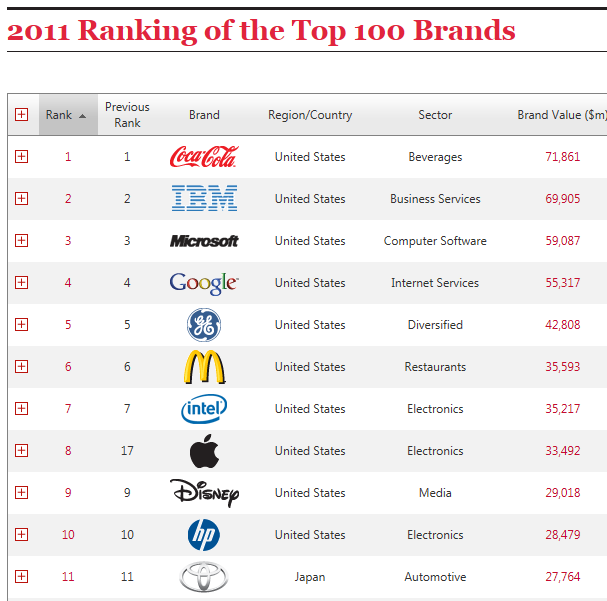
According to the report, the respondents came from a wide variety of organizations, including 48 of the top 100 brands listed in the latest Interbrand rankings.
Here’s the finding that hit me hard:
If CMOs are to be held responsible for the marketing returns they deliver, they must also have significant influence over all four Ps: promotion, products, place and price.
Surprisingly, this is often not the case.
CMOs told us they exert a strong influence over promotional activities such as advertising, external communications and social media initiatives.
But, in general, they play a smaller role in shaping the other three Ps.
Less than half of all respondents have much sway over key parts of the pricing process, for example.
Similarly, less than half have much impact on product development cycles or channel selection.
Apparently many companies have, in fact, concluded that marketing is too important to be left to the marketing department.
Punch line: Hate when your chips get stuck in the vending machine? You are not alone … Kettle brand launches its first, dialogue-free, national tv campaign, inspired by consumers’ passion for Kettle’s all-natural potato chips.
After 30 years of heavy reliance on word-of-mouth advocacy, Diamond Foods, Kettle Brand Potato Chips are getting star treatment with a major new campaign that includes the brand’s first national television advertising.
The campaign, themed “Nobody Likes Kettle Chips. They Love Them,” kicked off this week with national TV spots, print ads, public relations, in-store marketing, digital display ads, online video and social media ….
The humorous, dialogue-free TV spots portray fans of the batch-cooked, all natural potato chips in everyday moments in which they are eagerly anticipating satisfying their craving for the chips, only to have their hopes dashed by various glitches.
One spot shows a boy’s crushed expression as his teacher confiscates his secret bag of Kettle Chips (and proceeds to eat them herself). In another, a man at work desperately scrounges up enough change to buy a bag of the chips; his facial expression shifts from excited to gravely disappointed as the bag gets stuck in the vending machine …
The campaign’s creative was inspired by real consumers describing their passion for the chips and “the extraordinary lengths they go to during ordinary moments to get, save and enjoy their favorite Kettle Brand chips.”
Diamond Foods reports that Kettle Brand’s U.S. sales in mass retail channels increased by 6.9% during the 12-week period ending Oct. 1, per Nielsen FDMx data …
Punch line: While there is no magic way to gain strong consumer engagement on Facebook, a Covario study highlights the “Facebook health” of 100 leading advertisers across industry verticals. This study reveals less is more and quality counts …
Coca-Cola ranks as the world’s No. 1 brand in a Covario study focusing on the Facebook health of 100 leading advertisers.
Hyundai, MTV, Disney and Bayer round out the top most liked and Wal-Mart rates best for engagement.
With the number of global Facebook users exceeding 750 million, its importance as an advertising medium is undeniable and growing fast … Coke has more than 34 million fans on Facebook, which is growing at a monthly rate of nearly 3%. The brand has strong fan engagement, typically posting seven items a month on its page with each garnering more than 235 comments and nearly 1,750 “likes.”
… “Several advertisers — Bayer and SC Johnson — have built followers, but their engagement statistics are relatively low … This is a huge branding opportunity for the firms.” AT&T, Wal-Mart, Dr. Pepper and Fox have excellent engagement, but lower than expected “reach” statistics …
Wal-Mart ranks on top for overall engagement, receiving an average of 7,390 comments and 726 “likes” on every post, which far exceeds all of the other advertisers in the study.
Apple is the only company among the nation’s top 100 advertisers that does not have an official Facebook page. The top Apple listing is a user page with 188,000 followers.
The study broke out Facebook leaders by vertical industry segments, including automotive, consumer packaged goods — sundries (Johnson & Johnson), consumer packaged goods — food and beverage (Coca-Cola), entertainment and media (MTV/Viacom), financial services/insurance (American Express), pharmaceuticals (Bayer), restaurants (Wendy’s), retailers (Victoria’s Secret), technology (Hewlett Packard) and telecommunications (DirecTV) …
Having many outbound posts is not an optimization factor … less is more with Facebook and quality is what counts … The best brands at engagement obtain upwards of 750 comments and 1,500 “likes” per post.
There is no magic to the type of posts being run by successful brand advertisers. While promotions are rampant in advertiser posts, often posting generalized questions is more successful than hard promotions …
Punch line: Despite a tough economic situation, Americans are likely to spend more this Halloween season. And, what candy should you buy for the trick-o-treaters? Well, this year consider bite-size M&Ms and Skittles – they scored the highest across all key metrics according to Insight Workbench …
According to the National Retail Federation’s 2011 Halloween Consumer Intentions and Actions Survey, Americans will spend $72.31 on costumes, candy, and decorations, up from last year’s $66.28 and 2009’s $56.31 …
Overall, this Halloween is all about bite-size …
According to Insight Workbench, Candy Corn, the most iconic Halloween candy had the weakest metrics across all categories: lowest share of buzz, a Net Sentiment score of 52 and a Passion Intensity score of 48. Most people eat it solely at Halloween for tradition’s sake …
According to the NPD Group, about 5% of all candy consumed annually is eaten between Halloween and the week after with the most popular choices being chocolate, chewy candies and hard candy.
“It really came down to a battle of the bite-sized candy bits: the good ole reliable, melts-in-your-mouth-not-in-your-hand chocolaty M&Ms vs. the chewy, fruit-impersonating Skittles that let you “taste the rainbow.”
“Halloween was once an inexpensive holiday. Families made treats like candy apples, constructed costumes out of old bed sheets, and made their own spooky decorations. As stores stockpile all of the typical Halloween fare … plan a budget for this trick or treat season,” says Howard Dvorkin, CPA and founder of Consolidated Credit Counseling Services, Inc. …
In one of the many tribute pieces to Steve Jobs, Business Week published a note from John Sculley.
A couple of lines caught my eye …
On PLC management:
When I first joined Apple, my priority was to squeeze three more years of cash flow out of the near-end-of-life Apple II so Steve would have enough cash runway to create and launch the Mac.
Simplify, simplify, simplify
Steve would say the hardest decisions are what to leave out, not what to put in.
He was the ultimate systems designer.
Always simplifying.
Everything began and ended with the user experience.
Simplify the steps. “Look, we can do it in three steps. … Not good enough, do it in one step.”
The master impresario:
The advances in technology over these years are extraordinary, but Steve wasn’t an engineer.
As an artist he barely drew anything recognizable on his white board.
But as a master impresario, the clarity and brilliance of his creations was genius.
Great companies, noble causes
Great companies must have a noble cause.
Then it’s the leader’s job to transform that noble cause into such an inspiring vision that it will attract the most talented people in the world to want to join it.
“From Stretched to Strengthened,” IBM’s latest Global Chief Marketing Officer Study, interviewed 1,734 CMOs from 19 industries and 64 countries. Topline findings converge on three points:
The empowered customer is now in control of the business relationship
Delivering customer value is paramount — and an organization’s behavior is as important as the products and services it provides
The pressure to be accountable to the business is not just a symptom of hard times, but a permanent shift that requires new approaches, tools and skills.
While 82% of marketing chiefs rely on traditional market research — which delivers information about consumers in the aggregate — comparatively few “are exploiting the full power of the digital grapevine,” with only 26% regularly tracking blogs, 42% tracking third-party reviews and only 48% tracking consumer reviews.
Four major priorities concern CMOs:
Data explosion
Social media
Proliferation of channels and devices
Shifting consumer demographics.
… IBM warns that a majority of CMOs are missing the personal touch, by paying more attention to markets than individuals and “peddling, not partnering,” and favoring data over relationships.
The researchers offer three key areas for improvement:
understand and deliver value to empowered customers;
create lasting relationships with those customers;
measure marketing’s contribution to the business in relevant, quantifiable terms.
While more than half of the interviewees are confident their organization’s corporate character is understood in the marketplace, just 20% believe their employees are fully on board, and 75% believe marketing should oversee brand reputation inside and outside the enterprise.
Conclusions on how to “Get fit for the future” include:
Create value for customers as individuals
Reprioritize investments to analyze digital channels to access customers’ views and use advanced analytics to recognize preferences and trends across every touch point
Work with IT to assess potential data and infrastructure exposures, employ tools to secure customer data and update privacy policies to address customers’ concerns
Capitalize on new digital channels to stimulate customer conversations and new relationships; use tangible incentives to attract followers.
“Marketing people will need unique skills in the near future. They’ll need to be capable of integrating marketing and IT – like footballers who can kick with both feet,” concludes Jeroen de Punder, CMO of Ricoh Netherlands.
… The remake is part of an effort to breathe new life into Ivory. It comes at a time when Americans are scaling back on spending in the down economy, but are looking for little, cheap ways to pamper themselves … As P&G has focused on bigger, faster-growing brands, the white bar of soap has lagged behind its rival Dove and faced increasing competition from Dial and Irish Spring.
Ivory isn’t among the 24 brands with at least $1 billion in annual sales at P&G … but the soap that floats has a long history with the company.
Ivory was the first brand mass-marketed by P&G. It is the namesake of a P&G research and production center called “Ivorydale.” It’s deeply entrenched in American pop culture as a sponsor of early television soap operas and the first televised major league baseball game …
“Ivory is where our origins are … It has a special place in a lot of people’s hearts around here. It’s incredibly important to keep it alive and growing.”
… P&G expects the new campaign to remind people why their families used Ivory in the past, and to attract new users with quality for low price …
“There is so much tail wind at our back: the economic environment, this trend of getting back to things that work, and reminding us of a time when things were a bit simpler.”
… Instead of Ivory’s usual nearly all-white packages, new ones will be more colorful. One is mostly bright blue. The new package emphasizes the 10 bars compared to 8- and 6-packs sold by most competitors with a big “10.” A simpler logo plays off the previous of the 1950s and carries the slogan, “pure, clean & simple.”
… The ads have some understated humor, calling Ivory “meticulously scented to smell exactly like soap” and pledging that “when dirt changes its formula, so will we.” …









 The Homa Files